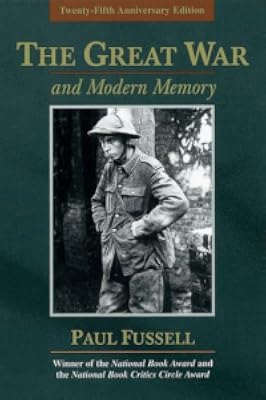
The Great War and Modern Memory
by Paul Fussell
On This Page
Description
Winner of both the National Book Award and the National Book Critics Circle Award and named by the Modern Library one of the twentieth century's 100 Best Non-Fiction Books, Paul Fussell's The Great War and Modern Memory was universally acclaimed on publication in 1970. Today, Fussell's landmark study remains as original and gripping as ever: a literate, literary, and unapologetic account of the Great War, the war that changed a generation, ushered in the modern era, and revolutionized how we show more see the world. This brilliant work illuminates the trauma and tragedy of modern warfare in fresh, revelatory ways. Exploring the work of Siegfried Sassoon, Robert Graves, Edmund Blunden, David Jones, Isaac Rosenberg, and Wilfred Owen, Fussell supplies contexts, both actual and literary, for those writers who-with conspicuous imaginative and artistic meaning-most effectively memorialized World War I as an historical experience. Dispensing with literary theory and elevated rhetoric, Fussell grounds literary texts in the mud and trenches of World War I and shows how these poems, diaries, novels, and letters reflected the massive changes-in every area, including language itself-brought about by the cataclysm of the Great War. show lessTags
Recommendations
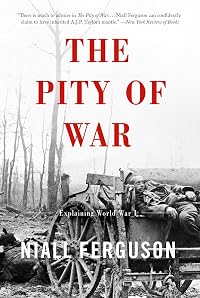
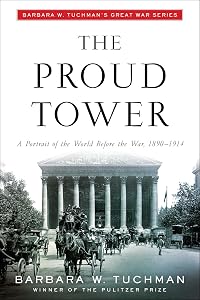
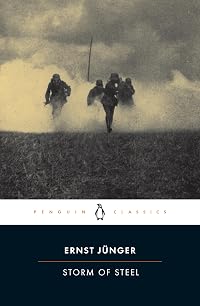
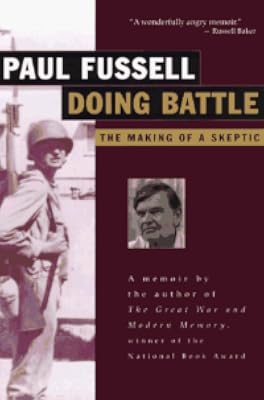
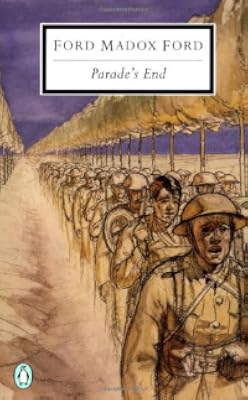
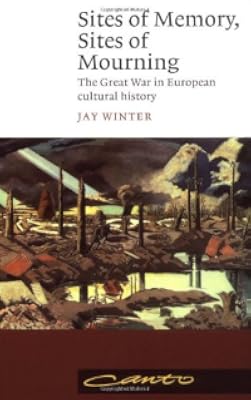
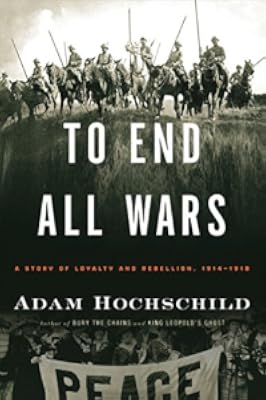


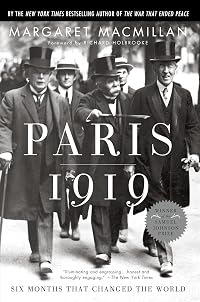


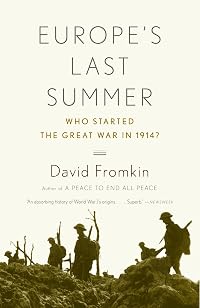

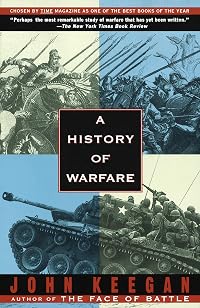
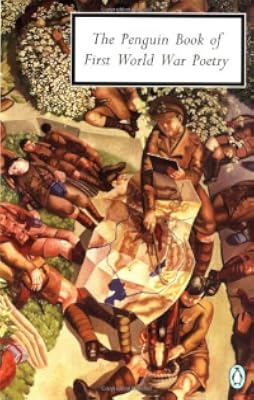
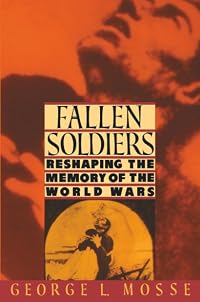
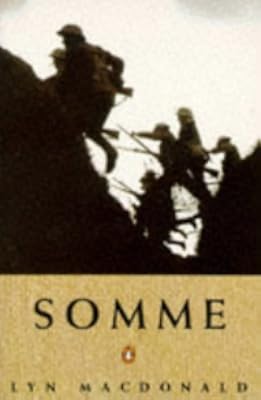
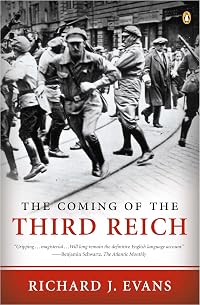
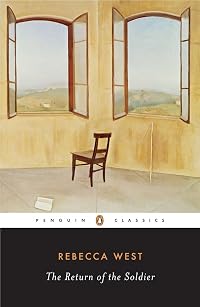


Member Recommendations
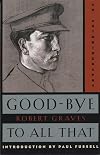

wildbill Part of George Sherston trilogy, fictionalized autobiography



Member Reviews
While it's true that Fussell prefers later memoirs to more immediate accounts of the war and doesn't conclusively prove that the First World War was history's first or most ironic war, "The Great War and Modern Memory" remains a wonderfully engaging and useful example of intellectual history. Fussell does a very good, very thorough, and very thoughtful job of examining the mindset of those who fought in the war and describing that era's intellectual climate. Though relatively free of statistics and accounts of wartime strategizing, the book is serves as a subtle portrait of the war's multitudinous horrors, which made death more mechanical and, in a sense, less traditionally dramatic than it had ever been before. Fussell writes show more convincingly about the breach that the book opened up between civilian and military life, homoeroticism before and after the war, how experiences of the war changed our ideas about wartime honor and heroism, and, perhaps most interestingly, examines how soldiers used ironic and theatrical motifs to process experiences that simply couldn't be put into words. Fussell's assertion that the Great War had an extensive influence on how civilian life during the rest of the twenty-first century is probably more controversial, but he ably shows how many of the institutions of modern life (the form letter, for one) were field-tested, so to speak, during that conflict. What I personally enjoyed most about this book is the sense of importance that Fussell lends to his ideas: he makes the poems that soldiers wrote and the self-conceptions their societies had seem as critical as any piece of armament you could name. "The Great War and Modern Memory" does exactly what any academic treatise should: make ideas seem vital and alive. This one should be required reading for students of all things Modernist. show less
An exceptional book, especially for those of us who appreciate the interconnections Fussell makes between literature and war. With a deft hand, he pulls together literary tradition right into the middle of the fray and opens the very heart of the wound. This is the first time I've truly understood war, and I see how it had to be done through literature. This will be a very personal book -- there will be lovers and haters. I can't imagine sitting on the fence on this one.
With the 100 year anniversary of World War One upon us, there has been an outpouring of new books on the war. Some of these are very good indeed, but reading a few new ones drew me back to this classic. I think it may be the best book I have ever read on the War, for two reasons.
First, while the book is mostly about the war in literature and memory, Fussell captures and shows the actual day-to-day experience of the soldiers in the trenches more vividly than anything else I have read. He was in combat in Europe World War II, so he knew things in visceral terms that non- combatants don't know (and, as he points out, very often did not and do not want to know). Also, while much of his research was literary, the rest of it was about as show more immediate as you can get: he spent three months in a room at the Imperial War Museum, reading the Museum's (unsorted) archive of papers of the British troops in World War I. In so doing, he says, "For three months I lived in the trenches with the British soldiery, accompanying them on raids on the German trenches across the way, consoling myself with their rum, pursuing and crunching lice in my trouser seams, and affecting British phlegm as they jumped the bags and dashed directly into machine gun fire."
The day to day experience he conveys is horrible, claustrophobic, and increasingly pointless. Soldiers on both sides began to believe that the war would never end; "the war", indeed, begins to seem a great pitiless machine that chews up rank after rank of men, and spits out corpses. This is not a new thought -- no one who has read much about the War is going to believe that trench life was fun. But Fussell conveys more strongly than anyone else I have read just how awful, and endless, it was. He intended his description to make war look horrible, and it does.
Second, Fussell's most important literary observation, it seems to me, is less about literature per se than about a way of thinking -- the modern way of thinking, if you will. He goes through key themes as they appeared in the writings of several major authors of the War. What emerges overall, however, is a sense that for many the ability to believe in ideals was killed in the war, shifting the postwar world to an attitude of pessimism and irony. Many have criticized Fussell's focus on a small group of British writers, but I think his point is still valid. The First World War made it impossible for thinking people to believe in human progress, or in the basic goodness of humankind. In the century since then, it has been too easy to remain disillusioned.
This is a terrific book, for those whose interests are primarily historical, as well as for those who have literary inclinations. Read it. show less
First, while the book is mostly about the war in literature and memory, Fussell captures and shows the actual day-to-day experience of the soldiers in the trenches more vividly than anything else I have read. He was in combat in Europe World War II, so he knew things in visceral terms that non- combatants don't know (and, as he points out, very often did not and do not want to know). Also, while much of his research was literary, the rest of it was about as show more immediate as you can get: he spent three months in a room at the Imperial War Museum, reading the Museum's (unsorted) archive of papers of the British troops in World War I. In so doing, he says, "For three months I lived in the trenches with the British soldiery, accompanying them on raids on the German trenches across the way, consoling myself with their rum, pursuing and crunching lice in my trouser seams, and affecting British phlegm as they jumped the bags and dashed directly into machine gun fire."
The day to day experience he conveys is horrible, claustrophobic, and increasingly pointless. Soldiers on both sides began to believe that the war would never end; "the war", indeed, begins to seem a great pitiless machine that chews up rank after rank of men, and spits out corpses. This is not a new thought -- no one who has read much about the War is going to believe that trench life was fun. But Fussell conveys more strongly than anyone else I have read just how awful, and endless, it was. He intended his description to make war look horrible, and it does.
Second, Fussell's most important literary observation, it seems to me, is less about literature per se than about a way of thinking -- the modern way of thinking, if you will. He goes through key themes as they appeared in the writings of several major authors of the War. What emerges overall, however, is a sense that for many the ability to believe in ideals was killed in the war, shifting the postwar world to an attitude of pessimism and irony. Many have criticized Fussell's focus on a small group of British writers, but I think his point is still valid. The First World War made it impossible for thinking people to believe in human progress, or in the basic goodness of humankind. In the century since then, it has been too easy to remain disillusioned.
This is a terrific book, for those whose interests are primarily historical, as well as for those who have literary inclinations. Read it. show less
Very enjoyable, very thought-provoking, but not necessarily very convincing, Fussell's sui-generis book is an extended literary criticism masquerading as social history – or perhaps the other way round. There are various arguments going on in here, but the main thrust is that much of how we think about the modern world – indeed our whole contemporary mindset – has its origin in ideas that came about as an attempt to respond to the unprecedented scale and irony of the 1914-18 conflict.
‘Irony’ is the crucial term. And a famously vague one; let me first, like a teenager giving a graduation speech, turn to the OED's third sense of the word:
A state of affairs or an event that seems deliberately contrary to what was or might be show more expected; an outcome cruelly, humorously, or strangely at odds with assumptions or expectations.
For Fussell, ‘Every war constitutes an irony of situation because its means are so melodramatically disproportionate to its presumed ends’; and ‘the Great War was more ironic than any before or since’. Highlighting the insanity of trench warfare, and the ‘ridiculous proximity of the trenches to home’, Fussell first traces the various ways people responded to this grotesque irony, and then considers how it has affected language, culture and thought processes since.
Though he does look at some contemporary letters and diaries, his main sources of evidence are the great literary responses to the war, especially Sassoon, Graves, Blunden, Owen, and David Jones, and he locates the source of all their techniques in ‘irony-assisted recall’.
I love this attention to irony as the defining quality of the war; but it also epitomises a sense I had that Fussell was claiming a special status for the First World War that it didn't really possess. After all, irony is hardly new. To me, it seems to be a central part of war literature almost as far back as you can go: Homeric irony is almost proverbial.
Similarly it seems quite a claim to say that 1914-18 was unusually marked by a ‘sense of adversary proceedings’, an ‘us against them’ mentality, since this is surely characteristic of the whole notion of what war is. If anything, the WWI literature I've read has been notable for its awareness that the other side was exactly the same as them; I think of the German and French soldiers trapped all night together in the shell-hole in All Quiet on the Western Front, for instance.
Just one more example to make my point. Fussell believes there is something unusually theatrical in the English conception of this war:
During the war, it was the British, rather than the French, the Americans, the Italians, the Portuguese, the Russians, or the Germans, who referred to trench raids as ‘shows’ or ‘stunts’ […] And it is English playwrights – or at least Anglo-Irish ones – like Wilde and Shaw who compose plays proclaiming at every point that they are plays.
But this is weird, not just because of the qualification he needed in that last sentence, but because when I think of deliberately artificial stagecraft I think of Brecht – a German – and the term used for this in modern theatre studies is a German one, Verfremdungseffekt. In general his idea of specifically national characteristics seems a bit strained (he uses Manning's Her Privates We as an example of how English writers were saturated with Shakespeare; but Frederic Manning was an Australian).
There are several more such quibbles I could adduce, but none of them stopped me enjoying Fussell's arguments, most of which are brilliantly constructed. He is especially convincing on the pervasive influence of the Oxford Book of Verse on contemporary patterns of speech and thought, and he has a fantastic ability to spot poetic echoes buried in the most unlikely places. When CE Montague writes of one destroyed battalion, ‘Seasons returned, but not to that battalion returned the spirit of delight in which it had first learnt to soldier together…’, perhaps it is not too difficult to discern the presence of Milton's ‘Thus with the year / Seasons return, but not to me returns / Day, or the sweet approach of Ev'n or Morn…’. But Fussell also finds parallels to both Sassoon's ‘The Kiss’ and Owen's ‘Arms and the Boy’ in Bret Harte's ‘What the Bullet Sang’ – and there are other, even more obscure examples.
An American, he seems fascinated by the extent to which the idea of ‘English Literature’ was a part of daily life for so many British soldiers, and he gathers a great deal of evidence from letters and diaries showing how common this was among all ranks.
Carrington once felt ‘a studious fit’ and sent home for some Browning. ‘At first,’ he says, ‘I was mocked in the dugout as a highbrow for reading “The Ring and the Book”, but saying nothing I waited until one of the scoffers idly picked it up. In ten minutes he was absorbed, and in three days we were fighting for turns to read it, and talking of nothing else at meals.’
Perhaps the most interesting chapter for me was the one about the homoeroticism of war writing, which examines certain tropes in First World War literature and traces them back to the influence of Housman, the Aesthetes and the Uranians, with their veneration of wounded or dying soldier ‘lads’, forever stripping off and bathing in handy streams. Here and elsewhere, Fussell follows the variations forward in time as well, to modern war literature, where he sees Heller's Catch 22 and Pynchon's Gravity's Rainbow as especially representative. For him, this style of heavily ironised, conspiratorial writing has its roots in the Western Front: ‘Prolonged trench warfare, whether enacted or remembered, fosters paranoid melodrama, which I take to be a primary mode in modern writing.’
Well, maybe. I enjoyed seeing the argument made even if I'm not sure I believe it.
Fussell himself fought in Europe the Second World War and was awarded a Bronze Star and a Purple Heart; in a certain sense this book is personal, and it has to do with exploring the gap between ideas of war and the reality. The way he reacted to the fighting in Alsace was in some sense (so at least he seems to be arguing) pre-moulded by society's experience of the Somme and Paschendaele. And indeed, like many other writers I've encountered recently, Fussell notes that one can easily ‘conceive of the events running from 1914 to 1945 as another Thirty Years' War and the two world wars as virtually a single historical episode.’ show less
‘Irony’ is the crucial term. And a famously vague one; let me first, like a teenager giving a graduation speech, turn to the OED's third sense of the word:
A state of affairs or an event that seems deliberately contrary to what was or might be show more expected; an outcome cruelly, humorously, or strangely at odds with assumptions or expectations.
For Fussell, ‘Every war constitutes an irony of situation because its means are so melodramatically disproportionate to its presumed ends’; and ‘the Great War was more ironic than any before or since’. Highlighting the insanity of trench warfare, and the ‘ridiculous proximity of the trenches to home’, Fussell first traces the various ways people responded to this grotesque irony, and then considers how it has affected language, culture and thought processes since.
Though he does look at some contemporary letters and diaries, his main sources of evidence are the great literary responses to the war, especially Sassoon, Graves, Blunden, Owen, and David Jones, and he locates the source of all their techniques in ‘irony-assisted recall’.
I love this attention to irony as the defining quality of the war; but it also epitomises a sense I had that Fussell was claiming a special status for the First World War that it didn't really possess. After all, irony is hardly new. To me, it seems to be a central part of war literature almost as far back as you can go: Homeric irony is almost proverbial.
Similarly it seems quite a claim to say that 1914-18 was unusually marked by a ‘sense of adversary proceedings’, an ‘us against them’ mentality, since this is surely characteristic of the whole notion of what war is. If anything, the WWI literature I've read has been notable for its awareness that the other side was exactly the same as them; I think of the German and French soldiers trapped all night together in the shell-hole in All Quiet on the Western Front, for instance.
Just one more example to make my point. Fussell believes there is something unusually theatrical in the English conception of this war:
During the war, it was the British, rather than the French, the Americans, the Italians, the Portuguese, the Russians, or the Germans, who referred to trench raids as ‘shows’ or ‘stunts’ […] And it is English playwrights – or at least Anglo-Irish ones – like Wilde and Shaw who compose plays proclaiming at every point that they are plays.
But this is weird, not just because of the qualification he needed in that last sentence, but because when I think of deliberately artificial stagecraft I think of Brecht – a German – and the term used for this in modern theatre studies is a German one, Verfremdungseffekt. In general his idea of specifically national characteristics seems a bit strained (he uses Manning's Her Privates We as an example of how English writers were saturated with Shakespeare; but Frederic Manning was an Australian).
There are several more such quibbles I could adduce, but none of them stopped me enjoying Fussell's arguments, most of which are brilliantly constructed. He is especially convincing on the pervasive influence of the Oxford Book of Verse on contemporary patterns of speech and thought, and he has a fantastic ability to spot poetic echoes buried in the most unlikely places. When CE Montague writes of one destroyed battalion, ‘Seasons returned, but not to that battalion returned the spirit of delight in which it had first learnt to soldier together…’, perhaps it is not too difficult to discern the presence of Milton's ‘Thus with the year / Seasons return, but not to me returns / Day, or the sweet approach of Ev'n or Morn…’. But Fussell also finds parallels to both Sassoon's ‘The Kiss’ and Owen's ‘Arms and the Boy’ in Bret Harte's ‘What the Bullet Sang’ – and there are other, even more obscure examples.
An American, he seems fascinated by the extent to which the idea of ‘English Literature’ was a part of daily life for so many British soldiers, and he gathers a great deal of evidence from letters and diaries showing how common this was among all ranks.
Carrington once felt ‘a studious fit’ and sent home for some Browning. ‘At first,’ he says, ‘I was mocked in the dugout as a highbrow for reading “The Ring and the Book”, but saying nothing I waited until one of the scoffers idly picked it up. In ten minutes he was absorbed, and in three days we were fighting for turns to read it, and talking of nothing else at meals.’
Perhaps the most interesting chapter for me was the one about the homoeroticism of war writing, which examines certain tropes in First World War literature and traces them back to the influence of Housman, the Aesthetes and the Uranians, with their veneration of wounded or dying soldier ‘lads’, forever stripping off and bathing in handy streams. Here and elsewhere, Fussell follows the variations forward in time as well, to modern war literature, where he sees Heller's Catch 22 and Pynchon's Gravity's Rainbow as especially representative. For him, this style of heavily ironised, conspiratorial writing has its roots in the Western Front: ‘Prolonged trench warfare, whether enacted or remembered, fosters paranoid melodrama, which I take to be a primary mode in modern writing.’
Well, maybe. I enjoyed seeing the argument made even if I'm not sure I believe it.
Fussell himself fought in Europe the Second World War and was awarded a Bronze Star and a Purple Heart; in a certain sense this book is personal, and it has to do with exploring the gap between ideas of war and the reality. The way he reacted to the fighting in Alsace was in some sense (so at least he seems to be arguing) pre-moulded by society's experience of the Somme and Paschendaele. And indeed, like many other writers I've encountered recently, Fussell notes that one can easily ‘conceive of the events running from 1914 to 1945 as another Thirty Years' War and the two world wars as virtually a single historical episode.’ show less
Paul Fussell's THE GREAT WAR AND MODERN MEMORY (1975) is not a book one can hurry though. I spent about a month on it, taking frequent breaks, because there's just so much to absorb, to learn, from this amazing volume of research, scholarship, and heartfelt commentary. Fussell came away from his own war, WWII, deeply and permanently scarred, and spent the better part of his professional life trying to understand the horror of war and the personal damage it can cause, but he was also deeply intrigued by the countless literary works that came from its participants and victims, evidenced here. He looks at not just works from the Great War, but other more recent wars too, up through Vietnam, and makes some very thoughtful and credible show more comparisons. Enough said; read this book. I enjoyed a brief correspondence with Paul before his death in 2012, and was deeply saddened when he left us. I will be thinking about this book, and his personal memoir, DOING BATTLE, for a long time. RIP, Paul.
- Tim Bazzett author of the memoir, SOLDIER BOY: AT PLAY IN THE ASA show less
- Tim Bazzett author of the memoir, SOLDIER BOY: AT PLAY IN THE ASA show less
It is amazing how hand in hand war and literature has always been. If veterans were not writing about the experiences of war, soldiers at the front didn't want to die until they learned what happened next in chapter of their favorite novels. It is as if literary and historical documents bravely hold hands against the barrage of bullets in the midst of chaos and carnage. Life imitated art and art mirrored life in the literature.
One of the most interesting facts of Great War and Modern Memory is the inclusion of the soldier's Field Service Post Card, a form of communication which dehumanized and automated communication with a code of what could and could not be said to loved ones back home. I appreciated the small facts that otherwise show more seemed out of place. show less
One of the most interesting facts of Great War and Modern Memory is the inclusion of the soldier's Field Service Post Card, a form of communication which dehumanized and automated communication with a code of what could and could not be said to loved ones back home. I appreciated the small facts that otherwise show more seemed out of place. show less
From the WWI reading program. Author Paul Fussell points out the number of terms that became permanent parts of the language due to WWI - "in the trenches", "going over the top", "no-man's land". (I was thinking more of terms that no longer have a military meaning, or at least not a primarily military meaning. People who talk about going "over the top" nowadays no longer associate the idea with getting a burst of machine gun fire in the chest.) I can't think of anything similar from WWII; maybe "blitz"? Or the popularity of calling people you disapprove of Nazis? I wonder how many trenchcoat wearers realize the big pockets are for grenades, the d-rings are to strap equipment down, and the double flap over the front keeps your buttons show more from being caught when you crawl under barbed wire.
There are a lot of eerie moments - the description of the summer of 1914 being one of the best in memory provokes me a little, because for the life of me I can't remember what the summer of 2001 was like.
Fussell makes the argument - which I find possible but not fully convincing - was that the experience of WWI for the Allies prolonged the course of WWII. Supposedly, the US was so horrified of casualties that it wasted many opportunities to be aggressive, thus allowing the Nazis to do an organized retreat. He does not cite any specific example of a battle or part of the 1944-1945 campaign where a more aggressive strategy could have been used, however. Certainly, Patton's push out of the Normandy beaches and Market-Garden were aggressive to a fault; I can't think of anywhere else where a more offensive approach would have helped.
Fussell seems to be pretty much a literate liberal. One particular item of note is he is the author of the famous essay "Thank God for the Atom Bomb", which got him no end of FLAK from the intelligentsia. Fussell was waiting to go in a part of Operation Olympic (so was my father, adding some personal relevance) and he recalls he first reaction to the news of Hiroshima as "I'm going to live after all". To Fussell's credit, he doesn't just express this as a personal feeling, but poses some cogent arguments against the accepted liberal doctrine about "The Bomb". For example, to the argument that the war would have been over in "a few months" even if the bomb was not used, he points out that Allied soldiers were dying at the rate of a few hundred a week even at this late point, and that several thousand Japanese soldiers and civilians were dying each week. Thus "a few months wait" might have actually cost more Japanese lives, not just Allied lives, than using the bomb.
I'm also grateful to Fussell for introducing me to the poetry of Randall Jarrell, who is the only English language WWII poet of the same stature as the WWI poets. I wonder why? Maybe some of the stuff that happened in WWII was beyond poetry. show less
There are a lot of eerie moments - the description of the summer of 1914 being one of the best in memory provokes me a little, because for the life of me I can't remember what the summer of 2001 was like.
Fussell makes the argument - which I find possible but not fully convincing - was that the experience of WWI for the Allies prolonged the course of WWII. Supposedly, the US was so horrified of casualties that it wasted many opportunities to be aggressive, thus allowing the Nazis to do an organized retreat. He does not cite any specific example of a battle or part of the 1944-1945 campaign where a more aggressive strategy could have been used, however. Certainly, Patton's push out of the Normandy beaches and Market-Garden were aggressive to a fault; I can't think of anywhere else where a more offensive approach would have helped.
Fussell seems to be pretty much a literate liberal. One particular item of note is he is the author of the famous essay "Thank God for the Atom Bomb", which got him no end of FLAK from the intelligentsia. Fussell was waiting to go in a part of Operation Olympic (so was my father, adding some personal relevance) and he recalls he first reaction to the news of Hiroshima as "I'm going to live after all". To Fussell's credit, he doesn't just express this as a personal feeling, but poses some cogent arguments against the accepted liberal doctrine about "The Bomb". For example, to the argument that the war would have been over in "a few months" even if the bomb was not used, he points out that Allied soldiers were dying at the rate of a few hundred a week even at this late point, and that several thousand Japanese soldiers and civilians were dying each week. Thus "a few months wait" might have actually cost more Japanese lives, not just Allied lives, than using the bomb.
I'm also grateful to Fussell for introducing me to the poetry of Randall Jarrell, who is the only English language WWII poet of the same stature as the WWI poets. I wonder why? Maybe some of the stuff that happened in WWII was beyond poetry. show less
Members
- Recently Added By
Lists

Books about World War I
80 works; 14 members

World War I books
32 works; 8 members

Modern Library 100 Best Nonfiction Books
100 works; 8 members

Top-Rated Books on LibraryThing
272 works; 119 members

THE WAR ROOM
813 works; 24 members
Author Information

24+ Works 7,336 Members
Paul Fussell Jr. was born in Pasadena, California on March 22, 1924. He was drafted into the Army in 1943 while attending Pomona College. During his tour of duty, he won the Bronze Star and two Purple Hearts. He returned to college in 1945. He received a bachelor of arts degree from Pomona College in 1947 and a master's degree and a doctorate in show more English from Harvard University. He taught English at Connecticut College for Women, Rutgers University, and the University of Pennsylvania. During this time he wrote several books on literary topics including The Rhetorical World of Augustan Humanism: Ethics and Imagery from Swift to Burke, Poetic Meter and Poetic Form, and Samuel Johnson and the Life of Writing. In 1975, he published The Great War and Modern Memory, which was a study of World War I and how its horrors fostered a disillusioned modernist sensibility. This book won both the National Book Critics Circle Award for Criticism and the National Book Award for Arts and Letters. His other works include Abroad: British Literary Traveling Between the Wars, Class: A Guide Through the American Status System, Wartime: Understanding and Behavior in the Second World War, BAD: Or, the Dumbing of America, and Doing Battle: The Making of a Skeptic. He died of natural causes on May 23, 2012 at the age of 88. (Bowker Author Biography) show less
Some Editions
Awards and Honors
Awards
Notable Lists
Series
Belongs to Publisher Series
Common Knowledge
- Canonical title
- The Great War and Modern Memory
- Original publication date
- 1975
- People/Characters
- Robert Graves; Wilfred Owen; Siegfried Sassoon
- Important events
- World War I (1914 | 1918); Battle of the Somme
- Dedication
- To the Memory of
Technical Sergeant Edward Keith Hudson, ASN 36548772
Co. F, 410th Infantry
Killed beside me in France
March 15, 1945 - First words
- By mid-December,1914, British troops had been fighting on the Continent for over five months.
- Last words
- (Click to show. Warning: May contain spoilers.)My belief is that what we recognize in them is a part, and perhaps not the least compelling part, of our own buried lives.
- Blurbers
- Keegan, John; Trilling, Lionel
Classifications
- Genres
- Literature Studies and Criticism, History, Nonfiction
- DDC/MDS
- 820.9358 — Literature & rhetoric English & Old English literatures English and Old English (Anglo-Saxon) literatures History, description, critical appraisal of works in more than one form Literature dealing with specific themes and subjects Humanity Historical, political, military themes
- LCC
- PR478 .E8 .F8 — Language and Literature English English Literature By period Modern 20th century
- BISAC
Statistics
- Members
- 2,310
- Popularity
- 8,646
- Reviews
- 31
- Rating
- (4.24)
- Languages
- English, Italian, Spanish
- Media
- Paper, Audiobook, Ebook
- ISBNs
- 23
- ASINs
- 15