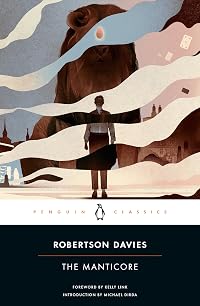
On This Page
Description
David Staunton, a successful man haunted by his relationship with his larger-than-life father, uses therapy to come to terms with his past.Tags
Recommendations















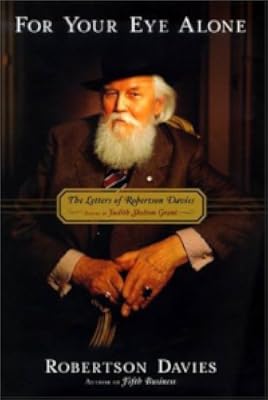



Member Recommendations

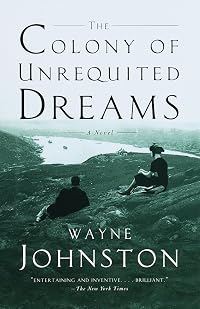
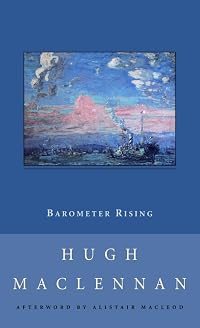
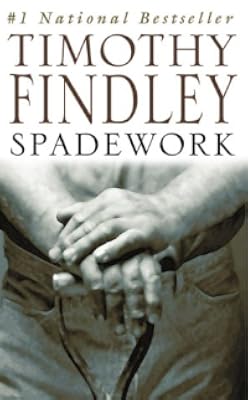
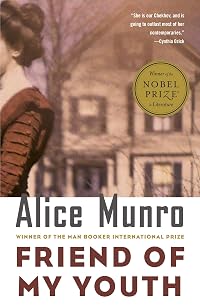
Smiler69 Both works based on early 20th century psychological and psychiatric findings and research.
Member Reviews
This is the second book of the Deptford Trilogy and it is almost as good as the first except that the lead in The Manticore,David Staunton, doesn’t quite have the charm of Dunstan Ramsay, the lead in the first book, Fifth Business. David Staunton is a criminal attorney dealing with some things in life that leads him to seek out a Jungian therapist in Zürich. The majority of the book is an account of those therapy sessions and the history that David recalls in the process. It might sound a little dull, but Davies fashions it all into a truly enjoyable reading experience.
I have only a passing familiarity with Carl Jung and his writing on archetypes, but the characters voice enough of the theory for it to become clear. As I take it, show more the archetypes that Jung discusses (e.g., Shadow, Anima, Magus, Friend, etc.) belong to a common, collectively unconscious, way of perceiving the world. The exact manifestation of these archetypes vary from person to person, but those manifestations cohere around the functions associated with the archetype and around the archetype’s mediating influence on our individual behavior. The Shadow, for example, is a manifestation of repressed, negative impressions of personality, often our own, that we project onto others where those impressions are safely objectified into objects and people that we can safely scorn without the turmoil of actually turning that scorn on ourselves. The other archetypes are also projections onto others that we use to manage our own lives.
The Jungian archetypes and their connection to a collective unconscious sounds a little too much like innate ideas to me. I tend to fall more in the empiricist camp when it comes to human understanding and I find it hard to believe that, given the diversity of human experience, that there are common archetypes, even if they do manifest differently to us as individuals. Nevertheless, even if the archetypes are fictions, I can see how they might have utility as focal points for reflection and I think this is point that comes through in the novel.
If anything, these archetypes are ways to make sense of people and events so that they don’t seem arbitrary (a theme throughout the books so far, starting with the arc of an errant snowball that opens the first book). Maybe a Jungian would say that what appears arbitrary in life are just patterns that rationalists and empiricists cannot see, but mapping those patterns to the play of archetypes imposes a kind of sense on them. However, the imposition of archetypes seems like it has the potential to do harm to the people that become the recipients of those projections. In making those projections on others we see them not on their own terms but on terms relative to our interests and needs. Maybe that’s all we can ever do — see the world through our eyes. However, if we take these archetypes, even if they are a fiction, perhaps they enable productive reflection that at least allows us to see that there is something about people and events that is different or in addition to what we are motivated to see. There is a strong connection here to Iris Murdoch’s concept of “moral vision” as an impediment to ethical action.
Maybe what I’m seeing in this book is a meditation on the power of fiction and on the recurring character types, and conventional story types, and familiar tropes that reveal elements of a shared or shareable experience. And focusing on what reoccurs and reasserts itself, aided by the innovation and novelty of fiction, we can still learn something. That has true transformative value.
The writing in both books of the trilogy has been delightful. Davies is witty and irreverent and has such clever and concise ways of making big points without ever interrupting the flow of the narrative to make a big point. And for as little as actually happens in the book, the plotting of those events and the pacing thoroughly kept my interest. I would have been happy with another hundred pages of this narrative and I am definitely eager to pick up a copy of the third book World of Wonders which focuses on Magnus Eisengrim. show less
I have only a passing familiarity with Carl Jung and his writing on archetypes, but the characters voice enough of the theory for it to become clear. As I take it, show more the archetypes that Jung discusses (e.g., Shadow, Anima, Magus, Friend, etc.) belong to a common, collectively unconscious, way of perceiving the world. The exact manifestation of these archetypes vary from person to person, but those manifestations cohere around the functions associated with the archetype and around the archetype’s mediating influence on our individual behavior. The Shadow, for example, is a manifestation of repressed, negative impressions of personality, often our own, that we project onto others where those impressions are safely objectified into objects and people that we can safely scorn without the turmoil of actually turning that scorn on ourselves. The other archetypes are also projections onto others that we use to manage our own lives.
The Jungian archetypes and their connection to a collective unconscious sounds a little too much like innate ideas to me. I tend to fall more in the empiricist camp when it comes to human understanding and I find it hard to believe that, given the diversity of human experience, that there are common archetypes, even if they do manifest differently to us as individuals. Nevertheless, even if the archetypes are fictions, I can see how they might have utility as focal points for reflection and I think this is point that comes through in the novel.
If anything, these archetypes are ways to make sense of people and events so that they don’t seem arbitrary (a theme throughout the books so far, starting with the arc of an errant snowball that opens the first book). Maybe a Jungian would say that what appears arbitrary in life are just patterns that rationalists and empiricists cannot see, but mapping those patterns to the play of archetypes imposes a kind of sense on them. However, the imposition of archetypes seems like it has the potential to do harm to the people that become the recipients of those projections. In making those projections on others we see them not on their own terms but on terms relative to our interests and needs. Maybe that’s all we can ever do — see the world through our eyes. However, if we take these archetypes, even if they are a fiction, perhaps they enable productive reflection that at least allows us to see that there is something about people and events that is different or in addition to what we are motivated to see. There is a strong connection here to Iris Murdoch’s concept of “moral vision” as an impediment to ethical action.
Maybe what I’m seeing in this book is a meditation on the power of fiction and on the recurring character types, and conventional story types, and familiar tropes that reveal elements of a shared or shareable experience. And focusing on what reoccurs and reasserts itself, aided by the innovation and novelty of fiction, we can still learn something. That has true transformative value.
The writing in both books of the trilogy has been delightful. Davies is witty and irreverent and has such clever and concise ways of making big points without ever interrupting the flow of the narrative to make a big point. And for as little as actually happens in the book, the plotting of those events and the pacing thoroughly kept my interest. I would have been happy with another hundred pages of this narrative and I am definitely eager to pick up a copy of the third book World of Wonders which focuses on Magnus Eisengrim. show less
Here the trilogy moves to its next narrator as David Staunton, son of the late Boy Staunton, enters into therapy following his father's unusual death. I found the "story told through therapy" approach a bit affected at first - why not a straightforward telling, as with the first novel? - but the psychoanalysis portions are fantastic, almost as if Davies were a personal expert in the field; so good, in fact, I may have benefited from it a bit myself. Boy Staunton stands at the centre of this trilogy but David's story is also compelling. He has never learned how to feel. While the reason for this is never plainly stated, I latched onto his declaration that, as a child, he could not love anything that disappointed his father. The conflict show more in him arose when he realized he was one of those things.
This is not, as most other reviewers point out, as good as the first book. To achieve that, it had to either broaden the world we were introduced to or dig beneath what we've already seen. It doesn't take much of a stab at doing either. Mostly it covers the same ground, and where there's contradiction or blank spots in David's knowledge these always seem resolvable by Ramsay's having known more. The external view of Ramsay is interesting, but it doesn't change his character or make me distrust what I think I already know. I've the odd impression that these first two books would have served each other better if they had been written and published in reverse order. The conclusion moves things forward a bit, but only in service to David's story, and even then it does not have the clean closure of Ramsay's. I love how articulate and insightful Davies' characters are, and that more than anything compels me to read on. show less
This is not, as most other reviewers point out, as good as the first book. To achieve that, it had to either broaden the world we were introduced to or dig beneath what we've already seen. It doesn't take much of a stab at doing either. Mostly it covers the same ground, and where there's contradiction or blank spots in David's knowledge these always seem resolvable by Ramsay's having known more. The external view of Ramsay is interesting, but it doesn't change his character or make me distrust what I think I already know. I've the odd impression that these first two books would have served each other better if they had been written and published in reverse order. The conclusion moves things forward a bit, but only in service to David's story, and even then it does not have the clean closure of Ramsay's. I love how articulate and insightful Davies' characters are, and that more than anything compels me to read on. show less
I have of late felt lost in time, and reading Robertson Davies hasn't helped. This book is a troubling palimpsest for me. My high school years were always influenced by strains of Jungian theory, which is horrible in how appropriate it is. The primary English teacher was a fan of Jung and Davies and it played a particularly large role in the Grade 12 English course, particularly the much-anticipated day when the class would go through the "Jungian Journey" ("Imagine yourself in a forest..."). I heart about it in Grade 9, and defeated the efficacy by getting lead through it by a couple of Grade 12 girls. We were at the school after hours, I think the band had been out playing or fundraising or I think it was carolling in Chesley, we were show more having a potluck dinner in the Home Ec room, and it was a friend's older sister, the school president (which me and the friend would later become), and [b:Fifth Business|74406|Fifth Business|Robertson Davies|https://d.gr-assets.com/books/1170852646s/74406.jpg|603433] was mentioned, and Jung, and symbols, and so on.
A few months later Erin was talking about Jung and synchronicity and how much that same English teacher liked the theory of it. Jung would always enter in this way, obliquely, always lurking there in the dark corners of my teenage education. Appropriate.
When I got to Grade 12 the English teacher was largely absent; we didn't read Fifth Business; I was in a bad way. I dropped the class with twelve days left and took it a second time the following year, where the class was what it was supposed to be, Fifth Business and all. Reading this book brought all these flashes of moments and years and feelings and more into a strange palimpsest. I'm glad I didn't spend more than 24 hours with it. I need to figure out a way to get back into my own time, but am oddly hopeful that such a ponderous book as this might be part of the way there. show less
A few months later Erin was talking about Jung and synchronicity and how much that same English teacher liked the theory of it. Jung would always enter in this way, obliquely, always lurking there in the dark corners of my teenage education. Appropriate.
When I got to Grade 12 the English teacher was largely absent; we didn't read Fifth Business; I was in a bad way. I dropped the class with twelve days left and took it a second time the following year, where the class was what it was supposed to be, Fifth Business and all. Reading this book brought all these flashes of moments and years and feelings and more into a strange palimpsest. I'm glad I didn't spend more than 24 hours with it. I need to figure out a way to get back into my own time, but am oddly hopeful that such a ponderous book as this might be part of the way there. show less
Continuing the story where he left off with Fifth Business, Davies switches narrators from Dunstan Ramsay to Boy Staunton's sun David. The first two thirds of the novel are Socratic in nature, being an exchange between David and a Jungian analyst. Watching David's character change and grow under the traditionally trained hand of Dr. von Haller was a vastly entertaining process. From the outset, David Staunton seems intolerably rich, or the kind of privileged class that is completely unaware that the rest of the world is not as objective as he thinks it is. We aren't meant to like the protagonist here, and I love a good unreliable narrator. We can't trust David, we don't even root for him until Part II of the book, I'd say. The familiar show more events from Fifth Business are rounded out, not because of how important David's functions in the grand plot are, but how dastardly and narrow-minded Boy Staunton was a man. Again, Roberston Davies uses this story to explore the life-long impact our actions can have without our knowing on another person, how what we do outlasts our life span.
Onto World of Wonders. show less
Onto World of Wonders. show less
David Staunton is a successful Canadian criminal lawyer and son of the recently deceased Boy Staunton, a rich and powerful magnate who has died in suspicious circumstances. David has arrived in Zürich, Switzerland shortly after his father's funeral to seek help from a Jungian analyst, following a nervous breakdown. The novel mostly consists of David's retelling of the course of his analysis, during which he goes over the events of his life from childhood to the present day, and also shares some of his dreams, which is where we come across the manticore of the title.
Having had a lifelong interested in psychology, I found this story quite compelling. Although I am by no means a Jungian specialist, it was clear that Davies was very show more thorough with his research, and that made the exchanges between David Staunton and his therapist completely plausible and also allowed allowed the author to use symbolism to great effect. While the story Staunton is recounting is filled with amusing incidents and humorous details, I failed to connect with it fully, which was slightly disappointing to me since I am such a fan of Robertson Davies, one of our great Canadian authors and a genius in his own right. However I am glad I read it and feel the story will stay with me and reveal to me various layers of meaning over time, and is definitely worth a second reading. Recommend. show less
Having had a lifelong interested in psychology, I found this story quite compelling. Although I am by no means a Jungian specialist, it was clear that Davies was very show more thorough with his research, and that made the exchanges between David Staunton and his therapist completely plausible and also allowed allowed the author to use symbolism to great effect. While the story Staunton is recounting is filled with amusing incidents and humorous details, I failed to connect with it fully, which was slightly disappointing to me since I am such a fan of Robertson Davies, one of our great Canadian authors and a genius in his own right. However I am glad I read it and feel the story will stay with me and reveal to me various layers of meaning over time, and is definitely worth a second reading. Recommend. show less
The Manticore is the equivalent of The Empire Strikes Back - the midpoint of a trilogy, ending without an ending. In fact, it ends with David Staunton, it's protagonist (I don't think we can call him a hero), staring off into the space of the Swiss Alps, pondering what lies in store for him in the next book. And, like Empire, the entire book is an examination of David's relationship with his (recently deceased) father, who has a Vader complex.
After Fifth Business, The Manticore is a disappointment. Staunton is a prig who has fled his native Canada for Switzerland, where he spends a year in analysis (being a wealthy lawyer, he can jet off at a moment's notice and stay gone an entire year without repercussions). The novel is entirely his show more story, most of which is pedestrian and mundane. After a short introduction which details the events leading to his flight, the novel devolves into an overly-long middle section which grinds through his analysis, followed by a short summation in which Staunton miraculously runs into his father's childhood friend (and the protagonist from the first, more entertaining book in the trilogy) Dunstan Ramsay. The middle section is heavy on intellectual discussion and reminded me of Ayn Rand, only without her horrific, unrealistic dialogue. It covers a lot of the same ground as the first book, only from a different character's perspective - a character infinitely less likable than Ramsay. It has unrealistically long monologues masquerading as conversation. It has remembered dreams which conveniently fit into the stage of analysis Staunton is at.
There are some interesting parts: Staunton's first and only sexual encounter is arranged by his father - at seventeen, no less - as an educational experience. Several of the court cases Staunton handles delve into the seedy side of life. But these parts are overwhelmed by the contrived psychoanalytical sessions.
I worried when only the first book of this trilogy was listed on the 1,001 Books You Must Read Before You Die list. My concerns were born out.
Addendum after finishing the final book, World of Wonders: we never discover what David Staunton's future holds in store. No clues are provided in the novel. If Davies continued this tale in another novel or trilogy, count me out. show less
After Fifth Business, The Manticore is a disappointment. Staunton is a prig who has fled his native Canada for Switzerland, where he spends a year in analysis (being a wealthy lawyer, he can jet off at a moment's notice and stay gone an entire year without repercussions). The novel is entirely his show more story, most of which is pedestrian and mundane. After a short introduction which details the events leading to his flight, the novel devolves into an overly-long middle section which grinds through his analysis, followed by a short summation in which Staunton miraculously runs into his father's childhood friend (and the protagonist from the first, more entertaining book in the trilogy) Dunstan Ramsay. The middle section is heavy on intellectual discussion and reminded me of Ayn Rand, only without her horrific, unrealistic dialogue. It covers a lot of the same ground as the first book, only from a different character's perspective - a character infinitely less likable than Ramsay. It has unrealistically long monologues masquerading as conversation. It has remembered dreams which conveniently fit into the stage of analysis Staunton is at.
There are some interesting parts: Staunton's first and only sexual encounter is arranged by his father - at seventeen, no less - as an educational experience. Several of the court cases Staunton handles delve into the seedy side of life. But these parts are overwhelmed by the contrived psychoanalytical sessions.
I worried when only the first book of this trilogy was listed on the 1,001 Books You Must Read Before You Die list. My concerns were born out.
Addendum after finishing the final book, World of Wonders: we never discover what David Staunton's future holds in store. No clues are provided in the novel. If Davies continued this tale in another novel or trilogy, count me out. show less
In the second volume of the acclaimed Deptford Trilogy, we switch narrators, from Dunstan “Boy” Staunton, to his son David. David is a successful lawyer but is a heavy drinker and is emotionally stunted. He travels to Zurich to receive therapy and to deal with his haunted past and the looming shadow of his, indomitable father.
David Staunton is a difficult main character and readers may find him cold and reserved, but in Davies, deft and crafty hands, he has created another sharp and inventive narrative. Smart, bold, prose and wonderful, bigger than life characters. Davies has become one of my favorite authors and I am looking forward to the final book in the trilogy.
David Staunton is a difficult main character and readers may find him cold and reserved, but in Davies, deft and crafty hands, he has created another sharp and inventive narrative. Smart, bold, prose and wonderful, bigger than life characters. Davies has become one of my favorite authors and I am looking forward to the final book in the trilogy.
Members
- Recently Added By
Published Reviews
ThingScore 50
Davis "is highly literate, intelligent man with a mystical and melodramatic imagination, and he conveys a sense of real life lived in a fully imagined sometimes mythical and magical world. Realists will probably be put off, but then they never even liked Jung. "
added by GYKM
Second volet de la trilogie de Deptford, Le Manticore suppose, par conséquent, un joli tour de force. Autonome, cohérent à soi-même, ce livre peut être lu isolément, mais il dévoile à ceux qui commenceront par L'objet du scandale une puissante architecture, des lignes de fuites et des renvois qui font attendre avec impatience le Monde des merveilles, troisième et dernier volet de show more l'aventure d'un caillou de granite rose. show less
added by Ariane65
Ici l'on plonge dans un Canada des années trente, assez proche de celui de la reine Victoria. La quête des origines, le roman familial, les dénis interprétés offrent des récits - mi-psychanalyse, mi-journal - qui enchanteront ceux qui savent que l'amour ne peut se cacher mieux que la toux.
added by Ariane65
Lists

The Best of Canadian Literature
235 works; 33 members

Governor General of Canada's English Fiction Awards
89 works; 3 members

Books Featured on Gilmore Girls
307 works; 21 members

Swinging Seventies
255 works; 18 members

Tonikat reading completed on Librarything journals
329 works; 2 members

Books You Read For University
184 works; 3 members

The Complete Rory Gilmore Reading List
506 works; 5 members
Talk Discussions
Past Discussions
Davies - The Deptford Trilogy - discussion in Literary Centennials (December 2012)
Author Information

89+ Works 24,790 Members
William Robertson Davies was born in Thamesville, Ontario in 1913. He taught English at the University of Toronto and was an actor, journalist, and newspaper editor before winning acclaim as a novelist with Tempest-Tost, the first of his Salterton trilogy. His most famous trilogy, The Deptford Trilogy--Fifth Business, The Manticore, and World of show more Wonders--develops the earlier Salterton novels. The locale is a fictitious Ontario city that prizes its English tradition, including the Anglican Church and the genealogy of the old families. Robertson's novels have been translated into approximately 20 languages. His masterful story-telling encompasses such issues as evil, love, fear, tradition, and magic as he brings his characters to life with wisdom and humor. Robertson Davies died in 1995. (Bowker Author Biography) Robertson Davies (1913-1995) had three successive careers during the time he became an internationally acclaimed author: first as an actor with the Old Vic Company in England; then as publisher of "The Peterborough Ontario Examiner"; & finally as professor & first master of Massey College at the University of Toronto. With twelve novels & several volumes of essays & plays to his credit, Davies was the first Canadian to be inducted to the American Academy & Institute of Arts & Letters. His last novel, "The Cunning Man" (Viking 1995), was a national bestseller. (Publisher Provided) show less
Some Editions
Awards and Honors
Awards
Notable Lists
Series

Belongs to Publisher Series
Bibliotheca stylorum (2001)
Work Relationships
Common Knowledge
- Canonical title
- The Manticore
- Original title
- The Manticore
- Alternate titles*
- Мантикора
- Original publication date
- 1972
- People/Characters
- Dunstan Ramsay; Boy Staunton; David Staunton; Johanna von Haller; Lieslotte Naegeli
- Important places
- Colborne College, Ontario, Canada; Zürich, Zürich, Switzerland
- First words
- When did you decide you should come to Zurich, Mr. Staunton?
- Last words*
- (Click to show. Warning: May contain spoilers.)Mais je sais que dès demain il me faudra découvrir quel est le visage de cette terre inconnue, de celle qui me guidera vers mon trésor.
- Original language
- English
*Some information comes from Common Knowledge in other languages. Click "Edit" for more information.
Classifications
Statistics
- Members
- 1,693
- Popularity
- 13,188
- Reviews
- 35
- Rating
- (3.94)
- Languages
- 8 — Dutch, English, French, German, Polish, Russian, Spanish, Swedish
- Media
- Paper, Audiobook, Ebook
- ISBNs
- 36
- ASINs
- 17