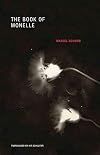
The Book of Monelle
by Marcel Schwob
On This Page
Description
When Marcel Schwob published The Book of Monelle in French in 1894, it immediately became the unofficial bible of the French Symbolist movement, admired by such contemporaries as Ste?phane Mallarme?, Alfred Jarry and Andre? Gide. A carefully woven assemblage of legends, aphorisms, fairy tales and nihilistic philosophy, it remains a deeply enigmatic and haunting work more than a century later, a gathering of literary and personal ruins written in a style that evokes both the Brothers Grimm show more and Friedrich Nietzsche. The Book of Monelle was the result of Schwob's intense emotional suffering over the loss of his love, a "girl of the streets" named Louise, whom he had befriended in 1891 and who succumbed to tuberculosis two years later. Transforming her into the innocent prophet of destruction, Monelle, Schwob tells the stories of her various sisters: girls succumbing to disillusionment, caught between the misleading world of childlike fantasy and the bitter world of reality. This new translation reintroduces a true fin-de-sie?cle masterpiece into English. A secret influence on generations of writers, from Guillaume Apollinaire and Jorge Luis Borges to Roberto Bolan?o, Marcel Schwob (1867-1905) was as versed in the street slang of medieval thieves as he was in the poetry of Walt Whitman (whom he translated into French). Paul Vale?ry and Alfred Jarry both dedicated their first books to him, and he was the uncle of Surrealist photographer Claude Cahun. show lessTags
Recommendations






























Member Reviews
This short but impressive and important work makes Marcel Schwob a sort of fin de siecle decadent successor to Dante and Colonna, constructing a significant mystical text in memory of the lost Beatrice-Polia-Monelle. Wakefield Press, the publisher of the 2012 English translation, says that it was adopted as the "unofficial bible of the French symbolist movement." The book is divided into three sections, each in a different style.
"The Voice of Monelle" is the first part, consisting of spiritual imperatives. It reads almost like Kahlil Gibran on an absinthe bender. It is excellent stuff for anyone who wants another installment of Aleister Crowley's "Liber Cheth," although Schwob was of course writing seventeen years before Crowley's show more reception of that "secret of the Holy Graal."
"The Sisters of Monelle" are a collection of narrative vignettes, closer in form to Schwob's previously-published work in The King in the Golden Mask. But these all feature lost or wayward girls for protagonists. Each story is named for a moral or psychological quality, such as "The Perverse," "The Disappointed," "The Faithful," and "The Numb," suggesting that they are allegories in which each story's girl represents a different plight of the unenlightened soul.
"Monelle" per se is the third part, consisting of six short chapters in the voice of an unnamed narrator, and this section is presumably the one that draws most directly on Schwob's personal memory of the girl Louise whom he had lost to tuberculosis in 1893. Even so, it is surreal and repeatedly floats across an ambiguous threshold of mortality.
Translator Kit Schluter's afterword contains both a general biography of Schwob and a more particular study of his relationship with Louise, including a facsimile of the sole surviving correspondence from her to the writer, and an account of the composition of Monelle and her book. show less
"The Voice of Monelle" is the first part, consisting of spiritual imperatives. It reads almost like Kahlil Gibran on an absinthe bender. It is excellent stuff for anyone who wants another installment of Aleister Crowley's "Liber Cheth," although Schwob was of course writing seventeen years before Crowley's show more reception of that "secret of the Holy Graal."
"The Sisters of Monelle" are a collection of narrative vignettes, closer in form to Schwob's previously-published work in The King in the Golden Mask. But these all feature lost or wayward girls for protagonists. Each story is named for a moral or psychological quality, such as "The Perverse," "The Disappointed," "The Faithful," and "The Numb," suggesting that they are allegories in which each story's girl represents a different plight of the unenlightened soul.
"Monelle" per se is the third part, consisting of six short chapters in the voice of an unnamed narrator, and this section is presumably the one that draws most directly on Schwob's personal memory of the girl Louise whom he had lost to tuberculosis in 1893. Even so, it is surreal and repeatedly floats across an ambiguous threshold of mortality.
Translator Kit Schluter's afterword contains both a general biography of Schwob and a more particular study of his relationship with Louise, including a facsimile of the sole surviving correspondence from her to the writer, and an account of the composition of Monelle and her book. show less
A book of genuinely inexorable power. What begins as a series of cryptic commandments unfolds into a grand metaphysical tragedy of loss and, above all, of the way in which the suffering of little girls and the destruction of childhood props up the adult world of certainty and pain. In the end, the ultimate tragedy of adulthood is the inability to let go.
As per usual with Wakefield Press, an excellent edition of an obscure and special book, well-translated and with a fantastic afterword.
As per usual with Wakefield Press, an excellent edition of an obscure and special book, well-translated and with a fantastic afterword.
A wondrous little book that begins with a bold philosophical outlook; then the narrative turns beautifully fairy-tale, before ending with darkling recollections of regret and sorrow.
It's all about Monelle, and the author's (perhaps fantasized) memories of her character and mysterious existence.
Enchanting and haunting in equal measure.
It's all about Monelle, and the author's (perhaps fantasized) memories of her character and mysterious existence.
Enchanting and haunting in equal measure.
An enigmatic novella.
Part One offers Monelle's philosophy of life. The tone brought to mind Nietzsche's Zarathustra. There is stark wisdom here that demands to be re-read.
Part Two contains snapshots of how Monelle might have been away from the dark city streets. Some of these narratives read like fairy tales. The girl at the heart of each short story seems sad yet adventurous, desiring escape.
Part Three delves into the mind of the despairing author as he attempts to make sense of his beloved's death.
An enticing book of evocative prose. Dark, lucid, memorable.
Part One offers Monelle's philosophy of life. The tone brought to mind Nietzsche's Zarathustra. There is stark wisdom here that demands to be re-read.
Part Two contains snapshots of how Monelle might have been away from the dark city streets. Some of these narratives read like fairy tales. The girl at the heart of each short story seems sad yet adventurous, desiring escape.
Part Three delves into the mind of the despairing author as he attempts to make sense of his beloved's death.
An enticing book of evocative prose. Dark, lucid, memorable.
The immortal testament to the young girl who tells you that when you let her go, if you lose her, she will come again; and if you lose her again, she will come again; and if you keep losing her, as you must, she'll keep coming back, as she must; so you remain connected (in the manner of a kinetoscope) and you can't stay together but you can gently play together; and even when something called TB has seemingly taken her where she can never come back; she can come back; and does.
Beautifully completed by the Translator's Afterword (thanks to Kit Schluter).
Beautifully completed by the Translator's Afterword (thanks to Kit Schluter).
A moving, beautifully written, though very depressing book. Highly recommended. Look forward to reading the other translations by Schluter.
The afterword by the translator was useful and insightful.
The afterword by the translator was useful and insightful.
Beautifully melancholic. I was in tears as I finished.
Members
- Recently Added By
Lists

Top Five Books of 2022
736 works; 272 members

Books We Love to Reread
688 works; 296 members

Llibres que he llegit el 2024
77 works; 1 member

Favorite Books in Translation
320 works; 133 members

Wakefield Press Ranked
20 works; 1 member
Author Information

88+ Works 1,555 Members
Some Editions
Series
Belongs to Publisher Series
Work Relationships
Is contained in
Common Knowledge
- Canonical title*
- Il libro di Monelle
- Original title
- Le livre de Monelle
- Original publication date
- 1894
- Original language*
- Francés
*Some information comes from Common Knowledge in other languages. Click "Edit" for more information.
Classifications
- Genres
- Fiction and Literature, General Fiction
- DDC/MDS
- 843.8 — Literature & rhetoric French & related literatures French fiction Later 19th century 1848–1900
- LCC
- PQ2423 .S8 .L513 — Language and Literature French, Italian, Spanish and Portuguese literatures French literature Modern literature 19th century
- BISAC
Statistics
- Members
- 336
- Popularity
- 93,712
- Reviews
- 9
- Rating
- (4.22)
- Languages
- 11 — Danish, English, Estonian, French, German, Greek, Italian, Portuguese, Slovak, Spanish, Swedish
- Media
- Paper, Ebook
- ISBNs
- 30
- ASINs
- 14