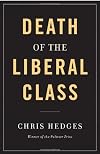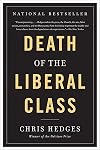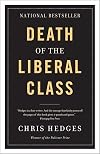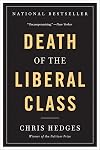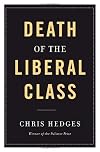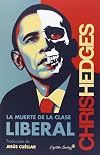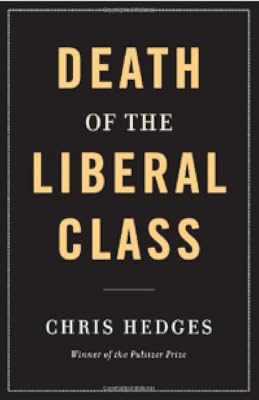
Death of the Liberal Class
by Chris Hedges
On This Page
Description
The liberal class permits us to define ourselves as a good and noble people and offers a safety valve for popular frustrations and discontentment by discrediting those who talk of profound structural change. The Death of the Liberal Class examines the failure of the liberal class to confront the rise of the corporate state and the consequences of a bankrupt liberalism, making the liberal class irrelevant to society at large and ultimately the corporate power elite they once served.Tags
Recommendations


Member Reviews
Just great as always from Chris Hedges. Not a book for optimists or people who hold out hope that humanity is not on a speeding train into oblivion. It is a full throated denunciation of so called liberals in the United States and their utter failure to represent the working class, slow down the rape of the ecosystem, or so much as be anything but whinier versions of conservatives who bow to the status quo at every possible turn. Read it!
Well, *that* was depressing. "Death of the Liberal Class" is probably the most unrelentingly grim polemic I've ever read. It could usefully be subtitled: "Why America Is Going to Hell in a Handbasket, and There's Nothing To Be Done About It."
In the author's view, the "liberal class" in America (which he never defines, incidentally) has abdicated its role of checking the worst excesses of power, to the point that it now effectively serves as a prop to the corporate state that will prove to be America's downfall. He draws parallels with Nazi Germany and Tsarist Russia. Some of what he's written is totally, terrifyingly plausible. His argument in a nutshell? "We stand on the verge of one of the bleakest periods in human history, when the show more bright lights of civilizations will blink out and we will descend for decades, if not centuries, into barbarity."
And yet...I was left to wonder: if things are really as bad as he says they are, shouldn't his voice have been silenced? By his own reasoning, this book should never have seen the light of day, let alone have been feted by the liberal class it excoriates, and indeed, been awarded a Pulitzer Prize. show less
In the author's view, the "liberal class" in America (which he never defines, incidentally) has abdicated its role of checking the worst excesses of power, to the point that it now effectively serves as a prop to the corporate state that will prove to be America's downfall. He draws parallels with Nazi Germany and Tsarist Russia. Some of what he's written is totally, terrifyingly plausible. His argument in a nutshell? "We stand on the verge of one of the bleakest periods in human history, when the show more bright lights of civilizations will blink out and we will descend for decades, if not centuries, into barbarity."
And yet...I was left to wonder: if things are really as bad as he says they are, shouldn't his voice have been silenced? By his own reasoning, this book should never have seen the light of day, let alone have been feted by the liberal class it excoriates, and indeed, been awarded a Pulitzer Prize. show less
This book covers the decay of liberalism from World War 1 through the rest of the 20th Century. Liberals started off championing the working class but degenerated into a lame "rising tide floats all boats" support for the rich and powerful. This shift was basically driven by a desire for liberals to save their own necks from various threats such as the McCarthy black list or just getting turned down for academic tenure.
I have read a bit about much of this history and find great resonance between my own outlook and that of Hedges. Still I found this book to be rather gut-wrenching. The elite has such power to suppress threats to its own privileges! Hedges covers this history in considerable detail, from Eugene Debs to Ralph Nader.
Hedges show more does have some constructive suggestions. The way forward is to build alternative structures starting at the grassroots level and pretty much ignoring the existing power structures. Of course there are rich traditions from which we can draw. Hedges is a Christian which comes through in the book but not in an overbearing way. We really need to pull resources from all the spiritual traditions of the world! show less
I have read a bit about much of this history and find great resonance between my own outlook and that of Hedges. Still I found this book to be rather gut-wrenching. The elite has such power to suppress threats to its own privileges! Hedges covers this history in considerable detail, from Eugene Debs to Ralph Nader.
Hedges show more does have some constructive suggestions. The way forward is to build alternative structures starting at the grassroots level and pretty much ignoring the existing power structures. Of course there are rich traditions from which we can draw. Hedges is a Christian which comes through in the book but not in an overbearing way. We really need to pull resources from all the spiritual traditions of the world! show less
Some valid criticism of the "liberal elite", but also a lot of self-righteous ranting against his former employer, and a withering condemnation of anyone who dares to disagree with him. In addition to the usual suspects of politicians, corporations, the Church, mass media, and Hollywood, he has nothing nice to say about beatniks, hippies, the Black Panthers, modern art, university tenure, 1960's radicals, academics, multiculturalism, political correctness, Herman Hesse, and Oprah, reserving his most emphatic vitriol for Israel, of course.
It's not quite all negative, though. He has nice things to say about several courageous journalists, Malcom X, Martin Luther King, Ralph Nader, Howard Zinn, Daniel Berrigan, Richard Goldstone, and show more quotes Camus and Chomsky seemingly dozens of times.
The final chapter starts out with a doomer diatribe focused on climate change and what he sees as the inevitable collapse of society and possibly the complete extinction of the human race, culminating in a post-apocalyptic neo-feudal totalitarian state, before bizarrely shifting focus to how the Internet is ruining our culture, and wrapping up with a brief call to enter a permanent state of rebellion against the Corporate State, without providing any real details on what they would entail in practice.
Aside from the obvious irony of an affluent Ivy League educated white Christian man complaining about how unfairly he's been treated, my biggest complaint is his refusing to differentiate at all between the "liberal class" and the "corporate elite." The first several chapters of the book document the decline of the power of progressive liberalism in the first half of the 20th century (after peaking with the labor union movement prior to WWI), which was interesting from a historical perspective. But as he moved to modern times, the lumping together of arch-conservative right-wing republicans with bleeding-heart liberal democrats (e.g. Carter, Clinton, and Obama not any different from Nixon, Reagan, Bush) into a single group seems a bit of a stretch. show less
It's not quite all negative, though. He has nice things to say about several courageous journalists, Malcom X, Martin Luther King, Ralph Nader, Howard Zinn, Daniel Berrigan, Richard Goldstone, and show more quotes Camus and Chomsky seemingly dozens of times.
The final chapter starts out with a doomer diatribe focused on climate change and what he sees as the inevitable collapse of society and possibly the complete extinction of the human race, culminating in a post-apocalyptic neo-feudal totalitarian state, before bizarrely shifting focus to how the Internet is ruining our culture, and wrapping up with a brief call to enter a permanent state of rebellion against the Corporate State, without providing any real details on what they would entail in practice.
Aside from the obvious irony of an affluent Ivy League educated white Christian man complaining about how unfairly he's been treated, my biggest complaint is his refusing to differentiate at all between the "liberal class" and the "corporate elite." The first several chapters of the book document the decline of the power of progressive liberalism in the first half of the 20th century (after peaking with the labor union movement prior to WWI), which was interesting from a historical perspective. But as he moved to modern times, the lumping together of arch-conservative right-wing republicans with bleeding-heart liberal democrats (e.g. Carter, Clinton, and Obama not any different from Nixon, Reagan, Bush) into a single group seems a bit of a stretch. show less
Chris Hedges is still too young for this old man's rant about the present malaise of the United States of America. His disenchantment dates back to 2003 when his anti-Iraq War advocacy led to his separation from the warmongering New York Times. Prior to that Hedges had covered the Middle East and the Balkans for the New York Times, in the middle of the sausage making of foreign politics reporting for an American audience. The moral failure (Hedges also studied divinity!) of so many of his liberal friends and institutions in standing fast against a blatantly unjust war underlies much of the writing of this philippic against the Liberals.
He never discusses what constitutes liberalism and the Liberal Class. With him, liberalism is sort of show more a warm feeling of doing the right often progressive thing. If he had discussed this, he would have noted that US Liberals are a fairly conservative bunch in a global view. After all, the US founding fathers were liberals. They wanted "life, liberty and the pursuit of happiness", mostly for themselves. They and their descendants were and are quite happy to keep others in bondage or in wage slavery. Otherwise, they would pay the army of cheap labor, the Wallmart greeters and packagers, the bellhops and concierges, the shoe shiners and ushers, gardeners and nannies a decent wage including health care. The lack of descent universal health care, education and transport infrastructure is no accident but an effect of a government of the rich, by the rich and for the rich. The United States of America has, from the beginning, been horribly afraid of "liberté, égalité, fraternité". Solidarity is un-American (only charity is acceptable if asked for by meek applicants).
Just as most European liberals such as the German FDP are the party of the rich and the professionals (managers, lawyers, doctors), the US Democrats mostly represent elite interests. There is no Liberal Class, they are part of the ruling class with a more centric outlook. Thus, it is no wonder that the progressives, Hedges so admires, are mostly left out in the cold, shut out of the governing process and have to fight tooth and nail to get even a piece of progressive legislation enacted. Hedges' stories about the failure of his heroes from the First World War on to achieve progressive successes instantly falsifies his titular claim of the death of the Liberal Class. While Hedges interviewed Zinn and Chomsky, he did not get their message that the US bipolar political organization is a scam. The New York Times does not write for the masses but a tiny elite. With a circulation of one million, it is directed at and reaches the small sliver of Americans who decide. For most Americans, politics is just a form of entertainment (Hollywood for ugly people). Hedges' chapter on politics as spectacle is his best, a reworking of the classic panem et circenses charge adapted to a Dancing with the Stars USA.
His rant fails to present countermeasures. His attack on the internet, technology and globalization is severely outdated. The new media are just the path to outflank the gate-keeping New York Times and the other media conglomerates. Unfortunately and ultimately, it is the passivity of the general population, and the poor among them, that prevents reform. It is not a lack of activists (Hedges' main charge) but a failure of resonance, of getting people off their couches, that keeps the plutocracy in power.
Overall, given his quite thoughtful interviews, I expected a deeper, more reasoned book. Enjoyable as a passionate but fruitless rant, thus itself one piece of the typical inconsequential output of the Liberal Class. show less
He never discusses what constitutes liberalism and the Liberal Class. With him, liberalism is sort of show more a warm feeling of doing the right often progressive thing. If he had discussed this, he would have noted that US Liberals are a fairly conservative bunch in a global view. After all, the US founding fathers were liberals. They wanted "life, liberty and the pursuit of happiness", mostly for themselves. They and their descendants were and are quite happy to keep others in bondage or in wage slavery. Otherwise, they would pay the army of cheap labor, the Wallmart greeters and packagers, the bellhops and concierges, the shoe shiners and ushers, gardeners and nannies a decent wage including health care. The lack of descent universal health care, education and transport infrastructure is no accident but an effect of a government of the rich, by the rich and for the rich. The United States of America has, from the beginning, been horribly afraid of "liberté, égalité, fraternité". Solidarity is un-American (only charity is acceptable if asked for by meek applicants).
Just as most European liberals such as the German FDP are the party of the rich and the professionals (managers, lawyers, doctors), the US Democrats mostly represent elite interests. There is no Liberal Class, they are part of the ruling class with a more centric outlook. Thus, it is no wonder that the progressives, Hedges so admires, are mostly left out in the cold, shut out of the governing process and have to fight tooth and nail to get even a piece of progressive legislation enacted. Hedges' stories about the failure of his heroes from the First World War on to achieve progressive successes instantly falsifies his titular claim of the death of the Liberal Class. While Hedges interviewed Zinn and Chomsky, he did not get their message that the US bipolar political organization is a scam. The New York Times does not write for the masses but a tiny elite. With a circulation of one million, it is directed at and reaches the small sliver of Americans who decide. For most Americans, politics is just a form of entertainment (Hollywood for ugly people). Hedges' chapter on politics as spectacle is his best, a reworking of the classic panem et circenses charge adapted to a Dancing with the Stars USA.
His rant fails to present countermeasures. His attack on the internet, technology and globalization is severely outdated. The new media are just the path to outflank the gate-keeping New York Times and the other media conglomerates. Unfortunately and ultimately, it is the passivity of the general population, and the poor among them, that prevents reform. It is not a lack of activists (Hedges' main charge) but a failure of resonance, of getting people off their couches, that keeps the plutocracy in power.
Overall, given his quite thoughtful interviews, I expected a deeper, more reasoned book. Enjoyable as a passionate but fruitless rant, thus itself one piece of the typical inconsequential output of the Liberal Class. show less
Overwhelming, exhausting -- this book could be divided into 17 books, it covered so much. Brilliant. He dares speak the truths that seldom, sometimes never, get into print. I have never devoted such a long, intesive time (per page) on any book. The historical views of the US labour movement pre WWII were fascinating. His firing from the NY Times was very intriguing. And I could go on for weeks. I must read it over -- too much to absorb. And the last dozen pages which I've just finished will make for an uneasy sleep tonight: The stark outline of humanity's immanent demise which we, as heedless consumers; and corporations, now the unchallengable demonic rulers of the planet, have brought about by disregarding the limited capacities of our show more earth & air.
. . . to be continued . . . [I'm ashamed to stick this little "review" in with some of the magnificent ones on this website] show less
. . . to be continued . . . [I'm ashamed to stick this little "review" in with some of the magnificent ones on this website] show less
This book describes that when the Liberal class no longer functions, we are in trouble. Chris Hedges details that the death of the liberal class removes an important check and balance against the powers that be. I can see what he is talking about all around me. The simple fact is, if things remain the same, the working and middle classes are getting really ticked-off. We have politicians and leaders that no longer work for us. They are controlled by American corporations, like Halliburton, that steals from U.S. citizens, and it is allowed to. It is time to remove corporate protection for officers of corporations, and we should not allowed any corporation or business to contribute to politicians or fund political action committees, and show more lobbyists should be removed from congress. The forefathers of this country were terrified of corporations, and so should we be. They own this country and our politicians. If nothing changes our democracy is done. The middle and working classes are beginning to hate democratic institutions and the top one percent. Something needs to be done now, before it is to late.
This is the book to really start you thinking. show less
This is the book to really start you thinking. show less
Members
- Recently Added By
Published Reviews
added by jdpwash
Lists

Exposing the Man Behind the Curtain
28 works; 3 members
Author Information

31+ Works 7,667 Members
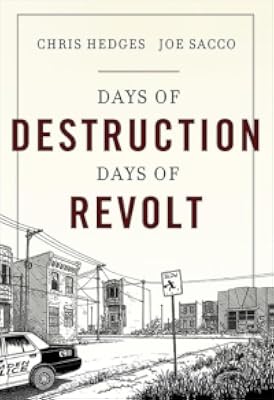
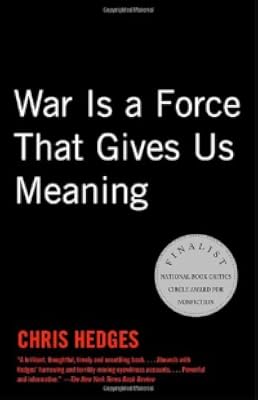
Chris Hedges is a graduate of Harvard Divinity School and a former Pulitzer Prize-winning journalist for The New York Times. He is the author of eleven books, including the New York Times bestsellers War Is a Force That Gives Us Meaning, American Fascists, and Days of Destruction, Days of Revolt, which he coauthored with Joe Sacco.
Awards and Honors
Common Knowledge
- Original publication date
- 2010
- Epigraph
- At any given moment there is an orthodoxy, a body of ideas
which it is assumed that all right-thinking people will
accept without question. It is not exactly forbidden to say
this, that or the other, but it is "not ... (show all)done" to say it, just as in
mid-Victorian times it was "not done" to mention trousers
in the presence of a lady. Anyone who challenges the prevailing orthodoxy finds himself silenced with surprising effectiveness. A genuinely unfashionable opinion is almost never
given a fair hearing, either in the popular press or in the
highbrow periodicals.
—George Orsell, "Freedom of the Press" - Dedication
- For Eunice,
Tv mihi cvrarvm reqvies, tv nocte vel atra lvmen,
et in solis tv mihi tvrba locis. - First words
- Ernest Logan Bell, an unemployed twenty-five-year-old Marine Corps veteran, walks along Route 12 in Upstate New York.
- Last words
- (Click to show. Warning: May contain spoilers.)And, for now, this is the only victory possible.
Classifications
- Genres
- Nonfiction, Politics and Government, General Nonfiction, History
- DDC/MDS
- 320.510973 — Society, government, & culture Political science Types of Government Political ideologies Liberalism Biography And History North America
- LCC
- JC574.2 .U6 .H43 — Political Science Political theory Political theory. The state. Theories of the state Purpose, functions, and relations of the state
- BISAC
Statistics
- Members
- 634
- Popularity
- 45,879
- Reviews
- 13
- Rating
- (3.98)
- Languages
- English, French, Russian, Spanish
- Media
- Paper, Audiobook, Ebook
- ISBNs
- 16
- UPCs
- 1
- ASINs
- 9