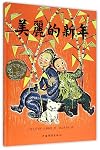
Mei Li
by Thomas Handforth
On This Page
Description
After spending an eventful day at the fair held on New Year's Eve, Mei Li arrives home just in time to greet the Kitchen God.Tags
Recommendations









Member Recommendations
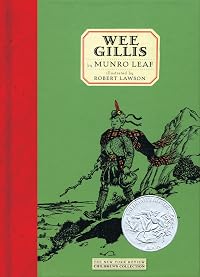
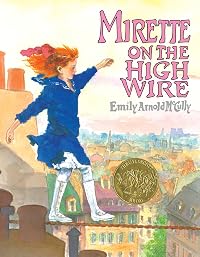
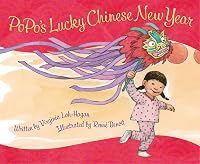
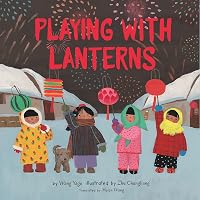
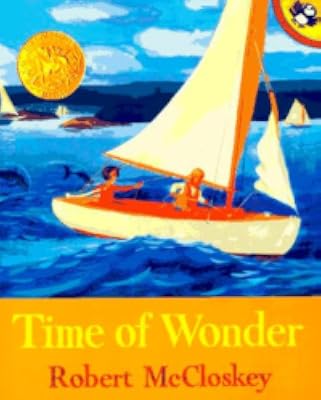
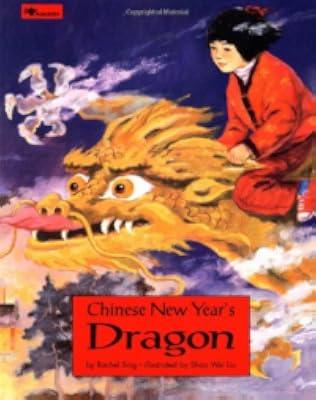
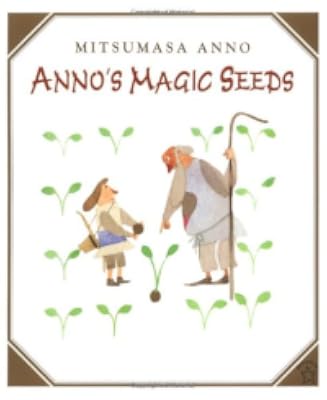
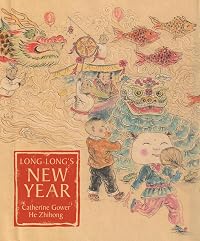
muumi Long-Long celebrates Chinese New Year in the 1990s; Mei Li is set during the 1930s. Both are faithful depictions of the culture and the comparison is fascinating.
Member Reviews
Young Mei Li wants to accompany her brother San Yu to the New Year Fair in the nearby city in this Caldecott Medal-winning picture-book from 1938 - it won the medal in 1939, the second year in which the award was given out - sneaking away from her walled home, and winning a ride by exchanging one of her precious marbles for the privilege. Once there, she enjoys many of the sights and activities of the day - buying firecrackers (which San Yu sets off), riding circus ponies, having her fortune told - before meeting up with Uncle Wang and returning home. It is only then that she learns the meaning of the young priest's prediction that she would "rule over a kingdom."
It is pure serendipitous good timing that I picked up this second show more Caldecott Medal-winner just now, as there is an article about it in the current issue of The Horn Book Magazine - described as the first of a series of planned articles celebrating the history of the Caldecott Medal, "Mei Li and the Making of a Picture Book" was written by Kathleen T. Horning, and is accompanied by the additional online material: Thomas Handforth, China, and the Real Mei Li - and I gained quite a bit of useful background information about the book and its creator from it. According to Horning, Mei Li is somewhat atypical of early Caldecott winners, in that it is a genuine picture-book, rather than an illustrated book - the early award committees had a period of adjustment, as they learned the difference between the two - and is also an innovative entry in the genre as a whole, featuring illustrations that cross two-page spreads, rather than being confined to a single page. The author/artist who created the book, Thomas Handforth, was the recipient of a Guggenheim Fellowship, and spent a number of years working in China, basing this story on a young girl that he knew while there.
I was surprised at how much I enjoyed Mei Li, having approached it with the expectation - largely the result of so many other vintage children's titles that I have read - that it might contain some racially or culturally problematic material. I didn't see anything here to offend, in that respect - I didn't get a feeling of condescension, or notice any strange "Oriental" stereotypes - although the gender norms did grate a bit. Mei Li is an adventurous little girl, but when all is said and done, the ending of the story emphasizes the fact that the domestic sphere is where she belongs. I also thought the story was a little uneven at times, jumping from one activity to the next. Having said that, this was an engaging enough story, and the black and white artwork was quite charming! The level of detail is quite amazing, and I thought the human faces were particularly expressive and well done. Recommended to readers who are interested in vintage picture-books, or who are investigating older Caldecott titles. show less
It is pure serendipitous good timing that I picked up this second show more Caldecott Medal-winner just now, as there is an article about it in the current issue of The Horn Book Magazine - described as the first of a series of planned articles celebrating the history of the Caldecott Medal, "Mei Li and the Making of a Picture Book" was written by Kathleen T. Horning, and is accompanied by the additional online material: Thomas Handforth, China, and the Real Mei Li - and I gained quite a bit of useful background information about the book and its creator from it. According to Horning, Mei Li is somewhat atypical of early Caldecott winners, in that it is a genuine picture-book, rather than an illustrated book - the early award committees had a period of adjustment, as they learned the difference between the two - and is also an innovative entry in the genre as a whole, featuring illustrations that cross two-page spreads, rather than being confined to a single page. The author/artist who created the book, Thomas Handforth, was the recipient of a Guggenheim Fellowship, and spent a number of years working in China, basing this story on a young girl that he knew while there.
I was surprised at how much I enjoyed Mei Li, having approached it with the expectation - largely the result of so many other vintage children's titles that I have read - that it might contain some racially or culturally problematic material. I didn't see anything here to offend, in that respect - I didn't get a feeling of condescension, or notice any strange "Oriental" stereotypes - although the gender norms did grate a bit. Mei Li is an adventurous little girl, but when all is said and done, the ending of the story emphasizes the fact that the domestic sphere is where she belongs. I also thought the story was a little uneven at times, jumping from one activity to the next. Having said that, this was an engaging enough story, and the black and white artwork was quite charming! The level of detail is quite amazing, and I thought the human faces were particularly expressive and well done. Recommended to readers who are interested in vintage picture-books, or who are investigating older Caldecott titles. show less
Mei Li is the youngest child in a loving family. She’s easy to spot with her “candle stick” pigtail atop her head. One day she goes with her brother to the New Year Fair. They have many adventures and eat wonderful treats, but almost miss getting back through the city gates!
Originally published in 1938, this won the 1939 Caldecott medal. Wonderful illustrations bring the Chinese cultural celebration to life. This is a great way to introduce very young children to a different country and its culture. The children get into a few scrapes, but all ends well.
Originally published in 1938, this won the 1939 Caldecott medal. Wonderful illustrations bring the Chinese cultural celebration to life. This is a great way to introduce very young children to a different country and its culture. The children get into a few scrapes, but all ends well.
For a book written and published in 1938, the illustrations are great, show a lot of detail, and honestly made me want to learn more. That's where the bulk of this rating stems because the story is...enh.
Mei Li wants to go to the New Year's Fair, but what can a girl do there? This is an old story, about a precocious girl who wants to have adventures. She eventually learns that her place is in the home. Because of the cultural values at the time this book was written, it doesn't translate well with today's societal values. Most parents and teachers want to instill a sense of pride in young females, and the time for books like is long past.
This review also appears on Barba Non DB.
Mei Li wishes to go to the New Year Fair in the city, but little girls always have to stay home. Undaunted, she sneaks out to visit the city, following her brother. What adventures await?
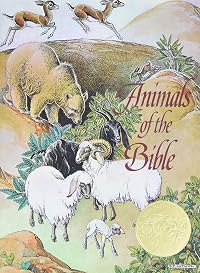
Thomas Handforth's Mei Li is the winner of the 1939 Caldecott Medal. Unlike the previous winner, Animals of the Bible, Mei Li is a real picture book.
The story centers around a young Chinese girl, Mei Li, who is unsatisfied with remaining at home, while the New Year Fair is going on. "If I always stay at home," she asks, "what can I be good for?" So off she goes to have adventures like her brother, San Yu. He wonders what a girl could do at the fair, but she bribes him to take her with him, all the same.
The fair show more is as exciting as Mei Li had hoped, and she shows her doubting brother all the things that a girl can do, at the fair. Looking at a group of circus performers, she tells him, "They can walk on stilts. They can balance on a tight-rope. They can throw pots and pans in the air with their feet. And so can I!"
Mei Li doesn't juggle pots and pans with her feet, but she does ask a strong circus girl to lift her upside-down in the palm of her hand; she feeds a bear a bit of bean-cake; and she dances on the back of a circus pony. Later, a fortune teller predicts that Mei Li will rule over a kingdom--naturally, she believes him. Soon after, they must hurry home, so they will be in time to greet the Kitchen God.
When she returns home, Mei Li's mother refers to her as "the princess who rules our hearts." She is surely a princess, but what sort of kingdom will she rule over? That night, the Kitchen God explains:
Mei Li is based on Handforth's experiences while living in China for six years, beginning in 1931, the characters and drawings are based on people he knew, and the titular heroine is based on Pu Mei Li, a four-year-old girl he met there. Much more information about this, including a photograph of the real Mei Li holding Handforth's picture book, can be found in this article from The Horn Book Magazine by Kathleen Horning (who, coincidentally, wrote From Cover to Cover: Evaluating and Reviewing Children's Books, which I read almost exactly two years ago).
The illustrations are in ink, done with a brush, which Handforth felt better captured the spirit of China. Few of the illustrations feature any background, but the figures represented are generally very dynamic. The book does feature a number of two-page spreads, varying text positioning depending on the artwork. The illustrations depict the actual scenes in the book, making Mei Li much more of a 'real' picture book than its predecessor for the Caldecott Medal.
Mei Li has been criticized for sexism. Not without grounds: Mei Li is told that her 'kingdom' is the home, and the book ends with a poem extolling the virtues of a woman who keeps a good house:
Furthermore, Mei Li is shown to be frightened of fireworks, allowing San Yu to set them off while she plugs her ears, and she gives her last lucky penny to San Yu to throw at a bell (for the promise of money all year), since she is sure that she could never hit it.
I think these criticisms are a little misguided; at least, they don't look at the whole picture. Compare what Mei Li does at the fair to what San Yu does: while Mei Li balances upside down on a circus performer's hand, San Yu dresses up as a wise man for a play; while Mei Li feeds a real bear a cake, to show her bravery, San Yu pretends to hunt a lion that is really two boys with a mask; Mei Li dances on the back of a prancing horse, after which San Yu throws her penny at a bell and goes off to buy a kite (a fake hawk, which he later uses to frighten Mei Li). Mei Li's adventures at the fair are real, and San Yu's are merely imaginary. Certainly it is Mei Li who comes off best in their little competition!
Too, Mei Li gives her first lucky penny to a beggar girl she meets when entering the city, and it's that girl who holds the gates open so that she can leave the city and return home to greet the Kitchen God, "And even five policemen and five soldiers could not force her away until Mei Li was through the gate." Not so easily cowed, this girl!
Finally, though the statement of the Kitchen God that the house is Mei Li's kingdom may be reinforcing the domestic role of women, Mei Li responds that it will do "for a while, anyway", which also means that eventually, it won't be enough. And Handforth wrote, of the real Mei Li:
Certainly some older children's books do not stand the test of time, as cultural values march on (The Five Chinese Brothers or Shen of the Sea, both coincidentally also dealing with China, are examples of this, for different reasons), but I wouldn't fear to recommend Mei Li.
Relatively little is to be found online about this book or its author. There is some other material from The Horn Book Magazine, linked above, including the magazine's contemporary review of the book, written by Elizabeth Coatsworth, originally published in the July-August 1939 issue. The Art Institute of Chicago, The Smithsonian American Art Museum, and The Seattle Public Library Northwest Art Collection each provide a few samples of Handforth's other art, including one picture which must (I think) have been the original model for a scene from Mei Li.
Altogether, I find Mei Li to be a much worthier recipient of the Caldecott Medal than its predecessor, and a good book, besides. I hope that the later recipients continue more in this vein! show less
Mei Li wishes to go to the New Year Fair in the city, but little girls always have to stay home. Undaunted, she sneaks out to visit the city, following her brother. What adventures await?
Thomas Handforth's Mei Li is the winner of the 1939 Caldecott Medal. Unlike the previous winner, Animals of the Bible, Mei Li is a real picture book.
The story centers around a young Chinese girl, Mei Li, who is unsatisfied with remaining at home, while the New Year Fair is going on. "If I always stay at home," she asks, "what can I be good for?" So off she goes to have adventures like her brother, San Yu. He wonders what a girl could do at the fair, but she bribes him to take her with him, all the same.
The fair show more is as exciting as Mei Li had hoped, and she shows her doubting brother all the things that a girl can do, at the fair. Looking at a group of circus performers, she tells him, "They can walk on stilts. They can balance on a tight-rope. They can throw pots and pans in the air with their feet. And so can I!"
Mei Li doesn't juggle pots and pans with her feet, but she does ask a strong circus girl to lift her upside-down in the palm of her hand; she feeds a bear a bit of bean-cake; and she dances on the back of a circus pony. Later, a fortune teller predicts that Mei Li will rule over a kingdom--naturally, she believes him. Soon after, they must hurry home, so they will be in time to greet the Kitchen God.
When she returns home, Mei Li's mother refers to her as "the princess who rules our hearts." She is surely a princess, but what sort of kingdom will she rule over? That night, the Kitchen God explains:
"This house is your kingdom and palace. Within its walls all living things are your loyal, loving subjects."
Mei Li sighed happily, "It will do for a while, anyway."
Mei Li is based on Handforth's experiences while living in China for six years, beginning in 1931, the characters and drawings are based on people he knew, and the titular heroine is based on Pu Mei Li, a four-year-old girl he met there. Much more information about this, including a photograph of the real Mei Li holding Handforth's picture book, can be found in this article from The Horn Book Magazine by Kathleen Horning (who, coincidentally, wrote From Cover to Cover: Evaluating and Reviewing Children's Books, which I read almost exactly two years ago).
The illustrations are in ink, done with a brush, which Handforth felt better captured the spirit of China. Few of the illustrations feature any background, but the figures represented are generally very dynamic. The book does feature a number of two-page spreads, varying text positioning depending on the artwork. The illustrations depict the actual scenes in the book, making Mei Li much more of a 'real' picture book than its predecessor for the Caldecott Medal.
Mei Li has been criticized for sexism. Not without grounds: Mei Li is told that her 'kingdom' is the home, and the book ends with a poem extolling the virtues of a woman who keeps a good house:
This is the thrifty princess,
Whose house is always clean,
No dirt within her kingdom
Is ever to be seen.
Her food is fit
For a king to eat,
Her hair and clothes
Are always neat.
Furthermore, Mei Li is shown to be frightened of fireworks, allowing San Yu to set them off while she plugs her ears, and she gives her last lucky penny to San Yu to throw at a bell (for the promise of money all year), since she is sure that she could never hit it.
I think these criticisms are a little misguided; at least, they don't look at the whole picture. Compare what Mei Li does at the fair to what San Yu does: while Mei Li balances upside down on a circus performer's hand, San Yu dresses up as a wise man for a play; while Mei Li feeds a real bear a cake, to show her bravery, San Yu pretends to hunt a lion that is really two boys with a mask; Mei Li dances on the back of a prancing horse, after which San Yu throws her penny at a bell and goes off to buy a kite (a fake hawk, which he later uses to frighten Mei Li). Mei Li's adventures at the fair are real, and San Yu's are merely imaginary. Certainly it is Mei Li who comes off best in their little competition!
Too, Mei Li gives her first lucky penny to a beggar girl she meets when entering the city, and it's that girl who holds the gates open so that she can leave the city and return home to greet the Kitchen God, "And even five policemen and five soldiers could not force her away until Mei Li was through the gate." Not so easily cowed, this girl!
Finally, though the statement of the Kitchen God that the house is Mei Li's kingdom may be reinforcing the domestic role of women, Mei Li responds that it will do "for a while, anyway", which also means that eventually, it won't be enough. And Handforth wrote, of the real Mei Li:
No Empress Dowager was ever more determined than she. A career is surely ordained for her, other than being the heroine of a children’s book.
Certainly some older children's books do not stand the test of time, as cultural values march on (The Five Chinese Brothers or Shen of the Sea, both coincidentally also dealing with China, are examples of this, for different reasons), but I wouldn't fear to recommend Mei Li.
Relatively little is to be found online about this book or its author. There is some other material from The Horn Book Magazine, linked above, including the magazine's contemporary review of the book, written by Elizabeth Coatsworth, originally published in the July-August 1939 issue. The Art Institute of Chicago, The Smithsonian American Art Museum, and The Seattle Public Library Northwest Art Collection each provide a few samples of Handforth's other art, including one picture which must (I think) have been the original model for a scene from Mei Li.
Altogether, I find Mei Li to be a much worthier recipient of the Caldecott Medal than its predecessor, and a good book, besides. I hope that the later recipients continue more in this vein! show less
Personal Review:
Mei Li is often told that she's just a girl and not valued. The story is somewhat fragmented and choppy. The action jumps from a scene with an acrobat to one with a bear to another with actors and yet another with circus performers and eventually with a skinny priest. In the end, her family comes looking for her and tells her that she is their princess when she lives within the walls of their house. If nothing else, Mei Li tells the tale of cultural values from long ago.
Even though it is dated, it still has the power to interest the children that read it. Set in 1939 China, the images and story presented here will last for all time. A beautiful little picture book full of classic illustrations.
Mei Li is often told that she's just a girl and not valued. The story is somewhat fragmented and choppy. The action jumps from a scene with an acrobat to one with a bear to another with actors and yet another with circus performers and eventually with a skinny priest. In the end, her family comes looking for her and tells her that she is their princess when she lives within the walls of their house. If nothing else, Mei Li tells the tale of cultural values from long ago.
Even though it is dated, it still has the power to interest the children that read it. Set in 1939 China, the images and story presented here will last for all time. A beautiful little picture book full of classic illustrations.
Young Mei Li disobeys her parents and the traditions of her society by following her brother into the walled city the morning before New Year's Day. The story takes place in China almost a century ago, and readers will delight in this little girl's adventure into the city as well as her attempts to leave the city before the gates close for the night! Mei Li is both curious and brave, and readers will relate to her attempts to prove herself worthy of the trip in her big brother's eyes. The realistic black and white illustrations coincide perfectly with the text, and young listeners will take their time absorbing the details of this foreign time and place. Both author and artist, Handforth lived in China for several years, and claimed show more that the story was based on a real Chinese girl. Beyond the Chinese cultural markers, children will identify with Mei Li's young spirit. A must for elementary school libraries and art libraries. show less
Members
- Recently Added By
Lists

Caldecott Medal Books
91 works; 15 members

Romalda Spalding's Writing Road To Reading
213 works; 3 members

Books Read in 2015
3,299 works; 126 members

Semicolon Reviews
38 works; 1 member
Author Information

2+ Works 279 Members
Awards and Honors
Common Knowledge
- Original publication date
- 1938
- People/Characters
- Mei Li; San Yu; Uncle Wang
- Important places
- China (North China)
- Important events
- Lunar New Year
- Epigraph
- We keep a dog to watch the house,
A pig is useful, too,
We keep a cat to catch a mouse,
But what can we do
With a girl like you? - First words
- In North china, near the Great Wall, is a city shut in by a Wall.
- Last words
- (Click to show. Warning: May contain spoilers.)Me Li sighed happily, "It will do for a while, anyway."
(Click to show. Warning: May contain spoilers.)Her food is fit
For a king to eat;
Her hair and clothes
Are always neat.
Classifications
Statistics
- Members
- 278
- Popularity
- 115,898
- Reviews
- 19
- Rating
- (3.36)
- Languages
- Chinese, English
- Media
- Paper
- ISBNs
- 5
- ASINs
- 12