On This Page
Description
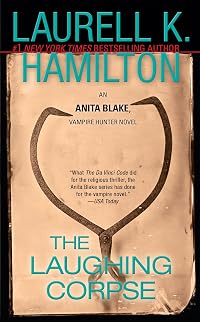
"The early Anita Blake novels find new life in trade paperback--as perfect collectibles for long-time fans or as great ways for new readers to sink their teeth into the series. In The laughing corpse, a creature from beyond the grave is tearing a swath of murder through St. Louis. And Anita will learn that there are some secrets better left buried--and some people better off dead."--Publisher's description.Tags
Recommendations


Member Reviews
Amazing, show stopping, spectacular, never the same, totally unique, completely not ever been done before, absolutely loved it! I was waffling between a 4 and 5 star for most of the read, but the ending! Jean-Claude! Like many a teen girl, I had a thing for vampires back in the day. I've read and watched a lot of vampire stories and Jean-Claude has to be the best vampire in vampire history. I sped through this audiobook in two days and the voice acting was phenomenal. ma petite, Jean Claude's nickname for Anita, sounded like a come on every time he said it. I've never been a big fan of slow burn romances or enemies to lovers tropes, but this one works so much for me. Anita and JC are more frenemies than enemies. Anita has really show more sensible character-driven reasons for not engaging in a romance with him and JC has very sensible political reasons for wanting Anita in his corner/bed. So the tension between them makes sense.
Anita is so incredibly flawed that it's actually amazing that I find her so likeable. Anita is way too concerned about being "one of the guys," she always believes the ends justify the means, she's a black-and-white thinker, and a total prude. It's easy to see that Hamilton is setting Anita up for big character growth in some or possibly all of these areas throughout the rest of her series. This book in particular deals with Anita getting a better grip on her own identity. Is Anita a monster or not? We don't get a simple answer to that question. But in this book Anita psychology abuses a mentally ill clairvoyant, absolutely terrifies a disabled prostitute, and kills three humans. Several times in this book Anita is asked or asks herself "would you have really pulled the trigger? could you really kill me? could I be pushed to kill her?" Anita is pushed to wonder if she's a good guy or a bad guy and eventually she has to realize she's something in between, which would break her black-and-white view of the world.
Thematically, I found this book interesting. In particular there was a conversation between Anita and a necromancer who committed human sacrifice. Anita is trying to understand how someone so good could be pushed to kill. And it made me wonder if we're all capable of killing, but each of us has our own specific level of a metaphorical push needed to get there. While most of us need an incredibly hard and persistent shove to get there, Anita seems to only need a brush of the shoulder.
As much as I found this an entertaining ride, I'm also interested in it from a craft perspective. The Anita Blake is such a long-running best-seller series, that it's actually fascinating to see how Hamilton set it up. I love that she pushed romance to the background and gave Anita so many ways in which to grow and mature. There are always a few different plots or cases going on to keep things moving quickly and big life/death themes are touched on but never hamfisted into the story. It's just really solid storytelling. show less
Anita is so incredibly flawed that it's actually amazing that I find her so likeable. Anita is way too concerned about being "one of the guys," she always believes the ends justify the means, she's a black-and-white thinker, and a total prude. It's easy to see that Hamilton is setting Anita up for big character growth in some or possibly all of these areas throughout the rest of her series. This book in particular deals with Anita getting a better grip on her own identity. Is Anita a monster or not? We don't get a simple answer to that question. But in this book Anita psychology abuses a mentally ill clairvoyant, absolutely terrifies a disabled prostitute, and kills three humans. Several times in this book Anita is asked or asks herself "would you have really pulled the trigger? could you really kill me? could I be pushed to kill her?" Anita is pushed to wonder if she's a good guy or a bad guy and eventually she has to realize she's something in between, which would break her black-and-white view of the world.
Thematically, I found this book interesting. In particular there was a conversation between Anita and a necromancer who committed human sacrifice. Anita is trying to understand how someone so good could be pushed to kill. And it made me wonder if we're all capable of killing, but each of us has our own specific level of a metaphorical push needed to get there. While most of us need an incredibly hard and persistent shove to get there, Anita seems to only need a brush of the shoulder.
As much as I found this an entertaining ride, I'm also interested in it from a craft perspective. The Anita Blake is such a long-running best-seller series, that it's actually fascinating to see how Hamilton set it up. I love that she pushed romance to the background and gave Anita so many ways in which to grow and mature. There are always a few different plots or cases going on to keep things moving quickly and big life/death themes are touched on but never hamfisted into the story. It's just really solid storytelling. show less
First read: late 2005
Re-read: June 2015
In the second Anita Blake: Vampire Hunter novel, Anita must investigate a series of gruesome murders. People are being torn apart by something and she suspects a powerful vaudin priestess of being behind it. In the meantime Anita finds herself being offered over one million dollars to perform a human sacrifice and raise a zombie almost 300 years old.
This book is even more well written, gorier, scarier, wittier and fast paced than Guilty Pleasures. It is hard to pick a favourite scene or a highlight from such an all-round strong book but the scene that always stays with me from this book is Anita waking up to find zombies in her apartment. That is the stuff of nightmares.
But then there is also the show more ultra-scary Dominga Salvador and her zombie experiments, Harold Gaynor the crippled millionaire and his hired thugs, the truly gory murder scenes, the tension-filled hunt for the murderous zombie in the suburban street...so many memorable moments.
Here we see Anita's first true growth in power.She is able to raise an entire graveyard of zombies and order them to murder her enemies. This is a truly chilling scene that shows what Anita is capable of and how scary she can be.
That dark side is juxtaposed with the lighter, more vulnerable Anita. We find out that she collects stuffed penguins and some of her internal dialogue made me laugh out loud. For example, during the sunset search for the murderous zombie Anita thinks:
"I wanted to say something brilliant. My God, Holmes, how did you know the zombie was hiding in the flower pot?" (pg 280)
There are no negative points to make here. Even on her worst day Laurell K. Hamilton is a skilled and talented author - and with The Laughing Corpse she is at the top of her game. show less
Re-read: June 2015
In the second Anita Blake: Vampire Hunter novel, Anita must investigate a series of gruesome murders. People are being torn apart by something and she suspects a powerful vaudin priestess of being behind it. In the meantime Anita finds herself being offered over one million dollars to perform a human sacrifice and raise a zombie almost 300 years old.
This book is even more well written, gorier, scarier, wittier and fast paced than Guilty Pleasures. It is hard to pick a favourite scene or a highlight from such an all-round strong book but the scene that always stays with me from this book is Anita waking up to find zombies in her apartment. That is the stuff of nightmares.
But then there is also the show more ultra-scary Dominga Salvador and her zombie experiments, Harold Gaynor the crippled millionaire and his hired thugs, the truly gory murder scenes, the tension-filled hunt for the murderous zombie in the suburban street...so many memorable moments.
Here we see Anita's first true growth in power.
That dark side is juxtaposed with the lighter, more vulnerable Anita. We find out that she collects stuffed penguins and some of her internal dialogue made me laugh out loud. For example, during the sunset search for the murderous zombie Anita thinks:
"I wanted to say something brilliant. My God, Holmes, how did you know the zombie was hiding in the flower pot?" (pg 280)
There are no negative points to make here. Even on her worst day Laurell K. Hamilton is a skilled and talented author - and with The Laughing Corpse she is at the top of her game. show less
Brace yourself for a book that takes you away from the boring and into a world of voodoo, deceit, and the terrifying threat of being controlled. “The Laughing Corpse” is the second book in the Anita Blake series. It follows Anita Blake, who has two roles: an animator and a paranormal consultant for the police. She helps solve homicides with supernatural elements.
Get ready for a narrative that explores the darkest corners of urban fantasy. It pushes the boundaries of the genre in unexpected ways, even for seasoned readers. This series has a dark noir atmosphere and a unique flair with satirical nuances.
While “Guilty Pleasures,” the first book in the series, saw Anita tangling with vampires, “The Laughing Corpse” thrusts her show more into the eerie realm of zombies. Hamilton knows how to build an incredible world. While adding her own spin, the author includes all the classic horror stuff, like vampires and zombies, and gives them specific rules. Zombies still crave living flesh, but Hamilton adds depth to them, going beyond the usual mindless image we have of them.
Amidst the dark backdrop of her story, Anita faces an encounter with a formidable voodoo priestess, a character who sends shivers down the spine of those in her presence. Even the feeling of safety, snug in bed, can’t protect one from the horrors lurking in the shadows. Death, it seems, can still creep through the cracks, uninvited.
"The Laughing Corpse" is a wild ride with twists and betrayals. Anita's friendships are tested and completely reshaped. Friends are put in a tough spot, thinking about doing things they never thought they would.
Read more at https://www.summonfantasy.com/reviews/the-laughing-corpse-shadows-of-the-voodoo-.... show less
Get ready for a narrative that explores the darkest corners of urban fantasy. It pushes the boundaries of the genre in unexpected ways, even for seasoned readers. This series has a dark noir atmosphere and a unique flair with satirical nuances.
While “Guilty Pleasures,” the first book in the series, saw Anita tangling with vampires, “The Laughing Corpse” thrusts her show more into the eerie realm of zombies. Hamilton knows how to build an incredible world. While adding her own spin, the author includes all the classic horror stuff, like vampires and zombies, and gives them specific rules. Zombies still crave living flesh, but Hamilton adds depth to them, going beyond the usual mindless image we have of them.
Amidst the dark backdrop of her story, Anita faces an encounter with a formidable voodoo priestess, a character who sends shivers down the spine of those in her presence. Even the feeling of safety, snug in bed, can’t protect one from the horrors lurking in the shadows. Death, it seems, can still creep through the cracks, uninvited.
"The Laughing Corpse" is a wild ride with twists and betrayals. Anita's friendships are tested and completely reshaped. Friends are put in a tough spot, thinking about doing things they never thought they would.
Read more at https://www.summonfantasy.com/reviews/the-laughing-corpse-shadows-of-the-voodoo-.... show less
After reading Guilty Pleasures and falling hook, line, and sinker into the Anita Blake world, I eagerly rushed forward to devour the second offering. The Laughing Corpse digs deeper into Blake’s world, shows off more of Jean-Claude, Ronnie, and the polices characters.
As always, Anita is surrounded by problems with no immediate, easy solution in sight. Emphasis isn’t placed heavily on her vampire slaying, more with her job as an animator. The suspense and story is strong from the beginning; action begins immediately and never lets up. The ending is one of the strongest out of the series, nearly knocking me to the floor with its intensity.
The voodoo priest as the villain is also one of my favorites out of every book. She’s dark, show more creepy, and as evil as they come – her showdowns with Anita were brilliant.
Jean-Claude still isn’t shown much, which is a shame. The chemistry between him and Anita is amazing; Hamilton plays up on it heavily and it’s always thrilling to me, in more ways than one, to read their exchanges. This time around Jean-Claude wants something else from Anita (I won’t give away spoilers) and seeing her run from it is great fun.
Hamilton consistently writes with a light, humorous hand while dealing with dark, depressing material. The characters she has written about are strong, unique in their own ways, and goal-driven.
I enjoyed this one even more than the first – it keeps getting better, not an easy feat to pull off. I can’t find much fault with it, great stuff. The Anita Blakes are also rich in mystery; it somehow manages to come together at the end, remaining secretive and mysterious throughout the novel.
The gore is pretty heavy, particularly the death scenes. Another big thumbs up for this book.
A definite recommendation for a sequel just be sure to start at the beginning in order to keep up to date. show less
As always, Anita is surrounded by problems with no immediate, easy solution in sight. Emphasis isn’t placed heavily on her vampire slaying, more with her job as an animator. The suspense and story is strong from the beginning; action begins immediately and never lets up. The ending is one of the strongest out of the series, nearly knocking me to the floor with its intensity.
The voodoo priest as the villain is also one of my favorites out of every book. She’s dark, show more creepy, and as evil as they come – her showdowns with Anita were brilliant.
Jean-Claude still isn’t shown much, which is a shame. The chemistry between him and Anita is amazing; Hamilton plays up on it heavily and it’s always thrilling to me, in more ways than one, to read their exchanges. This time around Jean-Claude wants something else from Anita (I won’t give away spoilers) and seeing her run from it is great fun.
Hamilton consistently writes with a light, humorous hand while dealing with dark, depressing material. The characters she has written about are strong, unique in their own ways, and goal-driven.
I enjoyed this one even more than the first – it keeps getting better, not an easy feat to pull off. I can’t find much fault with it, great stuff. The Anita Blakes are also rich in mystery; it somehow manages to come together at the end, remaining secretive and mysterious throughout the novel.
The gore is pretty heavy, particularly the death scenes. Another big thumbs up for this book.
A definite recommendation for a sequel just be sure to start at the beginning in order to keep up to date. show less
Anita Blake is, or wants to be, deeply human. And as such, she is obsessively concerned with the protection of humans from the things that go bump in the night. To protect others, she is willing to put her very life on the line, but not her very soul, not unless that is the only way to protect others. As such, she can be irritating, infuriating, and a just plain pain-in-the-ass to the people (or creatures) who want to protect her.
The question of humanity in the first three books that I have read (I am on a mission to read every single Anita book, they are that good) is fascinating. Mostly in the question "What IS Humanity"? Is it only those persons whose DNA is 'pure' who are "human"? What defines "Humanity"? Humans are, first and show more foremost, basically animals. Homo Sapiens, a species of bipedal primates, characterized by a brain capacity averaging 1400 cc (85 cubic in.) and by dependence upon language and the creation and utilization of complex tools. OK. Werewolves can be defined in the same manner, as can vampires. Yes, vampires came back from the dead, but they were previously humans - and in this world, werewolves can be defined as a standard issue homo sapiens who has been affected by a disease, much as Proteus syndrome, or any other disease which causes genetic differential within the standard issue.
And what IS Anita Blake, herself? Patently something very different than a 'standard' human, as indicated by the obsessive need of Jean Claude to have her by his side, as well as that of the two newest master's in this work to capture and use her for their own ends. She is definitely different - and it will be interesting to see how Hamilton explores and expands that difference in her series.
Jean Claude's character is fascinating as well in the questions he puts forth regarding the definition of "humanity". ARE vampires all that different from humans? CAN vampires really love, or does his obsession for Anita equate merely to his plans for the city, and the abilities of Anita that will give him the power he craves? The thing is, I WANT to believe in Jean Claude, he is that sort of character. I want him to be good at his centre, to really care about Anita, about his people, and about what is right. Even though, at the same time, I see him as a monster, not for the fact that he is a vampire, but because he is calculating enough that he can see using Anita, and apparently uncaringly using the wolves, such as Anita's reporter friend, in such as way as to strike fear into their hearts and minds. What _does_ he get up to when Anita is not watching? It is creepy to think about it . . . (And if Richard is such a great guy, what is he doing, naked in bed, in a room containing both vampires and werewolves? Voyeurism? Group sex anyone? Creepy. And Anita never says a word about it. Kind of a misstep there, Ms. Hamilton? I can't see the somewhat prudish Anita letting that one slip by that easily.)
Yes, Jean Claude is very much a monster - but what Wall Street bully isn't also a monster? Humans can be monsters in ways that the most vicious of four-legged monsters would never be able to fathom. Murder and serial killing for pleasure, child rape, religious war, the list of human atrocities goes on and on. So . . . who ARE the monsters? Really?
It will be interesting to see How Hamilton continues to develop the characters. While some people decry the violence of the books, and would rarely turn the reviews of her books into studies of the human psyche as I have a tendency to, I applaud Ms. Hamilton on her unblinking view of the "reality" of this amazing world she has built, and cannot but draw correlations between this world, and ours. I see very many lost sleep hours as I journey further and further into Anita's world. show less
The question of humanity in the first three books that I have read (I am on a mission to read every single Anita book, they are that good) is fascinating. Mostly in the question "What IS Humanity"? Is it only those persons whose DNA is 'pure' who are "human"? What defines "Humanity"? Humans are, first and show more foremost, basically animals. Homo Sapiens, a species of bipedal primates, characterized by a brain capacity averaging 1400 cc (85 cubic in.) and by dependence upon language and the creation and utilization of complex tools. OK. Werewolves can be defined in the same manner, as can vampires. Yes, vampires came back from the dead, but they were previously humans - and in this world, werewolves can be defined as a standard issue homo sapiens who has been affected by a disease, much as Proteus syndrome, or any other disease which causes genetic differential within the standard issue.
And what IS Anita Blake, herself? Patently something very different than a 'standard' human, as indicated by the obsessive need of Jean Claude to have her by his side, as well as that of the two newest master's in this work to capture and use her for their own ends. She is definitely different - and it will be interesting to see how Hamilton explores and expands that difference in her series.
Jean Claude's character is fascinating as well in the questions he puts forth regarding the definition of "humanity". ARE vampires all that different from humans? CAN vampires really love, or does his obsession for Anita equate merely to his plans for the city, and the abilities of Anita that will give him the power he craves? The thing is, I WANT to believe in Jean Claude, he is that sort of character. I want him to be good at his centre, to really care about Anita, about his people, and about what is right. Even though, at the same time, I see him as a monster, not for the fact that he is a vampire, but because he is calculating enough that he can see using Anita, and apparently uncaringly using the wolves, such as Anita's reporter friend, in such as way as to strike fear into their hearts and minds. What _does_ he get up to when Anita is not watching? It is creepy to think about it . . . (And if Richard is such a great guy, what is he doing, naked in bed, in a room containing both vampires and werewolves? Voyeurism? Group sex anyone? Creepy. And Anita never says a word about it. Kind of a misstep there, Ms. Hamilton? I can't see the somewhat prudish Anita letting that one slip by that easily.)
Yes, Jean Claude is very much a monster - but what Wall Street bully isn't also a monster? Humans can be monsters in ways that the most vicious of four-legged monsters would never be able to fathom. Murder and serial killing for pleasure, child rape, religious war, the list of human atrocities goes on and on. So . . . who ARE the monsters? Really?
It will be interesting to see How Hamilton continues to develop the characters. While some people decry the violence of the books, and would rarely turn the reviews of her books into studies of the human psyche as I have a tendency to, I applaud Ms. Hamilton on her unblinking view of the "reality" of this amazing world she has built, and cannot but draw correlations between this world, and ours. I see very many lost sleep hours as I journey further and further into Anita's world. show less
Anita Blake is, or wants to be, deeply human. And as such, she is obsessively concerned with the protection of humans from the things that go bump in the night. To protect others, she is willing to put her very life on the line, but not her very soul, not unless that is the only way to protect others. As such, she can be irritating, infuriating, and a just plain pain-in-the-ass to the people (or creatures) who want to protect her.
The question of humanity in the first three books that I have read (I am on a mission to read every single Anita book, they are that good) is fascinating. Mostly in the question "What IS Humanity"? Is it only those persons whose DNA is 'pure' who are "human"? What defines "Humanity"? Humans are, first and show more foremost, basically animals. Homo Sapiens, a species of bipedal primates, characterized by a brain capacity averaging 1400 cc (85 cubic in.) and by dependence upon language and the creation and utilization of complex tools. OK. Werewolves can be defined in the same manner, as can vampires. Yes, vampires came back from the dead, but they were previously humans - and in this world, werewolves can be defined as a standard issue homo sapiens who has been affected by a disease, much as Proteus syndrome, or any other disease which causes genetic differential within the standard issue.
And what IS Anita Blake, herself? Patently something very different than a 'standard' human, as indicated by the obsessive need of Jean Claude to have her by his side, as well as that of the two newest master's in this work to capture and use her for their own ends. She is definitely different - and it will be interesting to see how Hamilton explores and expands that difference in her series.
Jean Claude's character is fascinating as well in the questions he puts forth regarding the definition of "humanity". ARE vampires all that different from humans? CAN vampires really love, or does his obsession for Anita equate merely to his plans for the city, and the abilities of Anita that will give him the power he craves? The thing is, I WANT to believe in Jean Claude, he is that sort of character. I want him to be good at his centre, to really care about Anita, about his people, and about what is right. Even though, at the same time, I see him as a monster, not for the fact that he is a vampire, but because he is calculating enough that he can see using Anita, and apparently uncaringly using the wolves, such as Anita's reporter friend, in such as way as to strike fear into their hearts and minds. What _does_ he get up to when Anita is not watching? It is creepy to think about it . . . (And if Richard is such a great guy, what is he doing, naked in bed, in a room containing both vampires and werewolves? Voyeurism? Group sex anyone? Creepy. And Anita never says a word about it. Kind of a misstep there, Ms. Hamilton? I can't see the somewhat prudish Anita letting that one slip by that easily.)
Yes, Jean Claude is very much a monster - but what Wall Street bully isn't also a monster? Humans can be monsters in ways that the most vicious of four-legged monsters would never be able to fathom. Murder and serial killing for pleasure, child rape, religious war, the list of human atrocities goes on and on. So . . . who ARE the monsters? Really?
It will be interesting to see How Hamilton continues to develop the characters. While some people decry the violence of the books, and would rarely turn the reviews of her books into studies of the human psyche as I have a tendency to, I applaud Ms. Hamilton on her unblinking view of the "reality" of this amazing world she has built, and cannot but draw correlations between this world, and ours. I see very many lost sleep hours as I journey further and further into Anita's world. show less
The question of humanity in the first three books that I have read (I am on a mission to read every single Anita book, they are that good) is fascinating. Mostly in the question "What IS Humanity"? Is it only those persons whose DNA is 'pure' who are "human"? What defines "Humanity"? Humans are, first and show more foremost, basically animals. Homo Sapiens, a species of bipedal primates, characterized by a brain capacity averaging 1400 cc (85 cubic in.) and by dependence upon language and the creation and utilization of complex tools. OK. Werewolves can be defined in the same manner, as can vampires. Yes, vampires came back from the dead, but they were previously humans - and in this world, werewolves can be defined as a standard issue homo sapiens who has been affected by a disease, much as Proteus syndrome, or any other disease which causes genetic differential within the standard issue.
And what IS Anita Blake, herself? Patently something very different than a 'standard' human, as indicated by the obsessive need of Jean Claude to have her by his side, as well as that of the two newest master's in this work to capture and use her for their own ends. She is definitely different - and it will be interesting to see how Hamilton explores and expands that difference in her series.
Jean Claude's character is fascinating as well in the questions he puts forth regarding the definition of "humanity". ARE vampires all that different from humans? CAN vampires really love, or does his obsession for Anita equate merely to his plans for the city, and the abilities of Anita that will give him the power he craves? The thing is, I WANT to believe in Jean Claude, he is that sort of character. I want him to be good at his centre, to really care about Anita, about his people, and about what is right. Even though, at the same time, I see him as a monster, not for the fact that he is a vampire, but because he is calculating enough that he can see using Anita, and apparently uncaringly using the wolves, such as Anita's reporter friend, in such as way as to strike fear into their hearts and minds. What _does_ he get up to when Anita is not watching? It is creepy to think about it . . . (And if Richard is such a great guy, what is he doing, naked in bed, in a room containing both vampires and werewolves? Voyeurism? Group sex anyone? Creepy. And Anita never says a word about it. Kind of a misstep there, Ms. Hamilton? I can't see the somewhat prudish Anita letting that one slip by that easily.)
Yes, Jean Claude is very much a monster - but what Wall Street bully isn't also a monster? Humans can be monsters in ways that the most vicious of four-legged monsters would never be able to fathom. Murder and serial killing for pleasure, child rape, religious war, the list of human atrocities goes on and on. So . . . who ARE the monsters? Really?
It will be interesting to see How Hamilton continues to develop the characters. While some people decry the violence of the books, and would rarely turn the reviews of her books into studies of the human psyche as I have a tendency to, I applaud Ms. Hamilton on her unblinking view of the "reality" of this amazing world she has built, and cannot but draw correlations between this world, and ours. I see very many lost sleep hours as I journey further and further into Anita's world. show less
In this book, Anita Blake is being targeted by a ruthless billionaire who wants an ancient zombie raised. Anita seems to be the only one who can do it, but it will require a human sacrifice, something she flatly refuses no matter how much money is offered. Unfortunately, this madman with an fatal obsession isn't likely to take no for an answer.
To make matters worse, Jean Claude is pressing his suit with Anita. He has claimed her as his human servant, and if she doesn't start acting like one soon, it's likely to jeopardize his new position as Master of the city. She'll have to meet him halfway or risk making an enemy of the strongest vampire in St. Louis.
All this is going on amidst the backdrop of a brutal streak of serial murders. The show more police believes that something supernatural is behind them and bring in Anita to advise. It seems like some sort of dark power is hunting down and slaughtering innocent families and it's up to the Executioner to set matters straight.
These books have not aged well. There's a whole lot of internalize misogyny woven throughout Anita's character. She's constantly being described as, "not like other girls", "practically one of the guys", and "strong as a man". It's weird. And cringey. I liked these books a lot back in the day, but it might be better to hang on to that memory and leave these books in the past. show less
To make matters worse, Jean Claude is pressing his suit with Anita. He has claimed her as his human servant, and if she doesn't start acting like one soon, it's likely to jeopardize his new position as Master of the city. She'll have to meet him halfway or risk making an enemy of the strongest vampire in St. Louis.
All this is going on amidst the backdrop of a brutal streak of serial murders. The show more police believes that something supernatural is behind them and bring in Anita to advise. It seems like some sort of dark power is hunting down and slaughtering innocent families and it's up to the Executioner to set matters straight.
These books have not aged well. There's a whole lot of internalize misogyny woven throughout Anita's character. She's constantly being described as, "not like other girls", "practically one of the guys", and "strong as a man". It's weird. And cringey. I liked these books a lot back in the day, but it might be better to hang on to that memory and leave these books in the past. show less
Members
- Recently Added By
Lists

Best Urban Fantasy
632 works; 78 members

Bloody Good Vampire Books
394 works; 28 members

The Best Vampires, Werebeasts, Witches Books
192 works; 12 members

Best BRUTAL of Urban Fantasy
244 works; 1 member

Saiyuki Reload Best Summer Reads
159 works; 2 members

Books Read in 2014
2,343 works; 89 members

Books Read in 2019
4,052 works; 110 members

Vampire Romance
70 works; 1 member
Author Information

203+ Works 152,833 Members
Laurell K. Hamilton was born in Heber Springs, Arkansas on February 19, 1963. She received degrees in English and biology from Marion College, which is now Indiana Wesleyan University. She writes the Anita Blake: Vampire Hunter series and the Meredith Gentry series. (Bowker Author Biography)
Some Editions
Awards and Honors
Distinctions
Series

Work Relationships
Is contained in
Common Knowledge
- Canonical title
- The Laughing Corpse
- Original title
- The Laughing Corpse
- Original publication date
- 1994-09-01
- People/Characters
- Anita "The Executioner" Blake; Harold Gaynor; Bert Vaughn; Charles Montgomery; Tommy; Bruno (show all 63); Cicely; Catherine Maison; Mrs. Cassidy; Manuel "Manny" Rodriguez; Jamison; Kasey Markowitz; Elizabeth "Elsie" Markowitz; Detective Sergeant Rudolph "Dolph" Storr; Detective Zerbrowski; Katie Zerbrowski; Benjamin Reynolds; Peter Burke; Dominga Salvador; Ellen Grisholm; Mr. Grisholm; Uncle Mike; Rosita Rodriguez; Judith Blake; Antonio; Enzo; Grandmother Flores; Caroline Montgomery; Mary; Albert (Rosita's cousin); Tomas Rodriguez; John Burke; Detective Clive Perry; Lucille Storr; Irving Griswold; Jean-Claude; Luther; Wanda "Wheelchair Wanda"; Dave "Dead Dave"; Madeline; Jenny (dog); Dad; Evans; Brady; Sigmund (stuffed penguin); Veronica "Ronnie" Sims; Seymour/"Mr. Jean Jacket"; Peter/"Fatty"; Willie McCoy; Ernie; "The Amazing Albert" (comedian at The Laughing Corpse); Nikolaos; Mr. Kim; Sam Montgomery; Grandmother Blake; Merlioni; Fred; Dr. Marian Saville; Jane Doe; Bobby; Officer Ki; Officer Roberts; Officer Osborn
- Important places
- St. Louis, Missouri, USA; The Laughing Corpse, St. Louis, Missouri, USA
- Dedication
- To Ricia Mainhardt, my agent: beautiful, intelligent, confident, and honest. What more could any writer ask for?
To everyone who bought this book years ago,
because if you had not,
all those who recently found it
would never have had the chance - First words
- Harold Gaynor's house sat in the middle of intense green lawn and the graceful sweep of trees.
- Last words
- (Click to show. Warning: May contain spoilers.)The dead are my specialty.
- Blurbers
- Krentz, Jayne Ann; Gabaldon, Diana
- Original language
- English
Classifications
Statistics
- Members
- 6,694
- Popularity
- 1,793
- Reviews
- 90
- Rating
- (3.89)
- Languages
- 13 — Czech, Dutch, English, French, German, Greek, Hungarian, Italian, Japanese, Korean, Norwegian (Bokmål), Polish, Spanish
- Media
- Paper, Audiobook, Ebook
- ISBNs
- 45
- UPCs
- 1
- ASINs
- 18