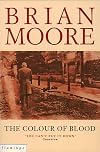
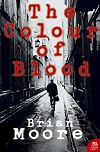
The Colour of Blood
by Brian Moore
On This Page
Description
Brian Moore, born and raised in Belfast, served with the British Ministry of War Transport in North Africa, Italy, and France during World War II and worked with the United Nations in Europe. In 1948, he moved to Canada, where he began writing plays and novels that quickly earned world-wide acclaim. Both The Colour of Blood and Lies of Silence have been shortlisted for the Booker Prize. One morning, in a bleak Eastern bloc country, someone tries to kill Cardinal Bem. Is it the Secret Police, show more or a radical operating from within the Catholic Church? That night, Cardinal Bem is kidnapped. Unable to determine whom his captors are working for, the aging Cardinal desperately searches for a way to avert the bloody revolution his disappearance will trigger. Dropping the listener into a world permeated with suspense, suspicion and fear, Brian Moore creates an unforgettable story. As the tension builds, Cardinal Bem becomes an icon for the conflict between personal safety and religious conviction. show lessTags
Recommendations



























Member Reviews
Moore died recently to considerable acclaim as a novelist and with several countries seeming to claim rights: he was born in Ireland, lived in Canada for several years and won the Governor General's award for fiction at least once, but for the last twenty years or so he lived in California. I had heard of, but never read him, and thought I would give him a chance with one of a couple of books of his that I picked up recently in a second had bookstore.
This is the story of a Cardinal (Blem) in an unnamed Eastern European country. who walks the fine line between maintaining the independence of the church and being a toady to the regime. Unfortunately, for some of his flock, his honest, and his view successful policies designed to further show more the former, are as proof of the latter. An attempt is made on his life following which the secret police put him under protective custody, against his wishes, only they aren't really the secret police but a disgruntled faction of the church which sees him as a block to a real expression of opposition to the regime, a position that he staunchly opposes because of the guaranteed, repressive backlash that would follow, but he doesn't know that they are not really the police until he escapes, but even then he is not sure who he can trust among the state officials or even his own church aides. The story is well-constructed, as Blem struggles to get back so that he can head-off a planned call to resurrection by certain members of the clergy; and the story conveys well the atmosphere of suspicion, mistrust, and confusion that were hallmarks of the soviet-style regimes.
Moore wrote in a very clear, clean style. However, I found that except for Blem himself who experiences some doubt and self-examination as he is exposed to new experiences, the rest of the characters were pretty flat: the inefficient and corrupt public police, the sinister head of the secret police, the prime minister determined to keep order in the country, the opposing clergy, the slightly bumbling clergy-guardian assigned to him in the "protective custody", and the more fanatical members of the opposition; all were fairly one-dimensional. But, I will try Moore again; he wrote something like 15-20 novels. show less
This is the story of a Cardinal (Blem) in an unnamed Eastern European country. who walks the fine line between maintaining the independence of the church and being a toady to the regime. Unfortunately, for some of his flock, his honest, and his view successful policies designed to further show more the former, are as proof of the latter. An attempt is made on his life following which the secret police put him under protective custody, against his wishes, only they aren't really the secret police but a disgruntled faction of the church which sees him as a block to a real expression of opposition to the regime, a position that he staunchly opposes because of the guaranteed, repressive backlash that would follow, but he doesn't know that they are not really the police until he escapes, but even then he is not sure who he can trust among the state officials or even his own church aides. The story is well-constructed, as Blem struggles to get back so that he can head-off a planned call to resurrection by certain members of the clergy; and the story conveys well the atmosphere of suspicion, mistrust, and confusion that were hallmarks of the soviet-style regimes.
Moore wrote in a very clear, clean style. However, I found that except for Blem himself who experiences some doubt and self-examination as he is exposed to new experiences, the rest of the characters were pretty flat: the inefficient and corrupt public police, the sinister head of the secret police, the prime minister determined to keep order in the country, the opposing clergy, the slightly bumbling clergy-guardian assigned to him in the "protective custody", and the more fanatical members of the opposition; all were fairly one-dimensional. But, I will try Moore again; he wrote something like 15-20 novels. show less
winner Sunday express book of the year/winner Canadian authors association literary award for fiction/shortlisted for Booker Prize
Ratings
Members
- Recently Added By
Lists

Booker Prize
491 works; 62 members

Man Booker Prize Longlist 1987
6 works; 2 members

Booker Prize Shortlist: Titles Not Yet Read
161 works; 4 members
Author Information

31+ Works 5,937 Members
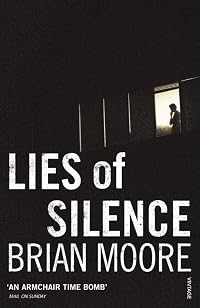
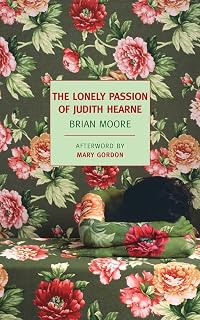
Brian Moore, 1921 - 1999 Brian Moore was born in Belfast on August 25, 1921 to Doctor James Bernard Moore and Eileen McFadden. He attended St. Malachy's College, a Catholic school, where the students where beaten on the hands daily. He left the college without a School Leaving Certificate because he failed Math. In 1941, a bomb damaged the family show more home, so they moved to a house on Camden Street. A year later, his father died. In 1942, he joined the National Fire Service, but knew that he wanted to be a writer. Moore knew some French, so he was hired by the British Ministry of War Transport to go as a port official to Algiers, North Africa. Afterwards, he traveled to Italy, France, and after the war, Warsaw (1945), Spain, Canada (1948), the United States and England, finally settling in California. Moore immigrated to Canada in 1948, where he worked as a proofreader and reporter for the Montreal Gazette. In 1951, he published his first story in the Northern Review and married Jacqueline Sirois, a fellow journalist. His only child, Michael, was born on November 24, 1953. He split with his wife in 1964 and then married Jean Denney, who he stayed married to until his death. Moore published "The Lonely Passion of Judith Hearne" (1955), "The Feast of Lupercal" (1957) and "The Emperor of Ice Cream" (1966), which is his most autobiographical novel. He recounts his school experiences, as well as what is was like during the bombing. In the 1990's, he wrote political fables and four novels. "Lies of Silence" is a thriller set in Belfast and was a more political statement than the previous novels. It was nominated for the Booker Prize and was his bestselling book. Several of his books were made into films such as "The Luck of Ginger Coffey," "Catholics," "The Lonely Passion of Judith Hearne" and "The Temptation of Eileen Hughes" was adapted for television. Moore received many awards, which included the Governor General's Award in 1961 for "The Luck of Ginger Coffey" and again in 1975 for "The Great Victorian Collection," which also won the James Tait Black Award in England. He was short listed for the Booker Prize in 1987 for "The Colour of Blood" and again in 1990 for "Lies of Silence." In July 1987, he conferred an honorary doctorate by Queen's University, Belfast. His film "Catholics" received the W.H. Smith Award in 1973 and the Peabody Award in 1974. In 1999, Brian Moore died at his home in Malibu, California. (Bowker Author Biography) show less
Some Editions
Awards and Honors
Common Knowledge
- Canonical title
- The Colour of Blood
- Original title
- The Colour of Blood
- Original publication date
- 1987
- People/Characters
- Stephen Cardinal Bem
- Important places
- East Europe; Iron Curtain countries
- Dedication
- For Jean
- Original language*
- Englisch
*Some information comes from Common Knowledge in other languages. Click "Edit" for more information.
Classifications
- Genres
- Fiction and Literature, General Fiction, Suspense & Thriller
- DDC/MDS
- 813.54 — Literature & rhetoric American literature in English American fiction in English 1900-1999 1945-1999
- LCC
- PR9199.3 .M617 .C65 — Language and Literature English English Literature English literature: Provincial, local, etc.
- BISAC
Statistics
- Members
- 308
- Popularity
- 104,153
- Reviews
- 2
- Rating
- (3.57)
- Languages
- Dutch, English, German, Swedish
- Media
- Paper, Audiobook
- ISBNs
- 20
- ASINs
- 5