
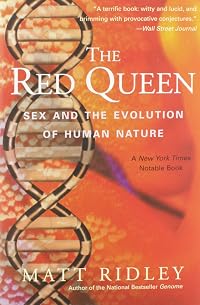
The Red Queen: Sex and the Evolution of Human Nature
by Matt Ridley
On This Page
Description
Referring to Lewis Carroll's Red Queen from Through the Looking-Glass, a character who has to keep running to stay in the same place, Matt Ridley demonstrates why sex is humanity's best strategy for outwitting its constantly mutating internal predators. The Red Queen answers dozens of other riddles of human nature and culture -- including why men propose marriage, the method behind our maddening notions of beauty, and the disquieting fact that a woman is more likely to conceive a child by an show more adulterous lover than by her husband. Brilliantly written, The Red Queen offers an extraordinary new way of interpreting the human condition and how it has evolved. show lessTags
Recommendations
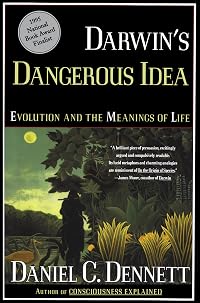
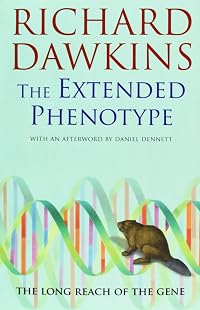





Member Recommendations
Member Reviews
I might have rated this more highly if I hadn't just come off a spate of reading very similar and slightly better works that incorporate much of its content in pithier form (Daniel Dennett's Darwin's Dangerous Idea and Steven Pinker's How the Mind Works, though those were both written afterwards), yet its central metaphor of sexual selection as arms race is compelling enough that I finished it alongside the superior Dennett and Pinker books anyway. The "red queen" of the title is derived from the famous character in Lewis Carroll's Through the Looking-Glass who at one point tells Alice that in her world, you have to run as fast as you can just to stay in place. Life is similar, in that hard-won evolutionary advantages are obsoleted show more almost instantly as competitors adapt to keep up - the book is about how sexuality is used both on a macro level between species, as a gene-shuffler that can provide a leg up over parasites and asexual organisms that are forced to evolve a bit more slowly; and on a micro level within species, as males and females choose different game-theoretic strategies to maximize reproductive fitness. Obviously we're most interested in human sexuality, so the book does not disappoint in its exploration of titillating topics like adultery, incest, homosexuality, polygamy, promiscuity, age differences, dimorphism, fashion, and communication, with plenty of comparisons to analogous behavior in the animal kingdom. There's also plenty of pages on whether all this exciting behavior is due to nature or nurture, which I did not find to be as well-written as Dennett or Pinker's very similar sections in their books (strawmen start popping up in conjunction with loaded subjects like feminism, though this happened somewhat in Pinker's book as well); readers who aren't idiots will be unsurprised that Ridley falls into the sensible "it's both, to some degree, depending on what you're talking about" camp. I found the red queen idea to be a an illuminating metaphor and I enjoyed Ridley's take on sexual selection, even if as a work specifically on evolutionary biology it didn't rise to the level of Richard Dawkins' The Extended Phenotype, which I consider to be one of the best books existing on the subject, but since I read it right next to books that seemed to recapitulate most of its insights in fewer pages I'm not sure I would recommend it above either. It was a better-written treatise on human sexuality than your average porn, though, that's for sure. show less
An eloquent exposition of the known facts and the then currently likely explanations for them. Written in 1993 but still a great overview. I am no expert on the subject but do follow it, and I think that nearly all of his content stands up today. Part of the reason for this is his wonderful habit of not just giving the summary but looking into the hows and whys of the conclusion the scientists have come to.
I find the very concept of the books title to be a deceptive one. At first glance you think, "hey that's clever, what a fascinating glimpse into a rather strange set of circumstances that bring out such an effect". By the time you are half way through the book you begin to realise that in fact this quirky little twist on the game of show more life is almost all pervasive and you are surrounded.
By the end of the book you have a new lens through which to view the world. Not many books do this, and hardly any of them do it using reality and logical thought, so this must be a keeper.
So ignore the various political pot shots taken at him (I speak as one who would happily cheer the mob onwards) and enjoy the quality of the writing and the fact you now have another way to think about the world. show less
I find the very concept of the books title to be a deceptive one. At first glance you think, "hey that's clever, what a fascinating glimpse into a rather strange set of circumstances that bring out such an effect". By the time you are half way through the book you begin to realise that in fact this quirky little twist on the game of show more life is almost all pervasive and you are surrounded.
By the end of the book you have a new lens through which to view the world. Not many books do this, and hardly any of them do it using reality and logical thought, so this must be a keeper.
So ignore the various political pot shots taken at him (I speak as one who would happily cheer the mob onwards) and enjoy the quality of the writing and the fact you now have another way to think about the world. show less
Tthis was both an interesting and irritating book. The words ‘aggrieved’ and ‘beleaguered’ would apply to his first few chapters as well as his summation, but I try to remember that the book was written 16 years ago, when the various divisions of social and biological sciences may have been more at odds. Ridley has little or no patience for anthropologists, sociologists, and even sociobiologists (that last surprised me a little) – evolution explains it all.
What does it explain? Well, why so many species in the world reproduce sexually, in spite of the biological expense and complication. And what that method does to push evolution along, in ways we might or might not be willing to recognize. His primary theory is that the show more exchange of DNA caused by sexual reproduction (as opposed to budding, splitting, and other asexual methods) has to do with the race between any organism and its parasites and diseases. He makes a pretty persuasive argument, with many examples from both current and ancient species.
His second thesis rests on how this arms race creates a feedback loop of reinforced inherited characteristics, some obvious, some almost chance. Again, many examples support his thesis. Where he gets most defensive is concerning the examples of our own species – that is where the book feels most out of date. I think we have become more sophisticated about our own responses as we have had the advantage of enhanced brain imaging of various kinds in the intervening decade and a half.
His querulous defensiveness left me wondering how he chose his evidence. The text is lavishly footnoted, but most of the evidence itself is hidden, and I wonder how much the selection is biased to prove his points, intentionally or not. Without copious research in his tracks, I don’t think there’s any way to tell.
I wonder if this is why I don’t read more non-fiction – I can trust the fiction to be fiction, but with non-fiction, I’m constantly asking myself “how does he know? And would I agree with his interpretation?” show less
What does it explain? Well, why so many species in the world reproduce sexually, in spite of the biological expense and complication. And what that method does to push evolution along, in ways we might or might not be willing to recognize. His primary theory is that the show more exchange of DNA caused by sexual reproduction (as opposed to budding, splitting, and other asexual methods) has to do with the race between any organism and its parasites and diseases. He makes a pretty persuasive argument, with many examples from both current and ancient species.
His second thesis rests on how this arms race creates a feedback loop of reinforced inherited characteristics, some obvious, some almost chance. Again, many examples support his thesis. Where he gets most defensive is concerning the examples of our own species – that is where the book feels most out of date. I think we have become more sophisticated about our own responses as we have had the advantage of enhanced brain imaging of various kinds in the intervening decade and a half.
His querulous defensiveness left me wondering how he chose his evidence. The text is lavishly footnoted, but most of the evidence itself is hidden, and I wonder how much the selection is biased to prove his points, intentionally or not. Without copious research in his tracks, I don’t think there’s any way to tell.
I wonder if this is why I don’t read more non-fiction – I can trust the fiction to be fiction, but with non-fiction, I’m constantly asking myself “how does he know? And would I agree with his interpretation?” show less
Ruling over of a strange world presented in 'Alice in Wonderland' by Lewis Carroll, the Red Queen is, also, a scientific principle first proposed by Leigh Van Halen, professor of biology and ecology at Chicago University, to explain coevolution between species. This principle is simple: like Carroll's world, and where the Red Queen evolves, in which one has to run just so as to stay in the same place, organisms are the way they are and behave the way they do because they are engaged in a race, not only against their competitors, but, also, their preys, predators, and/ or parasites and hosts. And, like in Carroll's world, we, here too, stay in the same place, since everything also evolves at the same pace, just to don't go extinct.
This show more principle dates back from 1973 only, but it has transformed biology, offering a wide new outlook upon how living organisms function. Indeed, as genes are at the heart of evolution (?), its driving motor, to understand our nature then one must first understand what are their interest in using organisms as their own vehicles. Put bluntly: why survival often involves sexual reproduction, centred around two sex (male, female) and, for example, cloning, or, not more than only two sexes? The Red Queen might be able to offer some answers, and the first part of this book, centred purely around biology, will be deeply engrossing to anyone interested in genetics.
Matt Ridley, though, doesn't stop there.
He shows how important such conclusions might be, going beyond biology (nature) to expand his reflexions to most of our behaviours (culture). Here's the topic of the second part of the book: showing the impact of the Red Queen's principle upon human sciences, sociology, anthropology, and, even, psychology. He explains, for instance, why we always observe the same schemas across human societies (pecking order, heterosexual monogamy...) although with different forms.
Here's an enthralling book, detailed, tough at times for lay readers, but, as the author takes the time to simply explain otherwise complex concepts before delving at the heart of the matter, it remains accessible to anyone willing to make the effort. The resulting dialogue between nature vs nurture, innate-acquired, a debate here articulated around sex, is fascinating. show less
This show more principle dates back from 1973 only, but it has transformed biology, offering a wide new outlook upon how living organisms function. Indeed, as genes are at the heart of evolution (?), its driving motor, to understand our nature then one must first understand what are their interest in using organisms as their own vehicles. Put bluntly: why survival often involves sexual reproduction, centred around two sex (male, female) and, for example, cloning, or, not more than only two sexes? The Red Queen might be able to offer some answers, and the first part of this book, centred purely around biology, will be deeply engrossing to anyone interested in genetics.
Matt Ridley, though, doesn't stop there.
He shows how important such conclusions might be, going beyond biology (nature) to expand his reflexions to most of our behaviours (culture). Here's the topic of the second part of the book: showing the impact of the Red Queen's principle upon human sciences, sociology, anthropology, and, even, psychology. He explains, for instance, why we always observe the same schemas across human societies (pecking order, heterosexual monogamy...) although with different forms.
Here's an enthralling book, detailed, tough at times for lay readers, but, as the author takes the time to simply explain otherwise complex concepts before delving at the heart of the matter, it remains accessible to anyone willing to make the effort. The resulting dialogue between nature vs nurture, innate-acquired, a debate here articulated around sex, is fascinating. show less
The author is at his best when he constantly asks "why?" on issues that may seem mundane or which we take for granted. Why sex not asex? Why does our concept of beauty take on its current form? Why are we mostly monogamous? How has sexual selection shaped out intelligence? My only gripes about this thought provoking read are that it's about a decade old (painfully obvious by the incorrect statistics on the human genome) and Ridley sometimes overstates his conclusions for the sake of the lay audience.
Stuck choosing between 3 and 4 stars, as I did really enjoy this book, but felt it lost steam a bit in the second half (the "human nature" part). I liked engaging with the various arguments put forward, and it was certainly a lively read. I thought Ridley came across as arrogant and dismissive of other disciplines, but his writing is easy to read, and he was concise in articulating his arguments.
I loved all of the chapters about non-human animals. The experiments were often amusing, and his obvious interest shone through. Later on, when he starts talking about humans, I felt he was arguing somewhat against strawmen. He didn't cite anyone for many of the points he was allegedly arguing against, so you just have to take his word for it show more that all the other disciplines are irrational and incapable of explaining human nature. I think that's poor academic practice and I wasn't impressed.
There are a couple of sections about homosexuality where I didn't feel he explored the issue very well in terms of adaptational value. It's just assumed that there's a "gay gene". There's mostly only talk of gay men, none of lesbians, and it's assumed that sexual behaviour is binary (hetero/homo) when we know the largest sexual minority is bisexuals. I'd be interested to see a proper exploration of sexual fluidity and cultural comparison from an evolutionary perspective.
This definitely made me want to pick up [b:Mothers and Others: The Evolutionary Origins of Mutual Understanding|6251387|Mothers and Others The Evolutionary Origins of Mutual Understanding |Sarah Blaffer Hrdy|https://images.gr-assets.com/books/1347821755s/6251387.jpg|6434265] again, which I had put down a while ago (I find hardbacks physically annoying to read, and always worry about damaging them). He cites Hrdy but I don't think she'd written that when he was writing this. Perhaps a lot of research couldn't be included because this book is 20 years old, so I have the unfair advantage of hindsight.
He talks a lot about sexual selection of (human) female traits, but not so much about male ones. I think he could have gone more in depth with that, as it's a really interesting subject. Another book I'm partway through that's full of information on this is [b:Sexual Selection and the Origins of Human Mating Systems|7021914|Sexual Selection and the Origins of Human Mating Systems|Alan F. Dixson|https://images.gr-assets.com/books/1349019944s/7021914.jpg|6084349]. Again, it's published years after Ridley's book, so is much more up to date.
Overall: enjoyable, definitely easy to read, sparks thought and debate. It does feel biased against other academic disciplines and the format didn't work so well for the explanations of "human nature", and I'd take a lot of what he says with a huge pinch of salt. Good springboard for doing your own research and making your own arguments. show less
I loved all of the chapters about non-human animals. The experiments were often amusing, and his obvious interest shone through. Later on, when he starts talking about humans, I felt he was arguing somewhat against strawmen. He didn't cite anyone for many of the points he was allegedly arguing against, so you just have to take his word for it show more that all the other disciplines are irrational and incapable of explaining human nature. I think that's poor academic practice and I wasn't impressed.
There are a couple of sections about homosexuality where I didn't feel he explored the issue very well in terms of adaptational value. It's just assumed that there's a "gay gene". There's mostly only talk of gay men, none of lesbians, and it's assumed that sexual behaviour is binary (hetero/homo) when we know the largest sexual minority is bisexuals. I'd be interested to see a proper exploration of sexual fluidity and cultural comparison from an evolutionary perspective.
This definitely made me want to pick up [b:Mothers and Others: The Evolutionary Origins of Mutual Understanding|6251387|Mothers and Others The Evolutionary Origins of Mutual Understanding |Sarah Blaffer Hrdy|https://images.gr-assets.com/books/1347821755s/6251387.jpg|6434265] again, which I had put down a while ago (I find hardbacks physically annoying to read, and always worry about damaging them). He cites Hrdy but I don't think she'd written that when he was writing this. Perhaps a lot of research couldn't be included because this book is 20 years old, so I have the unfair advantage of hindsight.
He talks a lot about sexual selection of (human) female traits, but not so much about male ones. I think he could have gone more in depth with that, as it's a really interesting subject. Another book I'm partway through that's full of information on this is [b:Sexual Selection and the Origins of Human Mating Systems|7021914|Sexual Selection and the Origins of Human Mating Systems|Alan F. Dixson|https://images.gr-assets.com/books/1349019944s/7021914.jpg|6084349]. Again, it's published years after Ridley's book, so is much more up to date.
Overall: enjoyable, definitely easy to read, sparks thought and debate. It does feel biased against other academic disciplines and the format didn't work so well for the explanations of "human nature", and I'd take a lot of what he says with a huge pinch of salt. Good springboard for doing your own research and making your own arguments. show less
I listened to this on audiobook, and perhaps that made some sections less compelling and easy to find my attention drifting. The main premise, that of the "Red Queen," is an interesting one - that we evolve only to ultimately stay in approximately the same place we have been in relation to our environment and our competitors. When he talked about why some traits were more likely to succeed than others, and why we didn't all just end up reproducing asexually, I was attentive. But when he went off on seeming tangents about algae or other limited creatures, I was a bit less intrigued.
He takes a strict evolutionary approach to why human behavior is the way it is, and he has no patience for social scientists. Anthropologists, sociologists; show more they're all just a bunch of people chasing their tails trying to explain things that only make sense when scientifically explained! Also singled out for distaste: feminism and political correctness, which Ridley is sure will shut down research into the differences between men's and women's brains. As is probably clear, I didn't much care for his attitude at times. The book is twenty years old, so there are several things he mentions as "current research" or "awaiting results" that I'm pretty sure have already been nailed down with a lot more information, but that's to be expected.
Overall, I found it a somewhat dry read with interesting bits dispersed throughout. show less
He takes a strict evolutionary approach to why human behavior is the way it is, and he has no patience for social scientists. Anthropologists, sociologists; show more they're all just a bunch of people chasing their tails trying to explain things that only make sense when scientifically explained! Also singled out for distaste: feminism and political correctness, which Ridley is sure will shut down research into the differences between men's and women's brains. As is probably clear, I didn't much care for his attitude at times. The book is twenty years old, so there are several things he mentions as "current research" or "awaiting results" that I'm pretty sure have already been nailed down with a lot more information, but that's to be expected.
Overall, I found it a somewhat dry read with interesting bits dispersed throughout. show less
Members
- Recently Added By
Published Reviews
ThingScore 75
There is a wealth of information here, and it is an excellent source for researchers because of its descriptions of studies and its extensive extensive reference section, as well as being an interesting book for a scientifically literate public.
added by jlelliott
Lists

Falling for Science
56 works; 3 members

A Rainbow of Books: Colors in the Title
570 works; 24 members

Books Read in 2006
421 works; 8 members

Read in 2006
140 works; 1 member

Books with Noble Titles
179 works; 11 members

In Our Time books
4,934 works; 2 members

Books Cited in Blueprint by Nicholas Christakis
261 works; 1 member
Author Information

37+ Works 11,585 Members
Matt Ridley is the author of several award-winning books, including Genome, The Agile Gene, and The Red Queen, which have sold more than 800,000 copies in twenty-seven languages worldwide. He lives in England.
Some Editions
Awards and Honors
Awards
Distinctions
Notable Lists
Series
Belongs to Publisher Series
Common Knowledge
- Canonical title
- The Red Queen: Sex and the Evolution of Human Nature
- Original title
- The Red Queen: Sex and the Evolution of Human Nature
- Original publication date
- 1993-10
- People/Characters
- Graham Bell; Leda Cosmides; Ronald Fisher; William Hamilton; John Maynard Smith; Donald Symons (show all 7); John Tooby
- Dedication
- For Matthew
- First words
- When a surgeon cuts into a body, he knows what he will find inside.
- Last words
- (Click to show. Warning: May contain spoilers.)But as long as we can keep asking why, we have a noble purpose.
- Canonical DDC/MDS
- 573.2
Classifications
- Genres
- Science & Nature, Nonfiction, General Nonfiction, Anthropology
- DDC/MDS
- 573.2 — Natural sciences & mathematics Biology Specific physiological systems in animals, regional histology and physiology in animals Origin of man
- LCC
- GN365.9 .R53 — Geography, Anthropology and Recreation Anthropology Anthropology Ethnology. Social and cultural anthropology Culture and cultural processes
- BISAC
Statistics
- Members
- 2,329
- Popularity
- 8,453
- Reviews
- 25
- Rating
- (4.01)
- Languages
- 18 — Bulgarian, Czech, Dutch, English, German, Greek, Hungarian, Italian, Japanese, Korean, Lithuanian, Polish, Russian, Serbian, Turkish, Portuguese (Portugal), Portuguese (Brazil), Chinese, simplified
- Media
- Paper, Audiobook, Ebook
- ISBNs
- 24
- ASINs
- 12