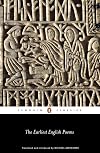
The Earliest English Poems
by Michael Alexander (Editor)
On This Page
Description
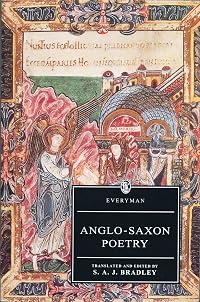
Anglo-Saxon poetry was produced between 700 and 1000 AD for an audience that delighted in technical accomplishment, and the durable works of Old English verse spring from the source of the English language. Michael Alexander has translated the best of the Old English poetry into modern English and into a verse form that retains the qualities of Anglo-Saxon metre and alliteration. Included in this selection are the "heroic poems" such as Widsith, Deor, Brunanburh and Maldon, and passages show more from Beowulf; some of the famous 'riddles' from The Exeter Book; all the "elegies," including The Ruin, The Wanderer, The Seafarer, The Wife's Complaint and The Husband's Message, in which the virtu of Old English is found in its purest and most concentrated form; together with the great Christian poem The Dream of the Rood. For more than seventy years, Penguin has been the leading publisher of classic literature in the English-speaking world. With more than 1,700 titles, Penguin Classics represents a global bookshelf of the best works throughout history and across genres and disciplines. Readers trust the series to provide authoritative texts enhanced by introductions and notes by distinguished scholars and contemporary authors, as well as up-to-date translations by award-winning translators. show lessTags
Recommendations











Member Reviews
Michael Alexander drew into one volume a wide selection of the best of English Anglo-Saxon poetry in this scholarly volume for Penguin Classics back in 1966. The works (which include only small sections of 'Beowulf') were translated by the Editor.
It remains an excellent guide to a lost culture shattered by the Norman occupation, England's cultural 'naqba'. Much of the work is necessarily fragmentary, lucky to survive at all. That survival relied on Christian tolerance of some pagan texts which were 'adapted' accordingly.
Alexander's commentary is helpful in positioning what survives as best he can at the point where an older pagan warrior culture was coming to terms with Christian culture and then having to face, as Christian warriors, show more new waves of incoming Viking pagan threats.
The harshness of old English life in a cold climate facing a colder North Sea and the importance of having (as a 'scop' or poet) a hearth-lord or gift-giver is only mitigated by the ability of the nearest thing to an intellectual of that period finding an alternative home in a monastery.
The pagan poet is part of a warrior aristocracy whose ethos is perhaps to seek plunder to bind his hearth together but also (well expressed in 'The Battle of Maldon') to seek honour in service to the lord who gives treasure to his warriors in return for their pledge of death in his defence if necessary.
As an ethos, it has not died even today. It is accepted in Hollywood accounts of military honour and implicit in the 'ethics' of organised crime. The 'band of brothers' stories of the Second World War (or no doubt Ukraine on both sides) is the ethos of honour where Lord has become State or Crown.
Christianity changes little other than to de-emphasise plundering and raiding for treasure in favour of social order and settled land-holding. God becomes Lord of Lords and guarantor of a reward not here on earth as treasure but as the treasure of everlasting life in heaven.
The transfer of one world to another across Europe might be considered as (in essence) the change in the meaning of the word from 'treasure' as gold and symbol of kin and war band relations to 'treasure' as something 'spiritual' to be interpreted by priests and to be found outside time and space.
Yet the old ways remained powerful. There is awe at past glories built by giants ('The Ruin'), remembrances of Germanic continental struggles including with the Huns, Tolkienesque tropes and swords with names and, of course, dealings with Grendel, his mother and dragons.
What comes across in this selection is that pre-Norman England was not isolated but was part of an extended Germano-Nordic culture with common myths and legends even if the old gods are not really part of the picture. This culture was set over and against 'Rome' and Huns alike.
As Peter Ackroyd has noted in his own comments on the grounding of the English imagination in Anglo-Saxon culture and, indeed, in Catholic Christianity (noting that Anglo-Saxon culture never denies the Christian even when most aware of its Germanic origins), some attitudes survive today.
Perhaps it is the climate but the modern English person will recognise a tendency to gloom and 'The Battle of Maldon' heroises defeat on a blunder as much as Tennyson did the Charge of the Light Brigade or we have done more recently with Dunkirk.
Bryhtnorth, Ealdorman of Essex, is a complete idiot when it comes to dealing with the Viking array on Northey Island but we are not supposed to notice that. We are only supposed to note his heroic death, the quasi-suicidal courage of his retainers and the contempt for the scuttling Odda and his kin.
Heroic stupidity seems to be as honoured today in English culture as then, alongside the sense of solitariness and loss of the Englishman who is detached from his society and up against the weather - as in 'The Wanderer' or 'The Seafarer'.
There are also the difficult riddles which sit alongside runes as a reminder that the English have always liked puzzles (as we know from our crime fiction). Anglo-Saxon literature was always primarily oral and social with poetry an advanced rhetorical art for firesides and halls.
There is probably no image more affecting to the English than that of the pagan priest turning to Christianity in the Northumbrian legend because he recognised that we were like sparrows coming from the dark and flying into the dark through the warmth of the Great Hall.
Anglo-Saxons seem to have been readied for Christianity by their very condition as denizens of Great Halls in inclement weather. The vulnerabilities of such an existence drew the Anglo-Saxon (it would seem) towards the question of what happened to the sparrow when it had flown out of the hall.
This leads us to the major Christian poem in the collection - the profoundly pious 'The Dream of the Rood' which, as Alexander points out, deploys riddling tropes to have the Cross of Christ be dreamed and then speak for itself as if it had a consciousness of its own.
This is the very heart of future weird fiction - the inanimate having an imagined life of its own. Things that be. This takes an animist view of the world drawn from the pagan and applies it anew to a poetic glorification of the Christian message of sacrifice.
It is not hard to see that the Christ's sacrifice on the Cross for man is a subtle inversion of something every educated Anglo-Saxon would recognise - the sacrifice of a man for his Lord. Christ was thus made truly heroic in the Anglo-Saxon mind and humanity thus both honoured and humbled.
All in all, a still useful collection that might be regarded as a puzzle in itself. It is quite a small amount of information on which to build a picture of a whole and long departed culture but Alexander does sterling work in at least giving us some chance of understanding the mind of the Anglo-Saxon. show less
It remains an excellent guide to a lost culture shattered by the Norman occupation, England's cultural 'naqba'. Much of the work is necessarily fragmentary, lucky to survive at all. That survival relied on Christian tolerance of some pagan texts which were 'adapted' accordingly.
Alexander's commentary is helpful in positioning what survives as best he can at the point where an older pagan warrior culture was coming to terms with Christian culture and then having to face, as Christian warriors, show more new waves of incoming Viking pagan threats.
The harshness of old English life in a cold climate facing a colder North Sea and the importance of having (as a 'scop' or poet) a hearth-lord or gift-giver is only mitigated by the ability of the nearest thing to an intellectual of that period finding an alternative home in a monastery.
The pagan poet is part of a warrior aristocracy whose ethos is perhaps to seek plunder to bind his hearth together but also (well expressed in 'The Battle of Maldon') to seek honour in service to the lord who gives treasure to his warriors in return for their pledge of death in his defence if necessary.
As an ethos, it has not died even today. It is accepted in Hollywood accounts of military honour and implicit in the 'ethics' of organised crime. The 'band of brothers' stories of the Second World War (or no doubt Ukraine on both sides) is the ethos of honour where Lord has become State or Crown.
Christianity changes little other than to de-emphasise plundering and raiding for treasure in favour of social order and settled land-holding. God becomes Lord of Lords and guarantor of a reward not here on earth as treasure but as the treasure of everlasting life in heaven.
The transfer of one world to another across Europe might be considered as (in essence) the change in the meaning of the word from 'treasure' as gold and symbol of kin and war band relations to 'treasure' as something 'spiritual' to be interpreted by priests and to be found outside time and space.
Yet the old ways remained powerful. There is awe at past glories built by giants ('The Ruin'), remembrances of Germanic continental struggles including with the Huns, Tolkienesque tropes and swords with names and, of course, dealings with Grendel, his mother and dragons.
What comes across in this selection is that pre-Norman England was not isolated but was part of an extended Germano-Nordic culture with common myths and legends even if the old gods are not really part of the picture. This culture was set over and against 'Rome' and Huns alike.
As Peter Ackroyd has noted in his own comments on the grounding of the English imagination in Anglo-Saxon culture and, indeed, in Catholic Christianity (noting that Anglo-Saxon culture never denies the Christian even when most aware of its Germanic origins), some attitudes survive today.
Perhaps it is the climate but the modern English person will recognise a tendency to gloom and 'The Battle of Maldon' heroises defeat on a blunder as much as Tennyson did the Charge of the Light Brigade or we have done more recently with Dunkirk.
Bryhtnorth, Ealdorman of Essex, is a complete idiot when it comes to dealing with the Viking array on Northey Island but we are not supposed to notice that. We are only supposed to note his heroic death, the quasi-suicidal courage of his retainers and the contempt for the scuttling Odda and his kin.
Heroic stupidity seems to be as honoured today in English culture as then, alongside the sense of solitariness and loss of the Englishman who is detached from his society and up against the weather - as in 'The Wanderer' or 'The Seafarer'.
There are also the difficult riddles which sit alongside runes as a reminder that the English have always liked puzzles (as we know from our crime fiction). Anglo-Saxon literature was always primarily oral and social with poetry an advanced rhetorical art for firesides and halls.
There is probably no image more affecting to the English than that of the pagan priest turning to Christianity in the Northumbrian legend because he recognised that we were like sparrows coming from the dark and flying into the dark through the warmth of the Great Hall.
Anglo-Saxons seem to have been readied for Christianity by their very condition as denizens of Great Halls in inclement weather. The vulnerabilities of such an existence drew the Anglo-Saxon (it would seem) towards the question of what happened to the sparrow when it had flown out of the hall.
This leads us to the major Christian poem in the collection - the profoundly pious 'The Dream of the Rood' which, as Alexander points out, deploys riddling tropes to have the Cross of Christ be dreamed and then speak for itself as if it had a consciousness of its own.
This is the very heart of future weird fiction - the inanimate having an imagined life of its own. Things that be. This takes an animist view of the world drawn from the pagan and applies it anew to a poetic glorification of the Christian message of sacrifice.
It is not hard to see that the Christ's sacrifice on the Cross for man is a subtle inversion of something every educated Anglo-Saxon would recognise - the sacrifice of a man for his Lord. Christ was thus made truly heroic in the Anglo-Saxon mind and humanity thus both honoured and humbled.
All in all, a still useful collection that might be regarded as a puzzle in itself. It is quite a small amount of information on which to build a picture of a whole and long departed culture but Alexander does sterling work in at least giving us some chance of understanding the mind of the Anglo-Saxon. show less
These are the only translations I've read by Michael Alexander, but I'll be picking up a copy of his Beowulf if I see it on my travels. This book has all that a casual reader needs - a detailed introduction and prefatory notes to each poem detailing its provenance, sources, a synopsis and relation to other known poems in the corpus. However, it's Alexander's way with words that impressed me while reading this book. He's not afraid to use archaicisms, some poetic licence and to compound words to evoke the distant world that these poems hail from... at least, I prefer Alexander's "And wielders and wrights?/Earthgrip holds them - gone, long gone,/fast in gravesgrasp while fifty fathers/and sons have passed," to the more literal "The grasp show more of the earth possesses/the mighty builders, perished and fallen,/the hard grasp of earth, until a hundred generations of people have departed." (Watson) show less
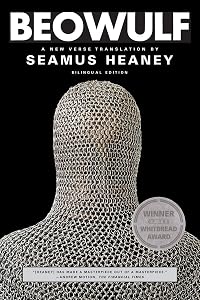
If readers ever stop to consider Old English literature, they likely will think about Beowulf or Chaucer. This collection of poetry fragments is one of the few books accessible to the average reader to present a selection of other preserved works that were written in Old English. The intention of the anthology is to demonstrate the variety of recorded texts from a distant past that is not as appreciated as it should be, to illustrate the oral skill of the storytellers and show how this storytelling was converted to the written form, and to teach on the particular traits of the poetry that made this a highly polished art form.
The book does offer several fragments from Beowulf. The rest, however, are pieces that are likely new to readers show more who aren't scholars in the field. Several of the poems are sections from extended poems that detailed important battles. Others are described as elegies or laments, and a few are nearly incomprehensible in their subject matter now that we are so far removed from their contexts. The book presents a selection of riddles, a typical past time in those Anglo-Saxon days, and an example of a beautiful poem that blends the new Christian religion with preexisting pagan traditions. Themes that were important to the listeners and tellers of those tales quickly become apparent: the importance of kin and community, the need for battles, the glory of battles, an emphasis on honor and courage, the seafaring life, the despair over being isolated and separated from family, and the power of the story teller.
I found this to be an intellectual read, very interesting in revealing an old culture and a way of storytelling that had power and beauty but is no longer practiced in the same manner. Our poetry has evolved into a very different form. Every excerpt, and most of these were excerpts, was accompanied with introductions and extensive footnotes. The selections were short, which helped to keep the reading move along smoothly. On the other hand, the reading was quite different from an escapist book. It was methodical and focused, and appealed to me because it expanded my knowledge of literature, not because it was a thrilling story. Occasionally I read for fun, sometimes for the dense play of language and literature, and at other times for information or growth. In this case, I was interested in the language and the information. The fascinating world of reading has so many rich new avenues to explore, and this book sheds just a small light on one of them. show less
The book does offer several fragments from Beowulf. The rest, however, are pieces that are likely new to readers show more who aren't scholars in the field. Several of the poems are sections from extended poems that detailed important battles. Others are described as elegies or laments, and a few are nearly incomprehensible in their subject matter now that we are so far removed from their contexts. The book presents a selection of riddles, a typical past time in those Anglo-Saxon days, and an example of a beautiful poem that blends the new Christian religion with preexisting pagan traditions. Themes that were important to the listeners and tellers of those tales quickly become apparent: the importance of kin and community, the need for battles, the glory of battles, an emphasis on honor and courage, the seafaring life, the despair over being isolated and separated from family, and the power of the story teller.
I found this to be an intellectual read, very interesting in revealing an old culture and a way of storytelling that had power and beauty but is no longer practiced in the same manner. Our poetry has evolved into a very different form. Every excerpt, and most of these were excerpts, was accompanied with introductions and extensive footnotes. The selections were short, which helped to keep the reading move along smoothly. On the other hand, the reading was quite different from an escapist book. It was methodical and focused, and appealed to me because it expanded my knowledge of literature, not because it was a thrilling story. Occasionally I read for fun, sometimes for the dense play of language and literature, and at other times for information or growth. In this case, I was interested in the language and the information. The fascinating world of reading has so many rich new avenues to explore, and this book sheds just a small light on one of them. show less
The chief interest in this edition of Old English poetry is in the translation. Michael Alexander took the bold step of not trying to translate the literal sense of the poems into modern English, but to try and preserve both the original form of the poems (alliterative, with each line broken into two half lines) and as much of the original vocabulary as can be retained without destroying the sense completely. And I must say this technique, for the most part, works brilliantly (at least for someone like myself who has some acquaintance with the poems and the language). It works best in the best poem, The Battle of Maldon, which conjures up a real and strong flavour of the original.
The choice of verse is perhaps not optimal: myself I show more would have left out the Riddles and had a bit more Beowulf, but this is really the only quibble. The notes are both extensive and useful, and the introduction clear and informative aboth about the poems and the translator's objectives and techniques.
Highly recommended for anyone with an interest in Old English or in Anglo-Saxon England generally. show less
The choice of verse is perhaps not optimal: myself I show more would have left out the Riddles and had a bit more Beowulf, but this is really the only quibble. The notes are both extensive and useful, and the introduction clear and informative aboth about the poems and the translator's objectives and techniques.
Highly recommended for anyone with an interest in Old English or in Anglo-Saxon England generally. show less
The Earliest English Poems (Penguin Classics), translated by Michael Alexander, who also did the excellent Penguin translation of Beowulf.
Alexander selected what he regards as the cream of the crop of Anglo-Saxon poetry. The style of his translations varies somewhat since he translated these works over a period of time, during which his attitudes toward translation changed. He adhered throughout, however, to the Old English verse format, built on a line composed of two clearly distinct half-lines, each with two beats, all held together by alliteration. He also tried to use as many of the Old English words as he could that would be still intelligible to modern readers. This choice of words gives his renderings a lot of strength and show more differentiates the diction from a more generalized heroic verse style that is often found in translations from various literatures and eras.
I find this old poetry, especially the battle poems, very involving and moving. I am not an Old English scholar, so I can't comment on the accuracy of the translation, but I like Alexander's translation of Beowulf better than any other I have read, and these shorter poems measure up to it.
The notes are sometimes helpful, but usually aimed at philologists. The introduction will be helpful to anyone unfamiliar with Anglo-Saxon society and literature, but Alexander's introductory comments on his own translation can be fussy and persnickety, quite the opposite of his poetic style, which is straightforward and forceful. He should let his poetry stand on its own. show less
Alexander selected what he regards as the cream of the crop of Anglo-Saxon poetry. The style of his translations varies somewhat since he translated these works over a period of time, during which his attitudes toward translation changed. He adhered throughout, however, to the Old English verse format, built on a line composed of two clearly distinct half-lines, each with two beats, all held together by alliteration. He also tried to use as many of the Old English words as he could that would be still intelligible to modern readers. This choice of words gives his renderings a lot of strength and show more differentiates the diction from a more generalized heroic verse style that is often found in translations from various literatures and eras.
I find this old poetry, especially the battle poems, very involving and moving. I am not an Old English scholar, so I can't comment on the accuracy of the translation, but I like Alexander's translation of Beowulf better than any other I have read, and these shorter poems measure up to it.
The notes are sometimes helpful, but usually aimed at philologists. The introduction will be helpful to anyone unfamiliar with Anglo-Saxon society and literature, but Alexander's introductory comments on his own translation can be fussy and persnickety, quite the opposite of his poetic style, which is straightforward and forceful. He should let his poetry stand on its own. show less
Alexander makes accessible poems that cannot be understood by native speakers of modern English without significant time and effort. Poems that nevertheless form the foundation of poetry in English and provide a window on the Anglo-Saxon world, its history, culture and values. This collection, despite its modest size, shows the range of modes and interests of Anglo-Saxon verse. Fragments such as The Battle of Maldon also make me wonder how much great literature has been lost irretreivably - a sad thought.
Exactly as advertised. I think Mr. Alexander is a capable translator, and the book contains my favourite Early English Poem, "The Ruin" on page 28 -9. ...It is a kingly thing....City...
Members
- Recently Added By
Author Information

Series
Belongs to Publisher Series
Penguin Classics (L172)
Common Knowledge
- Canonical title
- The Earliest English Poems
- Original publication date
- 1966
- People/Characters
- Widsith; Deor; Waldere; Byrhtnoth (Ealdorman of Essex, d. 991); Scyld Shefing; Beowulf (show all 7); Sigeferth
- Important places
- England, UK (as England); Bath, Somerset, England, UK (Aquae Sulis); Denmark; Finnsburg, Frisia; Exeter, Devon, England, UK; Maldon, Essex, England, UK (show all 7); Aquae Sulis, Britannia, Roman Empire (Bath)
- Important events
- Battle of Maldon (991)
- Epigraph
- This is the sense but not the order of the words as he sang them in his sleep; for verses, though never so well composed, cannot be literally translated out of one language into another without loss of their beauty and loftin... (show all)ess.
Bede, of Caedmon's hymn.
. . . tha ongan ic ongemang othrum mislicum and manigfealdum bisgum thisses kynerices tha boc wendan on Englisc . . . whilum word be worde, whilum andgit of angiete . . . .
Alfred, of Gregory's Cura Pastoralis... (show all)>. - Dedication
- TO EZRA POUND
- First words
- Well-wrought this wall: Wierds broke it.
The ruin.
The excuse, ultimately, for a book of this sort is a conviction on the part of the author that some early English poems deserve to be read by those who do not make their living out of the subject, that what is excellent shoul... (show all)d be made current.
Introduction. - Last words
- (Click to show. Warning: May contain spoilers.)That was not the Godric who galloped away. . . .
- Publisher's editor
- Radice, Betty; Baldick, Robert
- Disambiguation notice
- Translations from Old English verse, comprising extracts from 'The ruin', 'Widsith', 'Deor', 'Beowulf', 'The fight at Finnsburgh', 'Waldere', 'The wanderer', 'The seafarer', 'The wife's complaint', 'The husband's message', 'W... (show all)ulf & Eadwacer', Gnomic verses, Riddles, 'The dream of the rood', and 'The battle of Maldon'.
Classifications
Statistics
- Members
- 597
- Popularity
- 49,016
- Reviews
- 10
- Rating
- (3.95)
- Languages
- Old English, English
- Media
- Paper, Ebook
- ISBNs
- 5
- ASINs
- 10