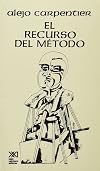
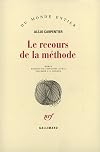
Reasons of state
by Alejo Carpentier
On This Page
Description
"One of the most significant novels in Latin American literature, written by Cuba's most important modern novelist--to win a bet with Gabriel Garcia Marquez. In the early 1970s, friends Gabriel Garcia Marquez, Augusto Roa Bastos and Alejo Carpentier reached a joint decision: they would each write a novel about the dictatorships then wreaking misery in Latin America. Garcia Marquez went on to write The Autumn of the Patriarch and Roa Bastos I, the Supreme. The third novel in this remarkable show more trinity is Reasons of State, hailed as the most significant novel ever to come out of Cuba. As with Garcia Marquez, Reasons of State is a bold story, boldly told -- daring in its perceptions, rich in lush detail, inventive in prose, and deadly compelling in its suspenseful plot. Inexplicably out of print for years, it tells the tale of the dictator of an unnamed Latin American country who has been living the life of luxury in high-society Paris. When news reaches him of a coup at home, he rushes back and crushes it with brutal military force. But returning to Paris he is given a chilly welcome, and learns that photographs of the atrocities have been circulating among his well-to-do friends. Meanwhile World War One has broken out, and another rebellion forces the dictator back across the ocean. As he struggles with the Marxist forces beginning to find footing in his own country, and Europe is devastated, Carpentier constructs a masterful and biting satire of the new world order"-- show lessTags
Recommendations




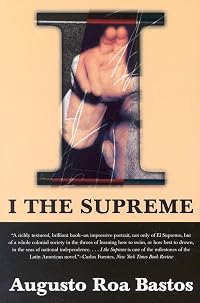








































Member Recommendations
gouldner Another great dictator novel
Member Reviews
This is the story of a dictator. The Head of State (we are never given his name) of an unnamed and imaginary Central American or South American nation is a Francophile, and the novel opens in his first person musings on awakening in Paris (this reader didn't realize it was in Paris until later in the book), quickly switches to the third person, and only reverts to the first person at the very end. Throughout, Carpentier's prose is dense, filled with images, and overloaded with lists of everything under the sun (an example, later).
While in Paris, the Head of State receives a telegram that a general has revolted against his rule, and he obviously needs to get back to his country, traveling through New York (which he compares, unfavorably, show more to Paris). He brutally quells that general's revolt, and eventually returns to Paris where he hangs out with the aristocrats and the Distinguished Academician. He is there when World War I breaks out and returns to his country, Throughout the war, the Head of State's country thrives, its banana and other fruit plantations flourishing and its mines booming (many of the plantations and mines are US-owned). But then, the war is over, and the economy falls apart. The Head of State gets the idea of building a Capitol building and he succeeds, but nothing can stop the forces determined to overturn him (a bomb goes off in his bathroom). The forces against him are multiple, including a provincial politician and someone known as The Student. The Head of State responds with terror, with the army killing professors, students, and a lot of other people. Eventually the US Marines arrive; the "Yankees" have switched their support from the Head of State to the provincial politician, and the Head of State has to flee to Paris, where none of his former friends will have anything to do with him because the press has reported on his massacres. Much more happens in this novel, but I can't tell everything.
Carpentier, as he mostly always does, digresses, into music (he was also a musicologist), art, architecture, and a lot more. As I noted above, the book is full of lists, often several per page, as seen in this example:
"That fire must not of course damage the frescoes of the Pantheon, the pink stone of the Place des Vosges, the windows of Notre-Dame, nor yet the chastity belts of the Abbaye de Cluny, the wax figures and illusions in the Musée Grévin, or the leafy chestnut trees of the avenue where the Comtesse de Noailles lived (although she was one of those who were cutting him) and still less the Trocadero, where as soon as the war was over our Mummy (now being fetched from Gothenburg by the Cholo Mendoza) would be displayed in a glass case."
The story of the Head of State is compelling, although he doesn't get his just desserts but dies, as so many dictators did, in Paris (or the south of France where several notorious 20th century dictators had villas). But Carpentier's style is the main reason I enjoyed this book, his digressions, his lists, and his glorious images. show less
While in Paris, the Head of State receives a telegram that a general has revolted against his rule, and he obviously needs to get back to his country, traveling through New York (which he compares, unfavorably, show more to Paris). He brutally quells that general's revolt, and eventually returns to Paris where he hangs out with the aristocrats and the Distinguished Academician. He is there when World War I breaks out and returns to his country, Throughout the war, the Head of State's country thrives, its banana and other fruit plantations flourishing and its mines booming (many of the plantations and mines are US-owned). But then, the war is over, and the economy falls apart. The Head of State gets the idea of building a Capitol building and he succeeds, but nothing can stop the forces determined to overturn him (a bomb goes off in his bathroom). The forces against him are multiple, including a provincial politician and someone known as The Student. The Head of State responds with terror, with the army killing professors, students, and a lot of other people. Eventually the US Marines arrive; the "Yankees" have switched their support from the Head of State to the provincial politician, and the Head of State has to flee to Paris, where none of his former friends will have anything to do with him because the press has reported on his massacres. Much more happens in this novel, but I can't tell everything.
Carpentier, as he mostly always does, digresses, into music (he was also a musicologist), art, architecture, and a lot more. As I noted above, the book is full of lists, often several per page, as seen in this example:
"That fire must not of course damage the frescoes of the Pantheon, the pink stone of the Place des Vosges, the windows of Notre-Dame, nor yet the chastity belts of the Abbaye de Cluny, the wax figures and illusions in the Musée Grévin, or the leafy chestnut trees of the avenue where the Comtesse de Noailles lived (although she was one of those who were cutting him) and still less the Trocadero, where as soon as the war was over our Mummy (now being fetched from Gothenburg by the Cholo Mendoza) would be displayed in a glass case."
The story of the Head of State is compelling, although he doesn't get his just desserts but dies, as so many dictators did, in Paris (or the south of France where several notorious 20th century dictators had villas). But Carpentier's style is the main reason I enjoyed this book, his digressions, his lists, and his glorious images. show less
The first decade of the 20th century sees the leader of an unnamed Latin American country spending more of his time in Paris than home. There, he cultivates the company of high society, indulges his passion for the classics and art, and satisfies his tastes for fine cuisine, drink, and women. A francophile to the core, France is for him, his spiritual home and real earthly home, not that backward, steaming jungle of a place where he came from, but which he believes, is his destiny to govern like a father to his children.
The novel opens with the Head of State performing his morning toilette in his grand Paris apartment, when the arrival of bad news from home ruins his reveries of the previous night's pleasures. A rebellion led by a show more trusted army general demanded his immediate return. At home, the Head of State himself leads the campaign which take him and the army to the hinterlands. The defeat of the rebels comes swiftly, and retribution on the sympathetic village almost gaily carried out by the victorious troops. Decadence and the good life have not dulled the President's warrior instincts, and he rides back to capital as victorious hero. More medals, more monuments -- testaments to his glorious deeds, celebrated his triumph. He takes a side trip to New York for treatment for his arthritis staying not a day more than needed (he needed the Americans, but how he hated the way these Yankees did things), and off he goes again to take refuge, after so many trials and tribulations this past year, in the charms of a Paris summer. This time, though, there is no welcome mat thrown upon his arrival, no invitations arrive, and social calls are politely but firmly refused. He finds out that the world had learned and been shown images of the massacre during the campaign that he himself led. News had reached this far shore. Still contemplating how he could recover his lost status, news arrive of a new rebellion led by someone close to him, and he is forced to go home again. He wins as before. This time though, he vows to make sure no more rebellions ever occur.
He builds grand edifices, monuments, and we see them bigger and grander every time, growing it seems in reverse proportion to his legitimacy as a leader, now being tested as talks circulate about the growing unrest, and the hushed whisperings about THAT overstayig resident of the Palace. Attacks start to come from all sides, even in his very own quarters, but the enemy remains shapeless, faceless. For "reasons of state", the Head of State uses all resources at his disposal to quelch this threat. And this is when really, truly, the reign of terror begins.
Between all this, we see his machinations -- selling off the vast banana plantations and installations to US companies. He has to pander to the Americans, crude and uncultured as they are (according to him), as geography and financial requirements dictate. He claimed to know his people, understood their longings, and, like a puppeteer who pulled strings and spoke in voices that charmed the audience, he promoted spectacle so they will forget to ask questions. He calls for elections, to show his people and the rest of the world, what a lover of democracy he was -- he wins, of course, by a landslide but nobody talks of the mysterious voices that threatened, that insinuated, that spooked everyone, that made sure no disaffection manifests itself in the ballots. When world opinion (or at least by those who mattered for him -- French) turned against him, he gathered all forces and with plenty of imagination, attempted to build up his country's image and restore prestige to himself. He was not loathe to sending cultural objects as donations to the great French museums, which he was sure, they would love.
This is no crass Head of State, no Idi Amin who behaves outlandishly in polite and exalted circles. He is the most cultured gentleman, who styles himself as a modern and progressive leader. Back home, he is known as a stern, almost ascetic, man free of vices that lesser men are prey to. Yet, known only to his closest aide and his housekeeper, he retains the vulgar habits of any commoner, with his girlie magazines, his licentious adventures, and alcoholism. There is the dichotomy, the contradictions. But the image of a strong, unbendable leader has to endure, and indeed all that he achieved. But only until he was one day, quietly, in the middle of the anarchy that had descended on the capital, taken away in a ship by his most trusted friend, to live out his remaining years in that faraway country which he considered his spiritual home. The final coup had taken place, and he was the last to know. Over there, in Paris, he lives out the rest of his years, in forgotten exile.
Carpentier's charting of the dictator's career makes for a compelling portrait of political power. The story is straightforward and easy to follow, quite unusual for Carpentier. But as usual for this author, digressions into art, literature, philosophy, and history abound which enriches, rather than bogging down the narrative. Though I found this novel interesting, it seemed a bit predictable, and a little too pat. Perhaps I want my dictators (fictional or not) to get their just desserts in the end. But perhaps Carpentier was really just more true to reality -- considering everything, do dictators really ever get what they deserve? Still a very well-written novel, and a pleasure to read. It should not be easy to translate Carpentier, who engages in plenty of word play, but Francis Partridge does a wonderful job. show less
The novel opens with the Head of State performing his morning toilette in his grand Paris apartment, when the arrival of bad news from home ruins his reveries of the previous night's pleasures. A rebellion led by a show more trusted army general demanded his immediate return. At home, the Head of State himself leads the campaign which take him and the army to the hinterlands. The defeat of the rebels comes swiftly, and retribution on the sympathetic village almost gaily carried out by the victorious troops. Decadence and the good life have not dulled the President's warrior instincts, and he rides back to capital as victorious hero. More medals, more monuments -- testaments to his glorious deeds, celebrated his triumph. He takes a side trip to New York for treatment for his arthritis staying not a day more than needed (he needed the Americans, but how he hated the way these Yankees did things), and off he goes again to take refuge, after so many trials and tribulations this past year, in the charms of a Paris summer. This time, though, there is no welcome mat thrown upon his arrival, no invitations arrive, and social calls are politely but firmly refused. He finds out that the world had learned and been shown images of the massacre during the campaign that he himself led. News had reached this far shore. Still contemplating how he could recover his lost status, news arrive of a new rebellion led by someone close to him, and he is forced to go home again. He wins as before. This time though, he vows to make sure no more rebellions ever occur.
He builds grand edifices, monuments, and we see them bigger and grander every time, growing it seems in reverse proportion to his legitimacy as a leader, now being tested as talks circulate about the growing unrest, and the hushed whisperings about THAT overstayig resident of the Palace. Attacks start to come from all sides, even in his very own quarters, but the enemy remains shapeless, faceless. For "reasons of state", the Head of State uses all resources at his disposal to quelch this threat. And this is when really, truly, the reign of terror begins.
Between all this, we see his machinations -- selling off the vast banana plantations and installations to US companies. He has to pander to the Americans, crude and uncultured as they are (according to him), as geography and financial requirements dictate. He claimed to know his people, understood their longings, and, like a puppeteer who pulled strings and spoke in voices that charmed the audience, he promoted spectacle so they will forget to ask questions. He calls for elections, to show his people and the rest of the world, what a lover of democracy he was -- he wins, of course, by a landslide but nobody talks of the mysterious voices that threatened, that insinuated, that spooked everyone, that made sure no disaffection manifests itself in the ballots. When world opinion (or at least by those who mattered for him -- French) turned against him, he gathered all forces and with plenty of imagination, attempted to build up his country's image and restore prestige to himself. He was not loathe to sending cultural objects as donations to the great French museums, which he was sure, they would love.
This is no crass Head of State, no Idi Amin who behaves outlandishly in polite and exalted circles. He is the most cultured gentleman, who styles himself as a modern and progressive leader. Back home, he is known as a stern, almost ascetic, man free of vices that lesser men are prey to. Yet, known only to his closest aide and his housekeeper, he retains the vulgar habits of any commoner, with his girlie magazines, his licentious adventures, and alcoholism. There is the dichotomy, the contradictions. But the image of a strong, unbendable leader has to endure, and indeed all that he achieved. But only until he was one day, quietly, in the middle of the anarchy that had descended on the capital, taken away in a ship by his most trusted friend, to live out his remaining years in that faraway country which he considered his spiritual home. The final coup had taken place, and he was the last to know. Over there, in Paris, he lives out the rest of his years, in forgotten exile.
Carpentier's charting of the dictator's career makes for a compelling portrait of political power. The story is straightforward and easy to follow, quite unusual for Carpentier. But as usual for this author, digressions into art, literature, philosophy, and history abound which enriches, rather than bogging down the narrative. Though I found this novel interesting, it seemed a bit predictable, and a little too pat. Perhaps I want my dictators (fictional or not) to get their just desserts in the end. But perhaps Carpentier was really just more true to reality -- considering everything, do dictators really ever get what they deserve? Still a very well-written novel, and a pleasure to read. It should not be easy to translate Carpentier, who engages in plenty of word play, but Francis Partridge does a wonderful job. show less
A tight and well written political satire.
> Le recours de la méthode de Alejo CARPENTIER, traduit par René L.-F. Durand (Gallimard) ;
La chanson que nous chantons de Eduardo GALEANO, traduit par Régine Mellac et Annie Morvan (Albin Michel) ;
Moi, le suprême de Augusto Roa BASTOS, traduit par Antoine Berman (Belfond)
Se reporter au compte rendu de Christian AUDEJEAN
In: Revue Esprit No. 12 (12) (Décembre 1977), pp. 142-143… ; (en ligne),
URL : https://esprit.presse.fr/article/christian-audejean/la-chanson-que-nous-chantion...
La chanson que nous chantons de Eduardo GALEANO, traduit par Régine Mellac et Annie Morvan (Albin Michel) ;
Moi, le suprême de Augusto Roa BASTOS, traduit par Antoine Berman (Belfond)
Se reporter au compte rendu de Christian AUDEJEAN
In: Revue Esprit No. 12 (12) (Décembre 1977), pp. 142-143… ; (en ligne),
URL : https://esprit.presse.fr/article/christian-audejean/la-chanson-que-nous-chantion...
Oct 4, 2020 (Edited)French
novela
Sep 9, 2019Spanish
Ratings
Members
- Recently Added By
Lists

Harold Bloom - The Western Canon: D. The Chaotic Age
833 works; 24 members
Author Information

123+ Works 6,226 Members
Alejo Carpentier was director of Cuba's National Press, which published many millions of volumes in an ambitious program, and for some years was Cuba's ambassador to France. A composer and musicologist, he consciously applied the principles of musical composition in much of his work. Imprisoned for political activity in 1928, he escaped with the show more aid of Robert Desnos, a French surrealist poet, to Paris, where he joined the literary circle of surrealists Louis Aragon, Tristan Tzara, and Paul Eluard. According to Carpentier surrealism influenced his style and helped him to see "aspects of American life he had not previously seen, in their telluric, epic, and poetic contexts." Carpentier articulated a theory of marvelous reality, "lo real maravilloso," with an almost surrealistic sense of the relationship among unrelated, or antithetical, elements, often from distinct ethnic and cultural backgrounds. The Lost Steps (1953) takes the form of a diary of a Cuban musician and intellectual who seeks escape from civilization during his trip to a remote Amazon village in search of native musical instruments. The short stories "The Road to Santiago," "Journey to the Seed," and "Similar to Night," present time as subjective rather than historical, and capable of remarkable personal variations. In his novel The Pursuit, printed in The War of Time (1958), whose title is an allusion to a line from Lope de Vega defining a man as "a soldier in the war of time, presents time similarly. "The Kingdom of This World (1949) deals with the period of Henri Christophe and the slave revolts in Haiti. Its circular structure presents the inevitable recurrence of tyranny and the need for eternal struggle against it. Reasons of State (1976), is another notable addition to the gallery of Latin American fictional portraits of dictators. It uses Carpentier's love for baroque style and parody to raise complex questions about the nature of revolution. (Bowker Author Biography) show less
Some Editions
Series
Belongs to Publisher Series
Common Knowledge
- Canonical title
- Reasons of state
- Original title
- El recurso del método
- Original publication date
- 1974
- Epigraph*
- Il mio scopo non è ... quello di insegnar il metodo che ciascuno deve seguire per ben condurre la propria ragione, ma di far vedere soltanto in qual modo ho cercato di condurre la mia.
Descartes, Discorso sul meoto... (show all)do - First words*
- ... ma se mi sono appena messo a letto. E già suona la sveglia.
- Last words*
- (Click to show. Warning: May contain spoilers.)Quello che forse qualcuno non sa è che Ofelia, pensando che la Terra è una e che la terra della Terra è terra della Terra dpvunque - memento, homo, quia pulvis es et in pulverem reverteris - aveva raccolto la sacra terra custodita in eterno dai quattro emblematici giaguari, in un'aiuola del giardino del Lussemburgo.
*Some information comes from Common Knowledge in other languages. Click "Edit" for more information.
Classifications
Statistics
- Members
- 311
- Popularity
- 103,071
- Reviews
- 5
- Rating
- (4.13)
- Languages
- 11 — Danish, Dutch, English, French, German, Hungarian, Italian, Norwegian (Bokmål), Portuguese, Spanish, Swedish
- Media
- Paper, Ebook
- ISBNs
- 39
- ASINs
- 9