On This Page
Description
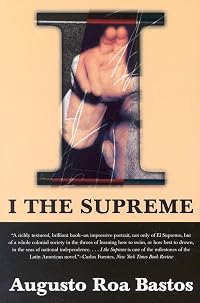
Latin America has seen, time and again, the rise of dictators, Supreme Leaders possessed of the dream of absolute power, who sought to impose their mad visions of Perfect Order on their own peoples. Latin American writers, in turn, have responded with fictional portraits of such figures, and no novel of this genre is as universally esteemed as Augusto Roa Bastos's I the Supreme, a book that draws on and reimagines the career of the man who was "elected" Supreme Dictator for Life in Paraguay show more in 1814.By turns grotesque, comic, and strangely moving, I the Supreme is a profound meditation on the uses and abuses of power--over men, over events, over language itself. show lessTags
Recommendations


















Member Recommendations

gouldner Another great dictator novel
Member Reviews
Roa Bastos imagines the reflections and annotations of the Paraguayan dictator José Gaspar Rodríguez de Francia as he nears the end of his life in 1840. In a fragmented text that purports to be composed of fragments of a circular dictated by the Supremo to his secretary, bits of his personal notebooks, and interjections of a later editor, Roa Bastos plays around with ideas about power and language. For a quarter of a century El Supremo has used words to dominate his citizens and oppress his actual or imagined opponents, and now as his grip on power and reality fades it’s words that are coming back to bite him.
A confusing, absorbing, more than slightly mad experience, and a powerful look at what it might mean to have absolute power.
A confusing, absorbing, more than slightly mad experience, and a powerful look at what it might mean to have absolute power.
¡Al fin!
Vaya que me costó trabajo acabarla. Y es que este libro tiene la cualidad de ser una de las grandes novelas latinoamericanas del XX y ser tremendamente soporífera al mismo tiempo. La tipografía es pequeñísima, las páginas son muchas y las digresiones demasiado abundantes. Entiendo que Roa Bastos hizo un despliegue impresionante de talento y erudición en este libro, pero la verdad es que se hace largo, largo, largo...
No me arrepiento de haberla leído (de hecho, muchos capítulos me parecieron magistrales) pero sí dudo mucho tener algún día la paciencia y la voluntad de leerla otra vez.
Vaya que me costó trabajo acabarla. Y es que este libro tiene la cualidad de ser una de las grandes novelas latinoamericanas del XX y ser tremendamente soporífera al mismo tiempo. La tipografía es pequeñísima, las páginas son muchas y las digresiones demasiado abundantes. Entiendo que Roa Bastos hizo un despliegue impresionante de talento y erudición en este libro, pero la verdad es que se hace largo, largo, largo...
No me arrepiento de haberla leído (de hecho, muchos capítulos me parecieron magistrales) pero sí dudo mucho tener algún día la paciencia y la voluntad de leerla otra vez.
Augusto Roa Bastos' loosely interrelated Paraguay Trilogy consists of Hijo de hombre, Yo el supremo and El fiscal. The first book tells the stories of a group of people living in rural Paraguay before and during the Chaco War, which was fought between Paraguay and Bolivia over a wide swath of land in the middle of both countries thought to possess vast oil deposits. It's a favorite of mine. The third tells of a man who sets off to murder a contemporary Paraguayan dictator. I can't remember if Stroessner is specifically named, but the dictator is obviously a representation of him. I read it a number of years ago and remember it being a real challenge, with a complex style that mixes streams of consciousness, extended dream interludes, show more and a narrator whose grasp of reality seems tenuous at best as he undertook his mission of toppling a tyrant in his home country. That left me with Yo el supremo, which I knew to be about 19th century dictator José Gaspar Rodríguez de Francia. My friend and fellow Paraguay enthusiast spoke glowingly of it, and I also read a short article by Juan Carlos Onetti that praised Roa Bastos' ability to penetrate into the mind of its subject, postulating that at some moment during the writing of this book, control over the pen transferred from the 20th century author to the 19th century dictator himself, with Francia's thoughts flowing across the pages. I'd been looking for a copy of this book for some time, and finally got ahold of a used Cátedra edition earlier this year.
I was glad to have a critical edition with all the usual footnotes and introductory studies, because this is a very complex book, alternating between many different narrative voices. There are sections of dialogue between Francia and his scribe, Patiño; there is a "Circular Perpetual," in which Francia documents his version of Paraguayan history, including his rise to power and interactions with emmissaries from Argentina, Brazil and England. These sections often contain extensive historical footnotes, completementing The Supreme's perspective with citations from actual texts written by the outside intruders themselves, documenting their often unwilling stays in Paraguay (Francia had a habit of detaining those who arrived from the outside). There are also entries from his private notebook, made up of bitter memories of his Brazilian father, a supposed contrabandist, and also his childhood spent in possession of a cherished human skull. These private interludes are often interrupted, with indications that sections of The Supreme's documents had been lost in a fire that consumed his personal quarters. In some cases, the transitions between private notebook, free-flowing dialogue with Patiño, and Circular Perpetual are difficult to follow. I felt fortunate to have a chart in the introduction that allowed me to check and see what exactly was going on in each of the book´s many unmarked chapters. Without it, I probably would have picked up on the transitions, but I might not have been as aware of what was going on.
Through five hundred pages of Francia, I got to know the dictator quite well. These texts, purportedly composed directly before (or after) his death, are an impressive representation of what a man who'd clung to power in an isolated backwater of South America might have thought and felt as he looked back on his life. It did indeed feel like Francia, not Roa Bastos, was writing the pages of this book, which is testament to the author's ability to penetrate into his subject and manipulate the Spanish language to represent the peculiarities of speech in a bilingual country where Guaraní is spoken alongside Spanish. The introduction to my edition documented a series of elements of Guaraní vocabulary and syntax that were incorporated into this Spanish text, with The Supreme constantly combining, blending and expanding Spanish words in ways that would be appropriate for a person of his patriotic Paraguayan background. You can read an exerpt from the English translation here: I the Supreme. I think it gives a taste of the exuberantly creative vocabulary employed throughout the book.
Right before I read this book, I was listening to an episode of This American Life about a Psycopath test developed for academic purposes and later employed by the prison system in a morally iffy way (i.e. a person who scores high on the test may never get parole, even if he or she is an exemplary prisoner and shows clear signs of rehabilitation). It related some of the questions from the test, and also mentioned that a surprisingly high number of extremely successful individuals (such as business executives) are considered psycopaths by its criteria. As I read, I thought about the example questions from the show, and figured that Francia would probably have been considered a psycopath as well. Unable to relate to the world around him, his conscience corrupted by his desire to protect the country he led from any and all colonialist encroachment, he was increasingly unable to relate to even his most trusted friends, let alone the hundreds of thousands of Paraguayan subjects he professed to love. He ended up alone and hated, stuck in his chamber writing and dictating an interminable stream of memories and political diatribes. It was sad, and the show about the psycopaths was sad too. It's hard to imagine what it'd be like to be unable to successfully relate to other people, and one way this condition was described on the show was, some people are emotionally deaf. Francia seemed that way, and in combination with the absolute power he exercised inside Paraguay's borders, it made for an ugly and increasingly pitiful portrait of a dictator.
But what was the alternative? What he was professing certainly had merit: this is a free country, and I invite you (England, Argentina, Brazil) to formally recognize our republic and enter into formal trade relations with us. We've got abundant natural resources, and they can be transported down the river to Buenos Aires and the ocean with minimal difficulty. We can work alongside each other to form a confederacy of independent, sovereign nations in South America, maintaining mutually beneficial trade agreements with England and Europe. He saw himself as a man of the stature of Simón Bolívar, but he slowly realized that nobody was with him: everyone knew that Paraguay was stuck in the middle of massive countries, isolated in the middle of a continent, and that it had no control over its trade destiny. The mouth of the river was controlled by the British in proxy with the Argentines, and if he didn't accept their unjust terms, there was no way Francia's ships were going to move downstream. Some of the foreign emissaries expressed admiration toward him in the beginning because he was an effective leader, organizing the country, expanding education greatly and decreasing corruption in the public sector. However, as Francia began to see that the cards were stacked against him, and those same men who originally admired him now presented him with insulting diplomatic proposals unbefitting of a free and sovereign nation, he lashed out at them, holding them prisoner and barring their exit from his country.
He was really in quite a Catch-22, forced to choose between trade agreements that didn't respect Paraguay's sovereignty, or complete isolation from the rest of the world and the economic benefits of foreign trade. His obstinate refusal to bow to the foreign powers who wanted to exploit his country's fertile lands and productive economy ended up ruining him, but what other choice did he have?
I really enjoyed reading this book, and I don't think I've read anything that blends fiction and history quite like this. It's an admirable portrait of a fascinating figure in Paraguayan history. I'd recommend it to all those who are interested in South American history, and also to those who enjoy innovative and challenging fiction. If you'd like more information on this book, there's a top-knotch Wikipedia article written by a professor of Latin American Studies here: I the Supreme.
March 9, 2012
I had endeavored to re-read Yo el supremo, thinking that my initial reading last year was barely enough to scratch the surface. I got about half way through this time and am going to put it down for a while. It is a remarkable book and I don't think I had realized the implications of the intertextuality most obviously present in the footnotes and citations of historical texts written about the Francia regime. Other texts are present in this text to the point that I asked myself two questions: to what extend is Doctor Francia, the subject and often narrator of this book, composed of all the books he has read? And, to what extent is this book composed of all the texts that Augusto Roa Bastos has read? These two questions lead to a third one: to what extent could this book be seen as one giant web of intertextuality? Is there anything here that is not found somewhere else, in some other book?
Starting with Doctor Francia and his readings, he often directly alludes to classical texts and the major (French) thinkers of the Enlightenment. He mentions Don Quixote on more than one occasion, and he's also a reader of Shakespeare. At one point, he's discussing his relationship with a human skull that he found as a child and which has become a favorite object for his philosophical ramblings. What's surprising, though, is that his conversation with the skull doesn't just allude to Hamlet; it transposes a large chunk of Hamlet directly into the Supreme's discourse. You pretty much have to examine Shakespeare's play side-by-side with Roa Bastos's book in order to fully undestand how the Francia's cherished skull has briefly become the skull of Yorick and his words have briefly become those of Hamlet. The Supreme's scribe later comments that he was caught up in his boss's words, which he recognized from a long-ago English lesson taught by one of the Robinson brothers. He knows the words are from somewhere else. Anyway, this brief appearance of Hamlet in Yo el supremo was one of the more obvious examples of intertextuality employed by Doctor Francia, but he's constantly incorporating elements of books he's read into his running commentary on the meaning of life at the top of Paraguay. I wonder how much of what he says reflects what he's read.
Then there's another sort of intertextuality. Intertexts that Francia couldn't possibly have read constantly peek through. I noticed a stretch of text that nearly replicated some lines from a poem by Federico García Lorca, and another that did the same with a César Vallejo poem. In the case of the possible García Lorca intertext ("Grito hacia Roma" from Poeta en Nueva York), a series of images of increasing intensity culminates in the phrase "caerán sobre mí" (will fall upon me). In García Lorca's poem, a similar series of images culminates in "caerán sobre ti" (will fall upon you). That poem is directed toward the Pope in Rome, who has just signed an agreement with Mussolini. The Pope is another "Supreme," and I found a great deal of affinity between the meaning of Francia's words and that of Lorca's poem. The poem is spoken toward a Supreme and culminates in the lyric subject's self-incorporation into the masses encouraged to ascend the Chrysler Building and scream toward Rome in a collective act of resistance against a corrupt sovereign. Here it's incorporated into the sovereign's speech, perhaps subtly signaling his awareness his position against the people he rules. What I'm trying to say is that there's a strong reason for incorporating those lines of poetry in this book. The same goes for the constant incorporation of discourses from the field of literary theory into the Supreme's ponderings of his control (or lack thereof) over the written word. When the Supreme reflects on writing and words' meanings, he thinks many things that were only thought-in-writing in the 20th century. He couldn't have read about this stuff, but Roa Bastos could have (and probably did). And then you could certainly see the author as the Supreme of his text, just as Francia is the Supreme of Paraguay. These two levels of intertextuality, one possible (the incorporation of texts that Francia could have read and been influenced by) and the other impossible (the incorporation of texts he couldn't possibly have read), fascinate me.
The problem with this book is its immensity. Every page presents its own set of challenges, its own meanings to unravel. Whatever you understand will only represent a small portion of what's there. Half was enough for now. The 300 pages I fought through gave me plenty of food for thought. For those interested in reading this book, I highly, highly recommend the Wikipedia page for it: I, the Supreme. On it I found the following quote from the British critic Bernard Levin, who, upon reading the English translation, affirmed that "he had read the book with an exhilaration similar to 'climbing Everest twice in one weekend.'" That sounds about right to me. show less
I was glad to have a critical edition with all the usual footnotes and introductory studies, because this is a very complex book, alternating between many different narrative voices. There are sections of dialogue between Francia and his scribe, Patiño; there is a "Circular Perpetual," in which Francia documents his version of Paraguayan history, including his rise to power and interactions with emmissaries from Argentina, Brazil and England. These sections often contain extensive historical footnotes, completementing The Supreme's perspective with citations from actual texts written by the outside intruders themselves, documenting their often unwilling stays in Paraguay (Francia had a habit of detaining those who arrived from the outside). There are also entries from his private notebook, made up of bitter memories of his Brazilian father, a supposed contrabandist, and also his childhood spent in possession of a cherished human skull. These private interludes are often interrupted, with indications that sections of The Supreme's documents had been lost in a fire that consumed his personal quarters. In some cases, the transitions between private notebook, free-flowing dialogue with Patiño, and Circular Perpetual are difficult to follow. I felt fortunate to have a chart in the introduction that allowed me to check and see what exactly was going on in each of the book´s many unmarked chapters. Without it, I probably would have picked up on the transitions, but I might not have been as aware of what was going on.
Through five hundred pages of Francia, I got to know the dictator quite well. These texts, purportedly composed directly before (or after) his death, are an impressive representation of what a man who'd clung to power in an isolated backwater of South America might have thought and felt as he looked back on his life. It did indeed feel like Francia, not Roa Bastos, was writing the pages of this book, which is testament to the author's ability to penetrate into his subject and manipulate the Spanish language to represent the peculiarities of speech in a bilingual country where Guaraní is spoken alongside Spanish. The introduction to my edition documented a series of elements of Guaraní vocabulary and syntax that were incorporated into this Spanish text, with The Supreme constantly combining, blending and expanding Spanish words in ways that would be appropriate for a person of his patriotic Paraguayan background. You can read an exerpt from the English translation here: I the Supreme. I think it gives a taste of the exuberantly creative vocabulary employed throughout the book.
Right before I read this book, I was listening to an episode of This American Life about a Psycopath test developed for academic purposes and later employed by the prison system in a morally iffy way (i.e. a person who scores high on the test may never get parole, even if he or she is an exemplary prisoner and shows clear signs of rehabilitation). It related some of the questions from the test, and also mentioned that a surprisingly high number of extremely successful individuals (such as business executives) are considered psycopaths by its criteria. As I read, I thought about the example questions from the show, and figured that Francia would probably have been considered a psycopath as well. Unable to relate to the world around him, his conscience corrupted by his desire to protect the country he led from any and all colonialist encroachment, he was increasingly unable to relate to even his most trusted friends, let alone the hundreds of thousands of Paraguayan subjects he professed to love. He ended up alone and hated, stuck in his chamber writing and dictating an interminable stream of memories and political diatribes. It was sad, and the show about the psycopaths was sad too. It's hard to imagine what it'd be like to be unable to successfully relate to other people, and one way this condition was described on the show was, some people are emotionally deaf. Francia seemed that way, and in combination with the absolute power he exercised inside Paraguay's borders, it made for an ugly and increasingly pitiful portrait of a dictator.
But what was the alternative? What he was professing certainly had merit: this is a free country, and I invite you (England, Argentina, Brazil) to formally recognize our republic and enter into formal trade relations with us. We've got abundant natural resources, and they can be transported down the river to Buenos Aires and the ocean with minimal difficulty. We can work alongside each other to form a confederacy of independent, sovereign nations in South America, maintaining mutually beneficial trade agreements with England and Europe. He saw himself as a man of the stature of Simón Bolívar, but he slowly realized that nobody was with him: everyone knew that Paraguay was stuck in the middle of massive countries, isolated in the middle of a continent, and that it had no control over its trade destiny. The mouth of the river was controlled by the British in proxy with the Argentines, and if he didn't accept their unjust terms, there was no way Francia's ships were going to move downstream. Some of the foreign emissaries expressed admiration toward him in the beginning because he was an effective leader, organizing the country, expanding education greatly and decreasing corruption in the public sector. However, as Francia began to see that the cards were stacked against him, and those same men who originally admired him now presented him with insulting diplomatic proposals unbefitting of a free and sovereign nation, he lashed out at them, holding them prisoner and barring their exit from his country.
He was really in quite a Catch-22, forced to choose between trade agreements that didn't respect Paraguay's sovereignty, or complete isolation from the rest of the world and the economic benefits of foreign trade. His obstinate refusal to bow to the foreign powers who wanted to exploit his country's fertile lands and productive economy ended up ruining him, but what other choice did he have?
I really enjoyed reading this book, and I don't think I've read anything that blends fiction and history quite like this. It's an admirable portrait of a fascinating figure in Paraguayan history. I'd recommend it to all those who are interested in South American history, and also to those who enjoy innovative and challenging fiction. If you'd like more information on this book, there's a top-knotch Wikipedia article written by a professor of Latin American Studies here: I the Supreme.
March 9, 2012
I had endeavored to re-read Yo el supremo, thinking that my initial reading last year was barely enough to scratch the surface. I got about half way through this time and am going to put it down for a while. It is a remarkable book and I don't think I had realized the implications of the intertextuality most obviously present in the footnotes and citations of historical texts written about the Francia regime. Other texts are present in this text to the point that I asked myself two questions: to what extend is Doctor Francia, the subject and often narrator of this book, composed of all the books he has read? And, to what extent is this book composed of all the texts that Augusto Roa Bastos has read? These two questions lead to a third one: to what extent could this book be seen as one giant web of intertextuality? Is there anything here that is not found somewhere else, in some other book?
Starting with Doctor Francia and his readings, he often directly alludes to classical texts and the major (French) thinkers of the Enlightenment. He mentions Don Quixote on more than one occasion, and he's also a reader of Shakespeare. At one point, he's discussing his relationship with a human skull that he found as a child and which has become a favorite object for his philosophical ramblings. What's surprising, though, is that his conversation with the skull doesn't just allude to Hamlet; it transposes a large chunk of Hamlet directly into the Supreme's discourse. You pretty much have to examine Shakespeare's play side-by-side with Roa Bastos's book in order to fully undestand how the Francia's cherished skull has briefly become the skull of Yorick and his words have briefly become those of Hamlet. The Supreme's scribe later comments that he was caught up in his boss's words, which he recognized from a long-ago English lesson taught by one of the Robinson brothers. He knows the words are from somewhere else. Anyway, this brief appearance of Hamlet in Yo el supremo was one of the more obvious examples of intertextuality employed by Doctor Francia, but he's constantly incorporating elements of books he's read into his running commentary on the meaning of life at the top of Paraguay. I wonder how much of what he says reflects what he's read.
Then there's another sort of intertextuality. Intertexts that Francia couldn't possibly have read constantly peek through. I noticed a stretch of text that nearly replicated some lines from a poem by Federico García Lorca, and another that did the same with a César Vallejo poem. In the case of the possible García Lorca intertext ("Grito hacia Roma" from Poeta en Nueva York), a series of images of increasing intensity culminates in the phrase "caerán sobre mí" (will fall upon me). In García Lorca's poem, a similar series of images culminates in "caerán sobre ti" (will fall upon you). That poem is directed toward the Pope in Rome, who has just signed an agreement with Mussolini. The Pope is another "Supreme," and I found a great deal of affinity between the meaning of Francia's words and that of Lorca's poem. The poem is spoken toward a Supreme and culminates in the lyric subject's self-incorporation into the masses encouraged to ascend the Chrysler Building and scream toward Rome in a collective act of resistance against a corrupt sovereign. Here it's incorporated into the sovereign's speech, perhaps subtly signaling his awareness his position against the people he rules. What I'm trying to say is that there's a strong reason for incorporating those lines of poetry in this book. The same goes for the constant incorporation of discourses from the field of literary theory into the Supreme's ponderings of his control (or lack thereof) over the written word. When the Supreme reflects on writing and words' meanings, he thinks many things that were only thought-in-writing in the 20th century. He couldn't have read about this stuff, but Roa Bastos could have (and probably did). And then you could certainly see the author as the Supreme of his text, just as Francia is the Supreme of Paraguay. These two levels of intertextuality, one possible (the incorporation of texts that Francia could have read and been influenced by) and the other impossible (the incorporation of texts he couldn't possibly have read), fascinate me.
The problem with this book is its immensity. Every page presents its own set of challenges, its own meanings to unravel. Whatever you understand will only represent a small portion of what's there. Half was enough for now. The 300 pages I fought through gave me plenty of food for thought. For those interested in reading this book, I highly, highly recommend the Wikipedia page for it: I, the Supreme. On it I found the following quote from the British critic Bernard Levin, who, upon reading the English translation, affirmed that "he had read the book with an exhilaration similar to 'climbing Everest twice in one weekend.'" That sounds about right to me. show less
I the Supreme is incredibly dense, throwing fact after fact at the reader. After 60 pages I was completely lost, necessitating an emergency read of wikipedia and gaining a grounding in Paraguay's history. After this, it became an easier read, but not much. The entire book is presented as musings of the dictator, a series of internal monologues about Paraguay, power and the lonelinees of command. It is, in places, incredibly well written, mixing the punning of Cabrera Infante with genuinely haunting magical realism. Both of these devices are used sparingly, and Bastos is skillful in their application. However, at 450 pages of small print, the relentless pace and unvarying structure did wear me down. Although themes do develop, there is show more no overall narrative to the dictator's thoughts and it became a slog in places. I read this very slowly, largely because there were many times that I couldn't face picking it up again, which is unusual for me. It was an odd experience: writing I occassionally liked a lot packaged in a book that never really got started. show less
La narración se desenvuelve a través de una sola voz protagonista. El resto de voces son visiones y puntos de vista históricos del mismo autor. Por ello, cuando Roa habla de «Yo el Supremo», hace referencia a sí mismo en la perspectiva del dictador.
Como «El Supremo» era conocido el abogado, revolucionario y dictador perpetuo de la República de Paraguay, José Gaspar Rodríguez de Francia, quien gobernó primero en triunvirato en 1811, en consulado a partir de 1813 y como magistratura unipersonal desde 1816 hasta su fallecimiento, acaecido en 1840.
La novela refleja los aspectos más negativos de su mandato. Es una obra demandante, pues en ella se subrayan la injusticia y la dureza del dictador.
Como «El Supremo» era conocido el abogado, revolucionario y dictador perpetuo de la República de Paraguay, José Gaspar Rodríguez de Francia, quien gobernó primero en triunvirato en 1811, en consulado a partir de 1813 y como magistratura unipersonal desde 1816 hasta su fallecimiento, acaecido en 1840.
La novela refleja los aspectos más negativos de su mandato. Es una obra demandante, pues en ella se subrayan la injusticia y la dureza del dictador.
El Supremo, como Dictador Perpetuo, quiere que la única voz que se escuche en sus dominios sea la suya y que todos sus súbditos sigan el camino marcado por él, porque está convencido de que ese es su destino. Cualquier opinión discordante, cualquier discurso crítico deben ser acallados. Cuando algo es necesario para el dictador, no importa que los métodos para conseguirlo sean brutales...
A partir de la figura de José Gaspar Rodríguez de Francia, quien gobernó férreamente Paraguay durante casi tres décadas del siglo XIX, se construye en Yo el Supremo una ficción narrativa realista desde el punto de vista histórico y mítica desde la perspectiva literaria, que funciona como perfecta radiografía del poder absoluto, con sus show more luces y, sobre todo, con sus sombras. show less
A partir de la figura de José Gaspar Rodríguez de Francia, quien gobernó férreamente Paraguay durante casi tres décadas del siglo XIX, se construye en Yo el Supremo una ficción narrativa realista desde el punto de vista histórico y mítica desde la perspectiva literaria, que funciona como perfecta radiografía del poder absoluto, con sus show more luces y, sobre todo, con sus sombras. show less
Apr 4, 2014Spanish
La narración se desenvuelve a través de una sola voz protagonista. El resto de voces son visiones y puntos de vista históricos del mismo autor. Por ello, cuando Roa habla de «Yo el Supremo», hace referencia a sí mismo en la perspectiva del dictador.
Como «El Supremo», era conocido el abogado, revolucionario y dictador perpetuo de la República de Paraguay, José Gaspar Rodríguez de Francia, quien gobernó primero en triunvirato en 1811, en consulado a partir de 1813, y como magistratura unipersonal desde 1816 hasta su fallecimiento, acaecido en 1840.
La novela refleja los aspectos más negativos de su mandato. Es una obra demandante, pues en ella se subrayan la injusticia y la dureza del dictador.
Yo el Supremo constituye una show more lúcida reseña histórica de la vida política del dictador supremo paraguayo a lo largo de sus veintiséis años de mandato, en los que se fraguó un mundo de injusticia, explotación, racismo, penurias, persecución y muerte; así como un sentimiento popular escindido entre el deseo de rebelión y el estoicismo perseverante.
La obra destaca por ofrecer una visión más realista de lo habitual en el género de la "novela de dictador" latinoamericana. Retrata la figura de Rodríguez de Francia sin demonizarla, con datos verosímiles. Supone un claro ataque al autoritarismo, una denuncia de la represión que se vivió en el país y una crítica al poder. Se relata la historia del doctor Francia desde el punto de vista de las víctimas de su régimen, sirviéndose de las anotaciones recabadas en su Cuaderno privado.
A lo largo de sus páginas aparece el mundo irreal en que vivió José Gaspar Rodríguez de Francia, cuyo poder alejó a la naciente república de las libertades y acabó con la población criolla y peninsular. show less
Como «El Supremo», era conocido el abogado, revolucionario y dictador perpetuo de la República de Paraguay, José Gaspar Rodríguez de Francia, quien gobernó primero en triunvirato en 1811, en consulado a partir de 1813, y como magistratura unipersonal desde 1816 hasta su fallecimiento, acaecido en 1840.
La novela refleja los aspectos más negativos de su mandato. Es una obra demandante, pues en ella se subrayan la injusticia y la dureza del dictador.
Yo el Supremo constituye una show more lúcida reseña histórica de la vida política del dictador supremo paraguayo a lo largo de sus veintiséis años de mandato, en los que se fraguó un mundo de injusticia, explotación, racismo, penurias, persecución y muerte; así como un sentimiento popular escindido entre el deseo de rebelión y el estoicismo perseverante.
La obra destaca por ofrecer una visión más realista de lo habitual en el género de la "novela de dictador" latinoamericana. Retrata la figura de Rodríguez de Francia sin demonizarla, con datos verosímiles. Supone un claro ataque al autoritarismo, una denuncia de la represión que se vivió en el país y una crítica al poder. Se relata la historia del doctor Francia desde el punto de vista de las víctimas de su régimen, sirviéndose de las anotaciones recabadas en su Cuaderno privado.
A lo largo de sus páginas aparece el mundo irreal en que vivió José Gaspar Rodríguez de Francia, cuyo poder alejó a la naciente república de las libertades y acabó con la población criolla y peninsular. show less
Jan 15, 2023Spanish
Members
- Recently Added By
Lists

Unreliable Narrators
170 works; 43 members

Read These Too
458 works; 9 members

Las 100 Mejores Novelas en Castellano del Siglo XX
105 works; 13 members

For Further Reading: A List of 160 Novels from 15 Literatures
160 works; 4 members
Las 100 mejores novelas de la literatura hispanoamericana
96 works; 1 member

Political satire in fiction
5 works; 1 member
Las cien mejores novelas del siglo XX en lengua española
117 works; 1 member

Canon de la narrativa universal del s. XX (cicutadry)
499 works; 3 members
Las 100 mejores novelas de la literatura hispanoamericana (cicutadry)
100 works; 1 member
Widely acclaimed, one book per year
105 works; 3 members
Author Information

38+ Works 1,134 Members
To say that Roa Bastos is the paradigm of the Latin American writer in exile would be no exaggeration. After spending 25 years in Buenos Aires following an abortive conspiracy in the 1940s to overthrow a dictatorship, Roa accepted a teaching position at the Universite de Toulouse-Le Mirail, from which he is now retired. In the mid-1980s, he show more accepted an offer of Spanish citizenship, resigned to his never again living in his native country. Roa Bastos's complex fiction is the attempt to record the "inner" history of Paraguay and to record the many silenced voices: those of the indigenous population (including those who speak the Guarani language, which dominates in Paraguay's bilingual and bicultural society); the original independence fighters and their revolutionary offspring; the marginalized artist who is forced to live, if not an actual exile, an interior exile; and those decent men and women whose very decency exposes them to exploitation and oppression. Roa Bastos's novel Son of Man is his effort to create such an inner history. Passages in an almost biblical style create a panoramic transition between vignettes in which Christ figures represent the injustices of Paraguayan society and its victims' sacrifices. I, the Supreme (1974) is the first-person narrative of Jose Gaspar Rodriguez de Francia, the Enlightenment-inspired Paraguayan strongman of the mid-1800s who sought to create an autochthonous utopia in the Paraguayan heartland. Francia fought against the overwhelming odds of international forces desiring to thwart Paraguay's political independence and to appropriate its natural resources, and Roa Bastos portrays him as a tragic figure. In the novel, he is caught between, on the one hand, the historical necessities of brutal dictatorship and the inevitable destiny of the young South American republics, and, on the other, the profoundly seductive chimeras of sociocultural independence. (Bowker Author Biography) show less
Some Editions
Awards and Honors
Awards
Notable Lists
Series

Belongs to Publisher Series
Work Relationships
Is contained in
Common Knowledge
- Canonical title
- I, the Supreme
- Original title
- Yo el supremo; Yo, el Supremo
- Original publication date
- 1974
- People/Characters*
- Cristóbal Colón
- Important places
- Paraguay
- First words*
- Io, il supremo Dittatore della Repub.ca
Ordino che alla mia morte il mio cadavere sia decapitato; la testa eposta su di una picca per tre giorni nella piazzza della Repubblica dove sarà convocato il popola al suono de... (show all)lle campane a stormo. - Last words*
- (Click to show. Warning: May contain spoilers.)Così, imitando ancora una volta il Dittatore (i dittatori hanno proprio questa funzione: rimpiazzare gli scrittori, gli storiografi, gli artisti, i pensatori, ecc.), il compilatore dichiara, con parole di un autore contemporaneo, che la storia racchiusa in questi Appunti si riduce al fatto che la storia che vi doveva essere narrata non è stata narrata. Per ciò i personaggi e i fatti che vi figurano hanno guadagnato, per la fatalità del linguaggio scritto, il diritto a una esistenza fittizia e autonoma, al servizio del non meno fittizio e autonomo lettore.
- Original language
- Spanish
*Some information comes from Common Knowledge in other languages. Click "Edit" for more information.
Classifications
Statistics
- Members
- 660
- Popularity
- 43,637
- Reviews
- 12
- Rating
- (3.84)
- Languages
- 7 — English, French, German, Italian, Portuguese, Russian, Spanish
- Media
- Paper, Ebook
- ISBNs
- 54
- ASINs
- 12