
On This Page
Description
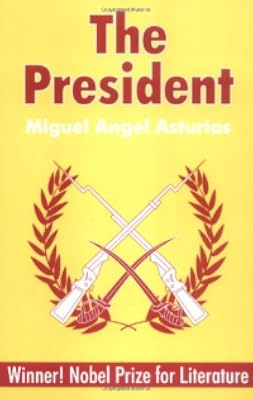
"Nobel Prize-winning Guatemalan author Miguel Ángel Asturias's masterpiece-the original Latin American dictator novel and pioneering work of magical realism-in its first new English translation in more than half a century, featuring a foreword by Nobel laureate Mario Vargas Llosa. A Penguin Classic. In an unnamed country, an egomaniacal dictator schemes to dispose of a political adversary and maintain his grip on power. As tyranny takes hold, everyone is forced to choose between compromise show more and death. Inspired by life under the regime of President Manuel Estrada Cabrera of Guatemala, where it was banned for many years, and infused with exuberant lyricism, Mayan symbolism, and Guatemalan vernacular, Nobel Prize winner Miguel Ángel Asturias's magnum opus is at once a surrealist masterpiece, a blade-sharp satire of totalitarianism, and a gripping portrait of psychological terror"-- show lessTags
Recommendations





























Member Recommendations
Member Reviews
I was prompted to buy this book after finding out that the CIA actively pushed to get it banned from the US market, and that was sufficient evidence that it was going to be an interesting read. A tale of a violent dictatorship in the early 20th century Guatemala narrated using "magical realism", which makes the reading experience dreamlike, made this story stand out for the most part. Slowly and steadily, the author introduces the sociopolitical setup of the capital city, and with that reveals how effective the state machinery has been in developing a deep mistrust among general public for each other. In a country where every citizen is basically acting as a spy while being spied on, there is no room for honesty and originality. As the show more plot unravels, the book basically boils down to one simple question: What happens when someone tries to act purely from the goodness of their heart in such a system while maintaining their loyalty to the country? show less
It is approaching nighttime, and in the porch of the cathedral of the capital of an unnamed Latin American country, the beggars and the most destitute of the city, gather to inspect their miserly belongings, nickel coins, and scraps of food before appropriating empty spaces for themselves to sleep in the night in. Their sleep was punctuated only by the sound of the footsteps of police patrolling the square below and the click of the sentinel's arms at the gates of the presidential palace. But tonight, something happened which would turn their miserable existence into something even more pitiful and horrifying. They were witness to a murder committed on the steps of cathedral. And the dead man was no ordinary person, for he was one or show more formerly one of the President's close allies.
The novel opens on this scene and sets the stage for the dark and ominous mood that pervades the country under the dictatorship. From this scene, the story shifts its focus on the President's favorite, a man called Angel Face, who was tasked to take care of the "disappearance" of General Canales, also a close associate of the President but who recently fell into disgrace. We do not know the exact nature of his offense, but he is now considered to be a rebel. The complications occur when Angel Face, in attempting to convince the General to flee (this was his specific assignment), was preempted by the arrival of other military who took the General away by force, and was left with the General's daughter, Camila. Angel Face himself was ruthless and cruel, he was not top hatchet man for nothing, but seeing the injustice of it all and the effect on the devastated young woman evoked in him a sense of duty and compassion, and he grows to love her. He knew what he was in for, but his devotion to Camila and now awareness of truth and justice brooked no halfhearted commitment on his part. Angel Face marries her, supposedly with the blessings of the President, but he knew too that his days were numbered. He is now the enemy. Many other incidents took place, highlighting the terror that dictated the actions of the citizens -- fear of being spied on, of displeasing those in power, of falling out of the favour of the President. Horrific deeds were widespread and commonplace and were never talked about. Years pass, the President continues to be at the height of his power, opponents are nowhere to be found for they have all been crushed, and a sinister calm pervades. We see a woman with a child, still waiting in hope for a certain prisoner to be released. But we know it is a hopeless wait. Deception, secrecy and lies hound our protagonists until the very end. show less
The novel opens on this scene and sets the stage for the dark and ominous mood that pervades the country under the dictatorship. From this scene, the story shifts its focus on the President's favorite, a man called Angel Face, who was tasked to take care of the "disappearance" of General Canales, also a close associate of the President but who recently fell into disgrace. We do not know the exact nature of his offense, but he is now considered to be a rebel. The complications occur when Angel Face, in attempting to convince the General to flee (this was his specific assignment), was preempted by the arrival of other military who took the General away by force, and was left with the General's daughter, Camila. Angel Face himself was ruthless and cruel, he was not top hatchet man for nothing, but seeing the injustice of it all and the effect on the devastated young woman evoked in him a sense of duty and compassion, and he grows to love her. He knew what he was in for, but his devotion to Camila and now awareness of truth and justice brooked no halfhearted commitment on his part. Angel Face marries her, supposedly with the blessings of the President, but he knew too that his days were numbered. He is now the enemy. Many other incidents took place, highlighting the terror that dictated the actions of the citizens -- fear of being spied on, of displeasing those in power, of falling out of the favour of the President. Horrific deeds were widespread and commonplace and were never talked about. Years pass, the President continues to be at the height of his power, opponents are nowhere to be found for they have all been crushed, and a sinister calm pervades. We see a woman with a child, still waiting in hope for a certain prisoner to be released. But we know it is a hopeless wait. Deception, secrecy and lies hound our protagonists until the very end. show less
I picked up this book with great expectations. I've had my eye on it for some time. It did not disappoint. In fact, it was better than I expected. A superb work of fiction certainly worthy of the Nobel Prize it garnered. The prose was exceptional often times reading like poetry. The author captures the lushness of the scene, the sufferings of the characters, and the brutal realities of the political system with a power few other books I have read can match.
A book that is often painful to read but human truths revealed in an unforgettable manner. Certainly, the best book I have read in some time.
A book that is often painful to read but human truths revealed in an unforgettable manner. Certainly, the best book I have read in some time.
Never named, but based on Guatemala's early 20th century dictator Manuel Estrada Cabrera, the president controls a web of hatchet men and informers (in fact, even ordinary people write to him to inform on their neighbors and others) to maintain his iron control over the unnamed country. Asturias wrote this book starting in 1922 in Guatemala, and then finished it in Paris in 1932, but politics prevented its publication until 1946.
The story begins among the desperate beggars sleeping on the porch of the cathedral; one of them, known as the Zany because of his craziness, kills a colonel who is taunting him. As with the "accidental" killing in The Case of Comrade Tulayev, this sets in motion an effort to frame political enemies for the show more murder, thus killing two or more birds with one stone. In this case, the enemies chosen are a general, formerly a favorite but who might or might not be siding with the "revolutionaries," and a lawyer who has also fallen from presidential favor; the beggars from the cathedral porch are forced to "confess" that they saw these two murder the colonel. Plot and counterplot take off from there, with others drawn into the conspiracy, sometimes horrifyingly so, as in the case of a poor woman who is thought to be connected to the general and,after being tortured and forced to let her infant son die, is sold to a brothel .
Although there are many subplots, and many characters, the heart of the novel is the president's "favorite," Miguel Angel Face ("He was as beautiful and as wicked as Satan.") and his surprising (to him) developing relationship with Camilla, the daughter of the disgraced general. Originally assigned by the president to help the general "escape," Angel Face involved the daughter in the scheme and either kidnapped her or spirited her away, according to what he told others. Angel Face is by no means an angel, but he does eventually experience the pangs of conscience as he comes to love Camilla.
Asturias was influenced by the French surrealists, and there are a variety of surreal effects and dream sequences in this book, as well as some lyrical descriptions of nature and landscape, some satirical sections, and some terrifying portrayals of the prison experience. Overall, it explores the insanity of dictatorship at many levels: not only how it views the slightest thing as an assault on the government (for example, when an illiterate sacristan accidentally tears down a presidentially important poster instead of the one for an event that has already happened and is thrown into jail as a revolutionary) but also how it affects people psychologically, whether they are struggling to survive, in prison, or (temporarily) a favorite of the dictatorship. It also dramatically explores the use of newspapers in spreading propaganda and information that isn't true but that serves the presidential agenda. Marred only by one anti-Semitic paragraph, this is a complex book and a devastating indictment, show less
The story begins among the desperate beggars sleeping on the porch of the cathedral; one of them, known as the Zany because of his craziness, kills a colonel who is taunting him. As with the "accidental" killing in The Case of Comrade Tulayev, this sets in motion an effort to frame political enemies for the show more murder, thus killing two or more birds with one stone. In this case, the enemies chosen are a general, formerly a favorite but who might or might not be siding with the "revolutionaries," and a lawyer who has also fallen from presidential favor; the beggars from the cathedral porch are forced to "confess" that they saw these two murder the colonel. Plot and counterplot take off from there, with others drawn into the conspiracy, sometimes horrifyingly so, as in the case of a poor woman who is thought to be connected to the general and,
Although there are many subplots, and many characters, the heart of the novel is the president's "favorite," Miguel Angel Face ("He was as beautiful and as wicked as Satan.") and his surprising (to him) developing relationship with Camilla, the daughter of the disgraced general. Originally assigned by the president to help the general "escape," Angel Face involved the daughter in the scheme and either kidnapped her or spirited her away, according to what he told others. Angel Face is by no means an angel, but he does eventually experience the pangs of conscience as he comes to love Camilla.
Asturias was influenced by the French surrealists, and there are a variety of surreal effects and dream sequences in this book, as well as some lyrical descriptions of nature and landscape, some satirical sections, and some terrifying portrayals of the prison experience. Overall, it explores the insanity of dictatorship at many levels: not only how it views the slightest thing as an assault on the government (for example, when an illiterate sacristan accidentally tears down a presidentially important poster instead of the one for an event that has already happened and is thrown into jail as a revolutionary) but also how it affects people psychologically, whether they are struggling to survive, in prison, or (temporarily) a favorite of the dictatorship. It also dramatically explores the use of newspapers in spreading propaganda and information that isn't true but that serves the presidential agenda. Marred only by one anti-Semitic paragraph, this is a complex book and a devastating indictment, show less
A grim, sometimes satirical portrait of life under a totalitarian regime in an unidentified Latin American country.
So beautiful, and sad. One moment you think everything is lost, but then is not, and then it is worst than you thought.
No fue un libro para mí. Lo retomaré en unos años a ver qué tal.
Members
- Recently Added By
Lists

Magic Realism
371 works; 52 members

Best of World Literature
432 works; 51 members

1940s
221 works; 25 members
Best Political Fiction
92 works; 12 members

Canon de la narrativa universal del siglo XX
254 works; 6 members
20th Century Literature
1,161 works; 54 members

Nobel Price Winners
222 works; 20 members

Latin American Literature
50 works; 11 members
Las 100 Mejores Novelas en Castellano del Siglo XX
105 works; 13 members

Reading Globally
136 works; 16 members

Read These Too
458 works; 9 members

Las cien mejores novelas escritas en español durante el siglo XX
22 works; 1 member
Las 100 mejores novelas de la literatura hispanoamericana
96 works; 1 member
Speculative Fiction from around the World
610 works; 17 members

Around the World in 80 Books
79 works; 4 members

Books and authors mentioned by Le Clézio in his Nobel Prize speech
87 works; 3 members
Las cien mejores novelas del siglo XX en lengua española
117 works; 1 member

Canon de la narrativa universal del s. XX (cicutadry)
499 works; 3 members
Las 100 mejores novelas de la literatura hispanoamericana (cicutadry)
100 works; 1 member

Magical Realism
23 works; 2 members
Author Information

154+ Works 3,162 Members
Novelist, playwright, poet, translator, and diplomat, Miguel Asturias received the Nobel Prize for Literature in 1967 for what was considered highly colored writing rooted in national individuality and Indian tradition. His first novel, El Senor Presidente, a fictional account of the period of violence and human degradation under the Guatemalan show more dictator Estrada Cabrera, was completed in 1932 but not published until 1946 for political reasons. It was pioneering in its use of surrealistic structures and Indian myth as integrated parts of the novel's structure. Mulata (1963) uses a Guatemalan version of the legend of Faust as a point of departure for Asturias's inventive use of Indian myth. In 1966, Asturias received the Lenin Peace Prize for writings that expose American intervention against the Guatemalan people. Following the 1954 uprising, Asturias was deprived of his citizenship by the new government and lived in exile for eight years. After the election of President Julio Cesar Mendez Montenegro in 1967, he was restored to his country's diplomatic services as ambassador to Paris and continued to publish. (Bowker Author Biography) show less
Some Editions
Awards and Honors
Awards
Notable Lists
Series

Belongs to Publisher Series
Work Relationships
Common Knowledge
- Canonical title
- The President
- Original title
- El señor Presidente
- Original publication date
- 1946
- People/Characters
- Eusebio Canales (General); Abel Carvajal; Miguel Cara de Angel; Zany; José Parrales Sonriente
- Important places
- Guatemala
- First words
- "Boom, bloom, alum-bright, Lucifer of alunite!"
- Last words*
- (Click to show. Warning: May contain spoilers.)Heer, ontferm u over ons...
- Blurbers
- Jackson, Dorian Lee; Mistral, Gabriela
- Original language
- Spanish
*Some information comes from Common Knowledge in other languages. Click "Edit" for more information.
Classifications
- Genres
- General Fiction, Fiction and Literature
- DDC/MDS
- 813 — Literature & rhetoric American literature in English American fiction in English
- LCC
- PQ7499 .A75 .S4 — Language and Literature French, Italian, Spanish and Portuguese literatures Spanish literature Provincial, local, colonial, etc. Spanish America
- BISAC
Statistics
- Members
- 1,232
- Popularity
- 19,981
- Reviews
- 22
- Rating
- (3.97)
- Languages
- 16 — Danish, Dutch, English, Finnish, French, German, Hebrew, Hungarian, Italian, Norwegian (Bokmål), Polish, Portuguese, Russian, Spanish, Swedish, Turkish
- Media
- Paper, Audiobook, Ebook
- ISBNs
- 63
- ASINs
- 22