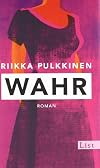
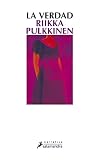
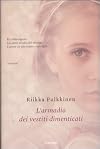
True
by Riikka Pulkkinen
On This Page
Description
Watching her parents struggle through her grandmother's terminal illness, Anna listens to family memories while pondering the fates of passersby before learning the story of her mother's nanny, about whom her grandparents have been silent for years.Tags
Recommendations













Member Recommendations

Member Reviews
[I received a review copy of this novel from Netgalley]
Original review here: http://irisonbooks.com/2012/04/02/true-b...
"Anna is quiet for a moment, then says, 'Every person’s sadness is their own. Other people can’t understand it.'"
True centres around Elsa, who is dying from cancer. But in many ways, the story is not so much about her, as about her family members and the way they deal with their impeding loss. Key characters are Martti, Elsa’s husband; Eleonoora, the daughter of Elsa and Martti; and Anna, one of Eleonoora’s daughters. And somewhere in the memories of Elsa and Martti, and later on Eleonoora and Anna, is hidden another key character: Eeva, Eleonoora’s nanny and Martti’s mistress.
Two key themes in this show more novel are love and loss. Rather big, and therefore easily perceived as empty, words, but they truthfully fit the book. Because of the double storyline of the loss of Elsa and the ones she loves as her family, and the pattern of love and loss in the affair between Martti and Eeva, these two themes are explored in a more worthwhile manner than the simple naming of them suggests. Add to that the layer of lost and found memories, and the truthfulness of those, and you may just begin to understand how this books delivers on some quite big themes through a micro study of an (extended) family.
Pulkkinen’s style is beautiful and thoughtful, and she spends quite a lot of time featuring detailed contemplations on life through the eyes of several characters. Most of these are related to the grander themes mentioned before. These contemplative sentences all threaten to tip over the line of philosophical into corny, but most of the time they worked with the general point the book was trying to get across.
I admit, True was a little confusing to me. I started reading this novel thinking it would be about a dying cancer patient and her family’s manner of coping. Instead, the novel heavily features the affair of Eeva and Martti, so much so that in the end I wonder if this is not rather the story of Eeva and Anna’s retelling of it, instead of a story revolving around Elsa. There is nothing wrong with that, although I do not in general do well with stories about affairs. I personally enjoyed True more than most stories about affairs that heavily feature "the other woman", because it plays less to feelings of victimization. I will say though, that I was left craving more details about Elsa’s illness and the contemporary dealing of the family. I felt a more natural sympathy for Elsa, and I was a little disappointed to see so little of Eleonoora and her other daughter, Maria.
Overall, True is a satisfying, quiet, and contemplative read as long as you are prepared to go along with its switch in focus from Elsa’s story to that of Anna and Eeva. If it weren’t for the rather long middle section of the novel that I felt could have done with a little less detail, the book could have very well ended up ranking high on my almost favourites list of the year. As it is, it falls into the top layer of that middle section: nourishing, but not stunning enough to blow me away. show less
Original review here: http://irisonbooks.com/2012/04/02/true-b...
"Anna is quiet for a moment, then says, 'Every person’s sadness is their own. Other people can’t understand it.'"
True centres around Elsa, who is dying from cancer. But in many ways, the story is not so much about her, as about her family members and the way they deal with their impeding loss. Key characters are Martti, Elsa’s husband; Eleonoora, the daughter of Elsa and Martti; and Anna, one of Eleonoora’s daughters. And somewhere in the memories of Elsa and Martti, and later on Eleonoora and Anna, is hidden another key character: Eeva, Eleonoora’s nanny and Martti’s mistress.
Two key themes in this show more novel are love and loss. Rather big, and therefore easily perceived as empty, words, but they truthfully fit the book. Because of the double storyline of the loss of Elsa and the ones she loves as her family, and the pattern of love and loss in the affair between Martti and Eeva, these two themes are explored in a more worthwhile manner than the simple naming of them suggests. Add to that the layer of lost and found memories, and the truthfulness of those, and you may just begin to understand how this books delivers on some quite big themes through a micro study of an (extended) family.
Pulkkinen’s style is beautiful and thoughtful, and she spends quite a lot of time featuring detailed contemplations on life through the eyes of several characters. Most of these are related to the grander themes mentioned before. These contemplative sentences all threaten to tip over the line of philosophical into corny, but most of the time they worked with the general point the book was trying to get across.
I admit, True was a little confusing to me. I started reading this novel thinking it would be about a dying cancer patient and her family’s manner of coping. Instead, the novel heavily features the affair of Eeva and Martti, so much so that in the end I wonder if this is not rather the story of Eeva and Anna’s retelling of it, instead of a story revolving around Elsa. There is nothing wrong with that, although I do not in general do well with stories about affairs. I personally enjoyed True more than most stories about affairs that heavily feature "the other woman", because it plays less to feelings of victimization. I will say though, that I was left craving more details about Elsa’s illness and the contemporary dealing of the family. I felt a more natural sympathy for Elsa, and I was a little disappointed to see so little of Eleonoora and her other daughter, Maria.
Overall, True is a satisfying, quiet, and contemplative read as long as you are prepared to go along with its switch in focus from Elsa’s story to that of Anna and Eeva. If it weren’t for the rather long middle section of the novel that I felt could have done with a little less detail, the book could have very well ended up ranking high on my almost favourites list of the year. As it is, it falls into the top layer of that middle section: nourishing, but not stunning enough to blow me away. show less
Usually I'm not a huge fan of I-form books. This one is an exception to that rule. Interesting to read. Many lives, one (extended) family, joy, unhappyness, love, leaving, hatred, desillusions, all come together in this book. At some point it even feels like history is repeating itself.
Admittedly I practically speedread this book, but all in all it was engaging family secret stuff written a very readable way.
True is a novel of 3 generations of an artistic and intellectual Finnish family -- Elsa, an eminent child psychologist, married to Martti, an artist; Eleeonora, her daughter, a surgeon; and Anna, who is caring for her grandmother, dying of cancer.
True is a novel that explores an individual and her family coming to terms with the indignities and dignity of illness and impending mortality.
True is Eeva's story -- the story of a liberated young woman in the 1960s, a university student with a nanny position, who falls in love with the father of the child she is caring for.
True uncovers family secrets and probes the nature of memories and their impact on how relationships develop.
True is a beautifully written, remarkable debut novel from show more Rikka Pulkkinen -- definitely a writer to keep an eye on.
And it is wonderfully evocative of the Finnish landscape. show less
True is a novel that explores an individual and her family coming to terms with the indignities and dignity of illness and impending mortality.
True is Eeva's story -- the story of a liberated young woman in the 1960s, a university student with a nanny position, who falls in love with the father of the child she is caring for.
True uncovers family secrets and probes the nature of memories and their impact on how relationships develop.
True is a beautifully written, remarkable debut novel from show more Rikka Pulkkinen -- definitely a writer to keep an eye on.
And it is wonderfully evocative of the Finnish landscape. show less
Para mitigar el sufrimiento de su abuela Elsa, una reconocida psicóloga infantil que padece una enfermedad incurable, Anna Ahlqvist le ofrece compartir los pequeños placeres que ambas adoran: hornear pasteles, disfrazarse juntas o improvisar un picnic en el parque. Durante uno de esos momentos de cálida intimidad, Anna se prueba un viejo vestido y una puerta que parecía cerrada para siempre se abre hacia el pasado. El vestido no perteneció a Elsa sino a Eeva, una joven mujer que había cuidado de la madre de Anna durante los largos viajes de su abuela. Y aunque el recuerdo de Eeva ha sido silenciado por todos, es la propia Elsa quien decide revivirlo. A medida que la historia se despliega y nos transporta a unos años en apariencia show more cargados de optimismo y ansias de libertad, Anna se obsesiona por recobrar el pasado de sus abuelos, como si de este modo pudiera recorrer un camino alternativo al de su propia vida. El resurgir de Eeva, sin embargo, tendrá efectos inesperados en la familia Ahlqvist. show less
Oct 19, 2012Spanish
Minut kirja imaisi mukaansa ensimmäisestä Eleonooran kertomasta jaksosta lähtien. Kirjan nimi ja 60-luvulle sijoittuvat jaksot ohjasivat pohtimaan miten kerromme itsellemme oman elämämme tarinaa. Pulkkinen (s.1980) on nuori kirjailija mutta hän on kirjoittanut hienosti kaikenikäisten näkökulmasta. Romaanin perhesuhteet olivat haavoistaan ja vaikeuksistaan huolimatta ihanan tasapainoisia ja läheisiä.
Apr 22, 2011Finnish
Odotin tältä kiitetyltä ja Finlandia-ehdokkaaksikin yltäneeltä esikoisteokselta paljon, mutta kirja oli pettymys. Kiinnostava alkuasetelma ja mystisen Eevan arvoitus piti mielenkiintoani jonnekin puoliväliin asti. Sitten homma alkoi lässähtää ja loppua kohti teksti sai jopa tahattoman koomisia sävyjä. Teksti on naiivia ja tekosyvällistä, mitä toki saattaa selittää se, että se on sellaiseksi tarkoitettukin: luettavaksi nuoren Annan kuvitelmina ja tulkintoina ennen hänen syntymäänsä sattuneista tapahtumista. Tämän tulkinnan mukaan Anna yrittäisi käsitellä omaa traumaansa eläytymällä Eevan osaan ja sijoittamalla oman elämänsä tapahtumia menneisyyteen. Niin tai näin, tulos ei mielestäni ole kovin vakuuttava.
Jan 6, 2014Finnish
Members
- Recently Added By
Lists

IMPAC Dublin Literary Award 2014 longlist
150 works; 3 members

Finlandia Prize Nominee
262 works; 3 members
Author Information

9+ Works 737 Members
Some Editions
Awards and Honors
Awards
Common Knowledge
- Canonical title
- True
- Original title
- Totta
- Original publication date
- 2010
- Important places
- Finland
Classifications
- Genres
- Fiction and Literature, General Fiction
- DDC/MDS
- 894.54134 — Literature & rhetoric Asian Literature Literatures of Altaic, Uralic, Hyperborean, Dravidian languages; literatures of miscellaneous languages of south Asia Finno-Ugric languages Finnic languages Finnish Finnish fiction 2000–
- LCC
- PH356 .P85 .T6813 — Language and Literature Uralic languages. Basque language Uralic. Basque Finnish
- BISAC
Statistics
- Members
- 299
- Popularity
- 106,916
- Reviews
- 12
- Rating
- (3.60)
- Languages
- 11 — Danish, Dutch, English, Finnish, French, German, Hungarian, Italian, Norwegian (Bokmål), Spanish, Swedish
- Media
- Paper, Audiobook, Ebook
- ISBNs
- 22
- ASINs
- 5