On This Page
Description
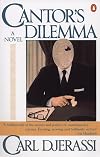
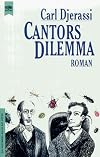
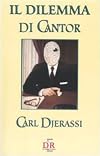
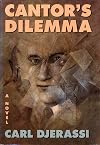
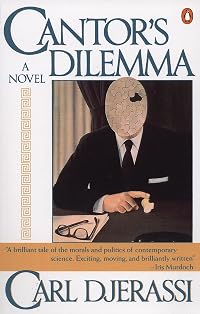
When Professor Isidore Cantor reveals his latest breakthrough in cancer research, his promising research fellow, Dr. Jeremiah Stafford, has only to conduct the experiment and win Cantor the Nobel prize. But how far will Stafford go to guarantee the results? Carl Djerassi draws from his career as a world-famous scientist to describe the fierce competition driving scientific superstars in this gripping novel.Tags
Recommendations




















Member Reviews
Science is a human endeavor, with all the messiness that humanity entails. Cantor's Dilemma is fiction, but author Carl Djerassi is a noted scientist, and his depiction of research and the scientific community is dead accurate. More than a hundred science studies papers, this book put a human face on the complications of shared authorship, trust and betrayal between partners, battles of ego over prestige and priority, and why repeatability and personal integrity are absolutely central to good science.
One caveat, Cantor's Dilemma can get a little racy in sections, in ways that may help to accelerate the narrative, but which are ultimately distracting. This book is a product of a time and place (1989), were gender politics were a weighty show more issue in academia, and I want a second opinion on how the female characters have aged. show less
One caveat, Cantor's Dilemma can get a little racy in sections, in ways that may help to accelerate the narrative, but which are ultimately distracting. This book is a product of a time and place (1989), were gender politics were a weighty show more issue in academia, and I want a second opinion on how the female characters have aged. show less
mostly well-written snapshot of academic life for scientists mashed with a little intrigue and a kind of "whodunit" for researchers. the book takes off slowly and divulges its secrets slowly but i ended up being engaged by the politics surrounding the attempted assault on the Everest or K2 of scholarship: the Nobel Prize (all metaphors borrowed from the book).
i did find the treatment of the female characters a bit stilted and perhaps a little heavy-handedly portrayed as strong and independent women. one character in particular struck me as a very 2-dimensional depiction of a single adult female. this was Djerassi's first novel, however, and the training wheels show. even within the course of the book, the storytelling improves and yet show more never really seems to pull story threads together to weave a single whole. at the end, i wasn't sure what it wanted to be and there were several unanswered questions. show less
i did find the treatment of the female characters a bit stilted and perhaps a little heavy-handedly portrayed as strong and independent women. one character in particular struck me as a very 2-dimensional depiction of a single adult female. this was Djerassi's first novel, however, and the training wheels show. even within the course of the book, the storytelling improves and yet show more never really seems to pull story threads together to weave a single whole. at the end, i wasn't sure what it wanted to be and there were several unanswered questions. show less
The politics of trying to win a Nobel Prize and, secondarily, of young women trying to get tenure. The dilemma did not seem that difficult to me. The ideas explored seemed more interesting than the story or people.
The author has a major idea about "science in art" and this is a fine example. The novel is set in in contemporary times (it was written in the 1980's, so the computing and telephony technologies are dated.) The story centers on two research scientists that collaborate on work that wins them the Nobel prize in medicine. One learns quite a bit about the prize and the ceremonies. Quite a bit of scientific thinking is involved, but the drama involves issues of honesty and trust between individuals of unequal authority and recognition. There are parallel plots involving the friends and lovers of the central pair. I learned quite a bit and was quite entertained, finishing the book quickly. I look forward to other writings by Djerasi.
ספר מתח מדעי. כנראה שלא עשה עלי רושם גדול כי אני לא זוכר כלום
Ratings
Members
- Recently Added By
Author Information

54 Works 632 Members
Carl Djerassi is emeritus professor of chemistry at Stanford University.
Series

Common Knowledge
- Canonical title*
- Cantor's Dilemma
- Original publication date
- 1989
- People/Characters
- Isidor Cantor; Jerry Stafford; Celestine Price; Jean Ardley; Paula Curry; Kurt Krauss (show all 7); Graham Lufkin
- Important places
- Chicago, Illinois, USA; Stockholm, Sweden
- Epigraph
- It seems paradoxical that scientific research, in many ways one of the most questioning and skeptical of human activities, should be dependent on personal trust. But the fact is that without trust the research enterprise coul... (show all)d not function.ARNOLD S. RELMAN, Editor
New England Journal of Medicine,1983 - Dedication
- For my most faithful readers,
Diane and Leah Middlebrook,
and for Terrence Holt. - First words
- "Damn," he muttered as he pressed his hand against his throbbing knee.
- Last words
- (Click to show. Warning: May contain spoilers.)There really isn't any hurry - after all, you, like Stafford, have already reported your work in a Nobel lecture.
*Some information comes from Common Knowledge in other languages. Click "Edit" for more information.
Classifications
Statistics
- Members
- 177
- Popularity
- 185,755
- Reviews
- 6
- Rating
- (3.36)
- Languages
- English, German, Italian
- Media
- Paper, Ebook
- ISBNs
- 8
- ASINs
- 2