
Carl Djerassi (1923–2015)
Author of Cantor's Dilemma: A Novel
About the Author
Carl Djerassi is emeritus professor of chemistry at Stanford University.
Image credit: Tradition in Action
Series
Works by Carl Djerassi
The Pill, Pygmy Chimps, and Degas' Horse: The Autobiography of Carl Djerassi (1992) 88 copies, 2 reviews
Four Jews on Parnassus--A Conversation: Benjamin, Adorno, Scholem, Schonberg by Carl Djerassi With Illustrations by Gabriele Seethaler (2008) 9 copies
Inmaculada concepción furtiva. El sexo en la era de la reproducción mecánica (Seccion de Obras de Ciencia y Tecnologia) (Spanish Edition) (2002) 3 copies
A Diary of Pique 1983-1984 / Ein Tagebuch des Grolls 1983-1984: A Bilingual Poetry Collection (2012) 2 copies
Calcolo 1 copy
Kalkül 1 copy
Unbefleckt 1 copy
Stammesgeheimnisse: Cantors Dilemma / Das Bourbaki Gambit. Zwei Romane aus der Welt der Wissenschaft (2002) 1 copy
Falácia 1 copy
The Politics of Contraception in Two Volumes : Volume I - The Present, Volume Two: The Future (Volume 1 and Volume 2) (1979) 1 copy
o dilema de cantor 1 copy
Tagged
Common Knowledge
- Canonical name
- Djerassi, Carl
- Birthdate
- 1923-10-29
- Date of death
- 2015-01-30
- Gender
- male
- Education
- University of Wisconsin
Realgymnasium
Kenyon College - Occupations
- chemist
novelist
playwright - Organizations
- Stanford University
Syntex - Awards and honors
- National Medal of Science ( [1973])
Wolf Prize (Chemistry ∙ 1978)
Austrian Cross of Honor for Art and Science, First Class (1999) - Relationships
- Middlebrook, Diane (wife)
Rosenkranz, George (colleague) - Nationality
- USA
Austria (passport) - Birthplace
- Vienna, Austria
- Places of residence
- London, England, UK
- Place of death
- San Francisco, California, USA
Members
Reviews
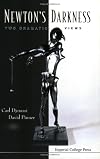
Two views of Isaac Newton and his disputes with...well, with nearly everyone. His famous temper is on display here; his dispute with Hooke is the focus of the first play and his dispute with Liebniz is center stage in the second offering. Newton is interesting not just because of his brilliance, but because his famous rages are a departure from the polite civility of London society. He was unable to stand even the slightest hint of criticism, and was famously rigid in his morality and show more Puritanical ethos. His heretical religious beliefs are also spotlighted in these offerings. Both the authors, but particularly Pinner, allude to the possibility that Newton was homosexual, though scholars are unwilling to go so far, because the evidence consists of absolutely nothing other than his close relationships to some male friends and his lack of a close relationship with women. Interesting, well written, and well researched, these plays allow us to come to grips with the reality that brilliance is not always wrapped up in a pleasant package. show less
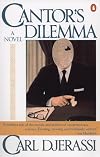
Science is a human endeavor, with all the messiness that humanity entails. Cantor's Dilemma is fiction, but author Carl Djerassi is a noted scientist, and his depiction of research and the scientific community is dead accurate. More than a hundred science studies papers, this book put a human face on the complications of shared authorship, trust and betrayal between partners, battles of ego over prestige and priority, and why repeatability and personal integrity are absolutely central to show more good science.
One caveat, Cantor's Dilemma can get a little racy in sections, in ways that may help to accelerate the narrative, but which are ultimately distracting. This book is a product of a time and place (1989), were gender politics were a weighty issue in academia, and I want a second opinion on how the female characters have aged. show less
One caveat, Cantor's Dilemma can get a little racy in sections, in ways that may help to accelerate the narrative, but which are ultimately distracting. This book is a product of a time and place (1989), were gender politics were a weighty issue in academia, and I want a second opinion on how the female characters have aged. show less
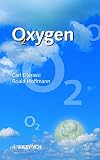
A play about the discovery of oxygen - or more accurately, about the battle for priority in the discovery of oxygen. Alternating between 1777 and 2001 Sweden, the characters attempt to determine which of three great men discovered the crucial gas first. Also, does it matter which one understood what they had discovered first? Scheele and Priestly continued to put their discoveries into the framerwork of phlogistan, while Lavoisier correctly dispensed with phlogistan and preferred the name show more Oxygen - which is the name we now use. The question, then - should the other two step aside in priority because Lavoisier knew what he'd found, and the other two didn't? And what role did Mme. Lavoisier play in it all? The play is written two actual chemists, so the science is accurately presented, but the play primarily focuses on the personalities and the discovery without getting bogged down in chemistry minutiae. An entertaining work, and it has the guts to take on the all too popular modern idea that if a scientist is ambitious, or less than godlike in his personal qualities, it somehow renders his science suspect. I just think it might have been a bit better if they'd dispensed with the 2001 plot line, and focused solely on the 1777 meeting. show less
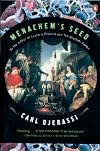
I entered my reading of Djerassi's Menachem's Seed with high expectations, and finished with a sour taste in my mouth. Don't get me wrong -- I don't believe by any means that scientists cannot or should not tread into the territory of literature. But this is ultimately a novel, goddamit, so why shouldn't it behave like one? My tongue-in-cheek reaction to reading Djerassi's work is aware of what this book attempts to do -- to combine ethics, politics, history, religion and love, against a show more backdrop of science -- but nevertheless rejects the insipid characterization, severe lack in plot development, and the awfully dominant commentary on the Israeli-Palestinian conflict. Where is the "exploration of the human" that the blurb on the back promises? Nowhere. Nowhere! Melanie Laidlaw is a desperate, lonesome woman who becomes infatuated with a man whom she deems ideal to serve as a father to her child. The catch is, he is married, and not very interested in the idea (which he knows nothing about). So Melanie, with her twisted mind reacting to the biological clock that apparently is just RAGING inside her, devises a plan. But an even greater catch is that none of what I just said takes place in the first two-thirds of the book because Djerassi was too concerned with not fleshing out his characters, with not producing plot development, with not preventing world politics from completely eclipsing the potentially beautiful observance of science and literature's union. Bleurgh. show less
Lists
You May Also Like


Associated Authors
Statistics
- Works
- 54
- Members
- 629
- Popularity
- #40,057
- Rating
- 3.5
- Reviews
- 24
- ISBNs
- 101
- Languages
- 8
- Favorited
- 3