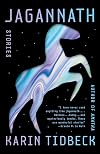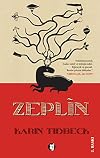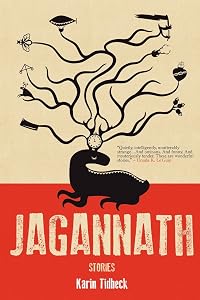
Jagannath
by Karin Tidbeck
On This Page
Description
A child is born in a tin can. A switchboard operator finds himself in hell. Three corpulent women float somewhere beyond time. Welcome to the weird world of Karin Tidbeck, the visionary Swedish author of literary sci-fi, speculative fiction, and mind-bending fantasy who has captivated readers around the world. Originally published by the tiny press Cheeky Frawg-the passion project of Ann and Jeff VanderMeer-Jagannath has been celebrated by readers and critics alike, with rave reviews from show more major outlets and support from lauded peers like China Mieville and even Ursula K. Le Guin herself. These are stories in which fairies haunt quiet towns, and an immortal being discovers the nature of time-stories in which anything is possible. show lessTags
Recommendations

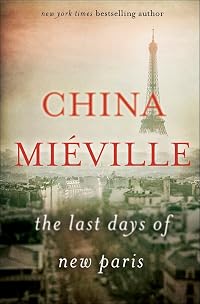
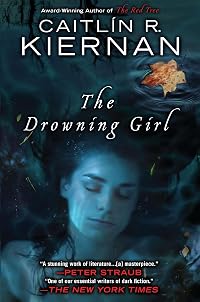

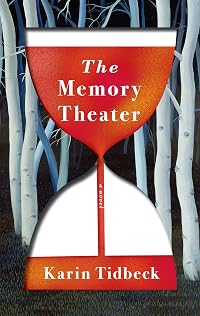
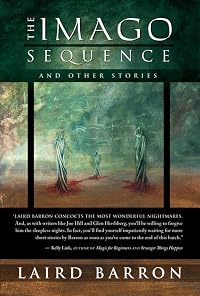
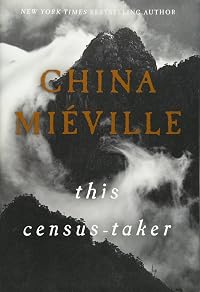
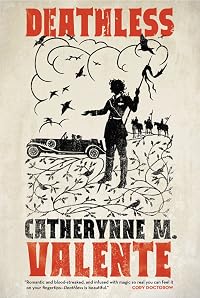
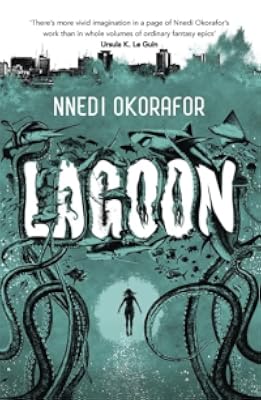
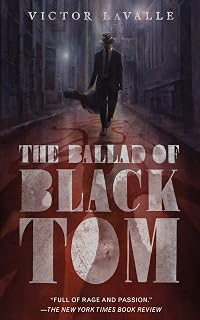


Member Recommendations
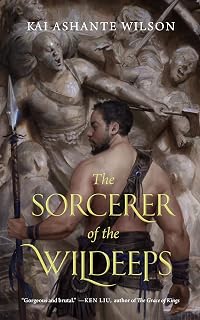
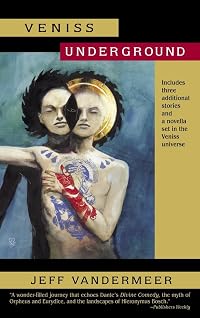
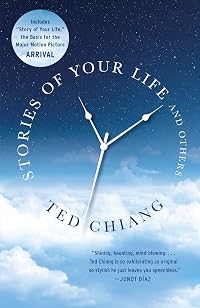
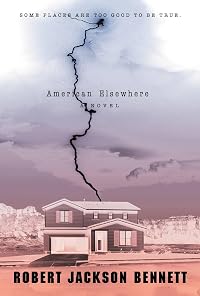
Longshanks Weird, slightly dark, occasionally wry and perceptive short stories that don't fall back on genre tropes.
Member Reviews
I love the glimpse, the sense of a world bigger than what’s on paper, the single idea explored to its limits. For me, when a writer has an original mind and the writing style to pull it off, there’s nothing better than a short story collection. If there’s also a sense of a red thread, of the collection being more than just a group of stories, but a manifestation of a way of seeing the world, I’m won over for real.
Karin Tidbeck has all of this in abundance. These stories might have relatives in the works of Miéville, or Link, or Lovecraft, but they are not quite like anything I’ve ever read. Because they are weird, sure, weird as all heck sometimes. And creepy. And scary and funny. But they are also filled with an unusual show more warmth. They are populated with people who kind of embrace the stangeness they encounter. The meetings with monsters, folklore creatures and bizarre messengers here are actual genuine meetings. And often, as in “Herr Cederberg”, the strangeness is paired with true beauty.
We meet with a writer who spends the summer in an abandoned holiday village, only to one morning find it populated with smiling people who claim to be her relatives. We meet a young girl who finds out that her sister’s mental illness might be something completely different. We meet a woman who grows a strange, burrowing little creature in a tin can, to have something to love. We meet a man who falls in physical, hopeless love with an airship.
There isn’t a bad story in the bunch here, and the variation is just right – the book feels diverse but coherent. In “Rebecka” we are in a world where God has returned, but everything stayed more or less the same. The narrator’s best friend wants to die, but God just won’t let her. In “Pyret” we are, in the form of a scientific article, presented to an extremely unusual folklore creature and the events surrounding it’s last sightings. And in the title story, the last scraps of humanity are living in symbiosis inside Mother, a giant centipedal creature roaming the wasteland. Not everyone comes up with a story like that. Even fewer pull it off.
I loved this, and recommend it to anyone with an interest in the weird. Also, Tidbeck’s description of Sweden, both Stockholm and the far north, is accurate and full of ambience. As are her other places by the way – such as the decadent croquet court of murderous queen Mnemosyne. show less
Karin Tidbeck has all of this in abundance. These stories might have relatives in the works of Miéville, or Link, or Lovecraft, but they are not quite like anything I’ve ever read. Because they are weird, sure, weird as all heck sometimes. And creepy. And scary and funny. But they are also filled with an unusual show more warmth. They are populated with people who kind of embrace the stangeness they encounter. The meetings with monsters, folklore creatures and bizarre messengers here are actual genuine meetings. And often, as in “Herr Cederberg”, the strangeness is paired with true beauty.
We meet with a writer who spends the summer in an abandoned holiday village, only to one morning find it populated with smiling people who claim to be her relatives. We meet a young girl who finds out that her sister’s mental illness might be something completely different. We meet a woman who grows a strange, burrowing little creature in a tin can, to have something to love. We meet a man who falls in physical, hopeless love with an airship.
There isn’t a bad story in the bunch here, and the variation is just right – the book feels diverse but coherent. In “Rebecka” we are in a world where God has returned, but everything stayed more or less the same. The narrator’s best friend wants to die, but God just won’t let her. In “Pyret” we are, in the form of a scientific article, presented to an extremely unusual folklore creature and the events surrounding it’s last sightings. And in the title story, the last scraps of humanity are living in symbiosis inside Mother, a giant centipedal creature roaming the wasteland. Not everyone comes up with a story like that. Even fewer pull it off.
I loved this, and recommend it to anyone with an interest in the weird. Also, Tidbeck’s description of Sweden, both Stockholm and the far north, is accurate and full of ambience. As are her other places by the way – such as the decadent croquet court of murderous queen Mnemosyne. show less
A gem of a short story collection, bursting with imagination. These satisfying and seemingly simple tales unfurl their complexity and challenge your expectations.
There are beautiful, whimsical ideas that have a dark human heart, like the wonderful opening story of a man who romances an airship. There are delightfully odd stories such as a player of violent croquet in the land of the Fae who discovers time and other evocative tales. I can smell the stink of dark cramped tunnels of the mothership as she births the last remnants of humanity or a starkly, beautiful mountain where old tales say the nature spirits called the Vittra live. Characters come alive briefly and connect to us, whether growing their own child to love to a pair of show more sisters dealing with their Vittra and their heritage. There is heartbreak and love and the aftermath of how we feel when we touch, however fleeting, the other.
"Cilla could neither name nor explain. It was like a longing, worse than anything she had ever experienced, but for what she had no idea. Something tremendous waited out there. Something wonderful was going to happen, and she was terrified that she would miss it."
Don't be Cilla, buy this book. Highly recommended show less
There are beautiful, whimsical ideas that have a dark human heart, like the wonderful opening story of a man who romances an airship. There are delightfully odd stories such as a player of violent croquet in the land of the Fae who discovers time and other evocative tales. I can smell the stink of dark cramped tunnels of the mothership as she births the last remnants of humanity or a starkly, beautiful mountain where old tales say the nature spirits called the Vittra live. Characters come alive briefly and connect to us, whether growing their own child to love to a pair of show more sisters dealing with their Vittra and their heritage. There is heartbreak and love and the aftermath of how we feel when we touch, however fleeting, the other.
"Cilla could neither name nor explain. It was like a longing, worse than anything she had ever experienced, but for what she had no idea. Something tremendous waited out there. Something wonderful was going to happen, and she was terrified that she would miss it."
Don't be Cilla, buy this book. Highly recommended show less
Collections can be hit and miss, but this collection of Tidbeck's speculative stories is everything a reader could want in such a collection--the tales are unique, fresh, and ripe with characters and concepts that will stick with a reader long past the book has been closed. Even the themes which come up repeatedly are treated in such unique and interesting ways that there's no repetition felt, and what's especially impressive is that the shorter stories in the collection are just as striking as the longer ones. Among the stand-outs in the collection for me were "Beatrice" and "Who is Arvid Pekon?", as well as "Rebecka"--and these are among some of the shorter stories in the collection, though I think I'll come back to read them show more repeatedly.
I'd absolutely recommend this collection to all lovers of speculative fiction, as these stories have the depth and freshness of the best high-concept novels out there in all of the best ways possible. I'm a fan of Tidbeck for life after reading Jagannath. show less
I'd absolutely recommend this collection to all lovers of speculative fiction, as these stories have the depth and freshness of the best high-concept novels out there in all of the best ways possible. I'm a fan of Tidbeck for life after reading Jagannath. show less
I had it in my head that these would be folkloric stories, but they're a lot more. I suppose speculative fits, but I'm really just delighted to find my favorite - fiction that is imaginative stories, not tailored to any marketing genre. I suspect my desire to transcend labels marks me as old more than anything else I say, but still I take great pleasure in anything that thwarts an algorithm and won't fit comfortably into a description. You tell good stories, and I'll listen. Anyway I really like this borderland imagination, I will certainly read more and might need to buy a copy for my permanent short story collection.
(A note, though, maybe take out Jagannath and use a different title.)
(A note, though, maybe take out Jagannath and use a different title.)
Strange. Disturbing. Unimaginable, but imagined. Weird. Karin Tidbeck’s first collection of short stories, Jagganath: Stories, can be so described, but one must also include compelling. It is not usual for me to want to read story after story in a single-author collection in a single sitting, but here each story was better than the last, and I stayed up long into the night reading. This Swedish author, who translated her own work into English, has an odd mind that produces odd stories, stories that every lover of weird fiction needs to read.
My fascination with this collection started with the first story, “Beatrice.” It is about a man who falls in love with an airship — not in the way a man normally falls in love with a show more complicated piece of machinery, not as in, “He loves his 1964 Mustang,” but actual passionate, physical and emotional love. He shares a warehouse for his love with a woman who has fallen in love with a steam engine. Somehow, Tidbeck makes this scenario work, even to the point of describing a sort of marriage between the machines and their human lovers, and beyond.
But “Beatrice” is Tidbeck’s way of easing us into the weirdness she has on offer. The story that has most stayed with me the most is “Rebecka.” Rebecka is a woman living in a time after God has returned to Earth and taken up an active role in the lives of His people, which often means frying them on the spot when they commit a transgression or saving them when another attempts to harm them. Karl was fried, but only after he had spent three days torturing Rebecka in every way he could imagine. Rebecka has been left horribly damaged in mind and body, and wants nothing more than to commit suicide; but God will neither allow her to do so nor mend her mind. She finally figures out how to solve her problem. The story left me with the same sort of chills I got when reading Ted Chiang’s “Hell is the Absence of God,” and I consider it equally deserving of the awards Chiang garnered. It’s a brilliant story.
“Augusta Prima” is another especially fascinating story, which opens with Augusta engaged in an unusual game of croquet, one using balls carved from bone and requiring a violence not usually associated with the lawn game. Augusta unwittingly discovers the concept of time after discovering a watch when searching for her ball in the rough beyond the gardens. Her discovery leads her down strange paths not normally visible from her world, into philosophies of which she has never dreamt.
Anyone who has ever had to call a governmental agency for help will be amused by “Who is Arvid Pekon?” I’ve often thought that the real person who answers the phone when I finally get through a complicated and contradictory message system was really the only one I ever talked to, and was inventing answers on the spot as he or she put on different voices to represent the different people I’d called. I’d love to have Miss Sycorax’s ability to speak directly to whomever I chose.
Finnish customs and folklore play a role in several of Tidbeck’s stories. “Brita’s Holiday Village,” for instance, relies upon the use of a holiday village as the site for a writer’s personal retreat to complete her novel. “Reindeer Mountain” concerns the vittra, a race of beings that lives in the mountains (and that’s actually inside the mountains, not on them) and occasionally seduces a human female. The vittra are something like fairies, but not as cute, and the story dramatically illustrates how they might appeal to young women dissatisfied with what life has to offer them. “Pyret” takes on the mantle of a sociological piece describing the titular life form, complete with footnotes. This shapeshifter race appears to be benign, if not actually of positive benefit to humans, but it is difficult to study and hard to tell if it is sentient or not. The story describes a number of interactions between humans and Pyret; while it does not have a standard plot, it is fascinating on its own terms as a study of a species of whick little is known.
“Aunts” and “Jagannath” both deal, in their own ways, with the nature of the body as surreal object (one maintained by internal sentient creatures, for instance, or bodies growing to unfathomable sizes) in realities that are not our own. Each, in its odd way, also deals with the question of the body as one’s home. They are marvelously peculiar stories.
The introduction by Elizabeth Hand, discussing the disturbing and yet funny nature of Tidbeck’s writing and the afterword by Tidbeck shed some additional light on the stories and the milieu in which Tidbeck writes. They are both fascinating for one interested in knowing more about how stories work, but unnecessary to the enjoyment of the stories themselves.
Jagganath: Stories is one of the best books of 2012. It contains writing that it new, different, alien, work that makes the normal world look strangely different, as if one’s eyes have taken in a landscape that alters our own. It is beautifully strange. show less
My fascination with this collection started with the first story, “Beatrice.” It is about a man who falls in love with an airship — not in the way a man normally falls in love with a show more complicated piece of machinery, not as in, “He loves his 1964 Mustang,” but actual passionate, physical and emotional love. He shares a warehouse for his love with a woman who has fallen in love with a steam engine. Somehow, Tidbeck makes this scenario work, even to the point of describing a sort of marriage between the machines and their human lovers, and beyond.
But “Beatrice” is Tidbeck’s way of easing us into the weirdness she has on offer. The story that has most stayed with me the most is “Rebecka.” Rebecka is a woman living in a time after God has returned to Earth and taken up an active role in the lives of His people, which often means frying them on the spot when they commit a transgression or saving them when another attempts to harm them. Karl was fried, but only after he had spent three days torturing Rebecka in every way he could imagine. Rebecka has been left horribly damaged in mind and body, and wants nothing more than to commit suicide; but God will neither allow her to do so nor mend her mind. She finally figures out how to solve her problem. The story left me with the same sort of chills I got when reading Ted Chiang’s “Hell is the Absence of God,” and I consider it equally deserving of the awards Chiang garnered. It’s a brilliant story.
“Augusta Prima” is another especially fascinating story, which opens with Augusta engaged in an unusual game of croquet, one using balls carved from bone and requiring a violence not usually associated with the lawn game. Augusta unwittingly discovers the concept of time after discovering a watch when searching for her ball in the rough beyond the gardens. Her discovery leads her down strange paths not normally visible from her world, into philosophies of which she has never dreamt.
Anyone who has ever had to call a governmental agency for help will be amused by “Who is Arvid Pekon?” I’ve often thought that the real person who answers the phone when I finally get through a complicated and contradictory message system was really the only one I ever talked to, and was inventing answers on the spot as he or she put on different voices to represent the different people I’d called. I’d love to have Miss Sycorax’s ability to speak directly to whomever I chose.
Finnish customs and folklore play a role in several of Tidbeck’s stories. “Brita’s Holiday Village,” for instance, relies upon the use of a holiday village as the site for a writer’s personal retreat to complete her novel. “Reindeer Mountain” concerns the vittra, a race of beings that lives in the mountains (and that’s actually inside the mountains, not on them) and occasionally seduces a human female. The vittra are something like fairies, but not as cute, and the story dramatically illustrates how they might appeal to young women dissatisfied with what life has to offer them. “Pyret” takes on the mantle of a sociological piece describing the titular life form, complete with footnotes. This shapeshifter race appears to be benign, if not actually of positive benefit to humans, but it is difficult to study and hard to tell if it is sentient or not. The story describes a number of interactions between humans and Pyret; while it does not have a standard plot, it is fascinating on its own terms as a study of a species of whick little is known.
“Aunts” and “Jagannath” both deal, in their own ways, with the nature of the body as surreal object (one maintained by internal sentient creatures, for instance, or bodies growing to unfathomable sizes) in realities that are not our own. Each, in its odd way, also deals with the question of the body as one’s home. They are marvelously peculiar stories.
The introduction by Elizabeth Hand, discussing the disturbing and yet funny nature of Tidbeck’s writing and the afterword by Tidbeck shed some additional light on the stories and the milieu in which Tidbeck writes. They are both fascinating for one interested in knowing more about how stories work, but unnecessary to the enjoyment of the stories themselves.
Jagganath: Stories is one of the best books of 2012. It contains writing that it new, different, alien, work that makes the normal world look strangely different, as if one’s eyes have taken in a landscape that alters our own. It is beautifully strange. show less
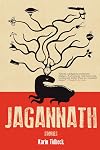
This is an amazing collection. I picked it up initially because of the cover art (it is a style I wish genre fiction used more often), without having heard of Tidbeck before. Reading it, I thought it was excellent: Tidbeck has a spare, thoughtful style and her stories are vivid, unusual, and not infrequently creepy. Every piece in the collection is strong.
But this collection is not just good: it has traveled with me. I don't have a long memory for short stories. I don't tend to return to them, re-read them, and collect them the way I do with novels. But I'm writing this a month later, and I am still turning these stories over in my head, looking for hidden places.
But this collection is not just good: it has traveled with me. I don't have a long memory for short stories. I don't tend to return to them, re-read them, and collect them the way I do with novels. But I'm writing this a month later, and I am still turning these stories over in my head, looking for hidden places.
Much of what passes for "dreamlike" is something much less than that. This is the real deal. Unsettling; murkily symbolic; attractive and frighteningly repulsive in turn. This is "fantastic fiction" in most every sense of the word, and fiction that, for all of that, feels very grounded in the human being. I'll definitely read more Tidbeck as books and stories become available.
Members
- Recently Added By
Published Reviews
ThingScore 83
It’s a slim volume, and some of the stories are only a few pages long, but it’s not quite like anything you’ve seen, even though you may hear vague echoes of everyone from Kafka to Borges to Tove Jansson.
added by karenb
For you, dear reader, something wonderful — and weird — is going to happen if you open this book.
It's waiting for you.
It's waiting for you.
added by karenb
By turns brilliant and indecipherably cryptic, this book will capture the imaginations of fans of experimental fantasy and science fiction and is a fine launch for Cheeky Frawg, a new press dedicated to international and translated fiction.
added by karenb
Lists

Best 21st Century Books (So Far)
679 works; 85 members

Female Author
1,234 works; 65 members

Top Five Books of 2017
757 works; 230 members

Speculative Fiction to Read
706 works; 31 members

Recommended Speculative Fiction by Women and People of Color
298 works; 45 members

Shelf 101
60 works; 1 member

Speculative Fiction from around the World
610 works; 18 members

Five star books
1,767 works; 109 members

Short Story Collections and Anthologies
261 works; 42 members
Author Information

22+ Works 1,381 Members
Some Editions
Awards and Honors
Awards
Work Relationships
Common Knowledge
- Original title
- Jagannath: Stories
- Original publication date
- 2010-09-20
- Blurbers
- Le Guin, Ursula K.; Mieville, China; Hand, Elizabeth; Wolfe, Gary K.; Fowler, Karen Joy; Swanwick, Michael (show all 8); Kiernan, Caitlin R.; Lord, Karen
- Original language
- Swedish; English
Classifications
- Genres
- Fiction and Literature, Fantasy, Horror
- DDC/MDS
- 839.738 — Literature & rhetoric German & related literatures Other Germanic literatures Swedish literature Swedish fiction 2000-
- LCC
- PT9877.3 .I45 .A2 — Language and Literature German, Dutch and Scandinavian literatures Swedish literature Individual authors or works 2001-
- BISAC
Statistics
- Members
- 482
- Popularity
- 63,259
- Reviews
- 26
- Rating
- (4.18)
- Languages
- 6 — Czech, English, German, Spanish, Swedish, Turkish
- Media
- Paper, Audiobook, Ebook
- ISBNs
- 13
- ASINs
- 3