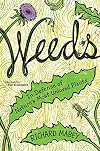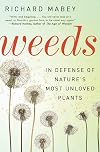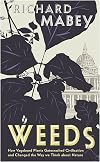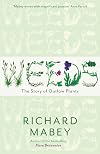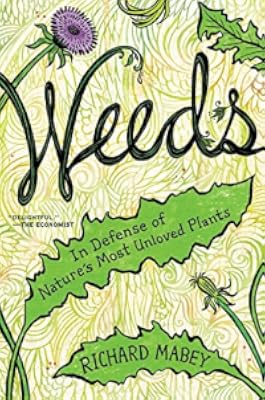
Weeds: How vagabond plants gatecrashed civilisation and changed the way we think about nature
by Richard Mabey
On This Page
Description
Weaving together natural history, botanical science and insight from his own travels, a nature writer reveals the many hidden truths behind these scourges of lawns and gardens, and explores how weeds have been portrayed from the Bible all the way to "Invasion of the Body Snatchers."Tags
Recommendations





Member Reviews
‘Weeds’ is not a gardening book, not a book to tell you how to eradicate the wretched things from your lawn nor one to tell you how to identify them. ‘Weeds’ is a history of weeds, of how plants come to be thought of as weeds, of how society reacts to them, of how they move, spread and adapt. It’s history, ecology and sociology added to the botany.
Mabey discusses how the concept of ‘weed’ started (probably at the same time as agriculture did), how weeds evolve and seem to outwit humans, why a plant is a weed in one place of the world and not in another, what weeds give back (hard to believe, but in the right setting, they do), the use of weeds medicinally, weeds in literature and poetry, how railways spread weeds all over show more Great Britain, and why almost any non-native plant seems to become a weed in Australia. The book is a very interesting read, forcing one to look at all sides of the concept of ‘weed’. If you like the kind of writing Bill Bryson does, you’ll like Mabey. show less
Mabey discusses how the concept of ‘weed’ started (probably at the same time as agriculture did), how weeds evolve and seem to outwit humans, why a plant is a weed in one place of the world and not in another, what weeds give back (hard to believe, but in the right setting, they do), the use of weeds medicinally, weeds in literature and poetry, how railways spread weeds all over show more Great Britain, and why almost any non-native plant seems to become a weed in Australia. The book is a very interesting read, forcing one to look at all sides of the concept of ‘weed’. If you like the kind of writing Bill Bryson does, you’ll like Mabey. show less
This is mostly a history of plants that may be considered weeds – basically, plants that are somewhere where a human doesn’t want it to be. It looks at how they travel, plants that were used medicinally, how they (re)populate decimated areas. He looks at how they’ve been viewed in history, including in literature, and more.
It was ok. Some parts were interesting, and others were dry. I probably tuned out a lot when he was looking at literature (except “In Flanders Fields”, which has more meaning). I still love the idea of the book, though!
It was ok. Some parts were interesting, and others were dry. I probably tuned out a lot when he was looking at literature (except “In Flanders Fields”, which has more meaning). I still love the idea of the book, though!
The book is written by an Englishman and I wanted more information about weeds in America. However, the focus on how a weed is defined within time and culture is fascinating.
Richard Mabey knows his weeds. Seriously. You know those nutty birdwatchers with their field guides and binoculars—that's Mabey with weeds. Yes, you say, but those birdwatchers go out on field hunts searching for rare birds—so does Mabey with a group of botanical nerds, searching for alien weeds in the refuse of British dumps. When a potential alien weed is found, a whistle is blown, everyone gathers around, photographs are taken, and debate ensues. The weed is then carefully removed, bagged, and a member is chosen to cultivate the weed at home. Mabey knows his weeds.
Because Mabey clearly knows what he is talking about, I gave him the benefit of the doubt. Assuming everything he said in this book is true, weeds are pretty amazing. show more Not only are they incredibly resilient, but they're smart. You thought Little Shop of Horrors was bad, wait until you see what our weeds are working on. Weeds is an excellent foray into the world of weeds. Here you see the weed through the lens of the historian, philosopher, scientist, socioeconomist, poet, and agriculturist.
Weeds are fascinating, but this book lags at times. When a person is truly passionate about a subject, they can easily overdo it. Mabey tells some wonderful stories about weeds, but he also tells ones that are difficult to make it through. Not to mention that introduction. It was over the top. I'm not sure who Mabey was writing for, but it didn't work. The language was incredibly forced. For Mabey's “entrée into the world of plants,” “on the tumuli of the old tips” where “a galaxy of more modest weeds tricked out the compacted layers of plastic and glass that passed for soil,” the “plants felt like comrades in arms, vegetable guerrillas that had overcome the dereliction of the industrial age.” Had the whole book read like those first five pages, I would've thrown it across the room and happily given it one star. Fortunately, Mabey figured out who his readers were and tossed this pomp verbosity into the compost bin.
Personally, I think Michael Pollan is a more engaging writer on the subject, and I recommend his Second Nature to anyone with even the most remote interest in nature. Mabey isn't as engrossing as Pollan, but I think he knows his stuff. He may even know more than Pollan does. And so, I recommend his Weeds to anyone with a deeper appreciation for the subject. It may be what saves you when the triffids finally have their day. http://www.youtube.com/watch?v=FqrLqg3w6AU show less
Because Mabey clearly knows what he is talking about, I gave him the benefit of the doubt. Assuming everything he said in this book is true, weeds are pretty amazing. show more Not only are they incredibly resilient, but they're smart. You thought Little Shop of Horrors was bad, wait until you see what our weeds are working on. Weeds is an excellent foray into the world of weeds. Here you see the weed through the lens of the historian, philosopher, scientist, socioeconomist, poet, and agriculturist.
Weeds are fascinating, but this book lags at times. When a person is truly passionate about a subject, they can easily overdo it. Mabey tells some wonderful stories about weeds, but he also tells ones that are difficult to make it through. Not to mention that introduction. It was over the top. I'm not sure who Mabey was writing for, but it didn't work. The language was incredibly forced. For Mabey's “entrée into the world of plants,” “on the tumuli of the old tips” where “a galaxy of more modest weeds tricked out the compacted layers of plastic and glass that passed for soil,” the “plants felt like comrades in arms, vegetable guerrillas that had overcome the dereliction of the industrial age.” Had the whole book read like those first five pages, I would've thrown it across the room and happily given it one star. Fortunately, Mabey figured out who his readers were and tossed this pomp verbosity into the compost bin.
Personally, I think Michael Pollan is a more engaging writer on the subject, and I recommend his Second Nature to anyone with even the most remote interest in nature. Mabey isn't as engrossing as Pollan, but I think he knows his stuff. He may even know more than Pollan does. And so, I recommend his Weeds to anyone with a deeper appreciation for the subject. It may be what saves you when the triffids finally have their day. http://www.youtube.com/watch?v=FqrLqg3w6AU show less
Didn't quite make 4 stars, but nearly. But awarded 4 stars in the end because I shall keep this book around and dip into it again. Lots of interesting information but a lot of it has to be taken on trust... or with a small pinch of salt. I love the way it has made me actually look up the actual weeds in my garden. Most of them I do know but some of them I just know by my own names and had no idea what the rest of the world calls them.Some of the other reviews made me laugh with complaints that english common names rather than american ones are used throughout most of the book. Weeds have so many local names that I had to look up a lot of them despite being english myself - and it just added to my own enjoyment.
Second time around I was show more surprised how little I remembered from the first time. So I enjoyed it all over again. However I think I'll look for something more botanical for next time..... show less
Second time around I was show more surprised how little I remembered from the first time. So I enjoyed it all over again. However I think I'll look for something more botanical for next time..... show less
Loved this book. Sort of a biography of weeds, in a way, or at least of the way some weeds have intersected with humans. I wish there had been photos, as so many of the weeds were truly beautiful. I kept my iPad handy, for reference. The uses of plants by man, and the abuses, and the likely future were all explored. Really enjoyed it. Highly recommended
“Weeds” should be a history of weeds around the world and how they’ve impacted man, been the source of medicine, worked their way into art, and more.
But it’s not quiet that. It’s mostly how weeds infiltrate British gardens.
OK, so it’s more than that, but that’s what it felt like to me in the long run.
England is crazy about gardening, and one of those crazy gardeners is the author. So, most of the writing is from that perspective. It’s fun for what it is, but I wanted more cultural history, and a global perspective. But I guess it wasn’t really going to happen with this writer.
Another problem was that the author used a lot of colloquial names for the weeds he discussed, but that means if you’re outside of England, show more you don’t really know what he’s talking about (unless and until he clarified or used American names).
What did he miss? As I said, medicine, weeds as food, the interaction between weeds and insects, or birds, or animals.
There were interesting sections, like how weeds took over bombing sites after WWII.
All in all, an OK book, but not what I was hoping for.
Read more of my reviews at Ralphsbooks. show less
But it’s not quiet that. It’s mostly how weeds infiltrate British gardens.
OK, so it’s more than that, but that’s what it felt like to me in the long run.
England is crazy about gardening, and one of those crazy gardeners is the author. So, most of the writing is from that perspective. It’s fun for what it is, but I wanted more cultural history, and a global perspective. But I guess it wasn’t really going to happen with this writer.
Another problem was that the author used a lot of colloquial names for the weeds he discussed, but that means if you’re outside of England, show more you don’t really know what he’s talking about (unless and until he clarified or used American names).
What did he miss? As I said, medicine, weeds as food, the interaction between weeds and insects, or birds, or animals.
There were interesting sections, like how weeds took over bombing sites after WWII.
All in all, an OK book, but not what I was hoping for.
Read more of my reviews at Ralphsbooks. show less
Members
- Recently Added By
Lists

Recommended Nature Writing
346 works; 180 members

Nature Writing
33 works; 3 members

Books Read in 2013
1,630 works; 51 members
Author Information

67+ Works 3,503 Members
Richard Mabey is one of Great Britain's foremost nature writers and editors. Mabey has written "The New Age Herbalist: How to Use Herbs for Healing, Nutrition, Body Care, and Relaxation," "In the Oxford Book of Nature Writing," which won the Whitbread Biography Award, and the BBC's television series, "Postcards from the Country." (Bowker Author show more Biography) show less
Common Knowledge
- Canonical title
- Weeds: How vagabond plants gatecrashed civilisation and changed the way we think about nature
- Original title
- Weeds: How vagabond plants gatecrashed civilisation and changed the way we think about nature
- Blurbers
- Holmes, Richard; Streever, Bill; Zimmer, Carl
- Disambiguation notice
- Published in Britain as "Weeds: How Vagabond Plants Gatecrashed Civilisation and Changed the Way We Think about Nature"
Classifications
- Genres
- Science & Nature, Nonfiction, Home & Garden, General Nonfiction
- DDC/MDS
- 632.5 — Applied science & technology Agriculture Plant injuries, diseases, pests
- LCC
- SB611 .M285 — Agriculture Horticulture. Plant propagation. Plant breeding Plant culture Pests and diseases Weeds, parasitic plants, etc.
- BISAC
Statistics
- Members
- 416
- Popularity
- 74,593
- Reviews
- 11
- Rating
- (3.61)
- Languages
- English, Italian
- Media
- Paper, Ebook
- ISBNs
- 9
- ASINs
- 7