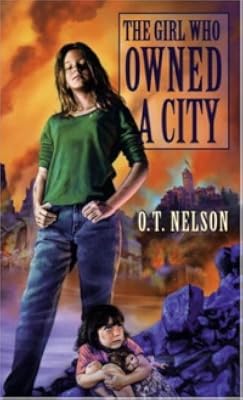
The Girl Who Owned A City
by O. T. Nelson
On This Page
Description
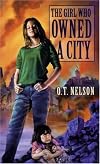
When a plague sweeps over the earth killing everyone except children under twelve, ten-year-old Lisa organizes a group to rebuild a new way of life.Tags
Recommendations







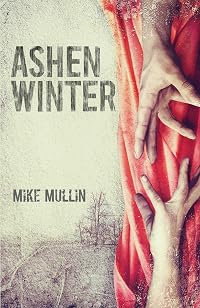
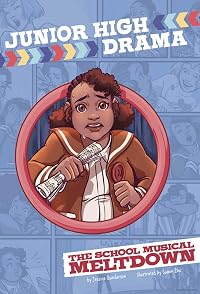


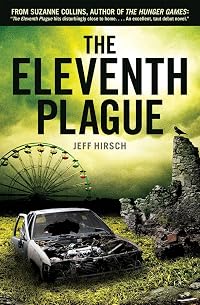
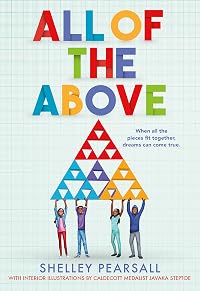
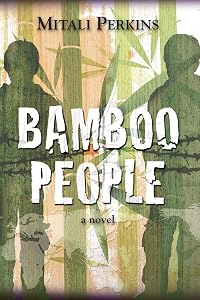

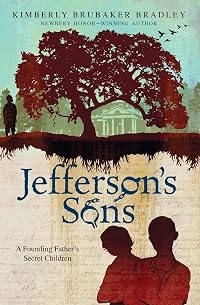


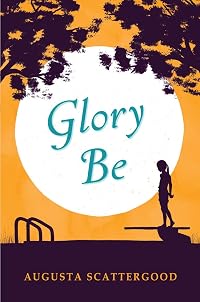
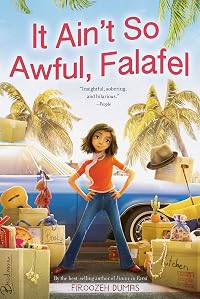
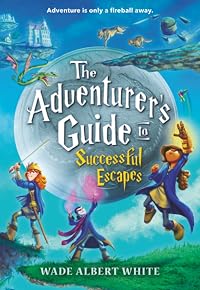
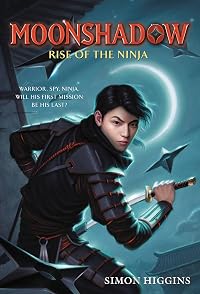
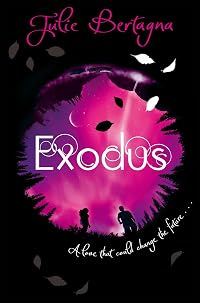
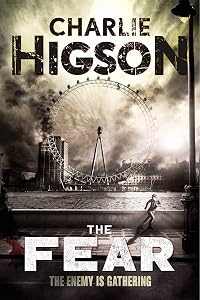
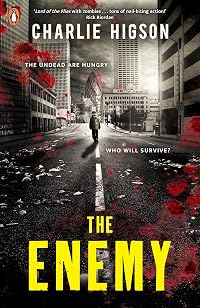
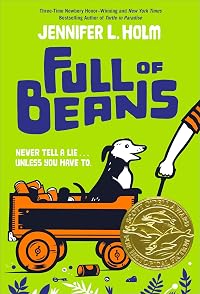
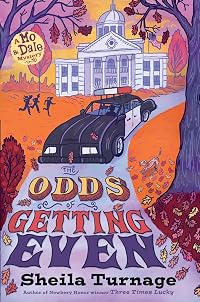
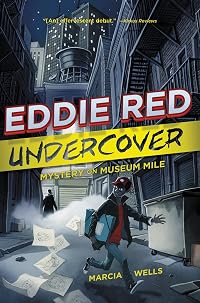
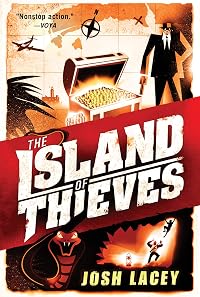
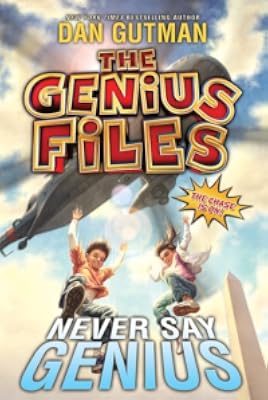
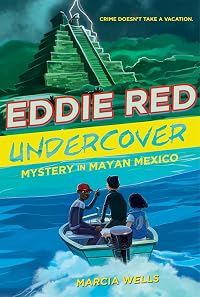
Member Recommendations

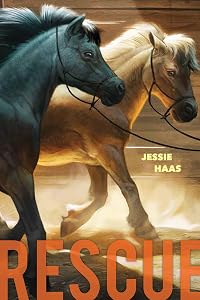
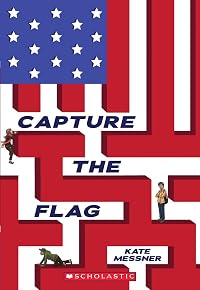
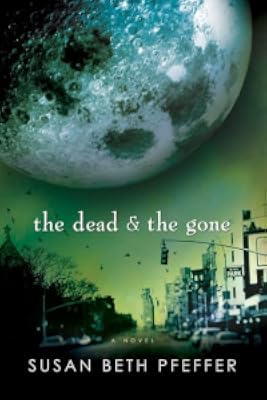
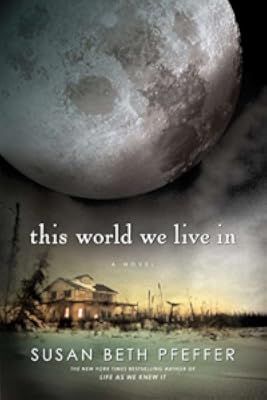
Found by June Oldham
by bookel
fastfinge More thoughts on nationhood, and what makes a nation, pitched at young readers.


Member Reviews
This is hands-down one of the worst books I have ever read. Pedantic in the extreme, nonsensically plotted and full of so many holes it looks like lace. And the writing is abysmal. Wait, what's worse than abysmal? Right, this book.
A plague has wiped out all the adults, so they are freshly dead. Except there aren't any bodies. Not one. They seem to have vanished, poof. Electricity doesn't work and there's no water to any of the houses, but there aren't any sanitation discussions. Apparently the plague made the children immune to cholera. Whatever, suspended my disbelief and moved on.
Lisa, our heroine, is ten but has been raised Libertarian. So the first thing she thinks of during a crisis is that she needs to stockpile food and raise a show more militia and be the leader who makes all the decisions. And if people don't like to do things her way they are free to leave. There will be no sharing. No charity. Only people earning their way, and fair trade at every turn. Pedantic. Heavy-handed. Preachy enough that one reads along and wonders "Why do my teeth hurt?" and realizes that one's jaw is clenched from annoyance.
I kept thinking of poor Dylan Thomas and the Christmas books he always got: "And pictureless books in which small boys, though warned with quotations not to, would skate on Farmer Giles' pond and did and drowned..."
The book exists to push hardcore Libertarian philosophy. I'm a Libertarian, but not so hardcore as this screed would like kids to grow up to be. Actually, after reading this book I think I understand why people back away when I say I'm a Libertarian. I think I'll just say from now on that I'm "socially liberal and fiscally conservative" so that no one who has read this book will think I am in favor of making small children work at night sentry duty to earn toys. show less
A plague has wiped out all the adults, so they are freshly dead. Except there aren't any bodies. Not one. They seem to have vanished, poof. Electricity doesn't work and there's no water to any of the houses, but there aren't any sanitation discussions. Apparently the plague made the children immune to cholera. Whatever, suspended my disbelief and moved on.
Lisa, our heroine, is ten but has been raised Libertarian. So the first thing she thinks of during a crisis is that she needs to stockpile food and raise a show more militia and be the leader who makes all the decisions. And if people don't like to do things her way they are free to leave. There will be no sharing. No charity. Only people earning their way, and fair trade at every turn. Pedantic. Heavy-handed. Preachy enough that one reads along and wonders "Why do my teeth hurt?" and realizes that one's jaw is clenched from annoyance.
I kept thinking of poor Dylan Thomas and the Christmas books he always got: "And pictureless books in which small boys, though warned with quotations not to, would skate on Farmer Giles' pond and did and drowned..."
The book exists to push hardcore Libertarian philosophy. I'm a Libertarian, but not so hardcore as this screed would like kids to grow up to be. Actually, after reading this book I think I understand why people back away when I say I'm a Libertarian. I think I'll just say from now on that I'm "socially liberal and fiscally conservative" so that no one who has read this book will think I am in favor of making small children work at night sentry duty to earn toys. show less
I suppose not every ten-year-old reads this book and realizes that if her parents suddenly died she could survive very well alone with her two-year-old brother.
I had grown up as an only child and had been raised to be independent and to be self-sufficient. This story alerted me to how independent I had actually become, but what's more -- it informed me that you had a responsibility to care for those you were loyal to and to protect the small from those who would bully and take advantage of them.
Lisa, the story's hero (for she is a hero), is jarringly real with all her flaws and virtues. Her devotedly loyal nature and her willingness to protect those weaker than her demonstrate the possibility of humanity's survival, and not merely show more human survival, in a world as rapacious as The Lord of the Flies. show less
I had grown up as an only child and had been raised to be independent and to be self-sufficient. This story alerted me to how independent I had actually become, but what's more -- it informed me that you had a responsibility to care for those you were loyal to and to protect the small from those who would bully and take advantage of them.
Lisa, the story's hero (for she is a hero), is jarringly real with all her flaws and virtues. Her devotedly loyal nature and her willingness to protect those weaker than her demonstrate the possibility of humanity's survival, and not merely show more human survival, in a world as rapacious as The Lord of the Flies. show less
I like post apocalyptic fiction. And I like books that come from a viewpoint different to my own. So I enjoyed this tale of Lisa, who becomes a leader after all adults are destroyed by plague. But it is a piece of propaganda with an agenda, and the agenda is that if you are clever and smart and work hard, you own what you are in charge of, and those left wing commies with their strange ideas about voting and sharing can just go and live somewhere else. If nothing else, it was a good book for challenging me to articulate why I don't agree with that. I think the conclusion I came to is that Lisa works hard for a lot, but a lot is a 'gift' - she is cleverer than average by good luck, she finds food in the warehouses that others have grown show more and stockpiled there - and so she is not solely responsible for her success. Also, it is easy in a story to say 'look, Lisa is clever and works hard, if you do not get downhearted you can learn from your mistakes and win your whole city back even when all looks doomed'. Which is a good cheerful rallying cry, but it is much more likely in the real world that even the most dedicated and brilliant person could be laid low by circumstances out of their control and need a safety net and a helping hand to get back on their feet again... show less
Tom Logan. He asks who did something (don't want to give out a spoiler for this oh so suspenseful book) to Lisa because he wants to "beat his little head in if I ever catch him".
Next paragraph. Tom Logan again. He's thinking about how he killed her.
Uh, correct me if I'm wrong but if he was looking to find who did this than how could he himself have done it?"
I suggest that Tom was trying, in the first, to deflect suspicion from himself.
---
Ok, wow, that other reviewer is so wrong. Tom asks himself the first question. And the second question doesn't even exist, at least in my edition. The closest text is Tom thinking about wishing Lisa hadn't gotten hurt... and
So anyway:
I don't understand the one-star reviews. There are some implausibilities in this book, sure. But mostly it feels believable. Children age 8-10 are very likely to love it... what child doesn't dream of a world without adults, a world of freedom and adventure? To learn that the same world also brings want and responsibilities is fascinating. And it's perfectly well written, with a lot of dialogue, heart, drama, and a sprinkle of humor. I wish I could have read it when I was a child as I would have thought of Lisa as a good role model, while at the same time enjoyed a unique adventure. show less
I remember reading this book when I was in 3rd or 4th grade and I remember loving it so much I did a book report on it. Looking back as an adult, I wonder if anyone was concerned about what I was reading. The Girl Who Owned a city is about a ten-year-old girl named Lisa who along with her younger brother, Todd, survive a plague that kills anyone over the age of twelve. So basically it's the 1970s version of Lord of the Flies with a female protagonist. Since all the adults are dead the children begin to form gangs for survival and protection. Lisa, Todd and a group other children form the Grand Avenue gang and turn their entire neighborhood into a fortress. I think why I liked this book so much as a kid was the thought of being on your show more own and having to take care of yourself. There's a part where Lisa has to drive a car to go loot some homes and stores. Nelson goes into detail about the process of creating the big fortress, the kind of booby traps the kids make (including Molotov cocktails and attack dogs). Looking back, this book was kind of nuts. I had read that this is the only book that O.T. Nelson has written and was based on an idea about what if his children were left alone without him. At some points in the story, it feels like Nelson is speaking through Lisa so she acts more like a middle-aged man than a girl. I would recommend this book for slightly older readers, like eleven and up. This might be a great book for guy readers, there's enough action and adventure to keep them interested. show less
This was one of my favorite books as a kid because the protagonist is a ten year old girl surviving in a post-plague world without adults when every one else is starving because she thinks through her problems. It doesn't quite hold up to rereading as an adult like some classics do--I felt talked down to quite a bit as the main themes are repeated clearly and often. As it turns out, this book was meant to be Ayn Rand for children.
After a virus wipes out everyone over age 12, one girl finds she has enough determination to not only survive against the gangs, but also to make plans to rebuild a community for hundreds of other children. It's a little implausible, of course, but the author makes it seem possible. And it's a little didactic, but then lots of children's books are. And, as it's told in omniscient third, there is more telling than showing. Still and all it's interesting, exciting, and would be well-suited to many classroom libraries.
Members
- Recently Added By
Lists

Best Dystopias
280 works; 276 members

Frequently sought stories - Name that Book group
149 works; 11 members

Satori Smiles Children's Book List
262 works; 7 members

World without adults
27 works; 2 members
Author Information
3 Works 857 Members
Awards and Honors
Distinctions
Work Relationships
Has the adaptation
Common Knowledge
- Canonical title
- The Girl Who Owned A City
- Original publication date
- 1979
- People/Characters
- Lisa Nelson; Todd Nelson; Craig Bergman; Jill Jansen; Charlie Harris; Steve Cole (show all 14); Tom Logan; Julie Harris; Erika Bergman; Eileen; Katy Jansen; Missy Jansen; Scott Donald Mennie; Jody
- Important places
- Glen Ellyn, outside of Chicago, Illinois, USA
Classifications
- Genres
- Fiction and Literature, Tween, Kids, Teen, Young Adult
- DDC/MDS
- 813.6 — Literature & rhetoric American literature in English American fiction in English 2000-
- LCC
- PZ7 .N4358 .G — Language and Literature Fiction and juvenile belles lettres Fiction and juvenile belles lettres Juvenile belles lettres
- BISAC
Statistics
- Members
- 854
- Popularity
- 31,964
- Reviews
- 25
- Rating
- (3.81)
- Languages
- English
- Media
- Paper, Audiobook, Ebook
- ISBNs
- 21
- ASINs
- 11