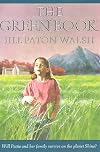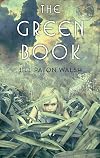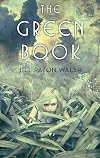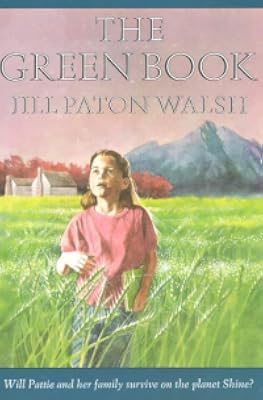
The Green Book
by Jill Paton Walsh
On This Page
Description
As their small stock of essential supplies dwindles, a group of refugees from earth struggle to make their strange new planet provide life's necessities.Tags
Recommendations


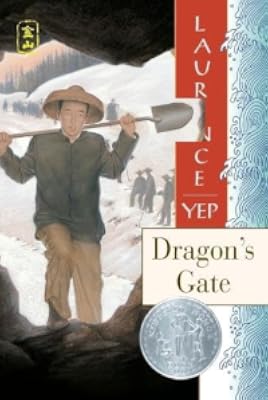
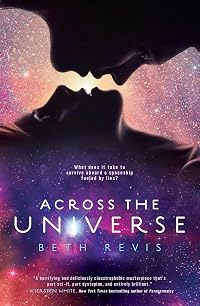
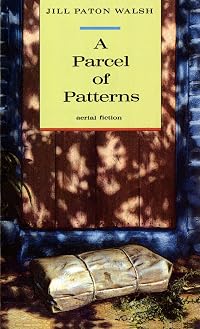
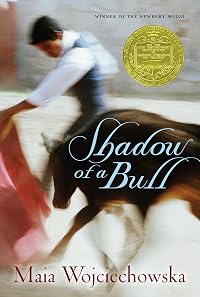
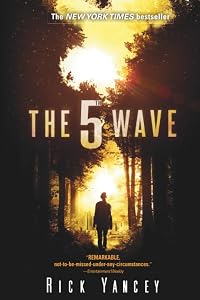
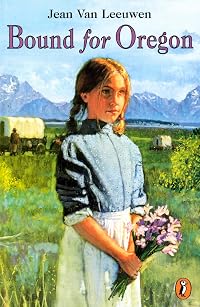
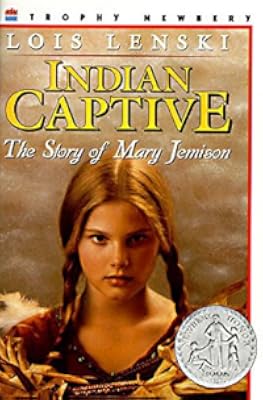


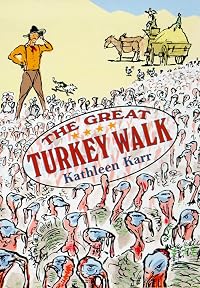



Member Recommendations



Member Reviews
This is no great work of literature but gets five stars for doing very well what it sets out to do, which is to tell a good sci fi story for young readers.
It is hard to find good science fiction for the youngest of readers but The Green Book is one of those. I loved the story of a small family unit going to a new planet, having to survive with other families and work things out in community. There are obvious time skips in the story to keep the book a manageable length for 2-3 grade readers, but these skips are done very well. I love all the beautiful ideas in the story that as a child I would have expanded upon in my own imagination. (Have you ever reread a book from childhood and found it much shorter and more bare bones than you show more remember?) The drama/problem of the story is real, but not overly complicated, and is treated with just the right amount of angst for this age group. And in the end it is the persistent hope and resilience of the children that saves the day. And yet even this plot point of the story is done without demeaning the grownups.
All in all a very well done story with good writing and beautiful ideas. I enjoyed my afternoon with this book. show less
It is hard to find good science fiction for the youngest of readers but The Green Book is one of those. I loved the story of a small family unit going to a new planet, having to survive with other families and work things out in community. There are obvious time skips in the story to keep the book a manageable length for 2-3 grade readers, but these skips are done very well. I love all the beautiful ideas in the story that as a child I would have expanded upon in my own imagination. (Have you ever reread a book from childhood and found it much shorter and more bare bones than you show more remember?) The drama/problem of the story is real, but not overly complicated, and is treated with just the right amount of angst for this age group. And in the end it is the persistent hope and resilience of the children that saves the day. And yet even this plot point of the story is done without demeaning the grownups.
All in all a very well done story with good writing and beautiful ideas. I enjoyed my afternoon with this book. show less
The Green Book was the perfect story at the perfect time for our family. Our daughter was a very early reader, and good chapter books that she could read that don't get into overly adult material - yet did not insult her intelligence - were hard to find. (if your impulse is to start listing them - we are avid readers, have no fear - we never ran out)
The child protagonists of this book were a great entry point for her - their intelligence was also something she appreciated. The Green Book was her gateway into reading longer form science fiction, of which she's become a fan.
Some reviews point out the fact that there are scientific inconsistencies... well, yeah - comics can be a good read, too, and getting hung up over where Spider-man's show more web is connecting and why Batman travels by rooftop doesn't seem to give anyone pause. Doctor Who, Star Wars, Star Trek, anyone? As for boring? Never. Sadly - this is likely the effect of assigned reading in school, which does kill many a good book for many a reluctant student. Ironically - the fact that it is assigned at times, speaks well for it's quality.
Another aspect that we liked was the fact that the society facing peril were not reaching for supernatural reassurances as they coped with their problems. The secular nature of their worldview was one we appreciate, and made the story feel like it was grounded. show less
The child protagonists of this book were a great entry point for her - their intelligence was also something she appreciated. The Green Book was her gateway into reading longer form science fiction, of which she's become a fan.
Some reviews point out the fact that there are scientific inconsistencies... well, yeah - comics can be a good read, too, and getting hung up over where Spider-man's show more web is connecting and why Batman travels by rooftop doesn't seem to give anyone pause. Doctor Who, Star Wars, Star Trek, anyone? As for boring? Never. Sadly - this is likely the effect of assigned reading in school, which does kill many a good book for many a reluctant student. Ironically - the fact that it is assigned at times, speaks well for it's quality.
Another aspect that we liked was the fact that the society facing peril were not reaching for supernatural reassurances as they coped with their problems. The secular nature of their worldview was one we appreciate, and made the story feel like it was grounded. show less
Earth is dying, and a spaceship full of people is sent to a distant planet that may be able to support life. They are sent with seeds, some equipment, and the smallest assortment of personal belongings. But when the ship lands on the new planet, their only hope is that it can sustain life - because there is no fuel for the spaceship to take off again and go elsewhere. For a book that is clearly science fiction, this oddly never really felt like it belonged in that genre. As the people struggle to try to grow food on the new planet, it felt more like reading about the various disasters that Larua Ingalls Wilder's family dealt with in the Little House series. A very short book, and a good read; though the supposed surprise of the last show more page is a bit predictable. show less
A quick read detailing a family's four year journey to a new planet. Though they have little resources, they, along with others, must seek out a new planet because the earth is no longer-- or soon to be no longer. It lends itself well to a lot of discussion questions in a classroom, such as needs and wants, what are your most important/valued possessions, how a journal can outline a story etc. It does spur a child's imagination.. What would it be like if all our plants were made of crystals and grass cut your feet? How would you survive? Oh, and if you could only have one book, which book would you take? Some of the characters chose very poorly.. Have fun reading this older short novel.
The story takes place in a future when the inhabitants of Earth have to leave it to escape its impending destruction (the cause of which is not explained in the book, but some allusions to the light getting bluer and the planet colder might mean the Sun is dying). Young Pattie, her father, older brother and sister are part of one of the last groups to leave. Their spaceship is quite old, and they are headed towards a planet where life might be possible. After four years of traveling, they finally arrive on the planet, which turns out to be quite hospitable at first with breathable air, drinkable water, and no dangerous animals or other beings. However, the group soon discovers that they cannot grow Earth vegetables in its show more crystalline-like soil, and the wheat they sowed looks more like glass than wheat. Will they be able to survive on Shine?
I am not a reader of science fiction, and apprehended reading this book, but I actually got into the story which is still very much “human” because it portrays a future that humanity might be confronted with one day, and I was actually disappointed at the end that the story was not longer. I wanted to know more about the life of the people on the new planet even though to stop the story where it does makes sense. The narration of the book is interesting because the narrator is omniscient, but includes himself/herself in the story by using the pronoun “we”. Since all the main characters are mentioned in the third-person, I spent the whole book wondering about that narrator. In an interesting mise en abyme, it turns out that the book we are reading was actually written by Pattie in a green cover notebook she had brought from Earth, hence the title. It usually takes a particular kind of child to enjoy science fiction stories, but I believe this book could appeal to other readers as well because of the more universal story. Ages 8 and up. show less
I am not a reader of science fiction, and apprehended reading this book, but I actually got into the story which is still very much “human” because it portrays a future that humanity might be confronted with one day, and I was actually disappointed at the end that the story was not longer. I wanted to know more about the life of the people on the new planet even though to stop the story where it does makes sense. The narration of the book is interesting because the narrator is omniscient, but includes himself/herself in the story by using the pronoun “we”. Since all the main characters are mentioned in the third-person, I spent the whole book wondering about that narrator. In an interesting mise en abyme, it turns out that the book we are reading was actually written by Pattie in a green cover notebook she had brought from Earth, hence the title. It usually takes a particular kind of child to enjoy science fiction stories, but I believe this book could appeal to other readers as well because of the more universal story. Ages 8 and up. show less
It's a children's book that would be just about perfect for 3 or 4th grade. It was also a book that allowed me to fill in a category for a challenge...so it served a duel purpose. It's an interesting story about modern pioneering with some really cool illustrations. To an adult reader it's a reminder that children can and do make some of the biggest contributions to family and society.
I first read this in grade school when I was first getting into fantasy/sci-fi and the story always stuck with me though I could not remember the title. I somehow tracked it down and was quite glad I did. The story follows a family who travels to a distant planet fleeing a dying Earth. This particular family and their compatriots were not well off so they are sent with limited resources on a ship not designed for colonization. The planet is one of crystalline structure - rocks, trees, plants all appear glass-like. It was this aspect of the world building that so caught my imagination as a child. Overall not a groundbreaking or amazing book, but it was nice to revisit it.
Members
- Recently Added By
Lists

Sonlight Books
1,487 works; 25 members

Frequently sought stories - Name that Book group
149 works; 11 members
Talk Discussions
Past Discussions
Found: YA - Earth dying, girl on spaceship to settle new planet in Name that Book (October 2023)
Children's book, journey to new planet, butterfly-like aliens in Name that Book (October 2011)
Author Information

59+ Works 8,502 Members
Jill Paton Walsh was born Gillian Bliss on April 29, 1937 in London. She graduated from St. Anne's College in Oxford. She taught at the Enfield Girls' Grammar School for three years and was a permanent visiting faculty member for the Center for Children's Literature at Simmons College in Boston, Massachusetts. She was also an adjunct British board show more member of Children's Literature New England. She has written more than 15 books for children. She has won numerous awards including the Book World Festival Award for Fireweed in 1970, the Whitbread Prize for The Emperor's Winding Sheet in1974, the Universe Prize for A Parcel of Patterns in 1984, and the Smarties Grand Prix for Gaffer Samson's Luck in 1984. She has also written adult novels, including completing an unfinished Dorothy Sayers manuscript. Her adult works include Knowledge of Angels, The Serpentine Cave, and A School for Lovers. She is the author of the Imogen Quy Mystery series and the Lord Peter Wimsey Mystery series. She was elected as fellow of the Royal Society of Literature in 1996. (Bowker Author Biography) show less
Some Editions
Awards and Honors
Notable Lists
Work Relationships
Has as a student's study guide
Common Knowledge
- Canonical title
- The Green Book
- Original title
- The Green Book
- Original publication date
- 1981
- Dedication
- For Robert, Matthew, and Kate -J.P.W.
- First words
- Father said, "We can take very little with us."
- Last words
- (Click to show. Warning: May contain spoilers.)"Father said, 'We can take very little with us'..."
- Original language
- English
Classifications
Statistics
- Members
- 771
- Popularity
- 36,155
- Reviews
- 16
- Rating
- (3.68)
- Languages
- Danish, English, Swedish
- Media
- Paper, Ebook
- ISBNs
- 12
- ASINs
- 6