On This Page
Description
Before Zoheret and her companions can populate a new planet, they must learn to conquer those same instincts that almost destroyed their ancestors on Earth over one hundred years ago.Tags
Recommendations















Member Recommendations


by bookel

Member Reviews
e-audiobook
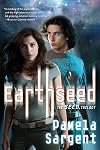
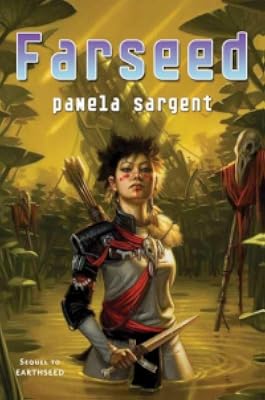
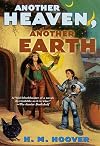
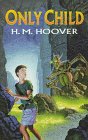
About 10% in. Does feel a bit dated. So far simplistic in some ways, but maybe because we're still learning about the 'world' from the perspective of naive teenagers. And I don't care for the cover as the teens would not wear jeans and belts, but probably jumpsuits much as real-life astronauts do. And there is a lot to learn about the world; in fact listening to audio is not ideal because I can't take notes or use book-darts. Otoh, I am enjoying it!
....
Next listen... getting more complex & interesting fast as the teens gain experience that widens their horizons & gives depths to their insights...
....
Done. Ok wow. Got very interesting. Definitely not just for teens. Much better than Hunger Games. (Ok, coming from me that's not show more saying much as I did not like HG at all, but still) and highly recommended to fans of that book.
Love the character of Ship that raised these teens. Love the provocation of what human nature really is... 'What If' we're stripped of the burdens of traditions & culture and are given a fresh start, will we be more like Star Trek's optimistic Federation, or more like the boys in Lord of the Flies? Love that a reader can enjoy the story just as an escapist adventure, can focus on the 'Sense of Wonder.'
Narrator excellent. Ending just fine... I don't know if I'll seek out the sequels, just because my to-read list is so long and I'm running out of lifetime. ;)
Highly recommended to people looking for more SF in the classic vein, esp. for female author, heroine a complex female. show less
About 10% in. Does feel a bit dated. So far simplistic in some ways, but maybe because we're still learning about the 'world' from the perspective of naive teenagers. And I don't care for the cover as the teens would not wear jeans and belts, but probably jumpsuits much as real-life astronauts do. And there is a lot to learn about the world; in fact listening to audio is not ideal because I can't take notes or use book-darts. Otoh, I am enjoying it!
....
Next listen... getting more complex & interesting fast as the teens gain experience that widens their horizons & gives depths to their insights...
....
Done. Ok wow. Got very interesting. Definitely not just for teens. Much better than Hunger Games. (Ok, coming from me that's not show more saying much as I did not like HG at all, but still) and highly recommended to fans of that book.
Love the character of Ship that raised these teens. Love the provocation of what human nature really is... 'What If' we're stripped of the burdens of traditions & culture and are given a fresh start, will we be more like Star Trek's optimistic Federation, or more like the boys in Lord of the Flies? Love that a reader can enjoy the story just as an escapist adventure, can focus on the 'Sense of Wonder.'
Narrator excellent. Ending just fine... I don't know if I'll seek out the sequels, just because my to-read list is so long and I'm running out of lifetime. ;)
Highly recommended to people looking for more SF in the classic vein, esp. for female author, heroine a complex female. show less
I only made it about a quarter of the way through. There might be something good here, but the protagonist Zoheret just annoyed me so much that I couldn't put up with her anymore. It's one thing to have a character who is attracted to assholes, especially if they grow out of it (which I'm hoping this one does eventually). But it's much worse when they spend all their time completely unselfconsciously mooning over said assholes without any trace of awareness of their assholishness. I could maybe put up with that for an hour or two (I listened to the audio book), maybe longer if there was another character calling Zoheret out on it, but as it is it was just too frustrating. Or maybe if the assholes only mostly acted as assholes, show more occasionally doing something nice, but in this case, the only "redeeming" quality seems to be how they look with their shirts off.
I dunno. Maybe I'm being too harsh. Or maybe there was just too much cognitive load involved in suspending my disbelief for the whole premise that I couldn't spare any mental effort on cutting Zoheret any slack. show less
I dunno. Maybe I'm being too harsh. Or maybe there was just too much cognitive load involved in suspending my disbelief for the whole premise that I couldn't spare any mental effort on cutting Zoheret any slack. show less
The science fiction premise behind Pamela Sargent's Earthseed is a strong one: children born on an interstellar ship must prepare for colonization of an extraterrestrial planet. The diverse cast of teenagers must live alone in the Hollow, a pastoral area of the planet-sized ship on which they were raised, and learn to function as a society. However, in-fighting and competition threatens their success, manifesting itself in a surprisingly bloody, violent way. This is not young adult science fiction for the faint of heart--it's essentially a tale of the foibles of humanity, presented with a very dark tone.
But, while this core plotline is dynamic and engaging in its direness, Sargent undermines it in several ways. Many of the teenagers show more are hardly introduced as characters only to become, suddenly, integral to the plot. Beyond their multi-cultural names, they seem largely interchangeable and poorly developed. Worse, Sargent throws in several plot wrenches suddenly, with little foreshadowing. This means that aspects of the climax feel almost like a convenient afterthought.
But stripped of all this, it's clear that Sargent possesses a certain tenderness for her main characters, particularly for heroine Zoheret and for the sentient ship (called, appropriately, "Ship") itself. For all Earthseed's flaws, Sargent manages a satisfying and well-wrought conclusion. show less
review of
Pamela Sargent's Earthseed
by tENTATIVELY, a cONVENIENCE - May 9, 2013
This is the 4th bk by Sargent that I've read. The others are The Sudden Star, Watchstar, & Venus of Dreams. The only one I've reviewed is Watchstar ( http://www.goodreads.com/book/show/6989152-watchstar ). I can't really say that I know her work yet. It appears that her writing is somewhat known as being targeted at young adults. I'd say this bk was.
As w/ Watchstar (1980), Earthseed (1983) is a 'coming-of-age' story - in this case it's not so much a story about a central character, even tho there IS a central female protagonist as there was in Watchstar, as it is about a whole community of characters 'birthed' by a 'mother' spaceship around the same time. show more
I reckon that there're enuf SF stories by now of groups of humans traveling to new planets in spaceships in order to spread humanity far & wide for this to be a subgenre. I think of Greg Bear's Anvil of Stars (1992) ( http://www.goodreads.com/book/show/464609.Anvil_of_Stars ) as a variant. I'm interested in reading the different imaginings of this possible future. At the same time, the basic idea isn't likely to surprise me precisely b/c it IS a subgenre.
It wd oversimplistic to call Earthseed the Lord of the Flies of this subgenre but it wd still be close. The spaceship, if I understood correctly, is an adapted asteroid. Inside there's a wilderness that spans 10s of miles. The coming-of-age Earthseed teenagers must live in this wilderness for awhile in order to develop their skills at adapting to an environment that doesn't machine feed them - as the mother ship had previously done. The Lord of the Flies aspect appears as the nastier side of humanity manifests itself in typical bullying Alpha Male ways.
While Sargent doesn't completely oversimplify human behavior into sexual stereotypes, there's a bit too much of the THE-MATRIARCHY-WILL-ULTIMATELY-BE-MORE-HUMANE -THAN-THE-PATRIARCHY in here for me. My own personal experience is that matriarchy is just as vicious & soul destroying & manipulative & hateful as patriarchy.
Maybe one of the more interesting aspects of this for me was the way Sargent had characters who were born w/ various health problems. I don't have a personal timeline of SF-stories-w/-characters-w/-major health-problems but Candas Jane Dorsey's A Paradigm of Earth (2001) comes to mind b/c of the character dependent on a wheelchair. Have any SF writers explored the possibilities of how zero-gravity might benefit a person w/o the use of their legs? I think of the movie Avatar.
Sargent's take on it appeals to me - the mother/father ship has created children from genetic banks as the ship has approached a potentially habitable planet. Not all of these kids have come out 'perfect'. One is blind, eg. Sargent's not going for the technology-is-a-perfect-Aryan-God routine, thank goodness. At any rate, I appreciate the sensitivity & realism of her treatment of the subject.
All in all, I whipped thru this, enjoying the tale & rooting for the least brutal, least selfish, & most cooperative & free-spirit encouraging path. So far, alas, Sargent doesn't strike me as particularly original either in terms of plot or in writing style. Instead, she's a 'solid' writer, as some might put it - a writer who imagines a very particular plot & then writes her way thru it w/ clarity & technical simplicity. show less
Pamela Sargent's Earthseed
by tENTATIVELY, a cONVENIENCE - May 9, 2013
This is the 4th bk by Sargent that I've read. The others are The Sudden Star, Watchstar, & Venus of Dreams. The only one I've reviewed is Watchstar ( http://www.goodreads.com/book/show/6989152-watchstar ). I can't really say that I know her work yet. It appears that her writing is somewhat known as being targeted at young adults. I'd say this bk was.
As w/ Watchstar (1980), Earthseed (1983) is a 'coming-of-age' story - in this case it's not so much a story about a central character, even tho there IS a central female protagonist as there was in Watchstar, as it is about a whole community of characters 'birthed' by a 'mother' spaceship around the same time. show more
I reckon that there're enuf SF stories by now of groups of humans traveling to new planets in spaceships in order to spread humanity far & wide for this to be a subgenre. I think of Greg Bear's Anvil of Stars (1992) ( http://www.goodreads.com/book/show/464609.Anvil_of_Stars ) as a variant. I'm interested in reading the different imaginings of this possible future. At the same time, the basic idea isn't likely to surprise me precisely b/c it IS a subgenre.
It wd oversimplistic to call Earthseed the Lord of the Flies of this subgenre but it wd still be close. The spaceship, if I understood correctly, is an adapted asteroid. Inside there's a wilderness that spans 10s of miles. The coming-of-age Earthseed teenagers must live in this wilderness for awhile in order to develop their skills at adapting to an environment that doesn't machine feed them - as the mother ship had previously done. The Lord of the Flies aspect appears as the nastier side of humanity manifests itself in typical bullying Alpha Male ways.
While Sargent doesn't completely oversimplify human behavior into sexual stereotypes, there's a bit too much of the THE-MATRIARCHY-WILL-ULTIMATELY-BE-MORE-HUMANE -THAN-THE-PATRIARCHY in here for me. My own personal experience is that matriarchy is just as vicious & soul destroying & manipulative & hateful as patriarchy.
Maybe one of the more interesting aspects of this for me was the way Sargent had characters who were born w/ various health problems. I don't have a personal timeline of SF-stories-w/-characters-w/-major health-problems but Candas Jane Dorsey's A Paradigm of Earth (2001) comes to mind b/c of the character dependent on a wheelchair. Have any SF writers explored the possibilities of how zero-gravity might benefit a person w/o the use of their legs? I think of the movie Avatar.
Sargent's take on it appeals to me - the mother/father ship has created children from genetic banks as the ship has approached a potentially habitable planet. Not all of these kids have come out 'perfect'. One is blind, eg. Sargent's not going for the technology-is-a-perfect-Aryan-God routine, thank goodness. At any rate, I appreciate the sensitivity & realism of her treatment of the subject.
All in all, I whipped thru this, enjoying the tale & rooting for the least brutal, least selfish, & most cooperative & free-spirit encouraging path. So far, alas, Sargent doesn't strike me as particularly original either in terms of plot or in writing style. Instead, she's a 'solid' writer, as some might put it - a writer who imagines a very particular plot & then writes her way thru it w/ clarity & technical simplicity. show less
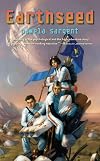
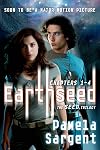
To be honest, when I first looked up Earthseed by Pamela Sargent on GoodReads I choked a little bit with laughter seeing it's original, 1983 cover. It was cheesy, embarrassing, and frankly everything I remember reading when I was 10 years old in the 80's.
Thankfully, the edition I received from TOR Teen featured an updated cover and, after reading a few reviews, I dove into the story with hope.
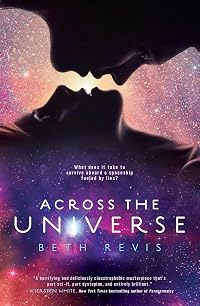
After just a few pages I was immediately reminded of Beth Revis' Across the Universe - which was not a bad thing, just made me remember the hope I had to see more sci-fi leaning Young Adult fiction out there and less paranormal-romance.
Earthseed gave me just about everything I look for in a sci-fi-"lite" book. It wasn't too filled with technical show more terms that I had to struggle to figure out what was going on, in fact almost immediately I knew exactly what was happening, between the sentient Ship and the children. What I had an issue with, however, was the blatant type-casting of both races and disabilities. Since this book was written in the early 80's I think it's safe to say that Pamela Sargent was definitely not aware of what we are today. So if you want to read this book, keep in mind the year it was published - not that it gives Sargent an excuse (and I'm rather surprised that TOR Teen editors did not tweak it a bit), just that it was written nearly 30 years ago. show less
Thankfully, the edition I received from TOR Teen featured an updated cover and, after reading a few reviews, I dove into the story with hope.
After just a few pages I was immediately reminded of Beth Revis' Across the Universe - which was not a bad thing, just made me remember the hope I had to see more sci-fi leaning Young Adult fiction out there and less paranormal-romance.
Earthseed gave me just about everything I look for in a sci-fi-"lite" book. It wasn't too filled with technical show more terms that I had to struggle to figure out what was going on, in fact almost immediately I knew exactly what was happening, between the sentient Ship and the children. What I had an issue with, however, was the blatant type-casting of both races and disabilities. Since this book was written in the early 80's I think it's safe to say that Pamela Sargent was definitely not aware of what we are today. So if you want to read this book, keep in mind the year it was published - not that it gives Sargent an excuse (and I'm rather surprised that TOR Teen editors did not tweak it a bit), just that it was written nearly 30 years ago. show less
Earthseed by Pamela Sergent was originally published in 1983. Somehow this book has escaped my attention until now. Earthseed is an interesting story about a spaceship named Ship, that has been programmed to find an inhabitable planet to populate with humans. These humans have never lived anywhere but on Ship. Ship has raised them, taught them, and prepared them to start a new life on a new planet.
Zoheret is a strong willed girl. She doesn't just blindly go with the crowd. She questions Ship's judgment when it releases them into a part of the ship that resembles a wilderness. Zoheret and her shipmates must learn survival skills and how to live independently of Ship. Situations arise that turn shipmates against each other, but soon they show more have to learn to work together to overcome a barrier that threatens their survival.
This story blew me away. It's like Survivor meets Battlestar Galactica. I started reading and didn't put this book down until I was finished. Even then I wanted more. Thankfully Earthseed is the first book in a trilogy so I'll get my wish. This book was exciting and full of adventure. It's definitely one of the best books I've read in some time. You're going to want to read it. It's also going to become a major motion picture. No details yet on when it's coming out or who will be in it. This story is great and I can definitely picture it on the big screen. show less
Zoheret is a strong willed girl. She doesn't just blindly go with the crowd. She questions Ship's judgment when it releases them into a part of the ship that resembles a wilderness. Zoheret and her shipmates must learn survival skills and how to live independently of Ship. Situations arise that turn shipmates against each other, but soon they show more have to learn to work together to overcome a barrier that threatens their survival.
This story blew me away. It's like Survivor meets Battlestar Galactica. I started reading and didn't put this book down until I was finished. Even then I wanted more. Thankfully Earthseed is the first book in a trilogy so I'll get my wish. This book was exciting and full of adventure. It's definitely one of the best books I've read in some time. You're going to want to read it. It's also going to become a major motion picture. No details yet on when it's coming out or who will be in it. This story is great and I can definitely picture it on the big screen. show less
The premise: ganked from BN.com: Ship hurtles through space. Deep within its core, it carries the seed of humankind. Launched by the people of a dying Earth over a century ago, its mission is to find a habitable world for the children--fifteen-year-old Zoheret and her shipmates--whom it has created from its genetic banks.
To Zoheret and her shipmates, Ship has been mother, father, and loving teacher, preparing them for their biggest challenge: to survive on their own, on an uninhabited planet, without Ship's protection. Now that day is almost upon them . . . but are they ready to leave Ship? Ship devises a test. And suddenly, instincts that have been latent for over a hundred years take over. Zoheret watches as friends become show more strangers--and enemies. Can Zoheret and her companions overcome the biggest obstacle to the survival of the human race--themselves?
My Rating
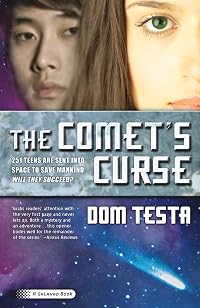
Give It Away: For the most part, I'm glad I read it. There's plenty of food for thought here, especially if you sit down and really think about what the author may be trying to say about various situations. It'd be easy to dismiss the book as relying too heavily on violence and showing bad romantic pairings, but it's more interesting to see what those choices are saying rather than assuming the author is an idiot. This might be my first book by Sargent, but I can tell the author isn't an idiot. The book is a product of its time, and it's definitely got something to say. That's what's interesting, and that's what's going to hold my interest with the second book, unless Sargent's style has evolved, and then that will likely hold my interest as well. Overall, Earthseed is a fast read, especially once you get to part two and the characters mature a bit more. Fans of Dom Testa's Galahad series will likely get into this book, but I should note that Testa's series definitely has a more optimistic note, whereas so far, Sargent's series tainted a bit by the darkness humanity can't escape. Again, it's interesting, and I think there's enough action to keep teen readers entertained. But for my part, this isn't a book I'll cherish and keep, so once I catch up on the series, I'll likely be passing the titles on.
Review style: There's actually a lot to discuss regarding this book: how its age affects the modern reader, my guess as to some now-published authors I think were inspired by this book, and most important, the nature of violence and the role in plays in this YA novel, which eventually stops feeling like a YA novel at all, and how's there's a strange discord with that. Spoilers, yes, as I notably want to talk about the nature of violence and how it plays out in the story, so if spoilers bother you, don't click the link below for the full review at my LJ. Everyone else, onward! As always, comments and discussion are most welcome. :)
REVIEW: Pamela Sargent's EARTHSEED
Happy Reading! show less
To Zoheret and her shipmates, Ship has been mother, father, and loving teacher, preparing them for their biggest challenge: to survive on their own, on an uninhabited planet, without Ship's protection. Now that day is almost upon them . . . but are they ready to leave Ship? Ship devises a test. And suddenly, instincts that have been latent for over a hundred years take over. Zoheret watches as friends become show more strangers--and enemies. Can Zoheret and her companions overcome the biggest obstacle to the survival of the human race--themselves?
My Rating
Give It Away: For the most part, I'm glad I read it. There's plenty of food for thought here, especially if you sit down and really think about what the author may be trying to say about various situations. It'd be easy to dismiss the book as relying too heavily on violence and showing bad romantic pairings, but it's more interesting to see what those choices are saying rather than assuming the author is an idiot. This might be my first book by Sargent, but I can tell the author isn't an idiot. The book is a product of its time, and it's definitely got something to say. That's what's interesting, and that's what's going to hold my interest with the second book, unless Sargent's style has evolved, and then that will likely hold my interest as well. Overall, Earthseed is a fast read, especially once you get to part two and the characters mature a bit more. Fans of Dom Testa's Galahad series will likely get into this book, but I should note that Testa's series definitely has a more optimistic note, whereas so far, Sargent's series tainted a bit by the darkness humanity can't escape. Again, it's interesting, and I think there's enough action to keep teen readers entertained. But for my part, this isn't a book I'll cherish and keep, so once I catch up on the series, I'll likely be passing the titles on.
Review style: There's actually a lot to discuss regarding this book: how its age affects the modern reader, my guess as to some now-published authors I think were inspired by this book, and most important, the nature of violence and the role in plays in this YA novel, which eventually stops feeling like a YA novel at all, and how's there's a strange discord with that. Spoilers, yes, as I notably want to talk about the nature of violence and how it plays out in the story, so if spoilers bother you, don't click the link below for the full review at my LJ. Everyone else, onward! As always, comments and discussion are most welcome. :)
REVIEW: Pamela Sargent's EARTHSEED
Happy Reading! show less
Members
- Recently Added By
Author Information

95+ Works 5,532 Members
Some Editions
Awards and Honors
Awards
Distinctions
Series

Common Knowledge
- Original title
- Earthseed
- Original publication date
- 1983
Classifications
- Genres
- Fiction and Literature, Teen, Young Adult, Science Fiction
- DDC/MDS
- 813.54 — Literature & rhetoric American literature in English American fiction in English 1900-1999 1945-1999
- LCC
- PZ7 .S2472 .E — Language and Literature Fiction and juvenile belles lettres Fiction and juvenile belles lettres Juvenile belles lettres
- BISAC
Statistics
- Members
- 243
- Popularity
- 133,845
- Reviews
- 12
- Rating
- (3.64)
- Languages
- English
- Media
- Paper, Audiobook, Ebook
- ISBNs
- 19
- ASINs
- 8