
Rite of Passage
by Alexei Panshin
On This Page
Description
In 2198 man lives precariously on hastily-established colony worlds and in seven giant starships. Mia Haveros ship tests its children by casting them out to live or die in a month of Trial in the hostile wilds of a colony world. Her trial is fast approaching and she must learn not only the skills that will keep her alive but the deeper courage to face herself and her world.Tags
Recommendations



















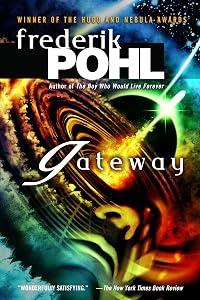


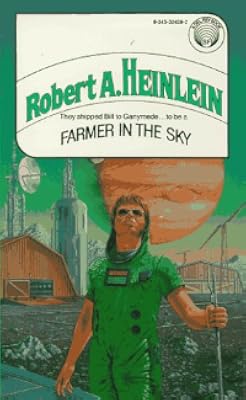



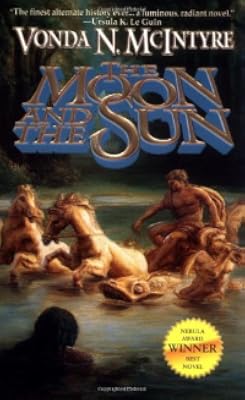
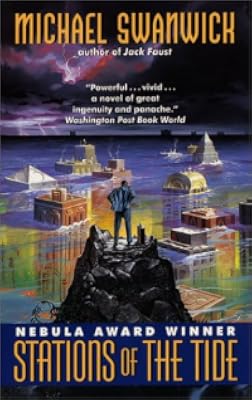


Member Recommendations


Member Reviews
Some years ago, someone wrote a vignette about travelling by air in the present day in the style of a science fiction novel. Everything - airports, passports, aeroplanes, baggage claim - was explained in info-dumps. Rite of Passage, which was nominated for the Hugo Award and won the Nebula Award, is like that. In the first chapter, Mia plays football - and then explains the game to the reader. She goes on to explain pretty much everything she encounters, little of which would be unfamiliar to an American reader in 1968.
Mia is a twelve-year-old girl on the Ship, a FTL-capable asteroid spaceship, which had been used centuries earlier to transport colonists to habitable worlds. It is one of several, but the only one mentioned. The show more colonies have been kept at low tech levels - think Revolutionary USA - and resent the high-handedness of the Ships and their inhabitants. Who, in turn, regard the colonists as intellectually and morally inferior “Mudeaters”. At the age of fourteen, Mia, like all Ship teenagers, will be dropped in the wilderness on a planet to survive for a month on her own. It’s called the Trial. Survivors are welcomed back to the Ship as adults.
Rite of Passage is Mia’s life up until her Trial, the friends she makes, her explorations of areas of the Ship, her education in Ship politics, culture and ethics… She’s chatty, opinionated, and clearly intended to be sympathetic. It’s all very… Heinleinesque (his juveniles, at least). Mia’s Trial, unfortunately, does not go as planned - the world is inhabited by colonists, Mia infiltrates the local capital when she learns her boyfriend has been captured, but she manages to break him out. They’re only fourteen, remember. Because of their treatment by the colonists, the Ship decides to “destroy” the world. Mia thinks this is wrong, thanks to her study of ethics. But, seriously, if you need to study ethics to decide genocide is wrong, then there’s something clearly fucked up with you.
In fact, there’s a lot that feels wrong about Rite of Passage - the elitism, the eugenics, the sexualisation of underage teens (what is with white male US science fiction authors of 40+ years ago and underage sex?), the dodgy philosophy, the lack of any real invention... I’m not even convinced the book is actually science fiction. It’s not like there aren’t US cities with affluent gated communities (predominantly white) and poor decaying neighbourhoods (predominantly black). Rite of Passage could be cast as a coming-of-age novel in Detroit or Chicago, and very little needs to change in the story.
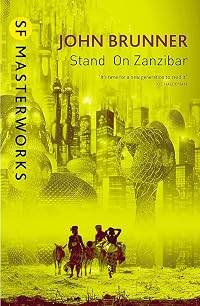
Rite of Passage lost the Hugo to Brunner’s Stand on Zanzibar, a novel which is still highly-regarded (although I thought it had aged very badly), but beat it to the Nebula. Delany’s Nova would have been a better Hugo winner, and Russ’s Picnic on Paradise a better Nebula winner. Frankly, I’m baffled Rite of Passage made either award shortlist. show less
Mia is a twelve-year-old girl on the Ship, a FTL-capable asteroid spaceship, which had been used centuries earlier to transport colonists to habitable worlds. It is one of several, but the only one mentioned. The show more colonies have been kept at low tech levels - think Revolutionary USA - and resent the high-handedness of the Ships and their inhabitants. Who, in turn, regard the colonists as intellectually and morally inferior “Mudeaters”. At the age of fourteen, Mia, like all Ship teenagers, will be dropped in the wilderness on a planet to survive for a month on her own. It’s called the Trial. Survivors are welcomed back to the Ship as adults.
Rite of Passage is Mia’s life up until her Trial, the friends she makes, her explorations of areas of the Ship, her education in Ship politics, culture and ethics… She’s chatty, opinionated, and clearly intended to be sympathetic. It’s all very… Heinleinesque (his juveniles, at least). Mia’s Trial, unfortunately, does not go as planned - the world is inhabited by colonists, Mia infiltrates the local capital when she learns her boyfriend has been captured, but she manages to break him out. They’re only fourteen, remember. Because of their treatment by the colonists, the Ship decides to “destroy” the world. Mia thinks this is wrong, thanks to her study of ethics. But, seriously, if you need to study ethics to decide genocide is wrong, then there’s something clearly fucked up with you.
In fact, there’s a lot that feels wrong about Rite of Passage - the elitism, the eugenics, the sexualisation of underage teens (what is with white male US science fiction authors of 40+ years ago and underage sex?), the dodgy philosophy, the lack of any real invention... I’m not even convinced the book is actually science fiction. It’s not like there aren’t US cities with affluent gated communities (predominantly white) and poor decaying neighbourhoods (predominantly black). Rite of Passage could be cast as a coming-of-age novel in Detroit or Chicago, and very little needs to change in the story.
Rite of Passage lost the Hugo to Brunner’s Stand on Zanzibar, a novel which is still highly-regarded (although I thought it had aged very badly), but beat it to the Nebula. Delany’s Nova would have been a better Hugo winner, and Russ’s Picnic on Paradise a better Nebula winner. Frankly, I’m baffled Rite of Passage made either award shortlist. show less
This book would have been great when I was 12 years old. It helps you wrestle with moral dilemmas. But reading it at the age I am, it seemed plodding. I did enjoy the moral lesson given on Free Birthers; the author's disgust was palpable. Our own planet would have been destroyed, if there existed Overlords for us, as it did in the story. As it is, we take the slow suicide, yea?
Rite of Passage by Alexei Panshin (My latest book review)
Mia Havero was born on one of the seven great starships constructed from hollowed-out asteroids, originally intended to transport colonists from Earth to more than one hundred colony worlds. But then the people of Earth destroyed their own planet, and the survivors among mankind are now scattered among these colonies, with the Ships continuously traveling between them, trading technical knowledge for raw materials. When teenage inhabitants of these vessels reach the age of fourteen, they undergo Trial, which involves being abandoned on one of the colony worlds to fend for themselves for a month without any contact with their respective Ships. They are given comprehensive training show more in the months before they leave and are provided with a small amount of survival gear. But since the colony worlds can be dangerous, a small percentage of these young people do not survive. This loss helps to keep the strictly-controlled population within safe limits while weeding out those who may be less fit for survival. Those who do return are granted full rights as adults, hence the title Rite of Passage.
The first half of the book does not contain much in the way of adventure. It is a description of the everyday life of Mia, a young girl living on one of the Ships, told from her perspective and replete with her opinions and musings. Mia tells us about the culture and prejudices of those who live alongside her, and she shares the views of her influential father on most issues. Many of Mia’s experiences are common to all young people everywhere. The only hints of adventure in this part of the book are a dangerous exploration of the ventilation system in an unfamiliar part of the Ship, and the ‘borrowing’ of spacesuits to conduct a potentially fatal spacewalk on the exterior of the asteroid which encases the Ship.
Although Mia seems to make up her mind very easily about the relative values of philosophical systems, she really only has a very superficial grasp of the complexities of these ideas, and many obvious questions do not even occur to her until during and after her period of Trial. In this way, the book realistically portrays the confidence and the folly of youth. The second half of the book is much more action-packed, and describes Mia’s period of Trial on a particularly unfriendly colony planet.
Moral and ethical questions which seemed clear-cut to Mia before Trial, now appear much more complicated, and when some of these issues are discussed openly by a Ship’s Assembly in the final part of the story, Mia is forced by her newly-acquired convictions to take a stand diametrically opposite to that of her father.
Some of most thought-provoking content consists of Mia’s musings on the nature of things. Here are some direct quotes from the book:
"I don't like the idea of people who don't sing to themselves when they're all alone. They're too sober for me. At least hum-- anybody can do that."
"The truth is, I guess, I just find it easier to cope with things than with people."
"It doesn’t hurt to like the inevitable."
"I had never realized before that adventures took so much doing, so much preparation and so much cleaning up afterward. That’s something you don’t see in stories. Who buys the food and cooks it, washes the dishes, minds the baby, to swing from, blows fanfares, polishes medals, and dies beautifully, all so that the hero can be a hero? Who finances him? I’m not saying I don’t believe in heroes — I’m just saying that they are either parasites or they spend the bulk of their time in making their little adventures possible, not in enjoying them."
"The trouble with stoicism, it seems to me, is that it is a soporific. It affirms the status quo and thereby puts an end to all ambition, all change. It says, as Christianity did a thousand years ago, that kings should be kings and slaves should be slaves, and it seems to me that that is a philosophy infinitely more attractive to the king than the slave."
"Whether or not your actions are determined, you have to act on the assumption that you have free will. If you are determined, your attempt at free will loses you nothing. However, if you are not determined and you act on the assumption that you are, you will never attempt anything. You will simply be a passive blob that things happen to."
"I believe in judging people by their faces, myself. A man can’t help the face he owns, but he can help the expression he wears on it. If a man looks mean, I generally believe he is unless I have reason to change my mind."
"Maturity is the ability to sort the portions of truth from the accepted lies and self-deceptions that you have grown up with. "
"I've always wondered what it would be like to be a spear carrier in somebody else's story. A spear carrier is somebody who stands in the hall when Caesar passes, comes to attention and thumps his spear. A spear carrier is the anonymous character cut down by the hero as he advances to save the menaced heroine. A spear carrier is a character put in a story to be used like a piece of disposable tissue. . . . The trouble is that each of us is his own hero, existing in a world of spear carriers. We take no joy in being used and discarded. "
"If I had the opportunity, I would make the proposal that no man should be killed except by somebody who knows him well enough for the act to have impact. No death should be like nose blowing. Death is important enough that it should affect the person who causes it."
"If you meet life squarely, you are likely to make mistakes, do things you wish you hadn't, say things you wish you could retract or phrase more felicitously, and, in short, fumble your way along. Those "mature" people whose lives are even without a single sour note or a single mistake, who never fumble, manage only at the cost of original thought and original action. They do without the successes as well as the failures."
I think this book would have been viewed as considerably unconventional when it was first published in 1968, and that is partly why it won a Nebula Award for Best Novel and was nominated for a Hugo. It is a very well-written and structured piece of work which still contains much of relevance for readers today, and it clearly has a unique place among science fiction coming-of-age stories. show less
Mia Havero was born on one of the seven great starships constructed from hollowed-out asteroids, originally intended to transport colonists from Earth to more than one hundred colony worlds. But then the people of Earth destroyed their own planet, and the survivors among mankind are now scattered among these colonies, with the Ships continuously traveling between them, trading technical knowledge for raw materials. When teenage inhabitants of these vessels reach the age of fourteen, they undergo Trial, which involves being abandoned on one of the colony worlds to fend for themselves for a month without any contact with their respective Ships. They are given comprehensive training show more in the months before they leave and are provided with a small amount of survival gear. But since the colony worlds can be dangerous, a small percentage of these young people do not survive. This loss helps to keep the strictly-controlled population within safe limits while weeding out those who may be less fit for survival. Those who do return are granted full rights as adults, hence the title Rite of Passage.
The first half of the book does not contain much in the way of adventure. It is a description of the everyday life of Mia, a young girl living on one of the Ships, told from her perspective and replete with her opinions and musings. Mia tells us about the culture and prejudices of those who live alongside her, and she shares the views of her influential father on most issues. Many of Mia’s experiences are common to all young people everywhere. The only hints of adventure in this part of the book are a dangerous exploration of the ventilation system in an unfamiliar part of the Ship, and the ‘borrowing’ of spacesuits to conduct a potentially fatal spacewalk on the exterior of the asteroid which encases the Ship.
Although Mia seems to make up her mind very easily about the relative values of philosophical systems, she really only has a very superficial grasp of the complexities of these ideas, and many obvious questions do not even occur to her until during and after her period of Trial. In this way, the book realistically portrays the confidence and the folly of youth. The second half of the book is much more action-packed, and describes Mia’s period of Trial on a particularly unfriendly colony planet.
Moral and ethical questions which seemed clear-cut to Mia before Trial, now appear much more complicated, and when some of these issues are discussed openly by a Ship’s Assembly in the final part of the story, Mia is forced by her newly-acquired convictions to take a stand diametrically opposite to that of her father.
Some of most thought-provoking content consists of Mia’s musings on the nature of things. Here are some direct quotes from the book:
"I don't like the idea of people who don't sing to themselves when they're all alone. They're too sober for me. At least hum-- anybody can do that."
"The truth is, I guess, I just find it easier to cope with things than with people."
"It doesn’t hurt to like the inevitable."
"I had never realized before that adventures took so much doing, so much preparation and so much cleaning up afterward. That’s something you don’t see in stories. Who buys the food and cooks it, washes the dishes, minds the baby, to swing from, blows fanfares, polishes medals, and dies beautifully, all so that the hero can be a hero? Who finances him? I’m not saying I don’t believe in heroes — I’m just saying that they are either parasites or they spend the bulk of their time in making their little adventures possible, not in enjoying them."
"The trouble with stoicism, it seems to me, is that it is a soporific. It affirms the status quo and thereby puts an end to all ambition, all change. It says, as Christianity did a thousand years ago, that kings should be kings and slaves should be slaves, and it seems to me that that is a philosophy infinitely more attractive to the king than the slave."
"Whether or not your actions are determined, you have to act on the assumption that you have free will. If you are determined, your attempt at free will loses you nothing. However, if you are not determined and you act on the assumption that you are, you will never attempt anything. You will simply be a passive blob that things happen to."
"I believe in judging people by their faces, myself. A man can’t help the face he owns, but he can help the expression he wears on it. If a man looks mean, I generally believe he is unless I have reason to change my mind."
"Maturity is the ability to sort the portions of truth from the accepted lies and self-deceptions that you have grown up with. "
"I've always wondered what it would be like to be a spear carrier in somebody else's story. A spear carrier is somebody who stands in the hall when Caesar passes, comes to attention and thumps his spear. A spear carrier is the anonymous character cut down by the hero as he advances to save the menaced heroine. A spear carrier is a character put in a story to be used like a piece of disposable tissue. . . . The trouble is that each of us is his own hero, existing in a world of spear carriers. We take no joy in being used and discarded. "
"If I had the opportunity, I would make the proposal that no man should be killed except by somebody who knows him well enough for the act to have impact. No death should be like nose blowing. Death is important enough that it should affect the person who causes it."
"If you meet life squarely, you are likely to make mistakes, do things you wish you hadn't, say things you wish you could retract or phrase more felicitously, and, in short, fumble your way along. Those "mature" people whose lives are even without a single sour note or a single mistake, who never fumble, manage only at the cost of original thought and original action. They do without the successes as well as the failures."
I think this book would have been viewed as considerably unconventional when it was first published in 1968, and that is partly why it won a Nebula Award for Best Novel and was nominated for a Hugo. It is a very well-written and structured piece of work which still contains much of relevance for readers today, and it clearly has a unique place among science fiction coming-of-age stories. show less
http://nhw.livejournal.com/724118.html
A rather good retelling of Heinlein's Tunnel In The Sky, with better world-building and characterisation. Mia, our narrator and heroine, has grown up on a generation starship where the young folks must endure a month on the surface of whatever nearby planet is handy to become full citizens. Her father, incidentally, is a senior politician on the starship.
This better-than-average sf Bildungsroman is then completely wrecked by the concluding section, in which Mia's people decide to blow up the planet on which she underwent her rite of passage - not because of the brutal treatment meted out by its inhabitants to her and her friends, not because they might be a potential military threat in the future, show more but purely because they don't use contraception enough. A truly great author might have made this into a great sf story (or at least a satisfactory denouement), but unfortunately Panshin isn't up to it.
So, an OK book with a terrible conclusion. show less
A rather good retelling of Heinlein's Tunnel In The Sky, with better world-building and characterisation. Mia, our narrator and heroine, has grown up on a generation starship where the young folks must endure a month on the surface of whatever nearby planet is handy to become full citizens. Her father, incidentally, is a senior politician on the starship.
This better-than-average sf Bildungsroman is then completely wrecked by the concluding section, in which Mia's people decide to blow up the planet on which she underwent her rite of passage - not because of the brutal treatment meted out by its inhabitants to her and her friends, not because they might be a potential military threat in the future, show more but purely because they don't use contraception enough. A truly great author might have made this into a great sf story (or at least a satisfactory denouement), but unfortunately Panshin isn't up to it.
So, an OK book with a terrible conclusion. show less
I was very pleased with this book. I was looking for something like the Heinlein juveniles, and Alexei Panshin really channels his inner Heinlein here.
Rite of Passage reads like one of the best Heinlein juveniles. It's told in first person by Mia Havero, a girl growing up in a huge spaceship, one of the few one remaining after the destruction of Earth. Humanity survives in a few spaceships like Mia's, which hold a lot of the scientific heritage of Earth, and in several planetary colonies which have returned to a low-tech way of life.
When she becomes 14 Mia, like all other children in her society, will have to undergo a rite of passage to become adult. She will be left with limited resources on a planet and will have to survive there show more for a month.
The book, like Heinlein's, is very readable, and concerned with how the main matures and becomes a young adult person. It has the relatable main character and the adventures we have come to expect from these juveniles, but it has something more: a more adult perspective on what growing up means. Rite of Passage is more hard-hitting than any Heinlein juvenile, with shocking evens in the last part of the novel that I'm not going to discuss to avoid spoilers.
I feel that Panshin also does a better job of not guiding the reader towards what the author believes... at least until we reach the final part.
The ending was perfect. We don't get to see whether Mia achieves her purpose. That's not the point of the story. The story ends when she grows up and becomes and adult. show less
Rite of Passage reads like one of the best Heinlein juveniles. It's told in first person by Mia Havero, a girl growing up in a huge spaceship, one of the few one remaining after the destruction of Earth. Humanity survives in a few spaceships like Mia's, which hold a lot of the scientific heritage of Earth, and in several planetary colonies which have returned to a low-tech way of life.
When she becomes 14 Mia, like all other children in her society, will have to undergo a rite of passage to become adult. She will be left with limited resources on a planet and will have to survive there show more for a month.
The book, like Heinlein's, is very readable, and concerned with how the main matures and becomes a young adult person. It has the relatable main character and the adventures we have come to expect from these juveniles, but it has something more: a more adult perspective on what growing up means. Rite of Passage is more hard-hitting than any Heinlein juvenile, with shocking evens in the last part of the novel that I'm not going to discuss to avoid spoilers.
I feel that Panshin also does a better job of not guiding the reader towards what the author believes... at least until we reach the final part.
The ending was perfect. We don't get to see whether Mia achieves her purpose. That's not the point of the story. The story ends when she grows up and becomes and adult. show less
This is an impressive science fiction novel from 1968. I had read praise about this novel many years ago, but only happened upon a paperback of the original "Ace Special" fairly recently. This is a different sort of coming of age story, especially considering when it was written. I found the narrative remarkably undated - rather simple prose without a plethora of jargon and expressions and attitudes that clearly date so many novels. This does read much like a young adult novel, but it approaches and addresses ethics issues that cross ages. To simplify, seemingly good people can do great evil in the name of good. As relevant today as it was in 1968.
The story begins with a young girl, Mia, living in a colony spaceship, a generation ship, show more one of a number that fled the destruction of earth in about our time and we find them something like 200 years after the event. The girl is about 12 when we begin, and the story is seen, told and unfolds from her perspective until about age 14. This is why the story appears to be written in a relatively simple way, because we experience life, adventures and events from her view. There is a sort of sweetness to much of this story. The story "grows up" as does our young girl, but the events in the story appear to be told from a time a few years after it all.
All children when they reach the age of 14 must go through the "Trial". It is a rite of passage for the people of the ship. They must survive on a relatively primitive planet for a month in order to earn the right to be an adult on the colony ship. It is a means of population control and natural selection, among other things - in a way part of this is also akin to a "Hunger Games".
I am really glad I read this. Comparisons to some of Robert Heinlein's better "juvenile" novels would be appropriate. The book is a little slow moving until the last third or so. However I was unhappy with the end. If there was a lesson to be learned at the end it was not clear to me, although it does reinforce the good society doing evil things message. For me, the endgame should have been better here. Not quite a four star book. show less
The story begins with a young girl, Mia, living in a colony spaceship, a generation ship, show more one of a number that fled the destruction of earth in about our time and we find them something like 200 years after the event. The girl is about 12 when we begin, and the story is seen, told and unfolds from her perspective until about age 14. This is why the story appears to be written in a relatively simple way, because we experience life, adventures and events from her view. There is a sort of sweetness to much of this story. The story "grows up" as does our young girl, but the events in the story appear to be told from a time a few years after it all.
All children when they reach the age of 14 must go through the "Trial". It is a rite of passage for the people of the ship. They must survive on a relatively primitive planet for a month in order to earn the right to be an adult on the colony ship. It is a means of population control and natural selection, among other things - in a way part of this is also akin to a "Hunger Games".
I am really glad I read this. Comparisons to some of Robert Heinlein's better "juvenile" novels would be appropriate. The book is a little slow moving until the last third or so. However I was unhappy with the end. If there was a lesson to be learned at the end it was not clear to me, although it does reinforce the good society doing evil things message. For me, the endgame should have been better here. Not quite a four star book. show less
This is a deep story with much more to it than appears at first. It is not just a startling twist on the idea of a spaceship-based society, but also on the coming-of-age story, but with a real twist: as the rebellious young heroine learns more about what her own culture really does, the reader realizes that there are real moral issues here, not just conflicts of style. Real evil often is done by "nice" people, and it's good to see an example of this worked out in fiction (where it's safer to let ourselves consider the presence of real moral choices). It's a rather timely topic for the present decade, which may be why this Nebula-winning book is now out of print! Do find this one if you're at all tempted.
Members
- Recently Added By
Lists

Best Science Fiction Novels
816 works; 426 members

Science fiction novels with a female protagonist
105 works; 29 members

Best Young Adult
413 works; 102 members

Generation Ship
28 works; 7 members

Nebula Award
111 works; 14 members

Books Read in 2022
5,226 works; 112 members

Best Sellers / Popular 1968
237 works; 5 members
Favorite Science Fiction
457 works; 223 members
Author Information

28+ Works 2,418 Members
Some Editions
Awards and Honors
Awards
Distinctions
Notable Lists
Series
Belongs to Publisher Series
Ace Science Fiction Specials, Series 1 (6 and 23)
Common Knowledge
- Canonical title
- Rite of Passage
- Original title
- Rite of Passage
- Original publication date
- 1968
- People/Characters
- Mia Havero; Jimmy Dentremont; Chairman Havero (Daddy)
- Important places
- The Ship; Tintera; Geo Quad; Alfing Quad; Sixth Level
- Epigraph
- SONNET 94
They that have pow'r to hurt and will do none,
That do not do the thing they most do show,
Who moving others are themselves as stone,
Unmoved, cold, and to temptation slow,
They ri... (show all)ghtly do inherit heaven's graces
And husband nature's riches from expense;
They are the lords and owners of their faces,
Others but stewards of their excellence.
The summer's flow'r is to the summer sweet
Though to itself it only live and die,
But if that flow'r with base infection meet,
The basest weed outbraves his dignity:
For sweetest things turn sourest by their deeds;
Lilies that fester smell far worse than weeds.
SHAKESPEARE - Dedication
- This book is for Charles and Marsha Brown
- First words
- To be honest, I haven't been able to remember clearly everything that happened to me before and during Trial, so where necessary I've filled in with possibilities--lies, if you want.
- Last words
- (Click to show. Warning: May contain spoilers.)We splashed through the rain, running toward the light over the entry gate.
{followed by Sonnet 94 again} - Blurbers
- Zelazny, Roger; Silverberg, Robert; Brunner, John; Blish, James
- Original language
- English
- Disambiguation notice
- Please DO NOT combine this with the roleplaying game supplement for Werewolf: The Apocalypse called Rite of Passage http://www.librarything.com/w... (show all)ork/2476...
There are several works with this title. Please do not combine with any of them. If your book is listed here, you can edit your author to make it clear, then separate and combine.
Classifications
Statistics
- Members
- 1,162
- Popularity
- 21,672
- Reviews
- 32
- Rating
- (3.70)
- Languages
- 8 — Czech, Dutch, English, French, German, Italian, Spanish, Turkish
- Media
- Paper, Audiobook, Ebook
- ISBNs
- 23
- ASINs
- 32