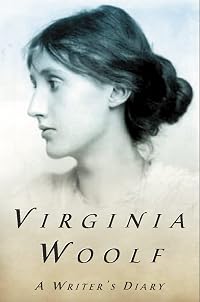
A Writer's Diary
by Virginia Woolf
On This Page
Description
An invaluable guide to the art and mind of Virginia Woolf, drawn by her husband from the personal record she kept over a period of twenty-seven years. Included are entries that refer to her own writing, others that are clearly writing exercises; accounts of people and scenes relevant to the raw material of her work; and comments on books she was reading. Edited and with a Preface by Leonard Woolf; Indices.Tags
Recommendations




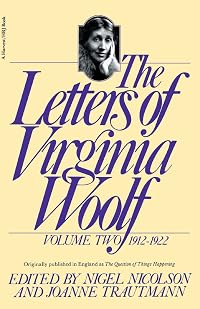


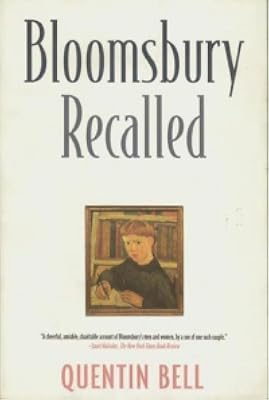
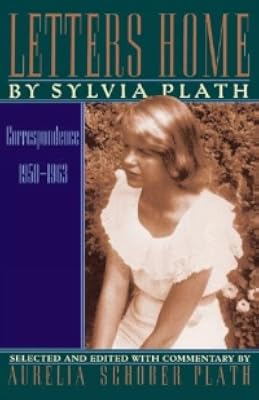
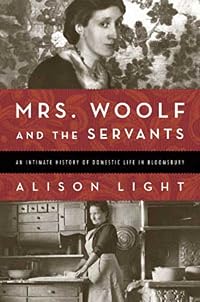









Member Recommendations

Member Reviews
I have to wonder at my timing on this one. Here I am, picking up one of the most perfect books for spurring the self on to writing during the merry month of NaNoWriMo, only to finish in the midst the most recent surge of action in the great Gramazon debacle; a debacle wholly embittered by the concept of self-published authors. Now, I'd like to go the traditional rout of publishing myself, but still. It gives both this review and my dream of writing for a living an air of antagonism, watch your step/mince your words or be misunderstood severely.
Or that could be me thinking too much.
But see here, though, that's what this whole work is all about. Thinking about writing, and when the person doing the thinking is Woolf, well. One hesitates show more to define one's principles about the 'too much thinking' business, for on one side lies her suicide and on the other, her body of work. And if you've ever had the privileged pleasure to experience her work, you know what I'm talking about.
What I'm actually attempting to talk about, here, in this review, is harder to say. The comfort I feel in comparing myself to Woolf is eerily seductive and not nearly as obsequiously awestruck as I would like it to be. I mean, Woolf! Bloomsbury group! Only one of the greatest prose artists to grace this poor world of ours, a life led during the interwar period filled with famous names, famous intrigues, and famous writing. Eurocentric and even more despairingly Anglocentric, to be fair, and her easy disparagement of others and her half-handed hypocrisy on women's rights set my teeth on edge, but my god. This old English lady who drowned herself fifty years before I was born understands me, down to the marrow of my meaning of life.
This compilation of cut-outs from a 27 year run of personal record is chock-full of that feeling, that sense of one's heartbeat relying on the pace and pound of words both writing and already written, a heartbeat that is sensitive in all the ways both right and wrong. It is not practical. It is not objective. It is everything to do with how a question of how I write put by a unwitting bystander is going to set me off on a complete and utter rhapsodizing on the power of literature in every facet of life. It is both unbearably personal and the manifesto of my character that I would proclaim to all, if I got the chance to. For, as you all know, literature means publishing, and publishing means business, and it is a very rare case indeed where those as devoted as Woolf to their craft avoid having their soul sucked out by the reality of writing for a living. Advertising, academia, pick your grindstone and hang on for dear life and the slow weathering down of passion in the face of life.
Did I mention that this book is not practical? Good. This isn't a creative fictioning self-help book, for all its sociocultural periphery. This is a lifeline.
Woolf was lucky to have a living situation such as hers. I am lucky for her being lucky enough to create such a body of work of not only reading and writing, but commentary on said reading and writing, especially writing. Especially how intimately and horrifically her mental state was tied to it, in as much a way as anything one lives for becomes. Which makes the state less of a tragedy and more of a best of all possible worlds, except not, except. Maybe? Or one could stick with 'that's life'. That is a much more honest answer, one that if you're lucky spools out enough years for the ink to spread out and flow.
I'd say more, but really, what else is there to say but: writers, read this. Readers, read this. As for me?
Or that could be me thinking too much.
But see here, though, that's what this whole work is all about. Thinking about writing, and when the person doing the thinking is Woolf, well. One hesitates show more to define one's principles about the 'too much thinking' business, for on one side lies her suicide and on the other, her body of work. And if you've ever had the privileged pleasure to experience her work, you know what I'm talking about.
What I'm actually attempting to talk about, here, in this review, is harder to say. The comfort I feel in comparing myself to Woolf is eerily seductive and not nearly as obsequiously awestruck as I would like it to be. I mean, Woolf! Bloomsbury group! Only one of the greatest prose artists to grace this poor world of ours, a life led during the interwar period filled with famous names, famous intrigues, and famous writing. Eurocentric and even more despairingly Anglocentric, to be fair, and her easy disparagement of others and her half-handed hypocrisy on women's rights set my teeth on edge, but my god. This old English lady who drowned herself fifty years before I was born understands me, down to the marrow of my meaning of life.
I thought, driving through Richmond last night, something very profound about the synthesis of my being: how only writing composes it: how nothing makes a whole unless I am writing: now I have forgotten what seemed so profound.To reiterate the perfection above, writing is both everything and nothing, depending on whether I'm paying more attention to my self or the grander scheme of things. A fervor delving into the very core of existence's delight, or a waste that asks the ultimate question of why I'm still bothering with everything in general. Once upon a time, if given the chance of control or perhaps even some means of getting rid of the nihilistic face of the coin completely, I would have taken it. These days, I'm not so sure.
This compilation of cut-outs from a 27 year run of personal record is chock-full of that feeling, that sense of one's heartbeat relying on the pace and pound of words both writing and already written, a heartbeat that is sensitive in all the ways both right and wrong. It is not practical. It is not objective. It is everything to do with how a question of how I write put by a unwitting bystander is going to set me off on a complete and utter rhapsodizing on the power of literature in every facet of life. It is both unbearably personal and the manifesto of my character that I would proclaim to all, if I got the chance to. For, as you all know, literature means publishing, and publishing means business, and it is a very rare case indeed where those as devoted as Woolf to their craft avoid having their soul sucked out by the reality of writing for a living. Advertising, academia, pick your grindstone and hang on for dear life and the slow weathering down of passion in the face of life.
Did I mention that this book is not practical? Good. This isn't a creative fictioning self-help book, for all its sociocultural periphery. This is a lifeline.
Woolf was lucky to have a living situation such as hers. I am lucky for her being lucky enough to create such a body of work of not only reading and writing, but commentary on said reading and writing, especially writing. Especially how intimately and horrifically her mental state was tied to it, in as much a way as anything one lives for becomes. Which makes the state less of a tragedy and more of a best of all possible worlds, except not, except. Maybe? Or one could stick with 'that's life'. That is a much more honest answer, one that if you're lucky spools out enough years for the ink to spread out and flow.
I'd say more, but really, what else is there to say but: writers, read this. Readers, read this. As for me?
You see, I'm thinking furiously about Reading and Writing. I have no time to describe my plans.Toodles. show less
I am always a little cautious with letter or diary collections – I can’t quite ever rid myself of the idea that I am completely the wrong audience. Letters and diaries have a very specific audience – often rooted in the time they were written, and the writers never intended, never dreamed perhaps that they would be being read by random strangers on buses, fifty, sixty or seventy years on. Still we can’t help but be fascinated can we – to read words never intended for us, left behind by those we still revere.
Diaries are difficult to review. Where to start? A Writer’s Diary really is a wonderful reading experience, Virginia Woolf seems to have been incapable of writing a poor sentence, though she was horribly hard on herself. show more From the first entry in this diary dated 1918 to the final entry – 1941 just three weeks before her death, we see something of her private inner world, from the books she was reading, the words she was herself writing to the people she encountered.
“One out to say something about Peace Day, I suppose, though whether it’s worth taking a new nib for that purpose I don’t know. I am sitting wedged into the window and so catch almost on my head the steady drip of rain which is pattering on the leaves. In ten minutes or so the Richmond procession begins. I fear there will be few people to applaud the town councillors dressed up to look dignified and march through the streets, I’ve a sense of Holland covers on the chairs; of being left behind when everyone’s in the country. I’m desolate, dusty, and disillusioned.”
When Virginia Woolf died in 1941 she left behind her the diaries which she had kept intermittently since 1915. In her diaries Virginia Woolf, had recorded what she did, what she thought and the impressions she had of the people around her. She also recorded her struggles as a writer, her hopes, fears, inspirations and experiments. Frequently her struggles, so exhaustive they made her ill. One of the uses Virginia made of her diary – Leonard Woolf explains in his preface – is that she would commune with herself about her books. She discusses sometimes briefly, sometimes at length her characters, her use of plot, form, even the titles she will give her books come in for scrutiny.
Some years after her death it fell to her husband, Leonard Woolf to edit twenty-seven years’ worth of diaries, it must have been quite a task. He realised that there were parts that could not be published until after people referred to in them had died. However, there was still lots of wonderful material, waiting to be discovered by her readers, and Leonard Woolf concentrated on those entries which particularly referred to Virginia Woolf’s writing. In these entries, we see the woman Virginia was, we feel her frustration as she wrestles with her writing, driving herself on, remorselessly sometimes, it is quite simply a wonderful portrait, painted by Virginia herself.
“So I have to create the whole thing afresh for myself each time. Probably all writers now are in the same boat. It is the penalty we pay for breaking with tradition, and the solitude makes the writing more exciting though the being read less so. One ought to sink to the bottom of the sea, probably, and live alone with one’s words.”
We see, Virginia elated when Morgan (that’s E M Forster to you) responded favourably to one of her works. Anxious about reviews that will inevitably appear whenever a new book was published – telling herself she wouldn’t care – she clearly did.
“My mind turned by anxiety, or other cause, from its scrutiny of blank paper, is like a lost child–wandering the house, sitting on the bottom step to cry.”
Alongside the detailed life of a writer – which is wonderfully readable, we catch glimpses of her life, life in London and at Rodmell, holidays to France and Italy. She records details of a slightly bizarre meeting she had with Thomas Hardy his wife Florence and their dog in 1926. She reads voraciously, and widely, is saddened by the death of Arnold Bennett. Life and death are a constant presence in these diaries, every bit as important as in her fiction. Virginia reports on the deaths of various figures; Strachey, Hardy and Roger Fry among others.
The woman who gave us Septimus Smith, who wrote Three Guineas was a woman deeply affected by war. She had been somewhat traumatised by the reports from the Front during The First World War. Here we see her, a woman in her fifties, living through another terrible war, struggling to make sense of it.
“Walking today (Nessa’s birthday) by Kingfisher pool saw my first hospital train – laden, not funereal but weighty, as if not to shake bones: something – what is the word I want – grieving and tender and heavy laden and private – bringing our wounded back carefully through the green fields at which I suppose some looked. Not that I could see them. And the faculty for seeing in imagination always leaves me suffused with something partly visual, partly emotional, I can’t, though it’s very pervasive catch it when I come home – the slowness, cadaverousness, grief of the long heavy train, taking its burden through the fields. Very quietly it slid into the cutting at Lewes. Instantly wild duck flights of aeroplanes came over head; manoeuvered; took up positions and passed over Caburn.”
Although I did a bit of dipping in and out – I did read another short novel while reading this collection – I did pretty much read this collection straight through – although it took the best part of a week. On reflection, it is probably not the best way to read these diary extracts – although I found myself more compelled and constantly drawn back to the book – Virginia Woolf’s testimony to her own creativity and triumphs is endlessly readable and endlessly quotable, as are her vulnerabilities. Forgive the wealth of quotes – I couldn’t help myself. I was amused by her preoccupation with her age – she mentions it quite often – sometimes on her birthday – but at other time too like this from April 1937.
“I was thinking between 3 and 4 this morning, of my 55 years. I lay awake so calm, so content, as if I’d stepped off the whirling world into a deep blue quiet space and there open eyed existed, beyond harm; armed against all that can happen.”
I am so glad I managed to fit in this marvellous volume of diaries to my #Woolfalong phase 5 – I wasn’t sure I was in the right frame of mind – but I needn’t have worried. show less
Diaries are difficult to review. Where to start? A Writer’s Diary really is a wonderful reading experience, Virginia Woolf seems to have been incapable of writing a poor sentence, though she was horribly hard on herself. show more From the first entry in this diary dated 1918 to the final entry – 1941 just three weeks before her death, we see something of her private inner world, from the books she was reading, the words she was herself writing to the people she encountered.
“One out to say something about Peace Day, I suppose, though whether it’s worth taking a new nib for that purpose I don’t know. I am sitting wedged into the window and so catch almost on my head the steady drip of rain which is pattering on the leaves. In ten minutes or so the Richmond procession begins. I fear there will be few people to applaud the town councillors dressed up to look dignified and march through the streets, I’ve a sense of Holland covers on the chairs; of being left behind when everyone’s in the country. I’m desolate, dusty, and disillusioned.”
When Virginia Woolf died in 1941 she left behind her the diaries which she had kept intermittently since 1915. In her diaries Virginia Woolf, had recorded what she did, what she thought and the impressions she had of the people around her. She also recorded her struggles as a writer, her hopes, fears, inspirations and experiments. Frequently her struggles, so exhaustive they made her ill. One of the uses Virginia made of her diary – Leonard Woolf explains in his preface – is that she would commune with herself about her books. She discusses sometimes briefly, sometimes at length her characters, her use of plot, form, even the titles she will give her books come in for scrutiny.
Some years after her death it fell to her husband, Leonard Woolf to edit twenty-seven years’ worth of diaries, it must have been quite a task. He realised that there were parts that could not be published until after people referred to in them had died. However, there was still lots of wonderful material, waiting to be discovered by her readers, and Leonard Woolf concentrated on those entries which particularly referred to Virginia Woolf’s writing. In these entries, we see the woman Virginia was, we feel her frustration as she wrestles with her writing, driving herself on, remorselessly sometimes, it is quite simply a wonderful portrait, painted by Virginia herself.
“So I have to create the whole thing afresh for myself each time. Probably all writers now are in the same boat. It is the penalty we pay for breaking with tradition, and the solitude makes the writing more exciting though the being read less so. One ought to sink to the bottom of the sea, probably, and live alone with one’s words.”
We see, Virginia elated when Morgan (that’s E M Forster to you) responded favourably to one of her works. Anxious about reviews that will inevitably appear whenever a new book was published – telling herself she wouldn’t care – she clearly did.
“My mind turned by anxiety, or other cause, from its scrutiny of blank paper, is like a lost child–wandering the house, sitting on the bottom step to cry.”
Alongside the detailed life of a writer – which is wonderfully readable, we catch glimpses of her life, life in London and at Rodmell, holidays to France and Italy. She records details of a slightly bizarre meeting she had with Thomas Hardy his wife Florence and their dog in 1926. She reads voraciously, and widely, is saddened by the death of Arnold Bennett. Life and death are a constant presence in these diaries, every bit as important as in her fiction. Virginia reports on the deaths of various figures; Strachey, Hardy and Roger Fry among others.
The woman who gave us Septimus Smith, who wrote Three Guineas was a woman deeply affected by war. She had been somewhat traumatised by the reports from the Front during The First World War. Here we see her, a woman in her fifties, living through another terrible war, struggling to make sense of it.
“Walking today (Nessa’s birthday) by Kingfisher pool saw my first hospital train – laden, not funereal but weighty, as if not to shake bones: something – what is the word I want – grieving and tender and heavy laden and private – bringing our wounded back carefully through the green fields at which I suppose some looked. Not that I could see them. And the faculty for seeing in imagination always leaves me suffused with something partly visual, partly emotional, I can’t, though it’s very pervasive catch it when I come home – the slowness, cadaverousness, grief of the long heavy train, taking its burden through the fields. Very quietly it slid into the cutting at Lewes. Instantly wild duck flights of aeroplanes came over head; manoeuvered; took up positions and passed over Caburn.”
Although I did a bit of dipping in and out – I did read another short novel while reading this collection – I did pretty much read this collection straight through – although it took the best part of a week. On reflection, it is probably not the best way to read these diary extracts – although I found myself more compelled and constantly drawn back to the book – Virginia Woolf’s testimony to her own creativity and triumphs is endlessly readable and endlessly quotable, as are her vulnerabilities. Forgive the wealth of quotes – I couldn’t help myself. I was amused by her preoccupation with her age – she mentions it quite often – sometimes on her birthday – but at other time too like this from April 1937.
“I was thinking between 3 and 4 this morning, of my 55 years. I lay awake so calm, so content, as if I’d stepped off the whirling world into a deep blue quiet space and there open eyed existed, beyond harm; armed against all that can happen.”
I am so glad I managed to fit in this marvellous volume of diaries to my #Woolfalong phase 5 – I wasn’t sure I was in the right frame of mind – but I needn’t have worried. show less
Virginia Woolf’s A Writer’s Diary is a fascinating look into a brilliant writer’s mind. She mostly writes about her writing process, her novels, her relationship with her husband Leonard and sister Vanessa, her coterie of various friends, travelling, and vivid descriptions of her day to day life. She describes her writing life as exacting, sometimes filled with drudgery, but nevertheless she forges on, faithfully, disciplined, and in an industrious manner. She reads prodigiously (I compiled a list of all the writers she mentions throughout the book – 35, if I counted correctly), composes fiction, literary criticism, and essays on a wide array of subjects. Despite her dedication to her writing, which fills the majority of her show more time, she also had a fairly active social life. She was definitely not reclusive, the way other serious authors can be. Also, I wouldn’t classify her as “tortured” artist, despite her early death by suicide. Her artistry and mental agility is striking. I think anyone her loves her novels and essays will find this book/diary highly captivating. show less
I lingered through this gorgeous book, all the while connecting with Virginia Woolf as a writer, especially understanding her exhaustion after finishing the final corrections of a novel, and the unsettled feeling after it's published...thinking: It's no good, no one's going to like it, it's nonsense...and then being surprised when people do like it (she pretty much knew out of her critics who wouldn't.)
I loved this entry from Wednesday, September 6th 1922:
"My proofs [Jacobs Room:] come every other day and I could depress myself adequately if I went into that. The thing now reads thin and pointless; the words scarcely dint the paper; and I expect to be told I've written a graceful fantasy, without much bearing upon real life. Can one show more tell? Anyhow, nature obligingly supplies me with the illusion that I am about to write something good; something rich and deep and fluent, and hard as nails, while bright as diamonds."
Leonard Woolf gleaned some gems from the years to make the thoughts of Virginia Woolf accessible to readers...and for writers. I believe it is essential reading for a writer...not in the "how to" sense, but in the emotional level as a writer goes through the process of writing... There's something very comforting knowing that you're not alone while you're at the computer typing with your emotional spigots on full blast and wondering all the while if you're going mad...chances are, you're not...you're just more aware, more curious, more sensitive, and thankfully, you've tapped into that beautiful vein of creativity and you're doing something with it...that is a good thing (just go with it!)
As far as insight about the grim "why" she filled her pockets with stones and walked into the river to drown herself, if that's what you're looking for it's not really there, yet it is... but try not to think about that "end" while reading it because you'll miss out on the good stuff...she had troubles, yes, we all do get headaches and anxieties and we can relate to the suffering through various ailments...but please, don't try to diagnose her, just enjoy her. Learn from her.
This book is a beautiful human document, and I love it. A Writer's Diary is going to have a permanent home on the shelf next to my writing desk. show less
I loved this entry from Wednesday, September 6th 1922:
"My proofs [Jacobs Room:] come every other day and I could depress myself adequately if I went into that. The thing now reads thin and pointless; the words scarcely dint the paper; and I expect to be told I've written a graceful fantasy, without much bearing upon real life. Can one show more tell? Anyhow, nature obligingly supplies me with the illusion that I am about to write something good; something rich and deep and fluent, and hard as nails, while bright as diamonds."
Leonard Woolf gleaned some gems from the years to make the thoughts of Virginia Woolf accessible to readers...and for writers. I believe it is essential reading for a writer...not in the "how to" sense, but in the emotional level as a writer goes through the process of writing... There's something very comforting knowing that you're not alone while you're at the computer typing with your emotional spigots on full blast and wondering all the while if you're going mad...chances are, you're not...you're just more aware, more curious, more sensitive, and thankfully, you've tapped into that beautiful vein of creativity and you're doing something with it...that is a good thing (just go with it!)
As far as insight about the grim "why" she filled her pockets with stones and walked into the river to drown herself, if that's what you're looking for it's not really there, yet it is... but try not to think about that "end" while reading it because you'll miss out on the good stuff...she had troubles, yes, we all do get headaches and anxieties and we can relate to the suffering through various ailments...but please, don't try to diagnose her, just enjoy her. Learn from her.
This book is a beautiful human document, and I love it. A Writer's Diary is going to have a permanent home on the shelf next to my writing desk. show less
Virginia Woolf
On January 1, 1953, Leonard Woolf completed his Preface to [book:A Writer's Diary|14948], a compilation of extracts from the 26 volumes of diaries that Virginia Woolf wrote from 1915 until 1941, with the last entry written just four days before her death. This book was published before the five-volume set of Woolf's diaries that is still in print today. Leonard Woolf makes it clear that, especially since so many of the people whom Woolf wrote about were still alive at the point, it was important for him to avoid publishing the more personal diary entries. Instead, Leonard Woolf selected excerpts that focused especially on Virginia Woolf's writing about writing, fiction as well as criticism. There's something very powerful show more about reading through Woolf's characterizations of her writing process in one volume, covering decades of her development as a novelist and a critic. As such, this volume is an ideal book to read if you are fascinated by Woolf's creative process, if you are a writer looking for inspiration, or if you are interested in Woolf's diaries, but want a taste of her writing before you make the commitment to read the more complete published editions of her diaries (which I plan to read through this summer).
There are some strong themes and topics that emerge from [book:A Writer's Diary|14948]. One is Woolf's strong commitment to writing and revising, even in the face of poor health. She describes the highs and lows she experienced at every stage of the writing process, from her initial conceptualization of a new novel or essay (often while she was completing another project), to her struggles to pinpoint her vision for her novels and to realize it in prose, to her commitment to re-writing and revising, always looking to condense her writing, to cut away any extraneous words or passages, to realize the heart of her vision for each novel or essay or biography.
Woolf struggled to find a rhythm to her writing and reading that would sustain her through the very difficult periods when she had just completed a long work, and when she was waiting to learn what its reception would be among friends and critics alike. She describes having at least two writing projects going at one time, along with some very ambitious reading projects, sometimes tied to her critical essays, and sometimes part of her development as a writer, to learn from others.
As I mentioned above, Woolf writes at length about her unease over the critical reception of her own books. Over time, and with more accolades behind her, this becomes a slightly less difficult struggle, but she never completely shook off her concern over how others, friends, family, critics, and the reading public, thought of her work and of her place in literature. How best to handle reviews of her work? To what extent should she write for external approval? How could she judge how good her writings were when her own assessments of them could shift by the hour?
All of the topics I mention above would be fascinating enough, but for me the true joy comes in reading Woolf's beautiful prose. I couldn't resist posting something like 15 excerpts in updates when I was reading this book, and that was a result of my being selective. Here are some of my favorite passages:
Woolf writes about her approach to writing a diary: "What sort of diary should I like mine to be? Something loose knit and yet not slovenly, so elastic that it will embrace anything, solemn, slight or beautiful that comes into my mind. I should like it to resemble some deep old desk, or capacious hold-all, in which one flings a mass of odds and ends without looking them through."
Woolf's aspirations for her writing: "Anyhow, nature obligingly supplies me with the illusion that I am about to write something good; something rich and deep and fluent, and hard as nails, while bright as diamonds."
Woolf's description of the relationship she seeks between her writing and the substance of life: "So the days pass and I ask myself sometimes whether one is not hypnotised, as a child by a silver globe, by life; and whether this is living. It's very quick, bright, exciting. But superficial perhaps. I should like to take the globe in my hands and feel it quietly, round, smooth, heavy, and so hold it, day after day. I will read Proust I think. I will go backwards and forwards."
The dual nature of life--solid and fleeting: "Now is life very solid or very shifting? I am haunted by the two contradictions. This has gone on for ever; will last for ever; goes down to the bottom of the world—this moment I stand on. Also it is transitory, flying, diaphanous. I shall pass like a cloud on the waves. Perhaps it may be that though we change, one flying after another, so quick, so quick, yet we are somehow successive and continuous we human beings, and show the light through. But what is the light? I am impressed by the transitoriness of human life to such an extent that I am often saying a farewell—after dining with Roger for instance; or reckoning how many more times I shall see Nessa."
The importance of revision: "At Rodmell I read through The Common Reader; & this is very important—I must learn to write more succinctly. Especially in the general idea essays like the last, "How it strikes a Contemporary," I am horrified by my own looseness. This is partly that I don't think things out first; partly that I stretch my style to take in crumbs of meaning. But the result is a wobble & diffusity and breathlessness which I detest."
Reading and discovery: "Now, with this load despatched, I am free to begin reading Elizabethans—the little unknown writers, whom I, so ignorant am I, have never heard of, Pullenham, Webb, Harvey.
"This thought fills me with joy—no overstatement. To begin reading with a pen in my hand, discovering, pouncing, thinking of phrases, when the ground is new, remains one of my great excitements."
The efforts to pin down ideas when writing: "It is all very well, saying one will write notes, but writing is a very difficult art. That is one has always to select: and I am too sleepy and hence merely run sand through my fingers. Writing is not in the least an easy art. Thinking what to write, it seems easy; but the thought evaporates, runs hither and thither. Here we are in the noise of Siena—the vast tunnelled arched stone town, swarmed over by chattering shrieking children."
Her thoughts of what she wants to achieve and develop in The Waves (referred to here by its early title The Moths): "Orlando has done very well. Now I could go on writing like that—the tug and suck are at me to do it. People say this was so spontaneous, so natural. And I would like to keep those qualities if I could without losing the others. But those qualities were largely the result of ignoring the others. They came of writing exteriorly; and if I dig, must I not lose them? And what is my own position towards the inner and the outer? I think a kind of ease and dash are good;—yes: I think even externality is good; some combination of them ought to be possible. The idea has come to me that what I want now to do is to saturate every atom. I mean to eliminate all waste, deadness, superfluity: to give the moment whole; whatever it includes. Say that the moment is a combination of thought; sensation; the voice of the sea. Waste, deadness, come from the inclusion of things that don't belong to the moment; this appalling narrative business of the realist: getting on from lunch to dinner: it is false, unreal, merely conventional. Why admit anything to literature that is not poetry—by which I mean saturated? Is that not my grudge against novelists? that they select nothing? The poets succeeding by simplifying: practically everything is left out. I want to put practically everything in: yet to saturate. That is what I want to do in The Moths. It must include nonsense, fact, sordidity: but made transparent."
And one last inspirational quote, which captures the magic, the beauty, the sadness, and the wonder of this volume: "Then (as I was walking through Russell Square last night) I see the mountains in the sky: the great clouds; and the moon which is risen over Persia; I have a great and astonishing sense of something there, which is "it." It is not exactly beauty that I mean. It is that the thing is in itself enough: satisfactory; achieved. A sense of my own strangeness, walking on the earth is there too: of the infinite oddity of the human position; trotting along Russell Square with the moon up there and those mountain clouds. Who am I, what am I, and so on: these questions are always floating about in me: and then I bump against some exact fact—a letter, a person, and come to them again with a great sense of freshness. And so it goes on. But on this showing, which is true, I think, I do fairly frequently come upon this "it"; and then feel quite at rest."
Virginia Woolf show less
During her life, author Virginia Woolf kept an extensive diary. After her death, her husband, Leonard, published this heavily edited version of entries that were written from 1918 through her death in 1941. In his preface, he explains that the editing was necessary because many of the entries were too personal to publish during the lifetimes of the people they were written about. Many of the entries, although not all, deal with Woolf's writing process and her work.
I'm not a huge fan of Woolf's novels, but I still found her diary interesting. I particularly enjoyed the framing of the diary (it starts at the end of World War I and ends as World War II is beginning). I also found her descriptions of how her feelings about her books show more fluctuated radically from one day to the next very interesting. Many times she would feel quite confident about how good a book was only to go back to it a few days later and decide it was rubbish. This isn't the type of book you can just sit down and read straight through, however, because it gets quite serious at times. It can also be hard to follow at times, although this is to be expected since Woolf wrote it for her eyes only instead of for other people. It took me nearly 3 months to get through it by reading a bit here and there between other books. show less
I'm not a huge fan of Woolf's novels, but I still found her diary interesting. I particularly enjoyed the framing of the diary (it starts at the end of World War I and ends as World War II is beginning). I also found her descriptions of how her feelings about her books show more fluctuated radically from one day to the next very interesting. Many times she would feel quite confident about how good a book was only to go back to it a few days later and decide it was rubbish. This isn't the type of book you can just sit down and read straight through, however, because it gets quite serious at times. It can also be hard to follow at times, although this is to be expected since Woolf wrote it for her eyes only instead of for other people. It took me nearly 3 months to get through it by reading a bit here and there between other books. show less
I don't really know much about the relationship between Leonard and Virginia Woolf, but this book was lovingly edited. Excerpted from her unabridged diaries, Leonard Woolf culled the bits that he thought to be most about writing--the process, exercises, etc. These entries detail her exhaustive writing and revision process, as well as the relationship between her own reading and writing. She often sets herself schedules and tasks here, which were interesting to read. Reading this book has re-invigorated my writing self.
Members
- Recently Added By
Lists

Best Autobiographies and Memoirs
370 works; 67 members

Books Read in 2013
1,630 works; 51 members

Modernism
140 works; 8 members

1950s
340 works; 22 members

Persephone
148 works; 3 members
Author Information

653+ Works 119,157 Members
Virginia Woolf was born in London, England on January 25, 1882. She was the daughter of the prominent literary critic Leslie Stephen. Her early education was obtained at home through her parents and governesses. After death of her father in 1904, her family moved to Bloomsbury, where they formed the nucleus of the Bloomsbury Group, a circle of show more philosophers, writers, and artists. During her lifetime, she wrote both fiction and non-fiction works. Her novels included Jacob's Room, Mrs. Dalloway, To the Lighthouse, Orlando, and Between the Acts. Her non-fiction books included The Common Reader, A Room of One's Own, Three Guineas, The Captain's Death Bed and Other Essays, and The Death of the Moth and Other Essays. Having had periods of depression throughout her life and fearing a final mental breakdown from which she might not recover, Woolf drowned herself on March 28, 1941 at the age of 59. Her husband published part of her farewell letter to deny that she had taken her life because she could not face the terrible times of war. (Bowker Author Biography) show less
Some Editions
Awards and Honors
Distinctions
Series
Belongs to Publisher Series
Persephone (97)
Work Relationships
Is an adaptation of
Has as a commentary on the text
Common Knowledge
- Canonical title
- A Writer's Diary
- Original publication date
- 1953
- People/Characters
- Virginia Woolf; Leonard Woolf; Vita Sackville-West; T. S. Eliot; E. M. Forster
- Important places
- Charleston House, near Lewes, Sussex, England, UK; Tilton House, near Lewes, Sussex, England, UK
- First words
- Monday, August 4th
While waiting to buy a book in which to record my impressions first of Christina Rossetti, then of Byron, I had better write them here. - Last words
- (Click to show. Warning: May contain spoilers.)I think it is true that one gains a certain hold on sausage and haddock by writing them down.
- Original language
- English
- Disambiguation notice*
- edited by Leonard Woolf
*Some information comes from Common Knowledge in other languages. Click "Edit" for more information.
Classifications
- Genres
- Biography & Memoir, Literature Studies and Criticism, Nonfiction
- DDC/MDS
- 828.912 — Literature & rhetoric English & Old English literatures English miscellaneous writings English miscellaneous writings 1900- English miscellaneous writings 1900-1999 English miscellaneous writings 1900-1945
- LCC
- PR6045 .O72 .Z5 — Language and Literature English English Literature 1900-1960
- BISAC
Statistics
- Members
- 1,422
- Popularity
- 16,577
- Reviews
- 15
- Rating
- (4.24)
- Languages
- 8 — Czech, Dutch, English, French, Italian, Farsi/Persian, Spanish, Turkish
- Media
- Paper, Audiobook, Ebook
- ISBNs
- 33
- ASINs
- 28