

Leonard Woolf (1880–1969)
Author of The Wise Virgins
About the Author
Image credit: Leonard Woolf
Series
Works by Leonard Woolf
The Journey Not the Arrival Matters: An Autobiography of the Years 1939 to 1969 (1969) 130 copies, 1 review
Diaries in Ceylon, 1908-1911: Records of a colonial administrator, being the official diaries maintained by Leonard Wool (1962) 8 copies
In Savage Times : Leonard Woolf on Peace and War : Containing four pamphlets by Leonard Woolf (The Garland Library of War and Peace) (1973) 2 copies
Hunting the Highbrow 2 copies
The International who's who 1 copy
The History of the Times 1 copy
Sowing: an autobiography of the years 1880-1904, Growing (1904-1911) and Beginning Again (1911-1918) 1 copy
Essays 1 copy
Journeys in Reading Book 1 1 copy
Works of Leonard Woolf 1 copy
Economic imperialism 1 copy
Co-operation and the war 1 copy
The League and Abyssinia 1 copy
The future of the League of nations : the record of a series of discussions held at Chatham house 1 copy
The Colonial empire 1 copy
Ceylon : a study of the "Report of the Special Commission on the Constitution" (cmd. 3131 of 1928) 1 copy
The Way of Peace 1 copy
Socialism and Co-Operation 1 copy
Mandates and empire 1 copy
The International Review 1 copy
The future of Constantinople 1 copy
Associated Works
The Letters of Disraeli to Lady Bradford and Lady Chesterfiel, Volumes I and II (1929) — Contributor — 8 copies
The London mercury — Contributor — 1 copy
Tagged
Common Knowledge
- Legal name
- Woolf, Leonard Sidney
- Birthdate
- 1880-11-25
- Date of death
- 1969-08-14
- Gender
- male
- Education
- University of Cambridge (Trinity College)
St Paul's School - Occupations
- civil servant
publisher (The Hogarth Press)
writer
autobiographer
political theorist
journalist (show all 7)
diarist - Organizations
- Bloomsbury Group
Cambridge Apostles
Hogarth Press - Relationships
- Woolf, Virginia (wife)
Bell, Vanessa (sister-in-law)
Bell, Clive (brother-in-law)
Stephen, Leslie (father-in-law)
Garnett, Angelica (niece)
Bell, Julian (nephew) (show all 9)
Bell, Quentin (nephew)
Nicholson, Virginia (great-niece)
Woolf, Cecil (nephew) - Short biography
- Leonard Woolf was born in London to an Anglo-Jewish family. His father was a barrister and Queen's Counsel. Woolf attended Arlington House School near Brighton, and St. Paul's School, London. In 1899, he won a scholarship to Trinity College, Cambridge University. There he was elected to membership in the undergraduate society known as the "Cambridge Apostles," whose other members included Lytton Strachey, John Maynard Keynes, E.M. Forster, and Bertrand Russell. Woolf received his bachelor's degree in 1902 but stayed for another year to study for the civil service exams. In 1904, he went to Ceylon (now Sri Lanka) as a cadet, and by 1908 was named an assistant government agent in the Southern Province. He returned to England in 1911 for a year's leave. The next year he married Virginia Stephen, who became famous as Virginia Woolf, and left the civil service. The couple helped found the Bloomsbury Group of artists and writers. Leonard became an influential political theorist, writer, and (with Virginia) publisher of the Hogarth Press. Woolf wrote for several left-wing and internationalist journals and his efforts helped to lay the foundations of the policy of the League of Nations and the United Nations, and of the welfare state. His best-known published work is probably his autobiography in numerous volumes.
- Nationality
- UK
- Birthplace
- Kensington, London, England, UK
- Places of residence
- Kandy, Ceylon
Rodmell, Sussex, England, UK - Place of death
- Rodmell, Sussex, England, UK
- Burial location
- Monk's House, Rodmell, Sussex, England, UK
- Map Location
- England, UK
Members
Reviews
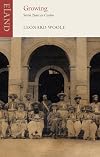
Playing tennis with starched whites with the other English administrators and then chatting over G and Ts in the tropical warm of the evening in an old Dutch fort on the north-east coast of Sri Lanka in the first decade of the twentieth century... Getting to know the Sinhalese of the Kandy region through hearing their complaints, intrigues, and travails in their own language as a defacto judge... As I read through this memoir I felt like I was sitting around the fire with Woolf in his last show more years (back in the sixties I think) and hearing stories from an educated, unconventional and honest English chap about a life lived in the twilight of the British Empire in Ceylon. And getting to know the Sri Lanka I've visited myself a few times better through hearing about the life and culture of people prior to much modernisation that took place over the twentieth century. Worth the price of admission for me. show less

A cooler volume of Leonard Woolf's biography, although interesting in many aspects, I felt more held at a distance. He very much comes across as a young man with an important job, who wants to do well. He is more brittle than in his college years where he is surrounded by his friends. By his own admission he found himself in an imperialist position, something that he hadn't thought about when setting out, and ultimately a state that he finds himself uncomfortable in, on a personal level, as show more opposed to on the level of how he was able to function.
Something that makes me warm to him is his admission that writing autobiography leaves any writer open to inaccuracies, flawed memories, singular perceptions and misunderstandings. When he feels he was good at something he says so, but he also reminds the reader that others may view things differently. He also admits when he gets things wrong, or is uncertain of specific memories. show less
Something that makes me warm to him is his admission that writing autobiography leaves any writer open to inaccuracies, flawed memories, singular perceptions and misunderstandings. When he feels he was good at something he says so, but he also reminds the reader that others may view things differently. He also admits when he gets things wrong, or is uncertain of specific memories. show less

This relatively short (340 page) volume is incredibly deceptive. I feel inadequate writing a review on it after only one reading (and reading this back I have far from done his aims, intentions and achievements justice), but what struck me most was a huge amount of it might well have been written today. It is as relevant, incisive, clear and informative as the day it was written.
Writing in the mid-late 1920s (the book was published in 1931 and took 10 years to complete; it was the first of 3 show more volumes) Woolf sets himself to study communal psychology. He believes it is more effective as a historian to focus on whole communities/cultures rather than totally focusing on events and higher profile individuals (although he does also write about some of those things).
One of the key changes historically is that prior to the mid 18th century there was almost no focus or even understanding of the concept of the individual. Everyone perceived everyone else, as well as themselves, as part of a group of some kind. However, the study and acknowledgement of the individual was a considerable driving force in how political and social changes were to occur.
Ultimately what Woolf is doing is showing us the path that led us to the first and second world wars, and to the aim in some countries of striving for democracy. What is very potent in his findings is that in the 1920s, and I think still today, what we call ‘democracy’ is not true democracy. He believes that we have got stuck in a kind of neo-authoritarianism which is informed by what he calls the ‘dead hand’ ie the lessons and conservativisms of the past, not least nationalism, patriotism and also to some degree imperialism and empire. I believe that we haven’t advanced that position by very much in many respects.
Some of what Woolf seems to infer is that as long as there is a kind of ‘privileged’ class leading the masses (this may not necessarily only be a wealthy ‘privilege’, but generally includes that), and the only responsibility (or equity) that the ordinary man in the street bears is to put the X on his voting paper, we will not have any kind of true democracy, as those privileged classes will always be wanting to protect their own patch before anyone else’s. And this rolls down. Many of us have managed to nudge ourselves a little further up that slippery pole, and we don’t want to slide back down, so rather than striving for a more authentic democracy in any serious way, we want to protect the small gains we have made. So in some senses we collude with the leaders in authority.
This quote I found particularly ‘live’ to the post-9/11 experience:
‘But those who survived the great war, and can now look back in tranquillity and recall the state of their own minds and that of their fellow-countrymen’s between 1914-1918, know that in war many things done under the impulse of modern patriotism to suppress opinion and to restrict liberty which have nothing to do with the country’s safety, and in fact are a hindrance to the efficient conduct of war. They are done partly because the spirit of modern patriotism is authoritarian and antagonistic to that of democracy, and partly because those in authority see that they can use the patriotic spirit to increase their own power and to suppress opposition.’
[After the Deluge, Vol 1, 1931, Woolf, L, pp297-8]
I’ll enhance this review after re-reading, which may be some while as I still have volumes 2 and 3 to read. show less
Writing in the mid-late 1920s (the book was published in 1931 and took 10 years to complete; it was the first of 3 show more volumes) Woolf sets himself to study communal psychology. He believes it is more effective as a historian to focus on whole communities/cultures rather than totally focusing on events and higher profile individuals (although he does also write about some of those things).
One of the key changes historically is that prior to the mid 18th century there was almost no focus or even understanding of the concept of the individual. Everyone perceived everyone else, as well as themselves, as part of a group of some kind. However, the study and acknowledgement of the individual was a considerable driving force in how political and social changes were to occur.
Ultimately what Woolf is doing is showing us the path that led us to the first and second world wars, and to the aim in some countries of striving for democracy. What is very potent in his findings is that in the 1920s, and I think still today, what we call ‘democracy’ is not true democracy. He believes that we have got stuck in a kind of neo-authoritarianism which is informed by what he calls the ‘dead hand’ ie the lessons and conservativisms of the past, not least nationalism, patriotism and also to some degree imperialism and empire. I believe that we haven’t advanced that position by very much in many respects.
Some of what Woolf seems to infer is that as long as there is a kind of ‘privileged’ class leading the masses (this may not necessarily only be a wealthy ‘privilege’, but generally includes that), and the only responsibility (or equity) that the ordinary man in the street bears is to put the X on his voting paper, we will not have any kind of true democracy, as those privileged classes will always be wanting to protect their own patch before anyone else’s. And this rolls down. Many of us have managed to nudge ourselves a little further up that slippery pole, and we don’t want to slide back down, so rather than striving for a more authentic democracy in any serious way, we want to protect the small gains we have made. So in some senses we collude with the leaders in authority.
This quote I found particularly ‘live’ to the post-9/11 experience:
‘But those who survived the great war, and can now look back in tranquillity and recall the state of their own minds and that of their fellow-countrymen’s between 1914-1918, know that in war many things done under the impulse of modern patriotism to suppress opinion and to restrict liberty which have nothing to do with the country’s safety, and in fact are a hindrance to the efficient conduct of war. They are done partly because the spirit of modern patriotism is authoritarian and antagonistic to that of democracy, and partly because those in authority see that they can use the patriotic spirit to increase their own power and to suppress opposition.’
[After the Deluge, Vol 1, 1931, Woolf, L, pp297-8]
I’ll enhance this review after re-reading, which may be some while as I still have volumes 2 and 3 to read. show less

A 1930s analysis of the European political situation. I came to this with the smug assumption that a white, male, privately educated, intellectual would naturally have a blinkered view of "civilization " and "barbarism", and his initial discussion of Pericles and Athenian democracy seemed to validate that. However, when he opened out the analysis to Stalin, Hitler and Chuchill, I was quite drawn in by the slow crafting of his arguments around power and economics. A worthwhile read. His show more knowledge of African peoples and cultures is however abysmal. show less
Lists
Awards


You May Also Like


Associated Authors
Statistics
- Works
- 73
- Also by
- 10
- Members
- 1,448
- Popularity
- #17,748
- Rating
- 3.8
- Reviews
- 26
- ISBNs
- 88
- Languages
- 7
- Favorited
- 2

