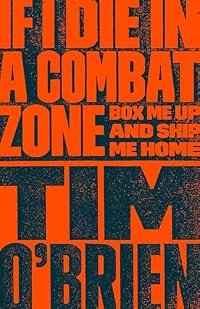
If I Die in a Combat Zone, Box Me Up and Ship Me Home
by Tim O'Brien
On This Page
Description
Before writing his award-winning Going After Cacciato, Tim O'Brien gave us this intensely personal account of his year as a foot soldier in Vietnam. The author takes us with him to experience combat from behind an infantryman's rifle, to walk the minefields of My Lai, to crawl into the ghostly tunnels, and to explore the ambiguities of manhood and morality in a war gone terribly wrong. Beautifully written and searingly heartfelt, If I Die in a Combat Zone is a masterwork of its genre.Tags
Recommendations













Member Reviews
You can see the outline of themes and stories that will recur throughout O'Brien's Vietnam War books in this, his first work, a memoir published in 1973. Perhaps because it is closer in time to the events it describes, If I Die in a Combat Zone has the ring of authenticity to it. Authenticity with an attitude. And that is far better than some of his later novels and short stories, which tend towards a preachiness that borders on the self-righteous. Still, I have the idea that sometimes O'Brien is fooling us with this "memoir." Without knowing anything about O'Brien or the time he pulled duty in Vietnam, I nevertheless feel that something is just a bit askew, here. Whether literally memoirs or not, the work stands on its own. And the show more cynicism, incompetence, lies, fears, and anger all comes through with a sense of actual experience. There are other attitudes and sides of the war, of course, but this particular one of O'Brien's is meted out to a war weary public already alienated from the war at the time of its publication.
It is also an accessible work. A little too much is made over the form of O'Brien's novels. There is a certain amount of gushing over his literary approach and elliptical style. In fact, it's something guaranteed to grab hold of the interest of high school AP teachers who think they've found something edgy and relevant for their students. But in fact almost all of O'Brien's work is accessible. He is not some Vietnam War version of James Joyce or Malcolm Lowry. He is not even a discount version of Jorge Luis Borges as some seem intent on making him. And, truthfully, he sometimes seems so engrossed with the form of his novels that it does seem he takes himself a little too self importantly in this regard.
All in all, however, this is a good work to provide insight to the experience of the war. Like his other works, however, the Vietnamese never appear more than as a sideshow. They generate sympathy, fear, and pity. But you never see them revealed. For O'Brien, it is as if they aren't really there. His world is one of bivouacs, firebases, camps, and outposts. Occasionally he encounters a hamlet, but its people remain mostly faceless, without lives or meaning of there own. I've always found this my main irritation with his writing, this sort of "Yessum, Bwana" attitude. Vietnam is also a country of rich scenery, vivid atmosphere, and a downright mystical air. But you'll never get any of this from Tim O'Brien. It's like he was never really there. show less
It is also an accessible work. A little too much is made over the form of O'Brien's novels. There is a certain amount of gushing over his literary approach and elliptical style. In fact, it's something guaranteed to grab hold of the interest of high school AP teachers who think they've found something edgy and relevant for their students. But in fact almost all of O'Brien's work is accessible. He is not some Vietnam War version of James Joyce or Malcolm Lowry. He is not even a discount version of Jorge Luis Borges as some seem intent on making him. And, truthfully, he sometimes seems so engrossed with the form of his novels that it does seem he takes himself a little too self importantly in this regard.
All in all, however, this is a good work to provide insight to the experience of the war. Like his other works, however, the Vietnamese never appear more than as a sideshow. They generate sympathy, fear, and pity. But you never see them revealed. For O'Brien, it is as if they aren't really there. His world is one of bivouacs, firebases, camps, and outposts. Occasionally he encounters a hamlet, but its people remain mostly faceless, without lives or meaning of there own. I've always found this my main irritation with his writing, this sort of "Yessum, Bwana" attitude. Vietnam is also a country of rich scenery, vivid atmosphere, and a downright mystical air. But you'll never get any of this from Tim O'Brien. It's like he was never really there. show less
Gripping and Intense
In this memoir Tim O'Brien recounts the testing of his moral principles and the continuing broadening of his understanding of the concepts of courage and bravery. The author successfully presents the reader with compelling insights into the moral dilemmas encountered by a young man dealing with the entirety of serving as an American soldier in Vietnam, including, the draft, the expectations of family and a small mid-western town versus his views on being a part to an immoral war. Throughout the book he struggles with what it means to be courageous and brave. Mr. O'Brien imposes the time line of his experience over these struggles with his internal demons, and sets those struggles against real combat and real show more casualties. He captures the daily tedium, punctuated by brief episodes of terror with the matter-of-fact style of Solzhenitsyn's "One Day In the Life of Ivan Denisovich." He is skillful in capturing the reader in the milieu of complex ethical uncertainties and the brutality that was the Vietnam War. This is apparent by Chapter 10, where he rocks the reader back on his heals with a very direct and simply-written two-page chapter.
Though it was written by a 21-year-old, this book may be the seminal Vietnam Era corollary of Stephen Crane's "The Red Badge of Courage," written when Crane was 24.
Chip Auger - 7th Marines, RSVN 1967-68 show less
In this memoir Tim O'Brien recounts the testing of his moral principles and the continuing broadening of his understanding of the concepts of courage and bravery. The author successfully presents the reader with compelling insights into the moral dilemmas encountered by a young man dealing with the entirety of serving as an American soldier in Vietnam, including, the draft, the expectations of family and a small mid-western town versus his views on being a part to an immoral war. Throughout the book he struggles with what it means to be courageous and brave. Mr. O'Brien imposes the time line of his experience over these struggles with his internal demons, and sets those struggles against real combat and real show more casualties. He captures the daily tedium, punctuated by brief episodes of terror with the matter-of-fact style of Solzhenitsyn's "One Day In the Life of Ivan Denisovich." He is skillful in capturing the reader in the milieu of complex ethical uncertainties and the brutality that was the Vietnam War. This is apparent by Chapter 10, where he rocks the reader back on his heals with a very direct and simply-written two-page chapter.
Though it was written by a 21-year-old, this book may be the seminal Vietnam Era corollary of Stephen Crane's "The Red Badge of Courage," written when Crane was 24.
Chip Auger - 7th Marines, RSVN 1967-68 show less
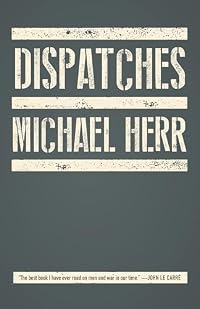
This is the kind of war book that feels like stories told to you by a new friend you're getting to know: they feel revealing, and raw, and painful but also a bit charming. The mix of just-a-regular-guy and the very skilled writer makes you think he's got it all exactly right, as if there could be only one perspective on such an experience. This and Herr's [b:Dispatches|4339|Dispatches|Michael Herr|https://i.gr-assets.com/images/S/compressed.photo.goodreads.com/books/1343099128l/4339._SY75_.jpg|8018] are the two best memoirs I've read on Viet Nam.
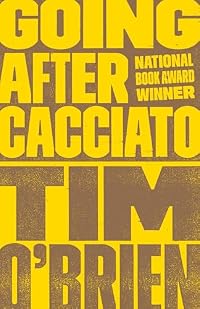
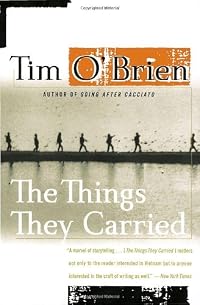
I also recommend [b:Going After Cacciato|3446|Going After Cacciato|Tim O'Brien|https://i.gr-assets.com/images/S/compressed.photo.goodreads.com/books/1399498199l/3446._SY75_.jpg|2242784] and show more [b:The Things They Carried|133518|The Things They Carried|Tim O'Brien|https://i.gr-assets.com/images/S/compressed.photo.goodreads.com/books/1424663847l/133518._SY75_.jpg|1235619]
Personal copy show less
I also recommend [b:Going After Cacciato|3446|Going After Cacciato|Tim O'Brien|https://i.gr-assets.com/images/S/compressed.photo.goodreads.com/books/1399498199l/3446._SY75_.jpg|2242784] and show more [b:The Things They Carried|133518|The Things They Carried|Tim O'Brien|https://i.gr-assets.com/images/S/compressed.photo.goodreads.com/books/1424663847l/133518._SY75_.jpg|1235619]
Personal copy show less
A capable war memoir from a capable writer. However, Tim O'Brien has been underwhelming for me, relative to his reputation, in the two books of his I have now read. If I Die in a Combat Zone, his conventional Vietnam memoir, lacks the occasional skilful turn that elevates his later book The Things They Carried. O'Brien is fine at delivering his war stories, but it is all rather routine. His attempts at literary flourishes – comments on Hemingway, Plato, courage and war, which drew me to the book – don't dig as deep as they ought. The only one that did was the link between draft-dodgers and Socrates on page 28 – aside from this, and a few of the details in some of the war stories, there is little to recommend If I Die in a Combat show more Zone in the crowded Vietnam-war-memoir genre. show less
For me, Tim O'Brien's The Things They Carried is the most powerful book that I have every read and it's the standard against which I judge all things O'Brien. In The Things They Carried, O'Brien plays with nonlinear and fragmented narrative structure, magical realism, and the power of storytelling to capture the visceral truth that telling the real story can't quite capture. For O'Brien, we must sometimes turn to fiction to capture what is "emotionally true" and, in doing so, be less concerned with an objective reality. In a way, If I Die in a Combat Zone makes this point for him. Written 15 years before Things, If I Die is a memoir of Tim O'Brien's experience in the Vietnam War. There is no metafiction razzle-dazzle, but rather a show more straight-forward, linear narrative that begins when O'Brien is drafted and ends as he boards the Freedom Bird headed toward home. It's powerful stuff, but not nearly as powerful as his fiction work. Despite that, anything by Tim O'Brien is better than almost anything else out there--fiction or non-fiction.
Having grown up in the post-World War II glow of American military might, O'Brien grew up in the ask-no-questions patriotic culture of the Midwest. Real men were expected to fight. Real men were supposed to look forward to war. Real men craved the opportunity to serve their country and protect their families. O'Brien doesn't reject these values, but these views are complicated by his natural philosophical inclinations. He questions the nature of bravery, as well as how American intervention in Vietnam is protecting the average American's right to life, liberty, and the pursuit of happiness. In the aftermath, he's left with no certain answers: "Now, war ended, all I am left with are simple, unprofound scraps of truth. Men die. Fear hurts and humiliates. It is hard to be brave. It is hard to know what bravery is. Dead human beings are heavy and awkward to carry . . . Is that the stuff for a morality lesson, even for a theme? . . . Can the foot soldier teach anything important about war, merely for having been there? I think not. He can tell war stories."
And that's what O'Brien does in the novel--he tells war stories. He tells of the tedious days of repetition, punctuated by brief bursts of action; he tells of military incompetence and the frustration of not knowing who the enemy is in a land where farmers by day picked up guns at night; he tells of how cruel being sent on R&R was, knowing the brief return to normality would not last. And he does all of this without being preachy; he simply shows us what life was like for the average soldier and leaves us to draw our own conclusions. His language is at once poetic and precise, getting to the heart of all things. No one can capture the peculiar mix of fear, adrenaline fed excitement, and remorse of a soldier's most introspective moments like O'Brien.
At one point, O'Brien ruminates on Ernest Hemingway's fascination with war: "Some say Ernest Hemingway was obsessed by the need to show bravery in battle. It started, they say, somewhere in World War I and ended when he passed his final test in Idaho. If the man was obsessed with the notion of courage, that was a fault. But, reading Hemingway's war journalism and his war stories, you get the sense that he was simply concerned about bravery, hence about cowardice, and that seems a virtue, a sublime and profound concern that few men have." It's a concern that permeates all of O'Brien's work and his treatment of it is indeed sublime. show less
Having grown up in the post-World War II glow of American military might, O'Brien grew up in the ask-no-questions patriotic culture of the Midwest. Real men were expected to fight. Real men were supposed to look forward to war. Real men craved the opportunity to serve their country and protect their families. O'Brien doesn't reject these values, but these views are complicated by his natural philosophical inclinations. He questions the nature of bravery, as well as how American intervention in Vietnam is protecting the average American's right to life, liberty, and the pursuit of happiness. In the aftermath, he's left with no certain answers: "Now, war ended, all I am left with are simple, unprofound scraps of truth. Men die. Fear hurts and humiliates. It is hard to be brave. It is hard to know what bravery is. Dead human beings are heavy and awkward to carry . . . Is that the stuff for a morality lesson, even for a theme? . . . Can the foot soldier teach anything important about war, merely for having been there? I think not. He can tell war stories."
And that's what O'Brien does in the novel--he tells war stories. He tells of the tedious days of repetition, punctuated by brief bursts of action; he tells of military incompetence and the frustration of not knowing who the enemy is in a land where farmers by day picked up guns at night; he tells of how cruel being sent on R&R was, knowing the brief return to normality would not last. And he does all of this without being preachy; he simply shows us what life was like for the average soldier and leaves us to draw our own conclusions. His language is at once poetic and precise, getting to the heart of all things. No one can capture the peculiar mix of fear, adrenaline fed excitement, and remorse of a soldier's most introspective moments like O'Brien.
At one point, O'Brien ruminates on Ernest Hemingway's fascination with war: "Some say Ernest Hemingway was obsessed by the need to show bravery in battle. It started, they say, somewhere in World War I and ended when he passed his final test in Idaho. If the man was obsessed with the notion of courage, that was a fault. But, reading Hemingway's war journalism and his war stories, you get the sense that he was simply concerned about bravery, hence about cowardice, and that seems a virtue, a sublime and profound concern that few men have." It's a concern that permeates all of O'Brien's work and his treatment of it is indeed sublime. show less
If I Die in the Combat Zone Book Review
Tim O’Brien writes a poignant, gripping novel that characterizes the experiences and thoughts of a soldier who also happens to be a thinking man. The novel chronicles O’Brien’s moral challenge of coming to terms with a war he feels obligated to fight.
O’Brien, coming from a small Minnesota town, struggles with the patriotic ideals of his family and community and his own anti-war beliefs never quite being able to make up his mind whether the war he is fighting is noble or absurd. Towards the end of his tour he is still not sure why he is fighting stating, “It is not a war fought for territory, not for pieces of land that will be won and held. It is not a war fought to win the hearts of show more the Vietnamese nationals, not in the wake of contempt drawn on our faces and on theirs, not in the wake of a burning village, a trampled rice paddy, a battered detainee.” He cannot justify this war like one fought over a Pearl Harbor or Hitler’s Holocaust. The tangible enemy of this war eludes him.
Throughout the book, O’Brien calls upon his classic education to try to reason away the madness of the war. He recalls Socratic dialogue about courage, applies it to his situation, and still is unable to justify his not deserting when he had the chance. Is he courageous for fighting in a war that he does not agree with, even though he feels like a coward for not doing what he truly believes in his soul?
The book discusses the horrors of war without using cheap, graphic details. Although at times curse words are uttered, the language is genuine and without it the novel would be lacking in realism. It shows its reader the brutality that comes from a survivalist mentality, and the psychological reality placed upon young minds in a wartime theatre.
O’Brien looks to his boyhood heroes to try to define himself, his commander, and the men he is fighting within those terms. He scrutinizes Ernest Hemingway’s “grace under pressure” analogy, to recognize a brave man, and realizes that it falls short. “It is more likely that men act cowardly and, at other times, act with courage, each in different measure, each with varying consistency. The men who do well on the average, perhaps with one moment of glory, those men are brave,” he decides, keeping with the tone of the novel. O’Brien seems to realize that life is constantly changing and that nothing can be stated with unwavering uncertainty. Time, place, and point of view temper everything in life and no amount of intellectualizing can make life fit into some preconceived package of thought or action.
If I Die in a Combat Zone will be great addition to a wartime literature collection for the high school reader. It is relevant to many of the questions being asked about the Iraq War and perhaps will help students begin to ask questions they had not thought of themselves. While he never steps up onto the anti-war soapbox, O’Brien subtly brings up all the issues and answers them with real-life experience and genuine Midwestern attitude.
O’Brien’s trials as a young infantryman characterize this novel into the category of a male maturation novel, and with many of the students contemplating joining the armed services, it will give them a realistic, first person point of view and not a glorified mythology of war. show less
Tim O’Brien writes a poignant, gripping novel that characterizes the experiences and thoughts of a soldier who also happens to be a thinking man. The novel chronicles O’Brien’s moral challenge of coming to terms with a war he feels obligated to fight.
O’Brien, coming from a small Minnesota town, struggles with the patriotic ideals of his family and community and his own anti-war beliefs never quite being able to make up his mind whether the war he is fighting is noble or absurd. Towards the end of his tour he is still not sure why he is fighting stating, “It is not a war fought for territory, not for pieces of land that will be won and held. It is not a war fought to win the hearts of show more the Vietnamese nationals, not in the wake of contempt drawn on our faces and on theirs, not in the wake of a burning village, a trampled rice paddy, a battered detainee.” He cannot justify this war like one fought over a Pearl Harbor or Hitler’s Holocaust. The tangible enemy of this war eludes him.
Throughout the book, O’Brien calls upon his classic education to try to reason away the madness of the war. He recalls Socratic dialogue about courage, applies it to his situation, and still is unable to justify his not deserting when he had the chance. Is he courageous for fighting in a war that he does not agree with, even though he feels like a coward for not doing what he truly believes in his soul?
The book discusses the horrors of war without using cheap, graphic details. Although at times curse words are uttered, the language is genuine and without it the novel would be lacking in realism. It shows its reader the brutality that comes from a survivalist mentality, and the psychological reality placed upon young minds in a wartime theatre.
O’Brien looks to his boyhood heroes to try to define himself, his commander, and the men he is fighting within those terms. He scrutinizes Ernest Hemingway’s “grace under pressure” analogy, to recognize a brave man, and realizes that it falls short. “It is more likely that men act cowardly and, at other times, act with courage, each in different measure, each with varying consistency. The men who do well on the average, perhaps with one moment of glory, those men are brave,” he decides, keeping with the tone of the novel. O’Brien seems to realize that life is constantly changing and that nothing can be stated with unwavering uncertainty. Time, place, and point of view temper everything in life and no amount of intellectualizing can make life fit into some preconceived package of thought or action.
If I Die in a Combat Zone will be great addition to a wartime literature collection for the high school reader. It is relevant to many of the questions being asked about the Iraq War and perhaps will help students begin to ask questions they had not thought of themselves. While he never steps up onto the anti-war soapbox, O’Brien subtly brings up all the issues and answers them with real-life experience and genuine Midwestern attitude.
O’Brien’s trials as a young infantryman characterize this novel into the category of a male maturation novel, and with many of the students contemplating joining the armed services, it will give them a realistic, first person point of view and not a glorified mythology of war. show less
Emotionally Honest, If a Bit Pretentious
O'Brien's writing is so clear and interesting that I read through this book in three sittings. It is easy to read and easy to understand.
The biggest thing that I took from this book is the realistic portrayal of soldiers and their actions. The different people who went through O'Brien's combat life all have reasonable motivations that lead to different outcomes. Some of the people are motivated by bravery or duty or contempt or just wanting to get out alive. When conducting themselves outside of a firefight, they act realistically according to those motivations.
However, during the few times that O'Brien describes encounters with belligerents, most of the soldiers, with perhaps two exceptions, show more act exactly as anybody should: they get out of the way. At first, I thought this portrayal of soldiers in action was embarrassingly realistic, but there is nothing embarrassing about it. When they are in firefights, the soldiers just waited it out.
Beyond this, O'Brien is very critical of his fellow soldiers, portraying them as mostly unthoughtful, which I found to be pretentious of O'Brien. This is a theme found in his description of many of the people he met in Vietnam. O'Brien says that soldiers don't think about death or bravery. Perhaps being surrounded by death, they are simply too exhausted to share the feelings or address their fears in any meaningful way.
While I picked up on his reasons for being against the Vietnam War, I didn't think it had a huge impact on the book. O'Brien did not want to go to war but I doubt that most soldiers, even volunteers, actually wanted to go to Vietnam. Those who went were motivated by a sense of duty. O'Brien never seemed to contradict this idea, even in his personal actions.
Being born after the Vietnam War, I only have an understanding of it in a historical context, but the emotions, motivations, and actions of the people O'Brien describes are realistic to me. show less
O'Brien's writing is so clear and interesting that I read through this book in three sittings. It is easy to read and easy to understand.
The biggest thing that I took from this book is the realistic portrayal of soldiers and their actions. The different people who went through O'Brien's combat life all have reasonable motivations that lead to different outcomes. Some of the people are motivated by bravery or duty or contempt or just wanting to get out alive. When conducting themselves outside of a firefight, they act realistically according to those motivations.
However, during the few times that O'Brien describes encounters with belligerents, most of the soldiers, with perhaps two exceptions, show more act exactly as anybody should: they get out of the way. At first, I thought this portrayal of soldiers in action was embarrassingly realistic, but there is nothing embarrassing about it. When they are in firefights, the soldiers just waited it out.
Beyond this, O'Brien is very critical of his fellow soldiers, portraying them as mostly unthoughtful, which I found to be pretentious of O'Brien. This is a theme found in his description of many of the people he met in Vietnam. O'Brien says that soldiers don't think about death or bravery. Perhaps being surrounded by death, they are simply too exhausted to share the feelings or address their fears in any meaningful way.
While I picked up on his reasons for being against the Vietnam War, I didn't think it had a huge impact on the book. O'Brien did not want to go to war but I doubt that most soldiers, even volunteers, actually wanted to go to Vietnam. Those who went were motivated by a sense of duty. O'Brien never seemed to contradict this idea, even in his personal actions.
Being born after the Vietnam War, I only have an understanding of it in a historical context, but the emotions, motivations, and actions of the people O'Brien describes are realistic to me. show less
Members
- Recently Added By
Lists

Books About the Vietnam War
15 works; 6 members

Best of American Literature
146 works; 9 members

Books Read in 2024
4,623 works; 126 members
Author Information

21+ Works 26,173 Members
Tim O'Brien was born on October 1, 1946 in Austin, Minnesota. He graduated from Macalester College in 1968 and was immediately drafted into the U. S. Army, serving from 1969 to 1970 and receiving a Purple Heart. Three years later, his memoirs of the Vietnam War were published as If I Die in a Combat Zone, Box Me Up and Ship Me Home. Later works show more include Northern Lights (1975), Going After Cacciato (1978, winner of the National Book Award), and The Things They Carried (1990, winner of the Melcher Book Award and finalist for the Pulitzer Prize and the National Book Critics Circle Award). (Bowker Author Biography) show less
Awards and Honors
Distinctions
Series
Belongs to Publisher Series
Work Relationships
Is contained in
Has as a student's study guide
Common Knowledge
- Canonical title
- If I Die in a Combat Zone, Box Me Up and Ship Me Home
- Original title
- If I Die in a Combat Zone, Box Me Up and Ship Me Home
- Original publication date
- 1973
- Important places*
- Vietnam
- Important events
- Vietnam War
- Epigraph
- lo maggior don che Dio per sua larghezza / fesse creando ... / ... fu de la volonta la libertate
~ The Divine Comedy
Par. V, 19 ff. - First words
- It's incredible, it really is, isn't it?
- Last words
- (Click to show. Warning: May contain spoilers.)It's impossible to go home barefoot.
*Some information comes from Common Knowledge in other languages. Click "Edit" for more information.
Classifications
Statistics
- Members
- 1,552
- Popularity
- 14,644
- Reviews
- 31
- Rating
- (3.86)
- Languages
- Dutch, English, French
- Media
- Paper, Audiobook, Ebook
- ISBNs
- 27
- ASINs
- 15