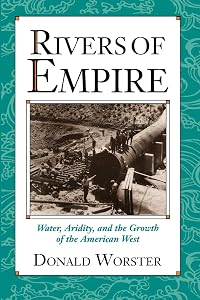
Rivers of Empire: Water, Aridity, and the Growth of the American West
by Donald Worster
On This Page
Description
When Henry David Thoreau went for his daily walk, he would consult his instincts on which direction to follow. More often than not his inner compass pointed west or southwest. "The future lies that way to me," he explained, "and the earth seems more unexhausted and richer on that side." In his own imaginative way, Thoreau was imitating the countless young pioneers, prospectors, and entrepreneurs who were zealously following Horace Greeley's famous advice to "go west." Yet while the epic show more chapter in American history opened by these adventurous men and women is filled with stories of frontier hardship, we rarely think of one of their greatest problems--the lack of water resources. And the same difficulty that made life so troublesome for early settlers remains one of the most pressing concerns in the western states of the late-twentieth century. The American West, blessed with an abundance of earth and sky but cursed with a scarcity of life's most fundamental need, has long dreamed of harnessing all its rivers to produce unlimited wealth and power. In Rivers of Empire, award-winning historian Donald Worster tells the story of this dream and its outcome. He shows how, beginning in the mid-nineteenth century, Mormons were the first attempting to make that dream a reality, damming and diverting rivers to irrigate their land. He follows this intriguing history through the 1930s, when the federal government built hundreds of dams on every major western river, thereby laying the foundation for the cities and farms, money and power of today's West. Yet while these cities have become paradigms of modern American urban centers, and the farms successful high-tech enterprises, Worster reminds us that the costs have been extremely high. Along with the wealth has come massive ecological damage, a redistribution of power to bureaucratic and economic elites, and a class conflict still on the upswing. As a result, the future of this "hydraulic West" is increasingly uncertain, as water continues to be a scarce resource, inadequate to the demand, and declining in quality. Rivers of Empire represents a radically new vision of the American West and its historical significance. Showing how ecological change is inextricably intertwined with social evolution, and reevaluating the old mythic and celebratory approach to the development of the West, Worster offers the most probing, critical analysis of the region to date. He shows how the vast region encompassing our western states, while founded essentially as colonies, have since become the true seat of the American "Empire." How this imperial West rose out of desert, how it altered the course of nature there, and what it has meant for Thoreau's (and our own) mythic search for freedom and the American Dream, are the central themes of this eloquent and thought-provoking story--a story that begins and ends with water. show lessTags
Recommendations












Member Reviews
Members
- Recently Added By
Lists

Recommended Nature Writing
346 works; 180 members
Author Information

16+ Works 1,744 Members
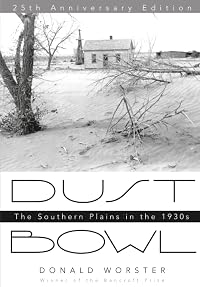
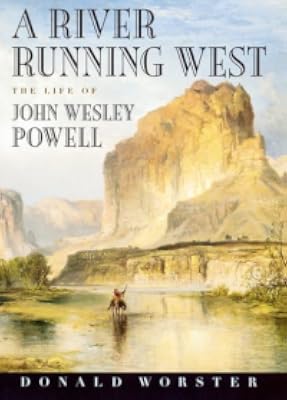
Donald Worster is Hall Distinguished Professor of American History at the University of Kansas and the author of many books including A River Running West, the Bancroft Prize-winning Dust Bowl, and Under Western Skies: Nature and History in the American West.
Awards and Honors
Common Knowledge
- Canonical title
- Rivers of Empire: Water, Aridity, and the Growth of the American West
- Original publication date
- 1985 (1st edition) (1st edition)
- Important places
- American West
- Original language
- English
- Disambiguation notice
- Full title (1985): Rivers of empire : water, aridity, and the growth of the American West / Donald Worster
Classifications
- Genres
- Nonfiction, History, General Nonfiction, Science & Nature
- DDC/MDS
- 333.91 — Society, government, & culture Economics Economics of land and energy Other natural resources Water energy - Hydrologic
- LCC
- HC107 .A17 .W67 — Social sciences Economic history and conditions Economic history and conditions By region or country
- BISAC
Statistics
- Members
- 215
- Popularity
- 152,253
- Rating
- (4.02)
- Languages
- English
- Media
- Paper
- ISBNs
- 3
- ASINs
- 2