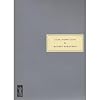
Alas, Poor Lady
by Rachel Ferguson
On This Page
Tags
Recommendations
















Member Recommendations



Member Reviews
Alas, Poor Lady tells the story of Grace Scrimgeour, from her birth in 1870, the seventh daughter of an upper middle class Victorian family in Kensington, to her death in 1936, a spinster relying on the favour of The Distressed Gentlefolks' Protective Association for her home and income. It is a depressing polemic on the plight of the single woman without means, and Ferguson barely conceals her disdain for the 19th century trend for large and unwieldy families which often produced a surfeit of girls (and the pre-feminist society which encouraged it). With the Boer and then the First World War devastating the population of marriagable bachelors, and the post war economic crisis shattering the once reliable income from stocks and shares, show more Grace is just one of thousands of unmarried, ill-educated, but well brought up women who descended into poverty as the prosperous Empire lost its finances and its menfolk.
It is desperately sad, but the quality of the writing lifts it above the political manifesto it might have been. The extended Scrimgeour family and its retinue are characterised beautifully, and the members of the gloriously warm hearted Wrenne family who bring a flicker of happiness into Grace's otherwise lonely and unfulfilled life are a delight. The reader bristles with indignation at the patriarch who thinks no further ahead than a longing for a son and heir, and the matriarch who is more concerned what the servants might say than her family's impending penury. She weeps with Grace when she realises that she is "a failure if you didn’t have a baby, but a disgrace if you wanted one, and said so’". She swallows the lump in her throat when bookish Mary cuts out an article about the ladies' college at Cambridge, knowing that she is too old, and her family too conservative, for her ever to go.
Ferguson's book deserves a place on the shelf with "The Women's Room" and "The Golden Notebook" - it reminds us of how far we've come, and how grateful we ought to be for emancipation, the welfare state, contraception, and women's liberation. It also takes a on greater poignancy during this current financial crisis; the worry about balancing income and expenditure is universal, no matter the century. A powerful and emotive book. show less
It is desperately sad, but the quality of the writing lifts it above the political manifesto it might have been. The extended Scrimgeour family and its retinue are characterised beautifully, and the members of the gloriously warm hearted Wrenne family who bring a flicker of happiness into Grace's otherwise lonely and unfulfilled life are a delight. The reader bristles with indignation at the patriarch who thinks no further ahead than a longing for a son and heir, and the matriarch who is more concerned what the servants might say than her family's impending penury. She weeps with Grace when she realises that she is "a failure if you didn’t have a baby, but a disgrace if you wanted one, and said so’". She swallows the lump in her throat when bookish Mary cuts out an article about the ladies' college at Cambridge, knowing that she is too old, and her family too conservative, for her ever to go.
Ferguson's book deserves a place on the shelf with "The Women's Room" and "The Golden Notebook" - it reminds us of how far we've come, and how grateful we ought to be for emancipation, the welfare state, contraception, and women's liberation. It also takes a on greater poignancy during this current financial crisis; the worry about balancing income and expenditure is universal, no matter the century. A powerful and emotive book. show less
I decided to read this book after rereading The Brontës Went to Woolworths, as it is the only other one of Rachel Ferguson's books to have received a modern reprinting. The back flap of my Persephone Books edition says, "her second [novel], The Brontes went to Woolworths (1931), is her best-known; but the most interesting is Alas, Poor Lady (1937), which was 'fuelled by her mordant social observation' (ODNB)." I disagree. The Brontës Went to Woolworths was delightfully inventive and engrossing; Alas, Poor Lady is a bit of a slog. The novel reminds me of Thomas Mann's Buddenbrooks or the like, those early-twentieth-century novels about the decline of a middle-class family. It's more limited in scope, however, covering just a single show more generation from birth to death-- a generation entirely of women (bar one son, who dies young), who find themselves trained into uselessness by the social conventions of their time, but largely unable to marry. I wanted to like it, and it had its moments, but it just never grabbed me on the whole, maybe because there were so many daughters, and I found it difficult to distinguish them from one another. Maybe also because I've read enough proto-feminist Victorian and Edwardian novels with similar takes that much of Ferguson's social critique was old hat. The first fifty pages, where we get insight into the basic setup of the family, and the last fifty pages or so, chronicling one of the daughters' time spent governessing, were the best parts. The intervening 350-ish pages got fairly monotonous. Disappointing, given how much I liked The Brontës. show less
Born in 1870, Grace Scrimgeour is the youngest daughter in a large, not-wealthy Victorian family. In an age and society where women were defined by their marital status, the Scrimgeours fail to make any provision for marriage for their younger daughters—Grace, Queenie, and Mary. One of the sisters becomes a nun; the others marry; but the focus is on the spinsters who remain at home with their mother, a selfish woman who fritters away money in their large house in Kensington.
The book chronicles Grace’s life from birth, through her abortive attempts to find a husband because she’s not attractive enough, through the family’s poverty and Grace’s attempts to earn money as a governess, work that she’s completely unsuited for. show more It’s a desperately sad novel about what happened to unmarried women—the book opens with Grace’s end in the 1930s, living in distressed circumstances and having to depend on the charity of others. On one hand, the reader feels sorry for Grace and her circumstances; on the other, Grace does nothing to alleviate them.
I read this novel at a time when my own success or lack thereof in the dating department isn’t optimal; so maybe it wasn’t the best book for my present state of mind. It’s a very sad book about the differences between men and women in Victorian England; how women spend their lives waiting, while men go out and actually live their lives. Because the novel covers such a large chunk of time, the story jumps around at times and seems sketchy in places. Nonetheless, I thought that this was a stunning read. It’s interesting to reflect on what would have happened to women like me (the “superfluous women” that Ruth Adam described so well in A Woman’s Place) a hundred years ago. show less
The book chronicles Grace’s life from birth, through her abortive attempts to find a husband because she’s not attractive enough, through the family’s poverty and Grace’s attempts to earn money as a governess, work that she’s completely unsuited for. show more It’s a desperately sad novel about what happened to unmarried women—the book opens with Grace’s end in the 1930s, living in distressed circumstances and having to depend on the charity of others. On one hand, the reader feels sorry for Grace and her circumstances; on the other, Grace does nothing to alleviate them.
I read this novel at a time when my own success or lack thereof in the dating department isn’t optimal; so maybe it wasn’t the best book for my present state of mind. It’s a very sad book about the differences between men and women in Victorian England; how women spend their lives waiting, while men go out and actually live their lives. Because the novel covers such a large chunk of time, the story jumps around at times and seems sketchy in places. Nonetheless, I thought that this was a stunning read. It’s interesting to reflect on what would have happened to women like me (the “superfluous women” that Ruth Adam described so well in A Woman’s Place) a hundred years ago. show less
This novel follows the fate of Victorian-era gentlewomen sisters, the Scrimgeours, who, unable to snag husbands, are left to very sorry fates. After the death of their monied father, their spendthrift, flighty mother dispenses with the money that by rights should be preserved for them--giving large endowments to a grandson-in-law (who reminds her of her own indulged son, a casualty of World War I) and to various charities. One daughter, Aggie, though not Catholic, retreats to convent life; another, Grace, becomes an inept governess. The sisters who did marry resent making any support payments to Grace, and to the two other unmarried sisters: Mary and Queenie. In the end, Grace ends up relying on a charity for impoverished show more gentlefolk.
Though an interesting and thought-provoking read, the book presents a number of challenges. First of all, much of the idiom is quite dated, and Ferguson writes fairly consistently convoluted, almost incomprehensible prose. This is not one of Persephone's easy middlebrow pleasure reads. It requires a certain amount of reading grit for one to persist. Additionally, the book might have benefited from a more narrow focus on one or two sisters. I was sorry, for example, not to have spent more time in the company of Mary, the blue-stocking sister, who struck me as the most interesting of all. show less
Though an interesting and thought-provoking read, the book presents a number of challenges. First of all, much of the idiom is quite dated, and Ferguson writes fairly consistently convoluted, almost incomprehensible prose. This is not one of Persephone's easy middlebrow pleasure reads. It requires a certain amount of reading grit for one to persist. Additionally, the book might have benefited from a more narrow focus on one or two sisters. I was sorry, for example, not to have spent more time in the company of Mary, the blue-stocking sister, who struck me as the most interesting of all. show less
At first, this seems the novel about a lot of sisters the heroine of "The Brontes went to Woolworths", Ferguson's best and best-known novel moaned about in the first sentence. It does lacks the madcap, deranged spirit of the previous novel, but Ferguson's intentions here are wholly different: this a rather angry look at the Victorian world and values and the strictures it put on women, particularly single women.
Only read this if you feel robust in spirits. The story of a set of female siblings at the turn of the nineteenth/twentieth centuries. Brought up in a dogmatic upper class Victorian fashion just as the manner of their upbringing and their known (domestic) world is being left behind by the onset of modernity. Each sister ill-equipped to deal with the individual circumstances they each find themselves in. Compellingly depressing reading.
This is Persephone number 65 - and not the happiest of stories - but rather a fascinating one .
In this 1937 novel Rachel Ferguson examines the fate of Victorian gentlewomen who failed to marry, and whose families failed to leave them adequetly provided for. In the first chapter we are introduced to the GP (the Gentlefolks Protective Association) in1936, and the question posed by a shocked young actress at the opening of a bazaar raising money for the GP - "who does this happen?" is then examined in detain through the rest of this 460 + page novel.
Grace Scrimgeour is born in 1870, the eight child of a middle aged woman, whose eldest daughter at 23 is also having a child (her first) Grace is one seven daughters and one son (born two show more years after Grace) only three of these daughters marry. This places huge finacial stresses on the family in their later years. Grace eventually has to become a governess and later a companion. In between jobs, she lives in near penury - in terribly sad circumstances, or is forced to be put up by one of her elder sisters, or her neice, who don't always do so very graciously. For one short period during her governess years she finds real happiness.
A very poignant novel, but very readable, and enjoyable. show less
In this 1937 novel Rachel Ferguson examines the fate of Victorian gentlewomen who failed to marry, and whose families failed to leave them adequetly provided for. In the first chapter we are introduced to the GP (the Gentlefolks Protective Association) in1936, and the question posed by a shocked young actress at the opening of a bazaar raising money for the GP - "who does this happen?" is then examined in detain through the rest of this 460 + page novel.
Grace Scrimgeour is born in 1870, the eight child of a middle aged woman, whose eldest daughter at 23 is also having a child (her first) Grace is one seven daughters and one son (born two show more years after Grace) only three of these daughters marry. This places huge finacial stresses on the family in their later years. Grace eventually has to become a governess and later a companion. In between jobs, she lives in near penury - in terribly sad circumstances, or is forced to be put up by one of her elder sisters, or her neice, who don't always do so very graciously. For one short period during her governess years she finds real happiness.
A very poignant novel, but very readable, and enjoyable. show less
Members
- Recently Added By
Lists

Books referenced in A Very Great Profession: The Woman's Novel 1914-39
199 works; 6 members

Persephone
148 works; 3 members
Author Information

20+ Works 852 Members
Series
Belongs to Publisher Series
Persephone (65)
Common Knowledge
- Original publication date
- 1937
- People/Characters
- Grace Scrimgeour
- Important places
- London, England, UK
- First words
- '--in declaring this bazaar open.' With the cessation of that silver voice the Town Hall was stirred into action.
Classifications
Statistics
- Members
- 120
- Popularity
- 270,632
- Reviews
- 7
- Rating
- (3.88)
- Languages
- English
- Media
- Paper
- ISBNs
- 1