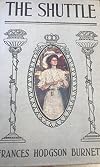
The Shuttle
by Frances Hodgson Burnett
On This Page
Description
If you're tired of Victorian heroines who are weak-willed, simpleminded, and utterly incapable of looking out for themselves, you simply must make the acquaintance of Bettina Vanderpoel, the refreshingly shrewd, independent, and level-headed protagonist of Frances Hodgson Burnett's novel The Shuttle. In the early twentieth century, America's nouveau riche families began to marry off their daughters to British aristocrats, and many of these matches were doomed before they even began by show more intractable cultural differences. When Betty sets off across the pond to rescue her sister Rosalie from one such ill-fated match, the novel really kicks into high gear.. show less
Tags
Recommendations
































Member Recommendations
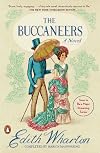
Sakerfalcon Wharton's final (unfinished) novel tackles the same theme as The Shuttle - American heiresses marrying into the English aristocracy, with mixed results.
30

by anonymous user
Member Reviews
I wasn’t sure what to expect from ‘The Shuttle’, because Persephone Books editions look lovely but have no blurb. It turned out to be an involving family drama and social commentary in three acts. Act I: a rich American girl marries an impoverished aristocrat, who turns out to be horribly abusive. Act II: after many years, her younger sister comes to visit in the abusive husband’s absence. Act III: husband and sister become locked in a battle of wills. Inevitably, the most fascinating and appealing character is the younger sister, Betty. It can be tiresome in novels when a beautiful and rich paragon of a young woman causes everyone to fall in love with her. In the case of Betty Venderpoel, it works because she is relentlessly show more practical and capable. In fact, she reminded me of [b:Cold Comfort Farm|92780|Cold Comfort Farm|Stella Gibbons|https://images.gr-assets.com/books/1416161594s/92780.jpg|847348]’s inimitable Flora Poste (a heroine of mine). Betty's initiative, resilience, and refusal to be intimidated by bullying are all admirable. While she is not oblivious to the limitations of being a woman, she deploys her intelligence and resources brilliantly. The dialogue between her and the odious Nigel is the highlight of the book. I also liked her comments about not wanting to be a man, merely wanting the same opportunities that men get.
Betty’s actions and the plot in general throw interesting light on the dynamics of American and English high society in Edwardian times. Transatlantic travel was becoming more accessible and Frances Hodgson Burnett began the novel to comment on marriages between rich American women and English men. Although the narrative obviously sides with the plucky US women against the villainous Brit Nigel, I found the Americans’ acceptance of British class dynamics striking. Nigel’s neglect of his estate (deliberate) and his neighbour’s (inevitable due to lack of money) are both presented as bad - they should be doing their duty as feudal lords. The text references the collapse of the feudal system, yet it is notable that the American characters only interact with old aristocratic families rather than Britain’s nouveau riche. It almost seems like the Americans are so charmed by the aesthetics of rural estates that the history behind them goes unquestioned. Betty seems very happy to bring some American money and energy to being Lord of the Manor. Yet it’s not as conservative a book as that. The independence of US women is deliberately contrasted with their more limited sphere in England. Betty does subtly change perceptions here and there, for example persuading an old aristo not to disdain a man just because his father and brother were rogues. The prevailing theme is American spirit and money reinvigorating the picturesque yet moribund English countryside, without necessarily transforming it.
An involving plot combined with a thoughtful context lift the narrative above melodrama and make for a compelling read. Betty carries the whole thing along; I’d happily read more novels in which she outwits awful men. Indeed, I think I should look for more Frances Hodgson Burnett. Prior to ‘The Shuttle’, I’d only read her childen’s books. show less
Betty’s actions and the plot in general throw interesting light on the dynamics of American and English high society in Edwardian times. Transatlantic travel was becoming more accessible and Frances Hodgson Burnett began the novel to comment on marriages between rich American women and English men. Although the narrative obviously sides with the plucky US women against the villainous Brit Nigel, I found the Americans’ acceptance of British class dynamics striking. Nigel’s neglect of his estate (deliberate) and his neighbour’s (inevitable due to lack of money) are both presented as bad - they should be doing their duty as feudal lords. The text references the collapse of the feudal system, yet it is notable that the American characters only interact with old aristocratic families rather than Britain’s nouveau riche. It almost seems like the Americans are so charmed by the aesthetics of rural estates that the history behind them goes unquestioned. Betty seems very happy to bring some American money and energy to being Lord of the Manor. Yet it’s not as conservative a book as that. The independence of US women is deliberately contrasted with their more limited sphere in England. Betty does subtly change perceptions here and there, for example persuading an old aristo not to disdain a man just because his father and brother were rogues. The prevailing theme is American spirit and money reinvigorating the picturesque yet moribund English countryside, without necessarily transforming it.
An involving plot combined with a thoughtful context lift the narrative above melodrama and make for a compelling read. Betty carries the whole thing along; I’d happily read more novels in which she outwits awful men. Indeed, I think I should look for more Frances Hodgson Burnett. Prior to ‘The Shuttle’, I’d only read her childen’s books. show less
Potential Trigger Warning
Betty Vanderpoel's older sister, Rosy, married an Earl, moved from New York to his estate in England, and hasn't been heard from in years. After the end of her education at a prestigious finishing school, Betty decides to find out what happened and boards "The Shuttle," Burnett's term for the scores of ships making their way across the ocean between American and "the Continent." What she discovers is hardly a surprise, it's how Burnett does it that was unexpected.
Did you know that the author of [b:The Secret Garden|2998|The Secret Garden|Frances Hodgson Burnett|https://i.gr-assets.com/images/S/compressed.photo.goodreads.com/books/1327873635l/2998._SY75_.jpg|3186437] and [b:A Little Princess|3008|A Little show more Princess|Frances Hodgson Burnett|https://i.gr-assets.com/images/S/compressed.photo.goodreads.com/books/1327868556l/3008._SY75_.jpg|1313599] wrote books about adults? I didn't. In fact, I'm not really sure where I found out about it, but I'm glad I did, even though it has its downsides. Those, unfortunately, include an old-fashioned amount of foreshadowing, some melodramatics, a questionable amount of negativity towards the British upper class(I mean, they're people too) and an incredibly stuck-up neighbor.
But Burnett's exploration of the psychological effects of abuse is stunningly accurate. Her astute observations, through Betty's eyes, are something you wouldn't expect in a book written in 1907. Nor would you expect it to be Betty, a woman, to be the one rushing off to help the lady in distress. This is, for its time, a remarkably feminist book---highlighting both the rampant issues facing women in that time-period(difficulty in proving abuse, loss of children due to divorce, public scandal, and ruined reputations) and the slowly expanding opportunities they were being given(education, business, and humanitarian work).
Also given a re-worked treatment is the topic of attempted rape. During my graduate work, I read Samuel Richardson's [b:Clarissa, or, the History of a Young Lady|529243|Clarissa, or, the History of a Young Lady|Samuel Richardson|https://i.gr-assets.com/images/S/compressed.photo.goodreads.com/books/1373639647l/529243._SY75_.jpg|2767990] (spare yourself, if you can). Clarissa, as blameless as she is, spends a lot of time fainting, losing her mind, and blaming herself. None of that is present here.Betty attempts her own defense, first physically and then, when given a chance, outsmarts him with her own wit.
It was, in its way, a refreshingly honest and unexpectedly true-to-life view of real issues. No glossing over period ills here. I suspect, just from a glance, that some of this stemmed from Burnett's own life experiences. Which is why I finished the book in spite of the rather pointed negative observations, both stated and unstated, regarding the Americans, the British, and the upper class. Because Burnett was familiar with both countries and the most qualified, yet compassionate, critiques often come from those who are members of the critiqued group. show less
Betty Vanderpoel's older sister, Rosy, married an Earl, moved from New York to his estate in England, and hasn't been heard from in years. After the end of her education at a prestigious finishing school, Betty decides to find out what happened and boards "The Shuttle," Burnett's term for the scores of ships making their way across the ocean between American and "the Continent." What she discovers is hardly a surprise, it's how Burnett does it that was unexpected.
Did you know that the author of [b:The Secret Garden|2998|The Secret Garden|Frances Hodgson Burnett|https://i.gr-assets.com/images/S/compressed.photo.goodreads.com/books/1327873635l/2998._SY75_.jpg|3186437] and [b:A Little Princess|3008|A Little show more Princess|Frances Hodgson Burnett|https://i.gr-assets.com/images/S/compressed.photo.goodreads.com/books/1327868556l/3008._SY75_.jpg|1313599] wrote books about adults? I didn't. In fact, I'm not really sure where I found out about it, but I'm glad I did, even though it has its downsides. Those, unfortunately, include an old-fashioned amount of foreshadowing, some melodramatics, a questionable amount of negativity towards the British upper class(I mean, they're people too) and an incredibly stuck-up neighbor.
But Burnett's exploration of the psychological effects of abuse is stunningly accurate. Her astute observations, through Betty's eyes, are something you wouldn't expect in a book written in 1907. Nor would you expect it to be Betty, a woman, to be the one rushing off to help the lady in distress. This is, for its time, a remarkably feminist book---highlighting both the rampant issues facing women in that time-period(difficulty in proving abuse, loss of children due to divorce, public scandal, and ruined reputations) and the slowly expanding opportunities they were being given(education, business, and humanitarian work).
Also given a re-worked treatment is the topic of attempted rape. During my graduate work, I read Samuel Richardson's [b:Clarissa, or, the History of a Young Lady|529243|Clarissa, or, the History of a Young Lady|Samuel Richardson|https://i.gr-assets.com/images/S/compressed.photo.goodreads.com/books/1373639647l/529243._SY75_.jpg|2767990] (spare yourself, if you can). Clarissa, as blameless as she is, spends a lot of time fainting, losing her mind, and blaming herself. None of that is present here.
It was, in its way, a refreshingly honest and unexpectedly true-to-life view of real issues. No glossing over period ills here. I suspect, just from a glance, that some of this stemmed from Burnett's own life experiences. Which is why I finished the book in spite of the rather pointed negative observations, both stated and unstated, regarding the Americans, the British, and the upper class. Because Burnett was familiar with both countries and the most qualified, yet compassionate, critiques often come from those who are members of the critiqued group. show less
What what what!? I enjoyed Burnett's Through One Administration, but I actually loved this! Who knew that Burnett could write this well? The Shuttle begins with Rosalie Vanderpoel, an American heiress, being married off to an English lord, Nigel Anstruthers. But Lord Nigel, whose estate is rapidly deteriorating in this modern world, doesn't get the access to the Vanderpoel fortune that he anticipated. The novel, which begins with some comedy about capitalist Americans and "the good Early Victorian days when 'a nice little woman to fetch your slippers for you' figured in certain circles as domestic bliss," quickly turns dark at that point, as Lord Nigel and his mother heap verbal abuse on Rosalie and cut her off from her family. (Later, show more more of this time is filled in through flashback, and it is similarly emotionally harrowing.) Rosalie is a bit of a milksop, but Burnett gets you into her head such that you feel what she's feeling quite intensely.
The main action picks up many years later, when Rosalie's younger sister, Betty, comes of age and decides to go spend her time in England to find out what happened to Rosalie. She finds a sister oppressed, a son deformed, and an estate neglected. What makes The Shuttle great is Betty: she's a no-nonsense girl of a type I can't remember ever having seen in turn-of-the-century fiction before. She looks at people and sizes up their value... but the narrative doesn't portray that as a problem. She wants to increase her assets, and one of those assets is happiness. So she uses her money to make herself and everyone around her happy. Looking at an amazing garden in decay, she comments, "it is all too beautiful-- to beautiful and too valuable to be allowed to lose its value and its beauty. It is a throwing away of capital." It's a very positive depiction of capitalism, and quite entertaining. Betty is a character who knows what she wants and takes it, and isn't a villain for doing that.
There's also G. Selden, an American typewriter salesman on vacation in America, and Mount Dunstan, the sarcastic-but-reliable aristocrat who lives next door to the Anstruthers estate. Selden is fun, as he pluckily attempts to sell people typewriters-- because what can solve your problems better than a typewriter? I'd read a spin-off about "G. Selden, Roving Typewriter Salesman" in a heartbeat. Mount Dunstan isn't too bad, and I suspect he's the only male redhead portrayed as sexually attractive in all of fiction.
But it's not just all happiness, light, and forthright American competence. Betty can do all this because Lord Nigel is out of town-- and when he returns, the situation turns dark very quickly. I read most of the last third in a cafe sitting next to a friend who had already read it herself, and she experienced the full gamut of my emotional reactions: shock, tension, horror, elation. I was completely and utterly emotionally absorbed in the story, to an extent that I rarely am. I don't want to say too much about it all, because it would spoil it when you go and read it (which you obviously will be doing), but it's completely gripping. Having opened the book with the joke about certain men just wanting a wife to fetch slippers, Burnett inverts it by revealing the ultimate outcome of that attitude as completely monstrous.
My only reservation about the novel is that my edition (a very classy-looking Persephone Books edition) is abridged. I suspect this is for the best-- Burnett is often long-winded, and I'm sure many navel-gazing passages were struck in favor of the exciting stuff-- but I would have liked to have made an informed choice. It is not even indicated on the Persephone Books website that the book is abridged; I did not know it until I got the book and saw it on the copyright page. The abridgment is not mentioned in Anne Sebba's preface, either, and there is absolutely no indication of what kind of content was cut or how the decisions to cut were made. A disappointing component to an otherwise very attractive edition. show less
The main action picks up many years later, when Rosalie's younger sister, Betty, comes of age and decides to go spend her time in England to find out what happened to Rosalie. She finds a sister oppressed, a son deformed, and an estate neglected. What makes The Shuttle great is Betty: she's a no-nonsense girl of a type I can't remember ever having seen in turn-of-the-century fiction before. She looks at people and sizes up their value... but the narrative doesn't portray that as a problem. She wants to increase her assets, and one of those assets is happiness. So she uses her money to make herself and everyone around her happy. Looking at an amazing garden in decay, she comments, "it is all too beautiful-- to beautiful and too valuable to be allowed to lose its value and its beauty. It is a throwing away of capital." It's a very positive depiction of capitalism, and quite entertaining. Betty is a character who knows what she wants and takes it, and isn't a villain for doing that.
There's also G. Selden, an American typewriter salesman on vacation in America, and Mount Dunstan, the sarcastic-but-reliable aristocrat who lives next door to the Anstruthers estate. Selden is fun, as he pluckily attempts to sell people typewriters-- because what can solve your problems better than a typewriter? I'd read a spin-off about "G. Selden, Roving Typewriter Salesman" in a heartbeat. Mount Dunstan isn't too bad, and I suspect he's the only male redhead portrayed as sexually attractive in all of fiction.
But it's not just all happiness, light, and forthright American competence. Betty can do all this because Lord Nigel is out of town-- and when he returns, the situation turns dark very quickly. I read most of the last third in a cafe sitting next to a friend who had already read it herself, and she experienced the full gamut of my emotional reactions: shock, tension, horror, elation. I was completely and utterly emotionally absorbed in the story, to an extent that I rarely am. I don't want to say too much about it all, because it would spoil it when you go and read it (which you obviously will be doing), but it's completely gripping. Having opened the book with the joke about certain men just wanting a wife to fetch slippers, Burnett inverts it by revealing the ultimate outcome of that attitude as completely monstrous.
My only reservation about the novel is that my edition (a very classy-looking Persephone Books edition) is abridged. I suspect this is for the best-- Burnett is often long-winded, and I'm sure many navel-gazing passages were struck in favor of the exciting stuff-- but I would have liked to have made an informed choice. It is not even indicated on the Persephone Books website that the book is abridged; I did not know it until I got the book and saw it on the copyright page. The abridgment is not mentioned in Anne Sebba's preface, either, and there is absolutely no indication of what kind of content was cut or how the decisions to cut were made. A disappointing component to an otherwise very attractive edition. show less
As the twentieth century begins, a sweet young pliable American heiress marries Sir Nigel Anstruthers, an impoverished English gentleman. To her ill-luck, he proves to be a manipulative bully, and he makes her life miserable. A dozen years later, the heiress's younger sister Betty, who has more wits and pluck than most, arrives to rescue her sister.
Betty is an intoxicating character: cool and self-possessed, smart, perceptive, unfailingly kind, and inquisitive. When she's first introduced she's a square-faced little brat glaring at her sister's fiance. Years of expensive boarding schools and business trips with her father help transform her into a heroine. When she first descends upon her sister's village, it seems there is nothing show more beyond her talents. She instantly charms the villagers with her good sense and kind gifts, charms the gentry with her manners and beauty, and cheers up her downtrodden sister&nephew. By chance, Betty meets Lord Mount Dunstan, who is as sensible and active as she is, but alas, has no money to keep up his ancient family estate. We're told they're clearly made for each other (although Mount Dunstan is a mere shadow puppet compared to Betty's intense and deep characterization, and his continual whinings about having no money irked me), and it seems that the only plot to the novel will be whether Mount Dunstan will get over his pride and ask Betty to marry him.
But then! Sir Nigel Anstruthers reappears upon the scene. And damn, he is a nasty piece of work. At first, it seems that Betty will easily beat him--but as time goes on, Nigel's sly comments and male gender serve him well, and Betty's reputation grows precarious. Nigel is actually dangerously good at gaslighting and turning people against each other, and began to grow quiet worried.Just when I got really scared, though, first Mount Dunstan saves Betty from physical danger and then Nigel fortuitously has a stroke just when he's about to ruin his wife's reputation. It felt like a cop-out--it was very unsatisfying. I wanted Nigel taken down using the law or for Betty to socially destroy him. Instead, he becomes paralyzed&non-communicative (a terrible fate, to be sure) and everyone pretends he didn't torment his family and waste all their money. Providing a united front to the lower classes was apparently more important than justice.
This is an interesting book, because you can see the gleamings of feminism and class consciousness peaking through here and there, but Burnett always pulls back. For instance, this book was written & set long before the Matrimonial Causes Act of 1923 made it possible for British women to divorce their husbands for anything less than proven adultery AND incest/bigamy/sodomy. Husbands could cheat on their spouses without fear of reprisal, and treat their wives as they pleased, generally--I remember a case where a judge ruled that a husband literally starving his wife wasn't abuse, because after all, if she wanted him to start feeding her she could just stop annoying him. In the event of a divorce (at this time, a very expensive and drawn out affair that required, iirc, 3 trials!), custody of children would always be awarded to their father. And of course, just trying to get a divorce was scandalous (see: [b:The Age of Innocence|53835|The Age of Innocence|Edith Wharton|http://photo.goodreads.com/books/1328753115s/53835.jpg|1959512]). So in this story, Betty and Rosalie don't even talk about starting divorce proceedings against Nigel--it's not really an option for them. Betty's tactic is just to make Rosalie's home a comfortable one by lending her money, and hope that Nigel will stay away. It was really painful to read how few options or hope even a very resourceful, wealthy, popular, beautiful and fictional lady has in this era. But at no point does Burnett actually advocate for change, whether in society or in the law--her otherwise voluable characters remain silent in this regard. So too does Burnett pull back from examining whether it's fair that some people have millions while people literally freeze to death feet away from them. Her heroes spend a lot of time bemoaning the (virtuous) poor's poverty and providing charity, but the idea that perhaps fair wages should be mandated, or old age pensions provided to all, is never considered by anyone. The whole relationship between rich and poor in this book is like libertarianism mixed up with Victorian sentiment.
In the end, this was an odd mix of fantasy (from the very character of Betty, who is delightfully too good to be true, to the spiritualism that saves Mount Dunstan's life), gothic horror (Nigel and his treatment of his wife and son), and romance. show less
Betty is an intoxicating character: cool and self-possessed, smart, perceptive, unfailingly kind, and inquisitive. When she's first introduced she's a square-faced little brat glaring at her sister's fiance. Years of expensive boarding schools and business trips with her father help transform her into a heroine. When she first descends upon her sister's village, it seems there is nothing show more beyond her talents. She instantly charms the villagers with her good sense and kind gifts, charms the gentry with her manners and beauty, and cheers up her downtrodden sister&nephew. By chance, Betty meets Lord Mount Dunstan, who is as sensible and active as she is, but alas, has no money to keep up his ancient family estate. We're told they're clearly made for each other (although Mount Dunstan is a mere shadow puppet compared to Betty's intense and deep characterization, and his continual whinings about having no money irked me), and it seems that the only plot to the novel will be whether Mount Dunstan will get over his pride and ask Betty to marry him.
But then! Sir Nigel Anstruthers reappears upon the scene. And damn, he is a nasty piece of work. At first, it seems that Betty will easily beat him--but as time goes on, Nigel's sly comments and male gender serve him well, and Betty's reputation grows precarious. Nigel is actually dangerously good at gaslighting and turning people against each other, and began to grow quiet worried.
This is an interesting book, because you can see the gleamings of feminism and class consciousness peaking through here and there, but Burnett always pulls back. For instance, this book was written & set long before the Matrimonial Causes Act of 1923 made it possible for British women to divorce their husbands for anything less than proven adultery AND incest/bigamy/sodomy. Husbands could cheat on their spouses without fear of reprisal, and treat their wives as they pleased, generally--I remember a case where a judge ruled that a husband literally starving his wife wasn't abuse, because after all, if she wanted him to start feeding her she could just stop annoying him. In the event of a divorce (at this time, a very expensive and drawn out affair that required, iirc, 3 trials!), custody of children would always be awarded to their father. And of course, just trying to get a divorce was scandalous (see: [b:The Age of Innocence|53835|The Age of Innocence|Edith Wharton|http://photo.goodreads.com/books/1328753115s/53835.jpg|1959512]). So in this story, Betty and Rosalie don't even talk about starting divorce proceedings against Nigel--it's not really an option for them. Betty's tactic is just to make Rosalie's home a comfortable one by lending her money, and hope that Nigel will stay away. It was really painful to read how few options or hope even a very resourceful, wealthy, popular, beautiful and fictional lady has in this era. But at no point does Burnett actually advocate for change, whether in society or in the law--her otherwise voluable characters remain silent in this regard. So too does Burnett pull back from examining whether it's fair that some people have millions while people literally freeze to death feet away from them. Her heroes spend a lot of time bemoaning the (virtuous) poor's poverty and providing charity, but the idea that perhaps fair wages should be mandated, or old age pensions provided to all, is never considered by anyone. The whole relationship between rich and poor in this book is like libertarianism mixed up with Victorian sentiment.
In the end, this was an odd mix of fantasy (from the very character of Betty, who is delightfully too good to be true, to the spiritualism that saves Mount Dunstan's life), gothic horror (Nigel and his treatment of his wife and son), and romance. show less
The Shuttle is a tale of transatlantic marriage gone wrong and how the love of a sister manages to put things to right. In the early days of easy travel across the Atlantic, a British baronet manages to marry silly but extremely wealthy Rosy Vanderpoel. All he wants is her money, and he resents that it will be left in her hands instead of his upon their marriage. So the moment he gets her away from her family, he begins isolating and tormenting her. Her loving family across the ocean wonders how she is doing as letters begin tapering off and they hear no news of her. Twelve years later her younger sister, a much stronger character, heads to England to find her sister and get to the bottom of things. What she finds shocks her, and she show more immediately sets to work trying to ameliorate things for poor Rosy in such a way that her husband can do nothing. But what about Betty herself? Jane Austen may have said that a single woman in want of a fortune must be in want of a husband, but a single woman with a fortune must be wary. As her sister's case shows, you often never know whether its you or your money a man wants until it is too late. So she respects her sister's impoverished neighbor, the Earl of Mount Dunstan, because he too finds the marriage mart disgusting, even though it would benefit him to make use of it. He would much rather find a more honest way of going about it. But every plan that anyone has has to be put on the shelf when Rosy's husband unexpectedly shows up and is determined to keep the power in his own hands, as befits a man of his station. And power may not be enough, as he soon sets his sights on Betty . . .
A very interesting piece of Edwardian melodrama about the Transatlantic marriage mart in which impoverished European nobles would marry rich American heiress in a trade of money for titles. As the author shows, such unions were often unhappy. The book does a good job of showing the kinds of power that a many could have over his wife, and takes a remarkably strong stand against spousal abuse. I also really liked how it captured a sense of how a gentleman was supposed to act, particularly in relation to his dependents (i.e. tenants & employees). That's certainly something that has been lost in the interim, probably to our disadvantage. Highly recommended to anyone who has enjoyed Burnett's adult works, or who has an interest in Edwardian society or literature. show less
A very interesting piece of Edwardian melodrama about the Transatlantic marriage mart in which impoverished European nobles would marry rich American heiress in a trade of money for titles. As the author shows, such unions were often unhappy. The book does a good job of showing the kinds of power that a many could have over his wife, and takes a remarkably strong stand against spousal abuse. I also really liked how it captured a sense of how a gentleman was supposed to act, particularly in relation to his dependents (i.e. tenants & employees). That's certainly something that has been lost in the interim, probably to our disadvantage. Highly recommended to anyone who has enjoyed Burnett's adult works, or who has an interest in Edwardian society or literature. show less
There’s a lovely passage in Frances Hodgson-Burnett’s childhood memoir – ‘The One I Knew the Best of All’ – that recalls the joy of imagining what wondrous stories might be inside the books on the highest shelf that she couldn’t quite reach.
‘The Shuttle’ is exactly the right book for that child to have written when she became a grown up author. An author who understood the magic of the story; the very special kind of magic that captures children and makes them into life-long readers. This book has that magic in abundance, and I was utterly captivated, from the first page to the last.
‘The Shuttle’ is set early in the twentieth century, at a time when wealthy American heiresses married into the British nobility. show more They gained titles and social standing, and their husbands gained the funds that they desperately needed to maintain their family estates.
Rosalie Vanderpoel, the sweet and naïve elder daughter of a New York millionaire, married Sir Nigel Anstruther, and she had no idea that all he wanted was her fortune. She soon learned that the man she had married was cruel, selfish and dissolute, but, because he was her husband, because she was already sailing across that Atlantic, away from her family and everything that she had ever known, there was nothing she could do.
Her younger sister, Betty, was still a child when Rosy married, and she saw Sir Nigel with the clear-sightedness of a child. She was suspicious of her new brother-in-law, and when Rosy failed to keep in touch with her family Betty feared the worst, and she began to make a plan. When she grew up she would go to England and rescue her sister.
When Betty arrives in England, ten years later, she finds her sister a pale shadow of her former self, abandoned with her young son in a crumbling mansion at the centre of a neglected estate while her husband fritters her family money on a life of debauchery.
There is a great deal that needs to be done to put things right, and Betty is the woman to do it. She has the same clear-sightedness that she had as a child, she has the understanding of business of what makes people tick that she learned at her father’s kmee, and she appreciates both American initiative and British tradition.
You have to love and admire Betty; she has intelligence, she has enthusiasm, she has empathy, and she is ready to spend money and to do whatever has to be done. She begins in the garden, with the gardener, and as the garden responds to love and care, so does the estate and the village around it.
The transformation of Rosy and of the estate that her young son with inherit is always at the centre of the story and it’s wonderful, rich in description, rich in understanding of humanity, but there is far more going on here.
An American typewriter salesman on a bicycling tour of Britain has a small but significant part to play.
The neighbouring estate over belongs to another impoverished nobleman, who loves his house and the country around it, but who doesn’t know how to save it and is far to proud to ask for help.
And back in America a proud and anxious father waited for news of his daughters.
Oh, this is a wonderful story, a big, old-fashioned book that makes it so easy to just read and read and read.
I loved the wonderful cast of characters: Rosy was lovely, and I really did feel for her; Betty was wonderful, the very best kind of heroine; their father was exactly the right kind of father; Mount Dunstan, from the neighbouring estate appeared weak but proved to be the best kind of hero; and Sir Nigel was a villain worthy of booing and hissing …..
It’s not subtle, but it is so lovely. Think of it as a story for a grown-up reader still on touch with their inner reading child ….
I loved that it was rooted in real history, and that the story explored the strengths and weaknesses of the British and American ways, and how they can work together for the greater good of both.
I loved that the author drew so very well on her own experiences, of life on both sides of the Atlantic and of marital abuse, and on her love of family, home and garden.
I loved the house and the garden that were described so beautifully and so lovingly that they came to life. I could see them, I really could.
And there’s a robin – if you’ve read ‘The Secret Garden’ you’ll appreciate that.
I loved that this was the story of the most wonderful heroine – and that the damsel in distress was rescued not by a knight in shining armour, but by her little sister!
I was a little disappointed that the end of the story lurched into melodrama, but in the end it was right. It was the ending that I had expected from quite early in the story, but the route there proved to be nicely unpredictable, and I loved every step of the journey. show less
‘The Shuttle’ is exactly the right book for that child to have written when she became a grown up author. An author who understood the magic of the story; the very special kind of magic that captures children and makes them into life-long readers. This book has that magic in abundance, and I was utterly captivated, from the first page to the last.
‘The Shuttle’ is set early in the twentieth century, at a time when wealthy American heiresses married into the British nobility. show more They gained titles and social standing, and their husbands gained the funds that they desperately needed to maintain their family estates.
Rosalie Vanderpoel, the sweet and naïve elder daughter of a New York millionaire, married Sir Nigel Anstruther, and she had no idea that all he wanted was her fortune. She soon learned that the man she had married was cruel, selfish and dissolute, but, because he was her husband, because she was already sailing across that Atlantic, away from her family and everything that she had ever known, there was nothing she could do.
Her younger sister, Betty, was still a child when Rosy married, and she saw Sir Nigel with the clear-sightedness of a child. She was suspicious of her new brother-in-law, and when Rosy failed to keep in touch with her family Betty feared the worst, and she began to make a plan. When she grew up she would go to England and rescue her sister.
When Betty arrives in England, ten years later, she finds her sister a pale shadow of her former self, abandoned with her young son in a crumbling mansion at the centre of a neglected estate while her husband fritters her family money on a life of debauchery.
There is a great deal that needs to be done to put things right, and Betty is the woman to do it. She has the same clear-sightedness that she had as a child, she has the understanding of business of what makes people tick that she learned at her father’s kmee, and she appreciates both American initiative and British tradition.
You have to love and admire Betty; she has intelligence, she has enthusiasm, she has empathy, and she is ready to spend money and to do whatever has to be done. She begins in the garden, with the gardener, and as the garden responds to love and care, so does the estate and the village around it.
The transformation of Rosy and of the estate that her young son with inherit is always at the centre of the story and it’s wonderful, rich in description, rich in understanding of humanity, but there is far more going on here.
An American typewriter salesman on a bicycling tour of Britain has a small but significant part to play.
The neighbouring estate over belongs to another impoverished nobleman, who loves his house and the country around it, but who doesn’t know how to save it and is far to proud to ask for help.
And back in America a proud and anxious father waited for news of his daughters.
Oh, this is a wonderful story, a big, old-fashioned book that makes it so easy to just read and read and read.
I loved the wonderful cast of characters: Rosy was lovely, and I really did feel for her; Betty was wonderful, the very best kind of heroine; their father was exactly the right kind of father; Mount Dunstan, from the neighbouring estate appeared weak but proved to be the best kind of hero; and Sir Nigel was a villain worthy of booing and hissing …..
It’s not subtle, but it is so lovely. Think of it as a story for a grown-up reader still on touch with their inner reading child ….
I loved that it was rooted in real history, and that the story explored the strengths and weaknesses of the British and American ways, and how they can work together for the greater good of both.
I loved that the author drew so very well on her own experiences, of life on both sides of the Atlantic and of marital abuse, and on her love of family, home and garden.
I loved the house and the garden that were described so beautifully and so lovingly that they came to life. I could see them, I really could.
And there’s a robin – if you’ve read ‘The Secret Garden’ you’ll appreciate that.
I loved that this was the story of the most wonderful heroine – and that the damsel in distress was rescued not by a knight in shining armour, but by her little sister!
I was a little disappointed that the end of the story lurched into melodrama, but in the end it was right. It was the ending that I had expected from quite early in the story, but the route there proved to be nicely unpredictable, and I loved every step of the journey. show less
Frances Hodgson Burnett, she of the classic children's books "A Little Princess" and "The Secret Garden," was a well-known novelist of her time; her adult novels were bestsellers. They are mostly out of print now (this one is), and I think that is a shame. They are not nearly as well-written as her children's novels, but they offer fascinating snapshots of race, gender, and class structures of their time. My current favorite is "The Shuttle," which is an examination of the time period in which so many American heiresses crossed the Atlantic to marry destitute British aristocrats. It seemed a straightforward transaction at its core - American money for British titles - but, as Burnett makes clear, the ramifications were often devastating show more for both parties.
Sweet, innocent Rosalie, daughter of a wealthy American financier, marries bullying Sir Nigel Anstruthers, who takes her back to his crumbling estate and systematically begins to dismantle Rosalie's life and self-esteem. (It bears noting that Burnett herself escaped an abusive marriage - her portrayal of Rosalie's life is a textbook domestic violence case.) Little sister Bettina - only eight when her sister married - has planned for twelve years to rescue her big sister. Now Bettina is 20, brilliant and beautiful and her father's favorite, and she is ready to put her plans into action. Betty is devastatingly clever and a surprisingly subtle planner - but Nigel is pure evil. Who will win? (Oh, c'mon - you know who.)
"The Shuttle" is a product of its times, often mannered, sometimes a bit tedious and often reflecting Burnett's fascination with spiritualism. But the story is engaging and the heroine is a startlingly powerful young woman, athletic and hard-headed - in fact, a refreshingly authoritative female figure in an era of proper Victorian misses. It's very interesting sociologically - and oh my, what a good story. show less
Sweet, innocent Rosalie, daughter of a wealthy American financier, marries bullying Sir Nigel Anstruthers, who takes her back to his crumbling estate and systematically begins to dismantle Rosalie's life and self-esteem. (It bears noting that Burnett herself escaped an abusive marriage - her portrayal of Rosalie's life is a textbook domestic violence case.) Little sister Bettina - only eight when her sister married - has planned for twelve years to rescue her big sister. Now Bettina is 20, brilliant and beautiful and her father's favorite, and she is ready to put her plans into action. Betty is devastatingly clever and a surprisingly subtle planner - but Nigel is pure evil. Who will win? (Oh, c'mon - you know who.)
"The Shuttle" is a product of its times, often mannered, sometimes a bit tedious and often reflecting Burnett's fascination with spiritualism. But the story is engaging and the heroine is a startlingly powerful young woman, athletic and hard-headed - in fact, a refreshingly authoritative female figure in an era of proper Victorian misses. It's very interesting sociologically - and oh my, what a good story. show less
Members
- Recently Added By
Lists

Best Downton Abbey-esqe books to read
17 works; 7 members

Best 20th Century Books as of 1924
100 works; 6 members

Publisher's Weekly Bestsellers Part I - 1895-1939
399 works; 8 members

Persephone
148 works; 3 members
Author Information

359+ Works 77,059 Members
Frances Hodgson Burnett wrote for children and adults, publishing both plays and novels. She was born in Manchester, England, on November 24, 1849. Her father, who owned a furniture store, died when she was only four years old. Her mother struggled to keep the family business running while trying to raise five children. Finally, because of the show more failing Manchester economy, the family sold the store and immigrated to the United States. In 1865 they settled just outside of Knoxville, Tennessee. Hoping to offset her family's continuing financial troubles, Burnett began to submit her stories to women's magazines. She was immediately successful. In the late 1860s her stories were published in nearly every popular American magazine. Burnett helped to support her family with income from the sale of her stories, even saving enough to finance a trip back to England, where she stayed for over a year. In 1879, Burnett published her first stories for children; two of her most popular are A Little Princess and The Secret Garden. In contrast to an extremely successful career, Burnett's personal life held many challenges. Her son Lionel was diagnosed with tuberculosis at age 15, from which he never recovered. His death inspired several stories about dead or dying children. Burnett lived her later years on Long Island, New York. She died in 1924. (Bowker Author Biography) show less
Some Editions
Awards and Honors
Distinctions
Series
Belongs to Publisher Series
Persephone (71)
Common Knowledge
- Canonical title
- The Shuttle
- Original publication date
- 1907
- People/Characters
- Rosalie; Sir Nigel Anstruthers; Betty
- Important places
- England, UK; New York, New York, USA
- Related movies
- The Shuttle (1918 | IMDb)
- First words
- No man knew when the Shuttle began its slow and heavy weaving from shore to shore, that it was held and guided by the great hand of Fate.
- Last words
- (Click to show. Warning: May contain spoilers.)And the Shuttle in the hand of Fate, through every hour of every day, and through the slow, deep breathing of all the silent nights, weaves to and fro—to and fro—drawing with it the threads of human life and thought which strengthen its web: and trace the figures of its yet vague and uncompleted design.
- Original language
- English
Classifications
Statistics
- Members
- 502
- Popularity
- 60,158
- Reviews
- 24
- Rating
- (4.01)
- Languages
- English, French, German
- Media
- Paper, Audiobook, Ebook
- ISBNs
- 62
- ASINs
- 23