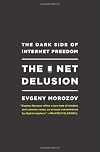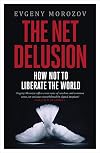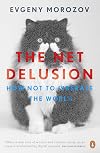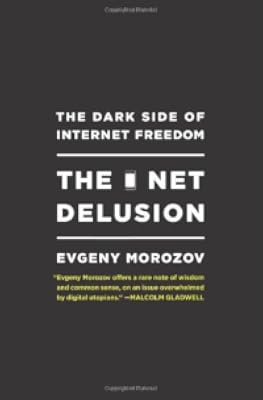
The Net Delusion: The Dark Side of Internet Freedom
by Evgeny Morozov
On This Page
Description
?Evgeny Morozov offers a rare note of wisdom and common sense, on an issue overwhelmed by digital utopians."?Malcolm GladwellTags
Recommendations


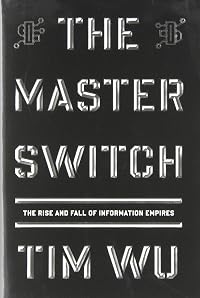


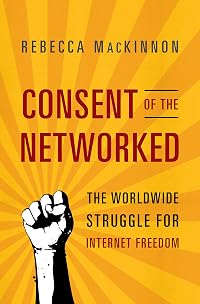


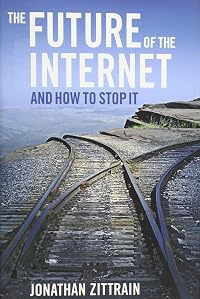
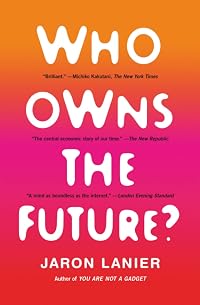

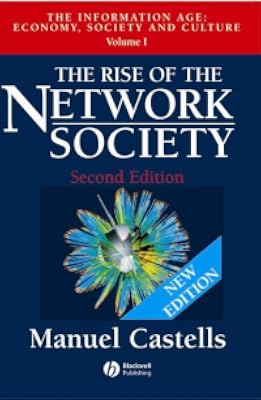














Member Recommendations
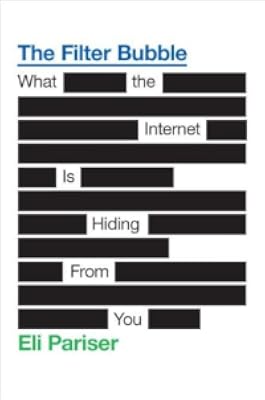
proximity1 A counter-view of the rosy future of the digital age.



Member Reviews
The Net Delusion is powerful, and it gains power as it rolls through its 320 pages. It took quite a while to lock me in; the first hundred pages gave me little I didn't already know. I admit I began to get fidgety, but the next couple of hundred pages gave me a ton of insight, building on what came before. The structure of it all is therefore quite impressive, as is the research. Morosov seems to have looked at essentially everything, prying a single, highly targeted quote from most sources. The result is a very inclusive and empirically supported shot at the Alice in Wonderland world of the internet as dictator-killer. The pace quickens, the momentum builds. It becomes a compelling read. Bravo, Morosov.
I particularly appreciated the show more view from the other side - of the ocean, of the rose-colored glasses, of the political spectrum. For example, Morosov says that as other countries develop their own social networking and search services (if only to keep track of their own potentially troublesome citizens), the Googles and Facebooks the US offers are being seen more and more as digital versions of Halliburton and Exxon. That's a perspective that should be shaking things up at Google, which portrays itself as the good guys from every conceivable angle.
Morosov wraps it up with a call for perspective - historical perspective. We will not change human nature with the internet, because nothing ever has, and the internet is just another technology that will fail to make critical changes - like telegraph, telephone, radio, and tv. And without knowing the past and the present, we have no business making naive prognostications about Twitter saving Iran - which clearly is not happening - or China suddenly rising up because of Amazon's department store on the net. It's a cold shower of important perspective. It needed to be said, and I can't imagine it being better said than it is in The Net Delusion show less
I particularly appreciated the show more view from the other side - of the ocean, of the rose-colored glasses, of the political spectrum. For example, Morosov says that as other countries develop their own social networking and search services (if only to keep track of their own potentially troublesome citizens), the Googles and Facebooks the US offers are being seen more and more as digital versions of Halliburton and Exxon. That's a perspective that should be shaking things up at Google, which portrays itself as the good guys from every conceivable angle.
Morosov wraps it up with a call for perspective - historical perspective. We will not change human nature with the internet, because nothing ever has, and the internet is just another technology that will fail to make critical changes - like telegraph, telephone, radio, and tv. And without knowing the past and the present, we have no business making naive prognostications about Twitter saving Iran - which clearly is not happening - or China suddenly rising up because of Amazon's department store on the net. It's a cold shower of important perspective. It needed to be said, and I can't imagine it being better said than it is in The Net Delusion show less
Morozov is on a crusade against 'Internetic-centric foreign policy' and 'cyber-utopianism', which he describes as a constellation of power interests linking Silicon Valley tech companies (Google, Twitter, Facebook) with Cold Warriors (Cheney, Clinton, Rumsfeld) in a profoundly misguided and dangerous effort to promote democracy overseas through technology. He argues that rather than being an unalloyed force for freedom, the internet can be used in many ways that strengthen authoritarian regimes.
The evidence for that last claim is overwhelming: I doubt a single case of 'internet abuse' between 2005 and 2010 has been left out of the book. For that first claim, that the tech companies and Cold Warriors are in alliance, Morozov's evidence show more is much more hand-wavey. A few speeches, a few NSA sponsored trips, some conference reports.
What this book does not have, and what it really needs, is a theory to organize these disparate elements into a coherent whole. Political power and the governance of internet technologies are complex issues, but the role of the public intellectual to render these complex issues, if not simple, at least comprehensible. Morozov gestures at the fact that the tools used to crack down on pedophiles, terrorists, media piracy, and spam in the West are the same tools used to crack down on activists and dissidents in authoritarians regimes, but he doesn't explain what this conflict means for those of us who would enjoy both a free world and an orderly internet. Likewise, he doesn't address why some states are 'democracies' and some states are 'authoritarian'. Sure, the US just throws Code Pink activists out of Senate hearings while Russia murders journalists, but why is some power legitimate and some illegal?
Most tellingly, for someone who is all about promoting 'cyber-realism', he is blurry on the specifics of what should be done (aside from localizing policy-which leads to embarrassing situations like the tweets from the US Embassy in Egypt). These days, both democracies and authoritarian regimes use the internet for the same reason they use trucks to transport soldiers, or have their citizens breath air; it'd be impossible not to. But a covert organization has different information strategies from a mass protest, and a mass protest is different from a revolutionary army or transitional government.
This lack of theory exacerbates the other problem with a lack of theoretical perspective; the inability to incorporate new information. This book was published in 2011, which means it was probably written in 2010, but Morozov hasn't substantially updated his thinking to include the Arab Spring and divergent outcomes in Tunisia, Libya, Bahrain, Egypt, Syria etc. (the fact that they're different might mean that he's right, but still, they all occurred simultaneously...) Wikileaks barely gets a mention, despite the diplomatic cable leaks beginning in February 2010. If there was a theory to The Net Delusion, you could ask how new information fits into or changes the framework. Even in a popular book that is less rigorous than an academic treatise, you need to do more to contextualize your ideas than wave at Foucault, Langdon Winner, George F. Kennan and so on. show less
The evidence for that last claim is overwhelming: I doubt a single case of 'internet abuse' between 2005 and 2010 has been left out of the book. For that first claim, that the tech companies and Cold Warriors are in alliance, Morozov's evidence show more is much more hand-wavey. A few speeches, a few NSA sponsored trips, some conference reports.
What this book does not have, and what it really needs, is a theory to organize these disparate elements into a coherent whole. Political power and the governance of internet technologies are complex issues, but the role of the public intellectual to render these complex issues, if not simple, at least comprehensible. Morozov gestures at the fact that the tools used to crack down on pedophiles, terrorists, media piracy, and spam in the West are the same tools used to crack down on activists and dissidents in authoritarians regimes, but he doesn't explain what this conflict means for those of us who would enjoy both a free world and an orderly internet. Likewise, he doesn't address why some states are 'democracies' and some states are 'authoritarian'. Sure, the US just throws Code Pink activists out of Senate hearings while Russia murders journalists, but why is some power legitimate and some illegal?
Most tellingly, for someone who is all about promoting 'cyber-realism', he is blurry on the specifics of what should be done (aside from localizing policy-which leads to embarrassing situations like the tweets from the US Embassy in Egypt). These days, both democracies and authoritarian regimes use the internet for the same reason they use trucks to transport soldiers, or have their citizens breath air; it'd be impossible not to. But a covert organization has different information strategies from a mass protest, and a mass protest is different from a revolutionary army or transitional government.
This lack of theory exacerbates the other problem with a lack of theoretical perspective; the inability to incorporate new information. This book was published in 2011, which means it was probably written in 2010, but Morozov hasn't substantially updated his thinking to include the Arab Spring and divergent outcomes in Tunisia, Libya, Bahrain, Egypt, Syria etc. (the fact that they're different might mean that he's right, but still, they all occurred simultaneously...) Wikileaks barely gets a mention, despite the diplomatic cable leaks beginning in February 2010. If there was a theory to The Net Delusion, you could ask how new information fits into or changes the framework. Even in a popular book that is less rigorous than an academic treatise, you need to do more to contextualize your ideas than wave at Foucault, Langdon Winner, George F. Kennan and so on. show less
This is a really important book that should be a third shorter. Shorn of the repetitive insistence that the internet is not all good, Morozov marshals impressive evidence for his thesis. It’s a version of Kranzberg’s first law of technology: the internet is neither good nor bad, nor is it neutral. But Morozov doesn’t spend much time on the “good” part, considering that internet exceptionalists have gone too far in that direction already.
Morozov argues that proponents of freeing populations via the internet seduce Western elites into thinking that democratization will be cheap, easy and automatic, thus distracting from debate over interventions that might actually be of some use. Worse, by touting the disruptive potential of show more the internet, those same Western elites convince dictators to ramp up their control of the internet to make sure that liberalization doesn’t happen. By giving public credit to Twitter for unrest in Iran and Egypt, Americans ensured that American internet resources would be inherently suspect in authoritarian nations from here on out. As he points out, “it’s hard to think of a state that actually didn’t surive the challenges posed by the [internet] dilemma. Save for North Korea, all authoritarian states have accepted the Internet, with China having more Internet users than there are people in the United States.”
Authoritarians aren’t dumb, and they have plenty of useful strategies at hand. They can implement context-sensitive filters so that people can shop but not engage in political activism. They can use Facebook’s social graph to target activists (and Facebook is all too willing to turn over any necessary information) and ensure that suspicious people/sites are automatically and selectively filtered out. They can use cheap technology to substitute for expensive, fallible, and occasionally sympathetic government employees doing surveillance and thus cover more ground. They can use SMS to collect information on where ethnic minorities are so as to more easily massacre them. They can support DDoS attacks on critical sites (he discusses Livejournal as well as a Saudi Arabian philosophy site with far fewer resources at its disposal).
They can astroturf the web to create fear, uncertainty, and doubt, as well as creating a public image of a regime with huge popular support. Here’s an article on China’s huge and decentralized array of paid web commenters posting the party line. “In countries where even ardent supporters of democratizaiton are often paranoid about foreign intervention, all it takes to discredit a blogger is to accuse her of being funded by the CIA, MI6, or Mossad …. If that accusation is repeated by a hundred other bloggers—even if some of them look rather dubious—most sane critics of the government think twice before reposting that blogger’s critical message.” Saudi Arabia boasts a “well-coordinated group of two hundred culturally conservative users” who monitor all Saudi Arabia-related videos posted on YouTube and flag the ones they don’t like. Avoiding YouTube is a possibility, but not a very good one: “Faced with the painful choice between scale and control, activists usually choose the former, surrendering full control over their chosen platform” and risking unpredictable takedowns. The resultant uncertainty deters too much investment in digital activism, because users have to fear Facebook/Google’s reactions as well as their governments’.
He fears that access to Western entertainment, which will get through more easily than other more political messages, will only dilute pressure for reform, and uses the example of East German access to West German television: as it turned out, many East Germans didn’t believe the Western news they received, in part because they didn’t recognize the uninformed portrayal of East Germany as corresponding to their own lives, “while the extensive propaganda of their own government made them expect that Western news, too, was heavily shaped by the government.” In fact, East Germans who received Western television “were, overall, more satisfied and content with the regime; the ones who could not receive Western television … were much more politicized, more critical of the regime, and, most interestingly, more likely to apply for exit visas.”
“If anything,” he argues, “the Internet makes it harder, not easier, to get people to care, if only because the alternatives to political action are so much more pleasant and risk-free.” So you “like” a Facebook group about saving Darfur but don’t show up to a local government meeting where you might actually have a chance of changing policy. While Wikipedia and some other Internet innovations allow distributed participation, “you can’t simply join a revolution any time you want, contribute a comma to a random revolutionary decree, rephrase the guillotine manual, and then slack off for months.” Nor can you start with protests and figure out demands later; knowing what you want has to be the starting point—something that also comes up in the book I’m reading now about occupied Japan.
Morozov argues that many subjects of repressive regimes want orderly justice, access to education and health care, and so on, as much as more than they want free elections, and if their governments can deliver those things—now aided by the internet in rooting out the most obvious of corruption, as in China where people are encouraged to report local malfeasance to national authorities—then they’ll have sufficient legitimacy to survive challenges. This is especially true given that many people online are at least as nationalistic and xenophobic as their governing regimes: “official government policy looks cosmopolitan in comparison.”
Morozov is particularly biting about how American politicians speak of the internet as bringer of truth abroad but dangerous source of potential misinformation (and porn, and copyright infringement etc.) at home. Obama said “the more freely information flows, the stronger the society becomes” in Shanghai, but in Virginia he targeted “a 24/7 media environment that bombards us with all kinds of content and exposes us to all kinds of arguments, some of which don’t always rank all that high on the truth meter.” It’s like we think that birtherism couldn’t possibly take hold somewhere else. Thomas Friedman suggests that people will be able to comparison shop for governments, but “[f]or some reason … Americans, with all their unfettered access to the Internet, don’t hail Friedman’s advice, failing to do much government-shopping on their own and see that other governments have far more reasonable approaches to, for example, imprisoning their citizens.”
Morozov is weakest when he condemns the speed of information flow, arguing that it’s impossible to make effective policies “under the influence of blood-cur[d]ling videos of Iranian protesters dying on the pavement.” Sensationalism (and indifference to suffering) have been with us for a while, and he seems to conflate easy access to video with lack of access to somehow-more-real “facts.” It’s certainly true that most Iranians weren’t on Twitter, so anyone making judgments about the situation in Iran during the big protests shouldn’t have just looked on Twitter, but policymakers have generally suffered from ethnocentric interpretations of events elsewhere, and I’m not convinced the internet changed that.
The book has few specific solutions. Morozov wants us to think harder about what we’re doing. He suggests considering restrictions on sales of privacy-violating technology to foreign states, as well as restrictions on what services like Google can do with private information generally. “While many of us in the developed world can maybe survive the demise of privacy as long as toher legal institutions are working well … it might easily have disastrous consequences elsewhere.” We must stop celebrating innovation for its own sake without looking at its political consequences. Solutions may be country-by-country—he suggests that uninhibited social/sexual discourse may be useful in the most repressive societies by pushing the boundaries of what can and can’t be said, whereas in others it may only be distracting. Morozov also points out the fallacies of the libertarian part of cyberlibertarianism: government needs to work well to give us the benefits of freedom, and the “freedom on the cheap” ideology that says the Internet will liberate the world without any help is just a part of the larger mistake about what government should be doing. show less
Morozov argues that proponents of freeing populations via the internet seduce Western elites into thinking that democratization will be cheap, easy and automatic, thus distracting from debate over interventions that might actually be of some use. Worse, by touting the disruptive potential of show more the internet, those same Western elites convince dictators to ramp up their control of the internet to make sure that liberalization doesn’t happen. By giving public credit to Twitter for unrest in Iran and Egypt, Americans ensured that American internet resources would be inherently suspect in authoritarian nations from here on out. As he points out, “it’s hard to think of a state that actually didn’t surive the challenges posed by the [internet] dilemma. Save for North Korea, all authoritarian states have accepted the Internet, with China having more Internet users than there are people in the United States.”
Authoritarians aren’t dumb, and they have plenty of useful strategies at hand. They can implement context-sensitive filters so that people can shop but not engage in political activism. They can use Facebook’s social graph to target activists (and Facebook is all too willing to turn over any necessary information) and ensure that suspicious people/sites are automatically and selectively filtered out. They can use cheap technology to substitute for expensive, fallible, and occasionally sympathetic government employees doing surveillance and thus cover more ground. They can use SMS to collect information on where ethnic minorities are so as to more easily massacre them. They can support DDoS attacks on critical sites (he discusses Livejournal as well as a Saudi Arabian philosophy site with far fewer resources at its disposal).
They can astroturf the web to create fear, uncertainty, and doubt, as well as creating a public image of a regime with huge popular support. Here’s an article on China’s huge and decentralized array of paid web commenters posting the party line. “In countries where even ardent supporters of democratizaiton are often paranoid about foreign intervention, all it takes to discredit a blogger is to accuse her of being funded by the CIA, MI6, or Mossad …. If that accusation is repeated by a hundred other bloggers—even if some of them look rather dubious—most sane critics of the government think twice before reposting that blogger’s critical message.” Saudi Arabia boasts a “well-coordinated group of two hundred culturally conservative users” who monitor all Saudi Arabia-related videos posted on YouTube and flag the ones they don’t like. Avoiding YouTube is a possibility, but not a very good one: “Faced with the painful choice between scale and control, activists usually choose the former, surrendering full control over their chosen platform” and risking unpredictable takedowns. The resultant uncertainty deters too much investment in digital activism, because users have to fear Facebook/Google’s reactions as well as their governments’.
He fears that access to Western entertainment, which will get through more easily than other more political messages, will only dilute pressure for reform, and uses the example of East German access to West German television: as it turned out, many East Germans didn’t believe the Western news they received, in part because they didn’t recognize the uninformed portrayal of East Germany as corresponding to their own lives, “while the extensive propaganda of their own government made them expect that Western news, too, was heavily shaped by the government.” In fact, East Germans who received Western television “were, overall, more satisfied and content with the regime; the ones who could not receive Western television … were much more politicized, more critical of the regime, and, most interestingly, more likely to apply for exit visas.”
“If anything,” he argues, “the Internet makes it harder, not easier, to get people to care, if only because the alternatives to political action are so much more pleasant and risk-free.” So you “like” a Facebook group about saving Darfur but don’t show up to a local government meeting where you might actually have a chance of changing policy. While Wikipedia and some other Internet innovations allow distributed participation, “you can’t simply join a revolution any time you want, contribute a comma to a random revolutionary decree, rephrase the guillotine manual, and then slack off for months.” Nor can you start with protests and figure out demands later; knowing what you want has to be the starting point—something that also comes up in the book I’m reading now about occupied Japan.
Morozov argues that many subjects of repressive regimes want orderly justice, access to education and health care, and so on, as much as more than they want free elections, and if their governments can deliver those things—now aided by the internet in rooting out the most obvious of corruption, as in China where people are encouraged to report local malfeasance to national authorities—then they’ll have sufficient legitimacy to survive challenges. This is especially true given that many people online are at least as nationalistic and xenophobic as their governing regimes: “official government policy looks cosmopolitan in comparison.”
Morozov is particularly biting about how American politicians speak of the internet as bringer of truth abroad but dangerous source of potential misinformation (and porn, and copyright infringement etc.) at home. Obama said “the more freely information flows, the stronger the society becomes” in Shanghai, but in Virginia he targeted “a 24/7 media environment that bombards us with all kinds of content and exposes us to all kinds of arguments, some of which don’t always rank all that high on the truth meter.” It’s like we think that birtherism couldn’t possibly take hold somewhere else. Thomas Friedman suggests that people will be able to comparison shop for governments, but “[f]or some reason … Americans, with all their unfettered access to the Internet, don’t hail Friedman’s advice, failing to do much government-shopping on their own and see that other governments have far more reasonable approaches to, for example, imprisoning their citizens.”
Morozov is weakest when he condemns the speed of information flow, arguing that it’s impossible to make effective policies “under the influence of blood-cur[d]ling videos of Iranian protesters dying on the pavement.” Sensationalism (and indifference to suffering) have been with us for a while, and he seems to conflate easy access to video with lack of access to somehow-more-real “facts.” It’s certainly true that most Iranians weren’t on Twitter, so anyone making judgments about the situation in Iran during the big protests shouldn’t have just looked on Twitter, but policymakers have generally suffered from ethnocentric interpretations of events elsewhere, and I’m not convinced the internet changed that.
The book has few specific solutions. Morozov wants us to think harder about what we’re doing. He suggests considering restrictions on sales of privacy-violating technology to foreign states, as well as restrictions on what services like Google can do with private information generally. “While many of us in the developed world can maybe survive the demise of privacy as long as toher legal institutions are working well … it might easily have disastrous consequences elsewhere.” We must stop celebrating innovation for its own sake without looking at its political consequences. Solutions may be country-by-country—he suggests that uninhibited social/sexual discourse may be useful in the most repressive societies by pushing the boundaries of what can and can’t be said, whereas in others it may only be distracting. Morozov also points out the fallacies of the libertarian part of cyberlibertarianism: government needs to work well to give us the benefits of freedom, and the “freedom on the cheap” ideology that says the Internet will liberate the world without any help is just a part of the larger mistake about what government should be doing. show less
Morozov è un osservatore attento e viene dalla giusta parte del mondo e storia (è bielorusso) per avere un occhio critico sul cyber-ottimismo (così lui lo definisce) occidentale. Non a caso, uno dei parallelismi più usati del libro è quello con la guerra fredda. Da leggere per aprire gli occhi sulle tanto sbandierate democratizzazioni che internet - e in genere i media - promuoverebbero.
A complex, well-written and insightful study of how the Internet is (NOT) setting the world free - quite the opposite in places. That what Evgeny Morozov writes is both fair and accurate there can't be much doubt; that the world and especially Westerners want to do anything about it is another discussion altogether.
Interesting take on the dangers of technology worship. Essentially, Morozov writes if the Internet can be used for spreading democracy and freedom, as many politicians and talking heads say, it can and is used for anti-democratic ends as well. Morozov provides many (MANY) examples of this, and more than a few times I thought, "Ok, I believe you!" (Although, to be fair, while I use computer technology almost every day, I also share his view that technology does not necessarily mean that good or useful results happen in the end, so I didn't need a terrible amount of convincing.) Worth a read, but you can skim a couple of parts, and the second half is quite compelling.
A much-needed reminder that the effects of an unregulated Internet may be wildly dissimilar in different contexts, and that technological solutions to non-technological problems may do more harm than good.
Members
- Recently Added By
Published Reviews
ThingScore 75
The Net Delusion is two books in one. The first, which is excellent, shows how flimsy the arguments of Washington policymakers are. The second, which is far from excellent, makes some rather flimsy arguments of its own. When Morozov argues against the grandiose claims of US policymakers, he is eager to tell us how little we know. When, in contrast, he is arguing on behalf of his own theories, show more he is prone to suggesting that we know rather more than we do. show less
added by atbradley
The Net Delusion is considerably more than an assault on political rhetoric; for, it argues, behind many of the fine words recently spoken in praise of technology lies a combination of utopianism and ignorance that grossly misrepresents the internet's political role and potentials.
added by mikeg2
Lists

why the internet makes us dumb
7 works; 1 member

Ryan Holiday's Books To Base Your Life On
97 works; 2 members
Author Information

20+ Works 1,244 Members
Awards and Honors
Common Knowledge
- Canonical title*
- L'ingenuità della rete. Il lato oscuro della libertà di internet
- Original title
- The Net Delusion: How Not to Liberate The World
- Alternate titles
- The net delusion: the dark side of internet freedom
- Original publication date
- 2011
- First words
- For anyone who wants to see democracy prevail in the most hostile and unlikely environments, the first decade of the new millennium was marked by a sense of bitter disappointment, if not utter disillusionment.
- Last words
- (Click to show. Warning: May contain spoilers.)Above all, cyber-realists would believe that a world made of bytes may defy the law of gravity but absolutely nothing dictates that it should also defy the law of reason.
- Canonical DDC/MDS
- 303.4833
- Canonical LCC
- HM851
*Some information comes from Common Knowledge in other languages. Click "Edit" for more information.
Classifications
- Genres
- Technology, Sociology, Nonfiction, General Nonfiction, Politics and Government
- DDC/MDS
- 303.4833 — Society, government, & culture Social sciences, sociology & anthropology Social processes Social change Causes of change Development of science and technology Communication
- LCC
- HM851 — Social sciences Sociology (General) Sociology Social change
- BISAC
Statistics
- Members
- 569
- Popularity
- 51,911
- Reviews
- 15
- Rating
- (3.65)
- Languages
- 5 — English, French, Italian, Russian, Spanish
- Media
- Paper, Ebook
- ISBNs
- 16
- ASINs
- 10