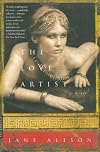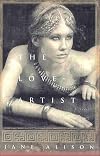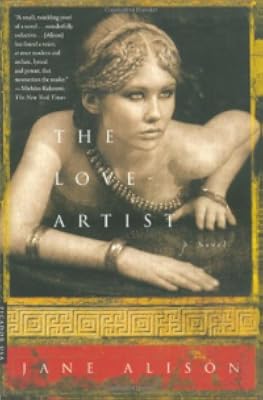
The Love Artist
by Jane Alison
On This Page
Description
Ovid, the leading author of the Roman Empire, finds inspriation in the person of Xenia, a mysertious woman who is part healer and part witch.Tags
Recommendations








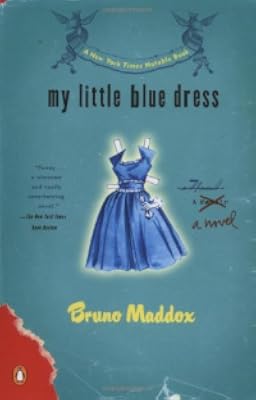

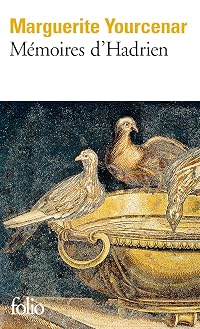
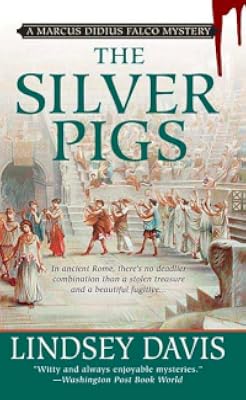
Member Recommendations

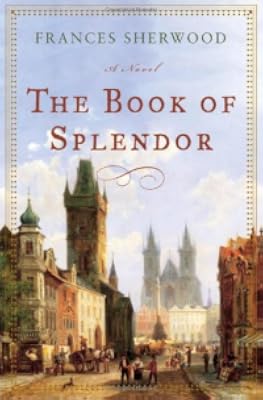
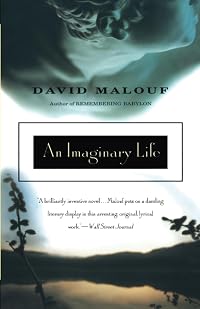
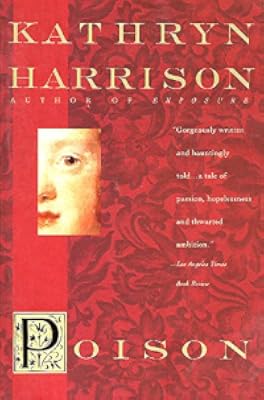
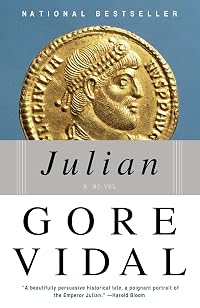
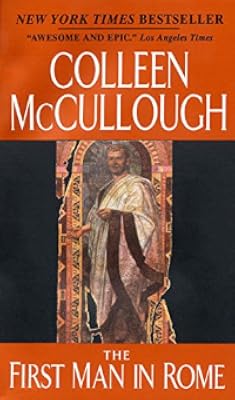
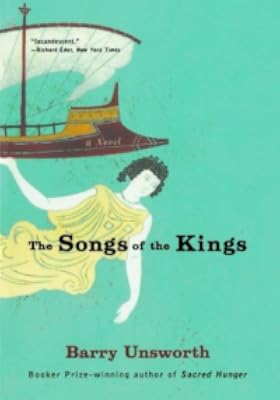
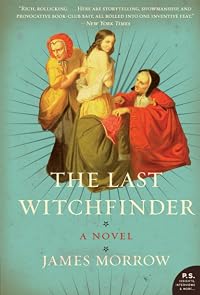
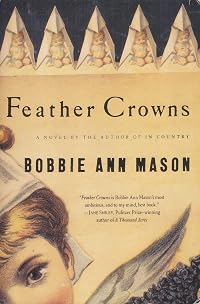
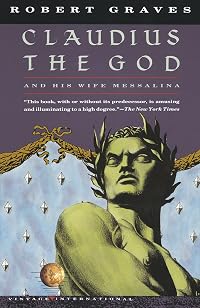
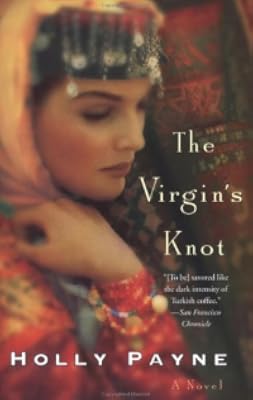
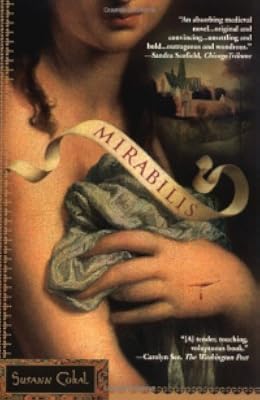
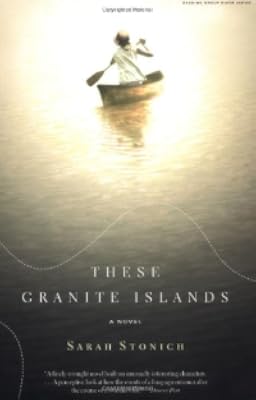
isabelx Both books contain a slightly magical version of the Classical world.
Member Reviews
Why was Ovid, the most popular writer of his era, banished to the remote town of Tomis in the Black Sea from the seat of the Empire's power, Rome, and the side of his patron, Augustus?
Why are merely two lines of Medea, widely touted as his most ardent and accomplished work, the only surviving remnant of this play?
Between the historical facts of Ovid’s life, his admission that a poem and a mistake were the pillars of his ruin, and these tantalising enigmas, Jane Alison has wrought a hauntingly romantic drama of psychological manipulation and sensual intrigue.
Holidaying in the Black Sea on the outskirts of the Roman Empire and avoiding the potential displeasure of Augustus, Ovid chances upon an almost unearthly woman who epitomises the show more fantastical elements of his about-to-be published Metamorphoses. A delectable, desirable, alluring combination of mystic and witch, Xenia seems myth translated into life. Ovid is enchanted, obsessed, almost as a virgin youth experiencing his first love, he is brimming with inspiration: Xenia will be the muse for his pièce de résistance. But this time, he renders his subject seductively dark and twisted.
When autumn arrives, Ovid tempts Xenia from her home on the coast of the Black Sea to Rome with the promise of immortality only an artist can bequeath. The ineluctable noose of ambition lures Ovid and he enters a Faustian contract, deceiving his muse and hurling them both towards a retribution he never imagined. As Ovid and Xenia become entangled in his art-inspiring-life conspiracy and the schemes of his patrons, so the reader is ensnared in this chilling yet enthralling re-telling of the events leading to Ovid’s banishment.
The Love Artist is an exotic, brilliant and utterly compelling meditation on love, genius, and the artist's (and his or her muse) unswerving quest for immortality. Ms Alison’s prose is as bewitching as Xenia is described, as sensual and steamy as Ovid’s The Art of Love, and as flawlessly complex and evocative of Ancient Rome as any cinematic poem scribed by the classical poets.
Ms Alison foreshadows the events that will eventually engulf Ovid by opening her story with the journey of his exile to Tomis, but the story proper commences in the light and heat and smells of summer and the joy of the first stirrings of unexpected, overwhelming, infatuation. As the seasons fade into winter, so the menace of Ovid's plotting and the machinations of shadowy puppeteers shroud the protagonists until each is propelled along a path that can only result in a terrifying, profoundly disturbing conclusion.
Readers of lusciously written character-driven prose, who enjoy fictional history of the ancient world, with breath-taking twists of plot and consequence, will not be disappointed with [b:The Love-Artist|2889|The Love-Artist|Jane Alison|http://photo.goodreads.com/books/1312006175s/2889.jpg|6793]. show less
Why are merely two lines of Medea, widely touted as his most ardent and accomplished work, the only surviving remnant of this play?
Between the historical facts of Ovid’s life, his admission that a poem and a mistake were the pillars of his ruin, and these tantalising enigmas, Jane Alison has wrought a hauntingly romantic drama of psychological manipulation and sensual intrigue.
Holidaying in the Black Sea on the outskirts of the Roman Empire and avoiding the potential displeasure of Augustus, Ovid chances upon an almost unearthly woman who epitomises the show more fantastical elements of his about-to-be published Metamorphoses. A delectable, desirable, alluring combination of mystic and witch, Xenia seems myth translated into life. Ovid is enchanted, obsessed, almost as a virgin youth experiencing his first love, he is brimming with inspiration: Xenia will be the muse for his pièce de résistance. But this time, he renders his subject seductively dark and twisted.
When autumn arrives, Ovid tempts Xenia from her home on the coast of the Black Sea to Rome with the promise of immortality only an artist can bequeath. The ineluctable noose of ambition lures Ovid and he enters a Faustian contract, deceiving his muse and hurling them both towards a retribution he never imagined. As Ovid and Xenia become entangled in his art-inspiring-life conspiracy and the schemes of his patrons, so the reader is ensnared in this chilling yet enthralling re-telling of the events leading to Ovid’s banishment.
The Love Artist is an exotic, brilliant and utterly compelling meditation on love, genius, and the artist's (and his or her muse) unswerving quest for immortality. Ms Alison’s prose is as bewitching as Xenia is described, as sensual and steamy as Ovid’s The Art of Love, and as flawlessly complex and evocative of Ancient Rome as any cinematic poem scribed by the classical poets.
Ms Alison foreshadows the events that will eventually engulf Ovid by opening her story with the journey of his exile to Tomis, but the story proper commences in the light and heat and smells of summer and the joy of the first stirrings of unexpected, overwhelming, infatuation. As the seasons fade into winter, so the menace of Ovid's plotting and the machinations of shadowy puppeteers shroud the protagonists until each is propelled along a path that can only result in a terrifying, profoundly disturbing conclusion.
Readers of lusciously written character-driven prose, who enjoy fictional history of the ancient world, with breath-taking twists of plot and consequence, will not be disappointed with [b:The Love-Artist|2889|The Love-Artist|Jane Alison|http://photo.goodreads.com/books/1312006175s/2889.jpg|6793]. show less
This book reminds me of some of the books I read for the fiction writing class in Greece, perhaps because it is set in ancient circumstances, but maybe because it blends more of the fantastic into the fabric of the historical setting. Giving Xenia the ability to see into the future gives the story a more comprehensive chronological sense, which is interesting as a reader aware of the variety of distances between here and Rome. The decision to spend so much time in Ovid and Xenia’s consciousness was a bit exhausting as a reader, and I would have preferred more action and dialogue. But as an authorial choice it made sense with the true topic of the story, because though framed as the story of their relationship, this is just the story show more of their independent characters, fiercely separated despite their intense temporary collision. show less
Somehow this book manages to convey a sense of Ovid's time while keeping a foot in a very modern sensibility. I wonder ... would a character like Xenia really have such autonomy? I would like to think so but I'm no scholar of the period.
The prose is lush and heady, but not so much so that you lose track of what's going on. Sometimes it's the very sensuousness that makes you feel more accurately what's going on. The portrait of ancient Rome, as seen through the eyes of both Ovid who lives and breathes and loves it, and Xenia to whom it's all alien and doomed, is brilliant.
I just have a couple of quibbles. Sometimes Alison seems too fond of her own adjectives. Maybe this is supposed to echo the style of classical epic (brave Ulysses & show more faithful Penelope & the wine-dark sea and all that), but I found it a flaw in otherwise compelling prose. I got really tired, for instance, of reading about Xenia's "glassy" hair in the first couple of chapters, and began to wonder, what color is her damned hair anyway? (Answer, finally gleaned from the Roman party girls' comments: it must be white-blonde.)
My other quibble is yeah, Xenia is a seer, prophetess, what-have-you, but toward the novel's climax I think she's given more knowledge of various characters' activities than I think she'd reasonably have. But again, that's just a nitpick. It's barely a ripple on the fabulous current of this tale.
Besides the beautiful, evocative, allusive writing, the thing I like best is that the author has taken what could have been a standard "literary" tale and refused to tread that biased & well-trodden ground. You have your passionate & driven man and your passionate but naive woman. In so many of these stories there's a horrible murder or betrayal and the literary twist is "she drove him to it" through the awesome power of her femaleness, yada yada. This sexist bushwa is unfortunately painfully prevalent in art throughout the centuries. How decent, how much more realistic, how much more authentic is Alison's presentation of Xenia not as The Female Other but as active, conscious actor in the story with her own ambitions, her own work, her own perceptions, and a normal human sense of self-preservation, alongside Ovid's own equally compelling inner workings.
The killer thing here is that Alison threads this normal and reasonable line through a setting of heavy sensuality, emotion & portent. In one sense this is a fantastic novel in the original sense of the word; no one's life is like this (is it?). In another sense, this is one of those rare books with a true portrait of the inner life of a woman as well as that of a man. show less
The prose is lush and heady, but not so much so that you lose track of what's going on. Sometimes it's the very sensuousness that makes you feel more accurately what's going on. The portrait of ancient Rome, as seen through the eyes of both Ovid who lives and breathes and loves it, and Xenia to whom it's all alien and doomed, is brilliant.
I just have a couple of quibbles. Sometimes Alison seems too fond of her own adjectives. Maybe this is supposed to echo the style of classical epic (brave Ulysses & show more faithful Penelope & the wine-dark sea and all that), but I found it a flaw in otherwise compelling prose. I got really tired, for instance, of reading about Xenia's "glassy" hair in the first couple of chapters, and began to wonder, what color is her damned hair anyway? (Answer, finally gleaned from the Roman party girls' comments: it must be white-blonde.)
My other quibble is yeah, Xenia is a seer, prophetess, what-have-you, but toward the novel's climax I think she's given more knowledge of various characters' activities than I think she'd reasonably have. But again, that's just a nitpick. It's barely a ripple on the fabulous current of this tale.
Besides the beautiful, evocative, allusive writing, the thing I like best is that the author has taken what could have been a standard "literary" tale and refused to tread that biased & well-trodden ground. You have your passionate & driven man and your passionate but naive woman. In so many of these stories there's a horrible murder or betrayal and the literary twist is "she drove him to it" through the awesome power of her femaleness, yada yada. This sexist bushwa is unfortunately painfully prevalent in art throughout the centuries. How decent, how much more realistic, how much more authentic is Alison's presentation of Xenia not as The Female Other but as active, conscious actor in the story with her own ambitions, her own work, her own perceptions, and a normal human sense of self-preservation, alongside Ovid's own equally compelling inner workings.
The killer thing here is that Alison threads this normal and reasonable line through a setting of heavy sensuality, emotion & portent. In one sense this is a fantastic novel in the original sense of the word; no one's life is like this (is it?). In another sense, this is one of those rare books with a true portrait of the inner life of a woman as well as that of a man. show less
Two offenses ruined me: a poem and an error.
Love and betrayal in Ancient Rome.
No-one knows why the Roman poet Ovid was exiled to Tomis on the Black Sea, or why only two lines of his poem "Medea" have survived, so it leaves the novelist a lot of scope in imagining what could have happened.
Ovid is out of favour with the puritanical Emperor Augustus after writing a book of advice about love, and decides that it might be prudent to leave Rome for a while. He takes a holiday on the Black Sea coast, while restlessly awaiting the publication of his latest work, "Metamorphoses", which he hopes may bring him back into favour at court, and while there he sees a young girl emerging from a pool like one of the transfigured characters from his show more book. Taking Xenia back to Rome with him, Ovid cynically manipulates her into fulfilling her role as his muse, and all the while he is desperate for her to use her witch's powers to tell him whether his work will survive him and his name will be known forever.
Although their plots are very different, "The Love-Artist" reminded me of one of my favourite books, Naomi Mitchison's "The Corn King and the Spring Queen", whose main character is also a witch from the coast of Black Sea who travels to the (supposedly) more civilised parts of the Roman Empire. show less
Love and betrayal in Ancient Rome.
No-one knows why the Roman poet Ovid was exiled to Tomis on the Black Sea, or why only two lines of his poem "Medea" have survived, so it leaves the novelist a lot of scope in imagining what could have happened.
Ovid is out of favour with the puritanical Emperor Augustus after writing a book of advice about love, and decides that it might be prudent to leave Rome for a while. He takes a holiday on the Black Sea coast, while restlessly awaiting the publication of his latest work, "Metamorphoses", which he hopes may bring him back into favour at court, and while there he sees a young girl emerging from a pool like one of the transfigured characters from his show more book. Taking Xenia back to Rome with him, Ovid cynically manipulates her into fulfilling her role as his muse, and all the while he is desperate for her to use her witch's powers to tell him whether his work will survive him and his name will be known forever.
Although their plots are very different, "The Love-Artist" reminded me of one of my favourite books, Naomi Mitchison's "The Corn King and the Spring Queen", whose main character is also a witch from the coast of Black Sea who travels to the (supposedly) more civilised parts of the Roman Empire. show less
Ovid, the Roman poet, was exiled to Tomis on the Black Sea for what he says in his "Tristia": Carmen et error [A poem and a mistake]. From this ambiguity, scholars and historians through the years have tried to puzzle out why he was exiled. Alison presents us with her speculation, giving us a lush, sensuous tale of Ovid and a mysterious "witch", Xenia, he meets on vacation on the Black Sea [a more salubrious part than his final home]. They fall in love and he takes her to Rome. He begins writing a tragedy of Medea with her as muse and model for the priestess. Xenia feels he has betrayed her with another woman. Jealous of his patroness, Julia, of the imperial family, she exacts a horrible vengeance.
I could SEE all scenes before me show more vividly, despite the author's sometimes purple prose. Besides the jealousy and betrayal, a main theme is the permanence of art and the artist [in this case Ovid.] Will he always be remembered, he keeps asking her. The novel took awhile to pick up steam, but finally rolled on swiftly to its inexorable conclusion. This novel is the expression of the inner life of its characters.
Recommended. On rereading in November 2016, I lowered my rating to 3***. show less
I could SEE all scenes before me show more vividly, despite the author's sometimes purple prose. Besides the jealousy and betrayal, a main theme is the permanence of art and the artist [in this case Ovid.] Will he always be remembered, he keeps asking her. The novel took awhile to pick up steam, but finally rolled on swiftly to its inexorable conclusion. This novel is the expression of the inner life of its characters.
Recommended. On rereading in November 2016, I lowered my rating to 3***. show less
This is a "quiet" novel, one that involves a lot of contemplation. My theory is that if your novel involves a lot of thinking/contemplation/dealing with something, then it better be about the most exciting people ever. And this one is about at least interesting people, Ovid and a witch. Somehow, it's still kind of boring.
Very interesting. Although I must say that I now have more questions instead of less about Ovid and the Augustan Roman period. Also, I'm not sure what the stream of consciousness style did for this book. I kept expecting Virginia Woolf to jump in with her [all important] brackets. Somehow [imagine this] that took me out of the classical Roman feeling that the author so craftily evoked. Still, it was very well written and I think my struggles were through my own limitations.
Members
- Recently Added By
Lists

Lives of the Poets (and Philosophers)
110 works; 5 members
Author Information

20+ Works 1,157 Members
Jane Alison has a bachelor's degree in classics from Princeton University & a M.F.A. from Columbia University. She lives in Germany. (Bowker Author Biography)
Awards and Honors
Distinctions
Common Knowledge
- Canonical title
- The Love Artist
- Original publication date
- 2001
- People/Characters
- Publius Ovidius Naso (Ovid); Xenia; Medea
- Important places
- Ancient Rome
- Epigraph
- Two offenses ruined me: a poem and an error. -Ovid, Tristia 2.207
I gave you your life. / Now you're wondering--will I take it, too? -Ovid, Medea, surviving fragment - First words
- Now the word is given, the horses are lashed, and the wagon jolts down the dark street, a helmeted soldier seated at each side and Ovid, the exile, between them.
- Last words
- (Click to show. Warning: May contain spoilers.)Two pairs of marble-smooth, fat, kicking legs; four sets of davvling pink toes; and twenty tiny fingers--which, at this moment, as the swell rolls forward, all reach toward the lifting water, trying to grasp an apricot jingle shell, which slowly, wobbling, sinks.
Classifications
Statistics
- Members
- 249
- Popularity
- 130,274
- Reviews
- 9
- Rating
- (3.35)
- Languages
- Dutch, English, German, Portuguese
- Media
- Paper, Ebook
- ISBNs
- 7
- ASINs
- 2