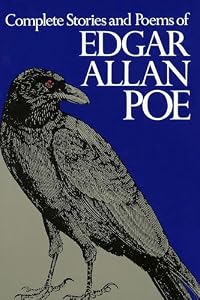
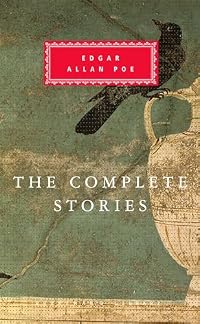
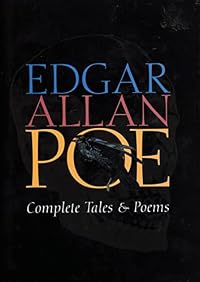
Complete Stories and Poems of Edgar Allan Poe
by Edgar Allan Poe
On This Page
Description
Brings together Poe's stories and poems in one volume.Tags
Recommendations
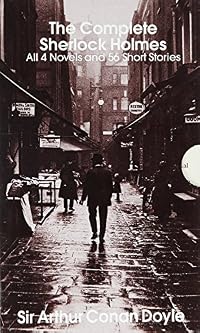
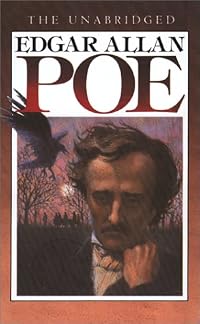

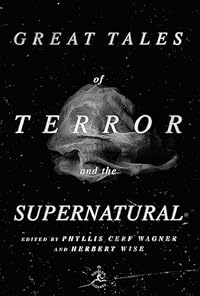
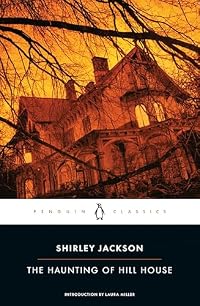
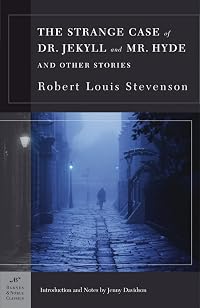
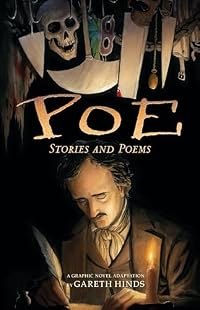


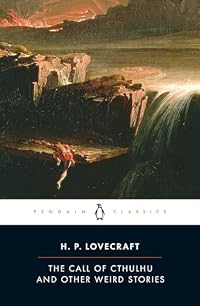
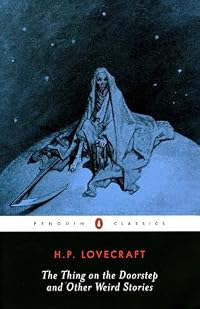
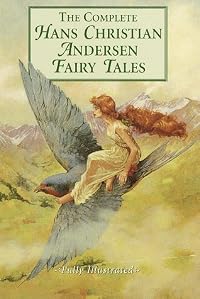
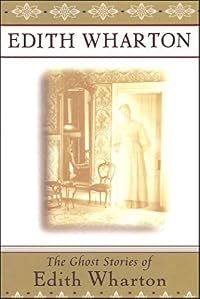
Member Recommendations
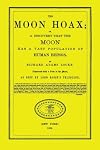
The moon hoax; or, A discovery that the moon has a vast population of human beings by Richard Adams Locke
JeffreySinclair "The Moon Hoax" is similar in style and purpose to Poe's short story "Hans Pfall", which it inspired.
11
Member Reviews
"And much of Madness, and more of Sin, And Horror the soul of the plot." (pg. 65)
A powerful and well-presented collection of all the poetry and fiction works of Edgar Allan Poe, one of the most influential writers of all time. Best-known for his gargantuan influence on Gothic horror and psychological terror (e.g. 'The Tell-Tale Heart' and 'The Fall of the House of Usher'), Poe also pioneered the genres of science-fiction (such as 'The Unparalleled Adventure of One Hans Pfaall'), detective fiction (the Auguste Dupin mysteries, a clear antecedent of Sherlock Holmes), treasure hunting ('The Gold Bug'), time travel ('Mellonta Tauta') and, in his only novel, The Narrative of Arthur Gordon Pym of Nantucket, seafaring adventure and show more catastrophe. Jules Verne, H. G. Wells, Arthur Conan Doyle, Stephen King, Jack London, Fyodor Dostoevsky, H. P. Lovecraft, Robert Louis Stevenson… all owe a debt to Poe, and I could go on and on with more names. And I've not even mentioned his poetry yet: 'The Raven' is rightly considered one of the greatest and most influential poems of all time, whilst there are other heavy-hitters like 'Annabel Lee'.
There is also, surprisingly, some comedy (such as the final short story, 'X-ing a Paragrab'), even if there is also a lot of dense prosing throughout. For example, on page 374, the detective story 'The Murders in the Rue Morgue' begins talking about 'stereotomy' and the theories of Epicurus and 'late nebular cosmogony': weird stuff that you'd rightly not usually find in fiction. And it's not a rare occurrence: a lot of the stories possess such pseudo-academic irregularities. Indeed, one of the final pieces, a 100-page 'prose poem' called Eureka, is essentially a pseudo-scientific screed (if an interesting one).
That said, it is horror which is the enduring theme of Poe's body of work; as he writes in 'House of Usher', he is concerned with "all sentiments having terror as a basis" (pg. 300). He generates "an atmosphere of sorrow. An air of stern, deep, and irredeemable gloom" which hangs over everything (pg. 302). It is often chilling, and it can be heavy going, which is why I broke from my usual reading habits and dipped into the book occasionally over a period of months.
Nevertheless, there is a wealth and variety of material to get stuck into. If the best-known pieces remain those of the best quality, there's still plenty of dark goodness to be found in the lesser-known pieces, and I certainly feel rewarded for having read the full body of work rather than just a 'greatest hits' collection. Reading it over these past few months, I've immersed myself in the book's gloom and absolutely devoured it. It has gradually seeped into my being, and set the tone for many of my days, something which might not have happened had I tried to tackle it all in one go. As Poe writes as the first line of the first story, 'Metzengerstein', on page 113: "Horror and fatality have been stalking abroad in all ages. Why then give a date to this story I have to tell?" show less
A powerful and well-presented collection of all the poetry and fiction works of Edgar Allan Poe, one of the most influential writers of all time. Best-known for his gargantuan influence on Gothic horror and psychological terror (e.g. 'The Tell-Tale Heart' and 'The Fall of the House of Usher'), Poe also pioneered the genres of science-fiction (such as 'The Unparalleled Adventure of One Hans Pfaall'), detective fiction (the Auguste Dupin mysteries, a clear antecedent of Sherlock Holmes), treasure hunting ('The Gold Bug'), time travel ('Mellonta Tauta') and, in his only novel, The Narrative of Arthur Gordon Pym of Nantucket, seafaring adventure and show more catastrophe. Jules Verne, H. G. Wells, Arthur Conan Doyle, Stephen King, Jack London, Fyodor Dostoevsky, H. P. Lovecraft, Robert Louis Stevenson… all owe a debt to Poe, and I could go on and on with more names. And I've not even mentioned his poetry yet: 'The Raven' is rightly considered one of the greatest and most influential poems of all time, whilst there are other heavy-hitters like 'Annabel Lee'.
There is also, surprisingly, some comedy (such as the final short story, 'X-ing a Paragrab'), even if there is also a lot of dense prosing throughout. For example, on page 374, the detective story 'The Murders in the Rue Morgue' begins talking about 'stereotomy' and the theories of Epicurus and 'late nebular cosmogony': weird stuff that you'd rightly not usually find in fiction. And it's not a rare occurrence: a lot of the stories possess such pseudo-academic irregularities. Indeed, one of the final pieces, a 100-page 'prose poem' called Eureka, is essentially a pseudo-scientific screed (if an interesting one).
That said, it is horror which is the enduring theme of Poe's body of work; as he writes in 'House of Usher', he is concerned with "all sentiments having terror as a basis" (pg. 300). He generates "an atmosphere of sorrow. An air of stern, deep, and irredeemable gloom" which hangs over everything (pg. 302). It is often chilling, and it can be heavy going, which is why I broke from my usual reading habits and dipped into the book occasionally over a period of months.
Nevertheless, there is a wealth and variety of material to get stuck into. If the best-known pieces remain those of the best quality, there's still plenty of dark goodness to be found in the lesser-known pieces, and I certainly feel rewarded for having read the full body of work rather than just a 'greatest hits' collection. Reading it over these past few months, I've immersed myself in the book's gloom and absolutely devoured it. It has gradually seeped into my being, and set the tone for many of my days, something which might not have happened had I tried to tackle it all in one go. As Poe writes as the first line of the first story, 'Metzengerstein', on page 113: "Horror and fatality have been stalking abroad in all ages. Why then give a date to this story I have to tell?" show less
I feel that Poe’s reputation precedes him very much. This anthology represents a very thorough representation of his works and development and as such gives a great overview of Poe as a writer. What I found to be shocking though is just how conservative he rather was in his conception of poetry and composition. Granted, he represented a much needed urbanity for American letters in his erudition. I’m not trying to say that his perspective was all that traditional; as exemplified in his criticisms of the English Lake Poets and exaltation of other writers such as Shelley. Nevertheless in so far as poetry comes he does not come to match the changes in poetic conception that were evolving as much as he is often portrayed.
That being said, show more I do give him much credit in influencing literary criticism in regards to the prevalent American take in his supervening much of the prejudices that still pervaded such as the nationalistic and almost “blue-stocking” reception of American poetry. His complete reworking of the poetic form in regards to scansion is quite frankly remarkable and ingenious, despite the fact that he still maintained the superiority of this type of evaluation. This conservatism thus greatly influences his ideal of the poetic principle. Overall though due credit is deserved. He seems to represent the last true American “critic” (which he certainly should be counted among them just as much as he belongs to the literati of the time). His influence thus should be cherished, for it is only a matter of a few decades that the complete overthrow of poetic values was to supervene. He is a turning point as such, much as Shelley and Byron were for the English, though their contribution to actual theory in no way matches that of Poe. His perspicuous insight into French composition in regards to form became the very thing that heralded the next round of American poets, such as Crane and Pound, who through their following suit of Poe’s criticism of the ideal of “national” poetry allowed for the emergence of the international influence of letters that has ever since become the staple and bastion of artistic expression and re-evaluation. All in all, despite the volumes magnitude, it is best to read it from beginning to end, rather than just as a way to excerpt particular favorites. show less
That being said, show more I do give him much credit in influencing literary criticism in regards to the prevalent American take in his supervening much of the prejudices that still pervaded such as the nationalistic and almost “blue-stocking” reception of American poetry. His complete reworking of the poetic form in regards to scansion is quite frankly remarkable and ingenious, despite the fact that he still maintained the superiority of this type of evaluation. This conservatism thus greatly influences his ideal of the poetic principle. Overall though due credit is deserved. He seems to represent the last true American “critic” (which he certainly should be counted among them just as much as he belongs to the literati of the time). His influence thus should be cherished, for it is only a matter of a few decades that the complete overthrow of poetic values was to supervene. He is a turning point as such, much as Shelley and Byron were for the English, though their contribution to actual theory in no way matches that of Poe. His perspicuous insight into French composition in regards to form became the very thing that heralded the next round of American poets, such as Crane and Pound, who through their following suit of Poe’s criticism of the ideal of “national” poetry allowed for the emergence of the international influence of letters that has ever since become the staple and bastion of artistic expression and re-evaluation. All in all, despite the volumes magnitude, it is best to read it from beginning to end, rather than just as a way to excerpt particular favorites. show less
I've reviewed the tales I read by their individual titles, and I won't repeat my reviews here. Let me just say that Poe is an under-appreciated master. Not just under-appreciated by many readers today, for whom he's synonymous with being a sort of proto-schlock-horror writer, but under-appreciated by readers and even famous writers of his day. Henry James infamously said that "[a]n enthusiasm for Poe is the mark of a decidedly primitive stage of reflection." Granted, James was young at the time, but still, that's no excuse. Even worse was Ralph Waldo Emerson's dismissal of Poe as the "jingle man." These writers (whom I otherwise admire) thought of Poe as immature, but I think they make the classic mistake of confusing the writer with show more his subject. Poe's characters are often high-strung and immature in their way, but Poe is never without an ironic distance from them. Many of the narrators of his tales are classic "unreliable narrators," and Poe wants his readers to see them as such--to see behind the masks they don--and it's there that his tales gather most force. show less
(Original Review, 1992-12-16)
Can a reader in this and age fully appreciate Poe? Maybe the age of the reader is significant - I first encountered Poe over forty decades ago - in the sense that time on the planet, life lived, experiences felt and understood, are part of the maturing process essential to entering Poe's visions and dream-states. Some of the comments I’ve read elsewhere suggest a fidgety class of pre-adolescents who have lost - if ever they had - what might be called attention spans. Then again, maybe Poe is uniquely American and the Europeans cannot fully grasp him.
And still again, here's another giveaway (from a comment):
"I might also see if I can watch a film adaptation of a story" which implies the commenter in show more question has never seen any of the Poe adaptations or any of the many, many movies inspired, through the years, by his stories; in fact my jaw dropped when I read that deathless line with its implicit admission - "I might also see if I can watch a film adaptation of a story". Wow. Expecting "scares" and "thrills"... my god, does Poe ever deserve better readers than that? OK dear commenter, I suggest forgetting Poe and taking yourself off to see “The Conjuring”, which boasts some excellent jumps, jolts and scares, plus a lovely performance by Lili Taylor. I think you'll find what you're expecting.
And by the way, Poe was also a sly satirist.
I think writing about the social is important, but a good deal easier than writing about the self. Society is sick and twisted indeed, and always has been, likely always will be. Why? It is because we, as selves, are what make society, and we as selves are rather like blind moles, or more on point, the creature from Kafka's Burrow. Poe peers relentlessly at the self, his "I" is almost always the "eye" (most vividly perhaps in the “Tell-Tale Heart”), and it is looking right inside ourselves. Poe ferociously anticipates the world to come, the psychoanalytic, the alienated, and the murderous. His tales foreground the serial killers, drug addicts, pedophiles, neurotics and psychotics, and the like which have become the commonplaces of our modern artistic and social environment. It is people, selves that create, and maintain, society. We can all point out what is wrong with society, but it's much harder to find the wrongs in our beloved selves.
Raskolnikov seems to me as much a petty, arrogant person with the utmost contempt for all things not himself, as a victim of society. Of course, it's a vicious circle, what we are specifically is engendered and perpetuated by specific societies. But in the end it is always the same. All that redemption in Dostoevsky seems rather naive. Going after Poe, is like going after Freud. Of course, individual human pathology is disagreeable, but it is there, and it is what we are. There is nothing we can do perhaps, but we are all responsible for what we all are.
If Poe had had the idea tools of psychoanalysis, complexes, repression, displacement, and so on, all of which would become literary commonplaces in the 20th century, he might not have been taken to task for his style. T. S. Eliot was outraged that Poe said "my most IMMEMORIAL year" (in “Ulalume”), but Poe in that poem, and in stories like “Ligeia”, “Black Cat”, and “Tell-Tale Heart” was inventing memory repression and he didn't have the Freudian term 'repression' to call on.
He is certainly not schlock compared to ANYONE. show less
Can a reader in this and age fully appreciate Poe? Maybe the age of the reader is significant - I first encountered Poe over forty decades ago - in the sense that time on the planet, life lived, experiences felt and understood, are part of the maturing process essential to entering Poe's visions and dream-states. Some of the comments I’ve read elsewhere suggest a fidgety class of pre-adolescents who have lost - if ever they had - what might be called attention spans. Then again, maybe Poe is uniquely American and the Europeans cannot fully grasp him.
And still again, here's another giveaway (from a comment):
"I might also see if I can watch a film adaptation of a story" which implies the commenter in show more question has never seen any of the Poe adaptations or any of the many, many movies inspired, through the years, by his stories; in fact my jaw dropped when I read that deathless line with its implicit admission - "I might also see if I can watch a film adaptation of a story". Wow. Expecting "scares" and "thrills"... my god, does Poe ever deserve better readers than that? OK dear commenter, I suggest forgetting Poe and taking yourself off to see “The Conjuring”, which boasts some excellent jumps, jolts and scares, plus a lovely performance by Lili Taylor. I think you'll find what you're expecting.
And by the way, Poe was also a sly satirist.
I think writing about the social is important, but a good deal easier than writing about the self. Society is sick and twisted indeed, and always has been, likely always will be. Why? It is because we, as selves, are what make society, and we as selves are rather like blind moles, or more on point, the creature from Kafka's Burrow. Poe peers relentlessly at the self, his "I" is almost always the "eye" (most vividly perhaps in the “Tell-Tale Heart”), and it is looking right inside ourselves. Poe ferociously anticipates the world to come, the psychoanalytic, the alienated, and the murderous. His tales foreground the serial killers, drug addicts, pedophiles, neurotics and psychotics, and the like which have become the commonplaces of our modern artistic and social environment. It is people, selves that create, and maintain, society. We can all point out what is wrong with society, but it's much harder to find the wrongs in our beloved selves.
Raskolnikov seems to me as much a petty, arrogant person with the utmost contempt for all things not himself, as a victim of society. Of course, it's a vicious circle, what we are specifically is engendered and perpetuated by specific societies. But in the end it is always the same. All that redemption in Dostoevsky seems rather naive. Going after Poe, is like going after Freud. Of course, individual human pathology is disagreeable, but it is there, and it is what we are. There is nothing we can do perhaps, but we are all responsible for what we all are.
If Poe had had the idea tools of psychoanalysis, complexes, repression, displacement, and so on, all of which would become literary commonplaces in the 20th century, he might not have been taken to task for his style. T. S. Eliot was outraged that Poe said "my most IMMEMORIAL year" (in “Ulalume”), but Poe in that poem, and in stories like “Ligeia”, “Black Cat”, and “Tell-Tale Heart” was inventing memory repression and he didn't have the Freudian term 'repression' to call on.
He is certainly not schlock compared to ANYONE. show less
This review was occasioned by re-reading, for the umpteenth time, "The Fall of the House of Usher". Like much of Poe, there are traces of sheer genius and elements, that if you care to look at them that way, are pretty bad writing. In this case, for instance, the narrator says on at least three occasions that words simply cannot describe something. And repeatedly Poe breaks one of the cardinal rules of writing, "Show, don't tell." Yet the overall oppressive atmosphere of the story is brilliant, as is the long opening sentence. I, as I suspect many others were, was fascinated with the stories and particularly the poems of Poe by the time I was 10 years old. There were Poe stories around my parents' house and of course there was the show more endless series of Roger Corman movies loosely based on Poe's works that one of our local channels showed almost every Friday night. Back them, however, this was one of the stories that interested me the least. The language was way overdone (and still is--even for Poe) and there is a scarcity of dialogue that certainly doesn't make for a quick read. As I've grown older, though, this is a story I have returned to periodically simply to get lost in the darkness. Poe's stories, even if they have physical aspects of horror as this one does, really take place in the heads of his characters. It isn't the horrible thing that matters--it is our impression of it. 160 years after his death, Poe is still feeding those parts of our minds that draw their strength from our innermost fears. show less
The recurring themes of isolation (internment is the extremest form) in the short stories becomes workmanlike and formulaic. The detailed crime/mystery stories like Murders on the Rue-Morgue make me think today Poe would have a CSI-like series on cable. How, the Pit and the Pendulum retains a disorienting, interesting Kafkaesque flair.
The language of the poetry is wondrous and strong, but probably won't speak to most modern readers.
The language of the poetry is wondrous and strong, but probably won't speak to most modern readers.
From his poetry I read:
Annabelle Lee
This is a re-read for me and one of my favourites from Poe. I remember the first time I read it vividly because my initial impression was "this isn't horror, this is sweet" with its singsong rhyming and talk about childhood sweethearts. Awww.... Ewww!! The horror hit me in a slow creepy sensation as he goes on to talk about that cold wind and I'll stop here because spoilers. If you've read it you know what I'm talking about. A re-read doesn't have the same horror-ific impact, but it's still pretty freaking creepy.
The Haunted Palace
This was on the same page as Annabelle Lee so I read it - meh. Nothing special but I could be losing something because its rhyming meter isn't a basic one so I was show more stumbling about a bit rhythm wise while reading it.
The Raven
I cannot think of the Raven without immediately seeing Vincent Price in my head; it's impossible and if there's anyone out there that has not seen Vincent Price perform Poe's The Raven I highly urge you to do so when you have a spare 10 minutes:
https://www.youtube.com/watch?v=T7zR3IDEHrM
The quality of the video is pretty poor, but it's still worth it.
With that performance in my head, this re-read of the Raven was a lot more powerful and much smoother than my initial attempt.
Lenore
This one immediately followed The Raven and since Lenore was the subject of The Raven I figured 'why not?', expecting more details. Nope. Again, unless the poetry is written for a grade schooler I stumble through it, so I might have missed some deeper horror here.
From his prose, I read:
The Masque of the Red Death
Oh, I liked this a LOT. So atmospheric, so richly detailed without being verbose. In just a few pages Poe captures both the grotesque and the horrific while creating a story that can be taken both literally and as an allegory. Loved this one.
The Purloined Letter
I'd heard of this one, of course, but until I started reading it I didn't know it was one of the Dupin mysteries. If I had known that, I'd have skipped it. It's a great mystery, but like all his Dupin stories it's twice as long as it has to be and serves as not only a platform for Poe's undisputed genius, but also as a stage from which Poe puts his ego on display. Lord can that man go on!
Words with a Mummy
I chose this because it's Halloween and - Mummies! I'd never heard of it before so I had no idea what to expect. What I got was hysterical! I loved this story so much and grinned the entire time I read it. This is a whole different side of Poe I'd love to see more of; a dry wit and a humorous look at our silly ideas about the progress of civilisation. If I'd read it without knowing who wrote it and someone tried to pass it off as a work of Wodehouse or similar, I'd not have disputed it.
My rating for the book is based on an average of the ratings I'd have the stories: I 5-star loved 3 of them and found the rest average. show less
Annabelle Lee
This is a re-read for me and one of my favourites from Poe. I remember the first time I read it vividly because my initial impression was "this isn't horror, this is sweet" with its singsong rhyming and talk about childhood sweethearts. Awww.... Ewww!! The horror hit me in a slow creepy sensation as he goes on to talk about that cold wind and I'll stop here because spoilers. If you've read it you know what I'm talking about. A re-read doesn't have the same horror-ific impact, but it's still pretty freaking creepy.
The Haunted Palace
This was on the same page as Annabelle Lee so I read it - meh. Nothing special but I could be losing something because its rhyming meter isn't a basic one so I was show more stumbling about a bit rhythm wise while reading it.
The Raven
I cannot think of the Raven without immediately seeing Vincent Price in my head; it's impossible and if there's anyone out there that has not seen Vincent Price perform Poe's The Raven I highly urge you to do so when you have a spare 10 minutes:
https://www.youtube.com/watch?v=T7zR3IDEHrM
The quality of the video is pretty poor, but it's still worth it.
With that performance in my head, this re-read of the Raven was a lot more powerful and much smoother than my initial attempt.
Lenore
This one immediately followed The Raven and since Lenore was the subject of The Raven I figured 'why not?', expecting more details. Nope. Again, unless the poetry is written for a grade schooler I stumble through it, so I might have missed some deeper horror here.
From his prose, I read:
The Masque of the Red Death
Oh, I liked this a LOT. So atmospheric, so richly detailed without being verbose. In just a few pages Poe captures both the grotesque and the horrific while creating a story that can be taken both literally and as an allegory. Loved this one.
The Purloined Letter
I'd heard of this one, of course, but until I started reading it I didn't know it was one of the Dupin mysteries. If I had known that, I'd have skipped it. It's a great mystery, but like all his Dupin stories it's twice as long as it has to be and serves as not only a platform for Poe's undisputed genius, but also as a stage from which Poe puts his ego on display. Lord can that man go on!
Words with a Mummy
I chose this because it's Halloween and - Mummies! I'd never heard of it before so I had no idea what to expect. What I got was hysterical! I loved this story so much and grinned the entire time I read it. This is a whole different side of Poe I'd love to see more of; a dry wit and a humorous look at our silly ideas about the progress of civilisation. If I'd read it without knowing who wrote it and someone tried to pass it off as a work of Wodehouse or similar, I'd not have disputed it.
My rating for the book is based on an average of the ratings I'd have the stories: I 5-star loved 3 of them and found the rest average. show less
Members
- Recently Added By
Lists

1001 Books You Must Read Before You Die
1,448 works; 1,132 members

Best Gothic Fiction
110 works; 30 members

Weird and Weirder Fiction
266 works; 34 members
501 Must-Read Books
508 works; 72 members
Scary Stories for the Season
160 works; 94 members

Lovecraft's 'Supernatural Horror in Literature' Reading List
216 works; 8 members

Read This Twice's Best Horror Books
94 works; 2 members
Gothicissisme I : Classics
24 works; 3 members

Harold Bloom - The Western Canon: C. The Democratic Age
336 works; 15 members

Books Featured on Gilmore Girls
307 works; 21 members

W. S. Maugham's Reading Suggestions for Spiritual Enrichment: American
13 works; 4 members

Top 100 to Read before you Die
109 works; 7 members

100 Hemskaste
81 works; 1 member

Shaykh Hamza's Book Recommendations
439 works; 3 members

Favorite Recent Poetry: 1980-2022
178 works; 71 members

Mustich's 1000 Books to Read Before You Die: A Life Changing List
1,001 works; 18 members

Greatest Books, allegedly
484 works; 9 members

Recommended Literary Books
111 works; 1 member

Rory Gilmore Challenge 101-200
33 works; 1 member
The 150 Greatest Novels of All Time
150 works; 6 members
The Complete Rory Gilmore Reading List
506 works; 5 members

Ghost Stories That Thrill Us
256 works; 115 members

BlackDog's Complete Paperbacks From Hell List
639 works; 3 members

A Reading List
100 works; 3 members

Trinity College Booklist (1951): Class Ten, English Literature
358 works; 5 members

The College Board: 101 Great Books Recommended for College-Bound Readers
111 works; 7 members

Books Read in 2021
5,361 works; 113 members

Books Read in 2006
418 works; 7 members
Favourite Books
1,817 works; 316 members

Unread books
1,063 works; 83 members

Western World's Greatest Books - Project Gutenberg
295 works; 15 members

Elegant Prose
80 works; 4 members

Works referenced in The Turk by Tom Standage
37 works; 1 member
American Lit for Eng 11 Research Project
368 works; 6 members

Poetry Corner
187 works; 15 members

Short Stories, Tales and Novellas
31 works; 1 member

Favorite Childhood Books
1,646 works; 517 members

The 100 Best Books of All Time by Norwegian Book Club (World Library)
104 works; 23 members

.
396 works; 1 member
Author Information

Edgar Allan Poe was born in Boston, Massachusetts on January 19, 1809. In 1827, he enlisted in the United States Army and his first collection of poems, Tamerlane and Other Poems, was published. In 1835, he became the editor of the Southern Literary Messenger. Over the next ten years, Poe would edit a number of literary journals including the show more Burton's Gentleman's Magazine and Graham's Magazine in Philadelphia and the Broadway Journal in New York City. It was during these years that he established himself as a poet, a short story writer, and an editor. His works include The Fall of the House of Usher, The Tell-Tale Heart, The Murders in the Rue Morgue, The Mystery of Marie Roget, A Descent into the Maelstrom, The Masque of the Red Death, and The Raven. He struggle with depression and alcoholism his entire life and died on October 7, 1849 at the age of 40. (Bowker Author Biography) show less
Some Editions
Awards and Honors
Notable Lists
Series
Belongs to Publisher Series
Work Relationships
Contains
Common Knowledge
- Canonical title*
- Complete Tales and Poems
- Original title
- Edgar Allan Poe: Complete Tales and Poems
- Alternate titles
- Edgar Allan Poe: Complete Tales & Poems; Edgar Allan Poe: Collected Works
- Original publication date
- 1824 - 1849; 1914; 1898
- People/Characters
- C. Auguste Dupin; Annabelle Lee
- Epigraph
- What song the Syrens sang, or what name Achilles assumed when he hid himself among women, although puzzling questions are not beyond all conjecture.
--Sir Thomas Browne, "Urn-Burial." - Dedication
- For my husband
Anthony John Ranson
with love from your wife, the publisher.
Eternally grateful for your unconditional love, nut just for me but for our children,
Simon, Androw and Nicola Trayler - First words
- The Murders In the Rue Morgue:
The mental features discoursed of as the analytical are, in themselves, but little susceptible of analysis.
Edgar Allan Poe was born, the second of three children, at Boston, January 19, 1809. - Last words
- (Click to show. Warning: May contain spoilers.)Stanzas:
Wearing its own deep feeling as a crown. - Disambiguation notice
- Do not combine "The Complete Tales and Poems" with "Complete Works" in any form (he wrote other things as well), nor with "Complete tales" in any form (since that won't include the poems).
*Some information comes from Common Knowledge in other languages. Click "Edit" for more information.
Classifications
- Genres
- Poetry, Fiction and Literature, Horror, Mystery
- DDC/MDS
- 818.309 — Literature & rhetoric American literature in English American miscellaneous writings in English Middle 19th Century 1830-61
- LCC
- PS2600 — Language and Literature American literature American literature Individual authors 19th century
- BISAC
Statistics
- Members
- 13,501
- Popularity
- 558
- Reviews
- 82
- Rating
- (4.37)
- Languages
- 8 — Czech, Dutch, English, French, German, Italian, Portuguese, Russian
- Media
- Paper, Audiobook, Ebook
- ISBNs
- 79
- UPCs
- 2
- ASINs
- 138