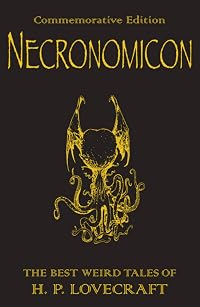
Necronomicon: The Best Weird Tales of H. P. Lovecraft
by H. P. Lovecraft
On This Page
Description
H. P. Lovecraft's astonishing tales blend elements of horror, science fiction, and cosmic terror that are as powerful today as they were when first published. This tome brings together all of Lovecraft's stories, just the way they were when first released.Tags
Recommendations





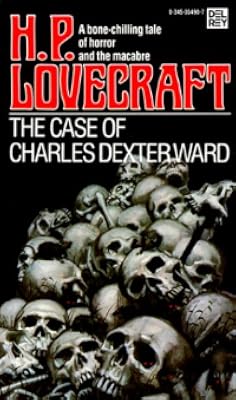
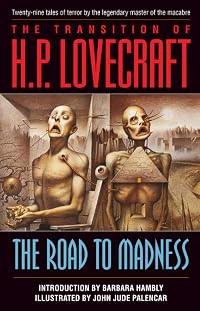
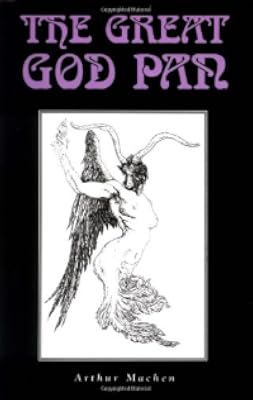
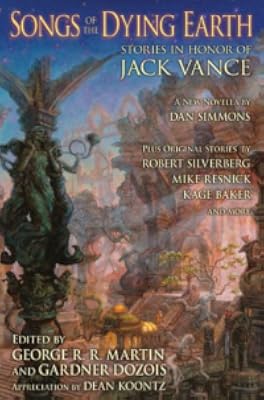
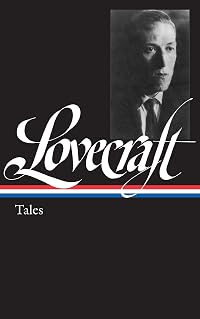

Member Recommendations
Sylak Cthulhu Mythos
Member Reviews
My first abortive attempt to acquire a copy of the Necronomicon came in April of 2018, when I prevailed in an online auction. By chance – or so I assumed – the tome was due to arrive in the mail around the time of Walpurgis Night, that time of year when it is said that Hell emerges on the earth and Satanic minions gather for unspeakable deeds and festivities, which I found appropriate given the nature of the book. However, by mid-May, with the Satanic hordes having apparently receded and the sun chancing to shine, this dark bible of the proto-Hadean races of forgotten eons still had not arrived. In correspondence with the anonymous seller, he assured me that the book had been posted, but that there had been said to be queer show more occurrences at his local post office, and perhaps the package containing the tome had been lost.
I suspected at the time that the seller had been reluctant to release the book, given the auction had specified no reserve and I had succeeded with a paltry sum that would have been little recompense to him for such a treasure, and that his vague claims of postal interferences were a ruse in order to retain the tome. Whether truly lost, or withheld, or perhaps intercepted by some third party, I have never been able to precisely determine, but I learned that, amidst our correspondence, the seller had fled to Turkey for a supposed holiday. In the interim, I had acquired a full refund, and the anticipated book never reached me. Whatever my frustrations at the time, I now believe that this Anatolia-bound fugitive, whether out of fear, greed, or perhaps a higher code of honour than is to be found in the eBay Seller's Guidelines, was, in denying me this foul tome, operating with my best interests at heart.
Discouraged by the affair, and with other disruptive events in my life taking precedence over my naïve foray into the realm of occult acquisition, it was a long time before I made further inquiries into a copy of the Necronomicon. My secundal attempt to acquire the book online proved much less obstructive than the first, and a different copy of the Necronomicon arrived from a different seller one ill-starred day in June of 2020. The book looked impressive – a stout, leather-bound tome promising, in gold filigree on the black cover, 'The Best Weird Tales of H. P. Lovecraft'. Here, at long last, was the work of a writer I had long felt a deep and strange desire to read. The name of 'Cthulhu', a dread elder god seemingly of Lovecraft's manufacture, had long been echoing in my head, though with a different pronunciation each time it occurred. Aside from this portentous echo, my only knowledge of the author had been 'The Shadow Over Innsmouth', which had served as the basis for a quest in the video game Oblivion, part of the Elder Scrolls series.
Nevertheless, despite my long-awaited success in procurement of the volume, and the enticing presentation of the Necronomicon as a touted Commemorative Edition, it was still a while before I began reading the book. I first cracked the spine of this accursed tome in February of 2021, prompted by the encouragement of a man I had believed a friend. He was a convinced acolyte of Lovecraft who, I now suspect, had darker motives; perhaps a cultist directed by the Old Ones, or a servant of some other demoniac agency, or even a demon himself.
In the months since that portentous day, I have dipped in and out of the Necronomicon with increasing fervour. The stories were, at first, ghost stories; disturbing and inventive ones that could create a deep chill in the reader's heart. Initial ones like 'Dagon', and those which involved dungeon-delving, pleasingly recalled that Elder Scrolls series I have already mentioned. Each story was of a high calibre, and though a formula quickly emerged, Lovecraft's skill as a writer vanquished any thoughts of sameness. However, the writer was verbose, obscurant and seemed to possess an aversion to dialogue, which made the stories slow and often difficult. Words like 'fulgurous' were used without abatement, and there were long, dense passages of prose with long, accumulative sentences. However, the stories were also brooding, Gothic and deeply fascinating; each and every one of them rewarded the effort made to read them. I began to appreciate, respect, and increasingly revere the influence of Lovecraft upon the horror genre.
As I progressed through the book, this respect began to take on forbidding proportions. The stories increasingly displayed an erudition that transcended pulp horror, and established Lovecraft as a literary writer in his own right. The terrors he revealed in the stories were, paradoxically, often left unrevealed: monsters and events that were described as 'inexplicable' or 'beyond description'. Rather than being a cheap trick, this technique was often rooted in archetypal fears of depths, darkness and the unknown: perhaps the unknowable, which goes beyond the bounds of the rational or even instinctive human mind. Even the stories of the Cthulhu Mythos – the entire cycle of which is included in the tome – retained this nameless fear, despite their monster being named and described. The stories, assembled in chronological order, began to discuss quantum mechanics, naming the likes of Planck and Einstein and other venerable interlopers against the hidden hand. So complete was Lovecraft's oppressive Gothic effect that such scientific discussions often came as a surprise; I had otherwise fallen into the trap of aligning Lovecraft, chronologically speaking, with the likes of Edgar Allan Poe, when he is in fact a contemporary of Hemingway and Joyce. For all his archaic trappings, Lovecraft is dealing with modern dilemmas: of the interplay of science and myth, and the Nietzschean diagnosis of a dead God; of the unmanning frontiers of outer space and the deepest recesses of earth and ocean; of consciousness itself and the deeply-rooted Jungian archetypes by which we fashion approximations of our deepest-held fears.
I began to become increasingly convinced of the tales. The dark streets of Arkham became more real to me than my hometown; the river waters of the Miskatonic more natural in their meanderings than any babbling brooks which reside nearby. I dreamed strange dreams and slept mostly in daylight; my mind not daring to conjure in dark midnight hours those images which danced from the pages and found root in the primordial recesses of my brain, as easily as if they had already been nested there in some comparable archetypal form. I noted, with increasing unease, the mentions in the text that the Necronomicon was not a tome comprising 'The Best Weird Tales of H. P. Lovecraft', but was instead a book-within-a-book, an unspeakable collection of subterranean Babelian invocations and eldritch rites composed or curated, so the story goes, by the mad Arab Abdul Alhazred. I wondered if perhaps my initial abortive seller from two years previous had not fled to Turkey, but was, in fact, returning there, perhaps reined in by a sultanic master or cult suzerain in order to prevent further dissemination of copies of the forbidden Necronomicon.
I wondered, then, why my secundal attempt to acquire the book from a different seller had been so uncomplicated in comparison to the first, and if the acquisition was not perhaps a trap laid for me by unknown agents, or a penalty for not having heeded the warnings from my first abortive encounter. My increasing attraction to and investment in the stories, and the growing madness that I began to associate with them, seemed to confirm this hypothesis. I began to notice typos in the main body of the text; at first a simple substitution of a letter which could be forgiven as a mistake, a transcribing or proofing error; but then entire phrases ("he had and swered" instead of "he had answered"), until finally I noticed that even that demoniac appellation, Necronomicon, had at least once been rendered as 'Necroriomicon'.
The conventional trappings of the book – the feeling of wood pulp, the publisher's mark of Gollancz, even the Afterword by Stephen Jones (which, though it would serve better as a Foreword, would still contain lamentably insufficient warning of the corrupting abominations contained within these pages) – did not assuage my unease. I now believe that the mistakes and corruptions in the text were not corruptions at all, but letters fragmented from an extradimensional realm – perhaps Kadath or R'lyeh or the Court of Azathoth – in which such distorted, bonded shapes pass for written language. In this realm, Necroriomicon is not a proofing error replacing Necronomicon, but a name by which the same book is known in a slightly altered realm distinct from ours.
I fear that the potent, eternal Necronomicon that was divined by Alhazred is trying to break out of its linguistic chains and sublimate into our own, through this similarly-titled and seemingly innocuous vehicle for Lovecraft's stories. I can only hope prospective readers see my growing madness as a cautionary tale and flee from even the mere mention of the name 'Necronomicon', even when the seductively chthonic tome is found reasonably priced online. For you see, the typos I identified were not typos at all, but an attempt at communication and dissemination. They were words written by a hand that was not human. show less
I suspected at the time that the seller had been reluctant to release the book, given the auction had specified no reserve and I had succeeded with a paltry sum that would have been little recompense to him for such a treasure, and that his vague claims of postal interferences were a ruse in order to retain the tome. Whether truly lost, or withheld, or perhaps intercepted by some third party, I have never been able to precisely determine, but I learned that, amidst our correspondence, the seller had fled to Turkey for a supposed holiday. In the interim, I had acquired a full refund, and the anticipated book never reached me. Whatever my frustrations at the time, I now believe that this Anatolia-bound fugitive, whether out of fear, greed, or perhaps a higher code of honour than is to be found in the eBay Seller's Guidelines, was, in denying me this foul tome, operating with my best interests at heart.
Discouraged by the affair, and with other disruptive events in my life taking precedence over my naïve foray into the realm of occult acquisition, it was a long time before I made further inquiries into a copy of the Necronomicon. My secundal attempt to acquire the book online proved much less obstructive than the first, and a different copy of the Necronomicon arrived from a different seller one ill-starred day in June of 2020. The book looked impressive – a stout, leather-bound tome promising, in gold filigree on the black cover, 'The Best Weird Tales of H. P. Lovecraft'. Here, at long last, was the work of a writer I had long felt a deep and strange desire to read. The name of 'Cthulhu', a dread elder god seemingly of Lovecraft's manufacture, had long been echoing in my head, though with a different pronunciation each time it occurred. Aside from this portentous echo, my only knowledge of the author had been 'The Shadow Over Innsmouth', which had served as the basis for a quest in the video game Oblivion, part of the Elder Scrolls series.
Nevertheless, despite my long-awaited success in procurement of the volume, and the enticing presentation of the Necronomicon as a touted Commemorative Edition, it was still a while before I began reading the book. I first cracked the spine of this accursed tome in February of 2021, prompted by the encouragement of a man I had believed a friend. He was a convinced acolyte of Lovecraft who, I now suspect, had darker motives; perhaps a cultist directed by the Old Ones, or a servant of some other demoniac agency, or even a demon himself.
In the months since that portentous day, I have dipped in and out of the Necronomicon with increasing fervour. The stories were, at first, ghost stories; disturbing and inventive ones that could create a deep chill in the reader's heart. Initial ones like 'Dagon', and those which involved dungeon-delving, pleasingly recalled that Elder Scrolls series I have already mentioned. Each story was of a high calibre, and though a formula quickly emerged, Lovecraft's skill as a writer vanquished any thoughts of sameness. However, the writer was verbose, obscurant and seemed to possess an aversion to dialogue, which made the stories slow and often difficult. Words like 'fulgurous' were used without abatement, and there were long, dense passages of prose with long, accumulative sentences. However, the stories were also brooding, Gothic and deeply fascinating; each and every one of them rewarded the effort made to read them. I began to appreciate, respect, and increasingly revere the influence of Lovecraft upon the horror genre.
As I progressed through the book, this respect began to take on forbidding proportions. The stories increasingly displayed an erudition that transcended pulp horror, and established Lovecraft as a literary writer in his own right. The terrors he revealed in the stories were, paradoxically, often left unrevealed: monsters and events that were described as 'inexplicable' or 'beyond description'. Rather than being a cheap trick, this technique was often rooted in archetypal fears of depths, darkness and the unknown: perhaps the unknowable, which goes beyond the bounds of the rational or even instinctive human mind. Even the stories of the Cthulhu Mythos – the entire cycle of which is included in the tome – retained this nameless fear, despite their monster being named and described. The stories, assembled in chronological order, began to discuss quantum mechanics, naming the likes of Planck and Einstein and other venerable interlopers against the hidden hand. So complete was Lovecraft's oppressive Gothic effect that such scientific discussions often came as a surprise; I had otherwise fallen into the trap of aligning Lovecraft, chronologically speaking, with the likes of Edgar Allan Poe, when he is in fact a contemporary of Hemingway and Joyce. For all his archaic trappings, Lovecraft is dealing with modern dilemmas: of the interplay of science and myth, and the Nietzschean diagnosis of a dead God; of the unmanning frontiers of outer space and the deepest recesses of earth and ocean; of consciousness itself and the deeply-rooted Jungian archetypes by which we fashion approximations of our deepest-held fears.
I began to become increasingly convinced of the tales. The dark streets of Arkham became more real to me than my hometown; the river waters of the Miskatonic more natural in their meanderings than any babbling brooks which reside nearby. I dreamed strange dreams and slept mostly in daylight; my mind not daring to conjure in dark midnight hours those images which danced from the pages and found root in the primordial recesses of my brain, as easily as if they had already been nested there in some comparable archetypal form. I noted, with increasing unease, the mentions in the text that the Necronomicon was not a tome comprising 'The Best Weird Tales of H. P. Lovecraft', but was instead a book-within-a-book, an unspeakable collection of subterranean Babelian invocations and eldritch rites composed or curated, so the story goes, by the mad Arab Abdul Alhazred. I wondered if perhaps my initial abortive seller from two years previous had not fled to Turkey, but was, in fact, returning there, perhaps reined in by a sultanic master or cult suzerain in order to prevent further dissemination of copies of the forbidden Necronomicon.
I wondered, then, why my secundal attempt to acquire the book from a different seller had been so uncomplicated in comparison to the first, and if the acquisition was not perhaps a trap laid for me by unknown agents, or a penalty for not having heeded the warnings from my first abortive encounter. My increasing attraction to and investment in the stories, and the growing madness that I began to associate with them, seemed to confirm this hypothesis. I began to notice typos in the main body of the text; at first a simple substitution of a letter which could be forgiven as a mistake, a transcribing or proofing error; but then entire phrases ("he had and swered" instead of "he had answered"), until finally I noticed that even that demoniac appellation, Necronomicon, had at least once been rendered as 'Necroriomicon'.
The conventional trappings of the book – the feeling of wood pulp, the publisher's mark of Gollancz, even the Afterword by Stephen Jones (which, though it would serve better as a Foreword, would still contain lamentably insufficient warning of the corrupting abominations contained within these pages) – did not assuage my unease. I now believe that the mistakes and corruptions in the text were not corruptions at all, but letters fragmented from an extradimensional realm – perhaps Kadath or R'lyeh or the Court of Azathoth – in which such distorted, bonded shapes pass for written language. In this realm, Necroriomicon is not a proofing error replacing Necronomicon, but a name by which the same book is known in a slightly altered realm distinct from ours.
I fear that the potent, eternal Necronomicon that was divined by Alhazred is trying to break out of its linguistic chains and sublimate into our own, through this similarly-titled and seemingly innocuous vehicle for Lovecraft's stories. I can only hope prospective readers see my growing madness as a cautionary tale and flee from even the mere mention of the name 'Necronomicon', even when the seductively chthonic tome is found reasonably priced online. For you see, the typos I identified were not typos at all, but an attempt at communication and dissemination. They were words written by a hand that was not human. show less
An audiobook can live and die by its narrator, and that's definitely true of this extensive collection, which features readers both good and bad. Lovecraft undeniably did something special for the horror genre, unleashing a whole world of cosmic terror to be expanded on in various incarnations. Nevertheless, his writing is dry, utilises virtually zero dialogue, and frequently drowns in hilariously "vague" and "nebulous" prose (from which the only thing that can be derived is that some unimaginably horrible nameless thing exists... somewhere... out there). Whether the atmosphere that this superfluously adjective-ridden prose aims to convey was delivered to me successfully or not was absolutely determined by who was reading the story. The show more Call of Cthulu was wonderfully read, and I was completely sold on the dread of the tale. Colour Out of Space was incredibly clinical, like a fact sheet read out by A.I.. A perfect example (of many) as to why I would rather read words on a page, although goodness knows how long it would have taken me to finish if that was the case here. The Dunwich Horror I also found compelling, with a different structure to most of the other stories and the added benefit of CHARACTERS and DIALOGUE.
Judging by this collection, I don't find Lovecraft particularly impressive as a writer or a storyteller. The mythology was unique at the time and played an important role in the development of a genre, but read one of the better stories and you've read them all. A discovery is made, it cannot be described, the consequences mean something awful exists out there in the universe - and god help those that witness it (or not - maybe that god is not the benevolent being you thought). That's the long and short of it. show less
Judging by this collection, I don't find Lovecraft particularly impressive as a writer or a storyteller. The mythology was unique at the time and played an important role in the development of a genre, but read one of the better stories and you've read them all. A discovery is made, it cannot be described, the consequences mean something awful exists out there in the universe - and god help those that witness it (or not - maybe that god is not the benevolent being you thought). That's the long and short of it. show less
The absolute best entry point for any Lovecraft newcomer and a beloved favorite tome for all horror fans! This deluxe edition is packed to the gills with haunting classics like the Cats of Ulthar, Lurking Fear, The Call of Cthulhu, Herbert West-Reanimator and so many more! Keep your nightmares alive with the best weird tales Lovecraft has to offer. It even comes with a few black and white awesome illustrations. It's super thick too and could probably double as an anvil in emergency situations. Lovecraft is one of the more complicated figures in literary history. Despite being a pulp fiction author who wrote in an outdated style and was regarded as overall problematic (and is reflected in some of his writing), he is credited for show more inventing cosmic horror and inspiring many famous horror creators today. Though his style flaunts that over-educated, outmoded language of 19th century gothic writers (like Poe) his writing is unique by his characters being somewhat distant and aloof. show less
You really can't read (about) horror or even science fiction without being aware of H.P. Lovecraft, especially the Cthulhu mythos he created and many writers elaborated on. So, when I saw this gorgeous hardback bound edition of his best weird tales, I was glad to find it on sale. This collection has many famous stories, including some in the Cthulhu Mythos (The Call of Cthulhu but also The Haunter of the Dark), the one novel in the 1001 list (At the Mountains of Madness) and the story written for/by Harry Houdini (Under the Pyramids).
I read the collection (nearly) back to back, including an additional three stories from some other bundles I had lying around that had much overlap with this edition. I do think that back to back is not the show more best way to read Lovecraft. When you read so many of these stories it becomes very obvious that the same structure is used over and over in a majority of them. We read the story of or about one man who had stumbled upon an ancient (horrible) mystery. He can't help himself and goes to investigate, not believing the many warnings of the local people. He gets drawn in, uncovering something huge. When it is too late the full story reveals itself in full horror and all the main character can do is write it down before the end comes to warn others to stay away. However, the horror is almost never described in full detail, almost always we get glimpses because whatever it is, it is too horrible to describe. Most stories are related to the Cthulhu Mythos of Elder Gods and the Old Ones. Reading all these stories does give a good idea of this Mythos, as it is never revealed fully, but just through the discoveries of these unfortunate characters.
All in all I think this is a pretty good collection, with a biography of Lovecraft as a last chapter and some lovely illustrations. The stories were pretty good, knowing they are written pre-1937, but I can see how later fiction has grown from this to become better. I give this collection four out of five stars. show less
I read the collection (nearly) back to back, including an additional three stories from some other bundles I had lying around that had much overlap with this edition. I do think that back to back is not the show more best way to read Lovecraft. When you read so many of these stories it becomes very obvious that the same structure is used over and over in a majority of them. We read the story of or about one man who had stumbled upon an ancient (horrible) mystery. He can't help himself and goes to investigate, not believing the many warnings of the local people. He gets drawn in, uncovering something huge. When it is too late the full story reveals itself in full horror and all the main character can do is write it down before the end comes to warn others to stay away. However, the horror is almost never described in full detail, almost always we get glimpses because whatever it is, it is too horrible to describe. Most stories are related to the Cthulhu Mythos of Elder Gods and the Old Ones. Reading all these stories does give a good idea of this Mythos, as it is never revealed fully, but just through the discoveries of these unfortunate characters.
All in all I think this is a pretty good collection, with a biography of Lovecraft as a last chapter and some lovely illustrations. The stories were pretty good, knowing they are written pre-1937, but I can see how later fiction has grown from this to become better. I give this collection four out of five stars. show less
Fair warning -- all of Lovecraft's work is suffused with his racism and misogyny. He also tends to overwritten passages that are pure examples of purple prose. Yet he was, and is, a major influence on many writers and indeed, could be argued to be more of a presence in modern-day horror/science fiction than in mainstream horror novels. For the reader who is comfortable with prolixity or who wants to better understand writers such as Stross, reading Lovecraft is a necessity.
I am quite impress'd with the other comments regarding Lovecraft here, although I completely disagree with mmyoung's warning. Very few of Lovecraft's tales are suffused with his racism and misogyny, and his racism have been completely overemphasized by modern critics. S. T. Joshi, who is not Caucasian and has studied Lovecraft's life and works in intimate detail, has said that Lovecraft's racism, although clearly his greatest fault, has a very minor place in Lovecraft's overall philosophy. That with which H. P. Lovecraft's remarkable fiction is suffused is weird atmosphere and an original blending of the genres of fantasy, horror, and science fiction. HPL had an amazing imagination,and he wrote beautifully and precisely. There is very show more little overwriting in Lovecraft, and very little purple prose. His voice is the voice of Literature, of the prose poem; and yet he was, in his approach to everyday circumstances and people, a realist. I return to his fiction again and again, and continue to find new depths of wonder and beauty. show less
E così dopo aver criticato Lovecraft nella mia recensione di Hodgson mi sono detto: dopotutto sono anni che non prendo in mano un suo libro, perché non riprovarci, magari in lingua originale? Ed eccomi qua.
Quella qui recensita è una edizione mastodontica, quasi 900 pagine, decine di racconti alcuni dei quali molto lunghi.
Qualche breve parola sui pezzi letti finora.
"The Statement of Randolph Carter" ***
Carino, molto classico, bello l'artificio letterario col quale il protagonista riporta la storia.
"The Doom that Came to Sarnath" **
prototipo dei racconti di Lovecraft che mi annoiano. Sembra di leggere qualche manuale di Dungeons & Dragons. 'Storie e leggende della città di Sarnath: il manuale del Dungeon Master' o qualcosa del show more genere.
"The Cats of Ulthar" *****
I gatti mi piacciono e questo racconto m'ha fatto spaccare! :DD
LOL!
"The Nameless City" ***
Uhm caruccio, l'avevo già letto in passato.
"Herbert West–Reanimator" *** e mezzo
Non male, mi aspettavo un finale più prevedibile e invece Lovecraft c'ha infilato una variante carina.
"The Music of Erich Zann" ***
Ahia le cose cominciano a mettersi male... La storia non e' brutta di per se', ma dopo sei racconti si comincia a notare il burrascoso rapporto tra Lovecraft e gli aggettivi. Il messaggio di Zann non e' semplicemente scritto in francese, e' scritto in un "execrable French", Rue d'Auseil non e' solo puzzolente, e' pervasa da un "evil stench". Eh, meno male che non sei mai andato in bagno dopo di me Lovecraft. show less
Quella qui recensita è una edizione mastodontica, quasi 900 pagine, decine di racconti alcuni dei quali molto lunghi.
Qualche breve parola sui pezzi letti finora.
"The Statement of Randolph Carter" ***
Carino, molto classico, bello l'artificio letterario col quale il protagonista riporta la storia.
"The Doom that Came to Sarnath" **
prototipo dei racconti di Lovecraft che mi annoiano. Sembra di leggere qualche manuale di Dungeons & Dragons. 'Storie e leggende della città di Sarnath: il manuale del Dungeon Master' o qualcosa del show more genere.
"The Cats of Ulthar" *****
I gatti mi piacciono e questo racconto m'ha fatto spaccare! :DD
LOL!
"The Nameless City" ***
Uhm caruccio, l'avevo già letto in passato.
"Herbert West–Reanimator" *** e mezzo
Non male, mi aspettavo un finale più prevedibile e invece Lovecraft c'ha infilato una variante carina.
"The Music of Erich Zann" ***
Ahia le cose cominciano a mettersi male... La storia non e' brutta di per se', ma dopo sei racconti si comincia a notare il burrascoso rapporto tra Lovecraft e gli aggettivi. Il messaggio di Zann non e' semplicemente scritto in francese, e' scritto in un "execrable French", Rue d'Auseil non e' solo puzzolente, e' pervasa da un "evil stench". Eh, meno male che non sei mai andato in bagno dopo di me Lovecraft. show less
Members
- Recently Added By
Published Reviews
Lovecraft intended these tales to crawl with the unnameable, the meaningless horror that lies behind the world we see. As an earnest of this the mysterious Old Ones, who "filtered" down from the stars a hundred million years ago, sleep beneath the Pacific, waiting to be woken by "mixed-blooded and mentally aberrant" worshippers. Their monstrous servants, genetically modified from our show more ancestors, suck and slither in the waste spaces of Tibet. Their abandoned Cyclopean cities rear up out of the Antarctic ice, or hang off the Himalayan mountainsides as "curious clinging cubes and ramparts". show less
added by simon_carr — edited by shervinafshar
Lists

Literary and artistic references in HBO's Lovecraft Country
32 works; 1 member

Sinister AudioTales
65 works; 1 member
Author Information

1,934+ Works 74,029 Members
Howard Phillips Lovecraft, 1890 - 1937 H. P. Lovecraft was born on August 20, 1890 in Providence, Rhode Island. His mother was Sarah Susan Phillips Lovecraft and his father was Winfield Scott Lovecraft, a traveling salesman for Gorham & Co. Silversmtihs. Lovecraft was reciting poetry at the age of two and when he was three years old, his father show more suffered a mental breakdown and was admitted to Butler Hospital. He spent five years there before dying on July 19, 1898 of paresis, a form of neurosyphillis. During those five years, Lovecraft was told that his father was paralyzed and in a coma, which was not the case. His mother, two aunts and grandfather were now bringing up Lovecraft. He suffered from frequent illnesses as a boy, many of which were psychological. He began writing between the ages of six and seven and, at about the age of eight, he discovered science. He began to produce the hectographed journals, "The Scientific Gazette" (1899-1907) and "The Rhode Island Journal of Astronomy" (1903-07). His first appearance in print happened, in 1906, when he wrote a letter on an astronomical matter to The Providence Sunday Journal. A short time later, he began writing a monthly astronomy column for The Pawtuxet Valley Gleaner - a rural paper. He also wrote columns for The Providence Tribune (1906-08), The Providence Evening News (1914-18), The Asheville (N.C.) Gazette-News (1915). In 1904, his grandfather died and the family suffered severe financial difficulties, which forced him and his mother to move out of their Victorian home. Devastated by this, he apparently contemplated suicide. In 1908, before graduating from high school, he suffered a nervous breakdown. He didn't receive a diploma and failed to get into Brown University, both of which caused him great shame. Lovecraft was not heard from for five years, re-emerging because of a letter he wrote in protest to Fred Jackson's love story in The Argosy. His letter was published in 1913 and caused great controversy, which was noted by Edward F. Daas, President of the United Amateur Press Association (UAPA). Daas invited Lovecraft to join the UAPA, which he did in early 1914. He eventually became President and Official Editor of the UAPA and served briefly as President of the rival National Amateur Press Association (NAPA). He published thirteen issues of his own paper, The Conservative (1915-23) and contributed poetry and essays to other journals. He also wrote some fiction which titles include "The Beast in the Cave" (1905), "The Alchemist" (1908), "The Tomb" and "Dagon" (1917). In 1919, Lovecraft's mother was deteriorating, mentally and physically, and was admitted to Butler Hospital. On May 24, 1921, his mother died from a gall bladder operation. While attending an amateur journalism convention in Boston, Lovecraft met his future wife Sonia Haft Greene, a Russian Jew. They were married on March 3, 1924 and Lovecraft moved to her apartment in Brooklyn. Sonia had a shop on Fifth Avenue that went bankrupt. In 1925, Sonia went to Cleveland for a job and Lovecraft moved to a smaller apartment in the Red Hook district of Brooklyn. In 1926, he decided to move back to Providence. Lovecraft had his aunts bar his wife, Sonia, from going to Providence to start a business because he couldn't have the stigma of a tradeswoman wife. They were divorced in 1929. After his return to Providence, he wrote his greatest fiction, which included the titles "The Call of Cthulhu" (1926), "At the Mountains of Madness" (1931), and "The Shadow Out of Time" (1934-35). In 1932, his aunt, Mrs. Clark, died; and he moved in with his other aunt, Mrs. Gamwell, in 1933. Suffering from cancer of the intestine, Lovecraft was admitted to Jane Brown Memorial Hospital and on March 15, 1937 he died. (Bowker Author Biography) show less
All Editions
Some Editions
Series
Belongs to Publisher Series
Work Relationships
Contains
Has as a supplement
Common Knowledge
- Canonical title
- Necronomicon: The Best Weird Tales of H. P. Lovecraft
- Alternate titles
- The Necronomicon
- Original publication date
- 2008
- Dedication
- In memory of
AUGUST DERLETH
and
DONALD WANDREI
for keeping the nightmares alive. - Disambiguation notice
- Necronomicon: the Best Weird Tales of H.P. Lovecraft is a collection of 36 works. Do not combine with other books titled Necronomicon, many of which refer to the book H.P. Lovecraft invented as a literary device in hi... (show all)s fictional world.
Classifications
Statistics
- Members
- 1,771
- Popularity
- 12,424
- Reviews
- 20
- Rating
- (4.26)
- Languages
- 7 — English, French, German, Hungarian, Italian, Norwegian, Swedish
- Media
- Paper, Audiobook, Ebook
- ISBNs
- 18
- ASINs
- 9