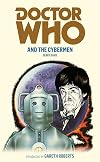
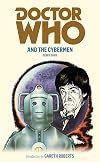
Doctor Who and the Cybermen
by Gerry Davis
Doctor Who: Target Novelisations: Publication order (12), Doctor Who: Target Novelisations: Doctor Who Library order (14), Doctor Who: Target Novelisations: Broadcast order (33), Doctor Who {non-TV} (Novelisations — Novelisation)
On This Page
Description
In 2070, the Earth's weather is controlled from a base on the moon. But when the Doctor and his friends arrive, all is not well. They discover unexplained drops of air pressure, minor problems with the weather control systems, and an outbreak of a mysterious plague.With Jamie injured, and members of the crew going missing, the Doctor realises that the moonbase is under attack. Some malevolent force is infecting the crew and sabotaging the systems as a prelude to an invasion of Earth. And the show more Doctor thinks he knows who is behind it- the Cybermen.This novel is based on 'The Moonbase', a Doctor Who story which was originally broadcast from 11 February-4 March 1967.Featuring the Second Doctor as played by Patrick Troughton, and his companions Polly, Ben and Jamie show lessTags
Recommendations









Member Reviews
With the fiftieth anniversary of Doctor Who happening this past weekend, what else was I going to read?
The Second Doctor is probably my favourite of the twelve incarnations we've seen(although Peter Capaldi's eyebrows were pretty jolly awesome in the 50th special) . I say “probably” because Patrick Troughton's version of the character has suffered the most from the BBC's ruthless deletion policies in the 1960s. About two-thirds of his serials suffer from the infamous affliction missing-episode-itis, with some of them having no surviving footage whatsoever. I waxed wroth about this earlier in the year when reviewing another Second Doctor tale, and a few months later the BBC announced it had found an entire Second Doctor serial and show more most of a second one in a shed in Nigeria, so maybe I should complain about this more often.
This story, based upon Troughton's fourth serial The Moonbase, is fairly typical Second Doctor fare. His stint on the show was famous for introducing the monster-of-the-week and base-under-siege episodes, as well as being notably more dark and scary than during his predecessor's reign. This one definitely falls into the base-under-siege category, with fan favourites the Cybermen being the siegers. It's short (the TV story was four episodes, here it's about 170 pages), but has enough time to build tension not once but twice. Some aspects of the story haven't aged terribly well, particularly its attitude towards companion Polly, whose job for most of the story is screaming, making tea, and distracting people with her miniskirt. New companion Jamie is also somewhat overlooked; the scriptwriters weren't sure what to do with him, apparently, so he's left unconscious in a bed for half the novel.
Flawed it may be, but even without the Doctor Who trappings to support it, there's a nice little science fiction tale here. That whole sentence could of course apply to half the episodes out there, and as long as it keeps applying we may one day get to see that 100th anniversary special too. show less
The Second Doctor is probably my favourite of the twelve incarnations we've seen
This story, based upon Troughton's fourth serial The Moonbase, is fairly typical Second Doctor fare. His stint on the show was famous for introducing the monster-of-the-week and base-under-siege episodes, as well as being notably more dark and scary than during his predecessor's reign. This one definitely falls into the base-under-siege category, with fan favourites the Cybermen being the siegers. It's short (the TV story was four episodes, here it's about 170 pages), but has enough time to build tension not once but twice. Some aspects of the story haven't aged terribly well, particularly its attitude towards companion Polly, whose job for most of the story is screaming, making tea, and distracting people with her miniskirt. New companion Jamie is also somewhat overlooked; the scriptwriters weren't sure what to do with him, apparently, so he's left unconscious in a bed for half the novel.
Flawed it may be, but even without the Doctor Who trappings to support it, there's a nice little science fiction tale here. That whole sentence could of course apply to half the episodes out there, and as long as it keeps applying we may one day get to see that 100th anniversary special too. show less
With the fiftieth anniversary of Doctor Who happening this past weekend, what else was I going to read?
The Second Doctor is probably my favourite of the twelve incarnations we've seen(although Peter Capaldi's eyebrows were pretty jolly awesome in the 50th special) . I say “probably” because Patrick Troughton's version of the character has suffered the most from the BBC's ruthless deletion policies in the 1960s. About two-thirds of his serials suffer from the infamous affliction missing-episode-itis, with some of them having no surviving footage whatsoever. I waxed wroth about this earlier in the year when reviewing another Second Doctor tale, and a few months later the BBC announced it had found an entire Second Doctor serial and show more most of a second one in a shed in Nigeria, so maybe I should complain about this more often.
This story, based upon Troughton's fourth serial The Moonbase, is fairly typical Second Doctor fare. His stint on the show was famous for introducing the monster-of-the-week and base-under-siege episodes, as well as being notably more dark and scary than during his predecessor's reign. This one definitely falls into the base-under-siege category, with fan favourites the Cybermen being the siegers. It's short (the TV story was four episodes, here it's about 170 pages), but has enough time to build tension not once but twice. Some aspects of the story haven't aged terribly well, particularly its attitude towards companion Polly, whose job for most of the story is screaming, making tea, and distracting people with her miniskirt. New companion Jamie is also somewhat overlooked; the scriptwriters weren't sure what to do with him, apparently, so he's left unconscious in a bed for half the novel.
Flawed it may be, but even without the Doctor Who trappings to support it, there's a nice little science fiction tale here. That whole sentence could of course apply to half the episodes out there, and as long as it keeps applying we may one day get to see that 100th anniversary special too. show less
The Second Doctor is probably my favourite of the twelve incarnations we've seen
This story, based upon Troughton's fourth serial The Moonbase, is fairly typical Second Doctor fare. His stint on the show was famous for introducing the monster-of-the-week and base-under-siege episodes, as well as being notably more dark and scary than during his predecessor's reign. This one definitely falls into the base-under-siege category, with fan favourites the Cybermen being the siegers. It's short (the TV story was four episodes, here it's about 170 pages), but has enough time to build tension not once but twice. Some aspects of the story haven't aged terribly well, particularly its attitude towards companion Polly, whose job for most of the story is screaming, making tea, and distracting people with her miniskirt. New companion Jamie is also somewhat overlooked; the scriptwriters weren't sure what to do with him, apparently, so he's left unconscious in a bed for half the novel.
Flawed it may be, but even without the Doctor Who trappings to support it, there's a nice little science fiction tale here. That whole sentence could of course apply to half the episodes out there, and as long as it keeps applying we may one day get to see that 100th anniversary special too. show less
In Doctor Who and the Cybermen, Gerry Davis adapts his and Kit Pedler’s serialized story, “The Moonbase,” with illustrations by Alan Willow. The story features the Second Doctor (as portrayed by Patrick Troughton) and his assistants Polly, Ben Jackson, and Jamie McCrimmon. This novel is of particular significance as half of the original tapes of the episode are missing, so that this is one of the few ways to enjoy the full story.
The story finds the Doctors and his companions arrive on the Moon in the year 2070. They make their way to a nearby Moonbase that uses a machine called a Graviton to control the weather on Earth. The Moonbase is suffering from a mysterious plague that affects the staff’s ability to operate the equipment. show more Unbeknownst to the Doctor and his companions, the Cybermen are causing the plague in order to seize the Graviton and use it to destroy the Earth.
Pedler and Davis created the Cybermen for the episode, The Tenth Planet, and here they further examine the Cybermen weapons and motivations. While the show’s first Cybermen came from the planet Mondas, these Cybermen “were the first space travellers from MONDAS [sic]” and “left it before it was destroyed,” coming from “the other Cyberman planet, TELOS [sic]” (pg. 89). This, coupled with the Doctor’s musing that “the trouble with the Cybermen is that one can never be entirely sure” (pg. 150) made possible further appearances of these enemies, who twice again attacked the Second Doctor. Fans of the Cybermen or of Troughton’s tenue as the Doctor will find plenty to enjoy in this novel and Willow’s illustrations recalls those found in the vintage comic strips and annuals. show less
The story finds the Doctors and his companions arrive on the Moon in the year 2070. They make their way to a nearby Moonbase that uses a machine called a Graviton to control the weather on Earth. The Moonbase is suffering from a mysterious plague that affects the staff’s ability to operate the equipment. show more Unbeknownst to the Doctor and his companions, the Cybermen are causing the plague in order to seize the Graviton and use it to destroy the Earth.
Pedler and Davis created the Cybermen for the episode, The Tenth Planet, and here they further examine the Cybermen weapons and motivations. While the show’s first Cybermen came from the planet Mondas, these Cybermen “were the first space travellers from MONDAS [sic]” and “left it before it was destroyed,” coming from “the other Cyberman planet, TELOS [sic]” (pg. 89). This, coupled with the Doctor’s musing that “the trouble with the Cybermen is that one can never be entirely sure” (pg. 150) made possible further appearances of these enemies, who twice again attacked the Second Doctor. Fans of the Cybermen or of Troughton’s tenue as the Doctor will find plenty to enjoy in this novel and Willow’s illustrations recalls those found in the vintage comic strips and annuals. show less
A fairly straightforward retelling of the second Doctor serial, "The Moonbase." Produced at a time when the Target novels were intended to recapture as accurately as possible what happened on-screen and bring it to a new audience.
"The Moonbase" is pretty much a re-telling of "The Tenth Planet" only instead of invading Earth, the Cybermen want to take over the moon...so they can then take over the Earth. It's a Troughton "base under seige" story and it works fairly well. Davis doesn't bring a lot of embellishment to the story beyond a prologue that catches you up on the history of the Cybermen.
As an audio reader, Anneke Wells does a nice job with the material. The only negative is the Cyber voices provided by Nick Briggs are new series show more Cybermen and not the originals. A bit disconcerting show less
"The Moonbase" is pretty much a re-telling of "The Tenth Planet" only instead of invading Earth, the Cybermen want to take over the moon...so they can then take over the Earth. It's a Troughton "base under seige" story and it works fairly well. Davis doesn't bring a lot of embellishment to the story beyond a prologue that catches you up on the history of the Cybermen.
As an audio reader, Anneke Wells does a nice job with the material. The only negative is the Cyber voices provided by Nick Briggs are new series show more Cybermen and not the originals. A bit disconcerting show less
Another one of the early 1970s Target Doctor Who novelisations now in eBook form, based on the 1967 Patrick Troughton story The Moonbase. The book expands a little on the TV version, especially in demonstrating a little more fully the multinational nature of the Moonbase crew, but lacks the depth of the David Whitaker and Malcolm Hulke novelisations. The original illustrations are a great bonus in these editions.
https://fromtheheartofeurope.eu/the-moonbase-doctor-who-and-the-cybermen/
A relatively early novelisation here, but not an especially good one. Davis' characterisation is poor (Jamie is thick; Polly is a girlie; the head of the Moonbase is from Yorkshire) and the science of the story still makes no sense. Davis' style must have improved over the years – this and Doctor Who and the Tenth Planet are markedly inferior to Doctor Who – The Highlanders.
A relatively early novelisation here, but not an especially good one. Davis' characterisation is poor (Jamie is thick; Polly is a girlie; the head of the Moonbase is from Yorkshire) and the science of the story still makes no sense. Davis' style must have improved over the years – this and Doctor Who and the Tenth Planet are markedly inferior to Doctor Who – The Highlanders.
http://nwhyte.livejournal.com/1028417.html#cutid3
A relatively early novelisation here, but not an especially good one. Davis' characterisation is poor (Jamie is thick; Polly is a girlie; the head of the Moonbase is from Yorkshire) and the science of the story still makes no sense. Davis' style must have improved over the years - this and Doctor Who and the Tenth Planet are markedly inferior to Doctor Who - The Highlanders.
https://nwhyte.livejournal.com/3438699.html
I twitched at a couple of differences. One of them is in the conversation about Lister:
‘Just a minute.’ Polly was beside him, her face looking a little anxious. ‘Are you really a medical doctor?’
The Doctor stopped, thought for a moment, and then brought out his show more inevitable diary. ‘Yes. I think I did take a medical degree once.’ He opened an early page in the diary and looked. ‘There it is; Edinburgh, 1870! What’s this...’ He looked closely at the entry. ‘... Lister... Mmm...’ He closed the diary, thrust it back into his pocket and turned to the patient.
Lister left Glasgow for Edinburgh in 1869, and remained there for the rest of his career. Between the 1967 broadcast and the 1975 novelisation, someone must have pointed out to Gerry Davis that it would have been impossible for the Doctor to study under Lister in Glasgow in 1888.
Another difference is in the account of the origin of the Cybermen, a desperate attempt to restore continuity with The Tenth Planet (though it's puzzling that Davis thought readers of 1975 would care more about this than viewers in 1967):
Benoit sat down on the edge of the console, his cool self again. ‘But the history books say you were all killed when your planet, MONDAS, exploded in 1986.’
The first Cyberman had moved to a position where he could watch the activity in the Gravitron room. He now turned round to answer Benoit. ‘We were the first space travellers from MONDAS. We left before it was destroyed. We have come from the other Cyberman planet, TELOS.’
The Doctor broke in, ‘Then you know how MONDAS was destroyed?’
The first Cyberman looked at him. ‘Yes, and we know what part you played in that. We have returned to take the power you used to destroy MONDAS.’
This represents one line of the TV script where Benoit says "But you were all killed!" show less
A relatively early novelisation here, but not an especially good one. Davis' characterisation is poor (Jamie is thick; Polly is a girlie; the head of the Moonbase is from Yorkshire) and the science of the story still makes no sense. Davis' style must have improved over the years - this and Doctor Who and the Tenth Planet are markedly inferior to Doctor Who - The Highlanders.
https://nwhyte.livejournal.com/3438699.html
I twitched at a couple of differences. One of them is in the conversation about Lister:
‘Just a minute.’ Polly was beside him, her face looking a little anxious. ‘Are you really a medical doctor?’
The Doctor stopped, thought for a moment, and then brought out his show more inevitable diary. ‘Yes. I think I did take a medical degree once.’ He opened an early page in the diary and looked. ‘There it is; Edinburgh, 1870! What’s this...’ He looked closely at the entry. ‘... Lister... Mmm...’ He closed the diary, thrust it back into his pocket and turned to the patient.
Lister left Glasgow for Edinburgh in 1869, and remained there for the rest of his career. Between the 1967 broadcast and the 1975 novelisation, someone must have pointed out to Gerry Davis that it would have been impossible for the Doctor to study under Lister in Glasgow in 1888.
Another difference is in the account of the origin of the Cybermen, a desperate attempt to restore continuity with The Tenth Planet (though it's puzzling that Davis thought readers of 1975 would care more about this than viewers in 1967):
Benoit sat down on the edge of the console, his cool self again. ‘But the history books say you were all killed when your planet, MONDAS, exploded in 1986.’
The first Cyberman had moved to a position where he could watch the activity in the Gravitron room. He now turned round to answer Benoit. ‘We were the first space travellers from MONDAS. We left before it was destroyed. We have come from the other Cyberman planet, TELOS.’
The Doctor broke in, ‘Then you know how MONDAS was destroyed?’
The first Cyberman looked at him. ‘Yes, and we know what part you played in that. We have returned to take the power you used to destroy MONDAS.’
This represents one line of the TV script where Benoit says "But you were all killed!" show less
Members
- Recently Added By
Lists

Penguin Random House
458 works; 4 members
Author Information

28+ Works 2,263 Members
Some Editions
Series


Work Relationships
Is an adaptation of
Common Knowledge
- Original publication date
- 1975-02-20
- People/Characters
- The Doctor (2nd); Polly Wright; Ben Jackson; Jamie McCrimmon; The Cybermen
- Important places
- The Moon
- First words
- Centuries ago by our Earth time, a race of men on the far distant planet of Telos sought immortality.
- Last words
- (Click to show. Warning: May contain spoilers.)'The trouble with the Cybermen is that one can never be entirely sure...'
- Original language
- English
Classifications
Statistics
- Members
- 439
- Popularity
- 70,279
- Reviews
- 7
- Rating
- (3.30)
- Languages
- English
- Media
- Paper, Audiobook, Ebook
- ISBNs
- 10
- ASINs
- 6