On This Page
Description
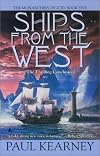
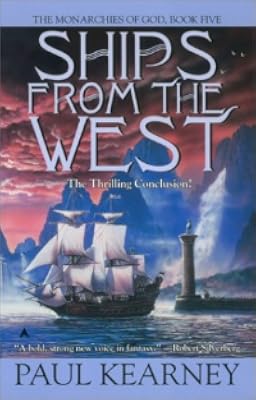
The mariner and adventurer Richard Hawkwood set sail years before to see if there really was a continent in the uttermost west - and to claim its riches for his own. Little did he know that the exiled magic-users who were banished from the lands lying within the Monarchies of God got there first - and they bear no love for their long-forsaken homelands . . . but Hawkwood has given them a reason to come home . . . This is the fifth and final volume in Paul Kearney¿s Monarchies of God saga, show more combining warfare, magic and political machinations in a rich, rewarding read. show lessTags
Recommendations

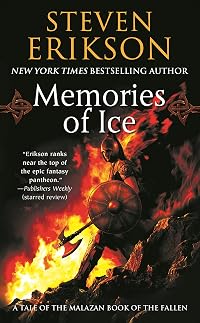
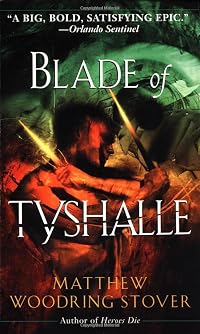
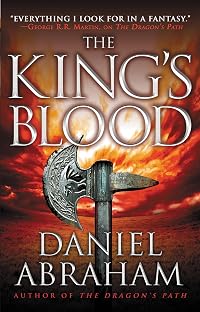
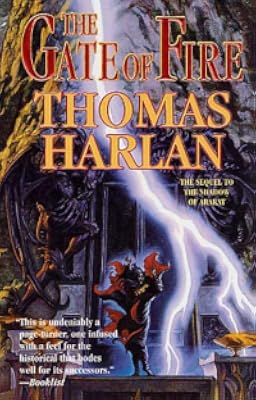
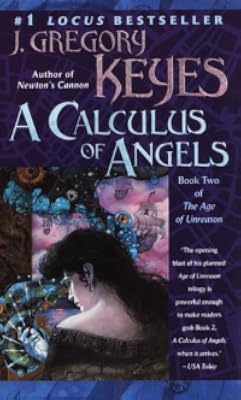
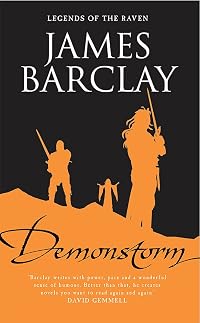
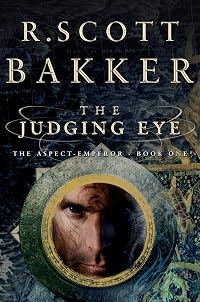


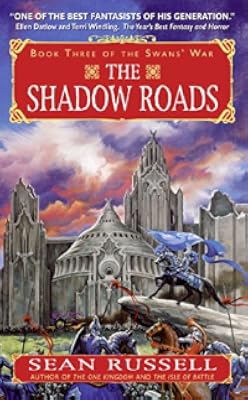
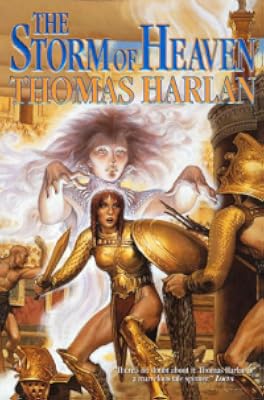
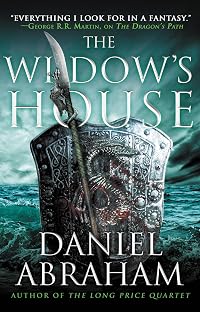
Member Recommendations
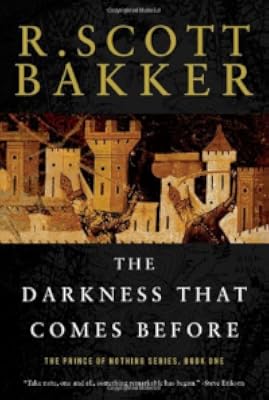
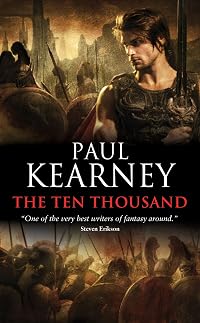
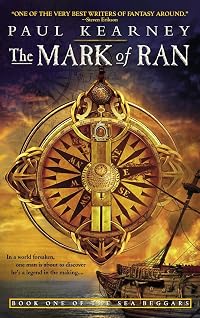
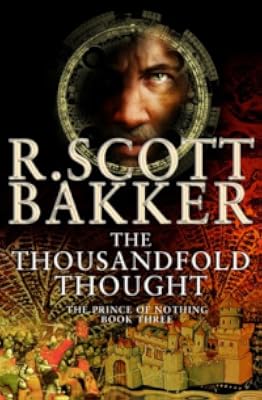
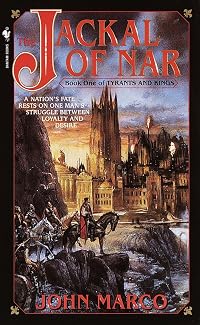
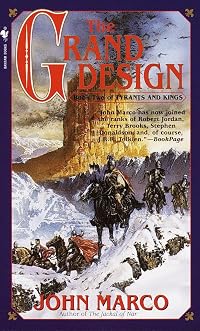
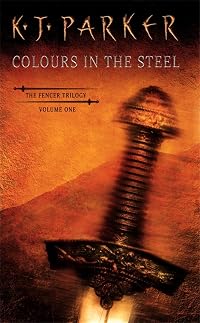
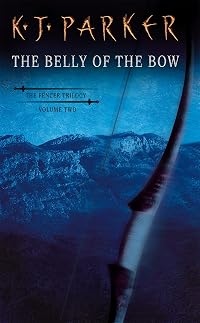
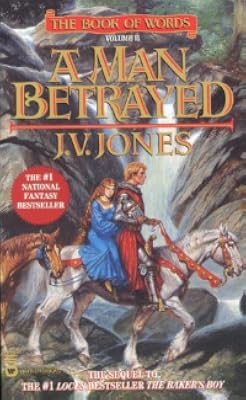
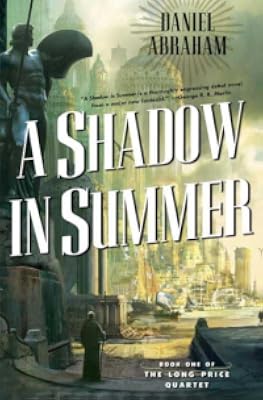
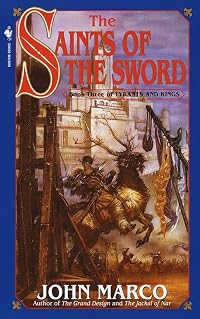
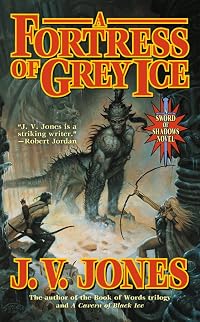
caimanjosh Both of these series feature great characterization, good writing, and a bare-knuckle, realistic approach to fantasy, as opposed to much of the high fantasy work out there.
Member Reviews
The final book in any long series usually has too much expected from it. And I'm glad to say this one delivers.
The final book in Paul Kearney's Monarchies of God quintet is a solid 4/5, not through any fault of its own, but the first four books were so extremely tight in focus that the final wrap up in the fifth book couldn't match their exact momentum.
I loved it, nonetheless, and the series, taken as a whole, is one of the best I've ever read, and worthy of much more attention.
Given a faithful cinematic or TV adaptation, it would blow 99.9% of every movie and series made in the past 20 years out of the water.
I'm pasting the following review regarding the series as a whole, as I wouldn't like to review each book alone. The reason why is show more explained here.
They may call it military sff, epic fantasy, adult speculative fiction, or any of the ready-made stamps, genres, or labels. And they would be right. And wrong; a label is too defining, too narrow.
To me, it's what a damn good story should be. It has magic, religion, royalty, corruption, brotherhood, war, sacrifice, love, and honor, and it never confines itself into preachiness, never aggrandizes one favorite theme on top of its world. A story from the better past where stories were not burdened by a Message with a capital M, or some forced formula of certain beats at specific moments, rather a heartfelt tale following a sample of humanity at the pendulum between best and worst.
It is one story involving its whole world over decades, but the relentless machinations of history would mean little were it not for the men and women whose lives are trampled by its heartless, inexorable march.
It's the mud on these men and women's faces, the scars on their bodies, the fears in their hearts and the small, fleeting glimmers of hope they cling to that put you constantly in their shoes. You are not a general or a historian reading a treatise. You're simply there in their skin, trembling, fleeing, fighting, bleeding, and rejoicing with every one of them.
Not one character was underwhelming, misplaced, or uninteresting. Not one scene was unessential or forced. Everything flowed naturally; in the heart of every character was the seed of his destiny, and the world evolved from its past towards its unfolding future with the natural elegance of a seedling towering into a magnificent tree.
The world, the theme, the plot, the characters, the scenes, it's all one organic whole, a fluid dance with a thousand performers moving in rhythm. Everything is a symphony of exceptional storytelling from the first page to the last.
I cannot recall experiencing such unity of vision except in a handful of books. That Paul Kearney has written this quintet almost thirty years ago, and it staying relatively unknown, is most confusing to me. Over the years, I've read tens of bestselling, critically acclaimed novels that are not worthy to untie this book's sandals.
Less than 400 people have added this book to their libraries on this site, while much drivel filed on the same genre has dozens of times as many readers. Marketing shenanigans or whatever. Crazy world.
Having finished all five books of Paul Kearney's Monarchies of God quintet, I found it one of the biggest, epicest, awesomest stories I've ever read.
(No, I won't go into a summary of what exactly happens to whom. You can check that out in other reviews, or the first book's pitch on Amazon)
The Monarchies of God is peak storytelling and deserves the highest recommendation. Pick the first book and you'll devour it, I promise you.
And I'll be sure to check the author's other novels as well. If they're half as good as this, they're definitely worth a read. show less
The final book in Paul Kearney's Monarchies of God quintet is a solid 4/5, not through any fault of its own, but the first four books were so extremely tight in focus that the final wrap up in the fifth book couldn't match their exact momentum.
I loved it, nonetheless, and the series, taken as a whole, is one of the best I've ever read, and worthy of much more attention.
Given a faithful cinematic or TV adaptation, it would blow 99.9% of every movie and series made in the past 20 years out of the water.
I'm pasting the following review regarding the series as a whole, as I wouldn't like to review each book alone. The reason why is show more explained here.
They may call it military sff, epic fantasy, adult speculative fiction, or any of the ready-made stamps, genres, or labels. And they would be right. And wrong; a label is too defining, too narrow.
To me, it's what a damn good story should be. It has magic, religion, royalty, corruption, brotherhood, war, sacrifice, love, and honor, and it never confines itself into preachiness, never aggrandizes one favorite theme on top of its world. A story from the better past where stories were not burdened by a Message with a capital M, or some forced formula of certain beats at specific moments, rather a heartfelt tale following a sample of humanity at the pendulum between best and worst.
It is one story involving its whole world over decades, but the relentless machinations of history would mean little were it not for the men and women whose lives are trampled by its heartless, inexorable march.
It's the mud on these men and women's faces, the scars on their bodies, the fears in their hearts and the small, fleeting glimmers of hope they cling to that put you constantly in their shoes. You are not a general or a historian reading a treatise. You're simply there in their skin, trembling, fleeing, fighting, bleeding, and rejoicing with every one of them.
Not one character was underwhelming, misplaced, or uninteresting. Not one scene was unessential or forced. Everything flowed naturally; in the heart of every character was the seed of his destiny, and the world evolved from its past towards its unfolding future with the natural elegance of a seedling towering into a magnificent tree.
The world, the theme, the plot, the characters, the scenes, it's all one organic whole, a fluid dance with a thousand performers moving in rhythm. Everything is a symphony of exceptional storytelling from the first page to the last.
I cannot recall experiencing such unity of vision except in a handful of books. That Paul Kearney has written this quintet almost thirty years ago, and it staying relatively unknown, is most confusing to me. Over the years, I've read tens of bestselling, critically acclaimed novels that are not worthy to untie this book's sandals.
Less than 400 people have added this book to their libraries on this site, while much drivel filed on the same genre has dozens of times as many readers. Marketing shenanigans or whatever. Crazy world.
Having finished all five books of Paul Kearney's Monarchies of God quintet, I found it one of the biggest, epicest, awesomest stories I've ever read.
(No, I won't go into a summary of what exactly happens to whom. You can check that out in other reviews, or the first book's pitch on Amazon)
The Monarchies of God is peak storytelling and deserves the highest recommendation. Pick the first book and you'll devour it, I promise you.
And I'll be sure to check the author's other novels as well. If they're half as good as this, they're definitely worth a read. show less
With "Ships from the West", Kearney wraps up the impressively mature and well-written Monarchies of God series. If you haven't read all the other 4 books in the series, then of course you should those first, as this one probably won't make much sense to you otherwise. With this book, the author brings the series to a fairly compelling end. All of the hallmarks of the rest of the series are present here -- excellent characterization, tight plotting, and an overall realistic, mature take on the fantasy genre - almost fantasy as history, if you will.
I've noted some other people who finished this book expressed disappointment with 1 thing: that many main characters were killed off. I would argue that this might actually make the book show more better and a more mature read than it otherwise might be. Yes, many characters that we've come to know and sympathize with are killed: the world is in cataclysm, after all, and serious loss of life is inevitable. Having characters the reader is familiar with, rather than merely faceless soldiers, drives this point home. Some characters may even die in ways that seem pointless or unworthy -- again, even heroes don't always die with glory.
I felt that the biggest flaw with this book was the breakneck speed with which things occurred. All of the events in this book could easily have merited a couple hundred more pages. It may be that the author was getting tired of the series and was eager to finally draw things to a close. While a bit regrettable, the book is still a good closer to a terrific series. (Impatient readers may even welcome this.)
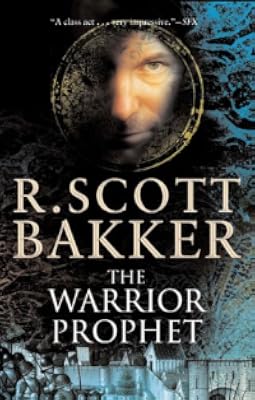
On a series-wide note, this is one of the finest fantasy series I've yet had the pleasure of reading. Rarely these days do I read a series straight through without taking breaks between the volumes to read other books, but I plowed straight through this one. Fans of R. Scott Bakker (Prince of Nothing), Joe Abercrombie (The First Law), and GRR Martin (A Song of Fire and Ice) will almost certainly derive great enjoyment from this. Anyone who enjoys well-written, bare-knuckle, serious fantasy would be well off giving this series a try. show less
I've noted some other people who finished this book expressed disappointment with 1 thing: that many main characters were killed off. I would argue that this might actually make the book show more better and a more mature read than it otherwise might be. Yes, many characters that we've come to know and sympathize with are killed: the world is in cataclysm, after all, and serious loss of life is inevitable. Having characters the reader is familiar with, rather than merely faceless soldiers, drives this point home. Some characters may even die in ways that seem pointless or unworthy -- again, even heroes don't always die with glory.
I felt that the biggest flaw with this book was the breakneck speed with which things occurred. All of the events in this book could easily have merited a couple hundred more pages. It may be that the author was getting tired of the series and was eager to finally draw things to a close. While a bit regrettable, the book is still a good closer to a terrific series. (Impatient readers may even welcome this.)
On a series-wide note, this is one of the finest fantasy series I've yet had the pleasure of reading. Rarely these days do I read a series straight through without taking breaks between the volumes to read other books, but I plowed straight through this one. Fans of R. Scott Bakker (Prince of Nothing), Joe Abercrombie (The First Law), and GRR Martin (A Song of Fire and Ice) will almost certainly derive great enjoyment from this. Anyone who enjoys well-written, bare-knuckle, serious fantasy would be well off giving this series a try. show less
The weakest of the 5, perhaps the book should have ended at 4, or gone on for another book? Kearney's pace is frantic, and I couldn't help but feel the final few chapters were rushing. I think the weight of the story told deserved a longer epilogue/denouement, but but overall I'm quite happy I read the Monarchies of God. I don't think Hawkwood was as compelling a protagonist as the author intended, but Corfe's journey was easily the highlight, if a bit tropey. I also don't think every facet of the story melded together, there might just have been too much to weave, but the Merduk invasion and the religious implications behind it were compelling.
Another note - what is it with fantasy books and maps? I love maps - big, clear ones if show more possible. Here, the map is 115 pages in and isn't very legible...I always wanted to see where the action was taken place, but gave up due to inadequate detail on the map. Ah well.
I don't think this is a fantasy series that would have crossover appeal to readers who don't enjoy high fantasy, but for those that do, this will quench you thirst temporarily. show less
Another note - what is it with fantasy books and maps? I love maps - big, clear ones if show more possible. Here, the map is 115 pages in and isn't very legible...I always wanted to see where the action was taken place, but gave up due to inadequate detail on the map. Ah well.
I don't think this is a fantasy series that would have crossover appeal to readers who don't enjoy high fantasy, but for those that do, this will quench you thirst temporarily. show less
I loved this series. I read each book immediately after finishing the one before, pored over each page, agonized with the characters. So it's nothing short of tragedy that I practically hated this book. After a long, even epic saga of war, love, magic, and exploration, Kearney clumsily wraps things up with this uninspired offering. It's a token effort, putting things to dissatisfying end without any of the heart or soul that made books 1-4 so appealing.
La tormenta se cierne sobre las Monarquías de Dios, y consigo trae la promesa de un conflicto a escala continental de tal magnitud que, en comparación, todas las guerras contra los merduk parecen simples escaramuzas.
A un lado, la Gran Alianza, la unión de los estados heréticos que, tiempo atrás, llegaron a un pacto con los merduk y fundieron en una sola fe sincrética las enseñanzas del Santo y el Profeta.
Al otro, el Segundo Imperio, una mezcolanza impía entre la autoridad de la Iglesia, convertida en poder temporal, y la hechicería de los cambiaformas venidos del Continente Occidental.
A un lado, la Gran Alianza, la unión de los estados heréticos que, tiempo atrás, llegaron a un pacto con los merduk y fundieron en una sola fe sincrética las enseñanzas del Santo y el Profeta.
Al otro, el Segundo Imperio, una mezcolanza impía entre la autoridad de la Iglesia, convertida en poder temporal, y la hechicería de los cambiaformas venidos del Continente Occidental.
Jan 10, 2023Spanish
Ratings
Members
- Recently Added By
Author Information

20+ Works 2,848 Members
Series

Work Relationships
Is contained in
Common Knowledge
- Canonical title
- Ships from the West
- Original publication date
- 2002
- People/Characters
- Richard Hawkwood
- Dedication
- For Peter Talbot
- First words
- Richard Hawkwood hauled himself out of the gutter whence the crowds had deposited him, and viciously shoved his way through the cheering throng, stamping on feet, elbowing right and left and glaring wildly at all who met his ... (show all)eye.
Classifications
Statistics
- Members
- 183
- Popularity
- 178,825
- Reviews
- 6
- Rating
- (3.50)
- Languages
- 5 — Czech, English, French, German, Spanish
- Media
- Paper, Ebook
- ISBNs
- 9
- ASINs
- 2