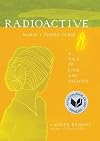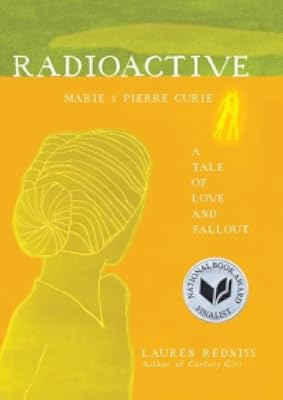
Radioactive: Marie & Pierre Curie: A Tale of Love and Fallout
by Lauren Redniss
On This Page
Description
Presents the professional and private lives of Marie and Pierre Curie, examining their personal struggles, the advancements they made in the world of science, and the issue of radiation in the modern world.Tags
Recommendations

















Member Recommendations
Member Reviews
[Radioactive] is a marvelous book. It's at once a biographical sketch of two pioneering researchers of radioactivity, a truly romantic love story, and a chilling history-of-the-science report. Presented through vibrantly colorful and lyrical, though curiously awkward, illustrations, Radioactive challenges the conventional image of the "Graphic Novel".
Marie and Pierre Curie—and their scientific work— are the subjects. Pierre Curie was born into science, son of a physician working in a neuroanatomical lab. He proved himself early and often, earning a university degree at 16, publishing a scientific paper at 21, and joining the Sorbonne's mineralogy lab to study crystals. Marya Sklodowska, on the other hand, was born into a working show more class Polish family living in Warsaw under Russian rule. A feature of early education included surprise interrogations by a state inspector who demanded students recite the names of Tzars and members of the imperial family. To get the education she wanted, she joined the Flying University, a clandestine network of a thousand women who met in secret and defied Russian control of education. Nevertheless, at 18, Marya took herself to Paris.
In 1891, the year 32-year-old Pierre began his doctoral dissertation ("Magnetic Properties of Bodies at Diverse Temperatures"), the 24-year-old Marya enrolled at the Sorbonne as Marie. She was one of only 23 female students among the total enrollment of 1800. Having completed degrees in mathematics and in physics in two years, she was hired by a national lab to study the magnetic properties of steel. She was working in borrowed space in a crowded lab until a Polish physicist visiting Paris introduced her to "a scientist of great merit": Pierre Curie. Thereafter, Marie reported on their introduction:
Upon entering the room I perceived, standing framed by the French window opening on the balcony, a tall young man with auburn hair and large, limpid eyes. I noticed the grave and gentle expression of his face, as well a certain abandon in his attitude, suggesting the dreamer absorbed in his reflections…We began a conversation which soon became friendly.
The two immediately began sharing lab space and research. Pierre persuaded Marie to marry him. They had a daughter and named her Irene. They collaborated in all ways, even keeping the same diary. Together they demonstrated the existence of two new elements, radium and polonium (the latter named for Marie's homeland, Poland). For this work, the Curies won the Nobel Prize in Physics in 1902.
Radium is simultaneously mesmerizing and deadly. Both Marie and Pierre were captivated by its glow, and while aware of the hazard, they handled the material during long days in their lab. Marie slept with a tiny radium crumb in a vial beside her pillow. Ultimately, the exposure undermined Marie's health, delaying the Stockholm trip to accept the Prize for more than a year.
Marie and Pierre Curie's lives are presented in a straight chronology. But accounts of the dramatic, often terrible but occasional beneficial, impacts of their discoveries, often decades later, disrupt the timeline. The linkage is essential.
The book is entirely Redniss's. She organized the presentation, wrote the text. She laid out the pages. She created the illustrations, using a technique called "cyanoprinting". (The process is an old one and is used to make blueprints.) She added colors to the prints using paints or colored pencils. She even designed the typeface.
The artwork in Radioactive is unique. Not inspired by comic-strip conventions, it doesn't use the comic artist's vocabulary. Too, the book's design bends the conventions of story presentation. There's no grid, no uniform lineup of panels, each depicting an action, a phrase of dialog or a reaction or an emotion. Redniss may have used a grid to guide her layouts, but if she did, it is transparent. The art and the text blocks (which seldom are "blocks") flow across the spreads.
I first read Radioactive about 10 years ago. At the time, graphic novels were comics in the guise of books. Each page presented a grid of panels with cartoon figures and dialog balloons. Redniss's concept blew me away. It was—and still is, of course—a book aglow, perfectly fitting the topics.
It is quite unfortunate that images can't be shown in the reviews, for this is a GRAPHIC edition. Images are so important for anyone to get a satisfactory understanding of the book. Here's what I posted to my thread:
https://www.librarything.com/topic/342172#7856401 show less
Marie and Pierre Curie—and their scientific work— are the subjects. Pierre Curie was born into science, son of a physician working in a neuroanatomical lab. He proved himself early and often, earning a university degree at 16, publishing a scientific paper at 21, and joining the Sorbonne's mineralogy lab to study crystals. Marya Sklodowska, on the other hand, was born into a working show more class Polish family living in Warsaw under Russian rule. A feature of early education included surprise interrogations by a state inspector who demanded students recite the names of Tzars and members of the imperial family. To get the education she wanted, she joined the Flying University, a clandestine network of a thousand women who met in secret and defied Russian control of education. Nevertheless, at 18, Marya took herself to Paris.
In 1891, the year 32-year-old Pierre began his doctoral dissertation ("Magnetic Properties of Bodies at Diverse Temperatures"), the 24-year-old Marya enrolled at the Sorbonne as Marie. She was one of only 23 female students among the total enrollment of 1800. Having completed degrees in mathematics and in physics in two years, she was hired by a national lab to study the magnetic properties of steel. She was working in borrowed space in a crowded lab until a Polish physicist visiting Paris introduced her to "a scientist of great merit": Pierre Curie. Thereafter, Marie reported on their introduction:
Upon entering the room I perceived, standing framed by the French window opening on the balcony, a tall young man with auburn hair and large, limpid eyes. I noticed the grave and gentle expression of his face, as well a certain abandon in his attitude, suggesting the dreamer absorbed in his reflections…We began a conversation which soon became friendly.
The two immediately began sharing lab space and research. Pierre persuaded Marie to marry him. They had a daughter and named her Irene. They collaborated in all ways, even keeping the same diary. Together they demonstrated the existence of two new elements, radium and polonium (the latter named for Marie's homeland, Poland). For this work, the Curies won the Nobel Prize in Physics in 1902.
Radium is simultaneously mesmerizing and deadly. Both Marie and Pierre were captivated by its glow, and while aware of the hazard, they handled the material during long days in their lab. Marie slept with a tiny radium crumb in a vial beside her pillow. Ultimately, the exposure undermined Marie's health, delaying the Stockholm trip to accept the Prize for more than a year.
Marie and Pierre Curie's lives are presented in a straight chronology. But accounts of the dramatic, often terrible but occasional beneficial, impacts of their discoveries, often decades later, disrupt the timeline. The linkage is essential.
The book is entirely Redniss's. She organized the presentation, wrote the text. She laid out the pages. She created the illustrations, using a technique called "cyanoprinting". (The process is an old one and is used to make blueprints.) She added colors to the prints using paints or colored pencils. She even designed the typeface.
The artwork in Radioactive is unique. Not inspired by comic-strip conventions, it doesn't use the comic artist's vocabulary. Too, the book's design bends the conventions of story presentation. There's no grid, no uniform lineup of panels, each depicting an action, a phrase of dialog or a reaction or an emotion. Redniss may have used a grid to guide her layouts, but if she did, it is transparent. The art and the text blocks (which seldom are "blocks") flow across the spreads.
I first read Radioactive about 10 years ago. At the time, graphic novels were comics in the guise of books. Each page presented a grid of panels with cartoon figures and dialog balloons. Redniss's concept blew me away. It was—and still is, of course—a book aglow, perfectly fitting the topics.
It is quite unfortunate that images can't be shown in the reviews, for this is a GRAPHIC edition. Images are so important for anyone to get a satisfactory understanding of the book. Here's what I posted to my thread:
https://www.librarything.com/topic/342172#7856401 show less
I had heard the name Marie Curie, but I did not know much about this pioneering scientist. Wow, what an eye-opener. She was born in Poland in 1867 and moved to Paris in 1891, to study science at the University of Paris. A couple years later, she meets Pierre Curie, an instructor at the School of Physics and Chemistry. They soon marry and begin blazing a path, that will bring both wonder to the world and incredible destruction.
This all will launch, with their discovery of polonium and radium, which sets off a long list of breakthroughs, leading to “radioactivity”, a term they both coined. I think we know where this is heading.
I am not much of a science geek, but I do not think there has ever been a pairing, in the history of science, show more that has reached these monumental achievements. The couple ended up winning the Nobel Peace Prize for physics and eight years later, Marie earned a second one for chemistry.
Yes, this wonderful graphic biography, is a love story and a scientific history lesson but it is also explores the horrible repercussions: “The Fallout” part of the title. Hiroshima, Three Mile Island and Chernobyl make appearances, along with a few lesser horror stories featuring the evils of radiation.
I cannot express how perfect this all comes together, with simple illustrations and a vibrant palette of colors, all held together with a strong narrative drive. Find this book! show less
This all will launch, with their discovery of polonium and radium, which sets off a long list of breakthroughs, leading to “radioactivity”, a term they both coined. I think we know where this is heading.
I am not much of a science geek, but I do not think there has ever been a pairing, in the history of science, show more that has reached these monumental achievements. The couple ended up winning the Nobel Peace Prize for physics and eight years later, Marie earned a second one for chemistry.
Yes, this wonderful graphic biography, is a love story and a scientific history lesson but it is also explores the horrible repercussions: “The Fallout” part of the title. Hiroshima, Three Mile Island and Chernobyl make appearances, along with a few lesser horror stories featuring the evils of radiation.
I cannot express how perfect this all comes together, with simple illustrations and a vibrant palette of colors, all held together with a strong narrative drive. Find this book! show less
WOW.
This book is a new addition to my list of all-time favorites. Here is a short, incomplete list of the things I loved about it:
1. The subject. It's about Marie Curie, who is one of the most accomplished scientists of all time -- educational and inspiring! It's also about her actual discoveries, and how they changed the way we thought about the very nature of things. Double educational and inspiring! PS: did you know she was the first person, man or woman, to receive two Nobel prizes?
2. The breadth. The book isn't careful about tracking the life of Mme. Curie, or talking only about things she accomplished. It has an easy-going, free-association kind of style, like a conversation with a brilliant and well-read friend, that can range show more from a list of other Polish superstars to Mme. Curie's sex scandal to the scientists behind the Manhattan Project to the story of a couple who think visits to radioactive caves have helped treat the wife's Hepatitis C. And yet it all feels planned rather than disjointed!
3. The art. I'm a huge fan of books-as-art, where the experience of reading is enhanced by font, paper color and thickness, illustration, text size and color, and creative layouts. This book has all of that, and yet I never once thought a page seemed too busy or that anything lacked a purpose. Instead, every time I turned the page, I looked forward to seeing what my eyes would get to encounter next! PS: some of the images on the cover are glow-in-the-dark! And some of the internal illustrations were created using cyanotype, a photographic printing process that produces a cyan-blue print. Not only is it fitting that these illustrations were created using a chemical process, but the result is reminiscent of the soft glow of radium that so entranced Mme. Curie.
4. The size. This is shaped like a coffee table book, tall and wide but slim. This makes it perfect for displaying and a pleasure to read (although there are one or two pages where the layout requires the font to be just a bit too small for my taste -- but then, having to peer closely at a few of the pages is also part of the reading experience!) This would also make a fabulous gift -- maybe for a new high school graduate?
In short, I can't think of another time when I've seen such a wonderful amalgamation of art and science in a single package. Also, I learned a lot, and enjoyed myself thoroughly (two things that I often experience singly, but nothing beats experiencing them at the same time!)
Six exclamation points in this review: this may be a new record. (less) show less
This book is a new addition to my list of all-time favorites. Here is a short, incomplete list of the things I loved about it:
1. The subject. It's about Marie Curie, who is one of the most accomplished scientists of all time -- educational and inspiring! It's also about her actual discoveries, and how they changed the way we thought about the very nature of things. Double educational and inspiring! PS: did you know she was the first person, man or woman, to receive two Nobel prizes?
2. The breadth. The book isn't careful about tracking the life of Mme. Curie, or talking only about things she accomplished. It has an easy-going, free-association kind of style, like a conversation with a brilliant and well-read friend, that can range show more from a list of other Polish superstars to Mme. Curie's sex scandal to the scientists behind the Manhattan Project to the story of a couple who think visits to radioactive caves have helped treat the wife's Hepatitis C. And yet it all feels planned rather than disjointed!
3. The art. I'm a huge fan of books-as-art, where the experience of reading is enhanced by font, paper color and thickness, illustration, text size and color, and creative layouts. This book has all of that, and yet I never once thought a page seemed too busy or that anything lacked a purpose. Instead, every time I turned the page, I looked forward to seeing what my eyes would get to encounter next! PS: some of the images on the cover are glow-in-the-dark! And some of the internal illustrations were created using cyanotype, a photographic printing process that produces a cyan-blue print. Not only is it fitting that these illustrations were created using a chemical process, but the result is reminiscent of the soft glow of radium that so entranced Mme. Curie.
4. The size. This is shaped like a coffee table book, tall and wide but slim. This makes it perfect for displaying and a pleasure to read (although there are one or two pages where the layout requires the font to be just a bit too small for my taste -- but then, having to peer closely at a few of the pages is also part of the reading experience!) This would also make a fabulous gift -- maybe for a new high school graduate?
In short, I can't think of another time when I've seen such a wonderful amalgamation of art and science in a single package. Also, I learned a lot, and enjoyed myself thoroughly (two things that I often experience singly, but nothing beats experiencing them at the same time!)
Six exclamation points in this review: this may be a new record. (less) show less
Radioactive: Marie & Pierre Curie: A Tale of Love and Fallout by Lauren Redniss was the first graphic novel, besides Maus, that I have ever read. I'm not a fan of the GN. However, this book was fantastic. It was so very interesting and written in a way that a laymen can understand nuclear fission and carbon-14. The love lives of Marie Curie was also interesting. There are many copies of original documents contained within as well as a good amount of end-notes. My only complaint is that there was a lot of white ink on red or orange pages that I could barely make out--I struggled to read a good many pages. I highly recommend this book as a GN, a biography, a NF, and just a plain good read! 176 pages
In Radioactive, Lauren Redniss depicts the lives and work of Marie and Pierre Curie through a combination of text and illustrations. Interspersed within this narrative are related stories about the lasting effects their work, mostly that which concerned radioactivity. These include accounts of major events like the Hiroshima bombing, Three Mile Island, and Chernobyl. It also includes other stories about those who go to radon mines for the supposed health benefits, factory workers in the 1920s who became ill from putting paint brushes dipped in radium in their mouths to achieve the fine strokes needed for painting glowing watches, and cancer survivors treated with radiation.
I really liked the illustrations in this book. Quite a few show more illustrations in this book are created by something called cyanotype printing that creates really compelling images in blue and white. (If you aren’t familiar with it, do a Google image search.) In her afterward, Redniss talks about the reasons she used this technique. One, it makes it appear as though the image is glowing internally, capturing radium’s luminosity. Second, the process uses the principles of photographic imaging, which was central to radioactivity, and finally, the chemicals produced by cyanotype printing can also be used to treat the effects of exposure to certain types of radiation. I found these images very striking before reading her reasons for using them, and hearing her reasons made them even more compelling. The cyanotype prints were beautiful, yet at the same time eerie and rather haunting. It highlights the idea that amidst all the excitement surrounding these incredible discoveries, there is this undertone of something just plain sad, knowing how invisibly poisonous the work environment was and all the bad that would come from the principles they were working to uncover.
While reading this book, I wavered between utter amazement of people’s ability to understand and manipulate our complex world and a complete fear of the exact same thing. So much good and bad can come from same scientific principles. The Curies, like so many other scientists of the era, feared the evil that would come from their work. What a complicated dilemma, to be so intelligent and passionate about your work, committed to knowledge sharing in the scientific community, but at the same time knowing what this knowledge can be used for.
On a happy note, there are other practical applications for the work of the Curies. The principles of the Curie point, which is a relationship between heat and magnetism, are used in plate tectonics, measuring caffeine in beverages, and treating hypothermia. The principle of piezoelectricity is used in propelling droplets in inkjet printers, controlling the beeps of smoke detectors, and reducing vibrations in tennis rackets. I don’t really understand these concepts, but it is nice to think about the scientists sitting around trying to figure out how to measure the caffeine content of coffee or how to make a smoke detector beep and not just those scientists making bombs.
I loved one of the photographs in the book that showed Marie Curie lecturing to a classroom entirely filled with men. Way to go, Marie! show less
I really liked the illustrations in this book. Quite a few show more illustrations in this book are created by something called cyanotype printing that creates really compelling images in blue and white. (If you aren’t familiar with it, do a Google image search.) In her afterward, Redniss talks about the reasons she used this technique. One, it makes it appear as though the image is glowing internally, capturing radium’s luminosity. Second, the process uses the principles of photographic imaging, which was central to radioactivity, and finally, the chemicals produced by cyanotype printing can also be used to treat the effects of exposure to certain types of radiation. I found these images very striking before reading her reasons for using them, and hearing her reasons made them even more compelling. The cyanotype prints were beautiful, yet at the same time eerie and rather haunting. It highlights the idea that amidst all the excitement surrounding these incredible discoveries, there is this undertone of something just plain sad, knowing how invisibly poisonous the work environment was and all the bad that would come from the principles they were working to uncover.
While reading this book, I wavered between utter amazement of people’s ability to understand and manipulate our complex world and a complete fear of the exact same thing. So much good and bad can come from same scientific principles. The Curies, like so many other scientists of the era, feared the evil that would come from their work. What a complicated dilemma, to be so intelligent and passionate about your work, committed to knowledge sharing in the scientific community, but at the same time knowing what this knowledge can be used for.
On a happy note, there are other practical applications for the work of the Curies. The principles of the Curie point, which is a relationship between heat and magnetism, are used in plate tectonics, measuring caffeine in beverages, and treating hypothermia. The principle of piezoelectricity is used in propelling droplets in inkjet printers, controlling the beeps of smoke detectors, and reducing vibrations in tennis rackets. I don’t really understand these concepts, but it is nice to think about the scientists sitting around trying to figure out how to measure the caffeine content of coffee or how to make a smoke detector beep and not just those scientists making bombs.
I loved one of the photographs in the book that showed Marie Curie lecturing to a classroom entirely filled with men. Way to go, Marie! show less
Reading Radioactive felt a little bit like poking through an artist's personal notebooks, the way words and images flow in and around each other. The art is beautiful to look at, but what was most remarkable to me was the way it harmonized with the story being told and elevated the narrative to something more intimate. There's also a lot of great asides about the science and the history surrounding the Curies and the far reaching effects of their research. A great book, recommended for lovers of art, science, history and good stories.
Marie and Pierre Curie may possibly be one of the most famous couples in the science world who lived, loved, and breathed their work. Their research, discoveries, and advancements eventually garners Marie two illustrious Nobel Peace prizes and a legacy that has echoed through their own children and numerous scientists after them.
Radioactive is a graphic novel that has the look and feel of a well put together scrapbook. The pages are filled with vibrant drawings and designs, but is balanced with text that shares with us the story of Marie, Pierre, their love and dedication to their work and to one another. To be honest, I found the science part of the book rather daunting and overwhelming. It reminded me too much of my inadequacy in show more understanding the complexity of chemistry. I would have been much more interested in the personal story of Marie and Pierre and yet the reality is that their love for the sciences was so much a part of who they were as individuals and as a couple that you couldn't share one without the other. The concept of the graphic novel and the blending of story and artwork was certainly enjoyable, but in the end, the difficulties I encountered trying to bridge the gap between their brilliance and my lack of understanding lead to a rather perfunctory reading experience. show less
Radioactive is a graphic novel that has the look and feel of a well put together scrapbook. The pages are filled with vibrant drawings and designs, but is balanced with text that shares with us the story of Marie, Pierre, their love and dedication to their work and to one another. To be honest, I found the science part of the book rather daunting and overwhelming. It reminded me too much of my inadequacy in show more understanding the complexity of chemistry. I would have been much more interested in the personal story of Marie and Pierre and yet the reality is that their love for the sciences was so much a part of who they were as individuals and as a couple that you couldn't share one without the other. The concept of the graphic novel and the blending of story and artwork was certainly enjoyable, but in the end, the difficulties I encountered trying to bridge the gap between their brilliance and my lack of understanding lead to a rather perfunctory reading experience. show less
Members
- Recently Added By
Published Reviews
ThingScore 100
Writer and artist Lauren Redniss's Radioactive is no ordinary biography of Marie and Pierre Curie. The story of radioactivity, one of the most exciting discoveries of the past 100 or so years, is brightly visualized through Redniss's imagination in her illustrated book. Ideas, scientific choices, motivations and insatiable passions unfurl in her elegant cyanotype drawings and are enacted by show more ethereal figures set into motion by the author's eloquence. show less
added by jlelliott
The short history of modern graphic storytelling has produced plenty of books whose visuals dwarf the text. Occasionally, the tale trumps the art.
Rare is the book that marries great fiction or nonfiction with visual elements that wow the viewer and have a purposeful, amplifying connection to the text. So put this one on your list.
The illustrated biography of Nobel Prize-winning scientist Marie show more Curie also explores some of the well-known unintended consequences of Curie's work in radioactivity. And the book incorporates contemporary voices of those whose lives would've been vastly different -- better and worse -- without Pierre and Marie Curie's discoveries.
All of that informs Ms. Redniss the visual artist, who places her story against a backdrop of historical photographs, collage and neoprimitive drawings, many finished with a special process that lends a graphic glow to some pages. It echoes the energy that lights up skeletons in X-rays and illuminated radioactive watch dials during World War I. . . . show less
Rare is the book that marries great fiction or nonfiction with visual elements that wow the viewer and have a purposeful, amplifying connection to the text. So put this one on your list.
The illustrated biography of Nobel Prize-winning scientist Marie show more Curie also explores some of the well-known unintended consequences of Curie's work in radioactivity. And the book incorporates contemporary voices of those whose lives would've been vastly different -- better and worse -- without Pierre and Marie Curie's discoveries.
All of that informs Ms. Redniss the visual artist, who places her story against a backdrop of historical photographs, collage and neoprimitive drawings, many finished with a special process that lends a graphic glow to some pages. It echoes the energy that lights up skeletons in X-rays and illuminated radioactive watch dials during World War I. . . . show less
added by PLReader
Lists

Recommended Comics / Graphic Novels
595 works; 120 members

Graphic Biographies of Women
59 works; 6 members
Club Read's Graphic Stories Recommendations
127 works; 2 members
Best Graphic Novel Nonfiction
199 works; 101 members

Club Read's Recommended Nonfiction Written by Women
618 works; 30 members

Books recommended by Calgary Public Library staff
1,588 works; 4 members
Author Information

6+ Works 1,446 Members
Awards and Honors
Work Relationships
Has the adaptation
Common Knowledge
- Canonical title
- Radioactive: Marie & Pierre Curie: A Tale of Love and Fallout
- Original title
- Radioactive: Marie & Pierre Curie: A Tale of Love and Fallout
- Original publication date
- 2010-12-21
- People/Characters
- Marie Curie; Pierre Curie; Irène Joliot-Curie; Paul Langevin
- Important places
- Paris, France
- Important events
- Discovery of Radium; World War I
- Dedication
- With apologies to Marie Curie, who said, "There is no connection between my scientific work and the facts of private life."
- First words
- Catastrophism, a geological theory championed by zoologist Georges Cuvier, holds that time lurches forward in sudden disasters.
- Last words
- (Click to show. Warning: May contain spoilers.)You could have cities and glass roads. A crystal city.
- Blurbers
- Rhodes, Richard; Krauss, Nicole; Gladwell, Malcolm
Classifications
Statistics
- Members
- 840
- Popularity
- 32,516
- Reviews
- 53
- Rating
- (4.16)
- Languages
- English, French, Portuguese
- Media
- Paper, Audiobook
- ISBNs
- 7
- ASINs
- 3