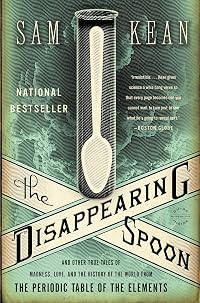
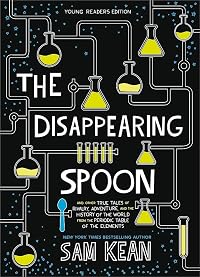
The Disappearing Spoon: And Other True Tales of Madness, Love, and the History of the World from the Periodic Table of the Elements
by Sam Kean
On This Page
Description
The periodic table of the elements is a crowning scientific achievement, but it's also a treasure trove of passion, adventure, obsession, and betrayal. These tales follow carbon, neon, silicon, gold, and all the elements in the table as they play out their parts in human history. The usual suspects are here, like Marie Curie (and her radioactive journey to the discovery of polonium and radium) and William Shockley (who is credited, not exactly justly, with the discovery of the silicon show more transistor)--but the more obscure characters provide some of the best stories, like Paul Emile François Lecoq de Boisbaudran, whose discovery of gallium, a metal with a low melting point, gives this book its title: a spoon made of gallium will melt in a cup of tea.--From publisher description. show lessTags
Recommendations
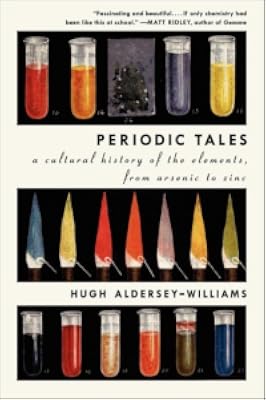
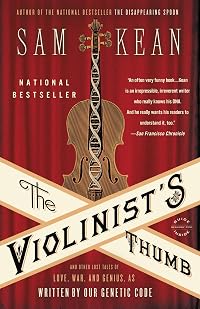
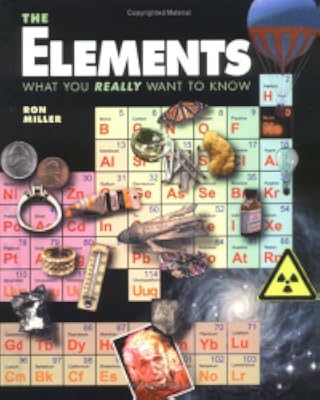

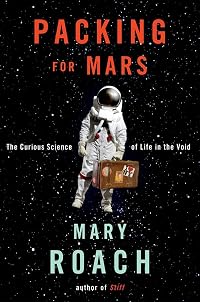




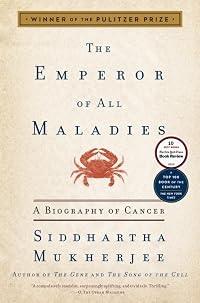
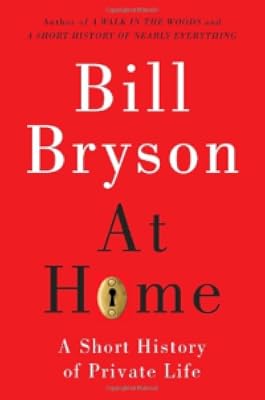
Member Recommendations
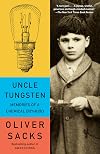
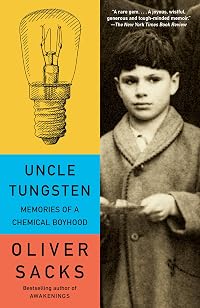
Katya0133 Uncle Tungsten focuses on the author's boyhood love of chemistry and not on the stories of many different people, but both describe a very human relationship with chemical elements.
20
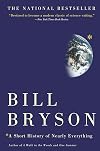
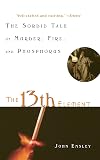

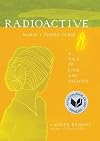
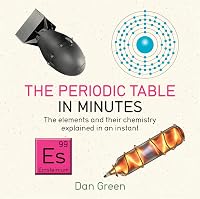
DetailMuse Kean's essays explore science history and scientists; Bellos's explore math history and mathematicians. All are fun and fascinating.
Member Reviews
This book demonstrates above all, that Sam Kean is a teacher. A good teacher will tell stories and not just spout unrelated facts. People will remember stories along after the formula or fact is forgotten. Instead of treating the Periodic Table as a chart that just tells the weight and number of electrons for each element, Kean tells an interesting story about that element. The stories range from war, fraud, madness, genius, and occasional explosions. The book's name is taken from the story about Gallium, which will melt when immersed in solutions hotter than 156 degrees. Therefore, a "prank" used to be to serve tea with a Gallium spoon and it would disappear as it sat in the hot tea. This witty book is not written for chemistry majors, show more but readers who may have hated chemistry in school but enjoy history, strange trivia, and odd personalities. A great read. 391 pages show less
From San Kean:
“I ended up with an honors degree in physics, but […] my real education was in my professors’ stories. […] I realized that there’s a funny, or odd, or chilling tale attached to every element on the periodic table.”
Kean came to those professors already primed for their stories -- by having been fascinated to find mercury not only in the Periodic Table of science class but also in his childhood thermometers … in literature’s mad hatter … and in the mercury-laxative leftovers discovered in Lewis & Clark’s trail of latrines.
Though I didn’t keep strict track, I think Kean includes a tale for every single element in this terrific book. And while he did so, he opened my eyes to things I’d forgotten (or not show more ever known!!), for example:
• Chemistry is based on atoms’ electrons and physics on their nuclei;
• "Alchemy" is true: every element traces back to the fusion of solar hydrogen atoms into helium;
• The familiar Periodic Table is just one of many potential configurations of the elements, some of which are 3D;
• There are more than three states of matter;
• Our bodies don’t monitor whether we’re inhaling enough oxygen, only that we’re exhaling enough carbon dioxide;
• Midas was real as well as fictional;
• Why sci-fi life forms are based on silicon;
• Why Americans call it “aluminum” but it’s “aluminium” to everybody else.
There’s chemistry here, and physics and biology. But there’s also astronomy, geology, history, politics, warfare, economics, gender studies, human ambition and inter-personal conflict. And there’s a whole lotta humor. There are also dozens of entertaining and informative endnotes, suggestions for further reading, and an index. The only way to make it even better is to pair it with Theodore Gray’s The Elements.
Get started by taking a look at the disappearing spoon of the title.
(Review based on an advance reading copy provided by the publisher.) show less
“I ended up with an honors degree in physics, but […] my real education was in my professors’ stories. […] I realized that there’s a funny, or odd, or chilling tale attached to every element on the periodic table.”
Kean came to those professors already primed for their stories -- by having been fascinated to find mercury not only in the Periodic Table of science class but also in his childhood thermometers … in literature’s mad hatter … and in the mercury-laxative leftovers discovered in Lewis & Clark’s trail of latrines.
Though I didn’t keep strict track, I think Kean includes a tale for every single element in this terrific book. And while he did so, he opened my eyes to things I’d forgotten (or not show more ever known!!), for example:
• Chemistry is based on atoms’ electrons and physics on their nuclei;
• "Alchemy" is true: every element traces back to the fusion of solar hydrogen atoms into helium;
• The familiar Periodic Table is just one of many potential configurations of the elements, some of which are 3D;
• There are more than three states of matter;
• Our bodies don’t monitor whether we’re inhaling enough oxygen, only that we’re exhaling enough carbon dioxide;
• Midas was real as well as fictional;
• Why sci-fi life forms are based on silicon;
• Why Americans call it “aluminum” but it’s “aluminium” to everybody else.
There’s chemistry here, and physics and biology. But there’s also astronomy, geology, history, politics, warfare, economics, gender studies, human ambition and inter-personal conflict. And there’s a whole lotta humor. There are also dozens of entertaining and informative endnotes, suggestions for further reading, and an index. The only way to make it even better is to pair it with Theodore Gray’s The Elements.
Get started by taking a look at the disappearing spoon of the title.
(Review based on an advance reading copy provided by the publisher.) show less
5 stelle e non bastano per un libro che è una vera delizia. Una delizia per chi, come me, è un chimico, ma anche per chi di chimica ha sempre detto di non capire nulla, fino ad averne repulsione.
In ottimo e chiaro inglese (e spero che la trduzione italiana sia all'altezza e non metta ampollosità e confusione in ciò che è chiaro e divertente) racconta la storia della scoperta dei vari elementi chimici, mettendo insieme un'opera che è scientifica, politica, storica, gossippara il giusto, e avvincente come un libro di Stephen King.
E che ha anche il merito di aver chiarito una volta per tutte a un chimico scarsamente portato per la fisica (io) il principio di indeterminazione di Heisenberg, strappandomi una bella risata per la show more semplice e incontrovertibile eleganza della spiegazione. show less
In ottimo e chiaro inglese (e spero che la trduzione italiana sia all'altezza e non metta ampollosità e confusione in ciò che è chiaro e divertente) racconta la storia della scoperta dei vari elementi chimici, mettendo insieme un'opera che è scientifica, politica, storica, gossippara il giusto, e avvincente come un libro di Stephen King.
E che ha anche il merito di aver chiarito una volta per tutte a un chimico scarsamente portato per la fisica (io) il principio di indeterminazione di Heisenberg, strappandomi una bella risata per la show more semplice e incontrovertibile eleganza della spiegazione. show less
Checking off one from my far too many (just kidding...one can never have too many books to read) Small Stacks of Found Books that I kept setting aside for others, this is in one word a delight! Mr. Kean has done something marvelous here: making the periodic table fun and accessible! For science geeks (and professionals) it always has been, but for those less inclined...this is great.He says in his Introduction that from the one element mercury, he "learned history, etymology, alchemy, mythology, literature, poison forensics, and psychology." He also learned physics and chemistry, clearly, because it's all through this book, and politics that sometimes had play in the field. And Kean conveys the history and concepts in the best mystery show more page-turner style, along with humor and sagacity. Even if you know the history and concepts, the chemistry and physics (I'm not a neophyte to either), I suspect you'll learn something or somethings.
Kean talks of the discoveries of the elements (and many of the gaffes), the origins of the table, the blanks and how they were filled. He delves into the biological interactions of some of the elements, from poisons to medicines, and how some elements mimic others, causing all kinds of havoc on the biological front. There is the politics of the Nobel prizes, the currency of elements, art and literature of elements. Something as seemingly simple as the Parker 51 pen gets copy time here, as the nibs were made of "durable ruthenium", "an element little better than scarp until then."
Near absolute zero, bubble chambers, "Tools of Ridiculous Precision"...there is so much information here. I couldn't begin to summarize with any justice. I'll share one nugget to illustrate Kean's keen science. (Forgive, please!) There's a chapter on toxicity of exposure (or ingestion) and a GREAT observation I flagged. Great to me, anyway. In talking about William Crookes, his "lapse into spiritualism", and succumbing to "pathological science", Kean explains pathological science:
Read it. Highly recommended. show less
Kean talks of the discoveries of the elements (and many of the gaffes), the origins of the table, the blanks and how they were filled. He delves into the biological interactions of some of the elements, from poisons to medicines, and how some elements mimic others, causing all kinds of havoc on the biological front. There is the politics of the Nobel prizes, the currency of elements, art and literature of elements. Something as seemingly simple as the Parker 51 pen gets copy time here, as the nibs were made of "durable ruthenium", "an element little better than scarp until then."
Near absolute zero, bubble chambers, "Tools of Ridiculous Precision"...there is so much information here. I couldn't begin to summarize with any justice. I'll share one nugget to illustrate Kean's keen science. (Forgive, please!) There's a chapter on toxicity of exposure (or ingestion) and a GREAT observation I flagged. Great to me, anyway. In talking about William Crookes, his "lapse into spiritualism", and succumbing to "pathological science", Kean explains pathological science:
In explaining what pathological science is, it's best to clear up any misconceptions about that loaded word, "pathological," and explain up front what pathological is not. It's not fraud, since the adherents of a pathological science believe they're right - if only everyone else could see it.(And here's the gem...
It's not pseudoscience, like Freudianism and Marxism, fields that poach on the imprimatur of science yet shun the rigors of the scientific method.Love it! Pseudoscience! I've been saying so for years!
It's also not politicized science, like Lysenkoism, where people swear allegiance to a false science because of threats or a skewed ideology. Finally, it's not general clinical madness or merely deranged belief. It's a particular madness, a meticulous and scientifically informed delusion. Pathological scientists pick out a marginal and unlikely phenomenon that appeals to them for whatever reason and bring all their scientific acumen to proving its existence.Kean says that a pathological science's "believers use the ambiguity about evidence as evidence - claiming that scientists don't know everything and therefore there's room for my pet theory, too."
Read it. Highly recommended. show less
Remember your favorite chemistry teacher? The one who always anthropormorphized chemical compounds and added drama and flavor to their lectures? This book is a lot like that.
Okay, fine, chemistry is a substantial part of my livelihood, so maybe I have more fond chemistry-based memories than then average person. Nonetheless, The Disappearing Spoon should be as enticing to those who never took a science class outside of distribution requirements as well as those of us whose favorite class was organic chemistry.
To be honest, I was pretty nervous about this book; as a biochemist, it makes me a little uncomfortable to admit that there's anything interesting outside of carbon, oxygen, hydrogen, nitrogen (and a touch of phosphorus and show more sulfur.) But Kean's writing is the definition of compulsively readable.
Drama is brought by the often argumentative, usually eccentric and always genius scientists who founded the principals of modern chemistry. In addition, each chapter is riddled with historical anecdotes staring a particular element or two. But the real richness of the book comes from Kean's ease with the science itself, describing valence shells, chemical bonds, radioactivity, fusion and fission in accurate, accessible and extremely lively ways. show less
Okay, fine, chemistry is a substantial part of my livelihood, so maybe I have more fond chemistry-based memories than then average person. Nonetheless, The Disappearing Spoon should be as enticing to those who never took a science class outside of distribution requirements as well as those of us whose favorite class was organic chemistry.
To be honest, I was pretty nervous about this book; as a biochemist, it makes me a little uncomfortable to admit that there's anything interesting outside of carbon, oxygen, hydrogen, nitrogen (and a touch of phosphorus and show more sulfur.) But Kean's writing is the definition of compulsively readable.
Drama is brought by the often argumentative, usually eccentric and always genius scientists who founded the principals of modern chemistry. In addition, each chapter is riddled with historical anecdotes staring a particular element or two. But the real richness of the book comes from Kean's ease with the science itself, describing valence shells, chemical bonds, radioactivity, fusion and fission in accurate, accessible and extremely lively ways. show less
Summary: The Disappearing Spoon is a history of the periodic table, and the elements it contains.
No, wait, come back!
This book is the history of chemistry, yes, but it is not technical at all, and is much more focused on the people involved, and how the realms of chemistry have intersected with the course of human history. The first part of the book ("Orientation: Column by Column, Row by Row") is the most focused on the pure science, explaining what the periodic table is, what makes one element different from another, and how their structure determines not only where they are on the table, but also what properties they will have. But even here, there's an emphasis on Mendeleev and the other scientists who figured these relationships show more out. From there, the book talks about different elements grouped more by their impact on civilization than their chemistry. There are chapters on nuclear fission and the history of the atomic bomb, on elements and medicine, on poisons, on money (including a possible chemical explanation for King Midas's mythical golden touch), and finally some chapters on the current and future state of chemistry as it moves beyond the confines of the periodic table.
Review: I thought this book was great. It is admittedly right up my alley - I love this kind of microhistory, plus toss in the history of science, and a ton of great trivia, and I am a happy girl. And while I am a scientist, I am not a chemist - I've taken plenty of chemistry courses, but the most recent of them was… 13 years ago? - so I was thrilled by Kean's straightforward explanations of how chemistry works, which is understandable to the layperson without sacrificing scientific accuracy (which is a devilishly tricky balance to achieve!)
So: this book was remarkably readable and straightforward in presentation. But it was also readable in terms of its content: it contains tons of interesting information and fascinating stories, amenable to reading in short chunks, but also always easy to pick back up and read more. I loved learning about how our knowledge of chemistry came about, especially in the age before fancy lab equipment and high-powered computers. I loved learning about where the term "computers" came from in the first place. Lise Meitner's story both fascinated me and made me sad (everyone always points to Rosalind Franklin as an example of women in science being passed over for Nobel Prizes, but Meitner is a much better example, since she was still alive at the time that work she contributed to received the award.) My mind was blown by some of the theoretical and cutting-edge physics and chemistry introduced in the latter chapters. (Like: why are mathematical constants constant? What if, somewhere in this universe - or another one - π was equal to 3.14158 instead of 3.14159? I can't quite wrap my head around it, but it's fun to try!) And I gleaned tons of tidbits to add to my store of trivia (for example, the process behind why you sometimes find a really old Hershey's Kiss with that weird powdery brownish-grey stuff on it is the same process that may have doomed Scott's expedition to the South Pole). And really, what more can I ask out of a book? 4.5 out of 5 stars.
Recommendation: Loved it. Highly recommended to anyone who likes microhistories, whether you're a scientist or not. And if you're not, please don't be daunted by the chemistry; Kean handles it very clearly, and makes it relevant to the other far-flung bits of history. show less
No, wait, come back!
This book is the history of chemistry, yes, but it is not technical at all, and is much more focused on the people involved, and how the realms of chemistry have intersected with the course of human history. The first part of the book ("Orientation: Column by Column, Row by Row") is the most focused on the pure science, explaining what the periodic table is, what makes one element different from another, and how their structure determines not only where they are on the table, but also what properties they will have. But even here, there's an emphasis on Mendeleev and the other scientists who figured these relationships show more out. From there, the book talks about different elements grouped more by their impact on civilization than their chemistry. There are chapters on nuclear fission and the history of the atomic bomb, on elements and medicine, on poisons, on money (including a possible chemical explanation for King Midas's mythical golden touch), and finally some chapters on the current and future state of chemistry as it moves beyond the confines of the periodic table.
Review: I thought this book was great. It is admittedly right up my alley - I love this kind of microhistory, plus toss in the history of science, and a ton of great trivia, and I am a happy girl. And while I am a scientist, I am not a chemist - I've taken plenty of chemistry courses, but the most recent of them was… 13 years ago? - so I was thrilled by Kean's straightforward explanations of how chemistry works, which is understandable to the layperson without sacrificing scientific accuracy (which is a devilishly tricky balance to achieve!)
"Oxygen, as element eight, has eight total electrons. Two belong to the lowest energy tier, which fills first. That leaves six left over in the outer level, so oxygen is always scouting for two additional electrons. Two electrons aren't so hard to find, and aggressive oxygen can dictate its own terms and bully other atoms. But the same arithmetic shows that poor carbon, element six, has four electrons left over after filling its first shell, and therefore needs four more to make eight. That's harder to do, and the upshot is that carbon has really low standards for forming bonds. It latches onto virtually anything."(And there you have at least the first two weeks of an organic chemistry class, in a nutshell.)
So: this book was remarkably readable and straightforward in presentation. But it was also readable in terms of its content: it contains tons of interesting information and fascinating stories, amenable to reading in short chunks, but also always easy to pick back up and read more. I loved learning about how our knowledge of chemistry came about, especially in the age before fancy lab equipment and high-powered computers. I loved learning about where the term "computers" came from in the first place. Lise Meitner's story both fascinated me and made me sad (everyone always points to Rosalind Franklin as an example of women in science being passed over for Nobel Prizes, but Meitner is a much better example, since she was still alive at the time that work she contributed to received the award.) My mind was blown by some of the theoretical and cutting-edge physics and chemistry introduced in the latter chapters. (Like: why are mathematical constants constant? What if, somewhere in this universe - or another one - π was equal to 3.14158 instead of 3.14159? I can't quite wrap my head around it, but it's fun to try!) And I gleaned tons of tidbits to add to my store of trivia (for example, the process behind why you sometimes find a really old Hershey's Kiss with that weird powdery brownish-grey stuff on it is the same process that may have doomed Scott's expedition to the South Pole). And really, what more can I ask out of a book? 4.5 out of 5 stars.
Recommendation: Loved it. Highly recommended to anyone who likes microhistories, whether you're a scientist or not. And if you're not, please don't be daunted by the chemistry; Kean handles it very clearly, and makes it relevant to the other far-flung bits of history. show less
Chemistry has never been my thing. I hated it in high school (except for the part where we melted mechanical pencils over the Bunsen burner). Recently watching the chemistry Crash Course episodes has reminded me that chemistry is not just the boring science class I struggled to stay awake through in high school. Chemistry is everything around us and understanding a bit about it will help me better understand the way the world works.
So I picked up The Disappearing Spoon with that in mind and was richly rewarded. Kean’s writing style was fun and made the subject matter interesting. He talks not only about the science behind each element, but about the scientists who discovered them and the impact they had on the world.
For example show more Mendeleev, who is credited with creating the Periodic Table, had a fascinating start. He was born in Siberia, the youngest of 11 children. His father died when he was only 13 and his mother worked incredibly hard to give him the chance to go to school. Imagine having to overcome all of those things just to be able to go to school!
Another favorite of mine was Marie Curie. Her fascinating life, including a marriage that was far ahead of its time and the discovery of multiple elements was so interesting. She won a Nobel Prize in a time when women in America weren’t even allowed to vote. I would love to a biography that focused solely on her.
The periodic table has changed the world in both positive and negative ways. Kean doesn’t shy away from the damage that’s been done because of the discovery of a new element. He talks about the effects of vaccinations and medicines and also at the way chemistry made things like the atom bomb possible. When cell phones became wildly popular in the 1990s the fight to find more of the metal used to create them caused the Congo to explode with fighting. People were in a frenzy to provide the metal that was in such high demand.
“Overall more than 5 million people have died in Congo since the mid-1990s, making it the biggest waste of life since World War II. The fighting there is proof that in addition to all the uplifting moments the Periodic table has inspired it can also play on humankind's worst, most inhumane instincts.”
This balanced look at the Table reminds us that with great knowledge (just like great power) comes great responsibility. Almost any scientific advance can be used for good or bad and there will always be a struggle to use it correctly.
BOTTOM LINE: The most interesting book I’ve read ever read about chemistry and one that kept me intrigued the entire time. We live in a truly remarkable world and I’ll never regret reading a book that opens up a new corner of that world to me. show less
So I picked up The Disappearing Spoon with that in mind and was richly rewarded. Kean’s writing style was fun and made the subject matter interesting. He talks not only about the science behind each element, but about the scientists who discovered them and the impact they had on the world.
For example show more Mendeleev, who is credited with creating the Periodic Table, had a fascinating start. He was born in Siberia, the youngest of 11 children. His father died when he was only 13 and his mother worked incredibly hard to give him the chance to go to school. Imagine having to overcome all of those things just to be able to go to school!
Another favorite of mine was Marie Curie. Her fascinating life, including a marriage that was far ahead of its time and the discovery of multiple elements was so interesting. She won a Nobel Prize in a time when women in America weren’t even allowed to vote. I would love to a biography that focused solely on her.
The periodic table has changed the world in both positive and negative ways. Kean doesn’t shy away from the damage that’s been done because of the discovery of a new element. He talks about the effects of vaccinations and medicines and also at the way chemistry made things like the atom bomb possible. When cell phones became wildly popular in the 1990s the fight to find more of the metal used to create them caused the Congo to explode with fighting. People were in a frenzy to provide the metal that was in such high demand.
“Overall more than 5 million people have died in Congo since the mid-1990s, making it the biggest waste of life since World War II. The fighting there is proof that in addition to all the uplifting moments the Periodic table has inspired it can also play on humankind's worst, most inhumane instincts.”
This balanced look at the Table reminds us that with great knowledge (just like great power) comes great responsibility. Almost any scientific advance can be used for good or bad and there will always be a struggle to use it correctly.
BOTTOM LINE: The most interesting book I’ve read ever read about chemistry and one that kept me intrigued the entire time. We live in a truly remarkable world and I’ll never regret reading a book that opens up a new corner of that world to me. show less
Members
- Recently Added By
Lists

Best Science Books for Non-Scientists
113 works; 57 members

Top Five Books of 2013
1,562 works; 715 members

Chemistry
53 works; 3 members

Books Read in 2013
1,630 works; 51 members

SantaThing 2014 Gifts
299 works; 17 members

Hachette Book Group
152 works; 6 members

Books Read in 2020
4,379 works; 124 members

Mind Expanding Books by hackerkid
581 works; 8 members

The r/AskScience Reading List
159 works; 3 members

r/History Recommended Reading List
603 works; 12 members

The r/Chemistry Recommended Books
87 works; 1 member

Books Read in 2023
5,547 works; 145 members
Author Information

29 Works 9,271 Members
Sam Kean is the author of The Disappearing Spoon, The Violinist's Thumb, and The Tale of the Dueling Neurosurgeons: The History of the Human Brain as Revealed by True Stories of Trauma, Madness, and Recovery all of which were national bestsellers. The Disappearing Spoon was nominated by the Royal Society for one of the top science books of 2010, show more while The Violinist's Thumb was a finalist for PEN's literary science writing award. Kean's stories have appeared in The New York Times Magazine, Slate, Psychology Today, and The New Scientist, among other places, and his work has been featured on "Radiolab" and NPR's "All Things Considered," among other shows. (Bowker Author Biography) show less
Some Editions
Awards and Honors
Awards
Distinctions
Series
Belongs to Publisher Series
Work Relationships
Common Knowledge
- Canonical title
- The Disappearing Spoon: And Other True Tales of Madness, Love, and the History of the World from the Periodic Table of the Elements
- Original title
- The Disappearing Spoon
- Original publication date
- 2010
- People/Characters
- Mohandas Gandhi (Mahatma Gandhi); Godzilla; Marie Curie; Luis Alverez; John Bardeen; Niels Bohr (show all 48); Satyendra Nath Bose; Walter Brattain; Robert Bunson; Francis Crick; William Crookes; Johann Wolfgang Döbereiner; Frank Drake; Gerhard Domagk; Albert Einstein; Kazimierz Fajans; Enrico Fermi; Martin Fleischmann; Albert Ghiorso; Donald Glaser; Marie Goeppert-Mayer; Johann Wolfgang von Goethe; Fritz Haber; David Hahn; Otto Hahn; Irène Joliot-Curie; William Thomson, 1st Baron Kelvin; Jack Kilby; Paul Emile François Le Coq de Boisbaudran; Gilbert Lewis; Edwin McMillan; Lise Meitner; Henry Mosely; Isaac Newton; Ida Noddack; Walter Noddack; Louis Pasteur; Linus Pauling; B. Stanley Pons; Seth Putterman; Bertha Röntgen; Wilhelm Röntgen; Ernest Rutherford; Robert Falcon Scott; Glen Seaborg; Emilio Segré; William Shockley; James Watson
- First words
- As a child in the early 1980s, I tended to talk with things in my mouth—food, dentist's tubes, balloons that would fly away, whatever—and if no one else was around, I'd talk anyway. (Introduction)
When most people think of the periodic table, they remember a chart hanging on the front wall of their high school chemistry class, an asymmetric expanse of columns and rows looming over one of the teacher's shoulders. - Quotations
- Never underestimate spite as a motivator for genius.
- Last words
- (Click to show. Warning: May contain spoilers.)Maybe as we explain how to read the table on all its different levels, they'll whistle (or whatever) in real admiration—staggered at all we human beings have managed to pack into our periodic table of the elements.
- Publisher's editor
- John Parsley
- Blurbers
- Kurlansky, Mark; McKibben, Bill; Streever, Bill
- Original language
- English
Classifications
Statistics
- Members
- 4,650
- Popularity
- 3,101
- Reviews
- 147
- Rating
- (3.85)
- Languages
- 11 — Dutch, English, Estonian, French, German, Italian, Norwegian (Bokmål), Polish, Portuguese, Spanish, Turkish
- Media
- Paper, Audiobook, Ebook
- ISBNs
- 43
- ASINs
- 22