
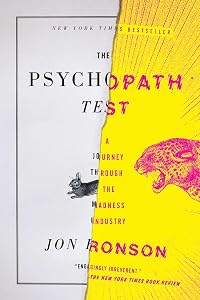
The Psychopath Test: A Journey Through the Madness Industry
by Jon Ronson
On This Page
Description
"In this madcap journey, a bestselling journalist investigates psychopaths and the industry of doctors, scientists, and everyone else who studies them. The Psychopath Test is a fascinating journey through the minds of madness. Jon Ronson's exploration of a potential hoax being played on the world's top neurologists takes him, unexpectedly, into the heart of the madness industry. An influential psychologist who is convinced that many important CEOs and politicians are, in fact, psychopaths show more teaches Ronson how to spot these high-flying individuals by looking out for little telltale verbal and nonverbal clues. And so Ronson, armed with his new psychopath-spotting abilities, enters the corridors of power. He spends time with a death-squad leader institutionalized for mortgage fraud in Coxsackie, New York; a legendary CEO whose psychopathy has been speculated about in the press; and a patient in an asylum for the criminally insane who insists he's sane and certainly not a psychopath. Ronson not only solves the mystery of the hoax but also discovers, disturbingly, that sometimes the personalities at the helm of the madness industry are, with their drives and obsessions, as mad in their own way as those they study. And that relatively ordinary people are, more and more, defined by their maddest edges."--Provided by publisher. show lessTags
Recommendations


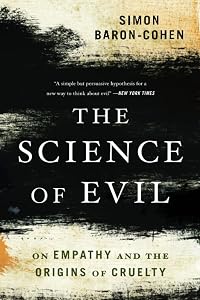
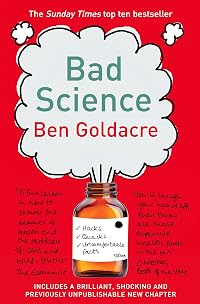
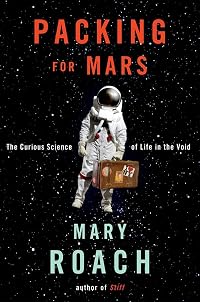
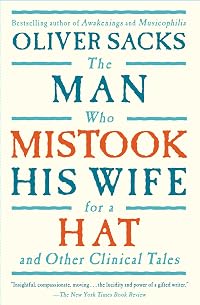



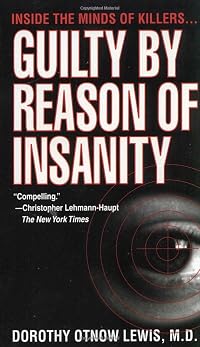
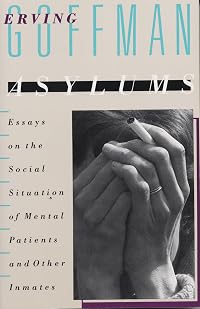
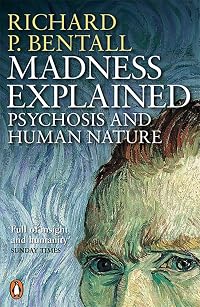
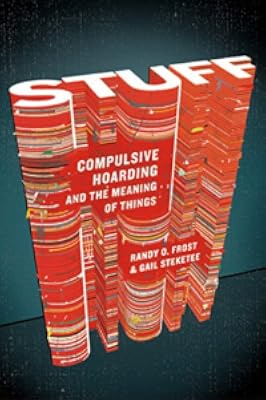
Member Recommendations
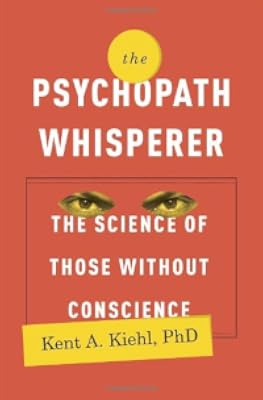
anonymous user This book also deals with recognizing and dealing with people who lack the ability to empathize with others and who see emotions as a weakness to be exploited. The tone is more scholarly and clinical.
21
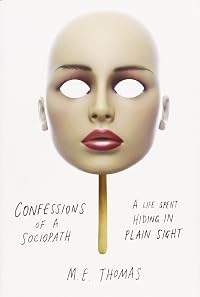
WildMaggie The personal experience of living with one versus the science of finding one.
Member Reviews
Terrifying, but not in precisely the way you’d imagine.
Ronson doesn’t shy away from the fact that psychopaths are scary, people who don’t react to certain stimuli in the same way as other people and who are capable of horrific crimes. He explores their nature, their crimes and how they’re perceived as being more common in the higher echelons of society. They don’t make for pleasant reading and are grimly fascinating. But what’s really compelling in Ronson’s book is the far deeper issue of how we diagnose psychological issues and how we judge if people are recovered. The Psychopath Test of the title is a checklist that allows us to judge is someone’s a psychopath or not; as Ronson demonstrates from his own experience show more it’s quite easy to label someone from it. Fundamentally a lot of these diagnoses reaffirm prejudices or ready-made assumptions, and with the pharmaceutical industry looking to sell more product such diagnoses are becoming more common, particularly to parents. As with much of Ronson’s work you’re never quite sure whether to laugh at the absurdity or recoil from the horror (more likely, you should be doing both). show less
Ronson doesn’t shy away from the fact that psychopaths are scary, people who don’t react to certain stimuli in the same way as other people and who are capable of horrific crimes. He explores their nature, their crimes and how they’re perceived as being more common in the higher echelons of society. They don’t make for pleasant reading and are grimly fascinating. But what’s really compelling in Ronson’s book is the far deeper issue of how we diagnose psychological issues and how we judge if people are recovered. The Psychopath Test of the title is a checklist that allows us to judge is someone’s a psychopath or not; as Ronson demonstrates from his own experience show more it’s quite easy to label someone from it. Fundamentally a lot of these diagnoses reaffirm prejudices or ready-made assumptions, and with the pharmaceutical industry looking to sell more product such diagnoses are becoming more common, particularly to parents. As with much of Ronson’s work you’re never quite sure whether to laugh at the absurdity or recoil from the horror (more likely, you should be doing both). show less
This has to be one of the books that I brought up in conversation more than any other while I was reading it. I learned that you want be careful how you bring this topic up though, otherwise you might risk offending people. They’ll think that you’re implying that they’re psychopaths.
You know, like when you mention something like “Hey psychopaths don’t dream very often.” Then thoughtlessly add, “That’s funny, you don’t dream very often.”
And nothing wins you brownie points like saying, “You know that relative of yours? After reading this book I’ve noticed they show some traits of a psychopath.”
The good news for hypochondriacs though? Evidently if you are worried about being a psychopath then you aren’t one. show more Good to know, huh?
Seriously though, this book was informative, interesting and a little bit scary. It wasn’t just filled with facts (like how there’s a much higher percentage of psychopaths in important corporate positions than in the general public), there were also intimidating tidbits (like how the recidivism rate actually went up for psychopaths who were treated with therapy).
And of course there was the actual checklist test. I’m pretty sure I was driving my husband crazy by pointing out psychopathic traits of characters on the TV and in movies. I’m very surprised that my summation of Voldemort’s psychopathic characteristics didn’t earn me an eye-roll.
If you like to analyze the people around you then you will have a lot of fun with this book. There isn’t an abundance of scientific information here. It is more a tale of the author’s quest to find out what makes a person a psychopath, and of the interesting people he met along the way. show less
You know, like when you mention something like “Hey psychopaths don’t dream very often.” Then thoughtlessly add, “That’s funny, you don’t dream very often.”
And nothing wins you brownie points like saying, “You know that relative of yours? After reading this book I’ve noticed they show some traits of a psychopath.”
The good news for hypochondriacs though? Evidently if you are worried about being a psychopath then you aren’t one. show more Good to know, huh?
Seriously though, this book was informative, interesting and a little bit scary. It wasn’t just filled with facts (like how there’s a much higher percentage of psychopaths in important corporate positions than in the general public), there were also intimidating tidbits (like how the recidivism rate actually went up for psychopaths who were treated with therapy).
And of course there was the actual checklist test. I’m pretty sure I was driving my husband crazy by pointing out psychopathic traits of characters on the TV and in movies. I’m very surprised that my summation of Voldemort’s psychopathic characteristics didn’t earn me an eye-roll.
If you like to analyze the people around you then you will have a lot of fun with this book. There isn’t an abundance of scientific information here. It is more a tale of the author’s quest to find out what makes a person a psychopath, and of the interesting people he met along the way. show less
This is just a huge amount of fun. It's not just a book about Hare's famous checklist; it's also a book about Jon Ronson's reactions to the people and entities he encounters while learning about the checklist and his reactions to assorted other people and entities having to do with the mental illness industry. That's not to say I didn't learn quite a bit. I did. Just that this is not a finely focused study or anything like that. In The Psychopath Test, Ronson takes a look at psychopathy in a roundabout way, beginning with these thoughts about the DSM-IV (Diagnostic and Statistical Manual of Mental Disorders):
"I could really be onto something," I thought. "It really could be that many of our political and business leaders suffer from show more Antisocial or Narcissistic Personality Disorder and they do the harmful, exploitative things they do because of some mad striving for unlimited success and excessive admiration. Their mental disorders might be what rule our lives. This could be a really big story for me if I can think of a way to somehow prove it."
I closed the manual.
"I wonder if I've got any of the 374 mental disorders," I thought.
I opened the manual again.
And I instantly diagnosed myself with twelve different ones.
This is a stroll through the horrific with a Bertie Wooster-type narrator. He distracts and veers off in odd directions while managing to ask difficult questions in very non-threatening ways. From Scientologists to a captain of industry who enjoyed laying people off to a death-squad leader in prison for mortgage fraud, Ronson gets some very interesting people to speak with him. The most frightening people to me were not the psychopaths, but the conspiracy theorists. Take this encounter where a conspiracy theorist talks about a woman injured in a terrorist bombing that he insists was all a hoax:
"I am also very suspicious of the fact that she refuses to sit down and have a dispassionate briefing about 7/7," David said. "Why won't she allow somebody to patiently talk her through the evidence?"
"She was in the carriage!" I said. "She was in the CARRIAGE. You really want her to sit down with someone who was on the internet while she was in the carriage and have them explain to her that there was no bomb?"
I guess it should be comforting to think that people who deny all actual evidence and cling angrily to some nonsensical idea are actually mentally ill, but it still makes me very, very tired. Having Ronson bug out his own eyes in disbelief now and again made the journey not only bearable but entertaining. In the above encounter, Ronson eventually ends the interview with a very professional "Oh, fuck off." show less
"I could really be onto something," I thought. "It really could be that many of our political and business leaders suffer from show more Antisocial or Narcissistic Personality Disorder and they do the harmful, exploitative things they do because of some mad striving for unlimited success and excessive admiration. Their mental disorders might be what rule our lives. This could be a really big story for me if I can think of a way to somehow prove it."
I closed the manual.
"I wonder if I've got any of the 374 mental disorders," I thought.
I opened the manual again.
And I instantly diagnosed myself with twelve different ones.
This is a stroll through the horrific with a Bertie Wooster-type narrator. He distracts and veers off in odd directions while managing to ask difficult questions in very non-threatening ways. From Scientologists to a captain of industry who enjoyed laying people off to a death-squad leader in prison for mortgage fraud, Ronson gets some very interesting people to speak with him. The most frightening people to me were not the psychopaths, but the conspiracy theorists. Take this encounter where a conspiracy theorist talks about a woman injured in a terrorist bombing that he insists was all a hoax:
"I am also very suspicious of the fact that she refuses to sit down and have a dispassionate briefing about 7/7," David said. "Why won't she allow somebody to patiently talk her through the evidence?"
"She was in the carriage!" I said. "She was in the CARRIAGE. You really want her to sit down with someone who was on the internet while she was in the carriage and have them explain to her that there was no bomb?"
I guess it should be comforting to think that people who deny all actual evidence and cling angrily to some nonsensical idea are actually mentally ill, but it still makes me very, very tired. Having Ronson bug out his own eyes in disbelief now and again made the journey not only bearable but entertaining. In the above encounter, Ronson eventually ends the interview with a very professional "Oh, fuck off." show less
What exactly does the word "psychopath" mean and who decides the qualifications? This was a relatively simple question that occurred to the author after he incurred a lawsuit for flippantly calling a cult leader psychopathic. Then when someone asked him to investigate the mysterious arrival of a book in the mailboxes of a number of prominent scientists - a book that seemed to be an incredibly complex riddle with no obvious author - Jon Ronson found himself flying around the world to do a story on an obviously mentally unwell man. He was fascinated by the man who was brilliant, but also extremely, enigmatically broken. How does this happen to a mind? What is psychopathy and how does it differ from just plain old madness? Where do these show more definitions come from and who benefits by affixing tidy labels to people?
The author then embarks on a research mission to decode the mental illness industry. Is anyone really qualified to pass judgement on a person's mental state and how does our entertainment culture enable abuse and profiteering off the backs of the unstable? This book is absolutely fascinating and very well written. I wanted it to be four hundred more pages. show less
The author then embarks on a research mission to decode the mental illness industry. Is anyone really qualified to pass judgement on a person's mental state and how does our entertainment culture enable abuse and profiteering off the backs of the unstable? This book is absolutely fascinating and very well written. I wanted it to be four hundred more pages. show less
I have to admit to having a partially serious reason for reading this one, having had my life made a misery for too long by someone who I'm fairly sure is a psychopath. I'd not heard of this title before, but when I started talking about it to a couple of not-particularly-bookish friends they both said 'yeah, I read that a number of years ago', so I'm guessing I must be last to the party on this one.
There were a lot of things to like with this book. It reminded me of Christopher McDougall's Born to Run book in the way that Ronson made himself (as journalist) part of the story, and I think that works very well where the writer has a generous dollop of dark humour and self-deprecation. It added another dimension to the book, allowing us show more as readers to be a fly-on-the-wall of his interviews and research. Ronson often questioned himself on the correctness of his assumptions, and I liked the honesty of that. As a character, he very much plays on his Louis Theroux type of persona - the amiable, slightly dorky guy who lulls his interviewees into a false sense of superiority which greatly loosens their tongue to the joy of his dictaphone.
On the subject matter of psychopathy, he raises a number of topical questions, looking at both sides of the argument on the psychiatric method of diagnosing psychopathy, and speaking with a number of alleged psychopaths, from violent men in prison to a hard-nosed top CEO. Wider than this, he highlights the disputes that have arisen over the last publication of the Diagnostic and Statistical Manual of Mental Disorder (DSM), which has been heavily criticised by many as it has expanded to the point where most of us could easily end up being (mis)diagnosed with some sort of mental disorder, so wide is the landscape of potential symptoms and character traits. Is this a pinnacle for psychiatric diagnosis, or are the pharmaceutical companies cleaning up to the detriment of many people unnecessarily being prescribed horribly strong drugs and indelibly labelled with a mental illness? And on the question of the psychopath test in particular, is this yet another fallible mechanism for misdiagnosing people? Is that ruthless Fortune 100 CEO really a psychopath because he possesses no empathy, or is he more simply just a greedy, ruthless money-maker who's out for himself?
All interesting points to think about, but this is light-touch journalism which investigates a serious subject with its tongue firmly stuck in its cheek. The blurb on the jacket has a quote from Will Self saying that he found himself 'laughing like the proverbial loon for page after page'. Whilst Ronson definitely doesn't take himself too seriously, this certainly wasn't a book of belly laughs for me. Psychopaths are dangerous people who destroy people's lives, so it was much too close to the bone for me to find the humour in the psychopathic cases he looked at. Which then made me think about what is the true point or value of this kind of book? Was it written first and foremost for comedic value, or was Ronson trying to cover both bases of funny man and proper investigative journalism? If it was the latter (which I suspect it was), I think with that approach you need to choose your topic wisely. Ronson liberally uses the word 'madness' throughout the book, which I'm fairly sure is not a particularly P.C. term these days and spoke volumes to me about Ronson's approach. There's a sniggering schoolboy aspect to his research; a juvenile delight derived from meeting these 'mad' people and trying to diagnose for himself whether the experts were right or not in calling them psychopaths. Funny for now, maybe Jon, but come back to me when you truly get entwined with one of these people and let's see how funny you think it is then.
3.5 stars - an engaging and interesting read, but just not a topic I can find humorous.
Post note - I did really enjoy Ronson's writing, though, and will definitely read more by him. This is too sore a topic for me, but if you're lucky enough to be psychopath-free to date knock yourself out - you'll enjoy it. show less
There were a lot of things to like with this book. It reminded me of Christopher McDougall's Born to Run book in the way that Ronson made himself (as journalist) part of the story, and I think that works very well where the writer has a generous dollop of dark humour and self-deprecation. It added another dimension to the book, allowing us show more as readers to be a fly-on-the-wall of his interviews and research. Ronson often questioned himself on the correctness of his assumptions, and I liked the honesty of that. As a character, he very much plays on his Louis Theroux type of persona - the amiable, slightly dorky guy who lulls his interviewees into a false sense of superiority which greatly loosens their tongue to the joy of his dictaphone.
On the subject matter of psychopathy, he raises a number of topical questions, looking at both sides of the argument on the psychiatric method of diagnosing psychopathy, and speaking with a number of alleged psychopaths, from violent men in prison to a hard-nosed top CEO. Wider than this, he highlights the disputes that have arisen over the last publication of the Diagnostic and Statistical Manual of Mental Disorder (DSM), which has been heavily criticised by many as it has expanded to the point where most of us could easily end up being (mis)diagnosed with some sort of mental disorder, so wide is the landscape of potential symptoms and character traits. Is this a pinnacle for psychiatric diagnosis, or are the pharmaceutical companies cleaning up to the detriment of many people unnecessarily being prescribed horribly strong drugs and indelibly labelled with a mental illness? And on the question of the psychopath test in particular, is this yet another fallible mechanism for misdiagnosing people? Is that ruthless Fortune 100 CEO really a psychopath because he possesses no empathy, or is he more simply just a greedy, ruthless money-maker who's out for himself?
All interesting points to think about, but this is light-touch journalism which investigates a serious subject with its tongue firmly stuck in its cheek. The blurb on the jacket has a quote from Will Self saying that he found himself 'laughing like the proverbial loon for page after page'. Whilst Ronson definitely doesn't take himself too seriously, this certainly wasn't a book of belly laughs for me. Psychopaths are dangerous people who destroy people's lives, so it was much too close to the bone for me to find the humour in the psychopathic cases he looked at. Which then made me think about what is the true point or value of this kind of book? Was it written first and foremost for comedic value, or was Ronson trying to cover both bases of funny man and proper investigative journalism? If it was the latter (which I suspect it was), I think with that approach you need to choose your topic wisely. Ronson liberally uses the word 'madness' throughout the book, which I'm fairly sure is not a particularly P.C. term these days and spoke volumes to me about Ronson's approach. There's a sniggering schoolboy aspect to his research; a juvenile delight derived from meeting these 'mad' people and trying to diagnose for himself whether the experts were right or not in calling them psychopaths. Funny for now, maybe Jon, but come back to me when you truly get entwined with one of these people and let's see how funny you think it is then.
3.5 stars - an engaging and interesting read, but just not a topic I can find humorous.
Post note - I did really enjoy Ronson's writing, though, and will definitely read more by him. This is too sore a topic for me, but if you're lucky enough to be psychopath-free to date knock yourself out - you'll enjoy it. show less
This book is being promoted as 'comic'. Sadly, it is not. It is quite a sad read. I laughed once out loud and smiled twice but only in the first chapter. If you end this book laughing, you have not ‘got it’. You should leave it a little angry and troubled.
Ronson exhibits all the graces and the flaws of modern British journalism. It is an easy read. The man is self-questioning (though clearly not too deeply lest he cease to function) and he is honest. But he is also skimming the surface of issues that require a far tougher and better book than this.
Perhaps he is being cleverer than I think. Perhaps his periodic questioning of the way his profession turns reality into narratives, into modern folk tales, will create a suspicion in the show more public's mind about how it receives information, how its mental world is structured. I think not.
The book is about the phenomenon of the psychopath which operates at so many levels as part of our cultural self-definition. As a species, we tend to need a scapegoat for structural ills that derive from our own nature - so, why not the 'psychopath' in our culture.
Perhaps 1% of the population is 'psychopathic' in the sense of presenting a reasonable danger to others under certain conditions. Perhaps another 5% have traits that could be dangerous under yet other more extreme conditions. I suspect 88% are just a danger to themselves as ‘normals’.
Political fear (I speak as a radical empath who is in the 'other' 6%, potentially equally dangerous to society for completely different reasons) seems to be determining that media headlines must ensure that 'psychopaths' are defined for incarceration by their nature rather than by their deeds.
Yet, as Charlie Chaplin’s M. Verdoux so eloquently put it in the film of that name, it is not the single psychopath whose default mode is tolerance for enormous crimes against humanity but the vast ‘normal’ mass who vote, work and play without much of a thought in their little minds.
Ronson opens the door to such subversive thinking but he only peeks in. The psychopath in Broadmoor is judged fit for release and we know it is a gamble. The corporate boss targeted as a psychopath turns out to be depressingly conventional in his private life. So far, so ‘normal’.
But Scientologists prove to be champions of human rights and psychiatrists appear to be at forefront of new sociologies of population control, aided by pharmaceuticals interests who turn any mild abnormality from a genetic variant of possible evolutionary value into a diagnosed disease.
Some of the most ethically filthy conduct in the book, leading to suicide and death in their victims, come from ‘normals’, the same sort of ‘normal’ who obeys an order in a war or who thinks corporate career progression is a substitute for personal responsibility.
The book deserves better than its jokey style. Perhaps the jokey style will build more understanding amongst the general population and that is its justification. Unfortunately, it will probably just flow off most ‘normal’s backs like that of the proverbial duck.
So let us try the analysis here that Ronson seems nervous of attempting – that hoary old business, no doubt, in his case, of just being a reporter, just telling a story.
First, as he rightly points out, there really are very dangerous persons which we have termed psychopaths but which are simply at one genetic and personality end of our human Bell Curve. They are not monsters, they are human. They are simply accentuations of aspects of our normal selves.
Society needs protection but it also needs to recognize, in different ecological circumstances, that they may be more important to us than ourselves in the future of our own species. We have to hope we hang on to civilization long enough to ensure that they are never needed.
Second, these dangerous ones are there but they are rare. We cannot build our entire social structure around protecting ourselves from what amounts to a force of nature any more than we should be degenerating as a free and questioning culture because of a few terrorists.
Faced with nature, sometimes bad things happen. They will continue to happen. ‘The bomber will always get through’. This is what we are as humans. It is dreadful for the victim but these cases are still rare and we should concentrate on a society that polices itself and is not policed.
What is happening is that the existence of the genuine psychopath and the genuine terrorist is being used by the authoritarian bureaucrat to introduce ever-increasing controls on our movement, conduct and language (aspirationally, on our minds) in an attempt to manage the unmanageable.
Without the ‘noble lie’ of a religion, with no Pope to serve Constantine, the bureaucrats are turning to definitional analysis and what they like to call science but which is no more scientific than was Lysenko under Stalin.
If this book does one service, it is to cast doubt on the more radical scientific credentials of psychology.
Over the last two decades, the psychologists and social scientists have found themselves riding on a lucrative gravy train medicalising ‘misbehaviour’ and unhappiness and offering cures based on chemicals and incarceration. The sick are becoming overwhelmed by the worried and the inconvenient.
These new priests of the mind are now busy perpetrating the lie of there being no free will (a spurious philosophical conclusion from consciousness studies by people who could usefully spend some time reading the great existentialists) and the even worse lie of a beneficent normality.
It was men in white coats who murdered the physically abnormal in euthanasia programmes under national-socialism. It is now men in white coats who are engaged in soul murder against the mentally different.
There are throw-away stories in the book of how gays and feminists could lobby successfully to ensure that certain psychological definitions were abandoned. Either science is science or it is not. Scientific decision-making in physics would not allow the peer review to include a lobbyist.
‘Conditions’ that have no politically powerful lobbies against them also have many commercial and family interests seeking their establishment.
But we have to keep our feet on the ground. If social science and psychology are socio-political tools, there are still things to be cured or managed.
There are people seriously suffering pain (yet the system still refuses to let psychiatrists test low dosage levels of psychedelics for depression and trauma). There is certainly work to be done on re-engineering society for relief from anxiety and self empowerment.
What is grossly unacceptable is to allow social or family order requirements to permit collusion between drug companies, a morally degenerate professional class and the state or parents in the use of drugs for social control of behaviours that are merely inconvenient or embarrassing.
We live in monstrous times. This book, to its credit, opens the door on the monsters – psychopathic and professional alike. We have a choice to go through the door and see what our society has become or shut it and pretend it is not happening.
So, my regret about this well-written, entertaining and thought-provoking book is that Ronson limits himself to anecdotes and questions. ‘Normals’ will pick this up, be entertained and go back to being ‘normal’ again. ‘Normal’ people are the shills for the men in white coats and grey suits.
What we really need now are writers who show people that just being ‘normal’ (and certainly being ‘normalised’) is damned dangerous to them and to their kids’ future and that ‘normal’ now means little more than manageable and controllable. Ronson merely skims the surface of this story. show less
Ronson exhibits all the graces and the flaws of modern British journalism. It is an easy read. The man is self-questioning (though clearly not too deeply lest he cease to function) and he is honest. But he is also skimming the surface of issues that require a far tougher and better book than this.
Perhaps he is being cleverer than I think. Perhaps his periodic questioning of the way his profession turns reality into narratives, into modern folk tales, will create a suspicion in the show more public's mind about how it receives information, how its mental world is structured. I think not.
The book is about the phenomenon of the psychopath which operates at so many levels as part of our cultural self-definition. As a species, we tend to need a scapegoat for structural ills that derive from our own nature - so, why not the 'psychopath' in our culture.
Perhaps 1% of the population is 'psychopathic' in the sense of presenting a reasonable danger to others under certain conditions. Perhaps another 5% have traits that could be dangerous under yet other more extreme conditions. I suspect 88% are just a danger to themselves as ‘normals’.
Political fear (I speak as a radical empath who is in the 'other' 6%, potentially equally dangerous to society for completely different reasons) seems to be determining that media headlines must ensure that 'psychopaths' are defined for incarceration by their nature rather than by their deeds.
Yet, as Charlie Chaplin’s M. Verdoux so eloquently put it in the film of that name, it is not the single psychopath whose default mode is tolerance for enormous crimes against humanity but the vast ‘normal’ mass who vote, work and play without much of a thought in their little minds.
Ronson opens the door to such subversive thinking but he only peeks in. The psychopath in Broadmoor is judged fit for release and we know it is a gamble. The corporate boss targeted as a psychopath turns out to be depressingly conventional in his private life. So far, so ‘normal’.
But Scientologists prove to be champions of human rights and psychiatrists appear to be at forefront of new sociologies of population control, aided by pharmaceuticals interests who turn any mild abnormality from a genetic variant of possible evolutionary value into a diagnosed disease.
Some of the most ethically filthy conduct in the book, leading to suicide and death in their victims, come from ‘normals’, the same sort of ‘normal’ who obeys an order in a war or who thinks corporate career progression is a substitute for personal responsibility.
The book deserves better than its jokey style. Perhaps the jokey style will build more understanding amongst the general population and that is its justification. Unfortunately, it will probably just flow off most ‘normal’s backs like that of the proverbial duck.
So let us try the analysis here that Ronson seems nervous of attempting – that hoary old business, no doubt, in his case, of just being a reporter, just telling a story.
First, as he rightly points out, there really are very dangerous persons which we have termed psychopaths but which are simply at one genetic and personality end of our human Bell Curve. They are not monsters, they are human. They are simply accentuations of aspects of our normal selves.
Society needs protection but it also needs to recognize, in different ecological circumstances, that they may be more important to us than ourselves in the future of our own species. We have to hope we hang on to civilization long enough to ensure that they are never needed.
Second, these dangerous ones are there but they are rare. We cannot build our entire social structure around protecting ourselves from what amounts to a force of nature any more than we should be degenerating as a free and questioning culture because of a few terrorists.
Faced with nature, sometimes bad things happen. They will continue to happen. ‘The bomber will always get through’. This is what we are as humans. It is dreadful for the victim but these cases are still rare and we should concentrate on a society that polices itself and is not policed.
What is happening is that the existence of the genuine psychopath and the genuine terrorist is being used by the authoritarian bureaucrat to introduce ever-increasing controls on our movement, conduct and language (aspirationally, on our minds) in an attempt to manage the unmanageable.
Without the ‘noble lie’ of a religion, with no Pope to serve Constantine, the bureaucrats are turning to definitional analysis and what they like to call science but which is no more scientific than was Lysenko under Stalin.
If this book does one service, it is to cast doubt on the more radical scientific credentials of psychology.
Over the last two decades, the psychologists and social scientists have found themselves riding on a lucrative gravy train medicalising ‘misbehaviour’ and unhappiness and offering cures based on chemicals and incarceration. The sick are becoming overwhelmed by the worried and the inconvenient.
These new priests of the mind are now busy perpetrating the lie of there being no free will (a spurious philosophical conclusion from consciousness studies by people who could usefully spend some time reading the great existentialists) and the even worse lie of a beneficent normality.
It was men in white coats who murdered the physically abnormal in euthanasia programmes under national-socialism. It is now men in white coats who are engaged in soul murder against the mentally different.
There are throw-away stories in the book of how gays and feminists could lobby successfully to ensure that certain psychological definitions were abandoned. Either science is science or it is not. Scientific decision-making in physics would not allow the peer review to include a lobbyist.
‘Conditions’ that have no politically powerful lobbies against them also have many commercial and family interests seeking their establishment.
But we have to keep our feet on the ground. If social science and psychology are socio-political tools, there are still things to be cured or managed.
There are people seriously suffering pain (yet the system still refuses to let psychiatrists test low dosage levels of psychedelics for depression and trauma). There is certainly work to be done on re-engineering society for relief from anxiety and self empowerment.
What is grossly unacceptable is to allow social or family order requirements to permit collusion between drug companies, a morally degenerate professional class and the state or parents in the use of drugs for social control of behaviours that are merely inconvenient or embarrassing.
We live in monstrous times. This book, to its credit, opens the door on the monsters – psychopathic and professional alike. We have a choice to go through the door and see what our society has become or shut it and pretend it is not happening.
So, my regret about this well-written, entertaining and thought-provoking book is that Ronson limits himself to anecdotes and questions. ‘Normals’ will pick this up, be entertained and go back to being ‘normal’ again. ‘Normal’ people are the shills for the men in white coats and grey suits.
What we really need now are writers who show people that just being ‘normal’ (and certainly being ‘normalised’) is damned dangerous to them and to their kids’ future and that ‘normal’ now means little more than manageable and controllable. Ronson merely skims the surface of this story. show less
Equipped with a 40 point questionnaire provided by its creator, Ronson sets out to identify psychopaths (once and for all, I now know that 'psychopath' and 'sociopath' are one and the same thing). He makes the very valid and probably all too true point that psychopaths are often to be found at the top of the echelon, as politicians and especially CEOs, since their lack of empathy and competitive urge and predatory instincts are useful traits to have in a cut-throat financial market.
One theory he proposes is that society, and specifically, all the EVILS in society, are caused by psychopaths shaping the world to suit their needs for exploitation and victimization. I believe this book has been hugely influential since it came out in 2011 show more and may directly or indirectly have influenced journalists and the public at large to claim that the current POTUS is unhinged and probably a psychopath... though since this term isn't used in DSM-4 (The Diagnostic and Statistical Manual of Mental Disorders; DSM-5 was released in 2013, after the publication of this book), the closest diagnosis they can give is 'narcissistic personality disorder', which essentially amounts to the same thing.
Statistics show that 1% of the population are psychopaths and that they are much more present in our daily lives than we might realize. Most people reading on psychology and psychiatry has a natural tendency to worry that they may have whatever illness is described, so the question 'am I a psychopath?' is bound to occur to most readers, but the author claims that just the fact of worrying if you are one indicates you definitely aren't, since psychopaths aren't capable of introspection to begin with. Also, anyone with a surfeit of empathy, as Joh Ronson is (he suffers from pronounced anxiety problems) is more likely to be a victim of a predatory sociopath than to become one. The current theory is that people are born this way and are impossible to 'cure' and that trying to rehabilitate them only teaches them how to more convincingly mimic how most sane people express emotions, in effect providing a kind of 'finishing school' for psychopaths. I found those segments describing how the illness (or characters trait) is manifested and how researchers used extremely unusual methods (including LSD trials) to find a 'cure' really fascinating. Definitely recommended.
On a personal note, in the later part of the book, Ronson makes the case that psychiatry has overreached its purpose by giving diagnoses where none are necessarily needed, and he mentions both autism and bipolar disorder as two of the most commonly inappropriately and overused mental conditions ascribed to children. One specialist argues that there is no real evidence that bipolar disorder actually exists in children, as apparently the illness usually develops in late teens or young adulthood and not before. I contest this finding as I'm absolutely certain I've been 'bipolar' (or whatever new term they find for my specific condition in future) since early childhood. show less
One theory he proposes is that society, and specifically, all the EVILS in society, are caused by psychopaths shaping the world to suit their needs for exploitation and victimization. I believe this book has been hugely influential since it came out in 2011 show more and may directly or indirectly have influenced journalists and the public at large to claim that the current POTUS is unhinged and probably a psychopath... though since this term isn't used in DSM-4 (The Diagnostic and Statistical Manual of Mental Disorders; DSM-5 was released in 2013, after the publication of this book), the closest diagnosis they can give is 'narcissistic personality disorder', which essentially amounts to the same thing.
Statistics show that 1% of the population are psychopaths and that they are much more present in our daily lives than we might realize. Most people reading on psychology and psychiatry has a natural tendency to worry that they may have whatever illness is described, so the question 'am I a psychopath?' is bound to occur to most readers, but the author claims that just the fact of worrying if you are one indicates you definitely aren't, since psychopaths aren't capable of introspection to begin with. Also, anyone with a surfeit of empathy, as Joh Ronson is (he suffers from pronounced anxiety problems) is more likely to be a victim of a predatory sociopath than to become one. The current theory is that people are born this way and are impossible to 'cure' and that trying to rehabilitate them only teaches them how to more convincingly mimic how most sane people express emotions, in effect providing a kind of 'finishing school' for psychopaths. I found those segments describing how the illness (or characters trait) is manifested and how researchers used extremely unusual methods (including LSD trials) to find a 'cure' really fascinating. Definitely recommended.
On a personal note, in the later part of the book, Ronson makes the case that psychiatry has overreached its purpose by giving diagnoses where none are necessarily needed, and he mentions both autism and bipolar disorder as two of the most commonly inappropriately and overused mental conditions ascribed to children. One specialist argues that there is no real evidence that bipolar disorder actually exists in children, as apparently the illness usually develops in late teens or young adulthood and not before. I contest this finding as I'm absolutely certain I've been 'bipolar' (or whatever new term they find for my specific condition in future) since early childhood. show less
Members
- Recently Added By
Published Reviews
ThingScore 75
Mr. Ronson’s latest book has less ballast. Though he retains his own paranormal ability to locate and befriend wing nuts of every stripe, he has to try a little harder than usual to get “The Psychopath Test” going. Chalk up some of that forced quality to the fact that Mr. Ronson’s BBC Radio 4 program, “Jon Ronson on ...,” is considered comedy. Throw in the fact that most show more psychopaths aren’t really all that funny. Still, his winning style pervades most of “The Psychopath Test,” as when Mr. Ronson wonders whether he will have psychopaths for readers. According to the second characteristic on the 20-item Hare Psychopathy Checklist (from which this book takes its title), some of them will. “Grandiose sense of self-worth” is one of their notable traits. “What should my message to them be?” he asks one Harvard Medical School psychologist. “Turn yourselves in?” show less
added by Shortride
Lists

A Brilliant List of Science Books for People Who Want Their Minds Blown
16 works; 3 members

Non-Fiction Worth Reading
1,015 works; 261 members

Best books I read in 2013
152 works; 3 members

Books To Get From The Library
115 works; 5 members

Books Read in 2022
5,166 works; 114 members
Author Information

28+ Works 12,858 Members
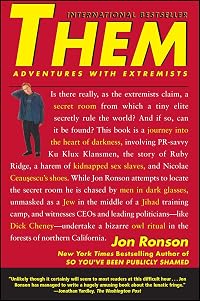
Jon Ronson is a writer and documentary film maker. His books include Them: Adventures with Extremists, Out of the Ordinary: True Tales of Everyday Craziness, What I Do: More True Tales, The Psychopath Test: A Journey Through the Madness Industry, and So You've Been Publicly Shamed. The Men Who Stare at Goats was made into a motion picture starring show more George Clooney in 2009. He will be delivering the opening address at the Brisbane Writers Festival in September 2015. (Bowker Author Biography) show less
Some Editions
Awards and Honors
Awards
Distinctions
Notable Lists
Work Relationships
Is contained in
Common Knowledge
- Canonical title*
- Psicopatici al potere. Viaggio nel cuore oscuro dell'ambizione
- Original title
- The psychopath test : a journey through the madness industry
- Alternate titles
- The Psychopath Test
- Original publication date
- 2011
- People/Characters
- Al Dunlap; Bob Hare; Douglas Hofstadter; David Shayler; Rebecca Riley
- Dedication
- For Anita Bhoomkar (1996-2009),
a lover of life and all its madness - First words
- This is a story about madness.
- Last words
- (Click to show. Warning: May contain spoilers.)And handwritten inside was the message, which comprised just two words: Good Luck!
- Canonical DDC/MDS
- 616.8582
- Canonical LCC
- HV33.R66
*Some information comes from Common Knowledge in other languages. Click "Edit" for more information.
Classifications
- Genres
- General Nonfiction, Nonfiction, Science & Nature
- DDC/MDS
- 616.8582 — Applied science & technology Medicine & health Diseases, Allergies, Skin Conditions Nervous Disorders: Autism, Anorexia, OCD Miscellaneous Personality, sexual, gender-identity, impulse-control, factitious, developmental, learning disorders; violent behavior; mental retardation Antisocial personality disorders, family violence and abuse
- LCC
- HV33 .R66 — Social sciences Social pathology. Social and public welfare. Criminology Social pathology. Social and public welfare.
- BISAC
Statistics
- Members
- 4,402
- Popularity
- 3,375
- Reviews
- 177
- Rating
- (3.76)
- Languages
- 12 — Czech, Dutch, English, Estonian, Finnish, French, German, Italian, Polish, Portuguese, Romanian, Spanish
- Media
- Paper, Audiobook, Ebook
- ISBNs
- 45
- ASINs
- 22