On This Page
Description
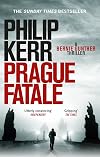
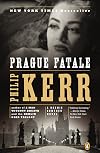
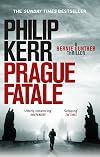
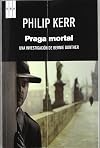
In 1941 Prague, private detective Bernie Gunther must sort through a roomful of murderous high-ranking Nazi Party members to discover who killed a young member of Reinhard Heydrich's staff.Tags
Recommendations




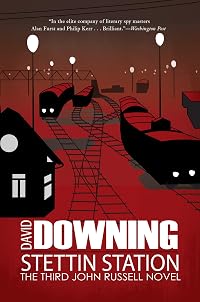


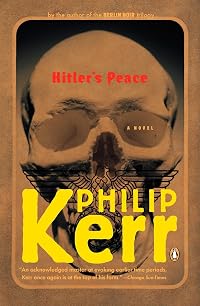
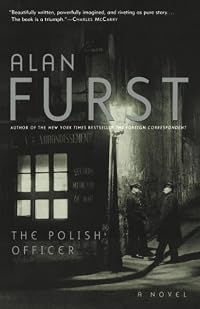
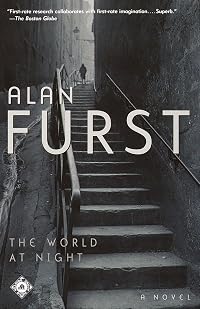

















Member Recommendations

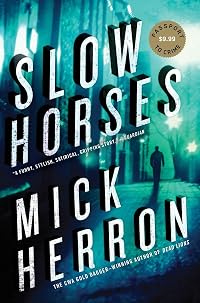
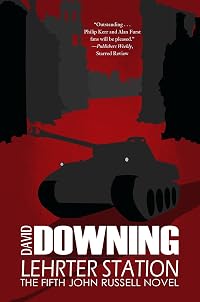
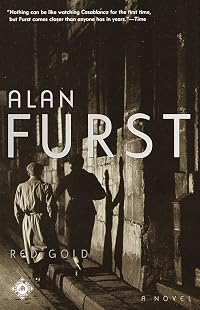
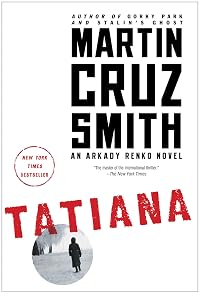
karatelpek An account of the assassination of Heydrich.
Member Reviews
characters were locked into the setting. The detective has to work out how the crime was done (it's a locked door mystery) and whodunnit. However, rather than being a nice twee English village, this country house was the castle residence of one of the most evil men in history. The suspects are not the local vicar and schoolmaster. Everyone in the castle is a senior SS officer guilty of heinous crimes, as is the victim. It's clever because as a reader there is a constant tension between wanting to see the crime solved and not caring about the fate of the nasty victim, plus just wanting the entire rats nest of scumbags to be dealt with most harshly. Gunther solves the crime using his basic detective instincts and in the process discovers show more Heydrich's real motive for the weekend gathering. The book ends with the assassination of Heydrich and the terrible reprisals that followed. I 'enjoyed' it a lot and couldn't put it down but it wasn't a pleasant experience, but as with all of the Bernie Gunther novels I was entranced by the historical accuracy and the way in which research into the real-life versions of the characters was threaded into a very readable narrative. Kerr knew his Nazi's very well and even the lives and characters of their wives get threaded into this story. It's quite battering though to read a novel where there is not one single likeable character. Should anti-heroes be likeable, I don't know, but the character of Gunther is very credible and addictive. show less
This is the eighth book featuring Bernie Gunther, Philip Kerr's Berlin detective. The series has taken Bernie from the 1930's, as the Nazis are coming to power, to 1950, when he gets caught up in Cold War espionage, and now back to the war years. “Prague Fatale” is set in 1941 and Bernie has returned from the Eastern Front – where he has seen unspeakable horrors – to the Berlin Kriminalpolizei (“Kripo”), where he is investigating the murder of a Dutch railroad worker and contemplating suicide. When he rescues a beautiful woman from an apparent assault, it seems that life might be worth sticking around for.
Bernie is a wonderful anti-hero – cynical, hard-nosed and equally hard-headed, unwilling to defer to the Nazis that show more now run the police. He smuggles food to the Jewish sisters in his apartment building and tries to avoid enforcing the wearing of the yellow star. He does his best to stay out of the way of the Nazis but half expects them to either arrest or kill him for insubordination. But good cops are in short supply and Bernie is such a good cop that General Reinhard Heydrich, brutal head of the SS and Kripo and therefore Bernie's boss, summons him to Prague to serve as his personal bodyguard and unearth a suspected conspiracy to assassinate him. Heydrich, one of the most brutal and feared Nazis, has recently been named Reichprotector of Bohemia and Moravia, the Czech states that have been annexed by Germany, and is chartered to “Germanize” acquiescent Czechs and “resettle” the rest.
Heydrich has invited a collection of high-level Nazis – mostly real historical figures – to a confiscated Jewish castle outside Prague to celebrate his new position but it is among this distinctly unpleasant group (“rats, jackals, vultures, hyenas”) that Heydrich wants Bernie to find the conspirator. When a body does turn up, however, in a room locked from the inside, it isn't Heydrich's and Bernie's new assignment is to quickly identify the killer before word of the death becomes known in Berlin and derails Heydrich's career.
At this point, the reader can't help but be reminded of the classic Agatha Christie setup on an English country estate with a dead body, a group of bystanders, each with a motive, and an intrepid detective bound to unmask the killer. But Kerr is up to a lot more. Layered on top of the locked-room murder mystery are a political thriller and a historical novel loaded with authentic characters and details of life under the Nazis. Art lovers will note that the Prague estate that is central to the novel has been appropriated from the Bloch-Bauer family and the brilliant golden portrait Bernie admires is the famous portrait of Adele Bloch-Bauer by Gustav Klimt. The original was stolen by “that fat bastard Hermann Göring” for his private collection, Bernie learns; the painting hanging in the house is a copy. (The original now hangs in the Neue Galerie in New York.) And might Kerr be making a sly reference to more recent events in a horrific torture scene in the basement of Gestapo headquarters? The word “waterboarding” is never used but it is clearly what is taking place and it is chillingly evoked.
This is a terrific novel on many levels, a gripping mystery set at a time when norms of good and evil no longer apply. Read it to find out whodunnit; read it to untangle the motives and machinations of the men around Hitler; read it to understand what life was like in Berlin in 1941; read it to be reminded once again how ordinary citizens must face their own complicity in the crimes of a brutal regime. show less
Bernie is a wonderful anti-hero – cynical, hard-nosed and equally hard-headed, unwilling to defer to the Nazis that show more now run the police. He smuggles food to the Jewish sisters in his apartment building and tries to avoid enforcing the wearing of the yellow star. He does his best to stay out of the way of the Nazis but half expects them to either arrest or kill him for insubordination. But good cops are in short supply and Bernie is such a good cop that General Reinhard Heydrich, brutal head of the SS and Kripo and therefore Bernie's boss, summons him to Prague to serve as his personal bodyguard and unearth a suspected conspiracy to assassinate him. Heydrich, one of the most brutal and feared Nazis, has recently been named Reichprotector of Bohemia and Moravia, the Czech states that have been annexed by Germany, and is chartered to “Germanize” acquiescent Czechs and “resettle” the rest.
Heydrich has invited a collection of high-level Nazis – mostly real historical figures – to a confiscated Jewish castle outside Prague to celebrate his new position but it is among this distinctly unpleasant group (“rats, jackals, vultures, hyenas”) that Heydrich wants Bernie to find the conspirator. When a body does turn up, however, in a room locked from the inside, it isn't Heydrich's and Bernie's new assignment is to quickly identify the killer before word of the death becomes known in Berlin and derails Heydrich's career.
At this point, the reader can't help but be reminded of the classic Agatha Christie setup on an English country estate with a dead body, a group of bystanders, each with a motive, and an intrepid detective bound to unmask the killer. But Kerr is up to a lot more. Layered on top of the locked-room murder mystery are a political thriller and a historical novel loaded with authentic characters and details of life under the Nazis. Art lovers will note that the Prague estate that is central to the novel has been appropriated from the Bloch-Bauer family and the brilliant golden portrait Bernie admires is the famous portrait of Adele Bloch-Bauer by Gustav Klimt. The original was stolen by “that fat bastard Hermann Göring” for his private collection, Bernie learns; the painting hanging in the house is a copy. (The original now hangs in the Neue Galerie in New York.) And might Kerr be making a sly reference to more recent events in a horrific torture scene in the basement of Gestapo headquarters? The word “waterboarding” is never used but it is clearly what is taking place and it is chillingly evoked.
This is a terrific novel on many levels, a gripping mystery set at a time when norms of good and evil no longer apply. Read it to find out whodunnit; read it to untangle the motives and machinations of the men around Hitler; read it to understand what life was like in Berlin in 1941; read it to be reminded once again how ordinary citizens must face their own complicity in the crimes of a brutal regime. show less
 This review was written for LibraryThing Early Reviewers.
In the fall of 1941, Berlin policeman Bernie Gunther is called upon to investigate a locked room murder at a country “house party” outside Prague. While borrowing plot elements and setting from crime novels from the Golden Era of detective fiction, this is anything but a cozy mystery. The guests are all high ranking officials in the Nazi party. Each one has already proven himself capable of murder through participation in torture and the mass murder of Jews.
Gunther doesn't try very hard to disguise his loathing of the Nazi party. However, he doesn't seem to consider himself morally superior to the Nazis. He loathes himself as much as he does anyone else. Even though he is not a party member, his superiors are, and he has been forced show more to carry out unspeakable acts that have driven him to the brink of suicide.
The book presents an interesting view of Nazi-era Germany. While Gunther airs his anti-Nazi views more outspokenly than other characters in the novel, he isn't the only disaffected German character. Most of the characters who show signs of disapproval of the Nazi regime also seem resigned to its power.
I've been avoiding this series because I was afraid the atmosphere and tone would be too heavy for me. However, the book's dark humor and my knowledge of the eventual downfall of the Nazi regime kept the book from being too depressing to read.
This review is based on an advance reader's edition provided by the publisher through LibraryThing's Early Reviewers program. show less
Gunther doesn't try very hard to disguise his loathing of the Nazi party. However, he doesn't seem to consider himself morally superior to the Nazis. He loathes himself as much as he does anyone else. Even though he is not a party member, his superiors are, and he has been forced show more to carry out unspeakable acts that have driven him to the brink of suicide.
The book presents an interesting view of Nazi-era Germany. While Gunther airs his anti-Nazi views more outspokenly than other characters in the novel, he isn't the only disaffected German character. Most of the characters who show signs of disapproval of the Nazi regime also seem resigned to its power.
I've been avoiding this series because I was afraid the atmosphere and tone would be too heavy for me. However, the book's dark humor and my knowledge of the eventual downfall of the Nazi regime kept the book from being too depressing to read.
This review is based on an advance reader's edition provided by the publisher through LibraryThing's Early Reviewers program. show less
This review was written for LibraryThing Early Reviewers.This is the eighth book in Philip Kerr's addictive "Berlin Noir" detective series featuring Bernie Gunther. The series starts out with Gunther as a wise-cracking, Nazi-hating homicide detective in mid-1930s Berlin, only surviving in the post--for a time--because he's good at his job. Over the course of the series, Kerr has already taken Gunther through World War II, as a very reluctant officer (and even more reluctantly technically a member of the SS) on the Eastern Front, and then out the other end to his post-war life. Prague Fatale, however, is a flashback, taking Kerr back to 1941, and back to his forced work relationship with Reinhard Heydrich, the real life "Butcher of Prague." It is Heydrich who calls Gunther to his headquarters show more outside Prague to solve a murder that's taken place in that headquarters during a gathering of top Nazi officials. There is much less espionage intrigue here than in most Gunther novels. This one's more straight-forwardly a murder mystery, but with several twists, of course, and the standard amount of historical content, some straightforwardly factual and some as imagined by Kerr. While not quite up to the top standards of the series, this is still a very entertaining entry. show less
A very dark addition to the Bernie Gunther series, this book (completely set in WW2) sees him in Berlin and Prague, working for Reinhardt Heydrich, ably portrayed here as an almost demonic intellegence. There is some entertaining dialogue between Gunther and the Nazi overlord which almost justifies the price of the book on its own, and while it lacks the overall quality of the previous book, [[Field Grey]] it is a strong, entertaining and chilling detective story.
Prague Fatale is the eighth novel in the Bernie Gunther series authored by the late Philip Kerr. In this story Gunther is back in Berlin working as a detective again although still a member by way of you might say a "corporate merger" in which the Berlin PD became merged into the SS. Gunther is assigned to investigate the death of what turned out to be a Dutch "foreign worker", i.e., a citizen of a conquered country looking to find employment and survival in Germany. What appeared to be at first glance an accidental death probably as a result of the Berlin blackout turns out to be something different.
In the course of his investigation Gunther encounters an attempted rape of a young woman and being the good cop that he is he rescues her show more from "worse than death" and pursues her attacker, who apparently gets away in the dark. Bernie pursues his investigations and becomes romantically involved with the woman he rescued. All of this is a prelude to Bernie's "recall" to service by and on behalf of Reinhard Heydrich, the recently appointed Reichsprotector of Bohemia and Moravia, that is, the former Czechoslovakia. Heydrich, who has employed Gunther in the past, believes that he is the object of an assassination plot, not by the Czechs, but by one or more of his Nazi brethren. He needs a real detective, not a party hack with a badge, so he sends for Gunther.
What ensues is a tangled knot that ties together events that occur in Heydrich's mansion outside of Prague with the death of the Dutch foreign worker and the attack on his now girlfriend who accompanies Gunther to Prague. Along the way we are introduced to a collection of thugs, party hacks, timeservers and associated nasties that you would expect to find in the SS. More that this I can't say concerning the storyline without giving the game away.
I will conclude by paying tribute to Kerr's uncanny ability to pull together a complex plot with sub-plots and create character portraits that ring true and do it with his usual mordant wit. As always, his novels have a basis in fact and reflect the quality and depth of the research that went into this novel. Prague Fatale is a great, albeit sobering, read. This is the twelfth book in the series that I have read and like the first eleven I highly recommend it. show less
In the course of his investigation Gunther encounters an attempted rape of a young woman and being the good cop that he is he rescues her show more from "worse than death" and pursues her attacker, who apparently gets away in the dark. Bernie pursues his investigations and becomes romantically involved with the woman he rescued. All of this is a prelude to Bernie's "recall" to service by and on behalf of Reinhard Heydrich, the recently appointed Reichsprotector of Bohemia and Moravia, that is, the former Czechoslovakia. Heydrich, who has employed Gunther in the past, believes that he is the object of an assassination plot, not by the Czechs, but by one or more of his Nazi brethren. He needs a real detective, not a party hack with a badge, so he sends for Gunther.
What ensues is a tangled knot that ties together events that occur in Heydrich's mansion outside of Prague with the death of the Dutch foreign worker and the attack on his now girlfriend who accompanies Gunther to Prague. Along the way we are introduced to a collection of thugs, party hacks, timeservers and associated nasties that you would expect to find in the SS. More that this I can't say concerning the storyline without giving the game away.
I will conclude by paying tribute to Kerr's uncanny ability to pull together a complex plot with sub-plots and create character portraits that ring true and do it with his usual mordant wit. As always, his novels have a basis in fact and reflect the quality and depth of the research that went into this novel. Prague Fatale is a great, albeit sobering, read. This is the twelfth book in the series that I have read and like the first eleven I highly recommend it. show less
This book definitely deserves the "noir" designation of the "Berlin Noir" series name. It's not a good time in Berlin, it's not a good time on the Eastern front, and it's not a good time in Prague. Things are horribly bad for the Jews, and dark hints are everywhere as to how much worse they're going to get. Rohm is dead, and Paragraph 175 is in full effect. Our (anti)hero Bernie Gunther has been pressed into service first as a bodyguard, then as a detective, by Heydrich, currently in Prague. These clouds do not have silver linings, apart from the sharp dialog that keeps this from ever becoming a slog.
Gunther finds himself in a castle full of SS higher-ups when one of their own is found dead in a classic locked-room mystery-- score one show more for putting a new twist on an old genre. He's still got a previous case of a dead foreign worker with possible spy connections on his mind from Berlin when he's thrust into this. Heydrich seems to be calling all the shots and seems to almost enjoy letting Bernie inflict his sneering anti-Party sentiments on these old guard members; Heydrich is cunning, impossible to read, and infathomable. Kerr doesn't attempt to humanize him or psychoanalyze him, and more the good that-- it would have wrecked the novel.
The sense all along is that Bernie is being played for higher political means (and Bernie is well aware of that), but the number of mysteries and plots that are interwoven here are so myriad and complex that unteasing them is quite a puzzle; it's mystery on top of mystery, and you're not even sure what the core one is. It's not too much to keep up with, though, and doesn't get out of hand; even the large cast of characters remains remarkably distinct. Plot lines and people may be drawn in a crystal clear way, but Kerr plays the cards of the mysteries close to his chest.
The atmosphere evoked in this novel is extremely disquieting, for all the reasons alluded to above and more. Needless to say, in a novel set in early 1940s Germany, no one is expecting anything lighthearted. But Kerr evokes, on an individual level and on a national level, the sense of the storm clounds gathered over Germany and its conquered territories and the people who were undergoing mass persecution or suffering as a result of the war. The novel is extremely bleak and a potent reminder of where fanatic nationalism leads. show less
Gunther finds himself in a castle full of SS higher-ups when one of their own is found dead in a classic locked-room mystery-- score one show more for putting a new twist on an old genre. He's still got a previous case of a dead foreign worker with possible spy connections on his mind from Berlin when he's thrust into this. Heydrich seems to be calling all the shots and seems to almost enjoy letting Bernie inflict his sneering anti-Party sentiments on these old guard members; Heydrich is cunning, impossible to read, and infathomable. Kerr doesn't attempt to humanize him or psychoanalyze him, and more the good that-- it would have wrecked the novel.
The sense all along is that Bernie is being played for higher political means (and Bernie is well aware of that), but the number of mysteries and plots that are interwoven here are so myriad and complex that unteasing them is quite a puzzle; it's mystery on top of mystery, and you're not even sure what the core one is. It's not too much to keep up with, though, and doesn't get out of hand; even the large cast of characters remains remarkably distinct. Plot lines and people may be drawn in a crystal clear way, but Kerr plays the cards of the mysteries close to his chest.
The atmosphere evoked in this novel is extremely disquieting, for all the reasons alluded to above and more. Needless to say, in a novel set in early 1940s Germany, no one is expecting anything lighthearted. But Kerr evokes, on an individual level and on a national level, the sense of the storm clounds gathered over Germany and its conquered territories and the people who were undergoing mass persecution or suffering as a result of the war. The novel is extremely bleak and a potent reminder of where fanatic nationalism leads. show less
This review was written for LibraryThing Early Reviewers.Members
- Recently Added By
Lists

Best Historical Fiction
620 works; 261 members

Noirvember: The Best Noir
113 works; 56 members

Books Read in 2023
5,638 works; 147 members

Top Five Books of 2025
954 works; 303 members
Author Information

45+ Works 19,438 Members
Awards and Honors
Series

Work Relationships
Is contained in
Common Knowledge
- Canonical title
- Prague Fatale
- Original title
- The Prague fatale
- Original publication date
- 2011
- People/Characters
- Bernie Gunther; Reinhard Heydrich; Arthur Nebe; Arianne Tauber; Ernst Udet
- Important places
- Prague, Czech Republic; Berlin, Germany
- Dedication
- Per a la Jane, una altra vegada
Once again, to Jane - First words
- Dilluns-dimarts (8-9 de juny de 1942).
Feia una dia radiant quan vaig arriba a l'estació Anhalter de Berlín, de tornada de Praga, juntament amb l'SS-Obergruppenführer Reinhard Tristan Eugen Heydrich, Reichsprotector de ... (show all)Bohèmia i Moràvia.
It was a fine warm day when, together with SS-Obergruppenfuhrer Reinhard Tristan Eugen Heydrich, the Reichsprotector of Bohemia and Moravia, I arrived back from Prague at Berlin's Anhalter Station. - Quotations
- Working for Heydrich was like being friendly with a vicious tom cat while you were looking around for the nearest mouse hole.
- Last words
- (Click to show. Warning: May contain spoilers.)Ara encara el tinc gravat i, sempre que hi penso sé que, com a mínim, puc posar un rostre als milions de persones que hi moriren.
(Click to show. Warning: May contain spoilers.)It stays with me always now, and whenever I think of it I know I can put at least one face and name to the several millions of people who died there. - Original language
- English
Classifications
Statistics
- Members
- 910
- Popularity
- 29,573
- Reviews
- 59
- Rating
- (3.97)
- Languages
- 10 — Catalan, Danish, Dutch, English, French, German, Greek, Italian, Polish, Spanish
- Media
- Paper, Audiobook, Ebook
- ISBNs
- 34
- ASINs
- 20