On This Page
Description
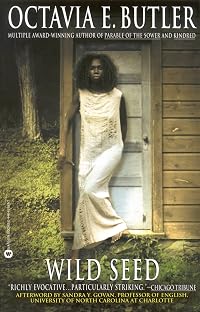
As the acclaimed Patternist science fiction series begins, two immortals meet in the long-ago past-and mankind's destiny is changed forever. For a thousand years, Doro has cultivated a small African village, carefully breeding its people in search of seemingly unattainable perfection. He survives through the centuries by stealing the bodies of others, a technique he has so thoroughly mastered that nothing on Earth can kill him. But when a gang of New World slavers destroys his village, show more ruining his grand experiment, Doro is forced to go west and begin anew. He meets Anyanwu, a centuries-old woman whose means of immortality are as kind as his are cruel. She is a shapeshifter, capable of healing with a kiss, and she recognizes Doro as a tyrant. Though many humans have tried to kill them, these two demi-gods have never before met a rival. Now they begin a struggle that will last centuries and permanently alter the nature of humanity. show lessTags
Recommendations
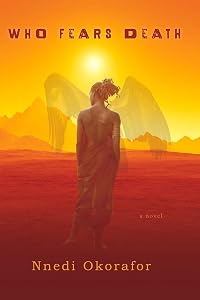
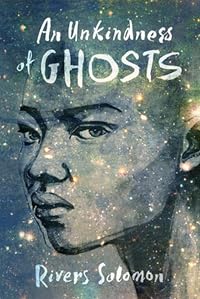
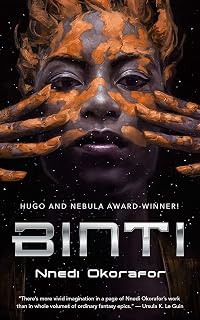
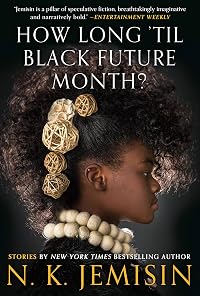

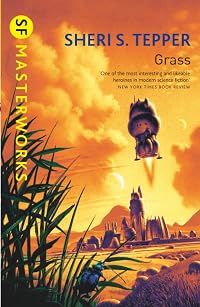
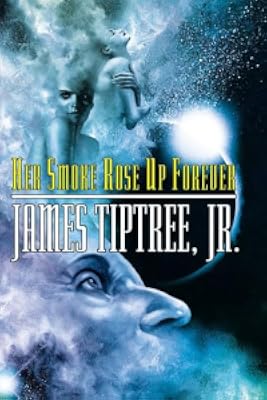
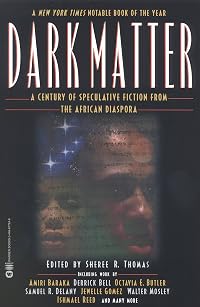
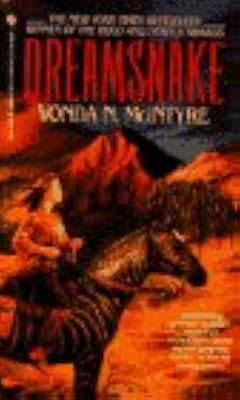
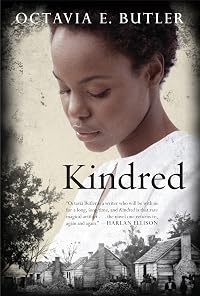
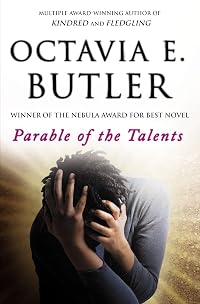
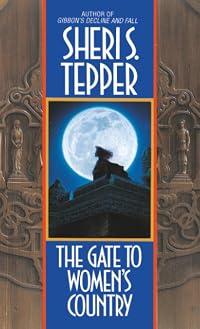
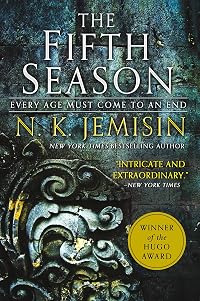
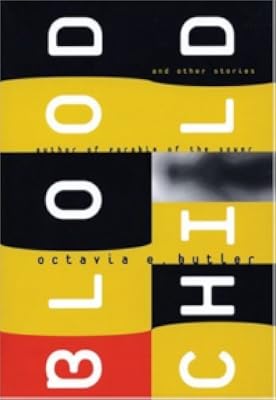

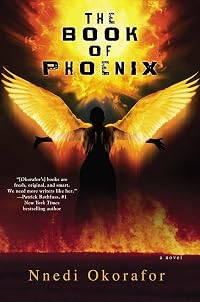
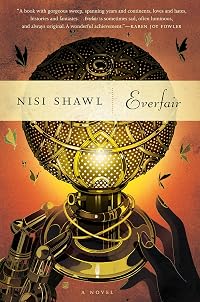
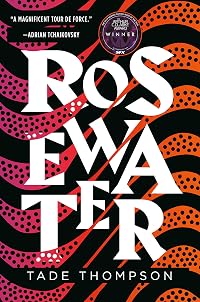
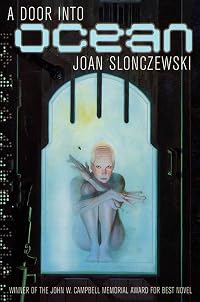
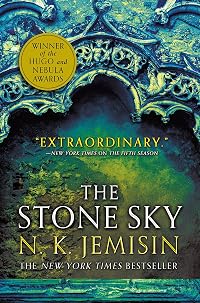
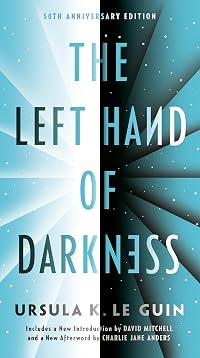
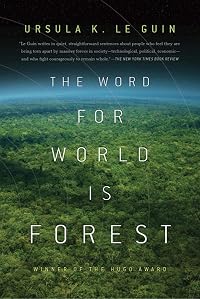

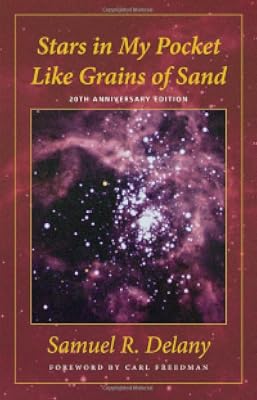
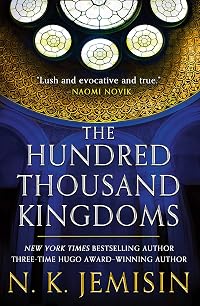
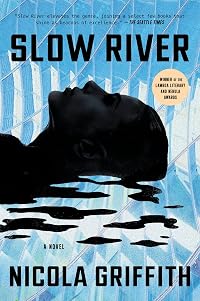
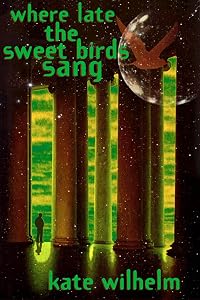
Member Recommendations
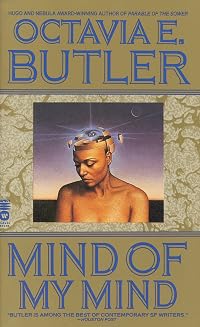
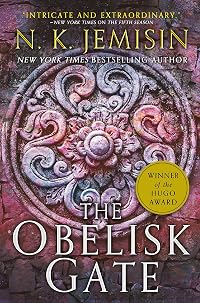
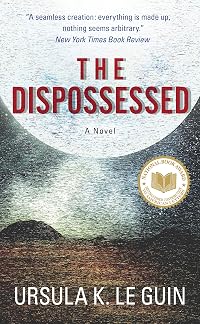
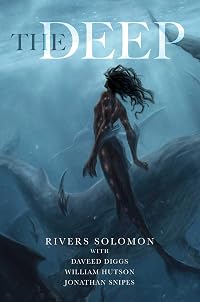
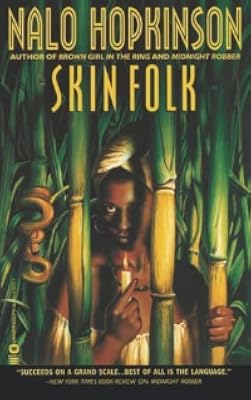
aaronius If you liked Wild Seed but don't necessary want to jump into other novels in the series, this is a short but great alternative by the same author with equally interesting characters and themes.
20


Sarasamsara Wild Seed takes place in the past while The Silent City explores a post-apocalyptic future. Thematically, however, they are eerily similar. Vonarburg and Butler share similar sensibilities.
Member Reviews
I have such feelings about Octavia Butler. I mean, she was so incredibly talented, a master of her craft, a profound influence on her genre, her paint, her characterization, her social criticism and understanding of humanity and the incredibly intriguing scenarios she interrogates...
But her books are just so fucking painful to read.
I loved Anyanwu, and she kept me hanging on in this novel, but THE INTENSITY WITH WHICH I WANTED TO YEET DORU INTO THE SUN. This book has interesting things to say about different kinds power and how they might shape/warp morality/worldview, and I do want to read more adventures of Anyanwu and her legacy and their (hopeful) eventual victory over Doro, BUT THAT WOULD MEAN SPENDING MORE TIME WITH DORO and show more that's a tough ask.
The world building in this though, from village life in Africa to the slave trade to New England colonies to plantation life in the Deep South. BUTLER AND HER MIND. show less
But her books are just so fucking painful to read.
I loved Anyanwu, and she kept me hanging on in this novel, but THE INTENSITY WITH WHICH I WANTED TO YEET DORU INTO THE SUN. This book has interesting things to say about different kinds power and how they might shape/warp morality/worldview, and I do want to read more adventures of Anyanwu and her legacy and their (hopeful) eventual victory over Doro, BUT THAT WOULD MEAN SPENDING MORE TIME WITH DORO and show more that's a tough ask.
The world building in this though, from village life in Africa to the slave trade to New England colonies to plantation life in the Deep South. BUTLER AND HER MIND. show less
What an amazing book! The heart of Wild Seed is the entrancing dynamic between Anyanwu and Doro, two immortal people who meet in western Africa around 1690 before Doro brings Anyanwu across to New York. Anyanwu is a powerful healer and shapeshifter, but Doro – as we might remember from Mind of My Mind – has the power to leap from body to body, killing the person inside. As they gain familiarity with one another their relationship evolves: sometimes lovers, and sometimes mortal enemies, but always with the overriding tension that the more powerful Doro considers himself the rightful “master” of people with supernatural abilities like Anyanwu, and what Anyanwu wants for herself and her descendants is to be free.
I did feel like show more (much like the other Patternmaster books) the novel took a little while to build momentum, but once it did it was unstoppable. Wild Seed felt more focused and cohesive than Mind of My Mind; in fact, I'm glad I read this one after that, because I think Mind of My Mind would have been disappointing in comparison (with the Doro/Mary conflict retreading much of the same ground as the better conflict between Doro and Anyanwu here, and with Anyanwu in that book – now renamed Emma – being an underwhelming character to say the least). I did find it interesting that Doro here seems less sure about what it is he's hoping to create through his breeding program – instead he's working on gut feelings about “potential” – whereas by Mind of My Mind he seems much clearer that he's trying to establish a race of telepaths.
Overall, this book shows why Octavia E. Butler deserves her place as one of the greats of the science fiction genre. I'm sure the relationship between Anyanwu and Doro will stick in my mind for a long time to come, especially the way their characters developed in the superb third part of the book. Although Patternmaster does come close, this is probably the best instalment in the series yet. show less
I did feel like show more (much like the other Patternmaster books) the novel took a little while to build momentum, but once it did it was unstoppable. Wild Seed felt more focused and cohesive than Mind of My Mind; in fact, I'm glad I read this one after that, because I think Mind of My Mind would have been disappointing in comparison (with the Doro/Mary conflict retreading much of the same ground as the better conflict between Doro and Anyanwu here, and with Anyanwu in that book – now renamed Emma – being an underwhelming character to say the least). I did find it interesting that Doro here seems less sure about what it is he's hoping to create through his breeding program – instead he's working on gut feelings about “potential” – whereas by Mind of My Mind he seems much clearer that he's trying to establish a race of telepaths.
Overall, this book shows why Octavia E. Butler deserves her place as one of the greats of the science fiction genre. I'm sure the relationship between Anyanwu and Doro will stick in my mind for a long time to come, especially the way their characters developed in the superb third part of the book. Although Patternmaster does come close, this is probably the best instalment in the series yet. show less
‘Wild Seed’ is the first book in the famous ‘Patternist’ series (though it was not written first). It is also the first book by Butler that I’ve read but will definitely not be the last: this was a book that kept me reading far too late into the night because I just could not put it down.
The book starts off in 1690, in Africa, and ends in 1840s in the United States. It follows the immortal man/spirit Doro – born in Africa in the days of ancient Egypt, and Anyanwu, an African woman with astonishing powers that set her apart from everyone around her. She can heal, she can shapeshift, and when she first meets Doro, she has already been alive for over 300 years.
Doro brings Anyanwu to America, and she becomes part of his show more “people”: an extensive group of individuals who are ruled by, and selectively bred by Doro to enhance their various special abilities.
With that as its starting point, ‘Wild Seed’ becomes a haunting, rich, and compelling story of Anyanwu’s struggle to survive in the new world under Doro’s rule, exploring themes like good and evil, slavery and oppression, race and eugenics, family and friendship, love and the essence of life itself: what makes life worth living? what is a good life? what is worth living for? what is worth dying for?
Butler’s cast of characters add to the richness of the book: they are all complex and conflicted, and even characters that pass by only briefly in the story are so well-written that they stay with you afterwards. And Anyanwu is one of the most interesting and likable literary characters I’ve encountered. She is a good, but flawed, person, fighting tooth and nail to stay true to herself and her own convictions, and to keep her freedom and self-determination – even under excruciatingly difficult circumstances.
‘Wild Seed’ is compelling, unique science fiction, and it’s a book that lingers in the mind long after you finish reading it. show less
The book starts off in 1690, in Africa, and ends in 1840s in the United States. It follows the immortal man/spirit Doro – born in Africa in the days of ancient Egypt, and Anyanwu, an African woman with astonishing powers that set her apart from everyone around her. She can heal, she can shapeshift, and when she first meets Doro, she has already been alive for over 300 years.
Doro brings Anyanwu to America, and she becomes part of his show more “people”: an extensive group of individuals who are ruled by, and selectively bred by Doro to enhance their various special abilities.
With that as its starting point, ‘Wild Seed’ becomes a haunting, rich, and compelling story of Anyanwu’s struggle to survive in the new world under Doro’s rule, exploring themes like good and evil, slavery and oppression, race and eugenics, family and friendship, love and the essence of life itself: what makes life worth living? what is a good life? what is worth living for? what is worth dying for?
Butler’s cast of characters add to the richness of the book: they are all complex and conflicted, and even characters that pass by only briefly in the story are so well-written that they stay with you afterwards. And Anyanwu is one of the most interesting and likable literary characters I’ve encountered. She is a good, but flawed, person, fighting tooth and nail to stay true to herself and her own convictions, and to keep her freedom and self-determination – even under excruciatingly difficult circumstances.
‘Wild Seed’ is compelling, unique science fiction, and it’s a book that lingers in the mind long after you finish reading it. show less
This book was incredibly uncomfortable.
One of the main characters forces people to marry and have children with their siblings and other relatives. He coerces people with threats of murder and other violence. And in the end, he gets a happy ever after without any real consequences for his actions except the *possibility* of losing someone he cares about.
The long-suffering other main character gradually corrupts her own morals to try to get along with him. She never gets justice for the many abuses she suffers.
I might have been okay with the ending if there was more about Doro's "redemption", rather than the ~15 minute explanation at the end of 'he's different now'. If there'd been more examples of how he felt remorse, how his values show more changed, etc. it might have made the ending a satisfying one. But instead it felt very rushed, and after the intensity of the abuses he'd committed earlier in the book I just feel upset that no justice ever happened. It feels like the ending trivializes the abuses. show less
One of the main characters forces people to marry and have children with their siblings and other relatives. He coerces people with threats of murder and other violence. And in the end, he gets a happy ever after without any real consequences for his actions except the *possibility* of losing someone he cares about.
The long-suffering other main character gradually corrupts her own morals to try to get along with him. She never gets justice for the many abuses she suffers.
I might have been okay with the ending if there was more about Doro's "redemption", rather than the ~15 minute explanation at the end of 'he's different now'. If there'd been more examples of how he felt remorse, how his values show more changed, etc. it might have made the ending a satisfying one. But instead it felt very rushed, and after the intensity of the abuses he'd committed earlier in the book I just feel upset that no justice ever happened. It feels like the ending trivializes the abuses. show less
I am a sucker for immortality novels. The Boat of a Million Years by Poul Anderson is a favorite, This Immortal by Roger Zelazny is something of a classic of the genre. And depending on where you want to draw the line, you could include the uploadable consciousness genre of which perhaps Richard K Morgan’s Altered Carbon is a prototype. If you are a lumper rather than a splitter you could well start all the way back at The Epic of Gilgamesh. Death tends to rankle 😉 , and so it’s really no surprise that people tell stories that circumvent that eventuality.
Given her reputation as a master of science fiction and arguably the most influential African American science fiction writer — Samuel Delany and N. K. Jemisin notwithstanding show more — it’s perhaps surprising that I hadn’t read Octavia Butler earlier. Notably, she was honored recently when the landing site of the Mars rover Perseverence was named for her. Wild Seed was the first of five Butler novels I’ve now enjoyed. I learned only later that Wild Seed was the fourth in a series known as the Patternist series, dealing with issues of telepathy, human engineering and the human future. This novel, while written later, is the earliest chronologically in the series, establishing its origins.
Butler’s story loops around two central characters. Doro was born thousands of years ago in ancient Egypt, and perpetuates himself by abandoning his body and taking over a new one, killing the previous occupant in the process with little remorse. He is driven to control the breeding of people with special powers, organizing villages in early America dedicated to this mission. Anyanwu is a mere centuries old, having been born in a village somewhere roughly within modern Nigeria. She has exquisite control over her body, able to repair any damage on a cellular level, and to use her powers to heal the sick. She has the ability to alter herself into other guises, shapes, people, and notably can assume the body and behavior of animals. When Doro encounters Anyanwu, he wants her for his breeding program. But for the first time he faces his own limits, and the possibility that another person has powers he cannot control. Anyanwu loves Doro but not his killing, and tries to negotiate a delicate path between her own potential death at Doro’s hands and protecting those at risk from his brutality.
Wild Seed embodies many themes apart from the immortality that initially drew me in: patriarchy, gender and race relations, eugenics and the improvement of the human species. But what propels the novel is Butler’s confident storytelling. She is in firm charge of her work at all times: language, pacing, character and plot all handled with aplomb. The reader basks in the warm security of a trusted writer. I love the experience of knowing I am in good hands, and that the author will not let me down. show less
Given her reputation as a master of science fiction and arguably the most influential African American science fiction writer — Samuel Delany and N. K. Jemisin notwithstanding show more — it’s perhaps surprising that I hadn’t read Octavia Butler earlier. Notably, she was honored recently when the landing site of the Mars rover Perseverence was named for her. Wild Seed was the first of five Butler novels I’ve now enjoyed. I learned only later that Wild Seed was the fourth in a series known as the Patternist series, dealing with issues of telepathy, human engineering and the human future. This novel, while written later, is the earliest chronologically in the series, establishing its origins.
Butler’s story loops around two central characters. Doro was born thousands of years ago in ancient Egypt, and perpetuates himself by abandoning his body and taking over a new one, killing the previous occupant in the process with little remorse. He is driven to control the breeding of people with special powers, organizing villages in early America dedicated to this mission. Anyanwu is a mere centuries old, having been born in a village somewhere roughly within modern Nigeria. She has exquisite control over her body, able to repair any damage on a cellular level, and to use her powers to heal the sick. She has the ability to alter herself into other guises, shapes, people, and notably can assume the body and behavior of animals. When Doro encounters Anyanwu, he wants her for his breeding program. But for the first time he faces his own limits, and the possibility that another person has powers he cannot control. Anyanwu loves Doro but not his killing, and tries to negotiate a delicate path between her own potential death at Doro’s hands and protecting those at risk from his brutality.
Wild Seed embodies many themes apart from the immortality that initially drew me in: patriarchy, gender and race relations, eugenics and the improvement of the human species. But what propels the novel is Butler’s confident storytelling. She is in firm charge of her work at all times: language, pacing, character and plot all handled with aplomb. The reader basks in the warm security of a trusted writer. I love the experience of knowing I am in good hands, and that the author will not let me down. show less
Dare you incorporate slavery into a science fiction novel? Octavia Butler dared. Frequently. And it works. Wild Seed's story about power, and a particular set of problems with power, is moving and also...entertaining? While there is tragedy and heaviness in the subject matter--it's also a quick and enjoyable read. The book doesn't try to be comprehensive. It doesn't try to say universally all the things to say about power and the human condition. It just says some things, in the context of some characters. It doesn't try to teach you everything you need to know and feel about slavery because that would be impossible. Instead, it tells a science fiction story wrapped around a particular type of relationship that can exist anywhere, at show more any time, with literal slavery being just one manifestation. Any cons? The first part of the novel was the best for me...it's more linear and engaging. The second part, and to some extent the third, are mostly about one main event, interspersed with asides and references to things that happened in the past. This is all perfectly fine as a structure for a novel, but I get itchy around too many flashbacks and passages of "story backfill," which can detract from the narrative while enriching it. Also--some readers will wish the ending were different. There are sequels, however! Highly recommend to all readers. show less
It was difficult not to give this five stars because as with so much of Butler's oeuvre, there are parts of it that are simply extraordinary. Butler's capacity to create worlds within worlds that seem simultaneously urgently relevant but also extraterrestrial is spellbinding. The protagonist, Anyanwu, is an immortal who can alter herself at the cellular level to heal herself, change identities, and in some cases, species. Much like Lauren Olamina in Parable of the Sower, Anyanwu is a multi-faceted, sometimes ambiguous, incredibly strong protagonist. Her antagonist, Doro, is a megalomaniacal spirit who has lived for thousands of years, who prolongs his life through cruel and terrible means. Fixated on forming his own society, his show more humanity is so deeply buried as to be thought lost.
Themes of community and kinship made this an important contribution of Afrofuturism when it was published, and it remains so today. It takes a multi-pronged approach to engaging with colonialism and in turn, postcolonialism. While much of this is transparent, Butler does not every lose sight of the storytelling and her characterization. This is where it is necessary to give Robin Miles, the reader of the audiobook, absolute accolades. Nuances in accents and intonation abound and each character, major or minor, shines through her portrayals.
Where I struggled with the book was near the ending. I found some of the plot directions difficult to reconcile, and while I generally like that Butler does not feel it necessary to explain all contexts for all events, there are several significant events that happen toward the end of the novel that were uncomfortably dissonant with the characterization. While Butler is making a case, perhaps, for transformation, the changes seemed rush and disproportionate to the major narratives that take up the book.
Aside from that, however, it is a book that, while it shares similarities with works here and there, manages to blend social commentary, speculative fiction, and fantasy in a seamless and organic way. show less
Themes of community and kinship made this an important contribution of Afrofuturism when it was published, and it remains so today. It takes a multi-pronged approach to engaging with colonialism and in turn, postcolonialism. While much of this is transparent, Butler does not every lose sight of the storytelling and her characterization. This is where it is necessary to give Robin Miles, the reader of the audiobook, absolute accolades. Nuances in accents and intonation abound and each character, major or minor, shines through her portrayals.
Where I struggled with the book was near the ending. I found some of the plot directions difficult to reconcile, and while I generally like that Butler does not feel it necessary to explain all contexts for all events, there are several significant events that happen toward the end of the novel that were uncomfortably dissonant with the characterization. While Butler is making a case, perhaps, for transformation, the changes seemed rush and disproportionate to the major narratives that take up the book.
Aside from that, however, it is a book that, while it shares similarities with works here and there, manages to blend social commentary, speculative fiction, and fantasy in a seamless and organic way. show less
Members
- Recently Added By
Lists

Favorite Science Fiction by Women Authors
737 works; 196 members

Diversity in Fantasy and Science Fiction
219 works; 33 members

Black Authors
384 works; 32 members
LGBTQ+ Speculative Fiction
820 works; 51 members

Speculative Fiction to Read
706 works; 32 members

2020
21 works; 1 member

Fantasy by Women Who Broke Away from Europe
144 works; 12 members

Books Read in 2023
5,547 works; 145 members

Schomburg Centennial Reading List
100 works; 4 members

Gaming Bookclub
3 works; 1 member

hypatian_kat to-read
429 works; 3 members

Literary Witches
86 works; 4 members

Female Protagonist
1,056 works; 57 members

Books Read in 2021
5,361 works; 113 members

Phi Beta Kappa reading list
260 works; 8 members

Books Read in 2017
4,249 works; 130 members

David Pringle's Science Fiction: The 100 Best Novels
101 works; 9 members

1980 great books
63 works; 1 member
Author Information

58+ Works 56,127 Members
Science-fiction writer and novelist Octavia Estelle Butler was born in Pasadena, California, on June 22, 1947. She earned as Associate of Arts degree from Pasadena City College in 1968 and later attended California State University and the University of California. Her first novel, Patternmaster, was the first in a series about a society run by a show more group of telepaths who are mentally linked to one another. She explored the topics of race, poverty, politics, religion, and human nature in her works. She won a Hugo Award in 1984 for her short story Speech Sounds and a Hugo Award and Nebula Award in 1985 for her novella Bloodchild. She received a MacArthur Grant from the John D. and Catherine T. MacArthur Foundation. The award pays $295,000 over a five-year period to creative people who push the boundaries of their fields. She died in Lake Forest Park, Washington on February 24, 2006 at the age of 58. (Bowker Author Biography) show less
Some Editions
Awards and Honors
Series


Belongs to Publisher Series
Work Relationships
Is contained in
Common Knowledge
- Canonical title*
- Wilde Saat
- Original title
- Wild Seed
- Original publication date
- 1980-07
- People/Characters
- Doro; Anyanwu
- Important places
- Wheatley, New York, USA
- Dedication
- To Arthur Guy
To Ernestine Walker
To Phyllis White for listening. - First words
- Doro discovered the woman by accident when he went to see what was left of one of his seed villages.
- Last words
- (Click to show. Warning: May contain spoilers.)She would not leave him.
- Original language
- English
*Some information comes from Common Knowledge in other languages. Click "Edit" for more information.
Classifications
Statistics
- Members
- 3,341
- Popularity
- 5,065
- Reviews
- 95
- Rating
- (4.09)
- Languages
- 5 — English, German, Italian, Polish, Portuguese (Portugal)
- Media
- Paper, Audiobook, Ebook
- ISBNs
- 29
- ASINs
- 16