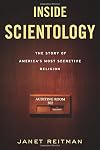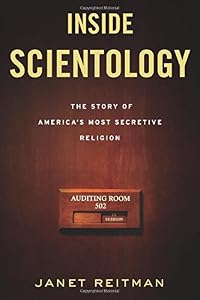
Inside Scientology: The Story of America's Most Secretive Religion
by Janet Reitman
On This Page
Description
Reitman offers the first full, journalistic history of the Church of Scientology, in an even-handed account that at last establishes the astonishing truth about the controversial religion. She traces Scientology's development from the birth of Dianetics through to the present day.Tags
Recommendations




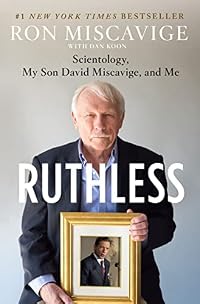
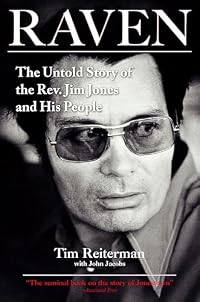




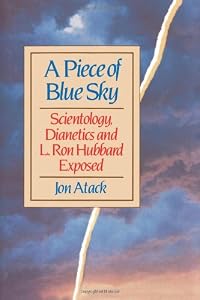



















Member Recommendations
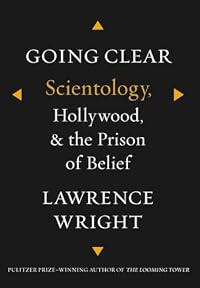
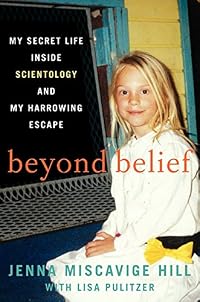
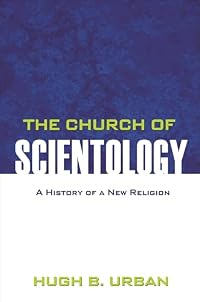
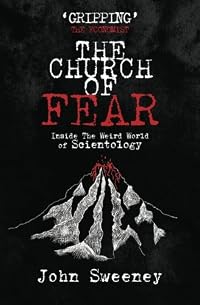
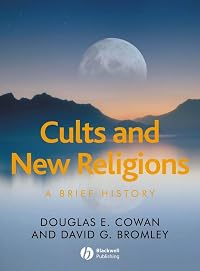
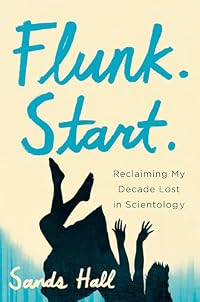
sparemethecensor Two similar journalistic exposes of Scientology, both of which take a surprisingly even-handed view of the group. I preferred Inside Scientology, although both are great primers on what is going on under David Miscavige's regime.
40
Member Reviews
This book offers a fairly thorough look at the history and current state of Scientology, based in large part on information from former Scientologists (many of them high-ranking), as well as at least one unmonitored interview with a still-practicing member. Reitman has, perhaps wisely, chosen not to use outspoken critics of the church as sources, believing that people who have generally been quieter about their experiences in Scientology are likely to provide a less biased account.
The book is divided into four parts. Part I offers a detailed history of Scientology, from its origin as a gleam in L. Ron Hubbard's eye in the 1950s, through a period of growth and scandal in the 1970s. Part II takes the story through the 80s and into the show more early 90s, including massive changes in the structure of the organization after Hubbard's death. Part III focuses on the case of Lisa McPherson, who, as "treatment" for a psychotic break, was confined to a room in a Scientology-run hotel for many days, where she eventually died. The Scientologists were accused of neglecting to provide proper care for her, despite her deteriorating physical condition, but nothing ever came to trial. Part IV takes Scientology to the present day, including its rise in popularity among Hollywood stars and its careful recruitment of Tom Cruise. It also offers the perspective of a third-generation Scientologist still in the movement, and describes the experiences of several people who left the organization in response to its leader's erratic behavior and what they describe as an "Orwellian" atmosphere.
The tone here generally feels very even and not at all sensationalistic, but the picture Reitman paints of Scientology is strange and often quite disturbing. It's also sociologically fascinating. Over the course of the book, I found myself asking all kinds of interesting questions. What is Scientology, really? A religion? A cult? A business? A self-help movement? A pseudoscience? A scam? All of the above? How similar is it to mainstream religions, really, in its origins or its techniques for controlling its parishioners? What should the limits on freedom of religion be, and does Scientology push those limits too far? Why do some people find spiritual value in what to others sounds plain old crazy? The book doesn't directly address these questions, and it certainly doesn't offer any answers, but it does provoke a great deal of thought.
I would, perhaps, have liked a little more exploration of the day-to-day experience of life as a Scientologist. I'm particularly curious about the details of what goes on in the "auditing sessions" that form the backbone of everyday Scientology, and which Reitman discusses only in very vague terms. Still, even without that, it's an interesting and eye-opening read. show less
The book is divided into four parts. Part I offers a detailed history of Scientology, from its origin as a gleam in L. Ron Hubbard's eye in the 1950s, through a period of growth and scandal in the 1970s. Part II takes the story through the 80s and into the show more early 90s, including massive changes in the structure of the organization after Hubbard's death. Part III focuses on the case of Lisa McPherson, who, as "treatment" for a psychotic break, was confined to a room in a Scientology-run hotel for many days, where she eventually died. The Scientologists were accused of neglecting to provide proper care for her, despite her deteriorating physical condition, but nothing ever came to trial. Part IV takes Scientology to the present day, including its rise in popularity among Hollywood stars and its careful recruitment of Tom Cruise. It also offers the perspective of a third-generation Scientologist still in the movement, and describes the experiences of several people who left the organization in response to its leader's erratic behavior and what they describe as an "Orwellian" atmosphere.
The tone here generally feels very even and not at all sensationalistic, but the picture Reitman paints of Scientology is strange and often quite disturbing. It's also sociologically fascinating. Over the course of the book, I found myself asking all kinds of interesting questions. What is Scientology, really? A religion? A cult? A business? A self-help movement? A pseudoscience? A scam? All of the above? How similar is it to mainstream religions, really, in its origins or its techniques for controlling its parishioners? What should the limits on freedom of religion be, and does Scientology push those limits too far? Why do some people find spiritual value in what to others sounds plain old crazy? The book doesn't directly address these questions, and it certainly doesn't offer any answers, but it does provoke a great deal of thought.
I would, perhaps, have liked a little more exploration of the day-to-day experience of life as a Scientologist. I'm particularly curious about the details of what goes on in the "auditing sessions" that form the backbone of everyday Scientology, and which Reitman discusses only in very vague terms. Still, even without that, it's an interesting and eye-opening read. show less
Reitman’s look at the history of Scientology provides a good background and fills in the more sensationalized version of the story to make it, if possible, even more disturbing. Actually, the “Xenu the galactic overlord” part isn’t even the craziest or worst thing described. Reitman tries to be balanced by discussing some of the positives about Scientology and noting that much of her information comes from former and disgruntled members of the church. She also describes the appeal of many aspects of the church (at least initially for some) as well as the charisma and attraction of its founder. However, it’s difficult to be balanced as the history of L. Ron Hubbard is very spotty and can be easily contrasted to the overly show more positive portrait of him in the religion. His successor, David Miscavige, comes of as extremely controlling and creepy. Even so, much of the negative culture associated with Scientology – extreme litigiousness, ill-treatment of members, a constant push for profit – started with Hubbard.
The first parts of the book focus on Hubbard’s life. Some of the episodes that have been subsequently blown out of proportion, like his military service, are examined in detail. The picture that comes through is one of a charismatic and ambitious con man. Hubbard’s career as a churn-it-out sci-fi writer later led to the publication of Dianetics, a self-help book with some elements that now sound, frankly, crazy but that Reitman puts in context of a number of flourishing self-help ideas, religions and cults. Some of the creepy (or unintentionally hilarious) bits are quotes taken from Hubbard’s writing – for example, his assertion that the average woman had multiple self-induced abortions or the trauma caused by an incident known as “The Clam”. Dianetics made Hubbard briefly rich but he was unable to control the practice. This experience would make him extremely controlling with all the Scientology branches and tech as well as litigious. Dianetics set forth the reason for people’s problems – past traumas that had to be worked through and cleared in auditing sessions, which had to be paid for, of course. After the Dianetics fad ended, Hubbard came back with Dianetics plus – Scientology. Many of the ideas were the similar but the notorious E-meter was used and various sci-fi aspects filtered into the new movement. People had to pay to be audited, pay to set up a branch of Scientology, pay part of the money they received from auditing, pay for the tech, and so on.
The evolution of the church from one stocked by 60’s idealists to a tightly controlled, hierarchical structure under the increasingly paranoid Hubbard is mostly related by a high up ex-member. It would have been nice to have multiple sources for this but Reitman did note that she had cross-checked as much as she could and interviewed a wide range of people. Later, describing the elite Sea Org and Hubbard’s Messengers, Reitman has stories from multiple Scientologists. Sometimes the organization of the church could be confusing as there were so many branches and acronyms and titles. Hubbard was quite paranoid but there was opposition to the church – both from people concerned about its cult-like aspects and the government, as Scientologists did things like harass the IRS and break into government buildings. The description of the controlling behavior by Hubbard and others certainly sounds like a cult. Hubbard continually moved around, trying to find a base for Scientology, at times running it from a ship that was always on the move. In his later years, he was almost a caricature of a wealthy, crazy recluse. One of his most trusted underlings was the ambitious David Miscavige.
After Hubbard’s death, Miscavige moved quickly to take power, rolling over his rivals and expelling anyone who opposed him. He continued Hubbard’s policy of harsh retaliation against ‘enemies’ and used lawsuits and harassment. He also tried to increase Scientology’s reach with various campaigns – new marketing efforts, outreach to celebrities, charities and good works. The church also made a hard push to be granted tax-exempt status and Reitman’s opinion seems to be that it was a mistake and a response to the harassment of the IRS.
The more recent history of Scientology is told through the personal stories of several famous and ordinary people – Lisa McPherson, a longtime devoted Scientologist who died under mysterious circumstances and whose death led to a criminal investigation, celebrities like John Travolta and Tom Cruise, and defectors high up in the organization as well as some who grew up in the church and are still Scientologists. Through the McPherson story, Reitman describes the development of Clearwater – the Florida town that became a Scientologist base, with tensions between the locals and the church. McPherson’s story also illustrates the high cost (social and financial) of her rise in the church as well as the tight-knit but controlling community.
Cruise and Travolta have been ridiculed for their involvement with the church but Reitman’s description of how Miscavige and the church chased and pressured celebrities is a bit creepy. Miscavige comes off even worse in the stories of former high-ranking Scientologists – he lounged in luxury while the staff worked around the clock for meager pay, he was paranoid and had poor managerial skills, and he became violent and cruel which set off another round of purges and defections. The Scientology community is shown in a good and bad light from two women, one of whom left the church and strained her relationship with the family. The other woman remained in the church but went to college and is shown as poised, intelligent and clear-eyed about the good and bad aspects of Scientology. With the instant connection and anonymity of the internet, many of the secrets of Scientology have been leaked. It has also allowed former Scientologists to connect. There’s not much of a religion outside the official church, but Reitman shows the start of some Scientologists outside of Scientology. Very interesting and detailed portrait of a secretive religion. The author tries hard to be balanced, but the book will probably make you Google map your nearest Church of Scientology and resolve to avoid it. show less
The first parts of the book focus on Hubbard’s life. Some of the episodes that have been subsequently blown out of proportion, like his military service, are examined in detail. The picture that comes through is one of a charismatic and ambitious con man. Hubbard’s career as a churn-it-out sci-fi writer later led to the publication of Dianetics, a self-help book with some elements that now sound, frankly, crazy but that Reitman puts in context of a number of flourishing self-help ideas, religions and cults. Some of the creepy (or unintentionally hilarious) bits are quotes taken from Hubbard’s writing – for example, his assertion that the average woman had multiple self-induced abortions or the trauma caused by an incident known as “The Clam”. Dianetics made Hubbard briefly rich but he was unable to control the practice. This experience would make him extremely controlling with all the Scientology branches and tech as well as litigious. Dianetics set forth the reason for people’s problems – past traumas that had to be worked through and cleared in auditing sessions, which had to be paid for, of course. After the Dianetics fad ended, Hubbard came back with Dianetics plus – Scientology. Many of the ideas were the similar but the notorious E-meter was used and various sci-fi aspects filtered into the new movement. People had to pay to be audited, pay to set up a branch of Scientology, pay part of the money they received from auditing, pay for the tech, and so on.
The evolution of the church from one stocked by 60’s idealists to a tightly controlled, hierarchical structure under the increasingly paranoid Hubbard is mostly related by a high up ex-member. It would have been nice to have multiple sources for this but Reitman did note that she had cross-checked as much as she could and interviewed a wide range of people. Later, describing the elite Sea Org and Hubbard’s Messengers, Reitman has stories from multiple Scientologists. Sometimes the organization of the church could be confusing as there were so many branches and acronyms and titles. Hubbard was quite paranoid but there was opposition to the church – both from people concerned about its cult-like aspects and the government, as Scientologists did things like harass the IRS and break into government buildings. The description of the controlling behavior by Hubbard and others certainly sounds like a cult. Hubbard continually moved around, trying to find a base for Scientology, at times running it from a ship that was always on the move. In his later years, he was almost a caricature of a wealthy, crazy recluse. One of his most trusted underlings was the ambitious David Miscavige.
After Hubbard’s death, Miscavige moved quickly to take power, rolling over his rivals and expelling anyone who opposed him. He continued Hubbard’s policy of harsh retaliation against ‘enemies’ and used lawsuits and harassment. He also tried to increase Scientology’s reach with various campaigns – new marketing efforts, outreach to celebrities, charities and good works. The church also made a hard push to be granted tax-exempt status and Reitman’s opinion seems to be that it was a mistake and a response to the harassment of the IRS.
The more recent history of Scientology is told through the personal stories of several famous and ordinary people – Lisa McPherson, a longtime devoted Scientologist who died under mysterious circumstances and whose death led to a criminal investigation, celebrities like John Travolta and Tom Cruise, and defectors high up in the organization as well as some who grew up in the church and are still Scientologists. Through the McPherson story, Reitman describes the development of Clearwater – the Florida town that became a Scientologist base, with tensions between the locals and the church. McPherson’s story also illustrates the high cost (social and financial) of her rise in the church as well as the tight-knit but controlling community.
Cruise and Travolta have been ridiculed for their involvement with the church but Reitman’s description of how Miscavige and the church chased and pressured celebrities is a bit creepy. Miscavige comes off even worse in the stories of former high-ranking Scientologists – he lounged in luxury while the staff worked around the clock for meager pay, he was paranoid and had poor managerial skills, and he became violent and cruel which set off another round of purges and defections. The Scientology community is shown in a good and bad light from two women, one of whom left the church and strained her relationship with the family. The other woman remained in the church but went to college and is shown as poised, intelligent and clear-eyed about the good and bad aspects of Scientology. With the instant connection and anonymity of the internet, many of the secrets of Scientology have been leaked. It has also allowed former Scientologists to connect. There’s not much of a religion outside the official church, but Reitman shows the start of some Scientologists outside of Scientology. Very interesting and detailed portrait of a secretive religion. The author tries hard to be balanced, but the book will probably make you Google map your nearest Church of Scientology and resolve to avoid it. show less
The most well-researched book on Scientology that I've read so far. Reitman has personal stories from a variety of former and current Scientologists and references many documents from the beginning of Dianetics to present day. She provides a fair and balanced history throughout, and I actually came away with more sympathy for pure Scientologists; the book ends up making a distinction between those who incorporate the best aspects of Hubbard's original self-help philosophy and those who subscribe to the divisive and fascist tactics of current leader David Miscavige. Endlessly fascinating, Scientology is simultaneously a study in the transformative power of the human mind and the destructive power of megalomanic leaders and group-think show more phenomena. show less
A brilliant investigation into a little-understood and culturally significant contemporary religion. If you want to understand all of the references in the latest Tom-Cruise-Katie-Holmes-divorce-stories to things like "the Sea Org," this book will fill you in. More importantly, if you want to see the journey from inspiration to idea to institution to insane-protection-of-said-institution, this is the book for you. Makes one wonder about religions, ideologies, institutions well beyond Scientology. I was fascinated...often horrified, but fascinated nonetheless.
A fascinating and comprehensive history of the Church of Scientology, Reitman covers the Church’s beginnings as a self-help movement to the present day multi-million dollar operation it has become. A large portion of the book is devoted to an in-depth biography of founder L. Ron Hubbard (seemingly quite the megalomaniac), from his beginnings as a pulp fiction (then science fiction) writer who dabbled in the occult, to naval officer, to self-help guru, and finally to founder of the Scientology religion. Also covered is the post-Hubbard period, where the Church has been ruled with an iron fist by Chairman of the Board David Miscavige; the Church’s notorious catering to celebrities; its battle with the IRS to receive tax-exempt status; show more some of its controversial legal battles, most notably that of the mysterious death of Scientologist Lisa McPherson; and profiles of current and past members.
In my opinion, many harmless religions have implausible creation stories and myths (the Xenu/Galactic Confederacy/body thetan stuff of Scientology doesn’t particularly bother me). Many harmless religions have self-help/psychology-based doctrines (e.g. Buddhism). However, based on the evidence presented in the book, I find the most disturbing aspect of the Church to be its severely authoritarian and cult-like organizational style. Members are isolated from non-Scientology friends and family, they are seemingly brainwashed into spending thousands of dollars on auditing sessions, they are encouraged to report any “ethics violations” of fellow members, and they are often emotionally (and sometimes physically) abused.
The only complaint I have about the book is its lack of focus on rank and file members. It deals almost exclusively with upper management and those members who work for the Church, particularly in the Sea Org and on the powerful Gold Base, which is the major seat of power of the Church. Otherwise, I highly recommend it. It’s well-written and organized, filled with captivating stories, and manages to come across as non-sensationalistic and even-handed, despite the off-the-wall subject matter. show less
In my opinion, many harmless religions have implausible creation stories and myths (the Xenu/Galactic Confederacy/body thetan stuff of Scientology doesn’t particularly bother me). Many harmless religions have self-help/psychology-based doctrines (e.g. Buddhism). However, based on the evidence presented in the book, I find the most disturbing aspect of the Church to be its severely authoritarian and cult-like organizational style. Members are isolated from non-Scientology friends and family, they are seemingly brainwashed into spending thousands of dollars on auditing sessions, they are encouraged to report any “ethics violations” of fellow members, and they are often emotionally (and sometimes physically) abused.
The only complaint I have about the book is its lack of focus on rank and file members. It deals almost exclusively with upper management and those members who work for the Church, particularly in the Sea Org and on the powerful Gold Base, which is the major seat of power of the Church. Otherwise, I highly recommend it. It’s well-written and organized, filled with captivating stories, and manages to come across as non-sensationalistic and even-handed, despite the off-the-wall subject matter. show less
A rollercoaster ride through the bizarre world of the infamous religion. It's full of juicy details, crazy stories, and enough Tom Cruise references to make even the most dedicated fan blush. And, despite all the weirdness, Reitman manages to keep a straight face and deliver a thorough and insightful account of the organization. If you're looking for a wild ride and a peek behind the curtain of Scientology, give "Inside Scientology" a read.
Just maybe don't mention it to Tom Cruise.
Just maybe don't mention it to Tom Cruise.
OMG Scientology. How I like to tease you. I remember going to that Hollywood center of theirs to take that "personality test" where they find something wrong with you that only Scientology can fix. And then my friends and I ran out of there, screaming, before the test was done because man, it was freaky! Hahaha. And I took an e-meter test once, uh... also in Hollywood. They were out on the street for some reason and were uh... giving "free stress tests" to people. I was like, sweet! Paul took a picture of me holding the cans. It's sitting on a desk somewhere in the apartment. When I thought of Damon Albarn it made the little needle jump, hahaha. And then for some reason there was a family outing to that same Hollywood Scientology place show more for Christmas to see the snow thing that they do. Winter Wonderland. IDK why. There must be a picture of me somewhere standing morosely next to a Scientology santa or carolers or whatever. Then I went to the L. Ron Hubbard Life Exhibition and holy shit! It was a museum of his bullshit! It ended with a display of all his certificates on a wall that moved while orgasmic music played. It was so good. I recommend it to all tourists. hahaha! Scientology.
Anyway about the book. It was as balanced as an objective report on Scientology can be, which means that the conclusion reached is: COS is a bunch of BS. Absolute bullshit, and people are idiots. Strangely though, I think I have more respect for Scientologists as people though I really don't understand them. I mean, I too am an idiot, and there was that one time I discovered I believed Damon Albarn was God. Seriously. But scientologists-as-people aside, The Church of Scientology is TERRIFYING. They took the brother of one of my best friends! He "disconnected" from his family and now they don't see him anymore. Fuckers. hahahaha? show less
Anyway about the book. It was as balanced as an objective report on Scientology can be, which means that the conclusion reached is: COS is a bunch of BS. Absolute bullshit, and people are idiots. Strangely though, I think I have more respect for Scientologists as people though I really don't understand them. I mean, I too am an idiot, and there was that one time I discovered I believed Damon Albarn was God. Seriously. But scientologists-as-people aside, The Church of Scientology is TERRIFYING. They took the brother of one of my best friends! He "disconnected" from his family and now they don't see him anymore. Fuckers. hahahaha? show less
Members
- Recently Added By
Lists

2008-2012 Notable Books for Adults
127 works; 10 members

Books Read in 2014
2,341 works; 89 members
Author Information

4+ Works 753 Members
Janet Reitman is a contributing editor at Rolling Stone. Her work has appeared in GQ, Men's Journal, the Los Angeles Times Magazine, and the Washington Post, among other publications. She holds a master's degree in journalism from Columbia University and was a finalist for a National Magazine Award in 2007 for the story "Inside Scientology."
Awards and Honors
Work Relationships
Common Knowledge
- Original publication date
- 2011-07-05
- People/Characters
- L. Ron Hubbard; Lisa McPherson; David Miscavige; Tom Cruise
- Dedication
- For my father, and for Lee
with love... - First words
- Whatever else might be said about Lafayette Ron Hubbard, he undoubtedly had a strange and unique genius.
- Last words
- (Click to show. Warning: May contain spoilers.)Instead, Mike Henderson had doubts and fears, just like every other mortal. "I don't know what's in store for me down the road, but I know I won't get there with Scientology," he said, with resignation. "And after thirty-four years, and six hundred thousand dollars, that is the saddest thing I can say about my life."
- Publisher's editor
- Wenner, Jann; Dana, Will; Blythe, Will
- Blurbers
- Wright, Lawrence; Sharlet, Jeff
Classifications
- Genres
- Nonfiction, General Nonfiction, Religion & Spirituality, History, Biography & Memoir
- DDC/MDS
- 299.936 — Religion Other religions Shintoism/Taoism/Other Mythologies Religions of other origin Religions of eclectic and syncretistic origin Scientology
- LCC
- BP605 .S2 .R45 — Philosophy, Psychology and Religion Islam. Bahaism. Theosophy, etc. Islam. Bahai Faith. Theosophy, etc. Other beliefs and movements
- BISAC
Statistics
- Members
- 750
- Popularity
- 37,319
- Reviews
- 35
- Rating
- (3.83)
- Languages
- English
- Media
- Paper, Audiobook, Ebook
- ISBNs
- 10
- UPCs
- 1
- ASINs
- 5