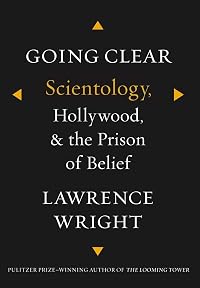
Going Clear: Scientology, Hollywood, and the Prison of Belief
by Lawrence Wright
On This Page
Description
National Book Award FinalistA clear-sighted revelation, a deep penetration into the world of Scientology by the Pulitzer Prize-winning author of The Looming Tower, the now-classic study of al-Qaeda’s 9/11 attack. Based on more than two hundred personal interviews with current and former Scientologists—both famous and less well known—and years of archival research, Lawrence Wright uses his extraordinary investigative ability to uncover for us the inner workings of the Church of show more Scientology.
At the book’s center, two men whom Wright brings vividly to life, showing how they have made Scientology what it is today: The darkly brilliant science-fiction writer L. Ron Hubbard, whose restless, expansive mind invented a new religion. And his successor, David Miscavige—tough and driven, with the unenviable task of preserving the church after the death of Hubbard.
We learn about Scientology’s complicated cosmology and special language. We see the ways in which the church pursues celebrities, such as Tom Cruise and John Travolta, and how such stars are used to advance the church’s goals. And we meet the young idealists who have joined the Sea Org, the church’s clergy, signing up with a billion-year contract.
In Going Clear, Wright examines what fundamentally makes a religion a religion, and whether Scientology is, in fact, deserving of this constitutional protection. Employing all his exceptional journalistic skills of observation, understanding, and shaping a story into a compelling narrative, Lawrence Wright has given us an evenhanded yet keenly incisive book that reveals the very essence of what makes Scientology the institution it is. show less
Tags
Recommendations


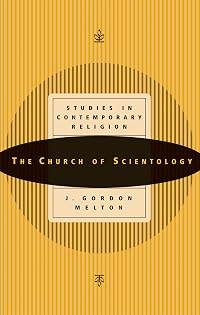
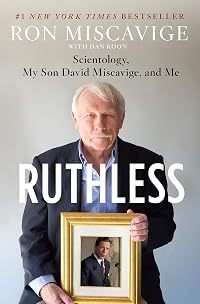



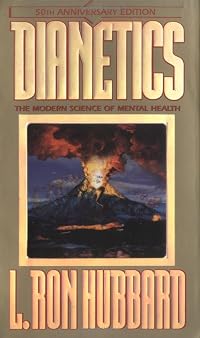


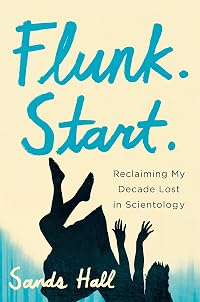
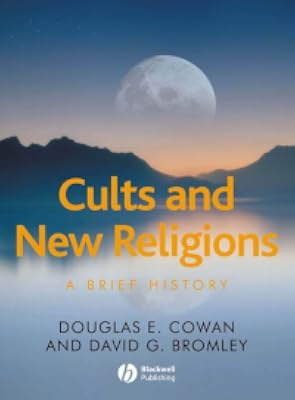









Member Recommendations
akblanchard Although he never joined the group, Manson dabbled in Scientology. It is interesting to draw parallels between Manson's treatment of his "Family" and life in the Scientology's Sea Org.
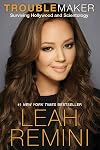
akblanchard Both books deal with the Hollywood-Scientology connection.
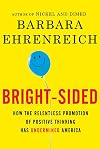
Bright-Sided: How the Relentless Promotion of Positive Thinking Has Undermined America by Barbara Ehrenreich
aulsmith Although Wright missed it completely, Scientology seems to be yet another in a long line of American religions/self-help groups influenced by the Positive Thinking Movement. If you want a wider vision of how these groups function, I highly recommend Ehrenreich.
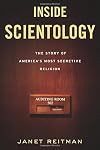
sparemethecensor Two similar journalistic exposes of Scientology, both of which take a surprisingly even-handed view of the group. I preferred Inside Scientology, although both are great primers on what is going on under David Miscavige's regime.
Member Reviews
One of my friends escaped from a Scientology “cult” (her term) when she was a teen. She has told me about her experiences, and I wanted to find out more about the organization.
This book is a combination history, biography, and exposé. It is an in-depth examination of the beliefs, terminology, structure, wealth, celebrity liaisons, allegations, and controversies. Based on interviews, the author relates experiences of people who have left the organization, which, of course, Scientology’s leadership disavows. It tries to make sense of whether or not this is truly a religion. It is currently classified as such in the US, and qualifies for a tax exemption, and the legal path to this status is part of the narrative.
The book goes into show more the many personalities involved in Scientology, especially the founder, L. Ron Hubbard, and current leader, David Miscavige. It covers the involvement of high-profile celebrities such as Tom Cruise and John Travolta. It examines the abuses (such as human trafficking, bullying, involuntary confinement, and harassment) claimed by former members.
I listened to the audio book, read by Morton Sellers. He reads in a “documentary” style with clear, staccato enunciation. His reading reminds me of the voiceover to a detective, police, or legal television show.
The book is well-written and extremely detailed. I am glad to see an investigative report that provides people more information about the organization, so they can better judge if they want to get involved. My advice – stay well clear of it. Some of my friend’s stories made me shudder and are in line with the alleged abuses described in this book. show less
This book is a combination history, biography, and exposé. It is an in-depth examination of the beliefs, terminology, structure, wealth, celebrity liaisons, allegations, and controversies. Based on interviews, the author relates experiences of people who have left the organization, which, of course, Scientology’s leadership disavows. It tries to make sense of whether or not this is truly a religion. It is currently classified as such in the US, and qualifies for a tax exemption, and the legal path to this status is part of the narrative.
The book goes into show more the many personalities involved in Scientology, especially the founder, L. Ron Hubbard, and current leader, David Miscavige. It covers the involvement of high-profile celebrities such as Tom Cruise and John Travolta. It examines the abuses (such as human trafficking, bullying, involuntary confinement, and harassment) claimed by former members.
I listened to the audio book, read by Morton Sellers. He reads in a “documentary” style with clear, staccato enunciation. His reading reminds me of the voiceover to a detective, police, or legal television show.
The book is well-written and extremely detailed. I am glad to see an investigative report that provides people more information about the organization, so they can better judge if they want to get involved. My advice – stay well clear of it. Some of my friend’s stories made me shudder and are in line with the alleged abuses described in this book. show less
I love reading about cults, and I've never read anything by Lawrence Wright that I didn't like, so I was all-in from the very beginning on Going Clear. Much of what is in the book has been cited in various articles, documentaries, and published personal accounts from defectors. Still, Wright does a fantastic job of bringing it all together and synthesizing it into a coherent narrative, adding details that make this a compelling (if not sometimes infuriating) read even for those familiar with Scientology.
The book begins at the beginning, with an in-depth look at Scientology's founder, the charismatic and prolific L. Ron Hubbard, a man who still holds the world record for the number of books written during his lifetime. We learn how show more Hubbard made the battle against psychiatry a lifelong mission, and how he evolved from being a dreamy sci-fi writer who cynically founded a religion-as-business to a deluded church leader, high on his own supply, convinced of his own divinity. We meet the women in Hubbard's life, his children, and some of his most ardent supporters, some of whom do not survive their association with the church.
After Hubbard's death, the narrative shifts to examining the current leader of the organization, a man with striking similarities—and differences—from Hubbard. We learn about how members of the Hollywood elite are drawn into Scientology, and how the organization maintains those relationships through its celebrity center in Los Angeles.
The most interesting part about the book (and possibly the most interesting thing about cults in general) is a consideration of what makes one group's set of beliefs an 'absurd cult' and what makes another group's beliefs an 'official religion'. Wright doesn't rush us to easy answers, and I appreciate it. He asks us to consider our own biases about how we define religion, and asks us to reflect on why many people want (and need) to believe things that are not true to be the best version of themselves.
This is a pretty long book, but I blazed through it quickly (even with all the legal disclaimers). There's a lot to consider here for anyone who has looked at religious people and wondered how intelligent people allow denial and existential fear to inspire beliefs that have no basis in reality. show less
The book begins at the beginning, with an in-depth look at Scientology's founder, the charismatic and prolific L. Ron Hubbard, a man who still holds the world record for the number of books written during his lifetime. We learn how show more Hubbard made the battle against psychiatry a lifelong mission, and how he evolved from being a dreamy sci-fi writer who cynically founded a religion-as-business to a deluded church leader, high on his own supply, convinced of his own divinity. We meet the women in Hubbard's life, his children, and some of his most ardent supporters, some of whom do not survive their association with the church.
After Hubbard's death, the narrative shifts to examining the current leader of the organization, a man with striking similarities—and differences—from Hubbard. We learn about how members of the Hollywood elite are drawn into Scientology, and how the organization maintains those relationships through its celebrity center in Los Angeles.
The most interesting part about the book (and possibly the most interesting thing about cults in general) is a consideration of what makes one group's set of beliefs an 'absurd cult' and what makes another group's beliefs an 'official religion'. Wright doesn't rush us to easy answers, and I appreciate it. He asks us to consider our own biases about how we define religion, and asks us to reflect on why many people want (and need) to believe things that are not true to be the best version of themselves.
This is a pretty long book, but I blazed through it quickly (even with all the legal disclaimers). There's a lot to consider here for anyone who has looked at religious people and wondered how intelligent people allow denial and existential fear to inspire beliefs that have no basis in reality. show less
Inside the Cult
Wright answers several questions in his fine, balanced, well researched and presented examination of Scientology, in particular, about its Hollywood connection, leaving the single biggest one for readers to decide for themselves.
Who was L. Ron Hubbard? What experiences led him to found his own religion (a categorization many would strongly dispute but won by doing something few can: bringing the IRS to its knees)? Why did people join and proselytize Hubbard's belief system? What do celebrities, among them Tom Cruise, John Travolta, Anne Archer, and others, find compelling about Scientology? What ideas comprise the beliefs of Scientologists? Why is Scientology secretive and what are those secrets? With Hubbard long dead, show more who currently leads Scientology? How has Scientology succeeded in surviving and amassing considerable wealth since the death of its founder? And, finally, the question Wright leaves readers to answer for themselves: is Scientology a religion, a religion in the making, or is it a cult, a very visible, wealthy, and pugnacious one at that?
You'll find much that's sensational in Going Clear, and much bearing the hallmarks common to religious cults, among them Jim Jones's People Temple, Moses David's (David Berg) Children of God (now The Family International), and Aleister Crowley's Ordo Templi Orientis (which Hubbard affiliated with after WWII), to cite a few.
You'll see these similarities on full display in Wright's book. These include a charismatic leader, proprietary knowledge without which salvation cannot be had, absolute devotion to the exclusion of family and past friends that promotes a binding insularity and captivity, to note just a handful. For comparison, and especially if cults interest you, you might want to try Tim Reiterman's biography of Jim Jones and the People's Temple march to tragedy, Raven: The Untold Story of the Rev. Jim Jones and His People. While different in approach and membership, you'll recognize how Scientology tacks to the cult course. Of course, as Wright develops in his epilogue, a movement may actually be a nascent religion in the making that appears alien and threatening to the reigning orthodoxy, as did Christianity and Mormonism, to cite an older and newer example. A further apt point made by Wright concerns how a religion's set of beliefs can appear absurd when an observer views them without the faith of the believers, something that can call into question the precepts of most any religion.
As for the sensational, these do not result from Wright's even writing. They spring from Hubbard and Scientology itself. Examples include Hubbard's manufactured naval history, the harsh punishment of members in the Rehabilitation Project Force (RPF), the original organization of Commodore's Messengers Organization employing pubescent girls, the low pay and miserable living conditions of members compared to the lavish furnishings of top leaders, the special treatment afforded celebrities, the aggressive stances against perceived church enemies that often included physical intimidation and endless and expensive legal suits (which serve to restrict unauthorized published information and which the church used to win their designation as a tax-exempt religious organization in the U.S.), and many more.
Recommended as an insightful exploration of a movement, its influence, and its claim to religious legitimacy. show less
Wright answers several questions in his fine, balanced, well researched and presented examination of Scientology, in particular, about its Hollywood connection, leaving the single biggest one for readers to decide for themselves.
Who was L. Ron Hubbard? What experiences led him to found his own religion (a categorization many would strongly dispute but won by doing something few can: bringing the IRS to its knees)? Why did people join and proselytize Hubbard's belief system? What do celebrities, among them Tom Cruise, John Travolta, Anne Archer, and others, find compelling about Scientology? What ideas comprise the beliefs of Scientologists? Why is Scientology secretive and what are those secrets? With Hubbard long dead, show more who currently leads Scientology? How has Scientology succeeded in surviving and amassing considerable wealth since the death of its founder? And, finally, the question Wright leaves readers to answer for themselves: is Scientology a religion, a religion in the making, or is it a cult, a very visible, wealthy, and pugnacious one at that?
You'll find much that's sensational in Going Clear, and much bearing the hallmarks common to religious cults, among them Jim Jones's People Temple, Moses David's (David Berg) Children of God (now The Family International), and Aleister Crowley's Ordo Templi Orientis (which Hubbard affiliated with after WWII), to cite a few.
You'll see these similarities on full display in Wright's book. These include a charismatic leader, proprietary knowledge without which salvation cannot be had, absolute devotion to the exclusion of family and past friends that promotes a binding insularity and captivity, to note just a handful. For comparison, and especially if cults interest you, you might want to try Tim Reiterman's biography of Jim Jones and the People's Temple march to tragedy, Raven: The Untold Story of the Rev. Jim Jones and His People. While different in approach and membership, you'll recognize how Scientology tacks to the cult course. Of course, as Wright develops in his epilogue, a movement may actually be a nascent religion in the making that appears alien and threatening to the reigning orthodoxy, as did Christianity and Mormonism, to cite an older and newer example. A further apt point made by Wright concerns how a religion's set of beliefs can appear absurd when an observer views them without the faith of the believers, something that can call into question the precepts of most any religion.
As for the sensational, these do not result from Wright's even writing. They spring from Hubbard and Scientology itself. Examples include Hubbard's manufactured naval history, the harsh punishment of members in the Rehabilitation Project Force (RPF), the original organization of Commodore's Messengers Organization employing pubescent girls, the low pay and miserable living conditions of members compared to the lavish furnishings of top leaders, the special treatment afforded celebrities, the aggressive stances against perceived church enemies that often included physical intimidation and endless and expensive legal suits (which serve to restrict unauthorized published information and which the church used to win their designation as a tax-exempt religious organization in the U.S.), and many more.
Recommended as an insightful exploration of a movement, its influence, and its claim to religious legitimacy. show less
Scientology and its founder L. Ron Hubbard are an enigma. It is sometimes denigrated as a cult, yet also attracts some of the biggest names in Hollywood, most famously Tom Cruise. Using hundreds of interviews with folks who have left, journalist Lawrence Wright gives a systematic and detailed biography of Hubbard, the starting of the religion, and what happened after Hubbard's death.
Though the seed for this book started with an article Wright wrote for The New Yorker profiling Paul Haggis, a Hollywood screenwriter who defected from the church of Scientology, this book is no mere expanding on a short article. Wright has thoroughly researched, interviewed, and worked with fact checkers throughout. His copious footnotes include places show more where the church denies the eyewitness accounts, and he keeps a carefully neutral, serious tone throughout leaving the reader to make their own conclusions and, if I may speak for myself, be completely shocked and appalled by some of the stranger stories in this tome. Hubbard was not a great guy. He had some pretty whackadoodle beliefs (though, to be fair, Wright points out that many new religions do, and so do established ones, when we sit back and look at them). Wright himself appears only in the final chapters when he meets with a spokesperson for the church. Truly fascinating, and a great read if you're at all interested in the subject. show less
Though the seed for this book started with an article Wright wrote for The New Yorker profiling Paul Haggis, a Hollywood screenwriter who defected from the church of Scientology, this book is no mere expanding on a short article. Wright has thoroughly researched, interviewed, and worked with fact checkers throughout. His copious footnotes include places show more where the church denies the eyewitness accounts, and he keeps a carefully neutral, serious tone throughout leaving the reader to make their own conclusions and, if I may speak for myself, be completely shocked and appalled by some of the stranger stories in this tome. Hubbard was not a great guy. He had some pretty whackadoodle beliefs (though, to be fair, Wright points out that many new religions do, and so do established ones, when we sit back and look at them). Wright himself appears only in the final chapters when he meets with a spokesperson for the church. Truly fascinating, and a great read if you're at all interested in the subject. show less
What a terrible and scurrilous attack on a noble and helpful religion! What a libel against its honest and self-effacing founder and prophet, L. Ron Hubbard! And upon its current and not at all insane leader, David Miscavige, who is by no means a sadistic tyrant! And upon Tom Cruise, who is not at all a megalomaniacal weirdo!
Psst...is everyone gone? Is it safe? Okay, I really liked this book. It's a hard hitting exposé of Scientology that has to be read to be believed. That first paragraph above was just a feeble attempt on my part to ward off retribution and harassment by the Church of Scientology for expressing a negative opinion.
Psst...is everyone gone? Is it safe? Okay, I really liked this book. It's a hard hitting exposé of Scientology that has to be read to be believed. That first paragraph above was just a feeble attempt on my part to ward off retribution and harassment by the Church of Scientology for expressing a negative opinion.
Fascinating look at the religion/cult/pyramid scheme/self-help system/human trafficker that is Scientology. One of the more interesting aspects for me is that I went into it expecting to snidely deride it’s claim as a religion but instead lowered my view of western religions enough to meet Scientology’s standards. They only sought that status for tax reasons—and I am certainly not saying they shouldn’t pay taxes. I am saying many churches should pay taxes. There has to be some threshold at which taxes are due. Mega-churches forfeit their sanctity when that much unregulated money rolls in. That modest tirade aside, how could you not love a story about a habitually lying, paranoid schizophrenic, racist, homophobic, wife beating, show more philandering sci fi writer creating a religion that condones slavery of its membership. That the “slaves” are mostly only bound by the chains of idolatry doesn’t excuse their bondage. Richly detailed from hundreds of interviews with past and present members, this well-structured narrative manages to steadily march through the history of founder L Ron Hubbard and dazzle the whole way. And when L Ron finally meets his Howard Hughes-esque end, when you thought Scientology might go into decline without it’s leader—a prone to sudden violence sociopath emerges named David Miscavige making Hubbard’s approach seem almost reasonable or quaint by comparison. This transition also moves Scientology from a distant 60’s / 70’s curio to a more immediate and real threat. As the pile of destroyed lives mounts so does the tension and I found many of these stories concerning and stressful. Just a taste—David Miscavige’s wife has been a “willing” prisoner in presumed poverty for over 17 years and has not been seen in public since being briefly allowed to appear at her father’s funeral. Meanwhile, Scientology’s current leader lives an opulent life including acknowledged dalliances. It’s good to be king.
(Even after finishing this, I wanted more about Scientology, so I immediately rolled into Leah Remini’s TROUBLEMAKER about her life in and final departure from Scientology * * * *) show less
(Even after finishing this, I wanted more about Scientology, so I immediately rolled into Leah Remini’s TROUBLEMAKER about her life in and final departure from Scientology * * * *) show less
I've always had an interest in Scientology--the whole 'charismatic redhead scifi author invents religion, defrauds millions, sails around on yacht' thing sounded like a dream. But Scientology as it exists is a nightmare, a brainwashing cult that at best charges extortionate amounts for nonsense and at worst, cuts a person off from their family and imprisons them in slave labor camps.
Going Clear is the definitive account of Scientology as it exists today, a massive corporation run for the benefit of David Miscavige and a handful of Hollywood superstars. Wright is most interested in the chaos at the top, as viewed through the eyes of a number of senior defectors, but he also delves into the history of Scientology. His account is more show more favorable to L. Ron Hubbard than many-treating him as a brilliant charlatan who immense life work is of value mainly because of its scope and amibition, rather than its coherence or utility. Operation Snow White, the largest domestic espionage operation in US history, is also treated briefly. But these flaws cannot detract from the authoritative collection of narratives that Wright has gathered on one of modernity's most evil movements. show less
Going Clear is the definitive account of Scientology as it exists today, a massive corporation run for the benefit of David Miscavige and a handful of Hollywood superstars. Wright is most interested in the chaos at the top, as viewed through the eyes of a number of senior defectors, but he also delves into the history of Scientology. His account is more show more favorable to L. Ron Hubbard than many-treating him as a brilliant charlatan who immense life work is of value mainly because of its scope and amibition, rather than its coherence or utility. Operation Snow White, the largest domestic espionage operation in US history, is also treated briefly. But these flaws cannot detract from the authoritative collection of narratives that Wright has gathered on one of modernity's most evil movements. show less
Members
- Recently Added By
Published Reviews
ThingScore 100
That crunching sound you hear is Lawrence Wright bending over backward to be fair to Scientology. Every deceptive comparison with Mormonism and other religions is given a respectful hearing. Every ludicrous bit of church dogma is served up deadpan. This makes the book’s indictment that much more powerful.
added by lorax
Lists

Vote: Science, Religion, and History Group Reads
30 works; 17 members

Top Five Books of 2013
1,562 works; 721 members

Non-Fiction Worth Reading
1,016 works; 262 members

Recommend the 20 best books you've read in the last five years
2,168 works; 606 members

Books Read in 2013
1,630 works; 51 members

Penguin Random House
458 works; 4 members

Books Read in 2019
4,052 works; 110 members

Books Read in 2018
4,360 works; 110 members

Books Read in 2024
4,727 works; 128 members

Extremism
31 works; 1 member
Talk Discussions
Past Discussions
Going Clear -- SHR group read in 75 Books Challenge for 2014 (April 2014)
Author Information

22+ Works 9,287 Members
Lawrence Wright (born August 2, 1947), Pulitzer Prize winning author, graduated from Tulane University and spent two years teaching at the American University in Cairo, Egypt. Wright is a staff writer for The New Yorker and a fellow at the Center on Law and Security at New York University School of Law. Wright is the author of the books God Save show more Texas: A Journey into the Soul of the Lone Star State (2018), Going Clear: Scientology, Hollywood, and the Prison of Belief (2013), Pulitzer Prize winning non-fiction The Looming Tower: Al-Qaeda and the Road to 9/11 (2006), Noriega: God's Favorite (2000), Twins: And What They Tell Us About Who We Are (1999), Remembering Satan (1994), Saints & Sinners (1993), In the New World: Growing Up in America, 1964-1984 (1987), and City Children, Country Summer: A Story of Ghetto Children Among the Amish (1979). (Bowker Author Biography) show less
Awards and Honors
Awards
Distinctions
Work Relationships
Has the adaptation
Common Knowledge
- Canonical title
- Going Clear: Scientology, Hollywood, and the Prison of Belief
- Original title
- Going Clear: Scientology, Hollywood, and the Prison of Belief
- Original publication date
- 2013
- People/Characters
- L. Ron Hubbard; David Miscavige; Paul Haggis; Tom Cruise; John Travolta
- Related movies
- Going Clear: Scientology & the Prison of Belief (2015 | IMDb)
- Dedication
- To my colleagues at The New Yorker
- First words
- Introduction
Scientology plays an outsize role in the cast of new religions that have arisen in the twentieth century and survived into the twenty-first.
London, Ontario, is a middling manufacturing town halfway between Toronto and Detroit, once known for its cigars and breweries. - Last words
- (Click to show. Warning: May contain spoilers.)He added: "I don't have to answer your questions anymore."
(Click to show. Warning: May contain spoilers.)Epilogue
The believers are still waiting for his return. - Blurbers
- Filkins, Dexter; Gallagher, Tom; Bergen, Peter; Kakutani, Michiko; Kurtz-Phelan, Daniel; Weinberg, Steve
- Canonical DDC/MDS
- 299.936
- Canonical LCC
- BP605.S2
Classifications
- Genres
- Religion & Spirituality, General Nonfiction, Nonfiction, History, Biography & Memoir
- DDC/MDS
- 299.936 — Religion Other religions Shintoism/Taoism/Other Mythologies Religions of other origin Religions of eclectic and syncretistic origin Scientology
- LCC
- BP605 .S2 — Philosophy, Psychology and Religion Islam. Bahaism. Theosophy, etc. Islam. Bahai Faith. Theosophy, etc. Other beliefs and movements
- BISAC
Statistics
- Members
- 2,345
- Popularity
- 8,418
- Reviews
- 132
- Rating
- (4.08)
- Languages
- 7 — English, French, German, Italian, Polish, Portuguese, Spanish
- Media
- Paper, Audiobook, Ebook
- ISBNs
- 18
- ASINs
- 14