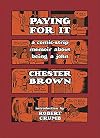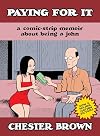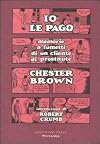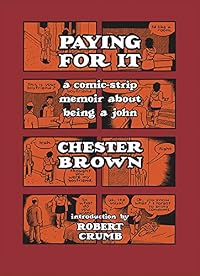
Paying for It: A Comic-Strip Memoir about Being a John
by Chester Brown
On This Page
Description
"Brown calmly lays out the facts of how he became not only a willing participant in but also a vocal proponent of one of the world's most hot-button topics--prostitution. Paying For It offers an entirely contemporary exploration of sex work--from the timid john who rides his bike to meet his escorts, wonders how to tip so as not to offend, and reads Dan Savage for advice, to the modern-day transactions complete with online reviews, seemingly willing participants, and clean apartments devoid show more of cliches street corners, drugs, or primps"--From publisher's web site. show lessTags
Recommendations















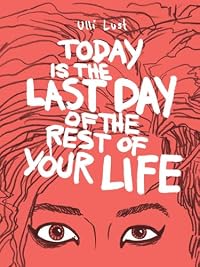



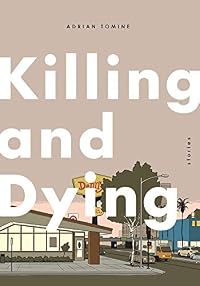
Member Recommendations
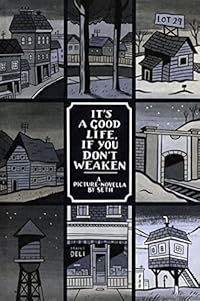
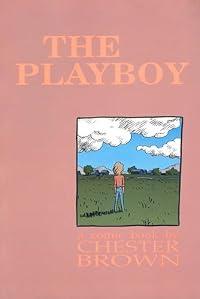
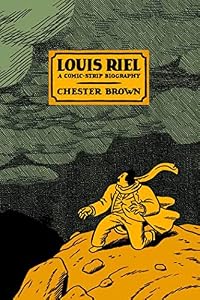
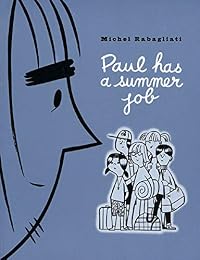
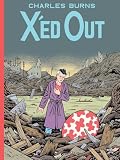
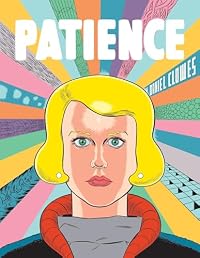
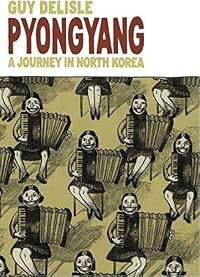
ijustgetbored Readers may be interested in juxtaposing these two graphic novels. From the voices of the protagonists to the illustrations, the contrast is immense.
by JGKC
Member Reviews
I was at the bookstore telling a friend how I never seem to like graphic novels*, and then I randomly picked this one up off the table and got sucked in. It's a non-fiction account of how the author decided to start paying for sex. The writing is matter-of-fact and rational, and Brown makes a reasoned case for his decision. He's very, very strongly opposed to marriage and to making long-term commitments. I disagree with him completely, but it was interesting to read his views. There are numerous appendices at the end of the book where he discusses various issues in more detail.
Maybe the thing that surprised me most, and that most made me realize how completely different our world-views were, was when he explained how a certain burden show more was lifted after he first had sex with a prostitute. In the past, he says, "Every time I saw an attractive woman, I wanted to walk up to her and initiate some sort of interaction. I usually lacked the confidence to do so. Those frequent inner battles led to a lot of tension. I rarely acted, which added to the burden because I'd condemn myself for failing to do anything and for missing potential opportunities." And so on. This is what really helped me understand why he feels the way he does about sex and relationships, and why it can seem rational while still being completely different from my own attitudes: I can't imagine attractiveness being the main factor in deciding whether to initiate contact with a stranger. I don't have much interest in interacting with random strangers in general; I'm more likely to talk to people because we're participating in some shared activity--a meetup, or a dinner with mutual friends. I'm not interested in developing a relationship based solely on how someone looks. But if looks are the primary thing that he cares about, and that's what makes him want to get involved with someone, and he doesn't really care about whether they have anything meaningful in common (because it seems pretty unlikely that an attractive stranger on the street would be a match personality-wise), then it makes sense just to hire a prostitute and be done with it.
So, I found it interesting and worthwhile to see a different perspective on the world (although I did sometimes find it a bit awkward to get this perspective in graphic-novel form, because some parts were, well, graphic). In many ways I found it sad to read about Brown's extreme cynicism, but it also made me think, which is always good. I think I'll read Brown's comic-strip biography of Louis Riel at some future point. show less
Maybe the thing that surprised me most, and that most made me realize how completely different our world-views were, was when he explained how a certain burden show more was lifted after he first had sex with a prostitute. In the past, he says, "Every time I saw an attractive woman, I wanted to walk up to her and initiate some sort of interaction. I usually lacked the confidence to do so. Those frequent inner battles led to a lot of tension. I rarely acted, which added to the burden because I'd condemn myself for failing to do anything and for missing potential opportunities." And so on. This is what really helped me understand why he feels the way he does about sex and relationships, and why it can seem rational while still being completely different from my own attitudes: I can't imagine attractiveness being the main factor in deciding whether to initiate contact with a stranger. I don't have much interest in interacting with random strangers in general; I'm more likely to talk to people because we're participating in some shared activity--a meetup, or a dinner with mutual friends. I'm not interested in developing a relationship based solely on how someone looks. But if looks are the primary thing that he cares about, and that's what makes him want to get involved with someone, and he doesn't really care about whether they have anything meaningful in common (because it seems pretty unlikely that an attractive stranger on the street would be a match personality-wise), then it makes sense just to hire a prostitute and be done with it.
So, I found it interesting and worthwhile to see a different perspective on the world (although I did sometimes find it a bit awkward to get this perspective in graphic-novel form, because some parts were, well, graphic). In many ways I found it sad to read about Brown's extreme cynicism, but it also made me think, which is always good. I think I'll read Brown's comic-strip biography of Louis Riel at some future point. show less
Chester Brown's paean to the joys of prostitution (hiring them, not being one; I suspect if he wrote from the latter point of view this would have been a very different book) is sort of an odd experience. The narrative was engrossing, believe it or not, and Chester is a more appealing character than he really should be, considering that he seems emotionally detached from everything and everyone in the world. But Brown's philosophy feels ill thought-out even though he goes on and on and ON about it; while he purports to weigh the pros and cons at great (and I do mean great) length, he never seems to wind up saying much. He works hard to dress up his maunderings on prostitution and turn them into a Platonic disquisition on the nature of show more love and the morality of the sex trade, but they really don't add up to anything more than "I think prostitution is a really good idea because I enjoy hiring prostitutes because it's a lot better than romance or monogamy." Well, ok, if you say so, brah!
Brown also elides over a lot of stuff that made me do a triple take. For example, in one sequence, he's having sex with a prostitute who keeps saying "Ow! Ow! Ow!" and who, according to Brown, appears to be in pain. She tells him that he isn't hurting her, but it's obvious that he is. He thinks to himself, "It's kind of a turn-on to me that she's in pain, but still, I think I'll cut this session short" or words to that effect. This experience gives him no pause whatsoever, even though it suggests that she might be unwilling or exploited, or both. Other than noting that her pain is turning him on, though (blecch), he doesn't appear to give it a second thought, other than to note that she probably isn't involved in human trafficking because, um, well, it's not clear why. Maybe because her accent is Canadian?
And whether he means to or not, Brown dehumanizes the prostitutes he portrays, as he never shows their faces or any of their physical features. The reader sees them mostly from behind, and he draws them all the same: thin with long dark hair. Brown claims that he used this technique to protect the women's privacy. Yeah, right -- because Brown's artistic technique has such verisimilitude. Give me a break. Brown's photo is in the back of the book, and I would never in a million years have recognized him if I had only seen his own drawings of himself; he draws himself as a generic dude with an oval head and glasses. So he couldn't have drawn the women in a similarly generic way? Anyone who's read Scott McCloud's "Understanding Comics" is going to see Brown's explanation for the rationalization really is.
Brown also spends the better part of the story deriding romantic love and monogamy, dismissing them as, among other things, "possessive love." Fine -- that's not necessarily an indefensible position. But by the end of the book, he's involved in -- you guessed it -- a monogamous relationship with one of the women he hired. He indulges in another paragraphs-long expostulation to explain this fact away -- something about how he's not a jealous person so it's different when he does it -- but his handwaving doesn't do much to obviate the fact that he's basically just revealed that the entire book is more or less an exercise in hypocrisy.
And finally, anyone who says he has "respect and affection" for Dave Sim has just lost me entirely.
So, three stars because I was riveted in the way I'd be riveted by a cobra about to strike, but I'll admit I kind of hate myself for it. show less
Brown also elides over a lot of stuff that made me do a triple take. For example, in one sequence, he's having sex with a prostitute who keeps saying "Ow! Ow! Ow!" and who, according to Brown, appears to be in pain. She tells him that he isn't hurting her, but it's obvious that he is. He thinks to himself, "It's kind of a turn-on to me that she's in pain, but still, I think I'll cut this session short" or words to that effect. This experience gives him no pause whatsoever, even though it suggests that she might be unwilling or exploited, or both. Other than noting that her pain is turning him on, though (blecch), he doesn't appear to give it a second thought, other than to note that she probably isn't involved in human trafficking because, um, well, it's not clear why. Maybe because her accent is Canadian?
And whether he means to or not, Brown dehumanizes the prostitutes he portrays, as he never shows their faces or any of their physical features. The reader sees them mostly from behind, and he draws them all the same: thin with long dark hair. Brown claims that he used this technique to protect the women's privacy. Yeah, right -- because Brown's artistic technique has such verisimilitude. Give me a break. Brown's photo is in the back of the book, and I would never in a million years have recognized him if I had only seen his own drawings of himself; he draws himself as a generic dude with an oval head and glasses. So he couldn't have drawn the women in a similarly generic way? Anyone who's read Scott McCloud's "Understanding Comics" is going to see Brown's explanation for the rationalization really is.
Brown also spends the better part of the story deriding romantic love and monogamy, dismissing them as, among other things, "possessive love." Fine -- that's not necessarily an indefensible position. But by the end of the book, he's involved in -- you guessed it -- a monogamous relationship with one of the women he hired. He indulges in another paragraphs-long expostulation to explain this fact away -- something about how he's not a jealous person so it's different when he does it -- but his handwaving doesn't do much to obviate the fact that he's basically just revealed that the entire book is more or less an exercise in hypocrisy.
And finally, anyone who says he has "respect and affection" for Dave Sim has just lost me entirely.
So, three stars because I was riveted in the way I'd be riveted by a cobra about to strike, but I'll admit I kind of hate myself for it. show less
Paying for it is written from the point of view of a man disillusioned with the idea of romantic love. No qualms there. He decides to make it his project to pay for sex instead of engaging in romantic relationships. An interesting subject of a graphic novel, then. What gets boring and repetitive is the frequent set pieces in which Hero Chester recycles his thoughtful (and strongly libertarian) arguments in favor of decriminalization of prostitution to uncomprehending friends-- chapter after chapter of this. The sex workers are faceless and generally indistinguishable, particularly the ones who appear in the very short chapters. I understand Brown's explanation of his desire to protect privacy, but total erasure of identity is what ended show more up happening; the series of women he depicts himself having sex with are more or less identitical.
I would have given the book a higher rating were it not for the appendix at the book's end. Long and frankly preachy, it is Brown's collected arguments in favor of decriminialization of prostitution. It is strongly libertarian. Opponents (depicted in graphic novel "strips" voicing their views) are shown as being blind to the complexity of the issues. To counter feminist arguments, he cites one feminist's arguments against prostitution and uses her to represent all feminist arguments against prostitution. Needless to say, this is quite a problem. He repeats the same tactic with several other issues, choosing one book/theorist to back up his point and citing no other sources.
Also deeply problematic was the fact that he equates the legalization of prostitition with the gay libration movement (repeatedly). These two things are not like each other. False tautology does not even begin to cover it.
Would I say Brown picked an interesting and timely subject? Yes. Would I say he executed it well? No. show less
I would have given the book a higher rating were it not for the appendix at the book's end. Long and frankly preachy, it is Brown's collected arguments in favor of decriminialization of prostitution. It is strongly libertarian. Opponents (depicted in graphic novel "strips" voicing their views) are shown as being blind to the complexity of the issues. To counter feminist arguments, he cites one feminist's arguments against prostitution and uses her to represent all feminist arguments against prostitution. Needless to say, this is quite a problem. He repeats the same tactic with several other issues, choosing one book/theorist to back up his point and citing no other sources.
Also deeply problematic was the fact that he equates the legalization of prostitition with the gay libration movement (repeatedly). These two things are not like each other. False tautology does not even begin to cover it.
Would I say Brown picked an interesting and timely subject? Yes. Would I say he executed it well? No. show less
Brown is sincere in not believing himself a misogynist, and certainly doesn't wish any of the sex workers he's been with ill, but I think there are a few problems that make me unable to swallow his imagined libertarian sex-trade utopia. They basically fall into two categories: 1) they only work if we assume all people are completely rational economic actors who never hurt beyond bearing or do stuff not in their interest (he basically doesn't talk about pimping, to take only the top of the problem pile); 2) his broader social arguments are always rooted in how he treats the women he pays to have sex with, which makes me suspicious; and 3) you can't tell a story like this by anonymizing the women, ever. I get the need to obscure some of show more their identities--in that case tell it as fiction. This seems more like self defense, more like "see? I'm okay! I was nice to her!" Which is problematic both for the personalizing reason in 2) and for the depersonalizing reason in 3). I don't think it's ever the john's place to tell the sex worker's story--but then, my definition of exploitation is clearly broader than Brown's, and while I don't think we can outlaw people performing acts not in the best interest of their happiness/health/safety, I do think we can work together to create a happy/healthy/safe society--whereas Brown seems ultimately like a sexual Hobbesian, who doesn't believe in love and thinks they chose their medicine as part of having the protection of a socioeconomic niche. In the end, too much of this feels like he's just looking for an excuse to tell you about the women he paid to have sex with, like a clammy older drunk. show less
Hearing Chester Brown read a good chunk of his newest graphic novel at a book launch, helped keep his distinct voice and cadence in my head while I read it. There's no denying the importance of this book politically in regards to sex workers and I think it does a really good job of normalizing 'the john' - especially through the internal monologues of Brown's exploration of different relationship paradigms and his paranoia in visiting sex workers. The book is charming and poignant but falls into the trap of a lot of memoirs - it doesn't necessarily follow a story structure - because real life doesn't do that - so in parts it starts to feel a bit repetitive or 'samey'. Other than that, Paying For It is still a fascinating read and an show more ambitious project on Brown's part. show less
Chester Brown, the Canadian writer-artist who has demonstrated his skill in both endevours in a previous historical narrative on the Métis leader Louis Riel, turns here to an autobiographical graphic presentation which would seem frought with difficulties. Paying for It is, on a superficial level, a frank account of his many years of seeking services from sexual workers. On a deeper ground, his story is a profound and reasoned argument for the decriminalisation of paid sexual activity between consenting adults.
Brown argues (in my opinion convincingly) that society has more to gain from removing all penalties in this area than from trying (unsuccessfully) to regulate or penalise one or both sides of the transaction.
This work is a show more serious sociological approach to the many aspects and problems that the subject of prostitution has posed everywhere. Presented in graphic sequential fashion, with text in handwriting and a direct, even scholarly, style, Brown organises his work chronologically and, then, submitting a set of 23 appendices which serve as reasoned support for his point of view. There are also extensive notes to accompany and clarify several aspects of the narrative. Of a total of 280 pages, 51 make up this non-graphic (but presented as handwritten text) supporting part.
As to the graphic art, a quasi-uniform format of eight same-size vignettes per page peopled by small figures with repetitive situations and scant erotic content, seems to underline the mechanic nature of most of the action. Brown does well to include many thought balloons which enrich the narrative and often provide humour. Other characters, besides the sexual workers and Brown himself as the 'john' in the story, add depth to this example of how pictoliterature has broken the bounds of 'comics' to explore intelligently new and promising ground. show less
Brown argues (in my opinion convincingly) that society has more to gain from removing all penalties in this area than from trying (unsuccessfully) to regulate or penalise one or both sides of the transaction.
This work is a show more serious sociological approach to the many aspects and problems that the subject of prostitution has posed everywhere. Presented in graphic sequential fashion, with text in handwriting and a direct, even scholarly, style, Brown organises his work chronologically and, then, submitting a set of 23 appendices which serve as reasoned support for his point of view. There are also extensive notes to accompany and clarify several aspects of the narrative. Of a total of 280 pages, 51 make up this non-graphic (but presented as handwritten text) supporting part.
As to the graphic art, a quasi-uniform format of eight same-size vignettes per page peopled by small figures with repetitive situations and scant erotic content, seems to underline the mechanic nature of most of the action. Brown does well to include many thought balloons which enrich the narrative and often provide humour. Other characters, besides the sexual workers and Brown himself as the 'john' in the story, add depth to this example of how pictoliterature has broken the bounds of 'comics' to explore intelligently new and promising ground. show less
I've been reading Chester Brown's idiosyncratic comics since he weirded me out with his "Ed the Happy Clown" story in "Yummy Fur" back in the late eighties. I followed him into his autobiographical work that appeared in the later issues of "Yummy Fur". His next project, in the mid-nineties, was called "Underwater", which I found incomprehensible. Then came the historical comic "Louis Riel", which I found boring. Now he's back with "Paying For It", which finds him back in autobiographical territory, which he excells at, partly because he's so cringe-inducingly honest. Partly because, in his own way, he's every bit as much of a character as the late Harvey Pekar.
In this book, he starts by telling us about the breakdown of his relationship show more with a girlfriend, to the point where they were just friends and roommates, with no sexual component to their relationship. Although he remains close friends with her to this day, Chester soured on the idea of romantic love; of long-term monogamous pairing. He began to think about patronizing prostitutes instead. After about a year of agonizing over the decision, he becomes a "john", and hires the services of a succession of prostitutes. This book is the story of his life in that arena. How does one go about setting up contact with a hooker? What's the etiquette involved? Do you tip? What do you get for your money? Do these girls like their work? All these questions are dealt with.
Chester is perfectly satisfied with the life he leads, although there is a surprise at the end that I won't give away here. Also, there's a lengthy (prose) afterword, in which he puts up a passionate and reasoned argument for decriminalization of prostitution. (not to be confused with legalization and regulation, which he argues against). You may come out of reading this book questioning a lot of your own preconceived notions. The book is frank, entertaining, and will give your system of ethics a workout. show less
In this book, he starts by telling us about the breakdown of his relationship show more with a girlfriend, to the point where they were just friends and roommates, with no sexual component to their relationship. Although he remains close friends with her to this day, Chester soured on the idea of romantic love; of long-term monogamous pairing. He began to think about patronizing prostitutes instead. After about a year of agonizing over the decision, he becomes a "john", and hires the services of a succession of prostitutes. This book is the story of his life in that arena. How does one go about setting up contact with a hooker? What's the etiquette involved? Do you tip? What do you get for your money? Do these girls like their work? All these questions are dealt with.
Chester is perfectly satisfied with the life he leads, although there is a surprise at the end that I won't give away here. Also, there's a lengthy (prose) afterword, in which he puts up a passionate and reasoned argument for decriminalization of prostitution. (not to be confused with legalization and regulation, which he argues against). You may come out of reading this book questioning a lot of your own preconceived notions. The book is frank, entertaining, and will give your system of ethics a workout. show less
Members
- Recently Added By
Lists

Drawn Out: The 50 Best Non-Superhero Graphic Novels
175 works; 8 members
Author Information

76+ Works 2,992 Members
Awards and Honors
Distinctions
Notable Lists
Common Knowledge
- Canonical title
- Paying for It: A Comic-Strip Memoir about Being a John
- Original title
- Paying for It: A Comic-Strip Memoir about Being a John
- Alternate titles
- Paying for It
- Original publication date
- 2011-03-25
- Important places
- Toronto, Ontario, Canada
Classifications
- Genre
- Graphic Novels & Comics
- DDC/MDS
- 306.7420971 — Society, Government, and Culture Social sciences, sociology & anthropology Social Behavior - Dating, Marriage, Divorce Sexual relations Sex work and prostitution Prostitution by females Female sex workers by place
- LCC
- PN6733 .B76 .P39 — Language and Literature Literature (General) Literature (General) Collections of general literature Comic books, strips, etc.
- BISAC
Statistics
- Members
- 477
- Popularity
- 63,373
- Reviews
- 22
- Rating
- (3.54)
- Languages
- 5 — English, German, Italian, Portuguese, Spanish
- Media
- Paper, Ebook
- ISBNs
- 9
- ASINs
- 5