
Pure
by Andrew Miller
On This Page
Description
Deep in the heart of Paris, its oldest cemetery is, by 1785, overflowing, tainting the very breath of those who live nearby. Into their midst comes Jean-Baptiste Baratte, a young, provincial engineer charged by the king with demolishing it. At first Baratte sees this as a chance to clear the burden of history, a fitting task for a modern man of reason. But before long, he begins to suspect that the destruction of the cemetery might be a prelude to his own.Tags
Recommendations





















Member Recommendations
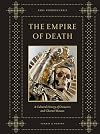
clfisha Anyone interested in the creation of Paris Catacombs and in charnel houses/ossuaries in general this is a great non-fiction coffee table book.
Member Reviews
Jean-Baptiste Baratte is a modern man, well-versed in Voltaire and ready to leave his peasant upbringing behind. Eager to display his engineering talents, he meets the minister at Versailles to receive his first significant appointment. Confident, composed, although a bit cocky, he really can’t foresee any challenge his enlightened education can’t overcome.
But, all his plans of illustrious success are somewhat hampered by the assignment he receives, one that is couched in a veiled threat. His job will be to demolish a dangerously aged Medieval church as well as removing the entire cemetery attached to it, on the Rue de Les Innocents. The minister explains,
"It is poisoning the city. Left long enough, it may poison not just local show more shopkeepers but the king himself. The king and his ministers.
Yes, my lord.
It is to be removed.
Removed?
Destroyed. Church and cemetery. The place is to be made sweet again. Use fire, use brimstone. Use whatever you need to get rid of it."
Given such a grotesque assignment, he quickly realizes that the challenge lies in more than just removing bodies. The task itself is monumental, given the crowded city and the few who wish to work on such a gory task. Baratte hesitates to begin, and as he settles in to his new job, he finds avoidance is his first impulse. What better time to buy a new suit and get drunk? A fashionable pistachio green suit that is purchased by trading in his father’s dark classic suit is a symbolic gesture that sets the scene for his new undertaking, and his new pal Armand, organ player at the Church, shows him exactly what and how to drink in order to forget the dead he’ll soon be faced with.
Thus, the novel begins, with Baratte and Armand and several other characters dealing with the sentimental and awkward removal of a beloved church. Each character is fully developed, and fascinating in the way they interact. Besides the intriguing plot, just seeing the ensemble of unlikely individuals become close-knit among grave circumstances makes the narrative surprisingly enjoyable. Virtually everyone changes in some way, and none more than Baratte.
"But are his ambitions what they were? Are they, for example, less ambitious? And if so, what has replaced them? Nothing heroic, it seems. Nothing to brag of. A desire to start again, more honestly. To test each idea in the light of experience. To stand as firmly as he can in the world’s fabulous dirt; live among uncertainty, mess, beauty. Live bravely if possible. Bravery will be necessary, he has no doubt of that. The courage to act. The courage to refuse. "
Given his thoughts above, you may imagine the fate of the pistachio suit.
The story is unique and clever, and astonishingly fast-paced. I’m not normally a fan of the historical fiction genre, and I’m completely unfamiliar with this period in French history, but I was completely absorbed. However, I have to mention, in hopes of assisting others, that some reviews of the book (most notably the New York Times) seem to imply a supernatural element, of vampires and some sort of wolf-spirit. I didn’t get that at all. One strong wind was described as howling like a wolf, but that’s it. Two well-preserved bodies are inexplicably uncovered in the removal, but no indication or allusion is made to them of being vampires. So, while there is madness and community resistance to Baratte’s assignment, there’s nothing that feels otherworldly about the story. show less
But, all his plans of illustrious success are somewhat hampered by the assignment he receives, one that is couched in a veiled threat. His job will be to demolish a dangerously aged Medieval church as well as removing the entire cemetery attached to it, on the Rue de Les Innocents. The minister explains,
"It is poisoning the city. Left long enough, it may poison not just local show more shopkeepers but the king himself. The king and his ministers.
Yes, my lord.
It is to be removed.
Removed?
Destroyed. Church and cemetery. The place is to be made sweet again. Use fire, use brimstone. Use whatever you need to get rid of it."
Given such a grotesque assignment, he quickly realizes that the challenge lies in more than just removing bodies. The task itself is monumental, given the crowded city and the few who wish to work on such a gory task. Baratte hesitates to begin, and as he settles in to his new job, he finds avoidance is his first impulse. What better time to buy a new suit and get drunk? A fashionable pistachio green suit that is purchased by trading in his father’s dark classic suit is a symbolic gesture that sets the scene for his new undertaking, and his new pal Armand, organ player at the Church, shows him exactly what and how to drink in order to forget the dead he’ll soon be faced with.
Thus, the novel begins, with Baratte and Armand and several other characters dealing with the sentimental and awkward removal of a beloved church. Each character is fully developed, and fascinating in the way they interact. Besides the intriguing plot, just seeing the ensemble of unlikely individuals become close-knit among grave circumstances makes the narrative surprisingly enjoyable. Virtually everyone changes in some way, and none more than Baratte.
"But are his ambitions what they were? Are they, for example, less ambitious? And if so, what has replaced them? Nothing heroic, it seems. Nothing to brag of. A desire to start again, more honestly. To test each idea in the light of experience. To stand as firmly as he can in the world’s fabulous dirt; live among uncertainty, mess, beauty. Live bravely if possible. Bravery will be necessary, he has no doubt of that. The courage to act. The courage to refuse. "
Given his thoughts above, you may imagine the fate of the pistachio suit.
The story is unique and clever, and astonishingly fast-paced. I’m not normally a fan of the historical fiction genre, and I’m completely unfamiliar with this period in French history, but I was completely absorbed. However, I have to mention, in hopes of assisting others, that some reviews of the book (most notably the New York Times) seem to imply a supernatural element, of vampires and some sort of wolf-spirit. I didn’t get that at all. One strong wind was described as howling like a wolf, but that’s it. Two well-preserved bodies are inexplicably uncovered in the removal, but no indication or allusion is made to them of being vampires. So, while there is madness and community resistance to Baratte’s assignment, there’s nothing that feels otherworldly about the story. show less
This has got to be one of the most beautifully written British novels of recent years. Andrew Miller's writing is a revelation: apparently effortless, wonderfully evocative prose to savour that conjures up the Paris quarter of Les Halles and the cemetery of Les Innocents before the start of the French Revolution, but with a palpable civil unrest already tainting the air, along with the stink of the overflowing burial ground. From the first sentence the reader is transported through time and space, following Jean-Baptiste Baratte, the engineer from Normandy, as he tries to make his way in the capital, tasked with the almost impossible: how to empty the ancient cemetery of Les Innocents, and destroy its church and sexton's house, in order show more to purify the Paris air? Over the subsequent twelve months, we follow Jean-Baptiste and an eclectic assortment of friends and acquaintances as they encounter bones dating back centuries, mummified corpses, accidental death and suicide, rape and insanity, but also friendship and love, leaving me quite breathless at the end. Wonderful stuff that could inspire someone to become a writer; heartily recommended. show less
Jean-Baptiste Baratte, a young engineer is given a patronage appointment to empty the cemetery of Les Innocents in Paris. The cemetery is full to bursting with interments from centuries past whose smell of decomposition and encroachment of cadaverous material into basements has begun to irritate the local populace. The project will involve destroying the church of Les Innocents, the mausoleums, the charnel houses, the meters deep burial pits, defleshing the bodies, and collecting the bones for relocation to a nearby quarry. A disturbing fiction which I could barely put down.
An excellent, quick read about the destruction of the les Innocents cemetery in Paris, just before the French Revolution. It is the story of the engineer who overseas the task, but follows him on a personal as well as professional level. He is a likeable character, with just the right balance of integrity and idiocy to make a good protagonist (in my view). The descriptions are beautiful, building a a picture of life in the les Halles area of Paris, and the book is full of colourful and eccentric characters. Most enjoyable to read, but also a bit gruesome. Somehow the unpleasant parts of the story, like the task itself ostensibly, seem tolerable.
Pure by Andrew Miller is set in the 19th Century and takes place amidst Les Innocents, the oldest cemetery in Paris. In 1875, the cemetery has been closed to burials for 5 years because it is overflowing with corpses and emitting a foul stench that permeates the air and taints anything growing in the ground nearby.
Jean-Baptiste Baratte is a young Engineer employed by the Minister to demolish the Les Innocents Cemetery and relocate the human remains to a secondary site outside the city of Paris. (The location is known to us now as the Catacombs of Paris).
Jean-Baptiste struggles with the morality of the project and where to find men willing to carry out the dark task of disturbing the final resting place of thousands of Parisian show more occupants.
Pure is rich in a sense of place and I really felt as though I were in Paris with the protagonist. The descriptions of the church, the charnel houses, the graveyards and the massive organ inside the church were so evocative I was quick to build a clear picture in my mind of this grisly yet soulful place. So much so, that when I stopped reading Pure to do some private reading about Les Innocents, the sketches were exactly what I'd pictured in my mind. The cemetery had been operating from the middle ages until 1780, and was said to contain the remains of 2 million people.
The true historical nature of the subject matter is the real hero here, and it's no surprise that Pure won the Costa Book Award in 2011 for "Best Novel" and "Book of the Year." Despite the dark content, there are several opportunities to smile throughout the novel, and here's one I'd like to share from page 51:
"He must read, work, think. He...pulls close the candle and opens his copy of Buffon's Histoire Naturelle Volume II. A piece of pale straw is his bookmark. He frowns over the page. The taxonomy of fish. Good. Excellent. He manages an entire paragraph before the words swim away from him in black, flickering shoals..."
I loved that quote, and hopefully it gives you an insight into Andrew Miller's writing style. Pure is not a book for everyone, it's gruesome and confronting and the smells alone might be enough to deter a brave reader, but it covers a fascinating event in history and one this reader definitely didn't want to shy away from. show less
Jean-Baptiste Baratte is a young Engineer employed by the Minister to demolish the Les Innocents Cemetery and relocate the human remains to a secondary site outside the city of Paris. (The location is known to us now as the Catacombs of Paris).
Jean-Baptiste struggles with the morality of the project and where to find men willing to carry out the dark task of disturbing the final resting place of thousands of Parisian show more occupants.
Pure is rich in a sense of place and I really felt as though I were in Paris with the protagonist. The descriptions of the church, the charnel houses, the graveyards and the massive organ inside the church were so evocative I was quick to build a clear picture in my mind of this grisly yet soulful place. So much so, that when I stopped reading Pure to do some private reading about Les Innocents, the sketches were exactly what I'd pictured in my mind. The cemetery had been operating from the middle ages until 1780, and was said to contain the remains of 2 million people.
The true historical nature of the subject matter is the real hero here, and it's no surprise that Pure won the Costa Book Award in 2011 for "Best Novel" and "Book of the Year." Despite the dark content, there are several opportunities to smile throughout the novel, and here's one I'd like to share from page 51:
"He must read, work, think. He...pulls close the candle and opens his copy of Buffon's Histoire Naturelle Volume II. A piece of pale straw is his bookmark. He frowns over the page. The taxonomy of fish. Good. Excellent. He manages an entire paragraph before the words swim away from him in black, flickering shoals..."
I loved that quote, and hopefully it gives you an insight into Andrew Miller's writing style. Pure is not a book for everyone, it's gruesome and confronting and the smells alone might be enough to deter a brave reader, but it covers a fascinating event in history and one this reader definitely didn't want to shy away from. show less
This is a book with a most unusual historical premise. The year is 1785. Protagonist Jean-Baptiste Baratte, an engineer from the Normandy region in France, is hired by the King’s administration to manage the removal of a cemetery, Les Innocents (a real place), and associated church. It is located in the Les Halles district of Paris. The unsanitary conditions have become intolerable. Partially decomposed bodies, many buried in common pits, have given rise to an appalling smell and tainted soil. Jean-Baptiste arrives in Paris and lodges with a local family near the cemetery. He gets in touch with a colleague to use a team of miners to perform the excavation. Once demolition begins, a number of doctors and other professionals are needed, show more including Dr. Guillotin. During the process a number of unfortunate events will occur, along with a few unexpected surprises.
The storyline follows Jean-Baptiste and the task he is assigned. His character is significantly developed. He is initially somewhat naïve, but also responsible and kind. His job is not an easy one (at risk of understatement!) He must employ creative means to accomplish the job. He will be transformed, and his idealism severely tested. This book is a fictional account of a real historic event. The writing is richly descriptive, providing a sense of time and place. There are hints at the French Revolution (which will arrive in a few years) and heavy symbolism regarding purification. I have no idea how this book got on my list to read, but I am glad it did. It is fascinating in a macabre way. I need to check out more of Andrew Miller’s catalogue. show less
The storyline follows Jean-Baptiste and the task he is assigned. His character is significantly developed. He is initially somewhat naïve, but also responsible and kind. His job is not an easy one (at risk of understatement!) He must employ creative means to accomplish the job. He will be transformed, and his idealism severely tested. This book is a fictional account of a real historic event. The writing is richly descriptive, providing a sense of time and place. There are hints at the French Revolution (which will arrive in a few years) and heavy symbolism regarding purification. I have no idea how this book got on my list to read, but I am glad it did. It is fascinating in a macabre way. I need to check out more of Andrew Miller’s catalogue. show less
Jean-Baptiste Baratte, a well qualified yet naïve young engineer, is sent to oversee the removal of the many thousands of bodies from the cemetery of Les Innocents in Paris, some 4 years before the French Revolution. This is the story of the unsettling year he spent there, dealing firstly with the foul conditions engendered by the over-spilling burial ground, the locals who despite everything, remained attached to the staus quo, the hard-to control and understand Flemish miners hired to do the work of exhuming and moving the cadavers, and the - to Baratte - wholly unfamiliar world of personal relationships particularly with women.
Miller conjures a vivid picture of the daily round in this little part of eighteenth century Paris: the show more smells, whether of sour breath or rotting vegetables or a dusty church; and of a world about to change, in the destruction of the cemetery and church which has for so long been at the heart of the community Baratte finds himself in. Violence and death are ever present.
Unsettled by the narrative, the reader is left with an impression of a world about to change, a world which is already changing in ways its citizens cannot comprehend. Uncertainty is what draws the reader in. show less
Miller conjures a vivid picture of the daily round in this little part of eighteenth century Paris: the show more smells, whether of sour breath or rotting vegetables or a dusty church; and of a world about to change, in the destruction of the cemetery and church which has for so long been at the heart of the community Baratte finds himself in. Violence and death are ever present.
Unsettled by the narrative, the reader is left with an impression of a world about to change, a world which is already changing in ways its citizens cannot comprehend. Uncertainty is what draws the reader in. show less
Members
- Recently Added By
Published Reviews
ThingScore 100
Flowers bloom again in the disinterred cemetery. Sunlight illuminates the darkness through the broken roof of the church. Though progress brings suffering and death, the balance, as Baratte knows, "will still be in your favour". As Miller proves with this dazzling novel, it is not certainty we need but courage, now as much as ever, before we too are reduced to bones.
added by riverwillow
Purifying centuries of decaying mortality and removing the miasma that permeates the dwellings, skin and even food of the area is neither simple nor necessarily popular. Miller threads into this fabric subtle ideas about modernity, glancing at Voltaire, public health and the seditious graffiti that anticipate the revolutionary fervour of 1789 - just four years away.
added by riverwillow
Lists

Top Five Books of 2013
1,562 works; 721 members

International IMPAC Dublin Literary Award
179 works; 6 members

BBC Radio 4 Bookclub
341 works; 13 members

Books Read in 2017
4,249 works; 129 members

Books Read in 2016
4,666 works; 199 members
Walter Scott Prize Winners and Shortlist
66 works; 6 members

Books Read in 2011
684 works; 20 members
Author Information

11+ Works 4,126 Members
Some Editions
Awards and Honors
Awards
Common Knowledge
- Canonical title
- Pure
- Original title
- Pure
- Original publication date
- 2011
- People/Characters
- Jean-Baptiste Baratte
- Important places
- Paris, France
- Epigraph
- The time will come when the sun will shine only on free men who have no master but their reason. Marquis de Condorcet
- Dedication
- In memory of my father, Dr Keith Miller, and of my friends, Patrick Warren and George Lachlan Brown.
- First words
- A young man, young but not very young, sits in an anteroom somewhere, some wing or other, in the Palace of Versailles.
- Quotations
- He has a notebook with him, a roll of linen tape. When he takes measurements, he asks Jeanne to hold one end of the tape; then, with a steel-tipped pen, a portable inkwell, he writes and sketches in the notebook.... he scratc... (show all)hes her replies onto the paper.... She watches how he can make a line thinner or thicker with a little adjustment of the angle of the nib.... He shuts the book, the inkwell, wipes the nib of the pen.
- Last words
- (Click to show. Warning: May contain spoilers.)The he turns away from him, wipes the flies from his face and hurries back to that soft line at the edge of the shed where the light begins.
- Blurbers*
- Binet, Laurent
- Original language*
- Engels
*Some information comes from Common Knowledge in other languages. Click "Edit" for more information.
Classifications
Statistics
- Members
- 1,243
- Popularity
- 19,823
- Reviews
- 67
- Rating
- (3.65)
- Languages
- 9 — Czech, Danish, Dutch, English, French, German, Italian, Polish, Portuguese
- Media
- Paper, Audiobook, Ebook
- ISBNs
- 30
- ASINs
- 15