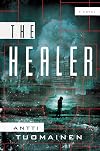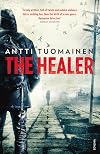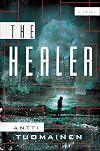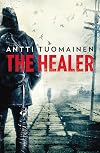
The Healer
by Antti Tuomainen
On This Page
Description
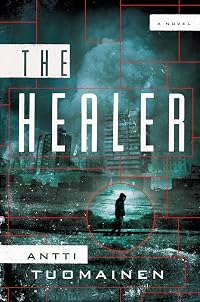
It's two days before Christmas, and Helsinki is battling ruthless climate catastrophe: subway tunnels are flooded; abandoned vehicles are burning in the streets. People are fleeing to the far north where conditions are still tolerable. Social order is crumbling and private security firms have undermined the police force. Tapani Lehtinen, a struggling poet, is among the few still willing to live in the city. When Tapani's wife, Johanna, a journalist, goes missing, he embarks on a frantic hunt show more for her. Johanna's disappearance seems to be connected to a story she was researching about a serial killer known as "The Healer". Determined to find Johanna, Tapani's search leads him to uncover secrets from her past—secrets that connect her to the very murders she was investigating.Atmospheric and moving, The Healer is a story of survival, loyalty and determination. Even when the world is coming to an end, love and hope endure.
. show less
Tags
Recommendations


















Member Recommendations
Member Reviews
Helsinki has been rendered almost uninhabitable due to climate change, and swamped by climate refugees. Buildings are falling into disrepair, law enforcement is breaking down, and the locals are heading north to seek sanctuary.
In the lead-up to Christmas, Tapani's journalist wife goes missing. After talking to friends, he realises that her disappearance may be linked to a story that she was working on, that of a serial killer called The Healer. Tapani goes to the police working on the Healer case, but they have no resources, and cannot help him. In order to find his wife, Tapani needs to strike out on his own, and delve into the life that she led before they met.
This book's prose has a hard-boiled feel to it, and Tuomainen evokes an show more atmosphere of a city on the brink of collapse. While I enjoyed it overall, there a few too many loose threads left at the end for my liking. show less
In the lead-up to Christmas, Tapani's journalist wife goes missing. After talking to friends, he realises that her disappearance may be linked to a story that she was working on, that of a serial killer called The Healer. Tapani goes to the police working on the Healer case, but they have no resources, and cannot help him. In order to find his wife, Tapani needs to strike out on his own, and delve into the life that she led before they met.
This book's prose has a hard-boiled feel to it, and Tuomainen evokes an show more atmosphere of a city on the brink of collapse. While I enjoyed it overall, there a few too many loose threads left at the end for my liking. show less
This is a very short book. I was disappointed by this when I received it, but relieved once I started reading; while this may be a function of the translation, the prose lacks flow, or appeal, or just something that's hard to put my finger upon--it seems sort of flat. There's a lot of telling, not showing, is one way I might put it, even though that's not always a negative in a book.
The Healer attempts to combine speculative fiction with mystery and, I suppose, social commentary/criticism. Climate change has finally taken its toll, in various ways, and everyone in the more southern parts of Europe is flocking North--way north, to Helsinki and beyond, where the geographic names (other than Helsinki) do not roll trippingly off the tongue. show more The main character's wife, a journalist (the last real journalist!) has disappeared! Oh woe! Is a larger plot at hand? There must be; he just knows something is wrong, and we know he knows, because he tells us, often. The police are overwhelmed, so he plays boy sleuth.
Observations:
1. Journalists must be really, really well-paid in Finland. The main character is a poet, and all he does is sit at home and write, while his wife does the bread-winning. Apparently, he's not had a job during their entire marriage.
2. Somehow, one can be married for a decade and know absolutely nothing about one's spouse's past. ("I never knew this about her, but why would she tell me? It happened before we met...") So what did they talk about for ten years?
The conclusion seemed quite rushed. And the plot quite contrived, considering it depended upon the husband knowing absolutely nothing about his wife (except their love, the color of her eyes, and that something was wrong). Apparently every single other person in their lives knew more about her than he did--and knew her longer than he did. The mystery/larger plot was meh. show less
The Healer attempts to combine speculative fiction with mystery and, I suppose, social commentary/criticism. Climate change has finally taken its toll, in various ways, and everyone in the more southern parts of Europe is flocking North--way north, to Helsinki and beyond, where the geographic names (other than Helsinki) do not roll trippingly off the tongue. show more The main character's wife, a journalist (the last real journalist!) has disappeared! Oh woe! Is a larger plot at hand? There must be; he just knows something is wrong, and we know he knows, because he tells us, often. The police are overwhelmed, so he plays boy sleuth.
Observations:
1. Journalists must be really, really well-paid in Finland. The main character is a poet, and all he does is sit at home and write, while his wife does the bread-winning. Apparently, he's not had a job during their entire marriage.
2. Somehow, one can be married for a decade and know absolutely nothing about one's spouse's past. ("I never knew this about her, but why would she tell me? It happened before we met...") So what did they talk about for ten years?
The conclusion seemed quite rushed. And the plot quite contrived, considering it depended upon the husband knowing absolutely nothing about his wife (except their love, the color of her eyes, and that something was wrong). Apparently every single other person in their lives knew more about her than he did--and knew her longer than he did. The mystery/larger plot was meh. show less
 This review was written for LibraryThing Early Reviewers.
Set in Helsinki in a dystopian future, when global warming has advanced to the point that anyone who can afford it has moved north to heavily-fortified compounds, social services are failing in the face of crime, disease, and chaos, and the rain never stops, a poet is searching for his wife who has disappeared while following a story. She's a journalist investigating a string of murders committed by a man who calls himself The Healer, who is targeting those who he believes are responsible for crimes against nature. Tapani Lehtinen is sure something bad has happened to Johanna, but he knows there is little the police can or will do. They are barely able to investigate homicides, much less missing persons. Yet Lehtinen is able to make an show more alliance of sorts with Harri Jaatinen, a tired police inspector who knows Johanna and thinks she was on to something. He gives Lehtinen what he knows about The Healer. Both of them are persistent in spite of having very little to give them hope.
The novel is not entirely successful as crime fiction.Our narrator is most definitely an amateur sleuth, though he has some of the trappings of the hardboiled PI. He stumbles upon clues, makes leaps that are based more on coincidence and convenience than detection, falls into fugue states where he reminisces about his relationship with Johanna.
The plot - the search for Johanna and her involvement with The Healer - is not the driving force of the novel. Rather, its the vision of a not-so-distant future in which a poet and a policeman have very little to sustain them other than a belief that they must go on, doing what they believe in. This is in contrast to The Healer, whose fanaticism is blind and violent.
In one passage, an angry character sketches out how the world got to such a terminal state. After a period of idealistic activism, the public mood turned to radicalism, followed by "disillusioned withdrawal ... that fight was won by big business--in other words, a few thousand people who were already superrich, who once again masked their own interests in the mantle of economic growth for the common good. The return to the old ways was echoed by the desire of a populace tired of momentary scarcity, of consuming less, to live like they had before: self-absorbed, greedy, and irresponsible--the way they'd always been taught to live."
In the end, both radical responses to environmental catastrophe and individualistic consumerism turn out to have more in common than Lehtinen's more modest belief in trying to do the right thing and in the power of his love for Johanna. There's something very likable about Lehtinen, who seems quintessentially Finnish in a Finland that has changed beyond recognition. show less
The novel is not entirely successful as crime fiction.Our narrator is most definitely an amateur sleuth, though he has some of the trappings of the hardboiled PI. He stumbles upon clues, makes leaps that are based more on coincidence and convenience than detection, falls into fugue states where he reminisces about his relationship with Johanna.
The plot - the search for Johanna and her involvement with The Healer - is not the driving force of the novel. Rather, its the vision of a not-so-distant future in which a poet and a policeman have very little to sustain them other than a belief that they must go on, doing what they believe in. This is in contrast to The Healer, whose fanaticism is blind and violent.
In one passage, an angry character sketches out how the world got to such a terminal state. After a period of idealistic activism, the public mood turned to radicalism, followed by "disillusioned withdrawal ... that fight was won by big business--in other words, a few thousand people who were already superrich, who once again masked their own interests in the mantle of economic growth for the common good. The return to the old ways was echoed by the desire of a populace tired of momentary scarcity, of consuming less, to live like they had before: self-absorbed, greedy, and irresponsible--the way they'd always been taught to live."
In the end, both radical responses to environmental catastrophe and individualistic consumerism turn out to have more in common than Lehtinen's more modest belief in trying to do the right thing and in the power of his love for Johanna. There's something very likable about Lehtinen, who seems quintessentially Finnish in a Finland that has changed beyond recognition. show less
This review was written for LibraryThing Early Reviewers.At some point in the future climate change has had the devastating environmental impact scientists have warned us about for years and in Helsinki the social order has all but collapsed as those who can afford to flee north, and those remaining fight each other over housing, food, jobs or for no reason at all. Johanna Lehtinen is a journalist who has been contacted by someone calling themselves The Healer who has claimed responsibility for a series of murders of prominent people whose common trait is that they are, in the killer’s eyes, especially responsible for the environmental degradation everyone is living with. Johanna is determined to track down this vicious killer even without the help of the resource-depleted police. Three show more days before Christmas in this unspecified future year Johanna disappears along with the photographer who was on assignment with her. Her husband,Tapani, is bereft but becomes single-minded in his quest to find his wife, alive and healthy.
If, like me, you’re all ‘serial killered out’ have no fear: this novel is barely about the killer at all. It’s not even really about the attempt to find and stop him. To me it’s a story about a man’s love for his wife and his need to hold on to that one thing while the world he has known collapses. And given that I am the least romantic person on the planet it’s a bit of a surprise then that I liked the book so very, very much.
One of the many things I adored about this book is its length. At under 250 pages it’s almost a short story in comparison to the doorstop-sized tomes being published these days but I’m not just happy to have come across a book that didn’t require weightlifting skills to read it. I truly believe it takes more talent to write with brevity and conciseness, especially when you still manage to produce as a thoroughly satisfying novel as someone who has double the word count at their disposal. And the writing here is incredibly good, each word imbued with heft and meaning, nothing extraneous. I imagine it’s difficult enough to produce a beautifully written book in one language. To turn someone else’s words into beauty in a second language must be infinitely harder and so I am truly humbled by Lola Rogers’ contribution as translator.
The characters are another striking feature of the novel. Tapani is a poet (though he’s the first to admit an unsuccessful one) whose life is given structure and direction by the process of writing. He is therefore in some ways the classic fish out of water when he is forced to dive into the physical world of investigation, though some of his the skills he uses in his work, such as a deep reservoir of patience, serve him well in his new role too. He makes new connections too including an African cab driver who has come to the city because it offers more opportunities than his homeland and a policeman who has lost access to virtually all the usual tools of his job due to the crumbling economy and social structure but has, oddly I suppose, retained his integrity. These two and several other people Tapani meets along the way help build a delicate hope that a future society burdened by the product of our shortcomings will not entirely have lost its humanity.
It’s not all romance and poetry though, there’s a first-class tale of suspense told too as Tapani goes after any lead, however insubstantial or tangential it appears. As he talks to her boss, her best friend and others he learns things he never knew about his wife’s past which helps to narrow down what has happened in her present. At the same time he reflects on their shared history and these flashbacks, short and sparsely written though they may be, are utterly gorgeous in the simple way they depict the couple’s love.
Although it’s a relatively minor theme here I can’t help but be struck by how often the changing nature of the media crops up as a theme in the European fiction I read. Liza Marklund, Thomas Enger and Stieg Larsson have all written stories which rail passionately against the modern trend towards populism over ‘real’ journalism. Tuomainen also addresses this theme such as when Johanna’s boss explains to Tapani the crux of the problem
Then I’ve got reporters like, for instance, Johanna, who want to tell the people the truth. And I’m always asking them, what fucking truth? And they never have a good answer. All they say is that people should know. And I ask, but do they want to know. And more importantly, do they want to pay to know?.
Indeed.
It’s difficult to explain how a book set in a deteriorating world in which it is almost constantly raining and where a serial killer is at large can be uplifting but THE HEALER is somehow life-affirming and beautiful despite its grim demeanour. Perhaps it’s the presence of a poet in the pages (for even unsuccessful poets have, I think, a different kind of soul than the rest of us) but somehow Tuomainen has written a sad but hopeful book that was an absolute treat to read. Highly recommended, and not just to crime fans. show less
If, like me, you’re all ‘serial killered out’ have no fear: this novel is barely about the killer at all. It’s not even really about the attempt to find and stop him. To me it’s a story about a man’s love for his wife and his need to hold on to that one thing while the world he has known collapses. And given that I am the least romantic person on the planet it’s a bit of a surprise then that I liked the book so very, very much.
One of the many things I adored about this book is its length. At under 250 pages it’s almost a short story in comparison to the doorstop-sized tomes being published these days but I’m not just happy to have come across a book that didn’t require weightlifting skills to read it. I truly believe it takes more talent to write with brevity and conciseness, especially when you still manage to produce as a thoroughly satisfying novel as someone who has double the word count at their disposal. And the writing here is incredibly good, each word imbued with heft and meaning, nothing extraneous. I imagine it’s difficult enough to produce a beautifully written book in one language. To turn someone else’s words into beauty in a second language must be infinitely harder and so I am truly humbled by Lola Rogers’ contribution as translator.
The characters are another striking feature of the novel. Tapani is a poet (though he’s the first to admit an unsuccessful one) whose life is given structure and direction by the process of writing. He is therefore in some ways the classic fish out of water when he is forced to dive into the physical world of investigation, though some of his the skills he uses in his work, such as a deep reservoir of patience, serve him well in his new role too. He makes new connections too including an African cab driver who has come to the city because it offers more opportunities than his homeland and a policeman who has lost access to virtually all the usual tools of his job due to the crumbling economy and social structure but has, oddly I suppose, retained his integrity. These two and several other people Tapani meets along the way help build a delicate hope that a future society burdened by the product of our shortcomings will not entirely have lost its humanity.
It’s not all romance and poetry though, there’s a first-class tale of suspense told too as Tapani goes after any lead, however insubstantial or tangential it appears. As he talks to her boss, her best friend and others he learns things he never knew about his wife’s past which helps to narrow down what has happened in her present. At the same time he reflects on their shared history and these flashbacks, short and sparsely written though they may be, are utterly gorgeous in the simple way they depict the couple’s love.
Although it’s a relatively minor theme here I can’t help but be struck by how often the changing nature of the media crops up as a theme in the European fiction I read. Liza Marklund, Thomas Enger and Stieg Larsson have all written stories which rail passionately against the modern trend towards populism over ‘real’ journalism. Tuomainen also addresses this theme such as when Johanna’s boss explains to Tapani the crux of the problem
Then I’ve got reporters like, for instance, Johanna, who want to tell the people the truth. And I’m always asking them, what fucking truth? And they never have a good answer. All they say is that people should know. And I ask, but do they want to know. And more importantly, do they want to pay to know?.
Indeed.
It’s difficult to explain how a book set in a deteriorating world in which it is almost constantly raining and where a serial killer is at large can be uplifting but THE HEALER is somehow life-affirming and beautiful despite its grim demeanour. Perhaps it’s the presence of a poet in the pages (for even unsuccessful poets have, I think, a different kind of soul than the rest of us) but somehow Tuomainen has written a sad but hopeful book that was an absolute treat to read. Highly recommended, and not just to crime fans. show less
Scandinavian mysteries have a reputation for being a bit bleak, but this one adds an element that takes it to a whole new level.
It is set in Helsinki in the near future, a city falling apart, in a world falling apart.
We are in the midst of a global ecological collapse, constant rain and flooding, food and drinking water become more scarce as each day goes by, electric and Internet unreliable, hundreds of millions of people try to move north to places they feel might be livable for a bit longer. Bangladesh has sunk into the ocean, unstoppable fires are consuming the rain forests of the Amazon, the US has been attacked by missiles from Mexican drug lords, the European countries that are left are at war. Things like police protection have show more become impossible, as most cops have left their jobs, medical care almost impossible to get, as those doctors left try to deal with widespread epidemics of TB, Ebola and the plague.
Well, that is unless you are very rich. Then you hire one of the many private security companies to protect you and your family and to buy the scare resources.
But it seems even a great deal of money can not offer total protection. The city has a killer, a serial killer, who calls himself The Healer. He is killing whole families of people he feels are guilty for creating the situation the world is in and the police seem helpless to stop him. Detectives are few, things like DNA testing or fingerprints almost impossible to get done.
Just one more terrible thing Tapani Lehtinen can do nothing about ...until his wife Joanna disappears. She is an investigative report, a dying breed, as is the newspaper she works for. But she is one of the few who feels a sense of duty, to try and do good. Tapani is a poet who still writes poetry every day that no one will read, as his wife is a writer after a story that no one really cares about. She never came home from work days ago and does not answer her phone. As her husband tries to find her, he discovers that she seems to have had a lead on the Healer and her last act may have been to meet with someone who had information on him. He also finds out a number of other things about the people in his life that in less shocking times might be shocking. Now, not so much.
Some things like greed and love, revenge and hatred, good and evil persist, regardless of what is going on in the world. Even if society is collapsing around you, human nature remains human nature.
OK, I will warn you, this is a dark book, in both its plot and setting. I think the sun appears for only one day in the whole story. It is a dark mystery set in a dark place.
But...except for one little issue, I really enjoyed this book. So let's get the issue out of the way. At times it can get a little preachy, a bit simplistic about the whole climate change issue. I think we get the author's point on that. I could do without the lecture.
Now, on to the good! Tapani is a great character, very likable, very smart and willing to go to any lengths to find his wife. Several of the minor characters, like a sympathetic police detective and a life saving immigrant cab driver are excellent as well. The plot, the actual mystery, is good, even if with a point or two that stretch believability. The writing is beautiful, odd to say about a story set in such a harsh world, with the translator, Lola Rogers, doing a fine job.
But I dare say what you will remember about this book when you finish it will be that world the author creates, a world literally rotting. And the question it raises..what makes some people go on when faced with a hopeless situation. Can love, even a love as strong as Tapani's make a difference? Are they the good, the brave, doing the right thing, or are they fools? You decide, right until the very last page and it shocking ending. show less
It is set in Helsinki in the near future, a city falling apart, in a world falling apart.
We are in the midst of a global ecological collapse, constant rain and flooding, food and drinking water become more scarce as each day goes by, electric and Internet unreliable, hundreds of millions of people try to move north to places they feel might be livable for a bit longer. Bangladesh has sunk into the ocean, unstoppable fires are consuming the rain forests of the Amazon, the US has been attacked by missiles from Mexican drug lords, the European countries that are left are at war. Things like police protection have show more become impossible, as most cops have left their jobs, medical care almost impossible to get, as those doctors left try to deal with widespread epidemics of TB, Ebola and the plague.
Well, that is unless you are very rich. Then you hire one of the many private security companies to protect you and your family and to buy the scare resources.
But it seems even a great deal of money can not offer total protection. The city has a killer, a serial killer, who calls himself The Healer. He is killing whole families of people he feels are guilty for creating the situation the world is in and the police seem helpless to stop him. Detectives are few, things like DNA testing or fingerprints almost impossible to get done.
Just one more terrible thing Tapani Lehtinen can do nothing about ...until his wife Joanna disappears. She is an investigative report, a dying breed, as is the newspaper she works for. But she is one of the few who feels a sense of duty, to try and do good. Tapani is a poet who still writes poetry every day that no one will read, as his wife is a writer after a story that no one really cares about. She never came home from work days ago and does not answer her phone. As her husband tries to find her, he discovers that she seems to have had a lead on the Healer and her last act may have been to meet with someone who had information on him. He also finds out a number of other things about the people in his life that in less shocking times might be shocking. Now, not so much.
Some things like greed and love, revenge and hatred, good and evil persist, regardless of what is going on in the world. Even if society is collapsing around you, human nature remains human nature.
OK, I will warn you, this is a dark book, in both its plot and setting. I think the sun appears for only one day in the whole story. It is a dark mystery set in a dark place.
But...except for one little issue, I really enjoyed this book. So let's get the issue out of the way. At times it can get a little preachy, a bit simplistic about the whole climate change issue. I think we get the author's point on that. I could do without the lecture.
Now, on to the good! Tapani is a great character, very likable, very smart and willing to go to any lengths to find his wife. Several of the minor characters, like a sympathetic police detective and a life saving immigrant cab driver are excellent as well. The plot, the actual mystery, is good, even if with a point or two that stretch believability. The writing is beautiful, odd to say about a story set in such a harsh world, with the translator, Lola Rogers, doing a fine job.
But I dare say what you will remember about this book when you finish it will be that world the author creates, a world literally rotting. And the question it raises..what makes some people go on when faced with a hopeless situation. Can love, even a love as strong as Tapani's make a difference? Are they the good, the brave, doing the right thing, or are they fools? You decide, right until the very last page and it shocking ending. show less
Take a serial killer. Add a dose of dystopian setting. Sprinkle with a reporter and set the whole thing in Finland. Now, take the husband of the reporter and send him to look for his wife.
This seems to be the premise of the Tuomainen's novel. Unfortunately the premise sounds better than the actual execution. Not that the novel is that bad - but most of the good parts in it are underdeveloped, the author is getting rambly on points that really do not matter and the end is unsatisfactory.
The one redeeming feature of the book is the dystopian setting - the author's idea of the flooded north and his descriptions are creepy and believable. If he had tried to write a novel around this and not make it a crime novel, it would have worked a show more lot better. Same with having the crime novel not set there - a lot of the action was seemingly driven by the setting but... it just felt weird.
Overall - not really the best that the North can offer (not even close) but an author I would keep an eye on - different setting or genre can actually work for him. show less
This seems to be the premise of the Tuomainen's novel. Unfortunately the premise sounds better than the actual execution. Not that the novel is that bad - but most of the good parts in it are underdeveloped, the author is getting rambly on points that really do not matter and the end is unsatisfactory.
The one redeeming feature of the book is the dystopian setting - the author's idea of the flooded north and his descriptions are creepy and believable. If he had tried to write a novel around this and not make it a crime novel, it would have worked a show more lot better. Same with having the crime novel not set there - a lot of the action was seemingly driven by the setting but... it just felt weird.
Overall - not really the best that the North can offer (not even close) but an author I would keep an eye on - different setting or genre can actually work for him. show less
This review was written for LibraryThing Early Reviewers.This is one time when an Early Reviewer program brought me a book I enjoyed without reservation.
I completely believed this dysfunctional, damaged world, spiraling toward ecological apocalypse, and I got sucked into the story. The characters kept me at arm's distance but it actually would have been out of sync with the tone if they had been more engaging. Overall there were too many coincidental connections among characters; that is my only complaint.
What most impressed me about this novel was how vivid and atmospheric it was, given the extremely spare writing style. Every word counted, every word needed to be there! I can't think of many books that I can say that about - and reading Tuomainen has inspired me to go and whack quite a few show more words from the novel that I am currently writing.
RECOMMENDED. show less
I completely believed this dysfunctional, damaged world, spiraling toward ecological apocalypse, and I got sucked into the story. The characters kept me at arm's distance but it actually would have been out of sync with the tone if they had been more engaging. Overall there were too many coincidental connections among characters; that is my only complaint.
What most impressed me about this novel was how vivid and atmospheric it was, given the extremely spare writing style. Every word counted, every word needed to be there! I can't think of many books that I can say that about - and reading Tuomainen has inspired me to go and whack quite a few show more words from the novel that I am currently writing.
RECOMMENDED. show less
This review was written for LibraryThing Early Reviewers.Members
- Recently Added By
Lists

Nordic Crime Fiction
66 works; 10 members
Scandinavian Crime Fiction
224 works; 37 members

Speculative Fiction from around the World
610 works; 18 members

Books Read in 2023
5,638 works; 147 members
Author Information

23+ Works 1,391 Members
Some Editions
Awards and Honors
Awards
Common Knowledge
- Canonical title
- The Healer
- Original title
- Parantaja
- Original publication date
- 2010
- People/Characters
- Tapani Lehtinen; Johanna Lehtinen
- Important places
- Helsinki, Finland
- Important events
- climate change
- Dedication
- For Anu
- First words
- Which was worse -- complete certainty that the worst had happened, or this fear, building up moment by moment?
- Last words*
- (Click to show. Warning: May contain spoilers.)Odotan kärsivällisesti, ja kun Johanna herää, kerron miksi minulla on pistooli kädessäni.
*Some information comes from Common Knowledge in other languages. Click "Edit" for more information.
Classifications
- Genres
- Fiction and Literature, Science Fiction, Mystery
- DDC/MDS
- 894.54134 — Literature & rhetoric Literatures of other languages Literatures of Altaic, Uralic, Hyperborean, Dravidian languages; literatures of miscellaneous languages of south Asia Finno-Ugric languages Finnic languages Finnish Finnish fiction 2000–
- LCC
- PH356 .T85 .P3713 — Language and Literature Uralic languages. Basque language Uralic. Basque Finnish
- BISAC
Statistics
- Members
- 220
- Popularity
- 147,044
- Reviews
- 26
- Rating
- (3.02)
- Languages
- 15 — Czech, Danish, Dutch, English, Finnish, French, German, Greek, Hungarian, Italian, Norwegian (Bokmål), Polish, Spanish, Swedish, Turkish
- Media
- Paper, Audiobook, Ebook
- ISBNs
- 39
- ASINs
- 5