On This Page
Description
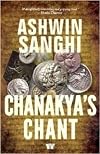
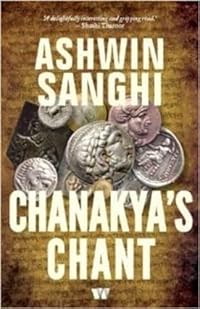
The year is 340 BC. A hunted, haunted Brahmin youth vows revenge for the gruesome murder of his beloved father. Cold, calculating, cruel and armed with a complete absence of accepted morals, he becomes the most powerful political strategist in Bharat and succeeds in uniting a ragged country against the invasion of the army of that demigod, Alexander the Great. Pitting the weak edges of both forces against each other, he pulls off a wicked and astonishing victory and succeeds in installing show more Chandragupta on the throne of the mighty Mauryan empire. History knows him as the brilliant strategist Chanakya. Satisfied-and a little bored-by his success as a kingmaker, through the simple summoning of his gifted mind, he recedes into the shadows to write his Arthashastra, the 'science of wealth'. But history, which exults in repeating itself, revives Chanakya two and a half millennia later, in the avatar of Gangasagar Mishra, a Brahmin teacher in smalltown India who becomes puppeteer to a host of ambitious individuals-including a certain slumchild who grows up into a beautiful and powerful woman. Modern India happens to be just as riven as ancient Bharat by class hatred, corruption and divisive politics and this landscape is Gangasagar's feasting ground. Can this wily pandit-who preys on greed, venality and sexual deviance-bring about another miracle of a united India? Will Chanakya's chant work again? Ashwin Sanghi, the bestselling author of The Rozabal Line, brings you yet another historical spinechiller. show lessTags
Recommendations


Member Reviews
Very nice book. The characters have been presented in intricate details and the author has run you through the book with fast paced action. The wits of Chanakya and Ganga are beyond imagination. Although too political and sometimes it has gone way overboard. All in all, it was a goodread.
Sometimes you pick up a book that just compels you to write a review; that agitates your mind so much that you know that you need to share the various thoughts and sentiments that it kindles in order to be at peace. This is what happened when I picked up Ashwin Sanghi’s latest offering, Chankaya’s Chant.
Why did I pick up the book from the horde of new releases that pass my table every day? Not sure really apart from the fact that the synopsis on the back cover seemed interesting and different. Also as one of our regulars on the blog pointed out, I do seem to have a soft spot for historical fiction. But Chankya’s Chant is different from the other books in the genre. It is both historical as well as contemporary. For there run show more through the book, two parallel stories – one that is based in current times and another that dates back 2300 years. Taken individually both these stories are complete and do full justice to their own genres. And that is one of the strengths of the book. None of the narratives leave the reader feeling short changed. Both are fact paced, compact and use the language of the era they are situated in. In Chankya’s Chant they come together as two equals, their union sanctified by the (un)holy quest for power that consumes the main protagonists. The reader is left with the distinction impression that when it comes to politics and power play, not much has changed in the last two millenia.
So 2300 years ago when a young boy is forced to flee after his father is insulted and beheaded for protesting against the excesses of a philandering king he pledges revenge. He distances himself from every emotion and relationship and embarks on a single minded quest for power. He chooses a young, eager and promising boy – Chandragupta -to instrumentalize his revenge and to save Bharat from the clutches of the Macedonian conqueror Alexander. And as “ends justify the means” he uses any and every trick conceivable – and mostly inconceivable – to get to his goal. No price is too large, no sacrifice too big and no relationship sacrosanct.There is only one rule in his game- winning. So he willingly sends off the only woman he loves in to the arms of men he detests; forces his protegee to seduce a Macedonian princess; poisons a well used by common people and cattle with white arsenic; plans political assassinations; encourages kingdoms to fight one another, creates religious differences that lead to the murder of many innocents – all in the name of the greater good. Of course, having followed his actions through the book one can’t help wondering if his purported goal of unifying Bharat is simply a guise to hide his all consuming need for revenge and power; to keep his force of “righteous and wronged” would be emperors on his side.
Read complete review @ http://blogs.indiareads.com/views-and-reviews/the-chant-of-power-book-review/ show less
Why did I pick up the book from the horde of new releases that pass my table every day? Not sure really apart from the fact that the synopsis on the back cover seemed interesting and different. Also as one of our regulars on the blog pointed out, I do seem to have a soft spot for historical fiction. But Chankya’s Chant is different from the other books in the genre. It is both historical as well as contemporary. For there run show more through the book, two parallel stories – one that is based in current times and another that dates back 2300 years. Taken individually both these stories are complete and do full justice to their own genres. And that is one of the strengths of the book. None of the narratives leave the reader feeling short changed. Both are fact paced, compact and use the language of the era they are situated in. In Chankya’s Chant they come together as two equals, their union sanctified by the (un)holy quest for power that consumes the main protagonists. The reader is left with the distinction impression that when it comes to politics and power play, not much has changed in the last two millenia.
So 2300 years ago when a young boy is forced to flee after his father is insulted and beheaded for protesting against the excesses of a philandering king he pledges revenge. He distances himself from every emotion and relationship and embarks on a single minded quest for power. He chooses a young, eager and promising boy – Chandragupta -to instrumentalize his revenge and to save Bharat from the clutches of the Macedonian conqueror Alexander. And as “ends justify the means” he uses any and every trick conceivable – and mostly inconceivable – to get to his goal. No price is too large, no sacrifice too big and no relationship sacrosanct.There is only one rule in his game- winning. So he willingly sends off the only woman he loves in to the arms of men he detests; forces his protegee to seduce a Macedonian princess; poisons a well used by common people and cattle with white arsenic; plans political assassinations; encourages kingdoms to fight one another, creates religious differences that lead to the murder of many innocents – all in the name of the greater good. Of course, having followed his actions through the book one can’t help wondering if his purported goal of unifying Bharat is simply a guise to hide his all consuming need for revenge and power; to keep his force of “righteous and wronged” would be emperors on his side.
Read complete review @ http://blogs.indiareads.com/views-and-reviews/the-chant-of-power-book-review/ show less
Though the book starts on a period-tale, it proved to be engrossing soon-after. I finished the book in one sitting on a sunday morning in one go (morning 9 am-4pm).
The author Ashwin Sanghi seems to be a learnt man-those kinds who are glued to literature, GK, quizzes, and current-affairs more than an average person. The book imbibes his knowledge-base gathered during his childhood, coupled with the knowledge of intricacies of corporate world. The book is a culmination of putting all the thoughts in form of a story. Though, the style of writing is Indian-like, the author seems to be inspired by robin-cook style of dramatizing scenes of murders and bloodshots ("The arrow shot directly for Philipino skin, and not be stopped by it, it show more pierced further to heart, which caused wail of blood to shoot from his mouth").
Though, at many places, the selection of phrases and idioms are way too predictable, for an Indian audience.
The interleaving of chapters makes it read like two-books in one, though. show less
The author Ashwin Sanghi seems to be a learnt man-those kinds who are glued to literature, GK, quizzes, and current-affairs more than an average person. The book imbibes his knowledge-base gathered during his childhood, coupled with the knowledge of intricacies of corporate world. The book is a culmination of putting all the thoughts in form of a story. Though, the style of writing is Indian-like, the author seems to be inspired by robin-cook style of dramatizing scenes of murders and bloodshots ("The arrow shot directly for Philipino skin, and not be stopped by it, it show more pierced further to heart, which caused wail of blood to shoot from his mouth").
Though, at many places, the selection of phrases and idioms are way too predictable, for an Indian audience.
The interleaving of chapters makes it read like two-books in one, though. show less
'A man who opens his mouth too often may end up meeting a tragic end, either from indigestion or execution!' - ironic, but point taken.
Political thriller roller coaster, politely acceptable
Political thriller roller coaster, politely acceptable
A good read.... a bit filmy in-between but worth a read.... nice quotes and witty situations... characterized very well!!!
A gripping political base... a way which politics should go
Ratings
Members
- Recently Added By
Author Information

25 Works 2,554 Members
Ashwin Sanghi is counted among India's highest-selling English fiction authors. he was born in January 1969. He was educated at St. Xavier's College in Mumbai and Yale University. He novels includie The Rozabal Line (2008), Chanakya's Chant (2010), The Krishna Key (2012) and The Sialkot Saga (2015). His latest thriller, Private India (2017), is show more co-authored with James Patterson. His non-fiction book 13 Steps to Bloody Good Luck was published in November 2014. (Bowker Author Biography) show less

2 Works 291 Members

Chirag Thakkar is a LibraryThing Author, an author who lists their personal library on LibraryThing.
Awards and Honors
Awards
Series

Classifications
Statistics
- Members
- 290
- Popularity
- 110,522
- Reviews
- 7
- Rating
- (3.66)
- Languages
- English, Gujarati, Hindi
- Media
- Paper, Audiobook, Ebook
- ISBNs
- 7
- ASINs
- 5