
Alex Rutherford
Author of Raiders from the North: Empire of the Moghul
About the Author
Disambiguation Notice:
Alex Rutherford is a pen name of Diana and Michael Preston.
Series
Works by Alex Rutherford
Říše Mughalů Vládce světa 1 copy
Associated Works
Tagged
Common Knowledge
- Gender
- n/a
- Map Location
- United Kingdom
- Disambiguation notice
- Alex Rutherford is a pen name of Diana and Michael Preston.
Members
Reviews
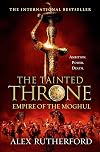
The fourth installment in the Empire of the Moghul series, The Tainted Throne, takes readers deeper into the turbulent history of the Mughal dynasty — this time focusing on the complex and often brutal reign of Empress Nur Jahan and the inner workings of Jahangir's court. Compared to its predecessor, I found this one more engaging and emotionally resonant, with stronger character development and a more gripping narrative.
Alex Rutherford continues to bring Mughal India to life with rich show more historical detail, political intrigue, and family drama. The Tainted Throne does a solid job of exploring the power dynamics between Nur Jahan and the men who surround her, presenting her as a formidable force in a male-dominated empire.
However, the book still suffers from a recurring flaw in the series: abrupt and often jarring time skips. While these jumps help to cover the vast and complex historical timeline, they sometimes rob the reader of crucial emotional or narrative buildup. I often found myself wanting to know more about what transpired in the gaps — particularly as relationships evolved or major events shifted the story. These skipped moments could have added greater depth and continuity to an otherwise strong story.
Despite that, this entry felt more focused and satisfying than the previous volumes. It manages to balance historical fact with narrative flair in a way that kept me invested. If you're already on the journey through the Empire of the Moghul series, The Tainted Throne is definitely worth reading — and might just rekindle your interest if the previous book left you unsure. show less
Alex Rutherford continues to bring Mughal India to life with rich show more historical detail, political intrigue, and family drama. The Tainted Throne does a solid job of exploring the power dynamics between Nur Jahan and the men who surround her, presenting her as a formidable force in a male-dominated empire.
However, the book still suffers from a recurring flaw in the series: abrupt and often jarring time skips. While these jumps help to cover the vast and complex historical timeline, they sometimes rob the reader of crucial emotional or narrative buildup. I often found myself wanting to know more about what transpired in the gaps — particularly as relationships evolved or major events shifted the story. These skipped moments could have added greater depth and continuity to an otherwise strong story.
Despite that, this entry felt more focused and satisfying than the previous volumes. It manages to balance historical fact with narrative flair in a way that kept me invested. If you're already on the journey through the Empire of the Moghul series, The Tainted Throne is definitely worth reading — and might just rekindle your interest if the previous book left you unsure. show less
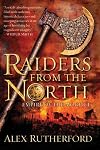
I didn’t finish this book, but I did read the first 146 pages (33%), and it was a hard slog at times. I wouldn’t have got that far if I hadn’t needed to review it for Early Reviewers. I stopped when I realized I was having more fun noting its bad points than I was in following the plot. So...
Problems, in no particular order:
Characters: I found the people in the book generally uninteresting. This was particularly true for the protagonist and viewpoint character, Barbur, but it also show more applied to pretty much everyone else, who are mostly one-dimensional stereotypes (good and bad characters alike) with no noticeable character development. We are given little insight into their minds and motives, partly because of the tight third-person narrative, which seldom leaves Barbur’s viewpoint after the first chapter.
Plot: The plot is straight-forward with little suspense. Boy unexpectedly becomes king, boy conquers another kingdom (with a lot of help from a wise old mentor), boy loses both kingdoms and becomes a brigand, boy eventually reconquers first kingdom… but at this point I stopped reading. Things that could have generated suspense didn’t: when Barbur recklessly undertakes a secret mission in the process of his first conquest, we know he’s going to succeed, so the only question is how (hint: not by doing anything smart). Later, when his mother, grandmother, and sister are being held hostage, their captor suddenly releases them for no apparent reason (He fears Barbur because of the latter’s bandit raids? Really?). And so it goes...
Historical accuracy: This I can’t speak to, as this is not my period or geographical area of interest, although some well-researched details are, er, evident (“All the hours of practice with his small, sharply curved double bow using a bronze ring to protect his thumb as he drew back the taunt string had paid off.”). I would assume it was good, except for...
Fighting: In the passages where Barbur is involved in combat, many of the details are unlikely to the point of being ludicrous. In the historical note at the back of the book, the author details his research, traveling throughout the area covered by the story and living with the descendants of Barbur’s people. I do wonder, however, if he ever mounted a horse or picked up a sword, much less observed or participated in primitive combat. In the description of Barbur’s scaling the walls and fighting on the battlements of Samarkand, I kept thinking of Mary Renault’s Alexander in Fire From Heaven, who would have laughed himself sick at Barbur’s antics. Later, when Barbur sets out to capture a small fort as a base for his brigandry, my disbelief finally came permanently unsuspended. First, does he gallop toward the objective, drawing his sword as he goes? No, he draws the sword first, then leaps into the saddle. Then, when he rides his horse into the hall of the fort in pursuit of one of the defenders and is confronted by a man with a spear and shield, does he charge, using his horse as a weapon and hacking his enemy down? No, he bandies words with the man (who replies, “Vanquish me in combat if you can.”), then dismounts and advances. Does the man throw his spear at Barbur, who is armed only with a sword? No, he tries to fence with it, then when our hero falls over the furniture and disarms himself, “raising his spear above his head in both hands he was about to stab its point into Barbur’s exposed throat”, only to be foiled by a hastily interposed wooden dinner platter... and so it goes.
Other details: This could become a long list. The scene-painting is generally effective, no doubt due to the author’s on-the-ground research. The narrative style, on the other hand, leaves much to be desired. Too many short choppy sentences; no sense of pace; grammatical errors which should have been caught by the editor (“By now, riding hard and light, the mountains of Freghana should have been in sight.”); too many cliches to mention; anachronisms (during “the ninety minutes the five scouts were away”, who held the stopwatch?); wooden dialogue; the fact that everyone speaks exactly the same, with no attempt at individual voices... the list goes on.
Sex and violence: Considering the subject matter, I didn’t see that much, although it’s possible that it increases in the remaining two thirds of the book. The violence is run-of-the-mill, except where it’s silly (see above); the only sexual episode I saw (where Barbur deflowers his bride) was unintentionally humorous (“Suddenly Barbur felt that his young blood could be contained no longer. The tension of the day seemed to explode inside him...”). And why is a seventeen year old warlord still a virgin, anyway?
Some people seem to have enjoyed this book. I wish them well; for myself, I struggled on, hope fading, until at last I was vanquished by the all-conquering Barbur, who simply succeeded in boring me to death. show less
Problems, in no particular order:
Characters: I found the people in the book generally uninteresting. This was particularly true for the protagonist and viewpoint character, Barbur, but it also show more applied to pretty much everyone else, who are mostly one-dimensional stereotypes (good and bad characters alike) with no noticeable character development. We are given little insight into their minds and motives, partly because of the tight third-person narrative, which seldom leaves Barbur’s viewpoint after the first chapter.
Plot: The plot is straight-forward with little suspense. Boy unexpectedly becomes king, boy conquers another kingdom (with a lot of help from a wise old mentor), boy loses both kingdoms and becomes a brigand, boy eventually reconquers first kingdom… but at this point I stopped reading. Things that could have generated suspense didn’t: when Barbur recklessly undertakes a secret mission in the process of his first conquest, we know he’s going to succeed, so the only question is how (hint: not by doing anything smart). Later, when his mother, grandmother, and sister are being held hostage, their captor suddenly releases them for no apparent reason (He fears Barbur because of the latter’s bandit raids? Really?). And so it goes...
Historical accuracy: This I can’t speak to, as this is not my period or geographical area of interest, although some well-researched details are, er, evident (“All the hours of practice with his small, sharply curved double bow using a bronze ring to protect his thumb as he drew back the taunt string had paid off.”). I would assume it was good, except for...
Fighting: In the passages where Barbur is involved in combat, many of the details are unlikely to the point of being ludicrous. In the historical note at the back of the book, the author details his research, traveling throughout the area covered by the story and living with the descendants of Barbur’s people. I do wonder, however, if he ever mounted a horse or picked up a sword, much less observed or participated in primitive combat. In the description of Barbur’s scaling the walls and fighting on the battlements of Samarkand, I kept thinking of Mary Renault’s Alexander in Fire From Heaven, who would have laughed himself sick at Barbur’s antics. Later, when Barbur sets out to capture a small fort as a base for his brigandry, my disbelief finally came permanently unsuspended. First, does he gallop toward the objective, drawing his sword as he goes? No, he draws the sword first, then leaps into the saddle. Then, when he rides his horse into the hall of the fort in pursuit of one of the defenders and is confronted by a man with a spear and shield, does he charge, using his horse as a weapon and hacking his enemy down? No, he bandies words with the man (who replies, “Vanquish me in combat if you can.”), then dismounts and advances. Does the man throw his spear at Barbur, who is armed only with a sword? No, he tries to fence with it, then when our hero falls over the furniture and disarms himself, “raising his spear above his head in both hands he was about to stab its point into Barbur’s exposed throat”, only to be foiled by a hastily interposed wooden dinner platter... and so it goes.
Other details: This could become a long list. The scene-painting is generally effective, no doubt due to the author’s on-the-ground research. The narrative style, on the other hand, leaves much to be desired. Too many short choppy sentences; no sense of pace; grammatical errors which should have been caught by the editor (“By now, riding hard and light, the mountains of Freghana should have been in sight.”); too many cliches to mention; anachronisms (during “the ninety minutes the five scouts were away”, who held the stopwatch?); wooden dialogue; the fact that everyone speaks exactly the same, with no attempt at individual voices... the list goes on.
Sex and violence: Considering the subject matter, I didn’t see that much, although it’s possible that it increases in the remaining two thirds of the book. The violence is run-of-the-mill, except where it’s silly (see above); the only sexual episode I saw (where Barbur deflowers his bride) was unintentionally humorous (“Suddenly Barbur felt that his young blood could be contained no longer. The tension of the day seemed to explode inside him...”). And why is a seventeen year old warlord still a virgin, anyway?
Some people seem to have enjoyed this book. I wish them well; for myself, I struggled on, hope fading, until at last I was vanquished by the all-conquering Barbur, who simply succeeded in boring me to death. show less
 This review was written for LibraryThing Early Reviewers.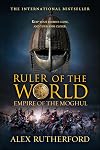
Ruler of the World, the third book in Alex Rutherford’s Empire of the Moghul series, is a fast-paced and gripping continuation of the saga of India’s Mughal emperors. As with the previous books, Rutherford masterfully blends historical fact with dramatic storytelling to bring to life one of the most powerful dynasties in history.
One of the standout features of the novel is its pacing—it moves quickly, never lingering too long on a single event, which makes it incredibly engaging. The show more momentum keeps you turning pages, eager to see what challenge or betrayal will strike next. However, this speed does come with a drawback: the narrative sometimes jumps through time within a single chapter, which can be disorienting. There are moments where it's unclear how much time has passed, making it harder to stay grounded in the story’s timeline.
Despite that, the characters remain a strong point. Each figure—whether a ruler, general, or consort—has a distinct personality and voice, which adds depth and emotional resonance to the tale. You feel their ambitions, fears, and loyalties in a way that brings the historical stakes to life.
Overall, Ruler of the World is a compelling read for anyone interested in historical fiction. While its structure may occasionally cause confusion, the vivid characters and relentless pace more than make up for it. show less
One of the standout features of the novel is its pacing—it moves quickly, never lingering too long on a single event, which makes it incredibly engaging. The show more momentum keeps you turning pages, eager to see what challenge or betrayal will strike next. However, this speed does come with a drawback: the narrative sometimes jumps through time within a single chapter, which can be disorienting. There are moments where it's unclear how much time has passed, making it harder to stay grounded in the story’s timeline.
Despite that, the characters remain a strong point. Each figure—whether a ruler, general, or consort—has a distinct personality and voice, which adds depth and emotional resonance to the tale. You feel their ambitions, fears, and loyalties in a way that brings the historical stakes to life.
Overall, Ruler of the World is a compelling read for anyone interested in historical fiction. While its structure may occasionally cause confusion, the vivid characters and relentless pace more than make up for it. show less
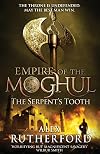
A MELANCHOLIC YET MAJESTIC ENTRY FOCUSED ON SHAH JAHAN’S GRIEF-DRIVEN ERA, WEAVING ROMANCE, ARCHITECTURAL BEAUTY, AND THE EMPIRE’S SLOW UNRAVELING INTO AN ELOQUENT HISTORICAL TAPESTRY.
Awards

You May Also Like


Associated Authors
Statistics
- Works
- 17
- Also by
- 1
- Members
- 759
- Popularity
- #33,503
- Rating
- 3.5
- Reviews
- 46
- ISBNs
- 58
- Languages
- 3
