On This Page
Description
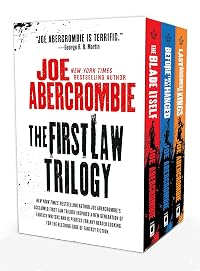
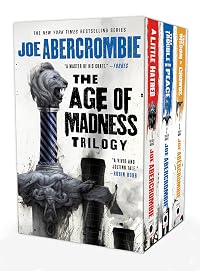
THE FIRST LAW trilogy is a fantasy masterpiece, now available in a stunning box set. It's a perfect gift for fans of A GAME OF THRONES; a must-have for fans of Joe Abercrombie; and a great way for new readers to discover one of the most highly acclaimed fantasy trilogies of the past decade.Tags
Recommendations
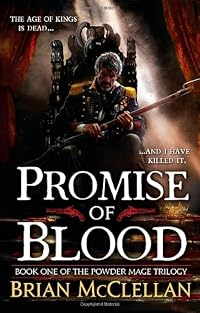
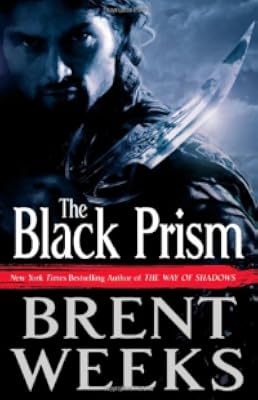

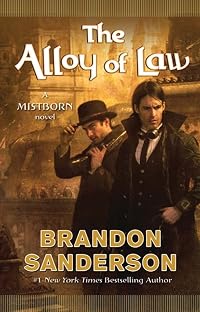
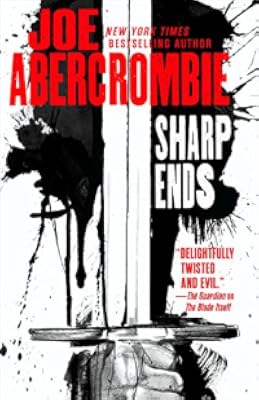
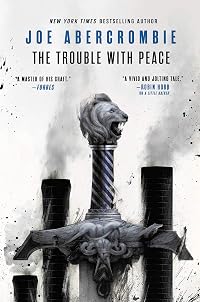
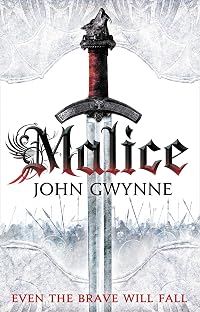
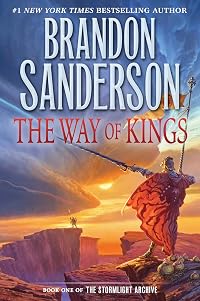
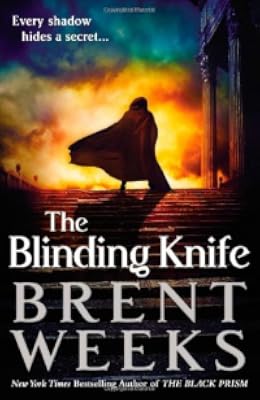
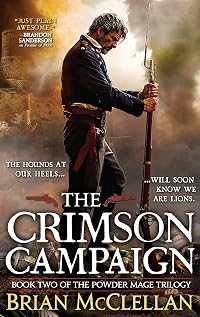
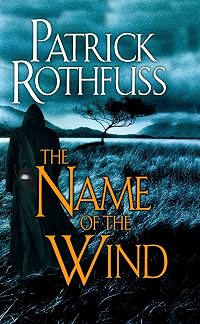
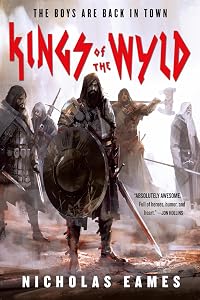

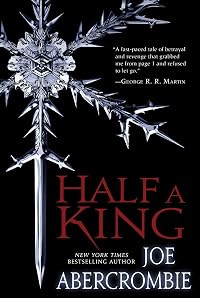

Member Recommendations
imyril Two very different authors tackle fantasy stereotypes and turn them on their heads. Abercrombie focuses on antiheroes - the coward, the torturer, the berserker - whereas Morgan takes more traditional heroes and then soaks them in noir. The results are delightfully wicked, blood-soaked and utterly readable.
Member Reviews
4 and a half stars. the trilogy consists of The Blade Itself, Before They Are Hanged, and Last Argument of Kings. Abercrombie places this work in the usual semi-medieval setting of this subgenre, complete with magic; but it is unusually a broadside against war, delineated in all its gritty, unsettling, and indecorous detail, and with all the destruction it causes front and center. as such it's a profoundly cynical Point of View, expressed and/or disavowed by a collection of riveting and memorable figures in the thick of it, including an unsung hero of... the Inquisition. but though it's pointed, it's also passionate. it loves its setting, and its characters - and inventing ever-new obstacles to strew in their path, too. it sets them up, show more it knocks them down, then they (mostly) get up to do it all over again. you've got to admire their perseverance. and i kind of love all the writing, the wicked joy of it, the world, built up over time over a thousand years only to be torn down again. is it the human condition? all that striving, all that building, all that care expended, to make something thought of as permanent, like say civilization, only to half-willfully, half-unwittingly, fail to preserve it (the status quo, or the dearly desired, or the dastardly plans) once again. is it inevitable, or not? read on. because it also reads really well, rollicking from page to page and from book to book with a zest and breakneck pace that make the whole work difficult to put down. along the way all the usual stock figures are made fresh, and all the conventions are subverted, and the result is one of those breath-of-fresh-air new standards that may change the genre as a whole for the better. show less
’If a thing smells like shit, and is the colour of shit, the chances are it is shit.’”
In “The First Law Trilogy (#1-3)” by Joe Abercrombie
“’No one likes to shake hands with the man who empties the latrine pits either, but pits have to be emptied all the same. Otherwise the world fills up with shit.’”
In “The First Law Trilogy (#1-3)” by Joe Abercrombie
“A soldier was dragged past with an arrow in his eye. ‘Is it bad?’ he was wailing, ‘is it bad?’”
In “The First Law Trilogy (#1-3)” by Joe Abercrombie
“Every man had his own special language of agony. Some screamed and howled without end. Some cried out for help, for mercy, for water, for their mothers. Some coughed and gurgled and spat blood. Some show more wheezed and rattled out their last breaths.”
In “The First Law Trilogy (#1-3)” by Joe Abercrombie
World building has always been the last refuge of the untalented when it comes to fantasy writing. If more time was spent on plot and characters, and less of GDP and child mortality rates of these 'fantasy worlds,' we'd all be a lot better off. If you compare how many pages are in the Illiad, or in Fritz Lieber's works, or in Joe Abercrombie's, say, and compare it to the doorstops of Martin and Jordan, then it's crystal clear that 'world building' can often be an unnecessary device. Abercrombie, as an example, created better characters in 4 pages of writing, than most authors did with 4 novels. More is not necessary better. World building is always problematic for me, because IMO, it robs the reader of imagination, of the ability and experience of filing in the gaps yourself, and becoming immersed in the world, which is a joy to me as a reader. Let's take the Shire from LotR as an example. Everybody's Shire is different, because every reader, every person, is unique, and has their own unique take on the Shire. Sure, the rolling green hills are there for everybody, but everybody's rolling green hills will be different. Bilbo's front do, or at Bag End will be its own unique and subtle shade of green for everybody. But if the author gives us every nut and bolt, fills in every blank, and gives us reams of economic data on a world or a person, then the imagination, the wonder, is lost. As a kid, I used to wonder at how strange and wonderful Numenor was in this particular world, but then Tolkien and his son gave us notebooks worth of backstory, filing in every gap, and Numenor lost its sparkle and wonder...
That's just the difference between good world building and bad world building. The suggestive unexplained detail hinting at wonders yet unrevealed (Abercrombie’s and Tolkien’s without the Notes) versus exhaustive and exhausting detail (like Jordan and Martin). Most of time it’s clearly just a question of balance. But if you read fantasy (of the imagined world’s variety) you need to believe this is a real place rather than just a hastily knocked together wonderland, even if you don't need reams of econometric data. Actually this why I generally don't read much fantasy anymore, except for a few authors here and there like Abercrombie. Nothing gets me frothing at the mouth more quickly than "You are the Chosen One, who must use the Staff of Wonders to defeat the Dark Duke!!" None of that in Abercrombie's SF. You get Sand dan Glokta instead, which is much, much better...
Nb: The Blade Itself (5), Before They Are Hanged (4) and Last Argument of Kings (5) show less
In “The First Law Trilogy (#1-3)” by Joe Abercrombie
“’No one likes to shake hands with the man who empties the latrine pits either, but pits have to be emptied all the same. Otherwise the world fills up with shit.’”
In “The First Law Trilogy (#1-3)” by Joe Abercrombie
“A soldier was dragged past with an arrow in his eye. ‘Is it bad?’ he was wailing, ‘is it bad?’”
In “The First Law Trilogy (#1-3)” by Joe Abercrombie
“Every man had his own special language of agony. Some screamed and howled without end. Some cried out for help, for mercy, for water, for their mothers. Some coughed and gurgled and spat blood. Some show more wheezed and rattled out their last breaths.”
In “The First Law Trilogy (#1-3)” by Joe Abercrombie
World building has always been the last refuge of the untalented when it comes to fantasy writing. If more time was spent on plot and characters, and less of GDP and child mortality rates of these 'fantasy worlds,' we'd all be a lot better off. If you compare how many pages are in the Illiad, or in Fritz Lieber's works, or in Joe Abercrombie's, say, and compare it to the doorstops of Martin and Jordan, then it's crystal clear that 'world building' can often be an unnecessary device. Abercrombie, as an example, created better characters in 4 pages of writing, than most authors did with 4 novels. More is not necessary better. World building is always problematic for me, because IMO, it robs the reader of imagination, of the ability and experience of filing in the gaps yourself, and becoming immersed in the world, which is a joy to me as a reader. Let's take the Shire from LotR as an example. Everybody's Shire is different, because every reader, every person, is unique, and has their own unique take on the Shire. Sure, the rolling green hills are there for everybody, but everybody's rolling green hills will be different. Bilbo's front do, or at Bag End will be its own unique and subtle shade of green for everybody. But if the author gives us every nut and bolt, fills in every blank, and gives us reams of economic data on a world or a person, then the imagination, the wonder, is lost. As a kid, I used to wonder at how strange and wonderful Numenor was in this particular world, but then Tolkien and his son gave us notebooks worth of backstory, filing in every gap, and Numenor lost its sparkle and wonder...
That's just the difference between good world building and bad world building. The suggestive unexplained detail hinting at wonders yet unrevealed (Abercrombie’s and Tolkien’s without the Notes) versus exhaustive and exhausting detail (like Jordan and Martin). Most of time it’s clearly just a question of balance. But if you read fantasy (of the imagined world’s variety) you need to believe this is a real place rather than just a hastily knocked together wonderland, even if you don't need reams of econometric data. Actually this why I generally don't read much fantasy anymore, except for a few authors here and there like Abercrombie. Nothing gets me frothing at the mouth more quickly than "You are the Chosen One, who must use the Staff of Wonders to defeat the Dark Duke!!" None of that in Abercrombie's SF. You get Sand dan Glokta instead, which is much, much better...
Nb: The Blade Itself (5), Before They Are Hanged (4) and Last Argument of Kings (5) show less
Book 1
In a grim dark world, where hunger, blood, and pain to various degrees are prevalent, a mysterious mage returns to Adua to claim his place on the Closed Council, putting together all the other characters of the novel, Sand dan Glokta, the crippled interrogator, Jezal Luthar, the dandy rich fencer, Logen, the ruthless mercenary, and others. Each one has its own POV, an approach that I personally love in worldbuilding. Skimming other reviews on various sites, I see these are the characters everyone mentions. Among them, Glokta is definitely the one who limped into my heart with his dark, witty humour. A tormented soul, but aren't those the best ones? I was surprised by the fact that no one mentions Ferro in their reviews, the only show more woman with a POV. Ferro, the former slave who escaped her captives now lives only for one reason: revenge. The author doesn't dedicate many chapters to her story, but I believe, or perhaps it's just a hope, that she'll be more central in the rest of the trilogy.
There's also another woman in the story, Ardee, but she has no POV. We only see her through the others’ eyes. His brother, Major West, vain Jezal who for once behaves like the gentleman he’s not, and Glokta, of course.
As you can imagine by now, I loved this book. The characters are all unique and reach out to the reader with their unmistakable voice. The only part that really really bored me was Logan’s last chapter. It was like it would never end—as a matter of fact, I think it's the longest chapter of the book—and I’m sure some readers loved it for that same reason. Sorry, but I can’t tell more because ... spoilers.
That said, there are a few things that I didn’t like.
First, the formatting quality. I purchased my copy on Amazon, so the issue may be limited to their edition. Many times, I found myself having to read back entire paragraphs to understand what was happening. There are many scene breaks in the middle of the scene exactly where they aren't supposed to be. One would expect that an author with a publishing house at their back would have decent formatting. Alas, that was not the case with my copy. Shit happens.
On top of these, there’s a scene where West and Jezal names are misplaced and some typos throughout the book. These aren’t as relevant as the scene breaks that shouldn’t be there and that made my read-through harder than it should have been.
Formatting aside, if you want to read something that goes along the lines of A Song of Ice and Fire without too many names to remember and better-developed characters—not to mention the fact that there no need to wait for twenty years to read the end... if that ever happens—then go for it. I made the mistake to purchase only book one and then risk spending too much for the rest of the trilogy.
Book 2
Before They Are Hanged is the second instalment of the First Law Trilogy. We find the characters where we had left them. My favourite one, the torturer Glokta is in Dagoka trying to discover what happened to his predecessor, vanished in mysterious circumstances and to save the city from the Gurkish’s siege.
Dandy Jedzal left for the Edge of the World with an improbable company, the magus Bayaz, Ferro the relentless former Gulkish’s slave, Ninefingers the ruthless mercenary, and Quai, the magus’ apprentice.
West is in the North trying to win a war on the second front, with the Crowned Prince Ladisla and a bunch of Northmen at his side.
I must say that once again Abercrombie delivers what promised. More torture, more crazy magical adventures, and more battles (even too many IMO, especially towards the end). Again, some people will love those chapters. Not me. Still, I read on because I couldn’t stop. This isn’t a book you can put down easily. But when I finished I was like, noooo. Is it already over? Why? Why? Why?
I wasn’t disappointed by Glotka’s path. He gets to a point where I expected him to go and makes several decisions that undoubtedly may bite his arse in the third book. His biting sarcasm is always a great joy to read. It kind of reminds me of myself.
The chapter ‘Allies’ has one of the most wonderful dialogues in the two books.
What kind of surprised me was West. However, that’s probably my fault. I dismissed his behaviour in the chapter ‘Nobody’s Dog’ in book 1 as total assholery and that was a mistake. It’s an unsettling character. Cathil, a girl who is following the army, describes him as ‘too angry for me’.
And now to what I didn’t like. Despite buying this edition on a different site from Amazon, I still found some typos and mistakes. I’ll add some screenshots below, just so you know that if that’s the kind of stuff you can’t handle when reading a book, this one’s not for you. This time, there wasn’t any issue with the formatting, so my reading was smoother than with the previous book (for reference to book one, here’s the review).
I’m having certain expectations about the future of some characters and I don’t know if I prefer to be surprised or disappointed. Probably the former.
All in all, this book was a page-turner exactly like the first one. On with book 3.
Book 3
The Last Arguments of Kings is the third and last instalment of the First Law trilogy by Joe Abercrombie. It’s a book packed with battles. There’s war in the north, war in the capital, war everywhere.
Superior Glokta is back in Adua, the capital, where he has to deal with more political intrigues than ever before.
West is forced to take the lead by the circumstances and doesn’t get too battered in the first part of the book.
Logen is Logen and being back in the north he can only do harm.
Ferro is in Adua with the First of the Magi to fulfil her destiny, but how can she after the flop in book two? Well, I had a feeling about how this would happen and I was right. After all, there wasn’t any other option, and I say this from an author’s point of view.
And last, of all there’s Jedzal. He’s back in Adua too and back with Ardee. Poor, sweet, always drunk Ardee. What he does, I can’t tell. He doesn’t end up as he imagined, for sure, but given that he’s my least favourite character, I think he deserves everything that happens to him
As usual, I loved Glokta’s timeline almost to the end. Almost because I had some expectations. The way his story ends was anticlimactic to me. After a certain scene in book one, I had pictured the ending as it is and then I said to myself, nah, it can’t be. Then I forgot because so many things happen in between.
Like I said above, I wasn’t surprised either by Jedzal’s insignificant existence.
As for Logen, he wasn’t a bad character, except when he was. I still don’t know what to think about this character. There were moments when he was enjoyable but most of the times I was just bored with his berserk scenes.
I can’t comment much about West without spoiling his timeline. It left me with a bittersweet taste in the mouth, but I suppose it’s inevitable in a grimdark fantasy.
And finally Ferro. She stays true to the last. Again, she’s not given too much space in the story, but none of the female characters is. Perhaps it's for the best. It’s not easy to properly write a character of a gender different from yours. I’m curious to see if the author experimented more in this sense with more recent books.
There's something else I didn't like: the sex. There is an explicit sex scene in this book, and one in book two.
I confess I wasn't impressed at all. I'm not bigoted, I've read erotica and steamy romance, although they aren't my favourite genres. Of course, sex scenes in those kind of books are a must, but in a grimdark fantasy book and out of the blue they really make no sense to me.
An experiment of the author? Or just a ruse to sell, because sex always sells a lot? If that's the case, he didn't need it. either way, I didn't appreciate them. Unlike A Song of Ice and Fire, there's no character like Cersei Lannister here. Therefore, there was really no need to throw in pricks at random.
All in all, I recommend this trilogy to those who like grimdark stories with gritty humour and battles, many battles, too many battles. All well pictured. show less
In a grim dark world, where hunger, blood, and pain to various degrees are prevalent, a mysterious mage returns to Adua to claim his place on the Closed Council, putting together all the other characters of the novel, Sand dan Glokta, the crippled interrogator, Jezal Luthar, the dandy rich fencer, Logen, the ruthless mercenary, and others. Each one has its own POV, an approach that I personally love in worldbuilding. Skimming other reviews on various sites, I see these are the characters everyone mentions. Among them, Glokta is definitely the one who limped into my heart with his dark, witty humour. A tormented soul, but aren't those the best ones? I was surprised by the fact that no one mentions Ferro in their reviews, the only show more woman with a POV. Ferro, the former slave who escaped her captives now lives only for one reason: revenge. The author doesn't dedicate many chapters to her story, but I believe, or perhaps it's just a hope, that she'll be more central in the rest of the trilogy.
There's also another woman in the story, Ardee, but she has no POV. We only see her through the others’ eyes. His brother, Major West, vain Jezal who for once behaves like the gentleman he’s not, and Glokta, of course.
As you can imagine by now, I loved this book. The characters are all unique and reach out to the reader with their unmistakable voice. The only part that really really bored me was Logan’s last chapter. It was like it would never end—as a matter of fact, I think it's the longest chapter of the book—and I’m sure some readers loved it for that same reason. Sorry, but I can’t tell more because ... spoilers.
That said, there are a few things that I didn’t like.
First, the formatting quality. I purchased my copy on Amazon, so the issue may be limited to their edition. Many times, I found myself having to read back entire paragraphs to understand what was happening. There are many scene breaks in the middle of the scene exactly where they aren't supposed to be. One would expect that an author with a publishing house at their back would have decent formatting. Alas, that was not the case with my copy. Shit happens.
On top of these, there’s a scene where West and Jezal names are misplaced and some typos throughout the book. These aren’t as relevant as the scene breaks that shouldn’t be there and that made my read-through harder than it should have been.
Formatting aside, if you want to read something that goes along the lines of A Song of Ice and Fire without too many names to remember and better-developed characters—not to mention the fact that there no need to wait for twenty years to read the end... if that ever happens—then go for it. I made the mistake to purchase only book one and then risk spending too much for the rest of the trilogy.
Book 2
Before They Are Hanged is the second instalment of the First Law Trilogy. We find the characters where we had left them. My favourite one, the torturer Glokta is in Dagoka trying to discover what happened to his predecessor, vanished in mysterious circumstances and to save the city from the Gurkish’s siege.
Dandy Jedzal left for the Edge of the World with an improbable company, the magus Bayaz, Ferro the relentless former Gulkish’s slave, Ninefingers the ruthless mercenary, and Quai, the magus’ apprentice.
West is in the North trying to win a war on the second front, with the Crowned Prince Ladisla and a bunch of Northmen at his side.
I must say that once again Abercrombie delivers what promised. More torture, more crazy magical adventures, and more battles (even too many IMO, especially towards the end). Again, some people will love those chapters. Not me. Still, I read on because I couldn’t stop. This isn’t a book you can put down easily. But when I finished I was like, noooo. Is it already over? Why? Why? Why?
I wasn’t disappointed by Glotka’s path. He gets to a point where I expected him to go and makes several decisions that undoubtedly may bite his arse in the third book. His biting sarcasm is always a great joy to read. It kind of reminds me of myself.
The chapter ‘Allies’ has one of the most wonderful dialogues in the two books.
What kind of surprised me was West. However, that’s probably my fault. I dismissed his behaviour in the chapter ‘Nobody’s Dog’ in book 1 as total assholery and that was a mistake. It’s an unsettling character. Cathil, a girl who is following the army, describes him as ‘too angry for me’.
And now to what I didn’t like. Despite buying this edition on a different site from Amazon, I still found some typos and mistakes. I’ll add some screenshots below, just so you know that if that’s the kind of stuff you can’t handle when reading a book, this one’s not for you. This time, there wasn’t any issue with the formatting, so my reading was smoother than with the previous book (for reference to book one, here’s the review).
I’m having certain expectations about the future of some characters and I don’t know if I prefer to be surprised or disappointed. Probably the former.
All in all, this book was a page-turner exactly like the first one. On with book 3.
Book 3
The Last Arguments of Kings is the third and last instalment of the First Law trilogy by Joe Abercrombie. It’s a book packed with battles. There’s war in the north, war in the capital, war everywhere.
Superior Glokta is back in Adua, the capital, where he has to deal with more political intrigues than ever before.
West is forced to take the lead by the circumstances and doesn’t get too battered in the first part of the book.
Logen is Logen and being back in the north he can only do harm.
Ferro is in Adua with the First of the Magi to fulfil her destiny, but how can she after the flop in book two? Well, I had a feeling about how this would happen and I was right. After all, there wasn’t any other option, and I say this from an author’s point of view.
And last, of all there’s Jedzal. He’s back in Adua too and back with Ardee. Poor, sweet, always drunk Ardee. What he does, I can’t tell. He doesn’t end up as he imagined, for sure, but given that he’s my least favourite character, I think he deserves everything that happens to him
As usual, I loved Glokta’s timeline almost to the end. Almost because I had some expectations. The way his story ends was anticlimactic to me. After a certain scene in book one, I had pictured the ending as it is and then I said to myself, nah, it can’t be. Then I forgot because so many things happen in between.
Like I said above, I wasn’t surprised either by Jedzal’s insignificant existence.
As for Logen, he wasn’t a bad character, except when he was. I still don’t know what to think about this character. There were moments when he was enjoyable but most of the times I was just bored with his berserk scenes.
I can’t comment much about West without spoiling his timeline. It left me with a bittersweet taste in the mouth, but I suppose it’s inevitable in a grimdark fantasy.
And finally Ferro. She stays true to the last. Again, she’s not given too much space in the story, but none of the female characters is. Perhaps it's for the best. It’s not easy to properly write a character of a gender different from yours. I’m curious to see if the author experimented more in this sense with more recent books.
There's something else I didn't like: the sex. There is an explicit sex scene in this book, and one in book two.
I confess I wasn't impressed at all. I'm not bigoted, I've read erotica and steamy romance, although they aren't my favourite genres. Of course, sex scenes in those kind of books are a must, but in a grimdark fantasy book and out of the blue they really make no sense to me.
An experiment of the author? Or just a ruse to sell, because sex always sells a lot? If that's the case, he didn't need it. either way, I didn't appreciate them. Unlike A Song of Ice and Fire, there's no character like Cersei Lannister here. Therefore, there was really no need to throw in pricks at random.
All in all, I recommend this trilogy to those who like grimdark stories with gritty humour and battles, many battles, too many battles. All well pictured. show less
Quite dark fantasy. The first two books kind of stumble along a bit, but the third is considerably better. It actually reads how I was first expecting Shadow of the Torturer to go, which as it turns out is a completely different book altogether, but would be a better name for this series.
We follow a small selection of characters starting with a barbarian Northman Logan Ninefingers, who turns out to be a full berserker as feared by his friends as his allies. He's separated from a group whom he conquered in duals, and ends up summoned by a Southern mage. Other interests gathered by the mage include Ferro an equally barbarous woman fleeing from slavers of the deep south, Jezal a pampered captain of the city, and Sand de Glokta, a vicious show more torturer, formally heroic knight, but captured by the deep southerners he's spent two years in their prisons, and returned a broken man, but not as bitter as you might expect. Few other women grace the pages, only one (a sister of the captain's friend) in anything other than passing mention.
Fate (and/ or the Mage) throws these unlikely persons together for a while, as they journey at the mage's behalf to retrieve some ancient artifact from an island at The Edge of The (known) World. Meanwhile the King commands war in the North as one of Logan's ex-enemies raises armies of his own. The South take advantage of this and decide to invade in overwhelming force of their own.
All of which leads to the only moral of the book - don't fight wars on two fronts at once. And don't get involved with affairs of wizards because they are subtle and quick to anger, though the latter is less relevant to modern life. It only becomes apparent in the third book when the motivations of everybody are finally laid bare.
It's dark fantasy, so much in the american mould there's a lot of violence. Really graphic violence and gore, but only against men. There's no nudity and only a little sex in the middle book. For the extremes of the violence (Sand is a major character and torturer by profession) the few women get away remarkably untouched throughout. Sand remains a kind of anti-hero throughout. He seldom interacts with any of the other characters, and pursues his own life, asking questions and reporting answers. But his involvement in the main plot gets ever deeper. Logan takes the a lot of the remaining action, with the annoying tag line "you can say one thing about logan he's" variable.It was funny the first couple of times, but quickly became annoying.
Overall whilst the conflict and resolution of the third book was well handled the drudgery of the first two never quite became exciting enough for me to want to read more in this series. show less
We follow a small selection of characters starting with a barbarian Northman Logan Ninefingers, who turns out to be a full berserker as feared by his friends as his allies. He's separated from a group whom he conquered in duals, and ends up summoned by a Southern mage. Other interests gathered by the mage include Ferro an equally barbarous woman fleeing from slavers of the deep south, Jezal a pampered captain of the city, and Sand de Glokta, a vicious show more torturer, formally heroic knight, but captured by the deep southerners he's spent two years in their prisons, and returned a broken man, but not as bitter as you might expect. Few other women grace the pages, only one (a sister of the captain's friend) in anything other than passing mention.
Fate (and/ or the Mage) throws these unlikely persons together for a while, as they journey at the mage's behalf to retrieve some ancient artifact from an island at The Edge of The (known) World. Meanwhile the King commands war in the North as one of Logan's ex-enemies raises armies of his own. The South take advantage of this and decide to invade in overwhelming force of their own.
All of which leads to the only moral of the book - don't fight wars on two fronts at once. And don't get involved with affairs of wizards because they are subtle and quick to anger, though the latter is less relevant to modern life. It only becomes apparent in the third book when the motivations of everybody are finally laid bare.
It's dark fantasy, so much in the american mould there's a lot of violence. Really graphic violence and gore, but only against men. There's no nudity and only a little sex in the middle book. For the extremes of the violence (Sand is a major character and torturer by profession) the few women get away remarkably untouched throughout. Sand remains a kind of anti-hero throughout. He seldom interacts with any of the other characters, and pursues his own life, asking questions and reporting answers. But his involvement in the main plot gets ever deeper. Logan takes the a lot of the remaining action, with the annoying tag line "you can say one thing about logan he's" variable.It was funny the first couple of times, but quickly became annoying.
Overall whilst the conflict and resolution of the third book was well handled the drudgery of the first two never quite became exciting enough for me to want to read more in this series. show less
The characters are flawed, yet perfect for the part they play in the story. My only criticism is in the development of the females, there is none, it's a man's tale.
People made a big deal about Joe Abercrombie as a real genre-buster when these books came out, so I was disappointed to see a pretty stereotypical - and extremely boysy - fantasy novel with a few attempts at being original via "grittiness".
The setting is a pretty typical fantasy one; empire in decline, evil threats coming over the horizon, zany cast of characters caught up in dramas. It's not done badly, indeed Abercrombie's prose and characterisation actively improves as the books go on, but it's pretty familiar stuff.
The "twist" that made so many people so excited when Abercrombie first published is the grittiness, which in execution means lots of violence, and most people in the books are bastards of one stripe or another, some more show more and some less likaeble.
It's not as original as I had been led to believe. Worse, the books are plagued with an unconscious and reflexive sexism demonstrated through both the dearth of female characters in general, and their depiction. In this day and age, I don't really feel there's any excuse for it, especially in epic fantasy where you well and truly have the page count to deliver.
This lack of reflection - for something that I was led to believe was an incisive critique of the genre - extends to more things than in the book than not. So really the series was more of a typical fantasy than not, and I think there is better out there.
I was disappointed with the First Law trilogy. Part of this was expectations on my part - naive expectations that a best-selling fantasy novel could genuinely be self-critical and thoughtful. But part of it was also the merits of the book, which are above average, but only just. show less
The setting is a pretty typical fantasy one; empire in decline, evil threats coming over the horizon, zany cast of characters caught up in dramas. It's not done badly, indeed Abercrombie's prose and characterisation actively improves as the books go on, but it's pretty familiar stuff.
The "twist" that made so many people so excited when Abercrombie first published is the grittiness, which in execution means lots of violence, and most people in the books are bastards of one stripe or another, some more show more and some less likaeble.
It's not as original as I had been led to believe. Worse, the books are plagued with an unconscious and reflexive sexism demonstrated through both the dearth of female characters in general, and their depiction. In this day and age, I don't really feel there's any excuse for it, especially in epic fantasy where you well and truly have the page count to deliver.
This lack of reflection - for something that I was led to believe was an incisive critique of the genre - extends to more things than in the book than not. So really the series was more of a typical fantasy than not, and I think there is better out there.
I was disappointed with the First Law trilogy. Part of this was expectations on my part - naive expectations that a best-selling fantasy novel could genuinely be self-critical and thoughtful. But part of it was also the merits of the book, which are above average, but only just. show less
Good character-driven British fantasy, styled in raw, abrasive realism. The universe too, regrettably less developed than the uniquely strong characterisation, does grow as the story advances.
The long & detailed dénouement after a final, more conventional grand confrontation is correspondingly thoughtful, twisting several common expectations in this genre.
The long & detailed dénouement after a final, more conventional grand confrontation is correspondingly thoughtful, twisting several common expectations in this genre.
Members
- Recently Added By
Lists

Best Fantasy Novels
821 works; 361 members

Teen Sci-Fi Fantasy Male Lead
47 works; 1 member
Author Information

91+ Works 40,799 Members
Joe Abercrombie is a freelance film editor, working mostly on documentaries and live music events. He lives and works in London. The First Law is his debut series. He won a Locus Award 2015 for science-fiction in the Young Adult Book Category with his title Half a King. (Bowker Author Biography)
Series

Work Relationships
Contains
Common Knowledge
- Canonical title
- The First Law Trilogy
- Original title
- The First Law Trilogy
- Original publication date
- 2012-08-30
- Original language
- English
- Canonical DDC/MDS
- 823.087661
Classifications
- Genres
- Fiction and Literature, Fantasy, General Fiction
- DDC/MDS
- 823.087661 — Literature & rhetoric English & Old English literatures English fiction By type Genre fiction Adventure fiction Speculative fiction Fantasy fiction High fantasy
- LCC
- HV875.55 .R68 — Social sciences Social pathology. Social and public welfare. Criminology Social pathology. Social and public welfare. Protection, assistance and relief Special classes Children Destitute, neglected, and abandoned
- BISAC
Statistics
- Members
- 439
- Popularity
- 69,985
- Reviews
- 15
- Rating
- (4.41)
- Languages
- English, Italian
- Media
- Paper, Ebook
- ISBNs
- 9
- ASINs
- 8