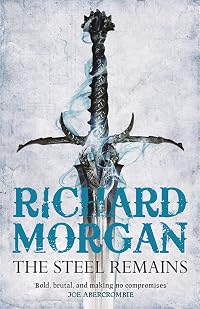
On This Page
Description
Ringil, the hero of the bloody slaughter at Gallows Gap, is a legend to all who don't know him and a twisted degenerate to those that do. A veteren of the wars against the lizards, he makes a living from telling credulous travelers of his exploits. Until one day he is pulled away from his life and into the depths of the Empire's slave trade, where he will discover a secret infinitely more frightening than the trade in lives.Archeth-pragmatist, cynic, engineer, and the last of her race-is show more called from her work at the whim of the most powerful man in the Empire and sent to its farthest reaches to investigate a demonic incursion against the Empire's borders.Egar Dragonbane, steppe-nomad and one-time fighter for the Empire, finds himself entangled in a small-town battle between common sense and religious fervor. But out in the wider world there is something on the move far more alien than any of his tribe's petty gods.Anti-social, anti-heroic, and decidedly irritated, all three of them are about to be sent unwillingly forth into a vicious, vigorous, and thoroughly unsuspecting fantasy world-called upon by an Empire that owes them everything and gave them nothing. show lessTags
Recommendations
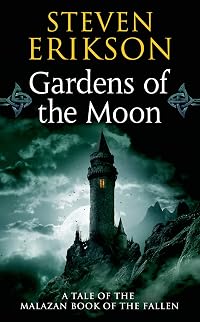
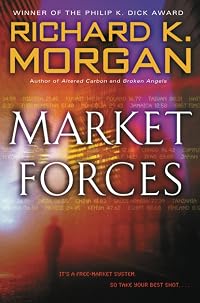
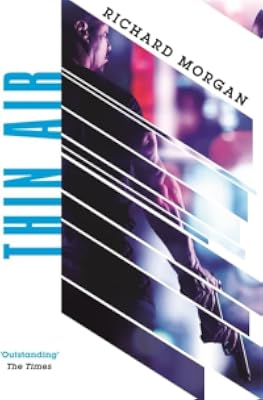
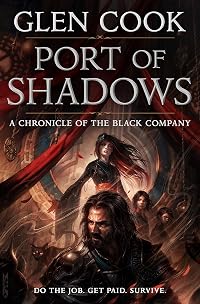
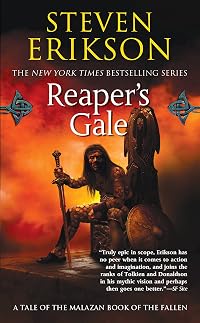
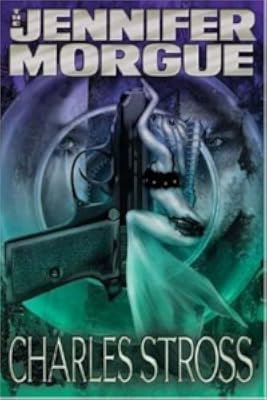
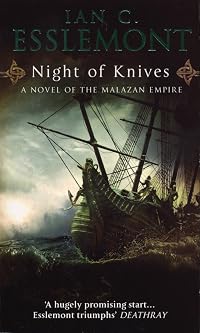
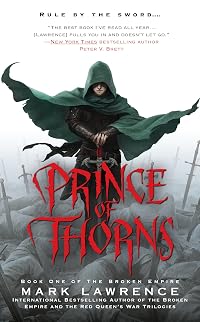
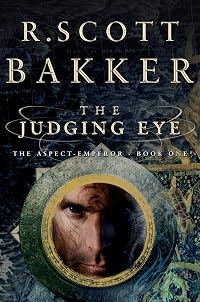
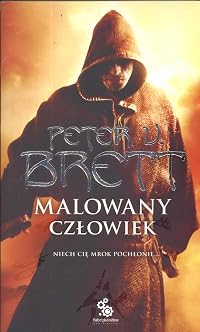
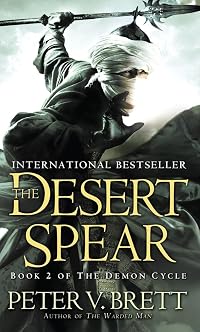
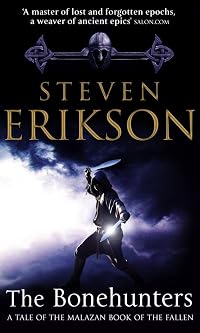
Member Recommendations
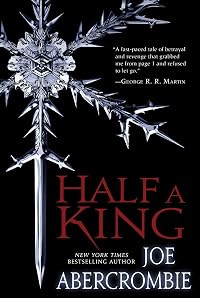
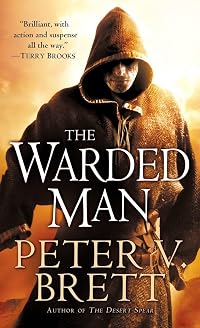
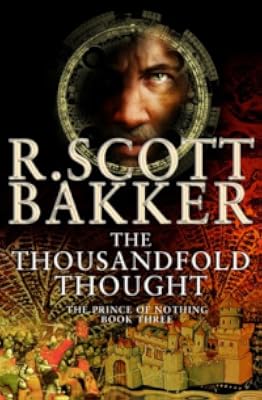
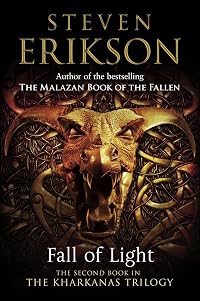
imyril Two very different authors tackle fantasy stereotypes and subvert them with glee. Abercrombie focuses on antiheroes - the coward, the torturer, the berserker - whereas Morgan takes more traditional heroes and then soaks them in noir. The results are delightfully wicked, blood-soaked and utterly readable.
dClauzel De la fantaisie noire, avec des sorciers à la volonté impérialiste, des guerres menées par des mercenaires, des révoltes opprimées dans le sang, et un sentiment éternel que de toute façon au final rien ne pourra changer pour le mieux, donc autant essayer quand même.
Member Reviews
The Steel Remains by Richard K. Morgan
Spoilers
I checked this book out at the library as it was repeatedly recommended by several people on the Library Thing. And, yes, you do know me! I really enjoyed this book.
I was not familiar with Mr. Morgan's science fiction books (I caught up!), so I had no expectations. _The Steel Remains_ is not for the faint of heart, and is a totally unexpected look at the fantasy genre. The protagonists are not particularly likable, they don't have mysterious magic, and they are not typical “fantasy” characters. There may be a "prophecy" tho...
The three protagonists, Ringil, “Gil”, Archeth and Egar feel real, gritty, flawed, and burned out. They swear, sometimes profusely, take drugs, ponder their show more worthiness, and generally mope about being somewhat useless 9 years after saving the world in an epic battle against weird scaled-folk. Yes, they were heroes then, and the lead character, Gil, a merchant's son, is a gay ex-warrior with an bad attitude who scratches out a meager living in a backwater village, regaling tavern patrons with his past victories (he did kill a dragon with the other lead character, Egar). He has a big ole sword that was made eons ago out of some special steel by the world's long departed engineers, and it is something special. Gil uses the fact that he is gay to stun and shock people with that fact, especially his pious father and brother.
Out of money, Gil accepts a job from his Mom to retrieve a long lost cousin who's been sold into slavery. He stumbles into a plot by the planet's ancient people - The Aldrain – to stage their come back. The Aldrain are immortal, and they mean to subject the current citizens to slavery and rule the world. Until their leader, a Dwenda called Seethlaw, kidnaps Gil and things fall apart. I don't know why, but I really enjoyed the Seethlaw character...even though he's a really bad guy, and there is an intense sexual relationship between him and Ringil. (...wow)
The three characters, Gil, Archeth (her character hopefully grows in the next book), is in the Emperor's Court, and Egar is heading up his family clan – both unhappily – end up together in a village at the edge of a swamp where the Aldrain are launching their evil comeback. I won't spoil it anymore but I will say that the "speech" Ringil makes to convince the others to make a stand against the Aldrain is quite potent.
Morgan's ability to wrap essential questions about love, understanding, redemption, self-worth –the reality of war– into fantastical settings with less than likable heroes is the secret to his success. Am I looking forward to the next 2 books in this series? Fuck yeah! show less
Spoilers
I checked this book out at the library as it was repeatedly recommended by several people on the Library Thing. And, yes, you do know me! I really enjoyed this book.
I was not familiar with Mr. Morgan's science fiction books (I caught up!), so I had no expectations. _The Steel Remains_ is not for the faint of heart, and is a totally unexpected look at the fantasy genre. The protagonists are not particularly likable, they don't have mysterious magic, and they are not typical “fantasy” characters. There may be a "prophecy" tho...
The three protagonists, Ringil, “Gil”, Archeth and Egar feel real, gritty, flawed, and burned out. They swear, sometimes profusely, take drugs, ponder their show more worthiness, and generally mope about being somewhat useless 9 years after saving the world in an epic battle against weird scaled-folk. Yes, they were heroes then, and the lead character, Gil, a merchant's son, is a gay ex-warrior with an bad attitude who scratches out a meager living in a backwater village, regaling tavern patrons with his past victories (he did kill a dragon with the other lead character, Egar). He has a big ole sword that was made eons ago out of some special steel by the world's long departed engineers, and it is something special. Gil uses the fact that he is gay to stun and shock people with that fact, especially his pious father and brother.
Out of money, Gil accepts a job from his Mom to retrieve a long lost cousin who's been sold into slavery. He stumbles into a plot by the planet's ancient people - The Aldrain – to stage their come back. The Aldrain are immortal, and they mean to subject the current citizens to slavery and rule the world. Until their leader, a Dwenda called Seethlaw, kidnaps Gil and things fall apart. I don't know why, but I really enjoyed the Seethlaw character...even though he's a really bad guy, and there is an intense sexual relationship between him and Ringil. (...wow)
The three characters, Gil, Archeth (her character hopefully grows in the next book), is in the Emperor's Court, and Egar is heading up his family clan – both unhappily – end up together in a village at the edge of a swamp where the Aldrain are launching their evil comeback. I won't spoil it anymore but I will say that the "speech" Ringil makes to convince the others to make a stand against the Aldrain is quite potent.
Morgan's ability to wrap essential questions about love, understanding, redemption, self-worth –the reality of war– into fantastical settings with less than likable heroes is the secret to his success. Am I looking forward to the next 2 books in this series? Fuck yeah! show less
Richard K Morgan’s The Steel Remains is gritty, bloody, violent, and explicit. It’s 400 pages but reads fast, especially once all the serious dying starts.
In the first half, I found his prose a little florid; his descriptions a little overly dramatic. It’s not just the action that is gritty— it’s also the scenery, the clothing, the smells and sounds… Morgan spends quite a bit of time building up his three characters, crafting lifetimes of detail for each one. Sometimes, the detail became tedious.
I got a little lost in all of it, and later— as conspiracies mounted and events spiraled out of control— I didn’t have as firm as grasp on plot as I did on Ringil’s internalized anger, Igar’s detachment from his cultural show more home, and Archeth’s lost sense of self.
However, I loved the action. And all that detail does contribute to keeping the characters real as people even as they swing swords and chop up bad guys. At the halfway mark, the book ramps up a whole notch. Which is really kinda amazing! The first half may be slow, but it is by no means boring. There was never a moment where I was left wondering who was holding what sword or which fist punched whose lights out. I’m still not clear on what exactly everyone was fighting for, but I totally followed when everyone died.
But let’s address the pink elephant in the room shall we? GAY SEX.
Descriptions of this book (see above, add “profane”, “dark”, “twisted”, etc.) could be used to underscore the violence of the story, yes. But frankly, in a lot of reviews, I got the sense that it was more about the gayness. Instead of saying “hey this book is SOOOO gay y’all”, a reviewer will say “shockingly explicit” and “not for the faint of heart” and everyone tries to act like they are not thinking about all that gay sex they just read.
Yes, Ringil is gay. AND he has sex! AND he kills everyone, with the gutting and the garroting and the guts spilling! It is both explicitly gay and explicitly violent! Ringil’s gayness comes up early, and often, and usually quite violently. I found it pitch perfect, to a tee.
Morgan has crafted a world that rings a lot of bells for our own — where being a hero and being gay are seen as mutually exclusive. Except in our society, we don’t go around gutting people with our alien-steel swords for every homophobic slur. I certainly didn’t think The Steel Remains contains some kind of subliminal liberal agenda that bashes religion, raises taxes, and makes Ronald Reagan weep. It’s part and parcel of Ringil’s environment to be constantly confronted about his sexuality by all and sundry around him, and to be violently angry, lewd and/or shocking in return.
I guess, what I am saying is - the book is not apologetic about its violence or its gayness and I don’t think the reader (or the reviewer) should be either. And if you want to pussy-foot around the violence or the gay, then I’m not sure you should read this book. It’s too good for you.
Bottom line: Morgan writes sincere, character-driven action. Often with fantasy novels, it becomes all about the tropes or stereotypes of the genre— the epic hero on his hero’s journey to the heroic end, defeating villains, talking to dragons, and saving princesses on the way. And with noir, its often the just the shock factor. Just how violent can we make the third death in this chapter? Just how low can we drag the protagonist with this fifth betrayal? Instead, Morgan has three characters all on the brink, in a world itself on the brink, in a way that is both dramatically exciting and emotionally interesting. show less
In the first half, I found his prose a little florid; his descriptions a little overly dramatic. It’s not just the action that is gritty— it’s also the scenery, the clothing, the smells and sounds… Morgan spends quite a bit of time building up his three characters, crafting lifetimes of detail for each one. Sometimes, the detail became tedious.
I got a little lost in all of it, and later— as conspiracies mounted and events spiraled out of control— I didn’t have as firm as grasp on plot as I did on Ringil’s internalized anger, Igar’s detachment from his cultural show more home, and Archeth’s lost sense of self.
However, I loved the action. And all that detail does contribute to keeping the characters real as people even as they swing swords and chop up bad guys. At the halfway mark, the book ramps up a whole notch. Which is really kinda amazing! The first half may be slow, but it is by no means boring. There was never a moment where I was left wondering who was holding what sword or which fist punched whose lights out. I’m still not clear on what exactly everyone was fighting for, but I totally followed when everyone died.
But let’s address the pink elephant in the room shall we? GAY SEX.
Descriptions of this book (see above, add “profane”, “dark”, “twisted”, etc.) could be used to underscore the violence of the story, yes. But frankly, in a lot of reviews, I got the sense that it was more about the gayness. Instead of saying “hey this book is SOOOO gay y’all”, a reviewer will say “shockingly explicit” and “not for the faint of heart” and everyone tries to act like they are not thinking about all that gay sex they just read.
Yes, Ringil is gay. AND he has sex! AND he kills everyone, with the gutting and the garroting and the guts spilling! It is both explicitly gay and explicitly violent! Ringil’s gayness comes up early, and often, and usually quite violently. I found it pitch perfect, to a tee.
Morgan has crafted a world that rings a lot of bells for our own — where being a hero and being gay are seen as mutually exclusive. Except in our society, we don’t go around gutting people with our alien-steel swords for every homophobic slur. I certainly didn’t think The Steel Remains contains some kind of subliminal liberal agenda that bashes religion, raises taxes, and makes Ronald Reagan weep. It’s part and parcel of Ringil’s environment to be constantly confronted about his sexuality by all and sundry around him, and to be violently angry, lewd and/or shocking in return.
I guess, what I am saying is - the book is not apologetic about its violence or its gayness and I don’t think the reader (or the reviewer) should be either. And if you want to pussy-foot around the violence or the gay, then I’m not sure you should read this book. It’s too good for you.
Bottom line: Morgan writes sincere, character-driven action. Often with fantasy novels, it becomes all about the tropes or stereotypes of the genre— the epic hero on his hero’s journey to the heroic end, defeating villains, talking to dragons, and saving princesses on the way. And with noir, its often the just the shock factor. Just how violent can we make the third death in this chapter? Just how low can we drag the protagonist with this fifth betrayal? Instead, Morgan has three characters all on the brink, in a world itself on the brink, in a way that is both dramatically exciting and emotionally interesting. show less
A bit clunky, a bit slow to start, and the three main characters were literally magicked together to fight the big battle at the end, which was a little disappointing, because there is something really fun and exciting when 3 disparate plotlines can meet up gracefully. It almost felt like the writer couldn't quite figure out how to get all of the characters together, so he created a mysterious character to make it happen. Which begs the question, if this character is so powerful, and has magical abilities that can transport people around this world, why doesn't he fight this battle? Perhaps an intriguing answer can be found in the next book. Overall, this grimdark adventure almost didn't come together for me. I realized partway through show more that I didn't like the main character. His shitty attitude came across as less clever, and more asshole. But I guess that was the point, because this wasn't necessarily a setup for a hero, but for a villain. But future volumes will perhaps clarify that character development as well. show less
The Steel Remains is Richard Morgan’s latest novel.
It purports to be his take on high or epic fantasy (or EFP or whatever, call it what you will). Yeah I can see that. It has all the classic tropes – a feudal society, a decaying empire, medieval military technology, gods as on-stage actors in the story, a quest of sorts, various monsters, and all of the other usual sword and sorcery type accoutrements.
The major viewpoint characters seem to fit some of the usual stereotypes too: Ringil Angeleyes is the master swordsman / lone wolf character: an acknowledged hero with a named eldritch broadsword on his back; the scion of a noble family. Egar Dragonbane is another well-known war hero, clanmaster of a nomadic herding clan on the open show more plains between the two major political entities. Archeth is the long-lived halfbreed daughter of humans and the now vanished race known as Kirianth, the Black Ones, serving as scientific advisor to the young emperor of the Throne Eternal.
All three are veterans of a war that united humanity and the remaining Kirianth for long enough to fight and defeat an invasion from the sea by the Scaled Folk, a war that gave them their subsequent fame and/or notoriety. As the book progresses, these three ex-comrades in arms are brought together again to face a new and deadly threat to humanity.
So, you think you’ve got the big picture here, right? It’s just standard big fantasy fare – a motley collection of heroes and heroines coming together in a quest to save the world as we know it, maybe with Morgan’s trademark violence and bad language from his previous works added in?
You’d be wrong.
It does have those story elements, but in my opinion, Morgan has set things up like this so he can then completely deconstruct the fantasy sub-genre, which he proceeds to do with gleeful abandon. To say how would require major spoilers.
Is the book readable? Absolutely – I found it an absolute page-turner.
Does it have the graphic sex and violence and language we know from his earlier work? Yes it does, so if you are easily offended by such things be careful. But none of the sex is non-consensual, and it is relevant to the characterisation of his protagonists.
On that point, are the viewpoint characters believable and sympathetic? I believe they are – they certainly hooked me in.
Do I recommend it as a good read? Yes I do –it’s a well-paced cracker of a story that also makes you think, not least about the nature of heroism.
So it does have something serious to say also? Absolutely – about what makes a hero and the ephemeral nature of heroism; about religious intolerance and dogmatism; about forced relocations of displaced ethnic populations; about the interaction of church and state; about politics and corruption; about the darkness and bleakness in human nature; and about the consequences of individual choices we make in our lives.
If you liked Morgan's earlier work, I suggest you give it a try. show less
It purports to be his take on high or epic fantasy (or EFP or whatever, call it what you will). Yeah I can see that. It has all the classic tropes – a feudal society, a decaying empire, medieval military technology, gods as on-stage actors in the story, a quest of sorts, various monsters, and all of the other usual sword and sorcery type accoutrements.
The major viewpoint characters seem to fit some of the usual stereotypes too: Ringil Angeleyes is the master swordsman / lone wolf character: an acknowledged hero with a named eldritch broadsword on his back; the scion of a noble family. Egar Dragonbane is another well-known war hero, clanmaster of a nomadic herding clan on the open show more plains between the two major political entities. Archeth is the long-lived halfbreed daughter of humans and the now vanished race known as Kirianth, the Black Ones, serving as scientific advisor to the young emperor of the Throne Eternal.
All three are veterans of a war that united humanity and the remaining Kirianth for long enough to fight and defeat an invasion from the sea by the Scaled Folk, a war that gave them their subsequent fame and/or notoriety. As the book progresses, these three ex-comrades in arms are brought together again to face a new and deadly threat to humanity.
So, you think you’ve got the big picture here, right? It’s just standard big fantasy fare – a motley collection of heroes and heroines coming together in a quest to save the world as we know it, maybe with Morgan’s trademark violence and bad language from his previous works added in?
You’d be wrong.
It does have those story elements, but in my opinion, Morgan has set things up like this so he can then completely deconstruct the fantasy sub-genre, which he proceeds to do with gleeful abandon. To say how would require major spoilers.
Is the book readable? Absolutely – I found it an absolute page-turner.
Does it have the graphic sex and violence and language we know from his earlier work? Yes it does, so if you are easily offended by such things be careful. But none of the sex is non-consensual, and it is relevant to the characterisation of his protagonists.
On that point, are the viewpoint characters believable and sympathetic? I believe they are – they certainly hooked me in.
Do I recommend it as a good read? Yes I do –it’s a well-paced cracker of a story that also makes you think, not least about the nature of heroism.
So it does have something serious to say also? Absolutely – about what makes a hero and the ephemeral nature of heroism; about religious intolerance and dogmatism; about forced relocations of displaced ethnic populations; about the interaction of church and state; about politics and corruption; about the darkness and bleakness in human nature; and about the consequences of individual choices we make in our lives.
If you liked Morgan's earlier work, I suggest you give it a try. show less
It's not terribly often a book makes it onto the tiny list of "things I loved like breathing" on the first go-around. Usually it takes a couple of re-reads before I realize that yes, this is one of them, this is a book I'll tell everyone I know to read with all the passion of a newly besotted lover.
This was an exception to the standard.
I sit here basking in the afterglow of this book, counting down the seconds until tomorrow when I can pick up the next one, and probably in no more than the four days this one took, I'll be fiending for the third. After that is something I'm not really ready to contemplate, which is parting ways with Gil and company, and this fascinating place that Morgan has conjured for us. This is the tl;dr. I loved show more this book and I hope you will too.
What's to love? Well, a lot. We can start broad and get smaller.
Let's touch on the elephant in the room, first: the genre. Grim-dark fantasy kind of has a rep for trying too hard, and frankly a lot of it does exactly that, leaving you rolling your eyes at how "edgy" everything has to be, picking your way through prose littered with absolutely unnecessary swears. Does this book have prose littered with swears? Oh you betcha. Are they unnecessary? Maybe sometimes, but mostly not. They suit the mood. Where it really shines in the genre is simply by not trying too hard. The story is what it is, it doesn't feel like anything has been tacked on just to shock or appall you.
The prose is not overly flowery, but Morgan does have a way with words. The action scenes are frankly my favorite out of any book I've ever read. Usually in books these are parts I skim, because it's difficult to paint a clear enough picture for me to imagine it, and without that they're pretty dull. Morgan makes them interesting and exciting, without getting too overly into all the horrible details. This is grimdark fantasy, so they're present, but he doesn't overdo it.
Morgan's world-building is top-notch, in my opinion. He gives you a lot without telling you what it is, and then slowly unveils details and information in a natural way. You are left confused at first, and it gives you sense that you should know, because everyone else seems to, and this actually works really, really well. You feel like a traveler in a strange place, waiting for things that make perfect sense to the locals to come clear to you. Since you're only an observer you can't ask; you have to wait and watch for all the pieces to come together.
Morgan is also not afraid to sprinkle a little of his scifi roots in his fantasy, and this is another thing that I think works very well. There's touches of realism in unexpected places, like characters' awareness that time marches on and that this medieval fantasy lifestyle cannot persist forever. Technology will change, swords will be outmoded. Too often a fantasy novel resists these things, as if afraid that bringing them to light will spoil the escapism. It could, but Morgan handles it deftly, and instead we are given the vision of a place that doesn't just exist in the time of the story, but will continue to exist after it's done.
Plot is not something I usually give much attention to in books, and that's kind of a good thing here, because the plot in this one flirts with anticlimactic. It's very clear that this is just setting the stage for where the story goes later, without having to one-up something tremendous that happened at the very beginning. It starts slow, and doesn't really pick up the pace until about 3/4ths in, by which point, well, time to wrap things up. I'm okay with that, not everyone will be.
For me the plot is a vehicle to deliver interesting characters and dialogue, and this is definitely my favorite part of the book. Dialogue is very well done, and not once did I have to roll my eyes because people don't talk like that. There's not too much of it, and not too little. Morgan managed to make it just right.
Every character you meet clearly has a past, and you're not always privy to that, because hey, you just met these people. They have their own inside jokes and their own relationship dynamics, which just like the world building, are doled out to you in natural pieces, uncovered through watching characters interact with each other, the world around them, and often themselves. There's clearly more to dig up, and that's one of the aspects of the sequels that I'm looking forward to most.
Oh, and Gil is gay, and while nobody else seems to be okay with that, he is, and that's really what matters. Having a gay male MC in mainstream fantasy is a bold move, and I was ecstatic to see it handled so well. Gil is definitely not a stereotype, and he won't hesitate to make anyone suffer for trying to paint him as one. show less
This was an exception to the standard.
I sit here basking in the afterglow of this book, counting down the seconds until tomorrow when I can pick up the next one, and probably in no more than the four days this one took, I'll be fiending for the third. After that is something I'm not really ready to contemplate, which is parting ways with Gil and company, and this fascinating place that Morgan has conjured for us. This is the tl;dr. I loved show more this book and I hope you will too.
What's to love? Well, a lot. We can start broad and get smaller.
Let's touch on the elephant in the room, first: the genre. Grim-dark fantasy kind of has a rep for trying too hard, and frankly a lot of it does exactly that, leaving you rolling your eyes at how "edgy" everything has to be, picking your way through prose littered with absolutely unnecessary swears. Does this book have prose littered with swears? Oh you betcha. Are they unnecessary? Maybe sometimes, but mostly not. They suit the mood. Where it really shines in the genre is simply by not trying too hard. The story is what it is, it doesn't feel like anything has been tacked on just to shock or appall you.
The prose is not overly flowery, but Morgan does have a way with words. The action scenes are frankly my favorite out of any book I've ever read. Usually in books these are parts I skim, because it's difficult to paint a clear enough picture for me to imagine it, and without that they're pretty dull. Morgan makes them interesting and exciting, without getting too overly into all the horrible details. This is grimdark fantasy, so they're present, but he doesn't overdo it.
Morgan's world-building is top-notch, in my opinion. He gives you a lot without telling you what it is, and then slowly unveils details and information in a natural way. You are left confused at first, and it gives you sense that you should know, because everyone else seems to, and this actually works really, really well. You feel like a traveler in a strange place, waiting for things that make perfect sense to the locals to come clear to you. Since you're only an observer you can't ask; you have to wait and watch for all the pieces to come together.
Morgan is also not afraid to sprinkle a little of his scifi roots in his fantasy, and this is another thing that I think works very well. There's touches of realism in unexpected places, like characters' awareness that time marches on and that this medieval fantasy lifestyle cannot persist forever. Technology will change, swords will be outmoded. Too often a fantasy novel resists these things, as if afraid that bringing them to light will spoil the escapism. It could, but Morgan handles it deftly, and instead we are given the vision of a place that doesn't just exist in the time of the story, but will continue to exist after it's done.
Plot is not something I usually give much attention to in books, and that's kind of a good thing here, because the plot in this one flirts with anticlimactic. It's very clear that this is just setting the stage for where the story goes later, without having to one-up something tremendous that happened at the very beginning. It starts slow, and doesn't really pick up the pace until about 3/4ths in, by which point, well, time to wrap things up. I'm okay with that, not everyone will be.
For me the plot is a vehicle to deliver interesting characters and dialogue, and this is definitely my favorite part of the book. Dialogue is very well done, and not once did I have to roll my eyes because people don't talk like that. There's not too much of it, and not too little. Morgan managed to make it just right.
Every character you meet clearly has a past, and you're not always privy to that, because hey, you just met these people. They have their own inside jokes and their own relationship dynamics, which just like the world building, are doled out to you in natural pieces, uncovered through watching characters interact with each other, the world around them, and often themselves. There's clearly more to dig up, and that's one of the aspects of the sequels that I'm looking forward to most.
Oh, and Gil is gay, and while nobody else seems to be okay with that, he is, and that's really what matters. Having a gay male MC in mainstream fantasy is a bold move, and I was ecstatic to see it handled so well. Gil is definitely not a stereotype, and he won't hesitate to make anyone suffer for trying to paint him as one. show less
Basically, this book takes high fantasy tropes and screws with them. This is not a parody; it's not so facile. But the author has clearly read and loved a great deal of fantasy in his life, and knows the basic stories well. And when he grew tired of the easy answers and Light vs Dark epic battles, he created this.
The elves have left Middle Earth--but they were actually aliens, driven half-mad by their flight across the stars, and the half-Elven Princess they leave behind them is a black lesbian with a drug problem. (I found Arceth to be the most fascinating character of all. Her eldritch family taught her modern concepts of morality, but she's been stuck in a feudal society for hundreds of years--her high-minded ideals are beginning to show more wear thin.)
The "elves" also left behind a magical sword, wielded by war hero Gil. Like many war heroes in fantasy novels written lately, Gil has become a washed-up mercenary, only pulled back into the Epic Battle for Civilization by the danger posed to a long-lost female loved one. But uh, Gil is gay, and his main resistance to helping is that the *last* Epic Battle turned into a slaughter of civilians, and his city tortured his lover to death before his eyes.
His former sword-brother, the barbarian Egar, is also pulled into the fray. Egar is a great play on the usual "savage tribe" trope.
This book is not a criticism of High Fantasy--it takes it to the next level. The queer characters, the characters of color, the atheists, the questions of consent and privilege, the logical next step for a country that's just defeated their Big Foe...Morgan uses all of it. And the adventure is better for it. show less
The elves have left Middle Earth--but they were actually aliens, driven half-mad by their flight across the stars, and the half-Elven Princess they leave behind them is a black lesbian with a drug problem. (I found Arceth to be the most fascinating character of all. Her eldritch family taught her modern concepts of morality, but she's been stuck in a feudal society for hundreds of years--her high-minded ideals are beginning to show more wear thin.)
The "elves" also left behind a magical sword, wielded by war hero Gil. Like many war heroes in fantasy novels written lately, Gil has become a washed-up mercenary, only pulled back into the Epic Battle for Civilization by the danger posed to a long-lost female loved one. But uh, Gil is gay, and his main resistance to helping is that the *last* Epic Battle turned into a slaughter of civilians, and his city tortured his lover to death before his eyes.
His former sword-brother, the barbarian Egar, is also pulled into the fray. Egar is a great play on the usual "savage tribe" trope.
This book is not a criticism of High Fantasy--it takes it to the next level. The queer characters, the characters of color, the atheists, the questions of consent and privilege, the logical next step for a country that's just defeated their Big Foe...Morgan uses all of it. And the adventure is better for it. show less
Posted to my Livejournal in January 2009:
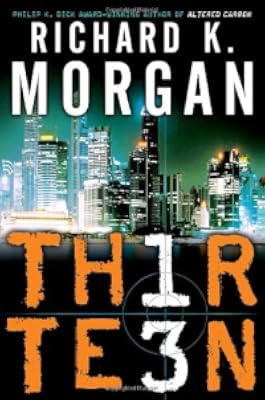
Morgan is the author of Thirteen and many other science fiction novels, and this is his first fantasy novel, which is quite good in its mix of traditional quest elements, a corrupt political landscape, and contemporary-feeling characters and language. Ringil is a war hero living in a backwater village, where he gets free room and board for telling stories of his legendary deeds and for taking care of the village's occasional supernatural predators. Basically, he's wasting the rest of his life, but that changes when his noble mother arrives and asks him to find one of his cousins, sold into slavery. Because slavery has become legal since the war ended, Ringil's investigations attract the attention show more of some powerful forces and bring him into contact with two comrades from the war: Egar the Dragonbane, a Majak clan leader; and Archeth, a kiriath half-breed advisor to the Emperor of Yhelteth. They discover evidence that the Aldrain, an otherworldly race supposed to have been driven from the world long ago, have returned to make war. This book has a lot of sex and violence and profanity, but it all fit with the characters and the pretty dark world Morgan created. At the end, there's the suggestion that Ringil may be becoming something he isn't sure is good, and that'll keep me excited for the next book. show less
Morgan is the author of Thirteen and many other science fiction novels, and this is his first fantasy novel, which is quite good in its mix of traditional quest elements, a corrupt political landscape, and contemporary-feeling characters and language. Ringil is a war hero living in a backwater village, where he gets free room and board for telling stories of his legendary deeds and for taking care of the village's occasional supernatural predators. Basically, he's wasting the rest of his life, but that changes when his noble mother arrives and asks him to find one of his cousins, sold into slavery. Because slavery has become legal since the war ended, Ringil's investigations attract the attention show more of some powerful forces and bring him into contact with two comrades from the war: Egar the Dragonbane, a Majak clan leader; and Archeth, a kiriath half-breed advisor to the Emperor of Yhelteth. They discover evidence that the Aldrain, an otherworldly race supposed to have been driven from the world long ago, have returned to make war. This book has a lot of sex and violence and profanity, but it all fit with the characters and the pretty dark world Morgan created. At the end, there's the suggestion that Ringil may be becoming something he isn't sure is good, and that'll keep me excited for the next book. show less
Members
- Recently Added By
Lists

Best Fantasy Novels
821 works; 361 members

LGBTQ+ Speculative Fiction
821 works; 51 members

Teen Sci-Fi Fantasy Male Lead
47 works; 1 member

Books Read in 2015
3,299 works; 129 members
Author Information

Some Editions
Awards and Honors
Awards
Notable Lists
Series

Work Relationships
Has the adaptation
Common Knowledge
- Canonical title
- The Steel Remains
- Original title
- The Steel Remains
- Original publication date
- 2008; 2010; 2009
- People/Characters
- Ringil Eskiath; Egar the Dragonbane; Archeth Indamaninarmal
- Important places
- Gallows Water; Earth
- Epigraph
- 'I think you look on death as your friend,' she murmured. 'That is a strange friend for a young man to have.'
'The only faithful friend in this world,' he said bitterly. 'Death is always sure to be at your side.'
... (show all)
Poul Anderson
The Broken Sword - Dedication
- This book is for my father, John Morgan, for carrying me past the seaweed.
- First words
- When a man you know to be of sound mind tells you his recently deceased mother has just tried to climb in his bedroom window and eat him, you only have two basic options.
- Quotations
- "Forget the law. It isn't going to help. They'll cite it where it suits them, ignore it where it doesn't. They're clerics, Archeth. They spend their whole fucking lives selectively interpreting textual authority to adv... (show all)antage."
Emperor Jhiral to Archeth, p.325 - Last words
- (Click to show. Warning: May contain spoilers.)He waited, patiently, for the flicker of blue fire to show itself again, and for whatever else might come with it.
- Blurbers
- Abercrombie, Joe; Erikson, Steven
Classifications
Statistics
- Members
- 1,856
- Popularity
- 11,644
- Reviews
- 92
- Rating
- (3.71)
- Languages
- 5 — English, French, German, Italian, Spanish
- Media
- Paper, Audiobook, Ebook
- ISBNs
- 28
- ASINs
- 14