On This Page
Description
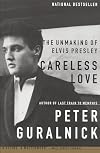
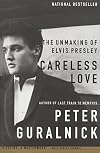
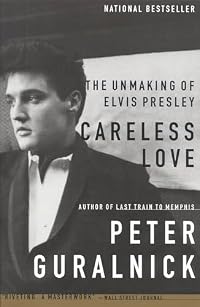
Careless Love is the full, true, and mesmerizing story of Elvis Presley's last two decades, in the long-awaited second volume of Peter Guralnick's masterful two-part biography. Last Train to Memphis, the first part of Guralnick's two-volume life of Elvis Presley, was acclaimed by the New York Times as "a triumph of biographical art." This concluding volume recounts the second half of Elvis' life in rich and previously unimagined detail, and confirms Guralnick's status as one of the great show more biographers of our time. Beginning with Presley's army service in Germany in 1958 and ending with his death in Memphis in 1977, Careless Love chronicles the unravelling of the dream that once shone so brightly, homing in on the complex playing-out of Elvis' relationship with his Machiavellian manager, Colonel Tom Parker. It's a breathtaking revelatory drama that for the first time places the events of a too-often mistold tale in a fresh, believable, and understandable context. Elvis' changes during these years form a tragic mystery that Careless Love unlocks for the first time. This is the quintessential American story, encompassing elements of race, class, wealth, sex, music, religion, and personal transformation. Written with grace, sensitivity, and passion, Careless Love is a unique contribution to our understanding of American popular culture and the nature of success, giving us true insight at last into one of the most misunderstood public figures of our times. show lessTags
Recommendations















Member Reviews
If in Last Train to Memphis Elvis Aron Presley was a shy, quiet kid with diamond-in-the-rough talent, for all appearances he is now a cocky, self-assured music and movie star in Careless Love. All of the makings of a good rock and roll star are there: sex, drugs and money. At this stage of the game Elvis is dating more women than he can keep track of, taking upppers and diet pills to keep up with the party-til-3am lifestyle, and spending boatloads of money all the while. By the time he is in his early 30s he has bought his entourage push carts, motorcycles and horses. "In all he managed to pay out well over $1000,000 in approximately two weeks, an orgy of spending that seemed to momentarily pacify Elvis..." (p 252). His sincerity gets show more lost in the mayhem and only resurfaces when he remembers his deceased mother. His mother brings out the best in him. Without her, his struggle to know himself is heartbreaking. Yet, what he really does knows is how to work the public, especially the ladies. Guralnick doesn't shy from this fact. He is unflinching in his quest for the truth of the legacy. He captures Presley's demise as the epic tragedy that it was. show less
There's a moment from the film Pulp Fiction that ended up on the cutting room floor in which Mia Wallace asks Vincent Vega whether he's an Elvis man or a Beatles man. "You might like both," she tells Vincent, "but you always like one better." I'm a hardcore Beatles fan, but I'm still fascinated by Elvis -- especially the post-GI, bad-movie making, white jump-suited, bloated karate Elvis. And that's why I bypassed completely Last Train to Memphis -- the first book in Guralnick's two-part Elvis bio, which tells the story of Elvis' meteoric rise -- and headed right for the good stuff.
Guralnick tells Elvis' story in a clear-eyed manner, spinning a story that's almost Shakespearian in its tragedy. And it quickly gets ugly, as Elvis corrodes show more into a lazy, strung-out fat kid, distracted by go-carts, badge collecting, and playing cowboys and Indians with his sycophantic Memphis Mafia, all the while derailing his own career, despite an incredibly forgiving fan base. From one oh-my-gosh, no way! moment to another, Guralnick delivers the goods, careening like a barely-controlled jalopy toward the decidedly non-glamorous ending we all know is coming. Look away? Heck no. Cringe-inducing? Heck yes. Awesome. show less
Guralnick tells Elvis' story in a clear-eyed manner, spinning a story that's almost Shakespearian in its tragedy. And it quickly gets ugly, as Elvis corrodes show more into a lazy, strung-out fat kid, distracted by go-carts, badge collecting, and playing cowboys and Indians with his sycophantic Memphis Mafia, all the while derailing his own career, despite an incredibly forgiving fan base. From one oh-my-gosh, no way! moment to another, Guralnick delivers the goods, careening like a barely-controlled jalopy toward the decidedly non-glamorous ending we all know is coming. Look away? Heck no. Cringe-inducing? Heck yes. Awesome. show less
Exceedingly well documented and written. A mega star who had incredible talent. It the end, his demons won. Giving away ctars, houses and any big ticket item available, Elvis Presley gifted friends in tandem with the drugs that consumed him, and in the end, led to his death.
Women grew weary of the self obsessed, narcissistic little boy, who like Peter Pan, simply refused to grow up. By the time of his death, he was only 42 years old with a bloated body, a voice that could not deliver, and performances at his shows were mediocre at best.
He was a man who thought and acted like a boy. Always craving an entourage that never left him, none of the people who surrounded him could help his addiction to a plethora of drugs. His autopsy showed an show more enlarged heart, liver damage as well as a painful bowel condition caused by excess drug usage. At the time of his death, at least 14 different drugs were in his body. The amount of codeine was ten times a normally prescribed level. His addiction to quaaludes brought toxic levels to a body that over abused drugs for many years.
With all abandonment for caution of how mass consumption of long-term usage of unnecessary medications, doctors freely prescribed drugs in mass quantities to the King of Rock and Roll.
No one could stop the train wreck that was Elvis Presley.
Three and 1/2 stars show less
Women grew weary of the self obsessed, narcissistic little boy, who like Peter Pan, simply refused to grow up. By the time of his death, he was only 42 years old with a bloated body, a voice that could not deliver, and performances at his shows were mediocre at best.
He was a man who thought and acted like a boy. Always craving an entourage that never left him, none of the people who surrounded him could help his addiction to a plethora of drugs. His autopsy showed an show more enlarged heart, liver damage as well as a painful bowel condition caused by excess drug usage. At the time of his death, at least 14 different drugs were in his body. The amount of codeine was ten times a normally prescribed level. His addiction to quaaludes brought toxic levels to a body that over abused drugs for many years.
With all abandonment for caution of how mass consumption of long-term usage of unnecessary medications, doctors freely prescribed drugs in mass quantities to the King of Rock and Roll.
No one could stop the train wreck that was Elvis Presley.
Three and 1/2 stars show less
This biography takes up basically the second half of Elvis’ life from the time he left the Army around 1958. The author had written the earlier years version also but I had not read it yet. It would certainly have filled in much needed info as at this point his mother had passed on and was under the management of the colonel all ready. Elvis is shown here as the great talent surrounded my many that would be there for him but also serve as enablers and dependents on his fame and wealth. The drug use starts early and as typical of that time in the form of pep pills that were so common and seen as the wonder energy drug. From there it was Elvis who made it his lifestyle and ultimate demise as his own research into all that came available show more he had determined would be necessary for himself to function with no downside. Though it was not covered in detail his sources mostly doctors were not seen as culpable in what eventually went down.
His relationship with Priscilla but many of the other women in his life would seem to mirror his obsession with the closeness with his mother. A strange relationship that could never really be workable with what the women wanted out of the relationship. As his fame moves forward and eventually declines so does Elvis and the pill addiction takes over and is painful to watch how it totally unravels him. The money he and the colonel went through is staggering and reflects how extreme fame not balanced well warps the all areas of his life.
The last years were difficult to witness, as he simply is not able to deliver on stage yet the fans keep coming to make the endless treadmill he finds himself on. At just like that it is over. The book ends with the funeral itself and I felt it would have been good to have more of the aftermath and the effects on the people that surrounded him. Ironically I got the feeling that he would have lived longer as a simple truck driver as he started out and maybe happier. Ultimately, though one could make a case for those enabling his behavior, it was Elvis who was responsible and he alone that brought it all crashing down. It almost seemed the expectation was that this was the only outcome available to him and he may have been relieved it was finally over. show less
His relationship with Priscilla but many of the other women in his life would seem to mirror his obsession with the closeness with his mother. A strange relationship that could never really be workable with what the women wanted out of the relationship. As his fame moves forward and eventually declines so does Elvis and the pill addiction takes over and is painful to watch how it totally unravels him. The money he and the colonel went through is staggering and reflects how extreme fame not balanced well warps the all areas of his life.
The last years were difficult to witness, as he simply is not able to deliver on stage yet the fans keep coming to make the endless treadmill he finds himself on. At just like that it is over. The book ends with the funeral itself and I felt it would have been good to have more of the aftermath and the effects on the people that surrounded him. Ironically I got the feeling that he would have lived longer as a simple truck driver as he started out and maybe happier. Ultimately, though one could make a case for those enabling his behavior, it was Elvis who was responsible and he alone that brought it all crashing down. It almost seemed the expectation was that this was the only outcome available to him and he may have been relieved it was finally over. show less
Well researched biography (part 2 of 2 books) on Elvis Presley. The second volume spent time on Presley's extensive success and decline into drug use. The author spent a lot of time interviewing those who knew and worked with Elvis as well as had extensive footnotes and bibliography. The writing style was very descriptive and many events made you feel like you were there. The books could have had more photographs since at times the author would describe a photo but alas, the photo was not included in the book. The book could have used some followup as to what happened to those who spent so much time with Elvis, i.e., the Memphis Mafia. It was hard to put down and highly recommended.
My first love was Elvis and my collection of his biographies was extensive, this is one of the better ones.
Part two of this great Elvis bio.
Well documented and written.
Well documented and written.
Members
- Recently Added By
Lists

Best Biographies, Autobiographies and Memoirs
464 works; 156 members

Best Biographies
216 works; 26 members
Author Information

32+ Works 4,580 Members
Peter Guralnick's books include the prizewinning two-volume biography of Elvis Presley. Last Train to Memphis and Careless Love: Sweet Soul Music; Dream Boogie: The Triumph of Sam Cooke; and Sam Phillips: The Man Who Invented Rock 'n' Roll. He won a Grammy for his liner notes for Sam Cooke Live at the harlem Square Club, wrote and coproduced the show more documentary Sam Phillips: The Man Who Invented Rock 'n' Roll, and wrote the scripts for the Grammy-winning documentary Sam Cooke/Legend and Martin Scorsese's blues documentary Feel Like Going Home. show less
Awards and Honors
Series

Work Relationships
Is contained in
Common Knowledge
- Canonical title*
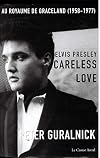
- Elvis Presley. Careless love: au royaume de Graceland, 1958-1977
- Original title
- Careless love. The unmaking of Elvis Presley
- Original publication date
- 1999
- People/Characters
- Elvis Presley; Priscilla Beaulieu (Presley)
- Important places
- Memphis, Tennessee, USA; Tennessee, USA; USA; Germany; Friedberg, Germany; Bad Nauheim, Germany (show all 15); Wiesbaden, Assia, Germany; Paris, Île-de-France, France; France; Monaco di Baviera; Las Vegas, Nevada, USA; Hollywood, Los Angeles, California, USA; Los Angeles, California, USA; Nevada, USA; California, USA
- Dedication
- For Jacob and Nina and for Alexandra
- First words
- They left in the aftermath of a blustery winter storm.
- Last words*
- (Click to show. Warning: May contain spoilers.)We are always considerate of other people´s feelings."
- Blurbers
- Dylan, Bob; Doyle, Roddy; Tosches, Nick; Savage, Jon; Parsons, Tony
- Original language
- English
*Some information comes from Common Knowledge in other languages. Click "Edit" for more information.
Classifications
- Genres
- Music, Biography & Memoir, Nonfiction, General Nonfiction
- DDC/MDS
- 782.42166092 — Arts & recreation Music Vocal Music, Singing Secular forms of vocal music Songs General principles and musical forms Traditions of secular songs {genres} Rock songs modified standard subdivisions History, geographic treatment, biography Biography
- LCC
- ML420 .P96 .G85 — Music Literature on music Literature on music History and criticism Biography
- BISAC
Statistics
- Members
- 881
- Popularity
- 30,558
- Reviews
- 11
- Rating
- (4.39)
- Languages
- 5 — English, French, German, Italian, Spanish
- Media
- Paper, Audiobook, Ebook
- ISBNs
- 19
- ASINs
- 9