On This Page
Description
Gilgamesh, King of Uruk, makes a dangerous journey in search of the secret of immortality.Tags
Recommendations














Member Reviews
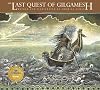
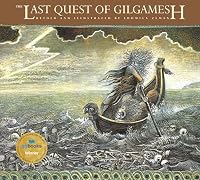
For all its critical aclaim, this book seems to have been one which slipped through the cracks with the general population, since very few people I know ran into it as a kid and I don't see it often in book stores or libraries. Myths and legends from cultures around the world are always a popular topic, but the focus still tends to be on the Greco-Roman traditions, with dashs of Egyptian, Chinese, and Eastern-European thrown in, and few go back far enough to touch on the stories of Gilgamesh. Maybe these stories are more difficult to romanticize or the plots are just a bit too unfamiliar for most people to delve into. We got this story (and still have it) because we read anything and everything available in the myths and legends show more section, and its one that has struck strongly in my memories. I may have forgotten about much of the plot until this re-read, but the artwork was instantly recognizable and enigmatic. Zeman could have chosen a multitude of styles for her artwork for this book, but it works so well to utilize the stylistic motifs from ancient Assyrian sculptures and friezes in this instance. If anything, she could have gone even further into the style, breaking up the story into even more panels to emphasize the style of some carvings that were used to decorate temples and public buildings at the time when the Gilgamesh story was contemporary. I'm sure this wouldn't have gone over that well with truely young readers though, so I applaud her overall application of elements like repetitive graphics, flat line reliefs, and a stark (yet colourful) palette to convey this classic legend. show less
In The Last Quest of Gilgamesh, Ludmila Zeman gives us the last of three books retelling the stories found in the Epic of Gilgamesh. Zeman once again produces a tale that includes rich historical detail, vivid images, and lessons to be learned. The book opens with the image of a man lying on the bank of a river. Zeman writes, “At the mouth of a river at the end of the earth, a man lies, near death. Could this be Gilgamesh, the all-powerful King of Uruk, loved by his people, famous throughout the ancient world for the magnificent wall he had built around his city?” And so the story begins, with a brief account of Enkidu’s death in The Revenge of Ishtar, and Gilgamesh’s pledge to find immortality. With the help of Shamhat’s show more spirit, Gilgamesh begins his quest. Shamhat had been beloved by all in Uruk, and had died in the attacks of Humbaba. She now guides Gilgamesh in his journey. Zeman describes the obstacles in Gilgamesh’s way, from steep mountains, wild and strange beasts, and the ever present desert terrain. Along the way Gilgamesh rescues a lion cub and brings him on his quest as a companion. As in the two previous works by Zeman, imagery and color play a prominent role in The Last Quest. Using ancient motifs and a muted range of colors, she portrays the region as both fierce and inviting. This would have truly been the case for the people of Mesopotamia, with lush, fertile areas surrounded by desert. Gilgamesh is directed by the Sun God to seek out Utnapishtim, who knows the secret of immortality. The journey to find him is the most difficult faced by Gilgamesh thus far. Again, Gilgamesh is tested by the gods, and Siduri, the Goddess of Wine, offers him refuge. He refuses, stating, “I have come through too much to give up now”. He proceeds to Utnapishtim, facing the Water of Death in a small boat, with the lion cub on board. Gilgamesh finally arrives on shore on Utnapishtim is amazed by his accomplishment. Utnapishtim tells him the story of how he was granted eternal life, after surviving a great flood. In just two pages, with scenes of the sea and pairs of animals, Zeman, and Utnapishtim, tell of the flood and the gods. Readers familiar with the Bible will recognize the story of the flood, and its similarities to Noah and his ark. But while the story is being told, Gilgamesh has fallen asleep and missed his chance to become immortal. Utnapishtim states, “Gilgamesh, a mortal you came here. A mortal you must leave”. But he is weak and gives Gilgamesh one more change, to find a plant in the sea that gives a man youth and strength. Gilgamesh finds it, and then falls asleep, “dreaming of the happiness he was bringing back to his people”. As he sleeps, Ishtar appears as a serpent and steals the plant and flower. As he is about to give up hope, the spirit of Enkidu arrives, and Gilgamesh embraces him. He brings the king back to his great city, and says, “Here, Gilgamesh, is the immortality you have sought. The city you built, the courage you showed, the good you have done. You will live in the hearts of people forever”. This is the end of Zeman’s story, and the end of the famed epic. She has given young readers their own version of the oldest story on earth, one rich in imagery and lessons to be learned. I highly recommend The Last Quest of Gilgamesh and the two works preceding it, to readers young and old. Zeman’s attention to detail and careful research bring this ancient story to life once more. show less
Very much in the spirit of the prior two books. The illustrations use a suitably darker palette. Zeman interprets the lion in the famous Gilgamesh statue as a companion, not an adversary. The story is even more loosely interpreted or less close to the canonical version, as Enkidu returns to comfort Gilgamesh while the boatman and Gilgamesh's destructive violence is omitted entirely. The expressions on the lion cub's face are entertaining.
I really enjoyed reading this story. it reminded me of the first time I read Gilgamesh myself, and how the story really captured my imagination. My daughter asked me quesitons at each page--"What's that, Mama?" "What are those bones doing there?" and that sort of thing. It really engaged her, and she enjoyed it immensely.
The only reason I wouldn't recommend this book is if you have a child who's very easily scared--there are bones that float in the water and that sort of thing, so a child who scares easily wouldn't find this a fun book.
The only reason I wouldn't recommend this book is if you have a child who's very easily scared--there are bones that float in the water and that sort of thing, so a child who scares easily wouldn't find this a fun book.
The last part of the triliogy of Gilgamesh stories, this is a very detailed part of the story. I think it may be a bit dark for younger ages, but with illustrations and story line can be a introduction into mythology.
Ratings
Members
- Recently Added By
Lists

The Story of the World: History for the Classical Child: Activity Book One
291 works; 3 members
Author Information

8+ Works 2,507 Members
Awards and Honors
Series

Work Relationships
Is an adaptation of
Common Knowledge
- Canonical title
- The Last Quest of Gilgamesh
- People/Characters
- Gilgamesh; Shamhat; Siduri; Utnapishtim; Ishtar; Enkidu
- Important places
- Uruk, Mesopotamia; Mesopotamia
- Dedication
- I would like to dedicate this book to all the archaeologists who resurrected the beautiful but almost forgotten ancient epic of Gilgamesh.
- First words
- At the mouth of a river at the end of the earth a man lies, near death.
- Last words
- (Click to show. Warning: May contain spoilers.)"Here, Gilgamesh, is the immortality you have sought," Enkidu said. "The city you built, the courage you showed, the good you have done. You will live in the hearts of people forever."
Classifications
Statistics
- Members
- 673
- Popularity
- 42,436
- Reviews
- 6
- Rating
- (4.17)
- Languages
- English, French, Portuguese
- Media
- Paper
- ISBNs
- 9
- ASINs
- 2