Miserere: An Autumn Tale
by Teresa Frohock 
On This Page
Description
Fantasy. Fiction. Exiled exorcist Lucian Negru deserted his lover in Hell in exchange for saving his sister Catarina's soul, but Catarina doesn't want salvation. She wants Lucian to help her fulfill her dark covenant with the Fallen Angels by using his power to open the Hell Gates. Catarina intends to lead the Fallen's hordes out of Hell and into the parallel dimension of Woerld, Heaven's frontline of defense between Earth and Hell. When Lucian refuses to help his sister, she imprisons and show more cripples him, but Lucian learns that Rachael, the lover he betrayed and abandoned in Hell, is dying from a demonic possession. Determined to rescue Rachael from the demon he unleashed on her soul, Lucian flees his sister, but Catarina's wrath isn't so easy to escape!. show lessTags
Recommendations



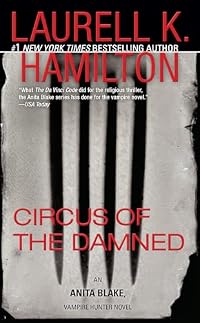
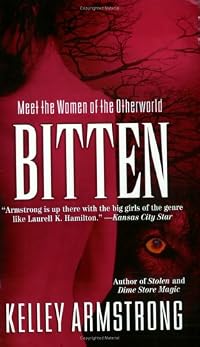
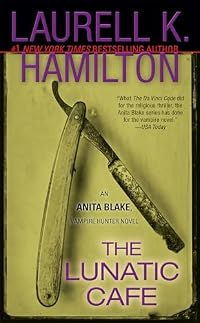
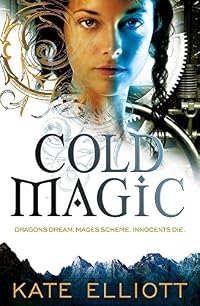

Member Recommendations
Member Reviews
I'm ashamed to say I've owned this since it was a new release and I only just got to it. I have to-read books that are older yet. The good news is that books, unlike fruit, so not spoil, and this was a fantastic read. I blazed through in days. Frohock created a unique setting of Woerld, a kind of border realm between Earth and Hell, where gifted youngsters are pulled to act as guardians. This is by no means your average YA portal fantasy, though. The protagonist is Lucian, an older man broken and abused by his twin sister Catarina. It's rare to find heroes of faith, and Lucian is a bright speck in a dark, gritty world. His plight is utterly heartbreaking as he rebels against his sister, saves a newcomer to Woerld, and begins domino show more cascade that could shift the spiritual dynamics of their plane. show less
I got an advanced reading copy of this book through Netgalley(dot)com. It was an interesting book and a solid fantasy, but I was a bit confused about what age group this book is aimed at. I had trouble relating to the characters, but enjoyed the fascinating world and magic. I am not sure if there will be a sequel to this book; it stands alone well but there is room for future adventures too.
The Woerld is a plane of existence between Earth and Hell where the inhabitants fight back denizens of Hell to protect humanity on Earth. In the Woerld Lucian has been suffering under the evil rule of his sister Catarina. Years ago he abandoned his lover Rachael in hell to save Catarina and he has been paying for it since. As Lucian flees Catarina's show more fortress he runs into a foundling named Lindsay who has fallen through a Hell Gate from our world. Lucian goes against his vows (to never open a Hell Gate) to rescue Lindsay, but alerts the authorities when he does so. Meanwhile Lucian's ex-lover Rachael has been struggling for her soul against the demon Wyrm who is fighting to possess her. Rachael is tasked with finding Lucian to bring him back to the authorities. What unravels is an evil plot that may force the Woerld to succumb to Hell; the ultimate question is can Rachael and Lucian stop Catarina?
This book weaves an interesting and complex story and builds a unique world. I loved the idea of a plane between Earth and Hell where beings struggle to protect humanity. The description in the book is well done and the characters are intriguing. The plot is masterfully woven and moves along at a good pace.
The thing I had the most trouble with were the characters; I had trouble relating too or liking any of them. It left me a bit confused about what age group this book is aimed at. Lindsay is a pre-teen, yet there is too much torture, violence and sex for this to be a middle grade or YA book. Rachael and Lucian appear to be older, in their forties or fifties maybe? Their older age and frame of mind made it harder to relate with them as characters either.
The other thing I didn't like about this book is the inconsistency of tone throughout. Lucien fights with prayer, so when Lucien is in the story it has a heavy Christian flavor to it...there is lots of praying and talking about God as the savior and chooser of fates. The portions with Catarina are opposite, there is lots of torture and deprivation. So at times this book was a bit too Christian for me and at other times it was a bit too yucky. I know that sounds strange, but it was strange and I just had trouble deciding where this book fit.
Overall this was a decent fantasy read. The world is very well done and the characters are intriguing. The plot moves at a good clip and is complex but not confusing. I had trouble relating to the characters and had trouble deciding what age group as well as genre this book was really aimed at. Although everything about this book was pretty well done; the vacillation between heavy Christianity and uber evil torture scenes made it something, that for me, wasn't really a joy to read. Because of this I probably won't read any sequels to this book. show less
The Woerld is a plane of existence between Earth and Hell where the inhabitants fight back denizens of Hell to protect humanity on Earth. In the Woerld Lucian has been suffering under the evil rule of his sister Catarina. Years ago he abandoned his lover Rachael in hell to save Catarina and he has been paying for it since. As Lucian flees Catarina's show more fortress he runs into a foundling named Lindsay who has fallen through a Hell Gate from our world. Lucian goes against his vows (to never open a Hell Gate) to rescue Lindsay, but alerts the authorities when he does so. Meanwhile Lucian's ex-lover Rachael has been struggling for her soul against the demon Wyrm who is fighting to possess her. Rachael is tasked with finding Lucian to bring him back to the authorities. What unravels is an evil plot that may force the Woerld to succumb to Hell; the ultimate question is can Rachael and Lucian stop Catarina?
This book weaves an interesting and complex story and builds a unique world. I loved the idea of a plane between Earth and Hell where beings struggle to protect humanity. The description in the book is well done and the characters are intriguing. The plot is masterfully woven and moves along at a good pace.
The thing I had the most trouble with were the characters; I had trouble relating too or liking any of them. It left me a bit confused about what age group this book is aimed at. Lindsay is a pre-teen, yet there is too much torture, violence and sex for this to be a middle grade or YA book. Rachael and Lucian appear to be older, in their forties or fifties maybe? Their older age and frame of mind made it harder to relate with them as characters either.
The other thing I didn't like about this book is the inconsistency of tone throughout. Lucien fights with prayer, so when Lucien is in the story it has a heavy Christian flavor to it...there is lots of praying and talking about God as the savior and chooser of fates. The portions with Catarina are opposite, there is lots of torture and deprivation. So at times this book was a bit too Christian for me and at other times it was a bit too yucky. I know that sounds strange, but it was strange and I just had trouble deciding where this book fit.
Overall this was a decent fantasy read. The world is very well done and the characters are intriguing. The plot moves at a good clip and is complex but not confusing. I had trouble relating to the characters and had trouble deciding what age group as well as genre this book was really aimed at. Although everything about this book was pretty well done; the vacillation between heavy Christianity and uber evil torture scenes made it something, that for me, wasn't really a joy to read. Because of this I probably won't read any sequels to this book. show less
Eh. Neither great nor terrible. Passable. Readable. Not odd enough to stand out, not standard enough to be comfortable.
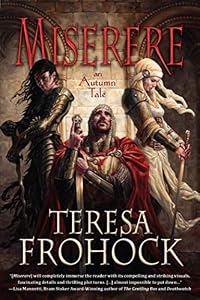
And not well served by the decisions made in packaging and marketing it. I mean, the blurb's actually really interesting. The blurb promises a threeway tussle of adult passions, decisions and consequences. The blurb reflects the cover. Neither of them make any mention of Lindsay, the twelve-year-old real-world girl who gets sucked through into the fantasy world in the second chapter of the book and plays a major role in events from there on - events which start with the blurb, dispensing with all of that as backstory in the first chapter.
I mean... what? (Not to mention that I don't particularly like YA, and show more surprise!world-transportation!YA is my least favourite flavour thereof.)
Stylistically, it's pretty bland. The writing plods along at workmanlike - perfectly serviceable - levels with occasional bouts of melodramatic purple. (Screams ravaging the night, a single drop of blood cascading down her cheek, etc.) If the prose had been masterful, the rather simple nature of the story might have been elevated and given a little more gravitas.
As it is, it doesn't excite, but it doesn't aggravate. It's ok. show less
And not well served by the decisions made in packaging and marketing it. I mean, the blurb's actually really interesting. The blurb promises a threeway tussle of adult passions, decisions and consequences. The blurb reflects the cover. Neither of them make any mention of Lindsay, the twelve-year-old real-world girl who gets sucked through into the fantasy world in the second chapter of the book and plays a major role in events from there on - events which start with the blurb, dispensing with all of that as backstory in the first chapter.
I mean... what? (Not to mention that I don't particularly like YA, and show more surprise!world-transportation!YA is my least favourite flavour thereof.)
Stylistically, it's pretty bland. The writing plods along at workmanlike - perfectly serviceable - levels with occasional bouts of melodramatic purple. (Screams ravaging the night, a single drop of blood cascading down her cheek, etc.) If the prose had been masterful, the rather simple nature of the story might have been elevated and given a little more gravitas.
As it is, it doesn't excite, but it doesn't aggravate. It's ok. show less
For a while now I haven't had this feeling of being completely captivated by a book. And then I picked this one...
This is an excellent dark fantasy with a well designed and even better described authentic world, where the narrator's language is rich, heroes are consistent and the protagonist is a good guy, but is very far from being perfect or blameless. Even the happy ending is not excessively happy - it is very a reasonable result of the tale.
I loved this book and am going to re-read in a near future.
This is an excellent dark fantasy with a well designed and even better described authentic world, where the narrator's language is rich, heroes are consistent and the protagonist is a good guy, but is very far from being perfect or blameless. Even the happy ending is not excessively happy - it is very a reasonable result of the tale.
I loved this book and am going to re-read in a near future.
Books like Miserere are why I'm glad I make it a personal rule to finish reading all books I start. It's always tempting to put a title away for something else when the story doesn't capture me right away, and certainly I had my doubts that this one would be right for me when I first began. But sometimes, a book can be full of surprises.
I ended up loving Miserere. All I needed was some time to get into it, and part of the reason is its pacing. It's the kind of book that takes its time revealing itself to you, doling out details about its world in a trickle as you read. I was unable to make heads or tails of the story until I understood a bit of the context, that the universe of Miserere is made up of four planes: Heaven, Earth, Woerld, show more and Hell. Woerld is sort of like the first line of defense against Hell and its demons, as it were; all the religions there work to keep Fallen hordes from breaking through to Earth. It is in Woerld where the book mostly takes place.
Exorcist and man of faith Lucian Negru has been in exile for sixteen years, banished for abandoning his lover Rachael in Hell in exchange for the life of his twin sister, Catarina. Catarina, however, didn't want to be saved, as she'd sold her soul to the Fallen for the chance to rule Woerld. Lucian was crippled and imprisoned when he refused to go along with her plans, until one day he escapes and endeavors to save Rachael, who has since made it back from Hell, albeit possessed by a demon that is slowly taking over and killing her.
Along the way, Lucian also rescues Lindsay, a young Earth girl who had slipped through the Veil into Woerld, just as he had many years before. Like Lucian, Lindsay possesses special powers, and will one day become one of the Kathoros, able to activate magic through prayer. Lucian is determined to make it his duty to train and protect her, but that's easier said than done with Catarina's minions on his tail and traitors at the heart of the Kathoroi.
Such a rich world, with so much history and background. I don't think I was able to absorb it all until a third of the way through the book, mostly because not everything's explained right away. You're meant to be thrown into Miserere without much guidance, letting the story do the job of explaining the details as it progresses. Call me impatient, but I don't usually enjoy books like that; I much prefer it when the setting and characters are set up early so I know what I'm in for. But still, Miserere ended up making it up to me in spades!
Contrary to its description and the nature of its themes, this book isn't really about religion, though religious philosophies and the notion of faith are interwoven into the story. More significant are the ideas of redemption and mercy, of finding the strength and reason to go on again even after falling from grace. It's also about love, of whether or not it is possible to trust again after betrayal.
Speaking of which, one of the first things that struck me about this book is how beautiful the writing is. I felt that the interplay of emotions between Lucian and Rachael unfolded very naturally and was presented almost perfectly, as were the descriptions of Lucien's mixed feelings for his traitorous sister. And yet, the writing was not at all flowery to the point of distracting, nor did it disrupt the flow of the story, which made this a very easy and smooth read. The execution in the details was also phenomenal; I am thinking of one scene in particular involving an exorcism that is quite possibly one of the most awesome and yet horrifying things I've ever read.
I just breezed through the second half of this book, since by then it had me completely hooked. One night, I found myself still up at 3am because I'd lost track of the hours reading this. I'm so glad I kept my mind open and gave this book a little time, as the reward was very much worth it. show less
I ended up loving Miserere. All I needed was some time to get into it, and part of the reason is its pacing. It's the kind of book that takes its time revealing itself to you, doling out details about its world in a trickle as you read. I was unable to make heads or tails of the story until I understood a bit of the context, that the universe of Miserere is made up of four planes: Heaven, Earth, Woerld, show more and Hell. Woerld is sort of like the first line of defense against Hell and its demons, as it were; all the religions there work to keep Fallen hordes from breaking through to Earth. It is in Woerld where the book mostly takes place.
Exorcist and man of faith Lucian Negru has been in exile for sixteen years, banished for abandoning his lover Rachael in Hell in exchange for the life of his twin sister, Catarina. Catarina, however, didn't want to be saved, as she'd sold her soul to the Fallen for the chance to rule Woerld. Lucian was crippled and imprisoned when he refused to go along with her plans, until one day he escapes and endeavors to save Rachael, who has since made it back from Hell, albeit possessed by a demon that is slowly taking over and killing her.
Along the way, Lucian also rescues Lindsay, a young Earth girl who had slipped through the Veil into Woerld, just as he had many years before. Like Lucian, Lindsay possesses special powers, and will one day become one of the Kathoros, able to activate magic through prayer. Lucian is determined to make it his duty to train and protect her, but that's easier said than done with Catarina's minions on his tail and traitors at the heart of the Kathoroi.
Such a rich world, with so much history and background. I don't think I was able to absorb it all until a third of the way through the book, mostly because not everything's explained right away. You're meant to be thrown into Miserere without much guidance, letting the story do the job of explaining the details as it progresses. Call me impatient, but I don't usually enjoy books like that; I much prefer it when the setting and characters are set up early so I know what I'm in for. But still, Miserere ended up making it up to me in spades!
Contrary to its description and the nature of its themes, this book isn't really about religion, though religious philosophies and the notion of faith are interwoven into the story. More significant are the ideas of redemption and mercy, of finding the strength and reason to go on again even after falling from grace. It's also about love, of whether or not it is possible to trust again after betrayal.
Speaking of which, one of the first things that struck me about this book is how beautiful the writing is. I felt that the interplay of emotions between Lucian and Rachael unfolded very naturally and was presented almost perfectly, as were the descriptions of Lucien's mixed feelings for his traitorous sister. And yet, the writing was not at all flowery to the point of distracting, nor did it disrupt the flow of the story, which made this a very easy and smooth read. The execution in the details was also phenomenal; I am thinking of one scene in particular involving an exorcism that is quite possibly one of the most awesome and yet horrifying things I've ever read.
I just breezed through the second half of this book, since by then it had me completely hooked. One night, I found myself still up at 3am because I'd lost track of the hours reading this. I'm so glad I kept my mind open and gave this book a little time, as the reward was very much worth it. show less
Review from Tenacious Reader: http://www.tenaciousreader.com/2015/03/27/backlist-burndown-review-miserere-by-t...
Miserere is an engaging, dark and unexpected book. I honestly was not sure where parts of this story were going, and I love that. I also love that this is not your cozy fantasy where people are generally safe, and its certainly not a clear cut good versus evil. There are shades of grey.
There are central features to the story that center on religion, but please do not mistake this for a religious book. I have to confess to having a bit of a knee-jerk reaction sometimes when a book starts referencing Christian beliefs. I start putting up defenses, waiting for the preachiness, attempts at conversion or even the judgmental show more subtexts that infer I will likely burn in hell for not following suit. Maybe that reaction is unwarranted in most cases, but regardless, it was definitely not warranted here. This is not a preachy or even religious book, religion is just an intricate part of the world (as it is in many fantasy stories as well as real world history). Religion adds another dynamic to the story and adds complexity to the world building. Using some known religions let Frohock build on the familiar.I don’t think that religion is any more prevalent in this than many other fantasy books, it just might feel that way at first because you are already familiar with it.
The story is fascinating. It takes place predominantly in Woerld, which is a realm or world that exists between our world and Heaven and Hell. Portal fantasies can have some prejudice against them, which is silly because I don’t understand how one fantastical element is better or more appealing than another fantastical element. To me it all comes down to execution, and this was incredibly well executed. And for anyone who is still leery given the portal aspect, I will also mention there is little focus on our world.
Our protagonist, Lucian, is dubbed a traitor in Woerld. Even getting his perspective, you know he has betrayed someone he loves. Seeing him cope with this and slowly unraveling the motivation for the betrayal is fascinating. You really come to care about Lucian and try to understand and empathize with him. His life has not been easy, and the more you read, the more you can see that. His character and relationships are complex and I just couldn’t learn enough about him or the other people in his life quick enough.
Honestly, I am shocked at how much story and world building Frohock is able to pack into this book, as it is not terribly long when you look at the page count or length of the audiobook. Yet, looking back I feel like I experienced more with it than many books twice the length. I guess that means it is incredibly efficient, because I can’t think of areas I felt were sacrificed, skimmed over or lacked detail. Very well done. I look forward to reading whatever Frohock writes next. show less
Miserere is an engaging, dark and unexpected book. I honestly was not sure where parts of this story were going, and I love that. I also love that this is not your cozy fantasy where people are generally safe, and its certainly not a clear cut good versus evil. There are shades of grey.
There are central features to the story that center on religion, but please do not mistake this for a religious book. I have to confess to having a bit of a knee-jerk reaction sometimes when a book starts referencing Christian beliefs. I start putting up defenses, waiting for the preachiness, attempts at conversion or even the judgmental show more subtexts that infer I will likely burn in hell for not following suit. Maybe that reaction is unwarranted in most cases, but regardless, it was definitely not warranted here. This is not a preachy or even religious book, religion is just an intricate part of the world (as it is in many fantasy stories as well as real world history). Religion adds another dynamic to the story and adds complexity to the world building. Using some known religions let Frohock build on the familiar.I don’t think that religion is any more prevalent in this than many other fantasy books, it just might feel that way at first because you are already familiar with it.
The story is fascinating. It takes place predominantly in Woerld, which is a realm or world that exists between our world and Heaven and Hell. Portal fantasies can have some prejudice against them, which is silly because I don’t understand how one fantastical element is better or more appealing than another fantastical element. To me it all comes down to execution, and this was incredibly well executed. And for anyone who is still leery given the portal aspect, I will also mention there is little focus on our world.
Our protagonist, Lucian, is dubbed a traitor in Woerld. Even getting his perspective, you know he has betrayed someone he loves. Seeing him cope with this and slowly unraveling the motivation for the betrayal is fascinating. You really come to care about Lucian and try to understand and empathize with him. His life has not been easy, and the more you read, the more you can see that. His character and relationships are complex and I just couldn’t learn enough about him or the other people in his life quick enough.
Honestly, I am shocked at how much story and world building Frohock is able to pack into this book, as it is not terribly long when you look at the page count or length of the audiobook. Yet, looking back I feel like I experienced more with it than many books twice the length. I guess that means it is incredibly efficient, because I can’t think of areas I felt were sacrificed, skimmed over or lacked detail. Very well done. I look forward to reading whatever Frohock writes next. show less
There's something I want to get out of the way here: I almost didn't read this book past the first chapter. It started out seeming like a big mess, like the author didn't know if she wanted to create a fantasy world or an alternate earth. Real-world mythology and religion (or rather, religious organizations all co-existing peacefully without any mention of actual religion) existing side-by-side with magic, fictional places mentioned alongside real places. It felt like a mess, like the author was perhaps banking on nobody having ever heard of an angel named Mastema or a place called Walachia, instead just hoping they'll consider it all a part of the fantasy.
Then chapter 2 hits, and you realize, with a jump to the modern real world, that show more things aren't actually as messed up as they seem, at least not when it comes to the world that the novel takes place in. It's revealed that there are layers of reality, worlds in addition to our own, and that the veil between then sometimes gets thin enough to allow people to pass through from one world to the next. Not an original concept, I'll grant you, but it did explain why mentions of real and fake places went hand in hand. There was a method to the madness, and it renewed my faith in the novel and made me want to keep reading.
Heavy with Judeo-Christian-Islamic mythology but still inclusive of any other belief system you can think of, Miserere takes place in Woerld, the plane of reality that's one step closer to Hell than we are. The real action takes place around Lucian, who escapes the clutches of his power-hungry sister Catarina, the woman who's working with a Fallen Angel to acquire yet more power and to take over Woerld. After his escape he meets Lindsay, a young girl who passed through the veil from our world into Woerld and who has become, in an instant, his protege. But Catarina's not the only one looking to bring Lucian back. The forces of God, believing Lucian to be a criminal in exhile, are after him too. But conspiracy runs deep, and even those who claim to follow the light may have a sinister purpose.
What started off so chaotically ended up making a lot of sense by the end, and the story had a great deal of depth to it that isn't always easy to come by when you're essentially saying that God, Heaven, and Hell are real. Miserere was far from bible-thumping; it had quite a good message of inclusion, acceptance, and tolerance for the fact that even when people pray to different gods they're still essentially praying to the same powers of goodness and light. Frohock plays with mythology in a wonderful and compelling way that makes you desperate to keep turning pages. The characters are richly detailed, well defined and interesting, and even though you've got adversaries who are working for the forces of evil, they remain three-dimensional and don't simply become caricatures.
Frohock's got some real talent here, and I was very impressed to find that this was her debut novel. This is normally the kind of quality you get from people who've been around the block a few times, so to speak. If this is Frohock's starting point, then I'm very excited to see what she's going to do next.
When all is said and done, the real reason this book lost points with me is because of the beginning. First impressions are important, and I know I can't expect everything to be revealed within the first ten pages, but it sat so wrongly with me until I forced my way through what seemed like a poor and unpolished opening that I can't help but have that impression colour my final review. I can only caution others to not be so thrown off when they read it. But in spite of a shaky start, the book turned out so much better than I thought it was going to, and this is one I can definitely recommend to those who enjoy a little world-crossing in their fantasy novels. show less
Then chapter 2 hits, and you realize, with a jump to the modern real world, that show more things aren't actually as messed up as they seem, at least not when it comes to the world that the novel takes place in. It's revealed that there are layers of reality, worlds in addition to our own, and that the veil between then sometimes gets thin enough to allow people to pass through from one world to the next. Not an original concept, I'll grant you, but it did explain why mentions of real and fake places went hand in hand. There was a method to the madness, and it renewed my faith in the novel and made me want to keep reading.
Heavy with Judeo-Christian-Islamic mythology but still inclusive of any other belief system you can think of, Miserere takes place in Woerld, the plane of reality that's one step closer to Hell than we are. The real action takes place around Lucian, who escapes the clutches of his power-hungry sister Catarina, the woman who's working with a Fallen Angel to acquire yet more power and to take over Woerld. After his escape he meets Lindsay, a young girl who passed through the veil from our world into Woerld and who has become, in an instant, his protege. But Catarina's not the only one looking to bring Lucian back. The forces of God, believing Lucian to be a criminal in exhile, are after him too. But conspiracy runs deep, and even those who claim to follow the light may have a sinister purpose.
What started off so chaotically ended up making a lot of sense by the end, and the story had a great deal of depth to it that isn't always easy to come by when you're essentially saying that God, Heaven, and Hell are real. Miserere was far from bible-thumping; it had quite a good message of inclusion, acceptance, and tolerance for the fact that even when people pray to different gods they're still essentially praying to the same powers of goodness and light. Frohock plays with mythology in a wonderful and compelling way that makes you desperate to keep turning pages. The characters are richly detailed, well defined and interesting, and even though you've got adversaries who are working for the forces of evil, they remain three-dimensional and don't simply become caricatures.
Frohock's got some real talent here, and I was very impressed to find that this was her debut novel. This is normally the kind of quality you get from people who've been around the block a few times, so to speak. If this is Frohock's starting point, then I'm very excited to see what she's going to do next.
When all is said and done, the real reason this book lost points with me is because of the beginning. First impressions are important, and I know I can't expect everything to be revealed within the first ten pages, but it sat so wrongly with me until I forced my way through what seemed like a poor and unpolished opening that I can't help but have that impression colour my final review. I can only caution others to not be so thrown off when they read it. But in spite of a shaky start, the book turned out so much better than I thought it was going to, and this is one I can definitely recommend to those who enjoy a little world-crossing in their fantasy novels. show less
Members
- Recently Added By
Lists

Top Five Books of 2013
1,564 works; 722 members

Top Five Books of 2016
795 works; 229 members

infjsarah's wishlist
408 works; 2 members
Author Information

13+ Works 442 Members
Teresa Frohock is a LibraryThing Author, an author who lists their personal library on LibraryThing.
Classifications
Statistics
- Members
- 190
- Popularity
- 171,473
- Reviews
- 14
- Rating
- (3.82)
- Languages
- English
- Media
- Paper, Ebook
- ISBNs
- 2
- ASINs
- 2